
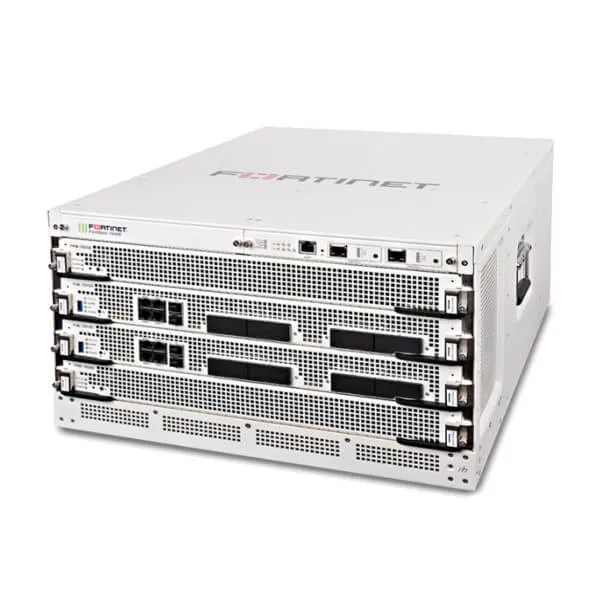
FortiGate FG-7040E Firewall in Africa
The FortiGate FG-7040E Firewall is a modular Fortinet security platform for organizations that need high-capacity firewalling, secure data center traffic control, VPN planning, FortiGuard protection services, and strong operational visibility across demanding networks. It is not a basic office firewall. It is a chassis-based appliance class suited to large campuses, service providers, financial networks, cloud facilities, public sector infrastructure, and regional enterprises where throughput, resilience, port choice, and implementation discipline matter.
✓ FortiGuard Bundle Review
✓ Africa Delivery Coordination
✓ Quote Assistance
Request Quote
Check Africa Availability
Quick Product Information
Fortinet
FortiGate 7040E / FG-7040E
Chassis-based next-generation firewall
Large enterprises, data centers, service providers, and critical networks
High-capacity network security, VPN, segmentation, and threat inspection
Contact FourTeck for current options
Africa-focused regional procurement support
Interface modules, licenses, support term, and power options are configuration dependent
Product Overview
Large networks now carry more than ordinary internet browsing. They carry cloud application traffic, encrypted business sessions, customer portals, remote user access, branch tunnels, data center replication, virtual workloads, voice platforms, payment systems, identity services, and operational technology links. A firewall in this environment must do more than permit or block ports. It must help the security team understand traffic, apply policy, control access, support routing decisions, inspect threats where licensed, and maintain stable performance as traffic grows.
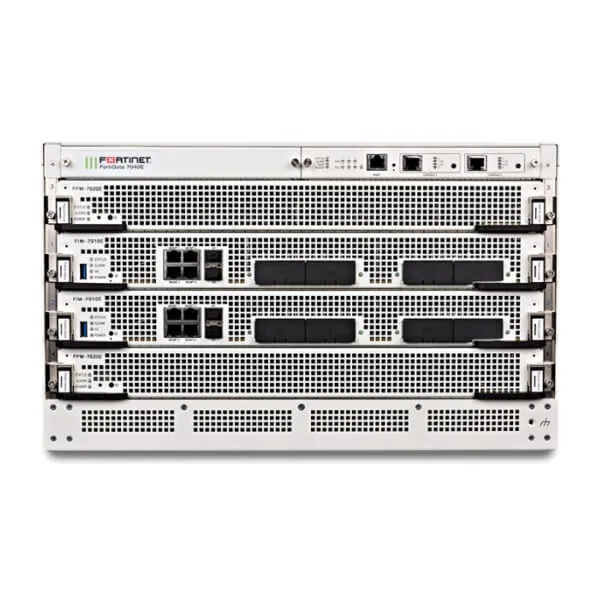
The 7040E class is designed for organizations that need a serious security gateway with modularity. Its 6U rackmount chassis design, processor modules, interface modules, management module, and high-capacity internal fabric make it suitable for environments where the firewall becomes part of the core security architecture rather than a small edge appliance. This matters for organizations with several high-speed uplinks, multiple protected zones, data center traffic flows, and a need to keep critical services reachable while security policies remain active.
For Africa buyers, the purchase is normally a project decision. The model name alone is not enough. The buyer must understand interface module selection, transceiver needs, FortiCare support level, FortiGuard service bundle, HA design, rack space, power planning, implementation scope, and renewal cost. A chassis firewall can serve the business for years when it is selected carefully; it can also become difficult if purchased without mapping ports, throughput, traffic type, and operational ownership.
FourTeck supports that buying journey by helping procurement teams, IT managers, cybersecurity leads, system integrators, and project buyers convert technical requirements into a practical quote request. The discussion can include current firewall replacement, new data center deployment, secure branch aggregation, telecom-grade segmentation, cloud interconnect protection, or network modernization. The goal is to help the buyer avoid under-sizing, missing modules, incorrect support terms, unmanaged renewals, or an appliance bundle that does not match the real environment.
Key Business Benefits
A high-end firewall purchase should be measured by business value, not only by a line in a datasheet. The following benefits explain why this appliance class is considered for demanding environments where security, uptime, and structured operations are important.
◆ High-Capacity Security Edge
Large organizations need security inspection that does not become a bottleneck for users, servers, and cloud platforms. Proper sizing helps the business protect more traffic while keeping application access responsive.
✓ Modular Interface Planning
Chassis firewall projects often require 10G, 40G, or 100G planning depending on the selected modules. This flexibility helps network teams match the firewall to the switching, routing, and data center design.
⚙ Better Project Control
FourTeck can help buyers review license terms, accessories, transceivers, power, rack space, and delivery needs before purchase, reducing the risk of receiving incomplete or mismatched components.
🔒 Threat Control Readiness
With the right FortiGuard services and policy design, the platform can support intrusion prevention, application control, malware defense, web protection, and other security services that strengthen the network.
↗ Scalable Network Architecture
A chassis firewall is often selected when growth is expected. It can support structured segmentation, high-speed uplinks, centralized management, and security controls that evolve with the network.
● Operational Visibility
When paired with the right logging and management tools, a firewall deployment can give security teams better visibility into users, applications, sessions, blocked events, and policy behavior.
Product Highlights
The 7040E is part of Fortinet’s high-end 7000E chassis family. It is commonly considered when a business needs security performance above the level of a small branch firewall and wants a platform that can sit at a data center edge, enterprise core, service provider security layer, or high-volume internet perimeter. Its chassis approach separates processing, interface connectivity, and management, which can be useful for environments where the firewall must be carefully aligned with network architecture.
Fortinet documentation describes the unit as a 6U, 19-inch, 4-slot rackmount chassis. A standard system includes Fortinet Interface Modules and Fortinet Processor Modules, while the management layer is handled by a System Management Module. The internal architecture uses an 80Gbps fabric backplane for data communication between chassis components and a 1Gbps base backplane for management and synchronization. These details matter because buyers should treat the appliance as a platform that needs design review, not a single fixed-port desktop box.
Depending on bundle and module choice, buyers may review interface options involving 10GE SFP+, 40GE QSFP+, or 100GE high-speed connectivity. The correct selection depends on the current switch fabric, uplink speed, routing plan, firewall zones, HA design, and future bandwidth expectations. FortiCare, FortiGuard services, FortiManager, FortiAnalyzer, optics, rack installation, and power cables should also be reviewed before approval. FourTeck can help the buyer translate these highlights into a structured request so the quote process reflects real technical needs.
Modular FIM/FPM Design
High-Speed Interface Planning
FortiOS Security Platform
Technical Specifications
| Specification | Details |
|---|---|
| Brand | Fortinet |
| Model | FortiGate 7040E / FG-7040E |
| Product Type | Chassis-based next-generation firewall and secure networking platform |
| Form Factor | 6U, 19-inch, 4-slot rackmount chassis |
| Backplane | 80Gbps fabric backplane and 1Gbps base backplane as described in Fortinet platform documentation |
| Standard Module Layout | Two Fortinet Interface Modules and two Fortinet Processor Modules in the standard chassis layout; final bundle is configuration dependent |
| Management | System Management Module with Ethernet connection and console access to modules |
| Processing Architecture | Fortinet processor modules with NP6 session offload and CP9 content processing acceleration in the 7000E architecture |
| Interface Options | Configuration dependent; common bundle discussions may include 10GE SFP+, 40GE QSFP+, or 100GE interface module planning |
| Published Performance Reference | Datasheet figures vary by bundle and traffic profile; buyers should confirm firewall, IPS, NGFW, and threat protection values during quote review |
| Power | AC/DC and redundant PSU options depend on selected bundle and supply route; confirm power cords and rack power before order |
| Security Services | FortiGuard service bundles available based on chosen subscription and support term |
| Support | FortiCare support level and term to be selected during quotation |
| Notes | Final specifications depend on selected bundle, FIM/FPM modules, license term, firmware, optics, power option, and supplier availability |
Buyers should choose the configuration by starting with network design, not by selecting the lowest hardware line item. Confirm the number of required high-speed links, whether 10G, 40G, or 100G interfaces are needed, whether the firewall will be deployed as a single unit or HA pair, and whether it will inspect only internet traffic or also internal segmentation traffic. The correct bundle should include the right support term, FortiGuard services, interface modules, optics, power accessories, and implementation plan. FourTeck can help review these details before quotation so the order reflects the business environment, not only the model number.
Configuration and Buyer Guidance
A chassis firewall requires more planning than a desktop appliance. Before requesting a quote, the buyer should define what the firewall must protect and how much inspected traffic will pass through it. Start with current internet capacity, projected data center throughput, number of protected network zones, VPN users, branch connections, cloud tunnels, routing method, and application control expectations. It is also important to understand whether SSL inspection will be used broadly or only on selected traffic, because inspection depth can influence sizing and license planning.
Traffic Profile
Confirm internet bandwidth, east-west traffic, VPN load, cloud traffic, encrypted sessions, and expected growth.
Interface Mapping
Identify required port speed, optic type, number of zones, HA links, upstream routers, and core switching paths.
Subscription Choice
Select FortiCare and FortiGuard terms that match protection expectations and renewal budgeting.
Deployment Plan
Review rack space, power, cabling, implementation window, rollback plan, and operational handover.
FourTeck recommends sharing the existing firewall model, network topology, uplink speeds, required security services, current pain points, and expected procurement timeline. This helps the sales and technical discussion move faster, especially for enterprise approvals where budget, technical validation, delivery, warranty direction, and implementation must align.
Ideal Business Use Cases
The 7040E is best considered where traffic volume, network criticality, and operational expectations are higher than a typical branch firewall can support. It is suitable for environments that need strong policy control, high-speed uplinks, secure remote access, segmentation, and Fortinet security service options across large numbers of users, servers, or customer-facing platforms.
Data Center Edge
Use the appliance to control traffic between internet links, cloud platforms, hosted applications, DMZ services, and internal zones where policy accuracy and performance are important.
Enterprise Core Segmentation
Protect sensitive network areas such as finance systems, identity services, server VLANs, data platforms, user networks, and operational systems with structured firewall policy.
Service Provider Security
Support high-capacity security requirements where customer, backbone, and managed service traffic require controlled access and scalable inspection planning.
Secure Branch Aggregation
Bring multiple branches, remote tunnels, and WAN paths into a centralized security architecture that supports policy consistency and monitoring.
Critical Public Platforms
Protect digital service platforms that require controlled access, secure remote administration, event visibility, and continuity planning.
Firewall Refresh Projects
Replace aging high-end appliances when throughput, license renewal, interface density, policy complexity, or reporting requirements have outgrown the old platform.
FortiGate 7040E Chassis Architecture
The architecture is one of the main reasons buyers consider this platform. A chassis model allows the security design to separate the physical frame, interface modules, processing modules, and system management. That layout matters in large networks because the firewall must connect to high-speed switching and routing layers while distributing processing tasks across internal components. Fortinet documentation identifies the system as a 6U rackmount chassis with an 80Gbps fabric backplane for data communication and a base backplane for management and synchronization functions.
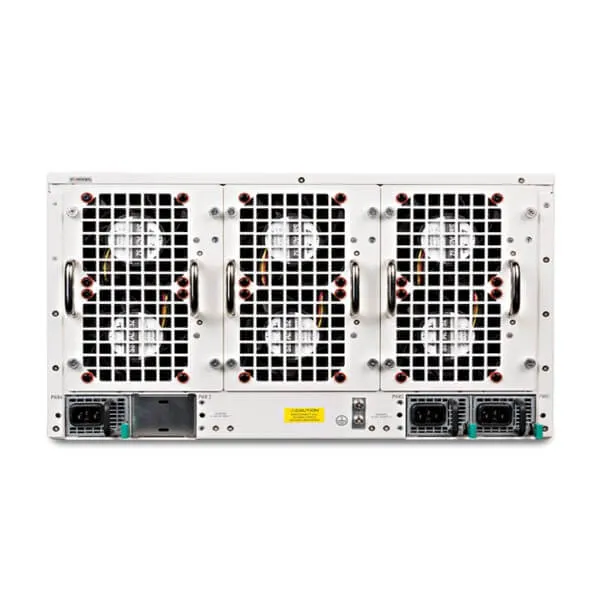
In practical buying terms, this means the firewall should be treated as part of the data center infrastructure. Rack space, cooling, airflow, cabling, power redundancy, management access, firmware planning, HA links, and module selection must be understood before installation. A team upgrading from a smaller appliance should plan for a more formal deployment process, including network diagrams, port mapping, change window approval, and post-installation validation. FourTeck can help the buyer prepare the right technical details for quote discussion so the selected bundle is aligned with how the appliance will actually be installed.
FortiGate 7040E Security Services and FortiGuard Planning
A firewall appliance becomes more valuable when the right security services and policies are applied. Buyers should not assume that hardware alone delivers every protection feature. FortiGuard service bundles, FortiCare support, firmware updates, IPS signatures, application control, malware defense, web filtering, DNS filtering, sandboxing options, and reporting tools must be reviewed according to the required protection level. The security team should decide which traffic needs deep inspection, which traffic requires application control, and which networks should be segmented with strict rules.
FortiOS is widely used across Fortinet appliances to combine firewalling, routing, VPN, SD-WAN capabilities, security profiles, administrator control, and monitoring functions. For a large deployment, it is sensible to consider FortiManager for centralized administration and FortiAnalyzer for logs and reporting. These tools can reduce operational pressure when multiple firewalls, VDOMs, administrators, or policy packages are involved. FourTeck can help customers discuss whether the firewall should be quoted as a standalone appliance, part of a high availability pair, or part of a wider Fortinet security platform with management and analytics.
The best protection plan starts with business risk. A bank may prioritize segmentation, encrypted traffic inspection, audit visibility, and strict administrator access. A telecom operator may focus on throughput, uptime, and controlled service zones. A university may need user policy, remote access, web controls, and research network separation. A government platform may require policy discipline, secure access, and structured change control. The same appliance can support different priorities when the subscription, configuration, and implementation plan are chosen correctly.
FortiGate 7040E Deployment, HA, and Management
High availability planning is one of the most important parts of a large firewall project. If the appliance protects a production data center, payment platform, national service, telecom core, campus backbone, or cloud edge, the design should define how traffic continues during maintenance or device failure. Buyers should discuss whether they need an HA pair, what type of failover is required, how heartbeat links will be cabled, which interfaces will carry production traffic, and how firmware changes will be handled. A rushed HA design can create avoidable downtime later.
Management planning is equally important. The System Management Module provides an interface for controlling chassis components, but operational teams still need policies for administrator access, role separation, configuration backup, log forwarding, monitoring, alerts, and change approval. FortiManager and FortiAnalyzer may be suitable when the customer needs centralized policy deployment, audit trails, event visibility, and easier operations across multiple Fortinet devices. For large environments, FourTeck recommends documenting management IP addresses, access restrictions, administrator roles, syslog or analyzer destinations, backup frequency, and escalation process before go-live.
A successful deployment also needs physical readiness. Rack placement, airflow, power feeds, cable labels, optic compatibility, spare transceivers, console access, out-of-band management, and maintenance access should be planned in advance. FourTeck can help buyers identify these topics during the supply conversation so the delivery is not treated as a simple shipment. The objective is a stable transition from purchase approval to secure production use.
What Buyers Should Check Before Purchase
Before requesting a quote, buyers should confirm the required configuration, usage environment, compatibility needs, warranty expectations, and delivery location. FourTeck can help review these details so the selected product matches the business requirement instead of choosing only by model name or price. This is especially important for the FortiGate FG-7040E Firewall because high-end chassis projects often include modules, subscriptions, power options, transceivers, installation planning, and renewal budgets that must be approved together.
Correct Model Fit
Confirm whether the 7040E capacity class is appropriate or whether another Fortinet high-end model is a better match for the workload.
Module and Port Choice
Review the number and speed of ports, required optics, uplinks, HA interfaces, management access, and future expansion needs.
Licenses and Renewals
Clarify FortiCare and FortiGuard bundle options, support term, renewal date, and protection services before the purchase is approved.
Quote Preparation
Share site count, bandwidth, current firewall, deployment country, HA requirement, power preference, and required support level.
Buyers should also ask whether installation support, migration assistance, policy cleanup, log forwarding, administrator training, and post-deployment checks are needed. These services may not be included in a hardware quote unless requested. For a replacement project, the team should collect current firewall policies, NAT rules, routing tables, VPN details, address objects, certificate requirements, and reporting destinations. For a new deployment, the buyer should provide topology diagrams, VLAN list, ISP details, cloud links, security zones, compliance needs, and maintenance window expectations. FourTeck uses this information to support a more accurate, practical purchasing conversation.
Africa Availability and Service Support
FourTeck supports product inquiries across Africa with assistance for product selection, configuration review, quote requests, delivery coordination, and warranty guidance. Availability may vary based on model, selected configuration, FortiCare term, FortiGuard bundle, interface module selection, supplier status, power option, and order quantity. For enterprise firewalls, FourTeck recommends that buyers request availability after confirming the required bundle rather than asking for a generic box price.
This product is normally reviewed through a project conversation because it can involve chassis hardware, modules, optics, support contracts, license duration, and deployment services. The FourTeck team can help buyers understand what information is needed for a quotation and can coordinate the commercial response around the real requirement. Buyers may request help for a single appliance, HA pair, refresh project, data center rollout, telecom deployment, or multi-site security modernization. Warranty handling and support route depend on the selected supply path and service term, so those details should be clarified before purchase approval.
Africa Country and Regional Coverage
Businesses across Africa, including Kenya, Uganda, Nigeria, Ghana, Tanzania, Rwanda, Ethiopia, South Africa, Zambia, Botswana, Senegal, and other regional markets can contact FourTeck for product availability, configuration guidance, and quote assistance. The team can help buyers review suitable models, related options, deployment requirements, and project supply needs based on business use. This combined regional support approach is useful for organizations that manage several sites, work through central procurement, or require consistent firewall standards across multiple offices and data centers.
For regional projects, FourTeck recommends one clear requirement document rather than separate disconnected requests. The document can list the primary deployment country, delivery city, number of units, HA requirement, internet capacity, port speed, support term, power preference, rack location, installation responsibility, and expected approval date. This helps the quotation and delivery discussion remain organized while avoiding repeated location-based product pages or unclear product names. Customers can begin from the Africa platform and use connected regional FourTeck channels when local coordination is required.
GCC, Middle East and Africa Availability
FourTeck Africa can support product inquiries for businesses across Africa while also guiding regional technology requirements through selected FourTeck platforms for Africa, GCC, and Middle East markets. Availability, delivery options, warranty handling, and configuration support may vary based on country, product type, selected configuration, supplier status, and order quantity. Regional buyers working across Africa, UAE, Saudi Arabia, Qatar, Oman, Bahrain, and nearby business markets can share one standardized requirement so the correct firewall model, license term, and deployment expectations are reviewed consistently.
Organizations with headquarters and branch operations in different regions often need common firewall standards, approved FortiGuard services, synchronized renewal dates, and similar management practices. FourTeck can help buyers connect commercial discussions with related regional platforms when needed, including FourTeck Africa, FourTeck Kenya, FourTeck Uganda, and FourTeck UAE. The practical focus remains the same: confirm requirements, review configuration, align support term, and prepare a realistic quote path.
Related Models for Business Requirements
Some buyers request the 7040E because they already know the model, while others are still comparing high-end Fortinet options. FourTeck can help review alternatives when capacity, interface type, budget, availability, or project timing points toward another appliance. The aim is not to push every buyer to the largest model; it is to match the firewall to the real network and support plan.
Fortinet FortiGate 3001G
High-end enterprise appliance for data center edge, segmentation, and high-speed firewall projects.
Fortinet FortiGate 60F
Compact firewall option for branch offices and smaller sites that do not need a chassis platform.
FortiGate 50G
A practical Fortinet option for growing offices and secure branch connectivity planning.
Fortinet FortiGate 31G
Desktop firewall for compact secure branch deployments with Fortinet service planning.
Firewall and Cybersecurity Services
Useful when the requirement includes policy review, VPN, segmentation, or deployment support.
Ruggedized Firewall Options
Relevant for industrial and harsh environment security projects where rugged design may be required.
Why Buyers Choose FourTeck
Large firewall procurement can be confusing because a buyer may see many part numbers, bundle codes, subscription terms, support levels, and accessory requirements. FourTeck helps customers turn those technical and commercial details into a clearer buying process. The team can discuss the intended use, current network, expected traffic, required interfaces, FortiGuard services, renewal term, HA planning, delivery destination, and warranty guidance before preparing the quote path.
FourTeck is useful for procurement teams that need a structured conversation rather than only a checkout button. A high-end firewall may require approvals from IT, security, finance, operations, compliance, and management. Each team looks at the project differently. IT may focus on ports and throughput. Security may focus on inspection and policy. Finance may focus on support term and total cost. Operations may focus on downtime and change windows. FourTeck can help collect these concerns and guide the buyer toward a configuration that makes sense for the whole project.
Assistance for enterprise technology procurement and product matching.
Review of modules, licenses, support term, accessories, and deployment needs.
Commercial response support after the buyer shares a clear requirement.
Guidance for delivery discussions and Africa-focused project requirements.
Frequently Asked Questions
It is used for high-capacity network security, data center edge protection, secure segmentation, VPN, threat inspection planning, and policy control in demanding enterprise or service provider environments. It suits organizations that need more capacity, module flexibility, and operational control than a small branch firewall can provide.
FourTeck supports Africa-focused inquiries for this product. Availability depends on selected bundle, module choice, support term, supplier status, quantity, and delivery destination. Buyers should contact FourTeck with technical and commercial requirements so current options can be reviewed before quotation.
Yes. FourTeck can help buyers review interface requirements, license options, FortiCare term, FortiGuard services, transceiver planning, rack readiness, power considerations, HA design, and delivery requirements. This support helps reduce the chance of ordering an incomplete or unsuitable configuration.
Yes. Interface modules, support subscriptions, security services, AC or DC power choices, optics, and accessories can vary by bundle and supply route. Buyers should confirm the required part numbers and support term during quote review instead of assuming every listing is the same.
Use the FourTeck contact page and share the deployment country, quantity, expected bandwidth, required interfaces, security services, support term, HA requirement, delivery timeline, and any current firewall replacement details. A clearer requirement helps the team prepare a more useful commercial response.
This appliance class is generally intended for high-capacity enterprise, data center, service provider, and large campus environments. Small offices may be better served by compact FortiGate models such as branch firewall appliances. FourTeck can help compare options before purchase.
Yes. Businesses can request project supply support, including single-unit purchase, HA pair discussions, refresh projects, regional deployments, or supporting products such as FortiManager, FortiAnalyzer, optics, switches, and professional service planning where required.
Warranty and support expectations depend on FortiCare term, supply route, product bundle, and country-specific handling. FourTeck can help buyers clarify support level, renewal term, replacement expectations, and documentation requirements before final order approval.
Prepare network diagrams, interface speed requirements, user and server traffic estimates, VPN details, routing method, security service requirements, preferred support term, HA expectations, rack and power details, delivery destination, and target installation timeline. This makes the quote process smoother.
Need Help Choosing the Right Fortinet Firewall?
FourTeck can help you review availability, configuration options, module planning, FortiCare and FortiGuard choices, warranty direction, delivery requirements, and related products for your business location. Share your requirement and the team will guide the next step.

Reviews
There are no reviews yet.