

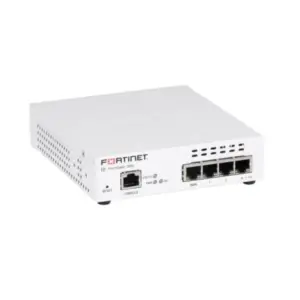
FortiAP FAP-U234F Access Point in Africa
The FortiAP FAP-U234F is built for organisations that need managed wireless coverage beyond ordinary office ceilings. It brings Wi-Fi 6 connectivity, a tri-radio design, internal antennas, dual Gigabit Ethernet interfaces and rugged outdoor installation capability into one professional access point. The unit can support secure wireless planning for warehouses, transport areas, campuses, hospitality grounds, production surroundings, outdoor service zones and distributed business sites where users and operational devices need dependable access. FourTeck helps buyers review controller compatibility, coverage goals, mounting, PoE, switching, cabling, support options, regional order codes and current supply routes before a quotation is approved.
Request QuoteCheck Africa Availability
Quick Product Information
Fortinet
FortiAP U234F / FAP-U234F
Ruggedized indoor/outdoor enterprise access point
Wi-Fi 6 / IEEE 802.11ax with legacy client support
Tri-radio, three 2×2 MIMO radios
Two Gigabit Ethernet RJ45 ports and console port
802.3at and 802.3af PoE support; final power path to be confirmed
Wall or pole installation with suitable hardware
Compatible FortiGate, FortiWLC or Fortinet cloud management path
Contact FourTeck for lifecycle, region-code and supply confirmation
Product Overview
Wireless coverage in a demanding business environment is not solved by placing a consumer router near a window. Outdoor yards, loading bays, walkways, warehouses, campus spaces, transport facilities and large hospitality grounds introduce challenges that ordinary indoor equipment was not designed to handle. Distance, weather exposure, mounting height, metal structures, moving vehicles, interference, roaming users and power availability all affect the result. The U234F was designed as a professional access point for this type of deployment, combining enterprise wireless functions with a ruggedized form factor and flexible management choices.
Its Wi-Fi 6 radio architecture helps modern client devices share airtime more efficiently than older wireless generations. The tri-radio design gives network teams a practical way to provide 2.4 GHz and 5 GHz access while using the additional radio for dual-5 GHz operation or dedicated monitoring, depending on the selected controller and configuration. This matters in environments where the wireless network must do more than provide basic internet access. Staff tablets, handheld scanners, maintenance laptops, mobile point-of-sale devices, guest phones, IoT endpoints and operational equipment may all need different access rules and performance expectations.
The access point also includes two Gigabit Ethernet ports and supports Power over Ethernet. This simplifies cabling because data and power can be delivered through the network path when the correct switch or injector is used. The internal antenna design reduces the complexity of attaching and positioning external antenna elements, while wall and pole mounting options help installers place the unit according to the site survey. Integrated Bluetooth Low Energy and ZigBee support can be relevant for beacon, location and IoT-oriented projects when the surrounding software and controller design support those use cases.
For African buyers, product selection should include current lifecycle status, the correct radio region, controller version, mounting environment, grounding, surge protection, cable route, PoE budget, support requirement and replacement planning. FourTeck helps procurement teams, IT managers, resellers and system integrators review these points before the order is finalised. The goal is to avoid a hardware-only purchase that later reveals missing accessories, incompatible management software or unrealistic coverage expectations.
Key Business Benefits
A professional wireless purchase should be measured by business outcomes: whether employees can stay connected, whether operational devices can move safely between areas, whether guest traffic is controlled, whether the IT team can see and manage the network, and whether the installation can be maintained over time. The following benefits translate the platform into practical buyer value.
◆ Better Outdoor Coverage Planning
A ruggedized access point allows wireless design to extend into yards, external walkways, service areas and semi-exposed locations without relying on indoor consumer hardware. Correct placement can reduce dead zones that interrupt mobile workflows.
✓ Efficient Wi-Fi 6 Access
Wi-Fi 6 features such as OFDMA help compatible devices use shared airtime more efficiently. The business value appears in busy environments where many endpoints need predictable access rather than one device consuming the channel.
⚙ Flexible Radio Operation
The tri-radio design can support standard dual-band access, dual-5 GHz planning or dedicated monitoring depending on the controller profile. This gives network teams more freedom to match the radio plan to the site.
● Cleaner Power and Cabling
PoE support can reduce the need for a separate electrical outlet beside the mounting point. This is useful on poles, high walls and remote building edges where cable planning must remain simple and serviceable.
🔒 Security-Aware Management
When managed through a compatible Fortinet platform, wireless access can align with SSIDs, VLANs, identity rules and firewall policy. Guest, staff and operational devices do not need to share the same trust level.
↗ Easier Multi-Site Operations
Central management can reduce repeated manual work across branches or campus zones. Standard naming, radio profiles, SSID settings and policy templates create a more supportable environment for lean IT teams.
These benefits depend on correct design. No access point can compensate for poor mounting, damaged cabling, insufficient PoE power, heavy interference or an unsuitable controller version. FourTeck uses the quotation stage to help buyers identify the supporting infrastructure so the wireless investment can deliver value after installation.
Product Highlights
The strongest feature of this model is the way several practical capabilities are combined in one outdoor platform. It is not simply an indoor access point inside a protective shell. The radio, connectivity, mounting and management options are intended for professional deployment where network availability, physical installation and policy control must be considered together.
Three 2×2 MIMO radios support flexible access and monitoring profiles.
Supports 802.11ax operation on the principal access radios for modern business clients.
Two 10/100/1000 RJ45 interfaces provide practical wired connectivity and PoE options.
Reduces external antenna assembly while supporting a clean outdoor installation.
Supports suitable beacon, location and IoT projects when enabled by the full solution.
Gives installers flexibility for campus, yard, building-edge and service-area placement.
Published deployment information also shows compatibility with FortiWLC, integrated FortiGate wireless controller functions and Fortinet cloud management options, subject to supported releases and entitlements. Buyers should not assume that every old controller or FortiGate software version will manage the unit. The exact platform, firmware path and licensing arrangement should be checked during the quote process. The third radio can be configured for access or monitoring roles, so the final design should state whether the business values additional 5 GHz capacity, wireless scanning or a balance of both.
Technical Specifications
| Specification Area | FAP-U234F Details | Buyer Guidance |
|---|---|---|
| Brand | Fortinet | Confirm the regional order code and current supply route. |
| Model | FortiAP U234F / FAP-U234F | Suffix varies by wireless regulatory domain. |
| Form Factor | Ruggedized indoor/outdoor access point | Plan wall or pole location, grounding and cable protection. |
| Wireless Standard | IEEE 802.11a/b/g/n/ac/ax | Client speed depends on device capability and radio conditions. |
| Radio Architecture | Tri-radio, three 2×2 MIMO radios | Final access or scanning roles depend on controller profile. |
| Frequency Bands | 2.4 GHz and 5 GHz | Available channels depend on country regulations and region code. |
| Radio 1 | 2.4/5 GHz 2×2 Wi-Fi 6 radio | Configured according to the wireless design. |
| Radio 2 | 5 GHz 2×2 Wi-Fi 6 radio | Useful for 5 GHz capacity and modern clients. |
| Radio 3 | 2.4/5 GHz 2×2 Wi-Fi 5 or monitoring role | Confirm access, dual-5 GHz or dedicated scan requirement. |
| Antennas | Internal antennas | Coverage still requires survey-based placement. |
| Ethernet | 2x 10/100/1000 Base-T RJ45 | Check switch port, VLAN, PoE budget and cable category. |
| Power | 802.3at and 802.3af PoE support | Confirm whether switch power or the correct injector is included. |
| IoT Radio | Bluetooth Low Energy and ZigBee support | Application depends on controller, software and project design. |
| Console | RJ45 serial console, 115200 baud | Useful for installation and troubleshooting by trained staff. |
| Management | Compatible FortiGate, FortiWLC or Fortinet cloud path | Software release and entitlement must be verified. |
| Mounting | Wall or pole mounting | Confirm included brackets and site surface. |
| Support | Based on selected FortiCare option and lifecycle status | Request current entitlement and renewal guidance. |
| Availability | Configuration and supply dependent | Ask FourTeck to check original model and suitable alternatives. |
Specifications describe the hardware, but the correct purchasing decision requires context. Wireless throughput is shared and varies with channel width, client capability, distance, interference, concurrent users, controller settings and application traffic. A dual Gigabit Ethernet design does not automatically mean both ports will be used in every installation. The second port, PoE behaviour and any power-sourcing function must be planned according to the approved deployment method and vendor guidance.
The regional suffix is especially important because wireless channels and transmit rules differ by market. Buyers should confirm the installation country before requesting the final part number. FourTeck can also help check whether the desired controller software supports the platform, whether an injector is required, whether weatherproof connectors and grounding materials are included, and whether a current FortiAP generation would be a better long-term choice for a new project.
Configuration and Buyer Guidance
The first configuration question is not “How fast is the access point?” It is “What must the wireless network support?” A warehouse scanner that sends small inventory updates has different requirements from a video call, a guest streaming session or a maintenance laptop downloading large files. The site should be divided into functional zones, and each zone should be reviewed for users, devices, applications, movement and environmental barriers.
Coverage Requirement
Share site dimensions, outdoor paths, walls, racks, containers, open ground, mounting height and known dead zones.
User and Device Load
Estimate normal and peak connections, including guests, handhelds, phones, tablets, cameras and IoT endpoints.
Network Integration
Confirm FortiGate model, FortiOS version, controller path, VLANs, authentication, DHCP and internet bandwidth.
Installation Readiness
Check PoE capacity, cable length, surge protection, grounding, pole or wall structure and access for maintenance.
Channel design should be based on the full site, not one device. In a multi-AP deployment, transmit power, channel reuse, roaming thresholds and SSID count should be coordinated so access points do not compete unnecessarily. The additional radio should have a defined role. Some businesses may benefit from dual-5 GHz access, while others may prefer continuous monitoring for rogue access points and wireless risks.
Support ownership must also be clear. Decide who will adopt the unit, create SSIDs, apply firmware, monitor alerts, document the mount location and respond when users report weak service. FourTeck can help prepare a bill of materials that includes the access point, correct regional code, power method, mounting accessories, switch requirements and support term. This reduces the risk of receiving the hardware without the pieces needed to install and manage it.
Ideal Business Use Cases
This platform is most useful where a standard indoor access point cannot be positioned safely or where wireless users move through exposed, semi-exposed or industrial spaces. The use case must still be validated through a survey because every site has different materials, interference and traffic patterns.
Warehouses and Logistics Yards
Handheld scanners, tablets and mobile terminals can require coverage between loading bays, storage zones and external dispatch areas. A ruggedized AP can form part of a planned roaming design, while VLAN and firewall rules keep operational devices separate from guest traffic.
Education and Campus Grounds
Schools, colleges and training centres may need controlled wireless around courtyards, walkways, sports facilities and building edges. Staff, student, visitor and device networks should use separate access policies.
Hotels and Hospitality Sites
Pools, gardens, event areas, terraces and external service zones can require guest and staff connectivity. Coverage planning should consider roaming, seasonal density, back-office separation and secure access for operational systems.
Manufacturing and Service Areas
Factories and workshops may need wireless for maintenance devices, production tablets, supervisors and asset workflows. Metal structures and machinery can change radio behaviour, so placement and interference testing are essential.
Transport and Parking Environments
Depots, parking areas, gatehouses and transport terminals can use managed wireless for staff systems, handheld devices and authorised service users. The network should restrict access by role and avoid exposing internal systems.
Distributed Business Compounds
A business with several buildings can use outdoor coverage to connect users across common areas, subject to correct backhaul, security and roaming design. Each building and path should be mapped before quantity is confirmed.
It should not be treated as a universal replacement for every indoor or high-density access point. Offices with dense meeting rooms may benefit from a different model, while very large public venues may require higher radio capacity and multi-gigabit uplinks. FourTeck can help compare the requested unit with current indoor, outdoor, Wi-Fi 6E or Wi-Fi 7 alternatives when the environment demands a different platform.
FortiAP FAP-U234F Wi-Fi 6 Radio Flexibility
The tri-radio architecture is valuable because it gives network designers more than one operating model. The principal radios can provide modern 2.4 GHz and 5 GHz access, while the third radio can be assigned according to the site’s priorities. In a busy location with many capable client devices, the design may favour additional 5 GHz capacity. In a security-focused location, the third radio may be used for scanning and wireless visibility. The best choice depends on user density, device capability, interference and the controller profile.
Wi-Fi 6 improves how compatible devices share the channel, but it does not remove the need for careful radio planning. Outdoor spaces can create long signal reach, which may sound positive but can cause interference if transmit power is too high. Adjacent access points must reuse channels sensibly, and client devices need enough signal to roam without staying attached to a distant unit. In mixed environments, older clients may also behave differently from newer Wi-Fi 6 devices.
For buyers, the practical lesson is to ask how the radios will be used before approving the quantity. A site may need fewer well-positioned units, more lower-powered cells or a combination of outdoor and indoor models. FourTeck can help translate the floor plan, yard map, device list and application load into a clearer quotation request. This helps the installation team receive a defined radio objective rather than a box with default settings.
FortiAP U234F Secure Management and Segmentation
Business wireless should not place every connected device into the same network. Staff laptops may need access to internal applications, guests may only need internet access, scanners may communicate with specific servers, and IoT devices may require tightly limited connections. A compatible Fortinet management design can link SSIDs to VLANs, identity controls and firewall policy so each group receives only the access it needs.
This is particularly useful in distributed environments where a small IT team supports many sites. Central profiles can make SSID names, security settings, radio behaviour and update practices more consistent. When a new branch or compound is added, the network team can work from an approved design instead of building every location differently. Visibility also improves troubleshooting because administrators can review AP status, connected clients and policy behaviour through the chosen management platform.
Management compatibility must be confirmed, not assumed. Published guidance lists support for FortiWLC, integrated FortiGate wireless control and Fortinet cloud options, but software versions, controller capacity and licensing can change. An older FortiGate may manage fewer access points or lack a required profile. A cloud-managed project may need the correct subscription and onboarding process. FourTeck can review the existing firewall or controller, the intended number of APs, the preferred support model and the required security policies before preparing the commercial response.
FortiAP U234F Rugged Deployment and PoE Planning
Outdoor wireless reliability depends heavily on physical installation. The mounting point should provide the intended coverage while remaining accessible for service. Poles and walls must be structurally suitable, cables should use weatherproof connections, and outdoor cable routes should be protected against moisture, mechanical damage and electrical surges. Grounding is not an optional finishing detail; it is part of protecting the equipment and the network connected to it.
PoE simplifies installation, but the switch or injector must supply the correct standard and power budget. Cable length, cable quality and intermediate connectors can affect voltage and link stability. The quotation should state whether power will come from a PoE switch, an approved injector or another supported method. It should also identify who supplies surge protection, grounding materials, weatherproof connectors, mounting hardware and any outdoor-rated cable.
The two Gigabit Ethernet ports create useful design options, but their exact role should follow the approved deployment guide. Buyers should not assume that the second port automatically provides redundancy, aggregation or power to another device in every configuration. FourTeck can help confirm the intended port use, controller design and accessory list. This prevents common project delays in which the access point arrives before the correct injector, brackets, cable protection or compatible switch has been arranged.
What Buyers Should Check Before Purchase
Before requesting a quote, buyers should confirm the required model, usage environment, compatibility needs, support expectations and delivery location. This access point belongs to an established Wi-Fi 6 generation, so the current lifecycle position and availability of support should be checked alongside the hardware specification. A new deployment may also benefit from comparing current FortiAP alternatives where longer lifecycle, Wi-Fi 6E, Wi-Fi 7 or multi-gigabit connectivity is required.
Correct Model and Region
Confirm the FAP-U234F suffix for the destination country. Wireless domains determine channel availability and transmit rules, so a part number for another region may be unsuitable.
Controller Compatibility
Provide the FortiGate, FortiWLC or cloud management details, current software release, number of APs and preferred operating mode so support can be verified.
Coverage and Capacity
Share a plan of the yard, buildings, walkways and high-use zones. State expected users, device types, application traffic and roaming requirements rather than selecting quantity by area alone.
Power and Cabling
Confirm PoE standard, available switch budget, cable category, distance, surge protection, grounding, injector requirement and whether all outdoor connectors are included.
Mounting Environment
State whether the unit will be mounted on a wall or pole, the mounting height, exposure level, nearby metal structures and access arrangements for future maintenance.
Support and Lifecycle
Ask for current hardware availability, FortiCare options, firmware support, renewal expectations and a suitable replacement path if the original model is constrained.
Required Accessories
List brackets, injectors, surge protectors, cable glands, outdoor-rated cables, switch ports and any installation materials so the quotation reflects a deployable solution.
Quote Preparation
Provide quantity, destination, project date, current network, floor or site plan, support term and installation scope. This allows FourTeck to review both the requested unit and alternatives.
Long-term cost includes more than the access point. It may involve PoE switching, cabling, installation labour, controller subscription, support renewal, replacement planning and periodic survey work as the site changes. A well-prepared request lets the buyer compare the total project rather than one hardware price. FourTeck supports this process by highlighting missing dependencies and helping customers avoid wrong-region units, unsupported controllers and incomplete outdoor installations.
Africa Availability and Service Support
FourTeck supports wireless access point enquiries across Africa with product selection, current availability checks, configuration review, quotation preparation, delivery coordination and warranty guidance. Supply can vary because enterprise wireless products use regional radio codes, and older or specialised models may not be available through every channel. Order quantity, support term, project date and destination can also affect the commercial path.
For an accurate response, buyers should share the exact requested model, destination country, quantity, existing controller, target installation date and whether the project requires only hardware or a wider bill of materials. FourTeck can review suitable PoE switching, mounting hardware, surge protection, support services and current FortiAP alternatives. Where the original unit is available only through limited channels, the team can explain the trade-off between sourcing the requested model and choosing a newer platform.
Warranty handling depends on the purchase route, selected FortiCare option and product lifecycle. Buyers should ask how hardware replacement, technical support and renewal will be handled before approving the order. Project supply should also include serial tracking, delivery documentation and a clear list of included accessories, especially when access points will be installed across several sites.
Africa Country and Regional Coverage
Businesses across Africa, including Kenya, Uganda, Nigeria, Ghana, Tanzania, Rwanda, Ethiopia, South Africa, Zambia, Botswana, Senegal and other regional markets can contact FourTeck for access point availability, controller guidance, configuration review and quote assistance. The same wireless requirement can look very different from one project to another. A logistics yard may prioritise scanner roaming, a school may need student and staff separation, a hotel may focus on guest coverage, and a manufacturer may require dependable connectivity around production and service zones.
Regional projects may involve purchasing in one country and installation in another. Buyers should provide the billing location, delivery destination, wireless region, technical contact, support expectation and installation partner. FourTeck can help coordinate a clearer bill of materials and compare the requested model with suitable alternatives when regional availability, lifecycle or local radio rules affect the order. Country names are not a substitute for design information; a useful enquiry should still include the site plan, users, devices, controller, switch and project date.
GCC, Middle East and Africa Availability
FourTeck Africa can support product enquiries for businesses operating across Africa while coordinating selected regional requirements through FourTeck channels for the GCC and Middle East. Companies connected to Kenya, Uganda, Nigeria, Ghana, Tanzania, Rwanda, Ethiopia, South Africa, UAE, Saudi Arabia, Qatar, Oman and Bahrain may manage purchasing from one office while deploying equipment in another country.
Cross-border projects need clear regional-code and warranty planning. The correct wireless domain must match the installation country, and support arrangements may depend on the supply route. Finance teams should state the billing entity, while technical teams should confirm the final site, controller platform, quantity and accessory requirement. Delivery planning should also identify whether equipment will be consolidated, shipped directly or installed through a local project partner.
FourTeck can help align these details without making unsupported promises about local stock or delivery timing. Availability is confirmed during quotation based on supplier status, region code, quantity, support term and destination.
Other Options Buyers May Consider
A buyer should compare the requested access point with related Fortinet products according to lifecycle, environment, radio capacity, antenna type, uplink speed and management path. A newer model may be more suitable for a fresh project, while the original unit may remain relevant for expansion of an existing standardised deployment. The following FourTeck resources help place the requirement into a broader secure networking plan.
FortiAP FAP-433F
An indoor Wi-Fi 6 option with higher radio capacity for offices, campuses and busy interior environments. It is useful when the project does not require an outdoor form factor.
Fortinet Wireless Security Solutions
A broader buying guide for secure WLAN planning, FortiAP selection, controller choice, guest access, PoE and network segmentation.
FortiGate FG-31G-PoE
A branch firewall resource for buyers planning secure internet access, VLANs, guest Wi-Fi and the surrounding PoE network.
Fortinet Security Fabric
Useful when the wireless project must connect with firewall policy, switching, endpoint visibility, logging and wider security operations.
Other technical alternatives may include newer rugged FortiAP 234-series models, higher-capacity outdoor units or current Wi-Fi 6E and Wi-Fi 7 platforms. FourTeck can discuss these choices during quotation without assuming that the newest model is automatically correct. Existing controller compatibility, client capability, budget, lifecycle and project standardisation all influence the decision.
Why Buyers Choose FourTeck
FourTeck helps buyers connect the product specification with the full deployment requirement. An outdoor access point can look complete on a price list, yet the project may still be missing the correct region code, controller support, PoE source, surge protection, mounting hardware, outdoor cable or support term. FourTeck uses the pre-sales stage to identify these gaps so the quotation is more useful to both procurement and the installation team.
The team supports small businesses, enterprise buyers, resellers, system integrators, schools, healthcare organisations, hospitality groups, logistics companies and public-sector projects. Assistance can include model confirmation, current lifecycle review, alternative product matching, bill-of-materials preparation, controller and switch discussions, delivery coordination and warranty direction. The advice is based on the information supplied by the customer, which means a detailed enquiry usually produces a better recommendation.
FourTeck does not replace a professional wireless survey or the customer’s installation engineer. Instead, it helps make the buying conversation clearer and reduces avoidable ordering errors. Share accurate site and network information, and the team can help prepare the next commercial step.
Frequently Asked Questions
What is the FAP-U234F used for?
It is used to provide managed business Wi-Fi in rugged indoor or outdoor environments such as warehouses, logistics yards, campuses, hospitality grounds, transport areas and external service zones. It supports modern wireless clients while fitting into a controlled Fortinet network with suitable management, VLAN, security and support planning.
Does it support Wi-Fi 6?
Yes. The principal access radios support IEEE 802.11ax Wi-Fi 6, while the tri-radio design also includes flexible 2.4 GHz and 5 GHz operation. Actual performance depends on client capability, channel design, interference, distance, configuration and the number of devices sharing the wireless medium.
Can it be managed by FortiGate?
The model is designed to work with compatible FortiGate wireless controller functions, FortiWLC and Fortinet cloud management paths. Compatibility depends on the specific controller, software release, capacity and entitlement. Buyers should provide their FortiGate model and firmware version for review before ordering.
Does the access point require PoE?
It supports Power over Ethernet and is commonly deployed from a compatible PoE switch or approved injector. The quotation should confirm the PoE standard, power budget, cable length, injector requirement and included accessories. Outdoor installations should also plan grounding and surge protection.
How many units will my site need?
Quantity depends on the site layout, mounting height, walls, metal structures, open areas, interference, user density, application traffic and roaming goals. A floor plan or yard map is more useful than a simple square-metre estimate. A survey may be required for critical coverage.
Is it available for Africa projects?
FourTeck can check current availability for Africa enquiries. Supply may vary by regional wireless code, lifecycle status, quantity, support term and destination. Buyers should request confirmation before approval, especially for project quantities or deployments with a fixed installation date.
Can FourTeck help with configuration planning?
Yes. FourTeck can review the controller, FortiGate, switch, PoE budget, SSIDs, VLANs, guest access, mounting, cabling and support requirement. Detailed installation and survey work should be scoped separately, but pre-sales guidance can improve the bill of materials.
What should I provide for a quotation?
Share quantity, destination country, site type, coverage area, floor or yard plan, expected users, device types, existing controller, FortiGate, switch model, PoE availability, preferred support term and project date. This helps FourTeck confirm the correct part number and alternatives.
Should I compare a newer FortiAP model?
For a new deployment, it is sensible to compare current outdoor FortiAP options, especially when longer lifecycle, Wi-Fi 6E, Wi-Fi 7 or multi-gigabit uplinks are important. Existing standardisation or controller compatibility may still make the requested model relevant. FourTeck can review both paths.
Can businesses request bulk or project supply?
Yes. Businesses, resellers and system integrators can request project-based supply. The enquiry should include site count, quantity, delivery schedule, regional codes, support term, controller design and required documentation. Availability and lead time are confirmed during the quotation process.
Need Help Choosing the Right Outdoor FortiAP?
FourTeck can help review model availability, regional code, controller compatibility, PoE, mounting, support options, related Fortinet products and delivery requirements. Share the site plan, user count, current network and destination so the team can prepare practical buying guidance.
Reviews
There are no reviews yet.