
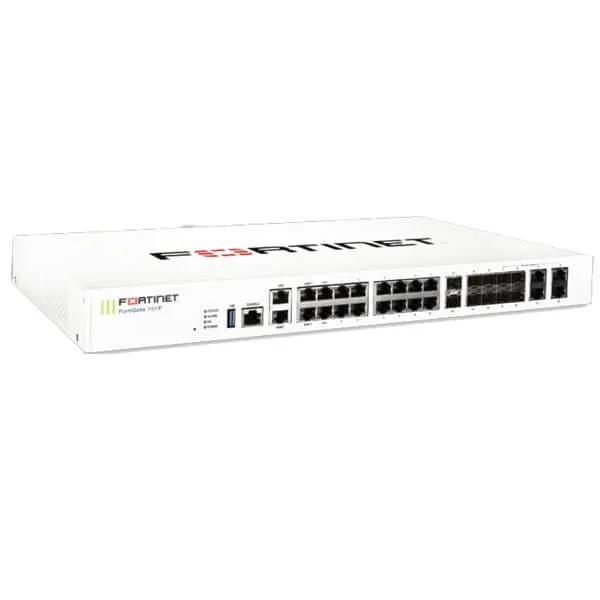
FortiExtender FEX-101F Cellular Gateway in Africa
The FortiExtender FEX-101F gives branch networks a practical way to use mobile broadband for primary connectivity, fixed-line failover or out-of-band access. It is built for organisations that cannot allow a single fibre, DSL or microwave link to become the only path to cloud applications, payment systems, remote support tools and business communications. FourTeck helps buyers confirm the correct regional model, mobile operator compatibility, SIM requirements, power method, management design and deployment accessories before quotation.
◆ Five Gigabit Ethernet Ports
⚙ Fortinet Management Paths
↗ Africa Quote Assistance
Request Quote
Check Africa Availability
Quick Product Information
Fortinet
FortiExtender FEX-101F
Indoor LTE cellular gateway and wireless WAN router
FEX-101F-EA commonly specified for EMEA/APAC; validation required
Single internal dual-SIM 3G/4G LTE Cat 6 modem
Primary WAN, backup WAN and out-of-band connectivity
Desktop or wall-mounted indoor installation
802.3af/at PoE input or optional regional 12V DC adapter
Contact FourTeck for current regional options
Model review, quote preparation, delivery coordination and warranty guidance
Product Overview
Reliable connectivity is now part of business continuity. A branch may depend on cloud accounting, hosted voice, inventory applications, card payment services, remote desktop tools, surveillance access, email and collaboration platforms throughout the working day. When the only fixed internet connection fails, staff productivity can stop immediately. The FortiExtender FEX-101F addresses this risk by adding a managed cellular path that can be positioned where the mobile signal is stronger and connected to the business network through Ethernet.
This product is more than a basic consumer mobile router. It is designed as customer-premises networking equipment for business sites that need LTE connectivity to work alongside existing routing, firewalling and management processes. The internal LTE Cat 6 modem supports a theoretical cellular rate of up to 300 Mbps download and 50 Mbps upload, subject to carrier coverage, radio conditions, spectrum, congestion, data plan and local network design. Two Micro-SIM slots allow a deployment to use one active cellular service with a secondary SIM option for carrier resilience. The final failover behaviour must be configured correctly and tested against the chosen operators.
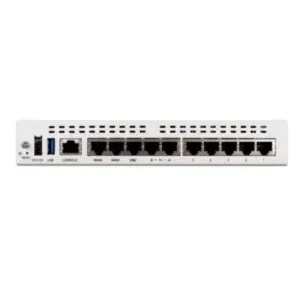
Five Gigabit Ethernet interfaces provide flexible network connection choices. The hardware includes a WAN connection and four LAN connections, while Fortinet documentation also describes configurable WAN/LAN use depending on firmware and deployment mode. One Ethernet port can receive PoE power, which helps installers place the unit near a window, high on a wall or in another signal-friendly indoor position without needing a mains socket beside it. An optional regional power adapter can be used where PoE is not available. USB and console connectivity support administration and service tasks, while GPS/GNSS capability can assist location-related requirements where supported by the implementation.
The gateway can be considered for a new branch awaiting fibre installation, a retail outlet that needs backup access for payment and stock systems, a clinic that depends on online records, a school using cloud learning platforms, an ATM or kiosk environment, a temporary project office, a remote service desk or a distributed organisation standardising cellular failover. It can also provide an out-of-band path that gives administrators an alternative route to network infrastructure when the primary WAN or normal management path is unavailable.
For Africa buyers, the most important step is not simply choosing the model number. Mobile bands, carrier acceptance, regional certification, SIM type, antenna placement, building materials, temperature, power availability and management licensing can all affect the result. FourTeck helps procurement and IT teams turn the request into a complete deployment requirement, reducing the chance of ordering the wrong regional variant or overlooking accessories and support services.
Key Business Benefits
The value of a cellular gateway is measured by the business services it helps keep reachable, the deployment problems it removes and the control it gives the network team. These benefits should be evaluated against the actual site requirement rather than treated as a generic feature list.
✓ Better WAN Resilience
A cellular path can reduce dependence on one fixed provider. When properly integrated with routing or SD-WAN policies, essential traffic can move to LTE during an outage. This helps protect branch productivity, payment processing, support access and cloud application availability while the primary connection is restored.
◆ Faster Site Activation
New offices, pop-up locations and project sites can wait weeks or months for fixed broadband. A validated mobile service can provide an earlier connection, allowing teams to begin basic operations while permanent connectivity is being installed. The gateway can later remain as the backup path.
● Flexible Signal Placement
A cellular device performs best where radio conditions are favourable. PoE input and Ethernet backhaul allow installers to separate the gateway location from the firewall or switch, placing it near a window or higher wall position instead of leaving it inside a metal cabinet with weak reception.
↗ Carrier Diversity
Dual-SIM design gives the project a path to use two mobile services, subject to configuration and operator compatibility. Carrier diversity can be valuable when one network has an outage, weak local capacity or poor coverage at a specific branch. The data plans and failover rules should be chosen deliberately.
⚙ Central Management Alignment
FortiExtender can fit into a broader Fortinet environment rather than operating as an isolated consumer router. Depending on architecture and licensing, teams can manage connectivity through FortiGate, FortiManager or cloud-based options, helping standardise visibility and operational procedures across many locations.
🔒 Out-of-Band Access
A separate mobile management path can help administrators reach equipment when the normal WAN connection has failed or a routing change has disrupted access. This can reduce the need for an immediate site visit, although secure access controls, authentication and tested recovery procedures remain essential.
✓ Compact Branch Deployment
The indoor desktop or wall-mount form factor is suited to branches where rack space is limited. A compact unit can be installed in reception areas, communications cupboards, retail back offices or wall positions, provided ventilation, environmental limits, cable protection and signal quality are considered.
Product Highlights
The FEX-101F combines a single internal LTE modem with dual-SIM capability, three external SMA antenna connections and a compact indoor enclosure. For the EMEA and many African requirements, the FEX-101F-EA order path is typically the relevant starting point because it is designed for EMEA, APAC and selected additional carrier markets. This does not replace carrier verification. Supported bands can depend on modem firmware, FortiExtender software and operator policy, so the mobile provider and deployment country should be confirmed before purchase.
Designed for up to 300 Mbps downlink and 50 Mbps uplink under suitable network conditions.
Enables planning for operator diversity and cellular service continuity.
Supports wired connection to firewall, switching and local network devices.
Lets installers position the gateway for stronger signal without placing a power outlet nearby.
Adds location capability where supported by the deployment and connected antenna design.
Supports managed branch architectures, secure SD-WAN planning and central operational control.
The physical design supports wall or desktop deployment. Published dimensions are approximately 150 mm by 150 mm by 37 mm, excluding antenna length, with a weight around 0.37 kg. Average power consumption is listed near 6.5 W and maximum consumption near 8.5 W. The operating temperature range is 0°C to 40°C, making it suitable for controlled indoor environments rather than exposed outdoor or high-temperature industrial locations.
Buyers should also note what is not automatically included in every order. SIM cards and mobile data plans come from the selected carrier. The regional DC power adapter may be sold separately because many deployments use PoE. Support, cloud management and service terms depend on the quotation. Antenna placement and cabling should be planned before installation, especially in buildings with coated glass, concrete walls, metal cabinets or weak indoor coverage.
Technical Specifications
| Specification | Details |
|---|---|
| Brand | Fortinet |
| Model | FortiExtender FEX-101F; regional order code must be confirmed |
| Africa-Oriented Variant | FEX-101F-EA is designed for EMEA/APAC and selected carrier markets; local carrier validation required |
| Product Type | Indoor broadband wireless WAN router / cellular gateway |
| Cellular Modem | One internal 3G/4G LTE Cat 6 modem |
| Published Cellular Class | Up to 300 Mbps downlink and 50 Mbps uplink; actual performance varies |
| SIM Support | Dual Micro-SIM (3FF); SIM cards and data plans not included |
| Antennas | Three external SMA antenna connections for main, auxiliary/diversity and GPS/GNSS functions |
| Ethernet | Five Gigabit Ethernet RJ45 ports for WAN/LAN deployment |
| PoE Input | One 802.3af/at PoE-powered Ethernet port |
| Other Interfaces | USB 2.0 port and console port |
| Power Options | PoE input or 12V DC external adapter; regional adapter may be ordered separately |
| Power Consumption | Approximately 6.5 W average and 8.5 W maximum |
| Mounting | Desktop or wall mount |
| Dimensions | Approximately 37 × 150 × 150 mm, excluding antennas |
| Weight | Approximately 0.37 kg |
| Operating Environment | 0°C to 40°C; 5% to 95% humidity, subject to installation guidance |
| Management | FortiGate, FortiManager and cloud management paths depending on architecture, software and licensing |
| Warranty and Support | Based on selected FortiCare term, supply route and quotation |
| Availability | Configuration and supplier-status dependent; contact FourTeck for current options |
Specifications should be read as a procurement starting point. Cellular gateways operate in a changing environment where mobile operators refarm spectrum, certify selected devices, adjust network policies and offer different radio coverage by location. A listed LTE band does not guarantee that every carrier will accept or fully support the unit. FourTeck recommends confirming country, operator, APN requirements, SIM type, intended data plan and deployment address before finalising the order.
The power choice also affects the bill of materials. A PoE-capable switch or injector may remove the need for a local adapter and makes signal-friendly placement easier. Where DC power is preferred, the correct regional plug should be specified. The final design may also need Ethernet cabling, surge protection, secure mounting, a compatible firewall port, central management licensing and a documented failover test. These items are configuration dependent and should appear in the project scope rather than being assumed.
Configuration and Buyer Guidance
A successful cellular gateway project begins with the service requirement. Buyers should decide whether LTE will be the primary connection, an automatic backup link, a manually activated emergency path or an out-of-band management channel. Each purpose creates different expectations for data allowance, routing, security, bandwidth and monitoring. A backup link carrying only payment traffic needs a different policy from a temporary primary link serving an entire office.
1. Define the Workload
List the applications that must stay online, expected users, peak traffic, upload demand and whether voice, video, backups or remote desktop will use the cellular link.
2. Confirm the Carrier
Provide the operator name, site address, available technologies, signal readings if known and whether two independent carriers are required.
3. Plan Placement
Identify window areas, wall locations, cable routes, cabinet conditions and PoE availability. Signal quality can change significantly within the same building.
4. Choose Management
Confirm whether the unit will be managed through a FortiGate, central Fortinet platform or another supported mode, and include any required license or support term.
5. Design Failover
Specify health checks, traffic priorities, return-to-primary behaviour, allowed applications and the maximum acceptable interruption during link changes.
6. Test and Document
Run outage tests, record SIM ownership, APN details, escalation contacts, data limits and recovery steps before the site is placed into production.
Data plan design deserves special attention. A cellular backup may remain unused for long periods and then carry heavy traffic during an outage. Operating-system updates, cloud synchronisation, video meetings and off-site backup jobs can consume the allowance quickly. Policies can restrict non-essential services while LTE is active, but this must be planned in the firewall or routing configuration. Procurement teams should include monthly data cost and possible overage charges in the long-term budget rather than evaluating hardware price alone.
The buyer should also decide whether an older FEX-101F request remains the best fit for a new deployment or whether a newer FortiExtender model offers a better lifecycle and feature path. FourTeck can compare the requirement against current alternatives without forcing a change where compatibility, installed-base standardisation or replacement needs make the FEX-101F appropriate.
Ideal Business Use Cases
Branch Office Failover
A branch with fibre, microwave or fixed wireless internet can use LTE as a secondary path. During a primary outage, routing policies can preserve access to email, business applications, authentication services and selected cloud platforms. The design should prioritise essential traffic and prevent uncontrolled data consumption.
Retail and Payment Locations
Retail outlets depend on payment authorisation, inventory updates, pricing systems and management access. A mobile backup path can help the store continue selected operations when fixed internet is interrupted. Network segmentation must keep payment traffic separate from guest Wi-Fi and general browsing.
Temporary and Project Sites
Construction offices, events, field projects and newly leased premises may need connectivity before the fixed provider completes installation. LTE can support initial operations, remote coordination and cloud access. The site should still be surveyed for signal, power, physical security and expected monthly data usage.
Kiosks, ATMs and Service Terminals
Unattended systems often need a dependable communication path for transactions, monitoring and remote support. A cellular gateway can provide primary or backup transport, while the security architecture controls which destinations and services are reachable. Physical mounting and remote recovery procedures are especially important.
Out-of-Band Network Management
Network teams can maintain a separate path for reaching a firewall, switch or router when the main WAN is unavailable. This is useful for remote branches with limited local support. Access should use strong authentication, restricted policies, logging and clearly documented emergency procedures.
Clinics and Education Sites
Smaller clinics, training centres and schools increasingly use cloud records, online learning and hosted administration. A backup connection can reduce disruption, but sensitive data still requires encryption, firewall policy, user controls and a data plan sized for the site’s actual applications.
Distributed Service Businesses
Logistics depots, professional service branches, repair centres and regional offices can standardise on a common cellular continuity design. Central visibility helps the network team track link status, signal quality and data use while applying consistent operational procedures across locations.
Remote Infrastructure Rooms
A small communications room without permanent on-site IT support can benefit from an independent recovery path. The gateway may help administrators investigate ISP failure, configuration errors or power recovery, reducing travel where a secure remote correction is possible.
The product should not be treated as an outdoor industrial gateway unless it is installed inside a suitable protected environment that respects the indoor temperature and humidity limits. Vehicle, outdoor, high-temperature or harsh-site projects may require another FortiExtender form factor. FourTeck can help distinguish between indoor branch needs and specialist field deployment requirements.
FortiExtender FEX-101F LTE WAN Resilience
WAN resilience is not achieved merely by inserting a SIM card. The secondary link must be independent enough to survive the failure that affects the primary service, and the network must know when to use it. A fibre cable and a fixed wireless link may still share upstream infrastructure or local power. Cellular adds another access method, but the organisation should verify that the chosen operator has useful coverage and capacity at the site.
The gateway’s dual-SIM capability can add a second layer of resilience by allowing two mobile providers. This is valuable when one carrier experiences a local outage or when different networks perform better in different regions. However, a dual-SIM device does not automatically create seamless continuity. The configuration must define which SIM is preferred, what condition triggers a change, how long the gateway waits, whether it returns automatically and how administrators receive alerts.
Business traffic should be classified before failover. Payment systems, authentication, voice, remote support and critical cloud applications may receive priority. Video streaming, large software updates, non-essential guest access and backup jobs may be restricted while LTE is active. This approach protects the data allowance and helps the cellular link support the applications that matter most. The firewall or SD-WAN design normally carries this policy responsibility.
A meaningful acceptance test should disconnect the primary link, measure the time until service resumes, confirm DNS and VPN behaviour, verify that critical applications work, observe data usage and then restore the primary connection. Testing should be repeated after major firmware, carrier or routing changes. FourTeck can help buyers define the equipment requirement and identify the configuration questions that must be resolved by the deployment team.
FortiExtender FEX-101F Signal Placement and PoE Deployment
Cellular performance is strongly influenced by placement. A device inside a closed metal cabinet, behind reinforced concrete or deep in the centre of a building may receive a much weaker signal than the same device placed near an external wall or elevated window. Weak radio conditions reduce throughput, increase retransmissions and can make failover unreliable at the moment it is needed.
The PoE-powered design helps solve this practical problem. An Ethernet cable can deliver power and network connectivity to the gateway, allowing the installer to move it away from the firewall and place it where the signal is more favourable. This avoids long cellular antenna extension cables, which can introduce loss and complicate the installation. The Ethernet run should follow structured cabling standards, remain within supported distance limits and include suitable protection where it passes through exposed areas.
A site survey does not always require expensive tools, but it should be systematic. Test more than one location, compare both intended carriers, observe signal metrics over time and account for busy periods. A strong signal indicator alone does not guarantee useful throughput because carrier congestion and backhaul capacity also matter. The deployment team should test the business applications, not just a speed-test result.
Power sourcing must also be clear. If the gateway is connected to a PoE switch, confirm the switch can provide the required standard on the correct port and that the total PoE budget is sufficient. If an injector is used, include it in the order and label the cabling correctly. If DC power is preferred, choose the correct regional adapter and protect the supply with an appropriate UPS where connectivity must survive short power interruptions.
The indoor enclosure should remain ventilated and protected from water, dust accumulation, direct solar heating and unauthorised handling. For exposed outdoor, vehicle or industrial projects, buyers should discuss rugged or purpose-built alternatives rather than adapting an indoor model beyond its intended environment.
FortiExtender FEX-101F Management and Fortinet Integration
Distributed connectivity becomes difficult to operate when every branch uses a different consumer modem with its own interface, credentials and update process. A business-oriented FortiExtender deployment can align the cellular layer with the broader Fortinet environment. Depending on the selected software, architecture and service options, administrators can use FortiGate, FortiManager or cloud-based management paths to monitor and control the gateway.
Integration is valuable because link status should be visible where routing and security decisions are made. The operations team may need to know which site is on cellular, which SIM is active, whether signal quality is degrading and how much data is being consumed. Central oversight supports faster troubleshooting and consistent policy, especially when the organisation has many branches and limited local IT staff.
Secure SD-WAN designs can use multiple connectivity paths according to performance and policy. The cellular gateway provides the transport, while the FortiGate can apply application-aware steering, health checks and security controls. The precise feature set depends on the FortiOS and FortiExtender versions, supported topology and licensing. Buyers should verify compatibility with the existing FortiGate model and firmware before making a standardisation decision.
Out-of-band management requires additional care. The alternative path should be restricted to authorised administrators and essential devices. Strong authentication, encrypted protocols, narrow access rules, logging and tested emergency credentials are more important than convenience. A separate path that is left broadly exposed can create risk instead of resilience.
FourTeck can help the buyer list the required management outcome, identify whether cloud or on-premises control is preferred, review support-term expectations and make sure the quotation includes the correct hardware and related service elements. Final configuration and policy implementation should follow the organisation’s security standards and change-control process.
What Buyers Should Check Before Purchase
Before requesting a quote, buyers should confirm the required regional variant, usage mode, operator compatibility, site conditions, management method and accessories. The model name alone does not describe the complete solution. A clear requirement helps FourTeck prepare a more accurate quotation and helps the deployment team avoid missing items or unsuitable assumptions.
Correct Regional Model
State the deployment country and mobile providers. The EA and AM variants target different carrier regions. Ask for written confirmation that the quoted SKU is appropriate for the intended operator environment.
Primary or Backup Role
Explain whether LTE will carry daily traffic, emergency traffic or management traffic. This affects the data plan, firewall policy, failover testing and performance expectations.
Carrier and SIM Details
Confirm Micro-SIM format, APN requirements, private or public addressing, roaming policy, monthly allowance, overage rules and whether the operator restricts device IMEI registration.
Signal and Antenna Plan
Provide information about building construction, proposed installation point and available carrier signal. Decide whether standard antennas are sufficient or whether another device form factor is needed.
Power and Cabling
Confirm PoE source, injector requirement, Ethernet route and UPS coverage. Where a DC adapter is needed, request the correct plug type and check whether it is included or separately ordered.
Management Compatibility
Share the FortiGate model, firmware, FortiManager environment and desired cloud-management approach. Confirm which licenses, subscriptions or support terms are required.
Lifecycle and Alternatives
For a new deployment, ask whether the FEX-101F remains the preferred procurement option or whether a current FortiExtender model provides a better long-term path. For replacement, share the installed configuration.
Warranty and Support
Specify the desired FortiCare term, response expectations and responsible support team. Warranty handling can vary by supply route, service level and country.
Bulk and Project Supply
For multi-site rollouts, provide quantity by country, required delivery waves, standard configuration, lab testing needs, asset-label requirements and target deployment dates.
Quote Preparation
Share country, city, carrier, quantity, role of the LTE link, FortiGate model, power method, support term and project deadline. These details allow a clearer commercial and technical response.
Long-term cost should include more than the appliance. Consider the mobile subscription, static or private APN charges, central management, FortiCare, PoE equipment, UPS capacity, installation labour, periodic testing and data overage risk. A low hardware price can become expensive if the design uses an unsuitable carrier, lacks traffic controls or requires repeated site visits. FourTeck approaches the request as a connectivity requirement so buyers can compare the complete deployment rather than a single line item.
Africa Availability and Service Support
FourTeck supports product enquiries across Africa with assistance for model selection, regional SKU review, quotation, delivery coordination and warranty guidance. Availability can change according to supplier status, remaining channel stock, current Fortinet portfolio, order quantity and the country of delivery. For this reason, the page does not claim immediate stock or a fixed delivery date.
Buyers should provide the intended mobile operators because cellular compatibility is central to the purchasing decision. FourTeck can help review whether the requested FEX-101F variant aligns with the region and whether a current alternative should be considered. The review can also cover PoE injectors or switches, regional power adapters, FortiCare options, central management expectations and related FortiGate requirements.
Delivery coordination is handled according to destination, quantity and available supply route. Multi-site orders may be planned in phases so the project team can validate a pilot deployment before wider rollout. Warranty direction depends on the quoted product, service term and country, and should be confirmed in the formal commercial response.
For an efficient response, send the model, quantity, country, city, mobile operator, intended use, FortiGate model, preferred support term and required date. FourTeck can then help structure the enquiry around the actual branch or project requirement.
Africa Country and Regional Coverage
Businesses across Africa, including Kenya, Uganda, Nigeria, Ghana, Tanzania, Rwanda, Ethiopia, South Africa, Zambia, Botswana, Senegal and nearby regional markets, can contact FourTeck for product availability, configuration guidance and quote assistance. The support process is designed for single-site purchases, branch standardisation, reseller requirements, system-integration projects and multi-country deployments.
Carrier conditions differ widely between countries and even between neighbourhoods in the same city. A network that performs well at head office may be weak at a warehouse or remote branch. Buyers should therefore identify the operator used at each site and, where possible, provide signal or coverage information. For larger projects, a pilot installation can help confirm the radio, routing and management design before the organisation commits to a wider quantity.
FourTeck can also help review related firewall, switching, wireless and power requirements so the gateway is not purchased in isolation. Delivery arrangements, taxes, import processes, warranty handling and project timing may vary by destination and are confirmed during quotation rather than assumed on the page.
GCC, Middle East and Africa Availability
FourTeck Africa can support business enquiries for Africa while coordinating wider requirements through selected FourTeck platforms serving GCC and Middle East markets. Organisations with branches in Africa and offices in the UAE, Saudi Arabia, Qatar, Oman, Bahrain or other regional locations often need a consistent connectivity design while still respecting local mobile carriers, certification, import rules and support arrangements.
A common hardware standard can simplify documentation and operations, but cellular projects cannot be copied blindly between countries. The correct regional model, supported bands, SIM policy, APN service, data plan and provider acceptance must be checked for each destination. A company may also choose different FortiExtender models where one market requires 5G, another needs rugged outdoor installation and a third only needs LTE failover in a controlled office.
Availability, delivery options, warranty handling and management services depend on the country, selected model, configuration and quantity. Buyers can use the FourTeck Africa platform for Africa enquiries and the FourTeck UAE platform for relevant GCC discussions. A coordinated requirement should list every country, site quantity, carrier, support term and target date.
FourTeck can help procurement teams compare regional needs, identify where a pilot is sensible and prepare a structured request for hardware, accessories and support. This approach is especially useful for retail groups, logistics companies, hospitality operators, financial services, education networks and service organisations with distributed branches.
Other Options Buyers May Consider
The right alternative depends on whether the project needs a dedicated cellular gateway, an integrated cellular firewall, a rugged device, faster 5G connectivity or a broader Fortinet branch design. The following FourTeck pages help buyers explore related components and approaches without assuming that one option is automatically better.
FortiGate FG-51G-5G Firewall
Consider an integrated firewall and cellular platform where a branch wants security and 5G/4G connectivity in one appliance, subject to sizing and license review.
FortiGate FG-41F Firewall
A compact branch firewall that can work with an external cellular gateway when the organisation prefers separate security and WAN devices.
FortiSwitch FS-124F-POE
A managed PoE access switch option for branches that need powered network devices and a structured Fortinet switching environment.
FortiAP FAP-831F Access Point
An enterprise wireless option for organisations building a broader Fortinet-managed branch with secure Wi-Fi, switching, firewalling and resilient WAN.
FortiGate Rugged FGR-60F
A rugged firewall reference for industrial or remote environments where an indoor branch gateway may not match temperature, mounting or operational requirements.
Buyers may also ask FourTeck to compare the FEX-101F with newer FortiExtender models. The comparison should consider radio technology, regional support, port layout, eSIM requirements, lifecycle, management compatibility, price and the organisation’s installed base. A newer model may be appropriate for a greenfield project, while the FEX-101F may remain relevant for an existing standard, replacement requirement or validated design.
Why Buyers Choose FourTeck
Business connectivity purchases involve more than matching a part number. FourTeck helps buyers translate the operational need into a clearer product request. For this gateway, that means discussing the role of LTE, the selected carriers, regional variant, SIM format, FortiGate environment, power source, management approach, support term and delivery destination before the quotation is finalised.
Structured assistance for single units, branch rollouts, reseller orders and project procurement.
Help identifying the regional model, power method, operator information and related network requirements.
Commercial responses built around quantity, destination, service term, accessories and project timing.
Delivery planning based on country, available supply route and order requirements.
Clarification of quoted support term, supply route and warranty-handling expectations.
Review of compatible firewall, switching, wireless, PoE and power-continuity requirements.
FourTeck supports SMBs, enterprise branches, resellers, system integrators and project teams. The objective is to help the customer avoid a wrong regional SKU, weak signal placement, missing power accessory, unsupported management assumption or incomplete support plan. Advice is based on the information supplied by the buyer and should be combined with site-specific engineering where necessary.
The final quotation remains the source for price, scope, delivery expectation and included services. This keeps the product page useful for planning without creating unverified stock, warranty or delivery claims.
Frequently Asked Questions
What is the FortiExtender FEX-101F used for?
It is an indoor LTE cellular gateway used to provide a primary wireless WAN connection, a backup path for fixed-line outages or an out-of-band management route. Common environments include branches, retail sites, clinics, schools, kiosks, temporary offices and distributed service locations. The exact role depends on routing, firewall policy, carrier coverage and the selected management design.
Which FEX-101F variant is suitable for Africa?
The FEX-101F-EA is the regional variant commonly associated with EMEA, APAC and selected additional carrier markets. That makes it the usual starting point for many Africa enquiries, but it should not be ordered without checking the country, mobile operator, supported bands, local certification and current supplier information. FourTeck can help review these details before quotation.
Does the gateway support two SIM cards?
Yes. The unit supports two Micro-SIM cards for a single internal LTE modem. This allows carrier-diversity and failover planning, but it does not mean both SIM services automatically deliver simultaneous bandwidth. The preferred SIM, failover conditions, return behaviour, APN settings and data plans must be configured and tested for the intended operators.
Can it replace a fibre or fixed broadband connection?
It can serve as a primary connection where LTE coverage and capacity meet the business requirement, especially at temporary or remote sites. Many organisations use it as a backup instead. The decision should consider signal quality, carrier congestion, monthly data allowance, upload demand, latency, public addressing, VPN use and the number of users that will depend on the link.
Can FourTeck help with configuration planning?
FourTeck can help review the purchasing and pre-sales requirements, including regional model, carriers, intended WAN role, FortiGate compatibility, PoE or adapter needs, support term and related accessories. Final network policy, routing, security and installation work should be completed by qualified personnel using the organisation’s standards and the applicable Fortinet documentation.
Is the power adapter included?
The gateway can be powered through a supported PoE connection or a regional 12V DC adapter. Fortinet ordering information indicates that region-specific adapters may be selected separately for relevant models. Buyers should confirm whether the quotation includes an adapter, PoE injector or neither. The power method should be decided before installation so no accessory is missing.
Is this model available across Africa?
FourTeck can check availability for Africa enquiries. Actual supply depends on the requested regional variant, channel status, quantity, delivery country and whether a newer alternative is recommended for the project. No immediate stock or delivery claim is made on this page. Share the country, quantity, operator and required date for a current response.
What should I provide when requesting a quote?
Provide the model, quantity, country, city, mobile operator, purpose of the LTE link, FortiGate model, preferred management approach, power method, FortiCare term and target delivery date. For multi-site projects, include quantities by location and indicate whether a pilot unit is required. This information helps FourTeck prepare a more useful technical and commercial response.
Can businesses request bulk or multi-site supply?
Yes. Businesses, resellers and system integrators can request coordinated supply for multiple sites. A rollout plan should include destination countries, quantities, preferred carriers, standard accessories, support term, delivery waves and deployment schedule. A pilot can be useful because it validates signal, SIM, management and failover behaviour before the same design is deployed more widely.
Should I compare the FEX-101F with a newer FortiExtender?
For a new project, comparison is sensible because current models may offer a stronger lifecycle, updated interfaces or different regional support. For a replacement or standardised installed base, the FEX-101F may still be the requested fit. FourTeck can compare the requirement using carrier technology, management compatibility, port needs, power, support availability and project budget.
Need Help Choosing the Right Cellular Gateway?
FourTeck can help review regional model suitability, mobile carrier requirements, FortiGate compatibility, power options, FortiCare expectations, availability and delivery requirements for your business location.

Reviews
There are no reviews yet.