
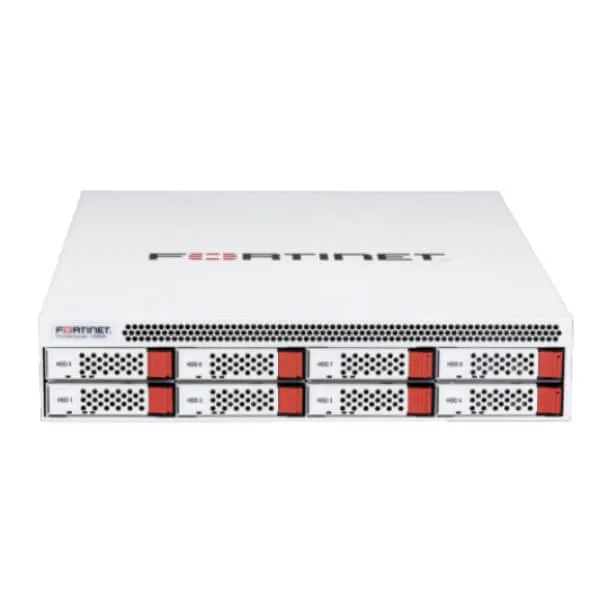
FortiManager FMG-1000G Management Appliance in Africa
The FortiManager FMG-1000G gives large organizations, service providers, and distributed security teams a dedicated platform for managing Fortinet devices, policies, configurations, revisions, firmware, and operational workflows from one controlled environment. It is designed for environments where hundreds of firewalls, virtual domains, branch sites, switches, access points, extenders, and secure networking services must be governed consistently without relying on fragmented administration at every location. FourTeck helps Africa buyers translate the appliance specification into a practical deployment plan that covers capacity, support term, high availability, rack requirements, power, interfaces, migration, and project delivery.
Request QuoteCheck Africa AvailabilityExplore Fortinet Products
Quick Product Information
Fortinet
FMG-1000G
Centralized network and security management appliance
Up to 1,000 Fortinet devices or VDOMs by default
32 TB raw; 24 TB usable after default RAID
2U rackmount appliance
Large enterprises, service providers, public sector, data centers, and multi-site groups
Contact FourTeck for current regional options
Selection, quotation, deployment planning, and warranty guidance
Support term, HA design, optics, cables, and services are requirement dependent
Product Overview
Managing a large security estate becomes difficult when every firewall, branch gateway, switch, wireless access point, and remote site is treated as a separate administrative task. Policy names drift, objects are duplicated, firmware versions become inconsistent, configuration backups are stored in different places, and engineers may make changes without a common approval path. The result is operational delay and greater risk, especially when one team supports several countries, business units, customers, or regulated environments. A dedicated FortiManager appliance creates a central point for those activities so network and security teams can work from a structured operational model instead of relying on disconnected device-by-device administration.
The FMG-1000G is positioned for substantial Fortinet deployments. Its default capacity of up to 1,000 managed devices or virtual domains makes it relevant to enterprises with many branches, managed security providers supporting multiple customers, government networks with separated agencies, banks with regional outlets, telecom operators, large education groups, healthcare networks, industrial organizations, and data center operators. The appliance supports central device management, policy and object administration, provisioning templates, firmware coordination, revision history, workflow approval, role-based access, monitoring, troubleshooting tools, automation interfaces, and multi-domain separation. Those capabilities are valuable because they allow technical teams to standardize what should be common while preserving controlled differences between locations, customers, or business units.
The hardware platform is built for continuous enterprise use. It provides a 2U rackmount chassis, 32 TB of raw self-encrypting storage, 24 TB usable capacity after the default RAID 50 arrangement, removable drives, redundant hot-swap power supplies, two 2.5GBase-T RJ45 interfaces, two 25GbE SFP28 interfaces, an RJ45 console port, front-to-back airflow, and trusted platform module support. These specifications matter in a management platform because configuration databases, revisions, logs, update packages, and administrative activity must remain available and protected while the organization grows.
FourTeck supports the selection process by reviewing more than the model number. Buyers should confirm how many physical devices and VDOMs will be managed, how many administrative domains are needed, whether a secondary FortiManager will be deployed for high availability, which software release matches the managed estate, how policy workflows should operate, whether FortiAnalyzer integration is planned, and what support entitlement is required. Rack depth, power capacity, airflow, optics, cabling, migration effort, and administrator training also affect project success. Bringing these details into the quotation stage helps the organization purchase a complete management solution rather than an isolated appliance.
Key Business Benefits
Central management is most useful when it reduces operational pressure and makes security governance easier to maintain. The benefits below explain how the appliance can support daily business outcomes when it is correctly sized and implemented.
◆ Consistent Policy Control
Central policy packages and reusable objects help security teams apply common rules across branches, departments, customers, or regions. This reduces configuration drift and makes it easier to document which controls are intended to be global and which are location specific.
✓ Faster Deployment at Scale
Templates, device blueprints, variables, and structured onboarding can shorten the work required to bring new branches or managed devices into service. Standardization is especially valuable during acquisitions, retail expansion, regional rollouts, and service-provider customer onboarding.
⚙ Controlled Change Management
Workspace locks, revision history, change notes, and workflow approval help teams reduce accidental conflicts. Engineers can prepare, review, authorize, and deploy changes through a more disciplined process that supports audit and operational accountability.
↗ Better Use of Skilled Staff
Automation, reusable templates, centralized firmware planning, and common policy objects reduce repetitive work. Senior engineers can focus on architecture and risk while routine tasks become easier to delegate and standardize across the operations team.
🔒 Separation for Teams and Customers
Administrative domains and role-based access allow an organization to separate environments, responsibilities, and data. This is useful for managed service providers, corporate groups, regulated departments, and organizations where regional administrators require limited access.
● Stronger Operational Visibility
Central dashboards, inventory views, configuration status, network health information, and troubleshooting tools give teams a broader picture of the environment. Visibility helps administrators identify devices that are out of sync, unhealthy, or outside the expected standard.
◆ Improved Recovery Readiness
Automated configuration backups and revision control provide a clearer path for restoring a known configuration after an error or failed change. High-availability design can also protect the management plane when continuity is important to business operations.
Product Highlights
Large Managed Estate
The platform is specified for up to 1,000 Fortinet devices or VDOMs by default, making it suitable for regional enterprises and managed environments that have moved beyond small-scale administration.
Resilient Storage Design
Eight 4 TB self-encrypting drives provide 32 TB raw storage and 24 TB usable capacity under the default RAID 50 layout. Removable drives and broad RAID support help align the appliance with enterprise service practices.
High-Speed Management Connectivity
Two 2.5GBase-T RJ45 ports and two 25GbE SFP28 ports provide flexible connection options for management networks, data center aggregation, backup paths, or dedicated infrastructure designs.
Enterprise Rack Hardware
The 2U chassis uses front-to-back airflow, redundant hot-swap power supplies, trusted platform module protection, and an operating range suited to controlled server-room and data-center environments.
Beyond the hardware, the value of FortiManager comes from the operational framework it creates. Device Manager supports centralized administration for FortiGate, Secure SD-WAN and SD-Branch environments, FortiProxy, FortiSwitch, FortiAP, and FortiExtender deployments where supported by the selected software release. Policy and Objects Manager allows teams to create reusable policies, security objects, and policy blocks. Provisioning templates help establish repeatable device blueprints, while Firmware Manager assists with scheduled upgrade activity and reporting.
The platform also supports role-based administration, workflow approval, configuration revisions, backups, FortiGuard content distribution, REST interfaces, connectors, and integration with FortiAnalyzer for deeper analytics. Some advanced assisted operations and FortiAI functions may require separate subscriptions and compatible software releases, so buyers should confirm the intended feature set during quotation. Hardware capacity does not remove the need for good design: administrative domains, policy structure, backup retention, change workflow, and access roles should be planned before migration begins.
Technical Specifications
| Specification | FMG-1000G Details |
|---|---|
| Brand | Fortinet |
| Model / SKU | FMG-1000G |
| Product Type | Centralized Fortinet network and security management appliance |
| Default Device / VDOM Capacity | Up to 1,000 managed Fortinet devices or virtual domains |
| Log Allowance | 2 GB per day according to the current hardware specification table |
| Raw Storage | 32 TB using 8 x 4 TB drives |
| Usable Storage | 24 TB after the default RAID arrangement |
| Supported RAID Levels | RAID 0, 1, 1s, 5, 5s, 6, 6s, 10, 50, and 60 |
| Default RAID Level | RAID 50 |
| Drive Security and Serviceability | Self-encrypting drives and removable hard drives |
| Form Factor | 2U rackmount |
| Network Interfaces | 2 x 2.5GBase-T RJ45 and 2 x 25GbE SFP28 |
| Console Port | RJ45 |
| Power Supplies | Redundant hot-swap AC power supplies |
| Hardware Security | Trusted Platform Module, Gen2 hardware specification |
| IPMI | No dedicated IPMI support; basic sensor information is obtained from the motherboard |
| Dimensions | 8.8 x 43.8 x 62.0 cm; 3.46 x 17.24 x 24.41 inches |
| Weight | 22.5 kg / 49.6 lb |
| AC Input | 100–240V AC, 50–60 Hz |
| Power Consumption | 251.36 W average / 302 W maximum |
| Heat Dissipation | 857.73 BTU per hour |
| Operating Temperature | 0°C to 40°C / 32°F to 104°F |
| Storage Temperature | -40°C to 70°C / -40°F to 158°F |
| Operating Humidity | 8% to 90% non-condensing |
| Airflow | Front to back |
| Operating Altitude | Up to 5,000 m / 16,404.2 ft |
| Support and Warranty | Based on selected FortiCare entitlement, supply route, and contract term |
How to Interpret the Specification
Capacity should be calculated from the real managed environment, not only the number of physical boxes. Each VDOM operating on a physical or virtual Fortinet device counts as a licensed network device, so an organization with many virtual domains can reach the platform limit sooner than a simple hardware inventory suggests. Buyers should document current devices, planned acquisitions, branch growth, customer environments, lab systems, disaster-recovery units, and expected VDOM expansion before deciding that the 1,000-device class provides enough headroom.
The storage figures also need context. The appliance provides 32 TB raw capacity and 24 TB usable capacity under the default RAID 50 layout, but retention requirements depend on configuration history, local logging use, update packages, backups, and the broader design. Organizations that require extensive analytics, regulatory retention, or detailed security reporting commonly evaluate FortiAnalyzer alongside FortiManager. FourTeck can help separate the management requirement from the analytics requirement so the final design assigns each workload to the right platform.
Configuration and Buyer Guidance
A successful purchase starts with a clear inventory and an agreed operating model. The appliance is powerful, but it cannot correct an unclear policy structure, unknown ownership, or an incomplete migration plan by itself. Procurement and technical teams should prepare the information below before requesting a final offer.
1. Count Devices and VDOMs
List every FortiGate, virtual appliance, VDOM, branch device, and supported Fabric component that will be managed. Add realistic three-year growth rather than sizing only for the current quarter.
2. Define Administrative Domains
Decide whether regions, customers, subsidiaries, labs, or regulated units need separate ADOMs. The domain structure affects permissions, policy ownership, software compatibility, and operational handover.
3. Confirm Software Compatibility
Record FortiOS versions, device models, current FortiManager release, upgrade constraints, and any legacy hardware. A staged compatibility review reduces migration surprises and protects older sites during transition.
4. Plan High Availability
Determine whether management downtime is acceptable. Critical environments may require a primary and secondary design, network path separation, backup power, configuration synchronization, and tested failover procedures.
5. Review Rack and Power
Confirm 2U rack space, 62 cm chassis depth, front-to-back cooling, dual power feeds, suitable power cords, UPS capacity, and access for replacing drives or power modules.
6. Map Interfaces and Optics
Choose between copper and SFP28 connectivity based on the management network. Confirm compatible transceivers, fiber type, cable length, switch port speed, VLAN design, and redundancy before ordering accessories.
Support entitlement should be treated as part of the solution rather than an afterthought. FortiCare level, contract length, replacement service expectations, software access, and regional support procedures can affect both risk and total ownership cost. The quotation should also state whether deployment, migration, administrator training, policy cleanup, documentation, and post-installation assistance are included or priced separately. FourTeck can help structure these questions so commercial approval is based on a complete scope.
Ideal Business Use Cases
The appliance fits organizations that need consistent control across many Fortinet-managed locations or customer environments. The following examples show where centralized administration can create practical business value.
Multi-Branch Enterprise Networks
Retailers, banks, logistics groups, hospitality companies, and service organizations can use centralized templates and policy packages to keep branch security aligned while allowing controlled local differences for WAN links, addressing, and business applications.
Managed Security Service Providers
Service providers can separate customer environments with administrative domains, assign role-based access, reuse approved policy structures, and create repeatable onboarding processes for growing customer estates.
Government and Public Sector
Departments and agencies can establish formal change approval, configuration revision history, delegated administration, standard security objects, and separated domains for different operational or regulatory responsibilities.
Financial and Regulated Organizations
Banks, insurers, payment services, and regulated enterprises can use workflow controls, change notes, role separation, backups, and consistent policy deployment to support stronger governance and audit preparation.
SD-WAN and Secure Branch Rollouts
Organizations deploying many branch sites can use blueprints, variables, templates, overlay provisioning, and centralized monitoring to reduce repetitive setup and speed the move from pilot design to regional rollout.
Data Center and Hybrid Environments
Enterprises managing physical firewalls, virtual appliances, cloud-connected sites, and segmentation policies can use one management framework to coordinate policy objects, revisions, upgrades, and operational visibility.
Universities and Healthcare Groups
Large campuses and hospital networks can separate administrative responsibilities, standardize branch or facility policies, maintain configuration history, and manage diverse security zones without giving every operator unrestricted access.
Telecom and Infrastructure Operators
Operators with many regional nodes can coordinate policy, firmware, device inventory, and troubleshooting while preserving separate domains for internal networks, customers, labs, and operational teams.
These use cases are strongest when the deployment includes process design. A central console is useful only when teams agree on naming, object ownership, revision practices, approval stages, emergency change procedures, backup checks, and administrator responsibilities. FourTeck can help buyers identify whether the project requires hardware supply only or a broader scope that includes discovery, migration planning, configuration services, documentation, and training.
FortiManager FMG-1000G Centralized Policy and Device Control
Central policy control addresses one of the most common problems in distributed security operations: the same business rule is implemented differently at different sites. An address object may have several names, a web-filtering profile may be updated in one region but not another, and a new application requirement may lead to hurried local changes that are never documented centrally. Over time, the organization develops a large collection of exceptions that are difficult to review, test, and retire.
FortiManager allows administrators to manage policies and objects through shared packages, global structures, reusable policy blocks, and controlled deployment to selected devices. This gives the security team a better way to define corporate standards while preserving device-specific settings where needed. Revision history records who made a change, when it was made, and why it was required. Workspace and workflow modes can prevent conflicting edits and introduce review before changes are installed. These capabilities are especially useful when several administrators work across shifts, countries, customers, or technical specialties.
Business value comes from predictability. A standard branch template can reduce the time needed to open a new location. A controlled policy block can help ensure that required services are present across a group of firewalls. A documented revision can make rollback easier after an unsuccessful change. A formal approval step can reduce the chance that an urgent request bypasses risk review. The platform does not remove the need for skilled engineers, but it gives those engineers a structured environment for safer collaboration.
Before deployment, buyers should decide which objects will be global, which policies will be inherited, which teams can edit or approve changes, how emergency changes are handled, and how configuration standards will be tested. FourTeck can help include these design topics in the project scope so the appliance supports a practical governance model from the first migration phase.
Scalable Provisioning, Firmware, and Automation
Large networks often lose time during repetitive tasks. Every new branch may require similar interface definitions, routing rules, SD-WAN settings, security policies, device naming, administrator accounts, and monitoring configuration. When these steps are performed manually, deployment speed depends on individual experience and small inconsistencies become difficult to avoid. Provisioning templates and device blueprints help convert an approved design into a repeatable process.
Variables allow a common template to adapt to site-specific values such as IP addresses, branch identifiers, WAN information, or local settings. This approach supports zero-touch or low-touch deployment planning for distributed sites when the surrounding network and logistics process is ready. The same central platform can coordinate firmware upgrades, report upgrade results, distribute approved images, and help administrators identify devices that are outside the expected software standard. Scheduling and staged rollout are important because large estates should rarely be upgraded as one uncontrolled event.
Automation interfaces add another layer of operational value. REST interfaces, scripts, connectors, and integration workflows can reduce repetitive tasks in onboarding, policy updates, inventory processes, and external system coordination. Organizations may connect management activity with ticketing, orchestration, monitoring, or security operations platforms, subject to the supported release and integration design. Advanced assisted scripting and FortiAI functions may require separate subscriptions, so those features should be confirmed commercially rather than assumed to be included with the hardware.
The strongest automation projects begin with stable manual processes. Buyers should identify which activities are frequent, repeatable, measurable, and safe to automate. Approval gates, rollback plans, test groups, maintenance windows, and exception handling should remain part of the design. FourTeck can help separate immediate deployment needs from later automation phases, allowing the organization to introduce standardization in a controlled way rather than trying to automate an unclear environment.
Resilient Hardware, Storage, and Management Continuity
A centralized management platform becomes operationally important because many administrators depend on it for policy deployment, backups, upgrades, and device visibility. The hardware therefore needs to be planned with the same discipline used for other core data-center systems. The 2U appliance includes redundant hot-swap power supplies, removable self-encrypting drives, trusted platform module support, and a RAID-capable storage subsystem. These features help the platform fit environments where serviceability, data protection, and controlled maintenance matter.
The default RAID 50 layout provides 24 TB usable capacity from 32 TB raw storage. Buyers should still define backup and recovery procedures outside the appliance. RAID protects against specific drive failures; it is not a replacement for configuration exports, documented recovery steps, remote copies, support access, or a tested high-availability design. A management outage during a firewall incident can slow response, even if the managed FortiGate devices continue forwarding traffic, so continuity planning should consider both hardware fault and operational recovery.
FortiManager high availability can be designed with a primary and secondary units where business requirements justify the additional appliance and supporting network architecture. The exact cluster design, license implications, interface use, synchronization, backup power, and maintenance process should be confirmed for the selected software version. Separate management links and dual network paths may be appropriate for critical environments, but every extra path should be documented and monitored.
Physical planning is equally important. The chassis is 62 cm deep, weighs 22.5 kg, draws up to 302 W, and requires front-to-back airflow. The rack should provide suitable rail support, service clearance, cooling, dual power feeds, and UPS capacity. SFP28 connectivity may require optics or direct-attach cables that are not assumed to be included. FourTeck can help buyers prepare an accessory and infrastructure checklist so the appliance arrives with the components needed for installation.
What Buyers Should Check Before Purchase
Before requesting a quote, buyers should confirm the required configuration, operating environment, compatibility needs, support expectations, and delivery location. A management appliance should be selected around the real Fortinet estate rather than only the hardware name or an attractive commercial figure. The checklist below helps prevent common gaps such as undercounted VDOMs, missing support, incompatible software, absent optics, unclear migration responsibility, or insufficient rack power.
Configuration Fit
Provide physical device count, VDOM count, expected growth, branch count, cloud instances, supported Fabric devices, and planned lab or disaster-recovery systems. Include a margin for expansion instead of sizing at the exact current total.
Compatibility Check
List device models and FortiOS releases. Confirm the intended FortiManager version, ADOM mode, upgrade path, FortiAnalyzer integration, identity services, ticketing systems, and any third-party connectors required by the operations team.
Availability and Warranty
Ask for current appliance availability, FortiCare level, support duration, replacement expectations, regional warranty process, software access, and the distinction between hardware supply, subscription services, and implementation support.
Quote Preparation
Share delivery country, order quantity, required date, commercial documentation, tax or import needs, support term, service scope, rack location, power standard, optics requirement, and whether professional migration assistance is required.
Required Accessories
Confirm rack rails, power cords, SFP28 transceivers, fiber patch leads, copper cables, management switch ports, console access, labels, spare power modules, and any local standards that affect the bill of materials.
Deployment Responsibility
Decide who will install the hardware, register support, upgrade software, create ADOMs, migrate devices, rebuild policies, test backups, train administrators, document the environment, and provide post-cutover assistance.
Long-Term Cost
Consider support renewals, secondary appliances, optics, UPS power, rack space, implementation, staff training, integration work, and future expansion. The lowest hardware figure may not represent the lowest operational cost.
Alternative Model Guidance
Ask whether a smaller FortiManager, a larger appliance, a virtual deployment, cloud management, or a high-availability pair better matches the estate. Selection should reflect capacity, operations, compliance, and lifecycle plans.
FourTeck can review this information before quotation and identify missing commercial or technical items. That review does not replace a formal implementation design, but it helps procurement teams avoid approving an incomplete order. For project supply, buyers should also state whether all units must ship together, whether phased delivery is acceptable, and whether serial-number reporting, staging, labeling, or export documents are required.
Africa Availability and Service Support
FourTeck supports product inquiries across Africa with assistance for model selection, capacity review, quotation, delivery coordination, and warranty guidance. Availability may vary according to the hardware lifecycle, selected FortiCare term, supplier position, order quantity, destination, and accessory requirement. For this reason, buyers should request current confirmation rather than assuming that a global listing reflects the correct regional supply route.
A useful inquiry includes the number of managed devices and VDOMs, current FortiManager version if one exists, expected growth, high-availability requirement, preferred support period, rack location, network interface plan, and delivery country. Buyers should also mention whether they require hardware only, migration support, configuration services, administrator training, policy cleanup, documentation, or integration with FortiAnalyzer and external systems. These details help separate the appliance price from the complete project scope.
Warranty handling and technical support depend on the selected entitlement and supply route. FourTeck can help explain the quotation structure, identify accessories, coordinate delivery information, and guide the buyer toward the appropriate support discussion. No stock, delivery date, or support response should be treated as confirmed until it appears in the approved commercial offer.
Africa Country and Regional Coverage
Businesses across Africa, including Kenya, Uganda, Nigeria, Ghana, Tanzania, Rwanda, Ethiopia, South Africa, Zambia, Botswana, Senegal, and nearby regional markets can contact FourTeck for availability guidance, configuration review, quotation, and project supply coordination. The team can help buyers assess whether this appliance, another FortiManager model, a virtual deployment, or a related management platform better fits the business requirement.
Regional procurement often involves more than shipping a box. Buyers may need commercial invoices, phased delivery, project registration information, accessory consolidation, rack and power confirmation, warranty direction, or coordination with a local installation partner. Requirements can vary by country and customer, so the quotation process should capture destination, order quantity, deadline, support term, and implementation responsibility from the beginning.
FourTeck also supports procurement teams that manage several countries from one headquarters. A consolidated inquiry can identify common hardware and support needs while preserving separate delivery instructions for each destination. This approach is useful for banks, NGOs, retail groups, education networks, healthcare organizations, logistics companies, and service providers that are standardizing security operations across multiple African markets.
GCC, Middle East and Africa Availability
FourTeck Africa can support inquiries for organizations operating across Africa while also guiding regional technology requirements through FourTeck platforms serving GCC and Middle East markets. Companies with offices in Kenya, Uganda, Nigeria, Ghana, Tanzania, Rwanda, Ethiopia, South Africa, the UAE, Saudi Arabia, Qatar, Oman, and Bahrain may need one coordinated product discussion even when procurement, delivery, installation, and support are handled through different regional routes.
Availability, delivery options, warranty handling, support entitlement, and configuration services can vary by country, supplier, order size, and commercial route. A regional project should therefore state which legal entity is purchasing, where the appliance will be installed, where support must be registered, which currency and trade terms are required, and whether the project includes accessories, staging, migration, or training. FourTeck can help organize these inputs so the buyer receives a clearer commercial response.
For relevant regional information, buyers can visit FourTeck Africa, FourTeck Kenya, FourTeck Uganda, or FourTeck UAE. These links help regional teams start the discussion through the platform closest to their procurement requirement.
Other Options Buyers May Consider
A centralized management appliance is normally part of a wider Fortinet environment. The related options below may be relevant when buyers are planning managed firewalls, switching, branch infrastructure, analytics, or a broader Security Fabric deployment. Final suitability depends on capacity, software release, licensing, and project design.
FortiGate FG-3500G Firewall
Suitable for high-capacity enterprise and data-center security environments that may require centralized policy and device management.
FortiGate FG-6500F Firewall
A high-end firewall platform for service-provider, large enterprise, and data-center deployments where centralized governance is important.
FortiSwitch FS-124F-POE
A Fortinet access switch option for branch and campus designs where switching may be coordinated through the wider Fortinet management ecosystem.
FortiGate FG-41F Firewall
A compact branch firewall option for distributed offices that may be brought under centralized policy, firmware, and configuration control.
Fortinet Product Range
Browse related Fortinet firewalls, access points, switches, management systems, security services, and infrastructure options available through FourTeck.
Fortinet Category for Africa
Review additional Fortinet product pages and suitable options for branch, campus, data-center, and security operations requirements.
FortiAnalyzer may also be considered when the project requires deeper log analytics, reporting, event investigation, and longer-term security visibility. FortiManager and FortiAnalyzer have different primary roles, so buyers should avoid assuming that one platform fully replaces the other. FourTeck can help identify whether the requirement is device management, analytics, or a combined architecture.
Why Buyers Choose FourTeck
Enterprise management projects involve technical, commercial, and regional questions that a short product listing cannot resolve. FourTeck helps buyers connect those details before purchase so the quotation is easier to review and the delivered solution is closer to the real operational requirement.
Business IT Supply Support
FourTeck works with procurement teams, technical managers, system integrators, resellers, and project buyers that need clear product and commercial information.
Configuration Guidance
The team can review device count, VDOMs, support term, interfaces, optics, power, rack requirements, HA planning, and service scope before quotation.
Quote Assistance
Buyers can request a structured offer based on destination, quantity, support entitlement, accessories, implementation needs, and required commercial documents.
Africa Delivery Coordination
Regional inquiries can be reviewed for delivery route, project timing, phased supply, local contacts, and destination-specific requirements.
Warranty Guidance
FourTeck can help explain how support entitlement, hardware replacement expectations, and warranty handling relate to the selected supply route.
Related Product Matching
Where the requested model is too small, too large, unavailable, or not aligned to the project, the team can discuss alternative Fortinet hardware or deployment models.
FourTeck does not replace the customer’s architecture owner, security policy authority, or formal implementation partner unless those services are included in the agreed scope. The value is a more informed buying process: technical questions are raised earlier, accessories are identified, support expectations are documented, and the commercial offer can reflect the complete requirement. This approach supports small procurement teams as well as large enterprises that need regional coordination and formal approvals.
Frequently Asked Questions
What is the FMG-1000G used for?
It is a centralized management appliance for Fortinet network and security devices. Organizations use it to manage device configurations, policies, objects, revisions, backups, firmware activities, provisioning templates, administrative domains, workflows, and monitoring from one platform. It is intended for large environments that need consistent administration across many branches, customers, business units, or virtual domains.
How many devices can the appliance manage?
The current hardware specification lists a default capacity of up to 1,000 Fortinet devices or VDOMs. Each VDOM counts as a licensed network device, so buyers should count virtual domains as well as physical and virtual appliances. Capacity planning should include expected growth, lab systems, disaster-recovery devices, acquisitions, and customer onboarding rather than using only the present hardware total.
Is the product available in Africa?
FourTeck supports inquiries across Africa, but current availability depends on supplier status, destination, order quantity, support entitlement, accessories, and project timing. Buyers should request a current quotation and state the delivery country, required date, support period, and whether implementation services are needed. No stock or delivery date is final until it is confirmed in the commercial offer.
Can FourTeck help with configuration planning?
Yes. FourTeck can help buyers prepare the information needed for model selection and quotation, including device and VDOM count, ADOM requirements, software compatibility, high availability, rack and power, interface choice, optics, support term, migration scope, and training needs. Detailed implementation services should be defined separately in the agreed project scope.
Does the appliance include support and licenses?
Support entitlement and any optional subscriptions depend on the quoted bundle. The hardware should not be assumed to include every FortiCare level, FortiAI feature, implementation service, or accessory. Buyers should ask for a line-by-line quotation that identifies the appliance, support term, optional services, optics, power cords, migration assistance, and renewal expectations.
What storage and RAID capability does it provide?
The hardware provides 32 TB raw storage using eight 4 TB self-encrypting drives. The specification lists 24 TB usable capacity after the default RAID 50 arrangement. It supports RAID 0, 1, 1s, 5, 5s, 6, 6s, 10, 50, and 60. Buyers should still maintain external backups and documented recovery procedures.
Can it be deployed in high availability?
FortiManager supports high-availability designs, but a resilient deployment requires more than one appliance and should be planned against the selected software release. Buyers should confirm cluster topology, synchronization, dedicated management interfaces, network redundancy, licensing, support coverage, backup power, and failover testing. FourTeck can help include the secondary unit and related accessories in the procurement discussion.
What information is needed for a quote?
Provide the managed device count, VDOM count, current software versions, required support term, HA requirement, interfaces and optics, rack location, delivery country, order quantity, deadline, commercial documentation needs, and whether the project includes migration, policy cleanup, integration, training, or post-installation support. Clear inputs reduce revisions and help the sales team prepare a more complete offer.
Can businesses request bulk or multi-country supply?
Yes. Businesses, resellers, integrators, and project teams can request support for bulk or multi-country requirements. The inquiry should identify quantities, destinations, preferred delivery sequence, support registration, accessories, currency, trade terms, and whether staging or serial-number reporting is required. Availability and commercial conditions may differ by destination, so the final plan should be confirmed before purchase approval.
Should FortiAnalyzer be purchased as well?
FortiManager focuses on centralized device, configuration, policy, and workflow management. FortiAnalyzer focuses on logging, analytics, reporting, and security event investigation. Some organizations need both platforms, while others have a smaller reporting requirement. The decision should be based on retention, compliance, investigation, reporting, and operations needs rather than assuming the two products have the same role.
Need Help Planning Your Fortinet Management Platform?
FourTeck can help you review managed device capacity, VDOM growth, administrative domains, support entitlement, high availability, rack and power requirements, optics, migration scope, warranty guidance, and delivery needs for your business location.

Reviews
There are no reviews yet.