
FortiManager FMG-3700G Management Appliance in Africa
Built for large Fortinet estates, the FMG-3700G gives NOC and SOC teams a dedicated platform for centralized policy administration, device configuration, revision control, provisioning, operational visibility and structured change management. It is suited to organizations that need to manage thousands of security and networking devices without allowing every branch, data center or administrator to become an isolated management problem.
✓ 224 TB Usable Storage
✓ Redundant Hot-Swap Power
✓ Africa Project Support
Request Quote
Check Africa Availability
Quick Product Information
Fortinet
FMG-3700G
Centralized management appliance
10,000 Fortinet devices or VDOMs
Up to 100,000 with supported add-on licensing
240 TB HDD plus 19.2 TB NVMe SSD
4RU rackmount
2 × 10GE RJ45 and 2 × 25GE SFP28
Redundant hot-swap supplies; 200–240V source required
Contact FourTeck for current options
Product Overview
Large security environments become difficult to operate when each firewall, branch, switch, access point or secure networking component is managed as a separate island. Configuration drift appears, policy objects are duplicated, administrator actions become harder to audit and routine changes consume time that should be spent on risk reduction and service improvement. A centralized management platform addresses this operational problem by giving teams one controlled place to organize devices, policies, templates, revisions and deployment processes.
The FMG-3700G is positioned for the upper end of Fortinet management requirements. Its default capacity of 10,000 devices or VDOMs makes it suitable for large enterprises, service providers, managed security operations, national institutions, distributed financial networks and organizations with substantial branch or tenant populations. Supported expansion can raise the managed device ceiling, but buyers should treat that maximum as a licensing and architecture discussion rather than a reason to size only by headline numbers. Administrative domains, log volume, change frequency, number of policy packages and operational workflows all influence the correct design.
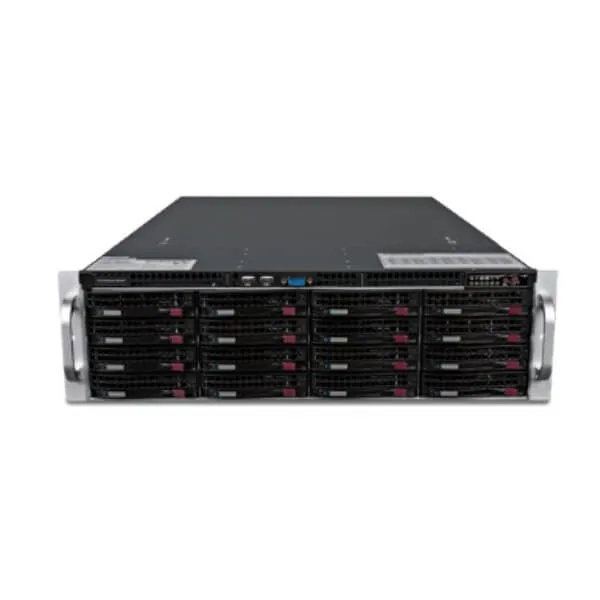
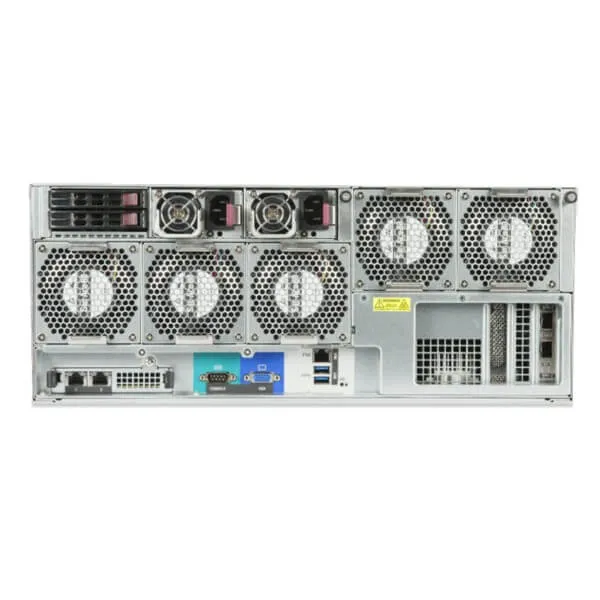
This appliance combines large-capacity HDD storage with NVMe SSD resources, a 4RU rackmount chassis, high-speed management interfaces, removable drives, redundant power and a trusted platform module. Those hardware characteristics matter because a central manager can become a critical dependency. If the management platform is unavailable, production firewalls may continue forwarding traffic, but administrators can lose the normal path for coordinated changes, deployment control, configuration review and troubleshooting. A properly planned platform therefore needs resilient power, controlled rack conditions, configuration backup, administrator role design and high-availability consideration.
FourTeck helps buyers translate the model into a complete procurement requirement. That includes confirming the managed estate, planned growth, licensing, support coverage, rack space, 200–240V power, airflow, connectivity, migration approach and delivery conditions. The result should be a management platform that matches the operational scale of the business rather than an expensive appliance purchased without a clear adoption plan.
Key Business Benefits
◆ Central Policy Control
A central policy workspace helps security teams standardize rules, objects and configuration practices across a large estate. This reduces the risk of branches developing inconsistent controls and gives change owners a clearer path for review, approval, deployment and rollback.
✓ Scalable Operations
The platform is designed for organizations managing thousands of devices or virtual domains. Operational scale matters because the management method that works for twenty sites usually fails when the estate grows into hundreds or thousands of locations, customers or business units.
⚙ Faster Provisioning
Templates, variables and structured provisioning workflows help teams prepare repeatable branch or device deployments. This can reduce manual configuration effort, improve consistency and support phased rollout programs where many locations follow a common security and networking blueprint.
● Change Accountability
Revision history, administrator roles and event records help organizations understand what changed, who initiated the change and how configuration evolved. This supports internal governance, troubleshooting and more disciplined maintenance windows.
↗ Multi-Team Administration
Administrative domains and role-based access can separate responsibilities by customer, geography, business unit or service group. This is valuable when one platform supports many teams but each administrator should see and change only the resources assigned to that role.
🔒 Resilient Management Design
Redundant hot-swap power, removable drives and high-availability options support a stronger operational design. These features do not replace backup and disaster recovery planning, but they give infrastructure teams a more suitable hardware base for a management service that affects many locations.
The practical value is not simply having a larger appliance. It is the ability to reduce repetitive administration while improving control over policy, configuration and deployment. A mature implementation can help the security team spend less time correcting inconsistent settings and more time improving architecture, monitoring risk and supporting business change.
Product Highlights
A strong base for large managed estates without starting from a small branch-class platform.
Expansion is available through supported add-on licensing and should be reviewed with architecture and ADOM requirements.
Large local capacity supports the operational needs of a high-end dedicated management appliance.
Dual 10GE copper and dual 25GE SFP28 interfaces support data center management network design.
FortiManager provides a central workspace for device configuration, policy and object administration, provisioning, revision control and operational monitoring across compatible Fortinet environments. The platform can support zero-touch deployment approaches using templates and variables, which is useful for branch expansion, service-provider onboarding and standardized enterprise rollouts. It also supports role-based administration so large organizations can assign clear responsibilities instead of sharing unrestricted access among many engineers.
High availability can be planned for organizations that need a backup management unit and controlled failover. Buyers should decide whether the management platform must remain available during maintenance, hardware faults or site incidents, then plan the second appliance, synchronization, network paths, rack capacity and support coverage accordingly. Hardware resilience should be matched with disciplined software operations, including tested backups, documented administrator access, maintenance procedures and configuration recovery.
Technical Specifications
| Specification Area | FMG-3700G Details |
|---|---|
| Brand and Model | Fortinet FortiManager FMG-3700G |
| Product Type | Centralized network and security management appliance |
| Devices / VDOMs, Default | 10,000 |
| Devices / VDOMs, Maximum | Up to 100,000 with supported device add-on licensing |
| Sustained Log Rate | 150 |
| GB per Day | 10 GB/day |
| Raw Storage | 240 TB using 60 × 4 TB HDD plus 19.2 TB using 6 × 3.2 TB NVMe SSD |
| Usable Storage after RAID | 224 TB |
| RAID Support | RAID 0, 1, 1s, 5, 5s, 6, 6s, 10, 50 and 60; default RAID 50 |
| Network Interfaces | 2 × 25GE SFP28 and 2 × 10GE RJ45 |
| Console Port | DB-9 |
| Drive and Power Design | Removable hard drives and redundant hot-swap power supplies |
| Platform Security | Trusted Platform Module |
| Form Factor | 4RU rackmount |
| Dimensions | 7.0 × 17.2 × 30.2 inches; 17.8 × 43.7 × 76.7 cm |
| Weight | 120 lb / 54.6 kg |
| Power Requirement | 2000W AC; appliance must connect to a 200–240V power source |
| Power Consumption | 850W average / 1423.4W maximum |
| Operating Environment | 10°C to 35°C, 5% to 95% non-condensing humidity, front-to-back airflow |
| Availability and Support | Configuration, support term, quantity and delivery route should be confirmed with FourTeck |
How to Read These Specifications
Capacity should be evaluated against the real managed estate, not only the current firewall count. Each VDOM can count as a licensed network device, and organizations may also need administrative domains for customer separation, geographic control, staged migrations or business-unit ownership. Growth assumptions should include planned acquisitions, new branches, managed customer environments and refresh projects.
The physical requirements also deserve careful review. A 4RU, 54.6 kg appliance with a depth of 76.7 cm requires a compatible rack, safe lifting practice, front-to-back airflow, substantial power capacity and suitable cooling. The 200–240V requirement must be confirmed before shipment. Buyers should also identify the correct SFP28 optics, copper management connectivity, cable paths and redundant power feeds.
Configuration and Buyer Guidance
Start by documenting the managed estate. Record the number of FortiGate devices, VDOMs, FortiSwitch units, FortiAPs, extenders and other compatible components that will be administered. Separate the present count from the three-year and five-year forecasts. A platform that looks oversized today may be justified by planned branch expansion, while a platform purchased only for a headline maximum may be financially inefficient if the organization will never use the scale.
Confirm physical devices, virtual domains, expected annual growth and any customer or tenant separation.
Define ADOMs, administrator roles, approval workflows and whether teams need separate policy workspaces.
Decide whether a second unit is required for management continuity and how failover will be tested.
Select a support term and service level aligned with the business impact of management downtime.
Next, review the deployment model. Some organizations will build a fresh management environment and onboard devices gradually. Others will migrate from an older FortiManager or a virtual deployment. Migration planning should cover compatibility, supported upgrade paths, configuration backup, ADOM versions, administrator accounts, certificates, device authorization, policy packages, scripts, templates and rollback steps. A central management move should not be treated as a simple hardware swap.
Finally, validate the data center conditions. Confirm rack depth, loading capacity, rail requirements, power feeds, UPS capacity, cooling, airflow direction, cable management and lifting access. Share these details with FourTeck before quotation so the appliance, optics, support, delivery method and optional services can be aligned with the actual site.
Ideal Business Use Cases
Large Multi-Branch Enterprises
Organizations with hundreds or thousands of branches can use centralized templates, policy packages and revision control to reduce configuration drift. Retail groups, logistics networks, financial services, healthcare chains and distributed service organizations benefit when branch deployments follow controlled standards.
Managed Security Providers
Service providers can separate customers or service groups through administrative domains and role-based access. This helps operations teams maintain clear boundaries while using one enterprise management platform for common workflows, change control and customer onboarding.
Government and Public Infrastructure
National institutions and public-service networks often operate many offices with formal change requirements. Central management can support consistent policy, administrator separation, audit trails and phased rollout planning across agencies, departments and service locations.
Telecom and Large Campus Environments
Telecommunications groups, universities and large campuses may manage complex combinations of firewalls, segmentation policies, wireless networks and access switching. A central platform gives engineers a clearer operational view and a repeatable method for policy updates.
Data Center and Cloud Connectivity
Enterprises running multiple data centers, disaster recovery sites and cloud interconnects can coordinate policy objects, routing templates and security changes through a controlled management process. This is especially useful when several infrastructure teams share responsibility.
Standardized SD-WAN Rollouts
Organizations deploying secure SD-WAN across many locations can use templates and variables to create consistent site blueprints. The business gains a cleaner rollout method, while technical teams retain the flexibility to handle local addressing, provider details and site-specific exceptions.
The strongest use case is an environment where central administration has become a business requirement rather than a convenience. Smaller organizations may be better served by a lower-capacity appliance, virtual deployment or cloud option. FourTeck can help compare those paths so buyers do not over-purchase while still protecting future growth.
FMG-3700G Centralized Policy and Device Management
The main reason to deploy FortiManager is to replace fragmented administration with an organized control plane. Security policies contain objects, services, schedules, inspection profiles, routing decisions and operational exceptions that become difficult to maintain when edited independently on thousands of devices. Central policy and object management allows teams to create structured packages, reuse approved objects and coordinate deployment through defined workflows.
This approach helps reduce inconsistent naming, duplicate objects and undocumented local changes. It also supports revision history, allowing administrators to compare configuration states and understand how a policy changed over time. For businesses with audit, governance or formal change-control requirements, that history can be as important as the policy itself. The platform should still be integrated with the organization’s ticketing, approval and documentation practices; technology cannot replace process ownership.
Role-based access supports separation of duties. A network operations engineer may need device visibility and troubleshooting rights, while a security policy administrator may require access to policy packages. A regional team may manage only assigned branches, and a service provider may separate customer environments. Buyers should map these roles before migration rather than granting broad access and correcting permissions later.
FourTeck can help buyers frame the requirement around policy count, administrator groups, ADOM structure, approval workflow and existing management practices. This makes the quotation discussion more useful because it connects appliance capacity with the way the organization actually operates.
FMG-3700G Zero-Touch Provisioning and Automation
When a business opens many branches, manual device-by-device setup becomes slow and error-prone. Zero-touch provisioning uses prepared templates, device blueprints and variables so a new site can receive a controlled baseline with less local intervention. Common settings can be standardized, while variables handle site-specific information such as addresses, branch identifiers, WAN details or naming.
The business value is repeatability. A bank opening service locations, a retailer adding stores or a service provider onboarding customers can build a common deployment pattern instead of asking engineers to rebuild the same configuration every time. This can shorten rollout cycles, reduce basic configuration mistakes and make support easier because sites share a known structure.
Automation must be governed carefully. Templates should be versioned, tested and approved before broad deployment. Variables need clear naming and ownership. Firmware compatibility, device authorization and rollback procedures should be documented. A mistake in a central template can be repeated at scale, so the same feature that accelerates deployment also increases the importance of change discipline.
Before purchase, buyers should identify the branch types they plan to automate, the number of standard designs, the exceptions that must remain local and the staff responsible for template maintenance. FourTeck can use this information to guide platform sizing, migration discussion and related service planning.
FMG-3700G High Availability and Operational Resilience
A central management appliance is not normally in the production forwarding path, but its availability still matters. During an outage, firewalls may continue enforcing their current configurations, yet administrators can lose the normal path for coordinated changes, device onboarding, policy deployment and management visibility. Organizations with strict operating requirements should therefore decide whether one appliance is acceptable or whether a high-availability pair is justified.
FortiManager high availability can use a primary unit with backup members so management services can continue when the operating unit fails. The design requires more than purchasing a second box. Buyers must plan network interfaces, synchronization, cluster management, power separation, rack space, support coverage, monitoring and failover tests. The backup unit should not share every physical dependency with the primary if the goal is resilience.
The FMG-3700G hardware supports removable drives and redundant hot-swap power supplies, which strengthens the appliance design. These features reduce some hardware risk but do not replace configuration backup, disaster recovery documentation or administrator access planning. A resilient deployment includes tested backups, controlled software updates, known recovery steps and an operational owner who understands the platform.
FourTeck can help buyers review whether the project needs a single unit, an HA pair or an alternative architecture. This discussion should consider outage tolerance, maintenance windows, number of dependent sites, service-provider commitments and the cost of delayed management access during an incident.
What Buyers Should Check Before Purchase
Before requesting a quotation, buyers should confirm the required configuration, operational scale, compatibility expectations, support term and data center readiness. The appliance is a major infrastructure purchase, and choosing by model number alone can leave important costs or dependencies outside the original order.
Configuration Fit
Share the current device and VDOM count, projected growth, number of ADOMs, administrator roles and expected policy complexity. Confirm whether add-on licensing is required now or only planned for later expansion.
Compatibility Check
Review managed device models, firmware versions, ADOM versions and the proposed FortiManager release. Migration from an older platform may require staged upgrades or configuration preparation.
Rack, Power and Cooling
Confirm 4RU space, rack depth, rail support, safe loading, 200–240V power, redundant feeds, UPS capacity and front-to-back airflow. The chassis weight and depth require proper handling.
HA and Backup
Decide whether a second appliance is required, how configuration will be backed up, where recovery copies will be stored and how failover or restoration will be tested.
Support Expectations
Select the appropriate FortiCare term and service level. Confirm whether the project also needs implementation support, migration assistance, best-practice consultation or priority replacement options.
Quote Preparation
Provide the delivery country, quantity, required support term, HA requirement, optics, target software version, implementation timeline and any procurement documentation needed for approval.
Buyers should also ask whether a current successor model or suitable alternative should be considered. Product families evolve, and the best commercial decision may depend on lifecycle status, availability, migration compatibility and support duration. FourTeck can help compare the requested model with current options without forcing a replacement that does not fit the project.
Africa Availability and Service Support
FourTeck supports inquiries for the FortiManager FMG-3700G Management Appliance Africa requirement with product selection, configuration review, commercial quotation, delivery coordination and warranty guidance. Availability can vary according to supplier position, support bundle, requested quantity, lifecycle status and destination, so buyers should request current confirmation before final approval.
Large management platforms are usually purchased as project items rather than casual online orders. FourTeck can help prepare the commercial scope around the appliance, support term, HA pair requirement, optics, rack considerations and deployment services. The team can also discuss suitable alternatives when lead time, lifecycle or technical fit makes another option more practical.
Delivery coordination may include destination review, order quantity, shipping documents and project timing. Warranty handling depends on the selected FortiCare service, purchase route and applicable terms. Buyers should keep the final quotation, serial records, support entitlement and internal asset information together so future renewals and support cases are easier to manage.
Africa Country and Regional Coverage
Businesses across Africa, including Kenya, Uganda, Nigeria, Ghana, Tanzania, Rwanda, Ethiopia, South Africa, Zambia, Botswana, Senegal and other regional markets can contact FourTeck for product availability, configuration guidance and quote assistance. The team can help buyers review suitable models, high-availability requirements, support terms, rack and power needs, deployment scope and project supply considerations.
Regional procurement often involves several stakeholders. A technical team may define the device count and architecture, finance may approve the investment, logistics may handle import requirements and a local implementation team may prepare the data center. FourTeck helps bring these details into one quote discussion so the commercial proposal reflects the complete requirement rather than only the appliance SKU.
GCC, Middle East and Africa Availability
FourTeck Africa can support product inquiries across Africa while also guiding regional technology requirements through connected platforms serving GCC and Middle East markets. Organizations operating between Africa, the UAE, Saudi Arabia, Qatar, Oman and Bahrain may need one procurement discussion covering headquarters standards, regional branches, support expectations and delivery destinations.
Availability, delivery options, warranty handling and configuration support can vary by country, selected support term, supplier status and order quantity. Cross-region projects should identify which entity will purchase, where the appliance will be installed, which team will register support and who will manage renewals. These details reduce administrative delays after delivery.
Useful regional references include FourTeck Africa, FourTeck Kenya, FourTeck Uganda and FourTeck UAE. Buyers can use the most relevant regional channel for project discussion while keeping the technical scope consistent.
Other Options Buyers May Consider
A centralized manager is usually part of a wider Fortinet architecture. Buyers may need compatible firewalls, switching, wireless access, analytics or support services. The following FourTeck references help procurement teams connect the management platform with the infrastructure it will administer.
FortiGate FG-3500G
A high-capacity enterprise firewall for data center and large perimeter environments that may benefit from centralized management.
FortiGate 3001G
A data center security appliance for demanding edge, segmentation and high-speed connectivity projects.
FortiSwitch FS-424E-POE
A managed PoE access switch for branch, campus and secure access designs within a Fortinet-oriented environment.
FortiAP FAP-831F
An enterprise Wi-Fi 6 access point for secure wireless deployments requiring centralized operational planning.
Fortinet Firewall Support
Support planning for FortiCare, renewal timing, firmware entitlement and replacement expectations.
Fortinet Firewall Portfolio
A broader buying guide for selecting FortiGate platforms, services and deployment options.
Why Buyers Choose FourTeck
Enterprise management appliances require a buying process that connects technical requirements with commercial and delivery realities. FourTeck works with procurement teams, IT managers, security architects, system integrators and business decision-makers to clarify what should be included before the quote is finalized.
Structured assistance for enterprise hardware, support terms, accessories and project quantities.
Review of device counts, VDOMs, ADOM planning, high availability, rack conditions and migration needs.
Clear commercial preparation based on the required appliance, support term, quantity and destination.
Regional delivery discussion based on project timing, shipping route and procurement documentation.
Support-term and service-level guidance without making unsupported promises about coverage.
Help identifying compatible firewalls, switches, access points, analytics platforms and alternatives.
FourTeck does not treat the appliance as an isolated box. A useful quotation should reflect the full project: what will be managed, who will administer it, how it will be protected, where it will be installed and what support the business expects after deployment. This approach helps reduce wrong-model purchases, missed accessories and incomplete project budgets.
Frequently Asked Questions
What is the FMG-3700G used for?
It is a dedicated FortiManager appliance used to centralize configuration, policy administration, provisioning, revision control and operational management across large Fortinet estates. It is intended for enterprises and service providers that need a structured way to manage thousands of devices or virtual domains from one platform.
How many devices can it manage?
The appliance supports 10,000 devices or VDOMs by default. Supported device add-on licensing can raise the maximum to 100,000. Buyers should include each VDOM in the licensing count and confirm the planned ADOM structure, growth forecast and software compatibility before final sizing.
Is the appliance available in Africa?
FourTeck supports Africa inquiries and can provide current availability guidance, quotation assistance, configuration review and delivery coordination. Availability varies according to supplier status, requested support term, quantity, lifecycle position and destination, so buyers should request formal confirmation for their project.
Can FourTeck help with configuration planning?
Yes. FourTeck can help buyers review managed device counts, VDOMs, ADOM planning, administrator roles, high availability, support term, optics, rack depth, power requirements and migration approach. Final implementation scope should be agreed separately according to the project.
Does the FMG-3700G support high availability?
FortiManager supports high-availability deployment with a primary appliance and backup units. Buyers should plan the additional hardware, synchronization, management interfaces, power separation, rack space, monitoring and failover testing. The exact design depends on the organization’s availability requirement.
What power and rack conditions are required?
The appliance is a 4RU rackmount system measuring approximately 76.7 cm deep and weighing about 54.6 kg. It requires a 200–240V power source, front-to-back airflow and suitable cooling. Buyers should confirm rack loading, rail compatibility, UPS capacity and redundant feeds before delivery.
What storage does the appliance include?
The published hardware specification lists 240 TB of HDD capacity using 60 drives plus 19.2 TB of NVMe SSD capacity using six drives. Usable storage after RAID is listed as 224 TB, with RAID 50 as the default configuration.
How do I request an accurate quote?
Send FourTeck the product model, quantity, delivery country, device and VDOM count, required support term, high-availability need, target deployment date and any optics or services required. Sharing rack and power information also helps the team identify potential site-readiness issues early.
Can businesses request project or bulk supply?
Yes. FourTeck can support project and quantity-based inquiries for centralized management, related Fortinet appliances, support services and deployment accessories. Commercial terms and delivery planning depend on product availability, quantity, destination and the final approved scope.
Should I consider a newer or alternative model?
Possibly. The best choice depends on lifecycle status, availability, current FortiManager releases, required capacity, migration path and support duration. FourTeck can compare the requested appliance with current alternatives while keeping the business requirement and existing Fortinet environment central to the decision.
Need Help Planning a Large Fortinet Management Platform?
FourTeck can help review appliance capacity, licensing, high availability, rack and power requirements, support options, delivery coordination and suitable alternatives for your organization.

Reviews
There are no reviews yet.