
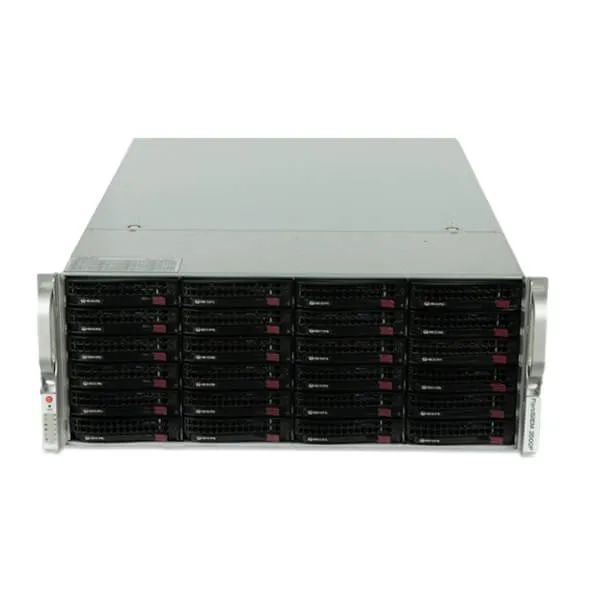
Fortinet FortiAnalyzer FAZ-3500F Log Appliance in Africa
The FAZ-3500F is a high-capacity, rack-mounted platform for organisations that need to collect, retain, analyse and report on large volumes of security and network logs. It is designed for enterprise security operations, managed service environments, distributed Fortinet estates and regulated organisations that need dedicated on-premises visibility. FourTeck helps buyers assess daily log volume, retention goals, device scale, support eligibility and lifecycle considerations before a quotation is prepared.
✓ 72 TB raw storage
✓ Hardware RAID
✓ Dual hot-swap power
✓ Africa project guidance
Request Quote
Check Africa Availability
Quick Product Information
Fortinet
FortiAnalyzer 3500F / FAZ-3500F
Centralized log, analytics and reporting appliance
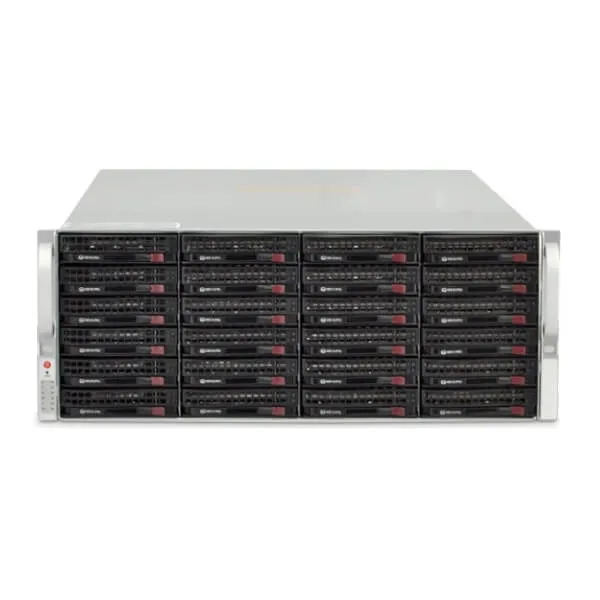
4U rackmount
Up to 5,000 GB per day
72 TB using 24 × 3 TB drives
Large enterprises, service providers and security operations teams
Contact FourTeck for current sourcing options
Dependent on supply route, condition and selected support eligibility
Verify firmware path, support term and lifecycle status before order
Product Overview
Large security environments generate a continuous stream of firewall events, web-filter records, intrusion alerts, authentication activity, VPN logs, application data, email-security information and administrative changes. When these records remain scattered across individual appliances, analysts lose time moving between consoles, historical context becomes difficult to reconstruct and reporting turns into a manual task. The FAZ-3500F was built to address this operational problem with a dedicated platform for central log collection, analysis, reporting and investigation.
The appliance is positioned for organisations whose daily event volume is too high for a small branch logger or a lightly sized virtual machine. Published platform figures include capacity for up to 5,000 GB of logs per day, a sustained analytics rate of 60,000 logs per second and a collector rate of 90,000 logs per second. These figures make the product relevant to large campuses, financial institutions, telecom environments, government networks, universities, managed security providers, industrial groups and distributed businesses running many Fortinet security devices. The platform can also accept compatible syslog data, although integration scope and parser support should be assessed during design.
For an IT manager, the practical value is central visibility. Instead of relying only on the local disk of each firewall, the organisation gains a separate place to retain information, review activity over time, create scheduled reports and investigate suspicious behaviour across multiple devices or administrative domains. For a security operations team, the benefit is faster access to related events and a clearer evidence trail. For audit and compliance teams, the platform can support structured reporting and longer retention strategies when storage is designed correctly.
Procurement requires additional care because the 3500F belongs to an established hardware generation. Buyers should not assume that every unit offered through the market has the same support status, disk history, firmware path or service entitlement. FourTeck therefore treats the model as a project purchase rather than a simple catalogue item. The buying discussion should include current daily log volume, expected growth, retention days, number of devices, administrative-domain requirements, rack and power conditions, preferred support coverage and whether a newer FortiAnalyzer model would provide a better long-term fit.
Key Business Benefits
A high-capacity log appliance creates value only when its technical resources support clear operational outcomes. The following benefits explain why organisations evaluate this class of FortiAnalyzer platform.
◆ Central Evidence Store
Central collection reduces dependence on the limited local storage of individual security devices. Analysts can review activity across a wider time range and preserve a more complete record for investigations, audits and operational review.
✓ Large-Scale Log Handling
The published 5,000 GB-per-day capacity supports environments with substantial event volume. This helps large organisations avoid under-sizing a logging platform that may otherwise fall behind during busy periods.
⚙ Faster Investigation
Search, event review and reporting from one platform can reduce time spent gathering data from separate firewalls. A better historical view helps analysts trace user, source, destination and threat activity more efficiently.
● Retention Planning
Seventy-two terabytes of raw disk capacity gives buyers a substantial storage base. Actual usable space and retention depend on RAID level, event mix, analytics allocation, archive policy and daily ingestion.
↗ Multi-Domain Administration
Administrative domains can help separate customers, subsidiaries, business units or operational teams. This is important for managed service providers and large groups that need delegated visibility without combining every environment into one view.
🔒 Hardware Resilience
Hardware RAID, removable drives and redundant hot-swap power supplies support a more resilient data-centre deployment than a single-disk desktop logger. Resilience still requires correct RAID, backup and high-availability planning.
✓ Better Reporting Discipline
Scheduled operational and compliance reports can give technical teams, auditors and management a consistent view of network activity. Report quality depends on log completeness, correct time settings and well-designed datasets.
Product Highlights
The appliance combines high-volume ingestion, substantial disk capacity and enterprise rack resilience in one platform. Its strongest technical highlight is the ability to receive up to 5,000 GB of logs per day under published conditions while sustaining up to 60,000 logs per second for analytics and up to 90,000 logs per second in collector operation. These numbers are important for environments that receive frequent events from many firewalls and security systems, but buyers should size from real event measurements rather than model labels alone.
Designed for substantial daily security-event volume.
24 removable 3 TB drives provide 72 TB raw capacity.
Supports RAID 0, 1, 5, 6, 10, 50 and 60, with RAID 50 published as default.
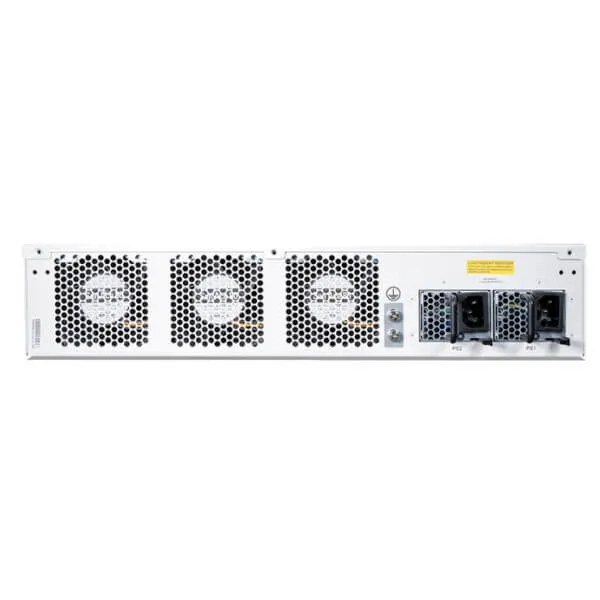
4U chassis with redundant hot-swap power supplies.
The 2 × Gigabit Ethernet RJ45 interfaces and 2 × Gigabit Ethernet SFP slots provide network connectivity for management and log transport. Because interface speed is modest compared with newer-generation appliances, architecture teams should examine peak log traffic, network path design and whether the deployment will use analyzer, collector or combined operation. The platform’s published maximum of 10,000 devices, VDOMs or ADOMs indicates scale, yet a realistic design must also consider report complexity, concurrent searches, retention policies and operational workload.
A final highlight is the established Fortinet workflow around FortiView, event monitoring, reporting, log forwarding, administrative domains and integration with Fortinet Security Fabric components. Exact feature availability depends on the installed FortiAnalyzer software release, active service subscriptions and support status. Buyers should confirm these items before treating a feature shown in current FortiAnalyzer marketing as guaranteed on a particular 3500F unit.
Technical Specifications
| Specification | Published FAZ-3500F Detail | Buyer Guidance |
|---|---|---|
| Brand / Model | Fortinet FortiAnalyzer 3500F / FAZ-3500F | Verify serial number, condition and support eligibility. |
| Product Type | Centralized log and analysis appliance | Plan whether it will operate as analyzer, collector or part of a larger design. |
| Logs per Day | Up to 5,000 GB/day | Use measured current and projected daily volume. |
| Analytics Sustained Rate | 60,000 logs/second | Complex reports and searches also consume resources. |
| Collector Sustained Rate | 90,000 logs/second | Confirm topology and forwarding destination. |
| Maximum Devices / VDOMs / ADOMs | 10,000 | Practical scale depends on traffic and administrative design. |
| Form Factor | 4U rackmount | Confirm rack depth, rail compatibility and service clearance. |
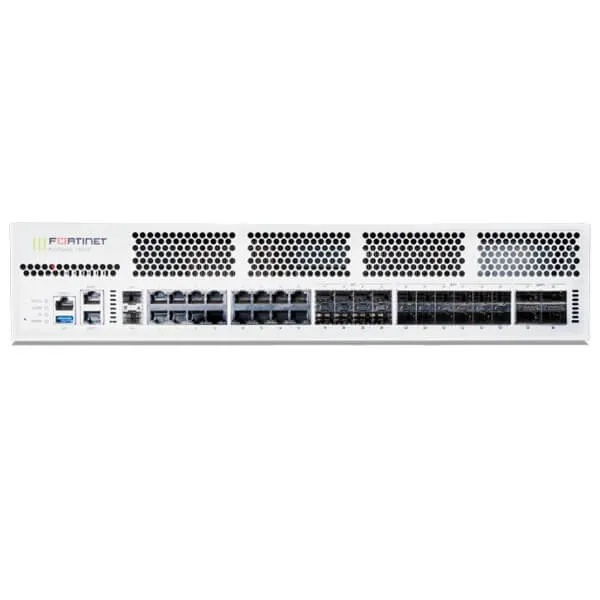
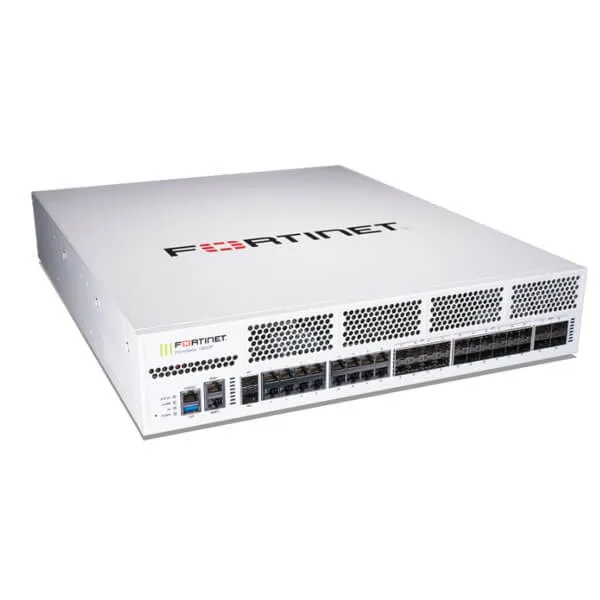
| Network Interfaces | 2 × GE RJ45 and 2 × GE SFP | Confirm optics, cabling and network segmentation requirements. |
| Raw Storage | 72 TB, 24 × 3 TB drives | Usable capacity is lower after RAID and system allocation. |
| Drive Serviceability | Removable drives | Confirm replacement-drive availability and matching specifications. |
| RAID Levels | 0 / 1 / 5 / 6 / 10 / 50 / 60 | Select for capacity, resilience and rebuild risk. |
| Default RAID | RAID 50 | Validate actual configuration on the supplied unit. |
| Power Supplies | Redundant hot-swap power supplies | Use separate protected power feeds where possible. |
| Power Input | 100–240V AC, 50–60 Hz | Check PDU socket, cable type and UPS capacity. |
| Average Power Consumption | 465 W | Allow headroom for UPS and cooling planning. |
| Heat Dissipation | 1,904 BTU/hour | Confirm data-centre cooling capacity. |
| Dimensions | 6.9 × 19.0 × 27.2 in / 17.6 × 48.2 × 69.0 cm | Confirm rack width, depth and rail set. |
| Weight | 93.74 lb / 42.52 kg | Use safe lifting and installation procedures. |
| Operating Temperature | 0°C to 40°C | Maintain stable airflow and clean rack conditions. |
| Operating Humidity | 10% to 90%, non-condensing | Avoid uncontrolled or dusty environments. |
How to interpret the specifications
Published capacity is a sizing reference, not a promise that every workload will behave identically. Retention is affected by actual log mix, compression, RAID selection, analytics allocation, archive policy and growth. A system receiving 5,000 GB every day will fill storage far faster than one receiving 1,000 GB. Buyers should calculate daily ingestion, retention days, safety margin and expected annual growth. They should also confirm whether critical logs will be duplicated to backup storage, forwarded to another analyzer or protected through a high-availability design.
Configuration and Buyer Guidance
The right FortiAnalyzer design begins with workload evidence. Before requesting a quote, export log-rate data from the existing environment or estimate volume from the number and type of Fortinet devices. A small number of high-throughput data-centre firewalls may generate more information than hundreds of lightly used branches. Include planned SSL inspection, VPN activity, web filtering, intrusion-prevention events and growth projects because these can materially change future volume.
1. Measure Daily Volume
Provide average and peak GB per day, plus logs per second where available.
2. Define Retention
Separate searchable analytics retention from long-term archive requirements.
3. Review Device Scale
List FortiGate units, VDOMs, other Fortinet products and third-party syslog sources.
4. Confirm Reporting Load
Describe scheduled reports, concurrent analysts and compliance reporting frequency.
5. Plan Resilience
Decide whether RAID, backup, log forwarding and high availability are required.
6. Verify Lifecycle
Check desired software release, FortiCare eligibility, replacement parts and newer-model alternatives.
The physical environment matters as much as software. Confirm four rack units of space, adequate depth, rail availability, separate power feeds, UPS runtime and cooling for approximately 1,904 BTU per hour. Fibre connections require compatible SFP modules and clean cabling. Finally, define who will install, migrate, register devices, create ADOMs, design retention policies and validate reports. A complete quote should reflect the appliance, support path, accessories and deployment needs rather than hardware alone.
Ideal Business Use Cases
This platform is most appropriate where log volume, investigation requirements and administrative scale justify a dedicated high-capacity appliance. It is not intended as a simple event viewer for a small office.
Large Enterprise Security Operations
A central security team can collect logs from headquarters, branches, data centres and remote environments. Unified review helps analysts investigate incidents without signing into each firewall separately.
Managed Security Service Providers
ADOM-based separation can support multiple customer or tenant environments. Providers should design quotas, access controls, reporting schedules and retention policies carefully.
Financial and Regulated Networks
Banks, insurers and other regulated organisations may require structured retention, audit reporting and evidence access. The appliance can form part of that design when policies and backup procedures are correctly implemented.
Government and Public Services
Distributed agencies can centralise security records from many locations, improving visibility across regional offices while maintaining administrative separation where required.
Universities and Large Campuses
Education networks generate diverse traffic across students, staff, research, guest access and data-centre systems. Central logging helps teams study incidents and report on network behaviour.
Telecom and Service Infrastructure
High event volume from customer-facing, backbone and security systems may require a dedicated collector and analyzer architecture. Interface and throughput planning is especially important.
Other valid uses include central reporting for a multi-country group, security analytics for industrial networks, consolidation after business acquisition and historical analysis for incident response. Buyers should avoid selecting the model simply because it is large. A correct fit depends on measured logs, retention, operational skills and the remaining support life of the offered unit.
FAZ-3500F High-Volume Log Processing
Log processing is the first design challenge in a large Fortinet environment. The appliance must receive bursts from many devices without creating a growing backlog, then index and analyse enough information to support searches and reports. The published analytics and collector rates give architects two different reference points. Analyzer work includes database activity, event correlation, searches and reporting, while collector operation focuses more heavily on receiving, archiving and forwarding logs.
This difference matters when the environment is geographically distributed. A business may place collectors closer to regional firewalls and forward data to a central analyzer, reducing the processing burden on one platform and creating a more scalable topology. In another design, the 3500F may operate as the principal analyzer for a consolidated estate. The correct choice depends on WAN reliability, recovery requirements, latency, retention and the number of operational teams.
Buyers should test peak periods rather than average only. A quiet weekend average can hide weekday spikes, software-update events, denial-of-service activity or large VPN login waves. Allow room for growth and new inspection services. Also confirm the speed and redundancy of the network path that carries logs. A high-capacity appliance cannot compensate for congested links, incorrect time synchronisation, packet loss or devices that are not configured to send complete logs.
FAZ-3500F Storage, RAID and Retention
The 72 TB figure is raw disk capacity, not the amount available for searchable logs. RAID consumes capacity to provide redundancy or performance characteristics, and the system reserves storage for its own operation. Analytics and archive allocations also affect how long data remains available in different forms. Buyers therefore need a retention model rather than a simple disk-size comparison.
Start with daily ingestion. Multiply the expected average by the number of retention days, then add growth and operational margin. Separate the period during which analysts need fast search from the period required only for archive or regulatory evidence. Review whether some log types can have shorter retention while critical security events remain longer. The organisation should also define what happens when quotas fill, who monitors disk health and how archived information is protected outside the appliance.
RAID 50 is published as the default, but it may not be ideal for every risk model. RAID 6 or 60 may offer additional tolerance for disk failures, while other layouts change capacity and performance. Rebuild time is an important consideration with many drives. Replacement disks should match required specifications, and organisations should plan how failed media will be handled securely.
RAID is not a backup. It protects against selected drive failures but does not protect against accidental deletion, corruption, administrator error, theft, catastrophic chassis failure or site loss. Critical environments should consider configuration backup, log forwarding, external archive, high availability and a documented recovery test. These controls are especially important when the appliance supports legal, audit or incident-response evidence.
FAZ-3500F Central Visibility and Administration
Central visibility helps security and network teams move from isolated device logs to a wider operational picture. Analysts can review traffic, threats, applications, system events and administrative changes from a common platform. This supports faster investigation because related activity can be examined across different firewalls, users and locations without manually exporting records from each device.
Administrative domains are valuable when one appliance supports several subsidiaries, customers or operational groups. Each domain can be planned with its own devices, quotas and access controls. This makes the platform relevant to service providers and large organisations, but it also creates governance responsibilities. Administrators need a naming convention, role design, change process and quota-monitoring routine. Poor domain planning can make reporting and troubleshooting more difficult.
Scheduled reports turn raw records into recurring operational information. Security teams may need threat summaries, management may need trend reports and auditors may need evidence of policy activity. Report usefulness depends on complete log sources, correct timestamps, suitable datasets and a realistic schedule. Too many heavy reports can compete with interactive analysis, so workloads should be tested.
Integration with other Fortinet products can strengthen context across the Security Fabric, but exact capabilities depend on the software version and active services. Buyers should compare the desired workflow with supported release notes for the specific unit. FourTeck can help prepare the compatibility questions and procurement checklist, while final technical validation should be completed against current Fortinet documentation and the offered service entitlement.
What Buyers Should Check Before Purchase
A successful purchase requires more than matching the model number. Buyers should first confirm whether the offered unit is new, refurbished, previously deployed or sourced through a secondary channel. Ask for the serial number, hardware condition, disk-health information, included rails, power cables and any accessories. Confirm whether FortiCare can be attached or transferred, which software releases are supported and whether the required security services remain available for this generation.
Configuration Fit
Share daily log volume, peak logs per second, retention days, device count, ADOM count, report schedule and expected growth.
Compatibility Check
Confirm FortiAnalyzer release, FortiGate versions, supported log sources, browser requirements, SFP modules and integration expectations.
Availability and Warranty
Ask whether the unit has valid service eligibility, what hardware replacement path applies and how support differs by supply route.
Rack and Power
Allow four rack units, sufficient depth, safe lifting, suitable rails, dual power feeds, UPS capacity and cooling headroom.
Required Add-ons
Identify transceivers, fibre patch leads, spare drives, support contracts, implementation services and external archive requirements.
Replacement Model Review
Compare newer FortiAnalyzer platforms if long support life, faster interfaces, encrypted storage or improved efficiency are priorities.
Before requesting a quote, provide the delivery country, required condition, support term, target installation date and whether the purchase forms part of a wider Fortinet project. For bulk or multi-site requirements, include the expected number of appliances and whether high availability is required. This information allows FourTeck to check suitable sourcing paths and advise when a newer option may reduce long-term operational risk.
Africa Availability and Service Support
FourTeck supports enterprise security appliance enquiries across Africa with assistance for model verification, configuration review, quotation, delivery coordination and warranty guidance. Availability for the 3500F may vary significantly because it is not a current-generation model in every channel. A quotation may depend on remaining distributor inventory, secondary-market sourcing, unit condition, service eligibility, order quantity and the buyer’s destination.
For a useful commercial response, buyers should provide the required hardware condition, whether active FortiCare is mandatory, daily log volume, retention target, number of managed devices, required installation date and delivery location. FourTeck can then help compare the requested model with suitable current alternatives, identify likely accessories and clarify which items require separate confirmation.
Regional support also includes procurement planning for rack infrastructure, power protection, connectivity, implementation scope and project documentation. Warranty handling depends on the source, condition and selected service agreement, so it should be stated clearly in the final quotation. No buyer should rely on a model name alone when purchasing an established-generation security appliance.
Africa Country and Regional Coverage
Businesses across Africa, including Kenya, Uganda, Nigeria, Ghana, Tanzania, Rwanda, Ethiopia, South Africa, Zambia, Botswana, Senegal and nearby regional markets, can contact FourTeck for availability checks, configuration guidance and project quotation. The team can help procurement departments, system integrators, resellers and end-user organisations review whether the requested appliance matches the intended logging workload and support requirements.
Regional delivery planning should account for destination, import process, shipment size, rack-installation schedule and the condition of the equipment. A 4U appliance weighing more than 42 kilograms requires careful packaging and handling. Buyers should also confirm the correct power cables, rack rails, SFP modules and any country-specific project documentation before shipment.
FourTeck’s Africa-focused approach is designed to give buyers one structured conversation covering hardware, lifecycle, support, logistics and alternatives. Visit the FourTeck Africa technology platform or use the contact page to share project details. Country coverage does not imply local stock in every market; current options are confirmed during quotation.
GCC, Middle East and Africa Availability
FourTeck can support regional technology enquiries across Africa and selected GCC and Middle East markets through its connected platforms. Organisations operating across Africa, the UAE, Saudi Arabia, Qatar, Oman and Bahrain may need consistent log-management planning, particularly when they run Fortinet security devices in several countries or data centres.
Availability, delivery route, service eligibility and warranty handling can differ by destination. A product that is available through one regional channel may not carry the same support arrangement in another. Buyers should therefore state the final installation country, preferred invoice route, required support term and whether the appliance will be used as part of a cross-border architecture.
For connected regional assistance, buyers can explore FourTeck Kenya project support, FourTeck Uganda technology assistance and FourTeck UAE and GCC solutions. Final supply options remain dependent on the requested model, condition, quantity and destination.
Other Options Buyers May Consider
Because lifecycle, interface speed and support duration may influence the final decision, buyers should compare the requested appliance with newer FortiAnalyzer models and related Fortinet platforms. The correct alternative depends on daily log volume, storage, retention, service term and whether the organisation needs centralized management as well as analytics.
Fortinet Cybersecurity Solutions
Review how FortiAnalyzer fits with FortiGate, FortiManager, FortiClient and other Fortinet components.
FortiGate 3001G
A high-capacity Fortinet firewall option for data-centre and enterprise security projects that may feed logs to FortiAnalyzer.
FortiGate 3500G
Suitable for buyers planning high-throughput security infrastructure with centralized reporting and analytics requirements.
Fortinet Threat Intelligence Services
Consider intelligence and operational services that can improve event context and investigation workflows.
Newer FortiAnalyzer G-series models may offer different storage, interface and efficiency characteristics. FourTeck can help buyers prepare a like-for-like comparison based on business workload rather than assuming that a numerically similar model is an exact replacement.
Why Buyers Choose FourTeck
Enterprise logging projects often fail at the buying stage because the appliance is selected from capacity headlines without considering retention, support life, disk condition, reporting load or deployment dependencies. FourTeck approaches the request as a complete business requirement. The goal is to help the buyer confirm whether the requested product, condition and service arrangement match the intended environment.
Review current supply paths and condition options.
Connect log volume and retention to the model choice.
Prepare a commercial response around the full requirement.
Highlight software, support and replacement-model questions.
Plan destination, handling and project timing.
Clarify coverage based on supply route and service term.
FourTeck supports end users, resellers, integrators, public-sector buyers and enterprise procurement teams. Assistance can include related firewall, management, storage, power and rack requirements. The final recommendation is based on the information supplied by the customer and current channel confirmation, avoiding unsupported claims about stock, delivery speed or service status.
Frequently Asked Questions
What is the FortiAnalyzer 3500F used for?
It is used to collect, retain, analyse and report on large volumes of security and network logs. The appliance is suited to enterprise security operations, service providers and distributed Fortinet environments that need centralized visibility, historical investigation, scheduled reporting and administrative-domain separation.
How much log data can the appliance receive?
Published specifications state up to 5,000 GB of logs per day, with sustained analytics processing of 60,000 logs per second and collector processing of 90,000 logs per second. Real design should account for peak bursts, reporting workload, searches, retention and expected growth.
Does 72 TB mean 72 TB of usable log storage?
No. Seventy-two terabytes is the raw capacity of 24 × 3 TB drives. Usable space is lower after RAID, system allocation and analytics or archive configuration. Retention must be calculated from actual daily volume, selected RAID level and the amount of growth margin required.
Can FourTeck help verify the correct configuration?
Yes. FourTeck can review daily log volume, device count, retention target, reporting needs, rack environment, support expectations and desired installation date. This helps determine whether the 3500F is suitable or whether a newer FortiAnalyzer platform should be considered.
Is the FAZ-3500F available across Africa?
Availability depends on supplier status, unit condition, service eligibility, quantity and destination. Because this is an established-generation appliance, sourcing may involve limited channel inventory or project-specific options. FourTeck confirms current possibilities after receiving the customer’s technical and delivery requirements.
What should be checked on a refurbished or previously deployed unit?
Buyers should request serial-number verification, disk-health information, chassis condition, included rails and cables, power-supply status, supported firmware, licensing details and support eligibility. They should also define warranty handling and replacement procedures in the quotation.
Does the appliance support high availability?
FortiAnalyzer platforms can support high-availability designs depending on software release, model compatibility and deployment requirements. Buyers should verify the exact supported topology for the intended version and consider whether log forwarding, backup and a secondary appliance are also needed.
Which details are needed for a quotation?
Provide the required model and condition, average and peak log volume, retention days, device count, support term, destination, quantity, target date, accessories, implementation scope and whether a current-generation alternative may be quoted. More complete information produces a more useful response.
Can businesses request bulk or project supply?
Yes. Procurement teams, resellers and integrators can request project supply for single or multiple units, related Fortinet products, rack accessories, power protection and regional delivery. Quantity, support path and installation schedule should be confirmed early because availability may be limited.
Need Help Sourcing the Right Log Appliance?
Share your daily log volume, retention target, device count, preferred support term and delivery country. FourTeck can help review current availability, lifecycle considerations, configuration fit and suitable alternatives for your security project.
Reviews
There are no reviews yet.