
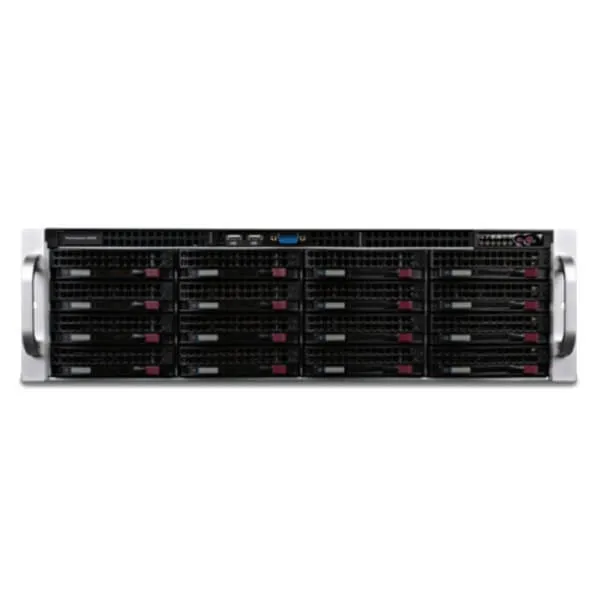
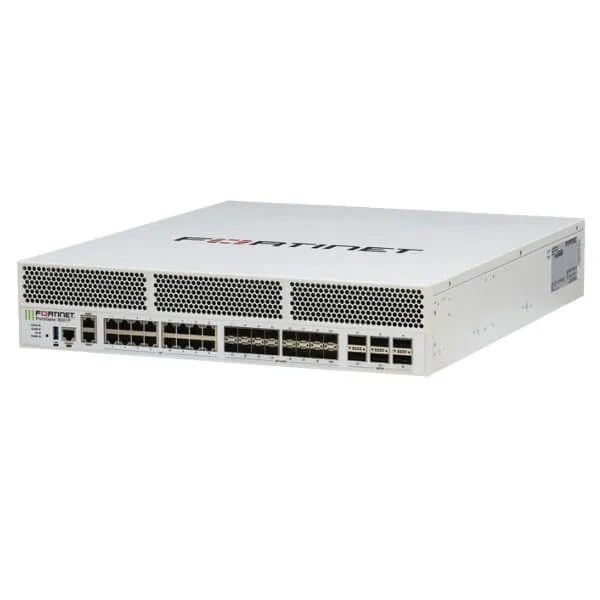
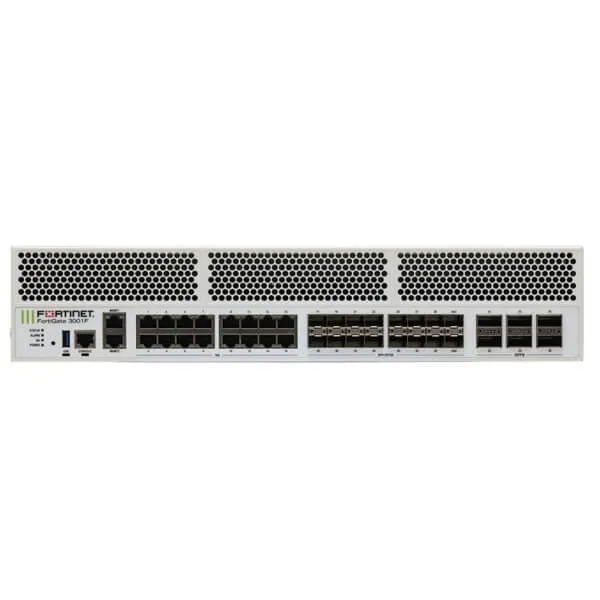
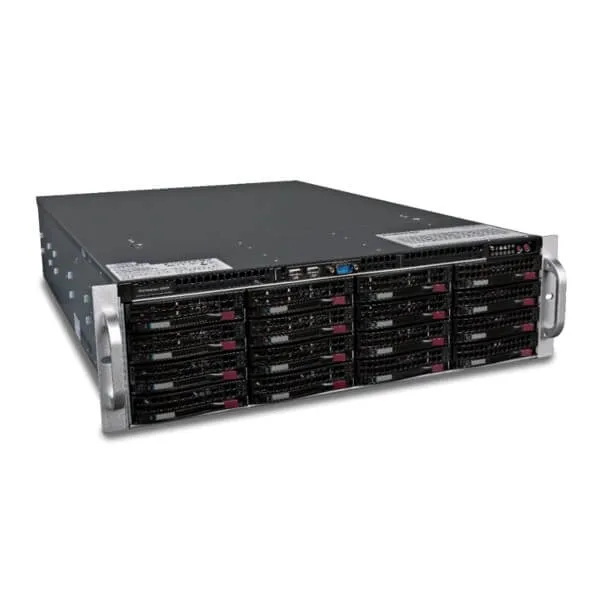
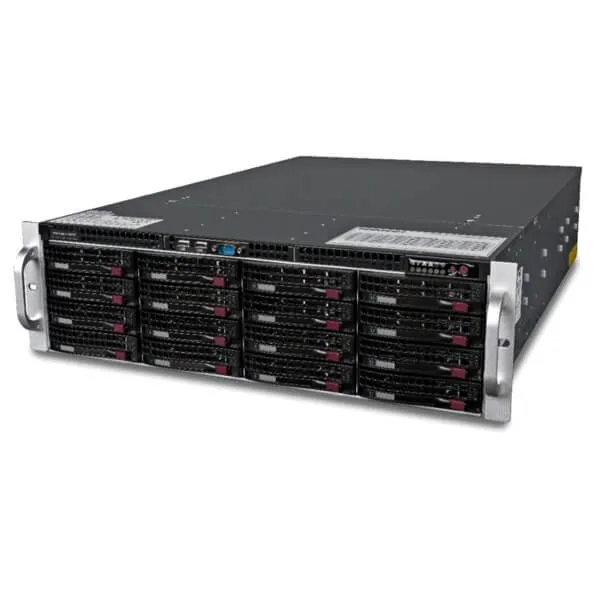
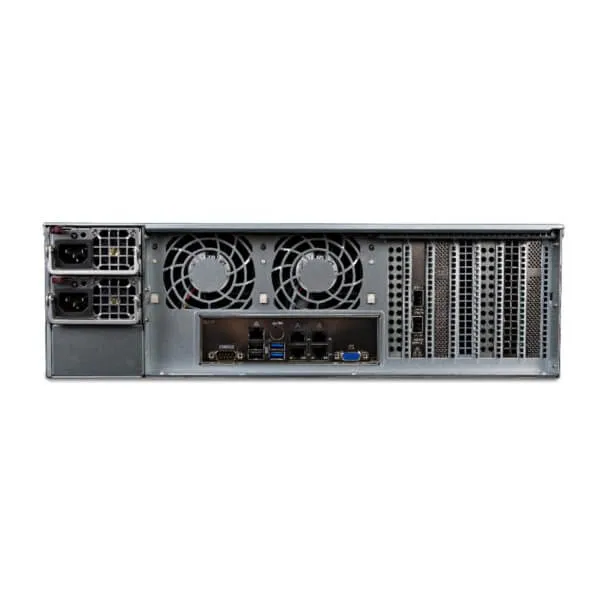
FortiAuthenticator FAC-3000F Identity Appliance in Africa
The FortiAuthenticator FAC-3000F Identity Appliance is designed for large organisations that need a dedicated, highly scalable platform for user authentication, multi-factor authentication, single sign-on, certificate services and identity-aware access. It brings authentication functions into one controlled appliance so security teams can reduce fragmented login systems, strengthen remote access, connect existing directories and apply consistent identity policy across Fortinet and third-party environments. FourTeck helps buyers turn user counts, application requirements, token plans and resilience expectations into a practical product and licensing request.
◆ MFA, SSO and certificate services
⚙ Active-passive high availability
↗ Africa quote and delivery guidance
Request Quote
Check Africa Availability
Quick Product Information
Fortinet
FAC-3000F
2U identity and access management appliance
Up to 40,000 local and remote users
Up to 240,000 with supported hardware upgrade licensing
MFA, SSO, RADIUS, TACACS+, certificate and identity services
4 x GE RJ45 and 2 x 10GE SFP+
2 x 2 TB SAS drives in RAID 1
Active-passive HA and configuration synchronization
Contact FourTeck for current Africa options
Product Overview
Large organisations rarely rely on one login system. Employees may use a corporate directory, administrators may authenticate to network equipment, remote users may connect through a VPN, guests may require temporary access, applications may depend on SAML or OIDC federation, and managed devices may need certificates. When these services are handled independently, security policy becomes harder to maintain. Password rules differ, user changes are repeated in several systems, audit evidence is scattered and support teams spend more time tracing access problems.
FAC-3000F addresses that problem by providing a dedicated identity layer for enterprise networks. It can operate as a centralized authentication platform, integrate with on-premises and cloud identity sources, support multi-factor authentication through FortiToken and other supported methods, provide single sign-on services, act as a certificate authority and deliver RADIUS or TACACS+ services for network access. It can also participate in the wider Fortinet Security Fabric, allowing user identity to become useful information for firewall policy and access decisions.
The appliance is sized for environments where authentication is a core service rather than a small add-on. A base capacity of 40,000 local and remote users gives enterprises a meaningful starting point, while supported upgrade licences can extend that figure to 240,000. The platform also supports a large FortiToken population, substantial RADIUS client capacity and high numbers of user and certificate objects. This makes it relevant to banks, telecom operators, government agencies, universities, healthcare networks, large retailers, managed service providers and regional groups with many branches or business units.
For Africa buyers, the purchasing decision should include more than the appliance part number. User licensing, token quantities, support entitlement, high-availability design, directory integration, transceivers, rack readiness and implementation responsibilities must all be considered. FourTeck helps buyers prepare these details before quotation so the selected appliance, upgrade licences and services match the intended deployment instead of creating a costly redesign after delivery.
Key Business Benefits
An identity appliance creates value when it improves security while also making access easier to operate. The following benefits explain how the platform can support business outcomes rather than merely adding another security device.
◆ Centralized Authentication
Consolidating authentication services gives administrators a clearer place to manage access policy, user verification and integrations. This can reduce duplicate configuration, simplify troubleshooting and improve consistency across VPN, network, application and administrative access.
🔒 Stronger User Verification
Multi-factor authentication adds another verification step beyond a password. Organisations can protect higher-risk users, administrators, remote staff and sensitive applications using methods that fit their security policy and user experience requirements.
↗ Scalable User Growth
The base licence supports 40,000 local and remote users, while supported hardware upgrade licences provide a path to 240,000. This allows growing organisations to plan identity capacity around future branches, acquisitions, contractors and digital services.
● Better Access Experience
Single sign-on and identity federation can reduce unnecessary repeated logins for approved resources. A more consistent sign-in journey helps users work efficiently while administrators retain control through policy, directory groups and authentication conditions.
⚙ Certificate Lifecycle Support
Built-in certificate authority functions help teams issue, manage and revoke certificates for supported use cases. This can strengthen VPN, device and service authentication while reducing dependence on unmanaged shared secrets.
✓ High-Availability Planning
Active-passive high availability and configuration synchronization support resilient designs where authentication must remain available during maintenance or appliance failure. Final resilience depends on correct network, power and operational planning.
Product Highlights
The FAC-3000F combines enterprise-scale identity capacity with dedicated hardware, mirrored storage and high-speed interfaces. Its strength is not one isolated function; it is the ability to bring several identity services into a coordinated platform that can support both Fortinet-based and mixed-vendor environments.
A substantial starting capacity for large enterprise and service-provider authentication environments.
Supported hardware user upgrades create room for long-term growth without changing the appliance immediately.
Capacity for up to 80,000 FortiTokens supports broad MFA deployment across high-risk or remote user groups.
Useful for network access, administrator authentication and integration with supported infrastructure.
SAML, OIDC and OAuth capabilities help connect approved applications and identity providers.
A trusted platform module and RAID 1 storage support a purpose-built enterprise appliance design.
The appliance also supports local and remote directory integration, Fortinet Single Sign-On, guest management, password recovery, certificate services and API-based workflows. Exact functionality can depend on the installed FortiAuthenticator software version, licence entitlement and integration design, so buyers should confirm the intended features during project scoping.
Technical Specifications
| Specification | FAC-3000F Details |
|---|---|
| Brand and Model | Fortinet FortiAuthenticator FAC-3000F |
| Product Type | Rack-mountable identity and access management appliance |
| Copper Interfaces | 4 x 10/100/1000 Ethernet RJ45 |
| High-Speed Interfaces | 2 x 10GE SFP+ interfaces |
| Local Storage | 2 x 2 TB SAS drives, RAID 1 |
| Trusted Platform Module | Yes |
| Local and Remote Users | 40,000 base / 240,000 upper limit with supported user upgrades |
| FortiTokens | Up to 80,000 |
| RADIUS Clients | 13,333 base / 80,000 upper limit |
| User Groups | Up to 8,000 |
| CA Certificates | Up to 50 |
| User Certificates | Up to 200,000 |
| Supported Services and Protocols | RADIUS, TACACS+, LDAP, SAML 2.0, OAuth, OIDC, X.509, EAP-TLS, SCEP and related supported services |
| Management | HTTPS, CLI and direct console DB9 CLI |
| High Availability | Active-passive HA and configuration synchronization HA |
| Form Factor | 2U rack mount |
| Dimensions | 88 x 438 x 601 mm |
| Weight | Approximately 20 kg |
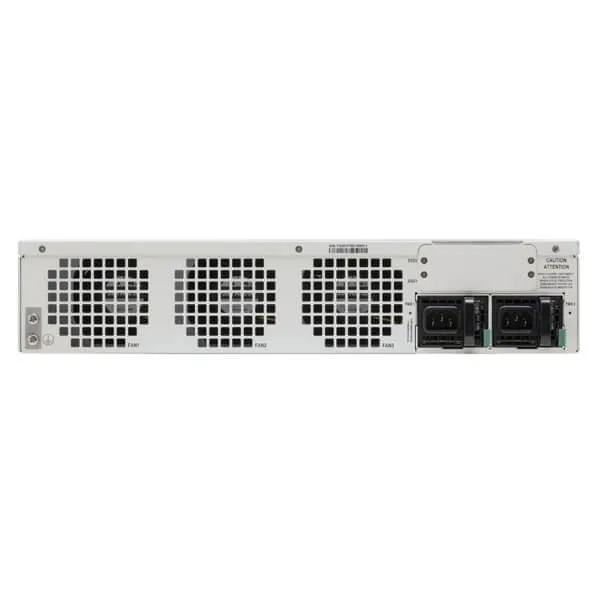
| Power Supply | Dual 1+1 1000W auto-ranging, 100V–240V |
| Power Consumption | 193.30W average / 236.28W maximum |
| Operating Temperature | 0°C to 40°C |
| Warranty and Support | FortiCare options and regional terms are configuration dependent; confirm during quotation |
| Availability | Contact FourTeck for current supplier status, support options and delivery coordination |
Capacity figures should be interpreted as platform limits, not a substitute for workload design. The number of users, tokens, authentication requests, certificates, RADIUS clients, integrations and high-availability nodes all influence the final architecture. Buyers should also confirm whether every required connector, authentication method and application workflow is supported by the planned software version. FourTeck can help structure a technical request that includes user growth, peak login events, certificate volume, token method, network topology and support term before commercial approval.
Configuration and Buyer Guidance
Choosing an enterprise authentication appliance begins with the access model, not the headline user limit. Procurement and security teams should document who will authenticate, which services they will access, how identities are stored and which events must remain available during outages. A clear requirement makes it easier to select user upgrades, tokens, support and deployment services.
1. Define User Population
Count employees, contractors, administrators, guests and external users. Separate current active users from future growth and seasonal peaks.
2. Map Authentication Flows
List VPN, Wi-Fi, switch access, firewall administration, cloud applications, internal portals and certificate-based services.
3. Confirm Directory Sources
Identify Active Directory, LDAP, cloud identity providers and local user databases, including ownership and synchronization needs.
4. Select MFA Methods
Choose mobile tokens, hardware tokens, FIDO2, email, SMS or certificates based on risk, usability, connectivity and policy.
5. Design Resilience
Plan the second appliance, network paths, power feeds, synchronization and recovery procedures for high-availability service.
6. Plan Support and Ownership
Clarify FortiCare entitlement, administrator training, implementation responsibility, change control, backups and renewal ownership.
The quote request should state the required quantity, base appliance, upgrade users, token quantities, transceiver needs, high-availability design, support duration, implementation scope and delivery destination. This prevents a hardware-only quotation from being mistaken for a complete identity project.
Ideal Business Use Cases
The appliance is most appropriate where authentication is shared across many users, applications, devices or locations and where service interruption would create material business risk.
Large Enterprise Workforce
Centralize authentication for employees, administrators and contractors across internal systems, remote access and network infrastructure. Directory integration can help maintain role information while MFA strengthens high-risk access.
Banking and Financial Services
Support stronger verification for privileged users, VPN access, network administration and selected business applications. Certificate and audit-related functions can form part of a broader security and governance programme.
Telecom and Service Providers
Handle large identity populations, many RADIUS clients and distributed infrastructure. Service providers should validate transaction rates, tenancy requirements and operational workflows during solution design.
Government and Public Services
Create a controlled authentication layer for staff, departments, remote offices and citizen-facing systems where applicable. Procurement should include data policy, certificate requirements and support processes.
Universities and Education Networks
Support staff, students, guests, labs and administrative systems through RADIUS, directory integration, guest access and certificate-based onboarding, depending on the institution’s network architecture.
Healthcare and Multi-Site Groups
Apply consistent access methods across hospitals, clinics, branches or regional offices while keeping authentication policy centrally managed. High availability is important where users depend on continuous access.
Other suitable scenarios include large retail groups, logistics networks, industrial enterprises, managed security operations and organisations standardising identity across mixed Fortinet and third-party infrastructure. The product should not be selected solely because the organisation is large; it should be selected when its capacity, integrations and operational model match the actual authentication architecture.
FAC-3000F Multi-Factor Authentication and Passwordless Access
Passwords remain necessary in many systems, but they are no longer sufficient for every access decision. Phishing, password reuse, credential theft and shared administrator accounts can allow an attacker to appear legitimate. Multi-factor authentication adds another verification factor so possession of a password alone is less likely to grant access.
FortiAuthenticator supports FortiToken-based authentication and a range of other supported methods, including one-time passwords, push approval, certificates and FIDO2 passwordless authentication. This flexibility matters because one method does not fit every user. Executives and remote staff may prefer mobile push. Administrators may need stronger hardware-backed options. Users in locations with limited mobile data may require time-based tokens. Managed devices may use certificates. The security team can assign methods according to risk and operational reality.
A successful MFA rollout also requires user communication, enrolment processes, token replacement procedures, lost-device handling and help-desk readiness. Organisations should decide who approves token issuance, how emergency access is controlled and how authentication events are reviewed. FourTeck can help buyers translate these operational needs into token quantities, licensing, implementation scope and support expectations.
Passwordless options can improve user experience while reducing exposure to passwords, but they still require compatible devices, browsers, applications and identity workflows. Buyers should test priority use cases before organisation-wide deployment and retain a secure recovery path for users who lose access to their authentication device.
FAC-3000F Single Sign-On and Identity Federation
Single sign-on can reduce repeated authentication prompts when users move between approved resources. FortiAuthenticator can work with directory information and supported federation standards to help applications trust an identity provider rather than maintaining separate user accounts and passwords for every service. This can simplify onboarding, role changes and account removal when the architecture is properly designed.
The platform can act as a SAML identity provider, participate as a service provider or proxy in supported designs, and support OIDC-based scenarios. It can also use Fortinet Single Sign-On methods to identify users for policy decisions within Fortinet environments. These capabilities allow organisations to connect internal applications, cloud services and network controls to a more consistent identity source.
Federation should be planned carefully because convenience and dependency increase together. If a central identity service is unavailable, many connected applications may be affected. High availability, certificate renewal, time synchronization, metadata management and change testing therefore become essential. Application owners should document fallback procedures and avoid unplanned changes to claims or group mappings.
Before requesting a quote, buyers should list the applications that require SSO, the current identity provider, directory group structure, expected user count and any external partner access. This information helps determine whether the appliance will serve as the primary identity provider, a proxy, an authentication hub or one component within a wider identity architecture.
FAC-3000F Certificate, RADIUS and Network Access Services
Identity is not limited to application login. Network devices, VPN gateways, wireless controllers, switches and managed endpoints also need a reliable way to verify users and devices. FortiAuthenticator supports RADIUS and TACACS+ services for compatible infrastructure, allowing organisations to centralize authentication for network access and administration.
RADIUS is commonly used for VPN, Wi-Fi and 802.1X access. TACACS+ is often relevant to administrator access on network equipment. The platform’s high RADIUS client capacity is useful in large distributed environments, but buyers should confirm the number of network access servers, authentication frequency and policy requirements. A design with thousands of branches or devices needs careful naming, shared-secret management, source-address planning and log retention.
Certificate authority functions add another control layer. The appliance can issue and manage X.509 certificates for supported server, client and VPN use cases, including certificate enrolment through supported protocols such as SCEP. Certificates can help reduce reliance on shared passwords and support managed-device verification, but they introduce lifecycle responsibilities such as renewal, revocation, backup and protection of the issuing authority.
Organisations should define certificate ownership, validity periods, revocation processes and disaster recovery before production rollout. FourTeck can help buyers include implementation and configuration assistance in the purchasing discussion so the appliance is delivered as part of a controlled access project rather than an isolated box in the rack.
What Buyers Should Check Before Purchase
Before requesting a quotation, buyers should confirm the complete identity requirement. A model number alone does not show whether the project needs user upgrades, a high-availability pair, tokens, transceivers, support services or implementation assistance. The following checklist helps procurement and technical teams prepare a complete request and avoid missing components.
Configuration Fit
Confirm current users, five-year growth, peak authentication events, FortiToken quantity, RADIUS clients, certificate volume and required integrations. Select upgrade licences only after these figures are documented.
Compatibility Check
List directories, cloud identity providers, FortiGate models, VPN types, Wi-Fi controllers, switches, applications and federation standards. Confirm support for the planned software version and authentication workflow.
High Availability
Decide whether one appliance is acceptable or whether the business needs a pair. Include rack space, power feeds, network ports, synchronization, backup and failure-testing requirements.
Licences and Tokens
Separate appliance capacity from user upgrades, FortiToken purchases, support entitlement and optional advanced or carrier requirements. Confirm whether physical, mobile or FIDO methods are needed.
Rack and Network Readiness
Reserve 2U rack space, sufficient depth, front-to-back airflow, dual power connections and compatible SFP+ transceivers. Check switch ports, VLANs, management access and console requirements.
Support and Lifecycle
Confirm FortiCare duration, firmware entitlement, replacement expectations and product lifecycle status for the intended procurement date. Record renewal ownership and escalation contacts.
Implementation Scope
State whether the project includes installation, migration, directory integration, MFA enrolment, SSO configuration, certificate design, testing, documentation and administrator training.
Quote Preparation
Provide quantity, required support term, destination, tax and procurement documents, expected delivery window, project schedule and whether supply is for one site or a multi-country rollout.
FourTeck can review these points and help match the requested appliance, upgrade licences and related services to the business requirement. This approach reduces the risk of ordering insufficient capacity, omitting MFA tokens, overlooking a second HA appliance or discovering compatibility questions after the purchase has already been approved.
Africa Availability and Service Support
FourTeck supports product inquiries across Africa with assistance for model selection, user-capacity review, token planning, support-term guidance, quotation preparation, delivery coordination and warranty direction. Availability can vary according to supplier status, selected licences, required quantity, support entitlement and destination, so buyers should request a current commercial response before final procurement approval.
A useful inquiry includes the number of users, applications, VPN users, RADIUS clients, directory sources, token preference, high-availability requirement and target deployment date. Buyers should also state whether they need the appliance only or a broader scope that includes installation, migration, authentication policy, certificate services, SSO configuration, testing and handover documentation.
FourTeck can help coordinate related items such as FortiToken options, compatible transceivers, FortiCare support and Fortinet firewall integration. Delivery timing and warranty handling depend on the supply route and selected contract. No stock or delivery commitment should be assumed until the quotation is confirmed.
Africa Country and Regional Coverage
Businesses across Africa, including Kenya, Uganda, Nigeria, Ghana, Tanzania, Rwanda, Ethiopia, South Africa, Zambia, Botswana, Senegal and other regional markets can contact FourTeck for availability guidance, configuration review and quotation support. The same product may be required for a headquarters, data centre, university, telecom network, bank, public institution or multi-site enterprise, but the commercial and technical scope will differ in each case.
Regional projects should identify where the appliances will be installed, whether the design uses one central authentication service or several local nodes, and whether remote branches depend on stable links to the main site. Power quality, rack conditions, cross-border delivery, local tax documents and project acceptance processes should be included early. A high-availability pair may also need coordinated delivery and matching support terms.
FourTeck can support procurement teams, IT managers, system integrators and project buyers by helping prepare a consistent bill of materials and identifying related options. Buyers can also review Fortinet identity security solutions for Africa for a wider view of FortiAuthenticator, FortiToken, cloud identity and privileged access planning.
GCC, Middle East and Africa Availability
FourTeck Africa can support identity appliance inquiries for organisations operating across Africa while also guiding regional procurement through selected FourTeck platforms for GCC and Middle East requirements. Businesses with offices or project stakeholders in the UAE, Saudi Arabia, Qatar, Oman and Bahrain may need consistent appliance, licence and support planning across locations.
Cross-regional projects should standardize user-count assumptions, authentication methods, token policy, directory ownership and support terms. One office may host the primary directory while another hosts applications or security operations. The identity architecture should account for latency, failover, local administration, data policy and the possibility that a regional network link becomes unavailable.
Availability, delivery options, warranty handling and configuration support vary by country, product status, selected licences and order quantity. Buyers may use the FourTeck Africa technology platform, the Kenya support channel, the Uganda service desk or FourTeck UAE for relevant regional coordination.
Other Options Buyers May Consider
The correct identity solution depends on user scale, deployment preference, resilience, application integration and lifecycle planning. Some buyers may need a smaller hardware appliance, a newer-generation model, a virtual deployment or a cloud-delivered service. Others may need related Fortinet products around the identity layer.
FortiAuthenticator 800F
Suitable for organisations that need dedicated hardware with a lower user range and smaller appliance footprint.
FortiAuthenticator 3000G
A newer high-capacity family option that buyers may evaluate when lifecycle, scale and future growth are key considerations.
FortiAuthenticator VM
Useful for virtualized or cloud infrastructure where the organisation prefers software deployment and can provide the required compute, storage and resilience.
FortiAuthenticator Cloud
A cloud-delivered route for organisations that want identity and MFA services without hosting a physical appliance at every location.
FortiToken
Mobile, hardware and supported token choices can form the second factor for VPN, administrator and application access.
FortiGate Integration
FortiGate can use identity information for VPN and policy workflows, creating a stronger connection between authentication and network enforcement.
FourTeck can help compare these routes without assuming that the largest hardware model is always the right choice. The decision should reflect user scale, data location, internal skills, hardware preference, budget model, resilience and expected product lifecycle.
Why Buyers Choose FourTeck
Enterprise identity projects cross several departments. Security teams define policy, infrastructure teams manage directories and networks, application owners manage federation, procurement manages contracts, and finance reviews the commercial model. FourTeck helps bring those requirements into one purchasing conversation so the quote reflects the intended deployment.
Assistance for product, licence, accessory and service scope preparation.
Review of users, integrations, MFA methods, high availability and growth.
A clearer commercial request for procurement teams and project buyers.
Guidance based on destination, quantity and current supply conditions.
Clarification of support entitlement and warranty expectations during quotation.
Help identifying tokens, firewalls, transceivers and service requirements.
FourTeck does not treat the appliance as a generic item. The team can help buyers ask the practical questions that influence success: What happens during a directory outage? Which users need MFA? How many applications require federation? Is a second appliance required? Who owns certificates and renewal dates? What must be delivered with the hardware? This buyer-focused approach supports more accurate planning and a clearer handover to technical teams.
Customers planning a broader security project can also review Fortinet firewall configuration services to understand how authentication, VPN, policy and network access can work together.
Frequently Asked Questions
What is the FAC-3000F used for?
It is used to centralize enterprise identity and authentication services. Typical functions include multi-factor authentication, single sign-on, RADIUS, TACACS+, directory integration, certificate services, guest access and identity information for Fortinet security policy. The exact deployment depends on the organisation’s users, applications, network devices and installed FortiAuthenticator software version.
How many users does the appliance support?
The base licence supports up to 40,000 local and remote users. Supported hardware upgrade licences can increase the upper limit to 240,000 users. Buyers should also review token quantity, RADIUS clients, certificates and peak authentication activity rather than sizing the project by user count alone.
Can it provide multi-factor authentication?
Yes. FortiAuthenticator can support FortiToken and other supported methods such as one-time passwords, push authentication, certificates and FIDO2 passwordless access. The correct method depends on user risk, device compatibility, connectivity, enrolment process and business policy. Token licences or devices may need to be ordered separately.
Can it integrate with Active Directory and cloud identity providers?
The platform supports directory and federation integration, including LDAP, SAML and OIDC-related workflows. Compatibility should be verified for the specific directory, application, authentication flow and software version. Buyers should provide a list of identity sources and applications before the solution is finalized.
Does it support high availability?
Yes. Active-passive high availability and configuration synchronization are supported. A resilient deployment normally requires two appropriately licensed appliances, suitable network design, independent power, synchronization planning and documented failover tests. FourTeck can help buyers include the second unit and related accessories in the quote request.
Is the FAC-3000F available in Africa?
FourTeck can assist with current supplier status, quotation, delivery coordination and support guidance for African business locations. Availability depends on the model, requested licences, support term, quantity and destination. Buyers should obtain a current quotation rather than relying on an unconfirmed stock statement.
What information is needed for a quote?
Share the number of users, token requirement, RADIUS clients, applications, directory type, SSO needs, certificate use cases, high-availability requirement, support duration, quantity and delivery location. Also state whether installation, migration, testing, documentation or administrator training should be included.
Can FourTeck help with configuration and deployment planning?
Yes. FourTeck can help review user capacity, integration requirements, token methods, HA design, rack readiness and related products before quotation. Configuration or implementation services can be discussed according to project scope, access availability, customer approvals and the required handover.
Should buyers compare the FAC-3000F with newer models?
Yes. Product lifecycle, future capacity, software support and availability should be reviewed before purchase. A newer hardware generation, virtual appliance or cloud service may be more suitable for some projects. FourTeck can help buyers compare practical options based on deployment preference, growth and support expectations.
Need Help Planning Enterprise Authentication?
Share your user count, MFA method, applications, directory environment, HA requirement and delivery location. FourTeck can help prepare a clear appliance, licence, support and deployment request for your organisation.

Reviews
There are no reviews yet.