
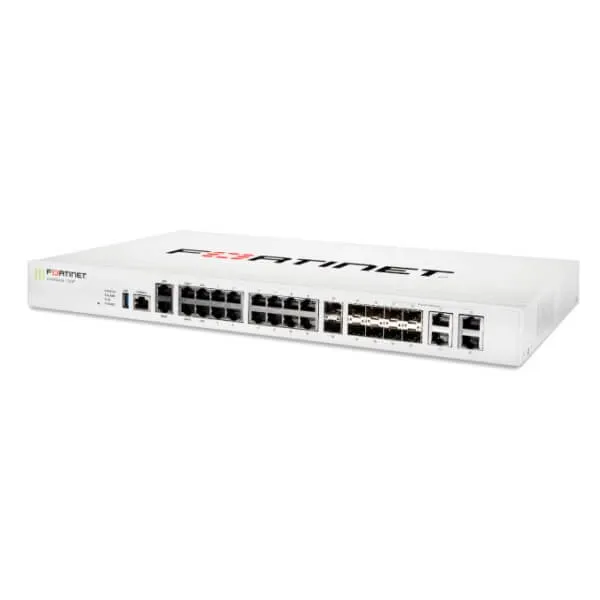
FortiWeb FWB-100F Web Application Firewall in Africa
Protecting a public website requires more than opening ports and placing a conventional firewall at the network edge. The FortiWeb 100F is a dedicated desktop web application firewall for organisations that need closer inspection of HTTP, HTTPS and API traffic before requests reach important business systems. It is designed for customer portals, online transaction services, business applications, mobile backends and other public-facing workloads where attack filtering, bot control, virtual patching and operational visibility matter. FourTeck helps buyers translate application traffic, hosting architecture, support terms and deployment goals into a practical FortiWeb purchasing plan.
✓ API and Bot Protection
✓ High-Availability Options
✓ Africa Quote Assistance
Request Quote
Check Africa Availability
Quick Product Information
Fortinet
FortiWeb 100F / FWB-100F
Hardware web application firewall
Web application and API protection
Compact desktop appliance
Up to 100 Mbps; traffic dependent
Contact FourTeck for current options
Bundle, term and deployment dependent
Product Overview
The FortiWeb 100F sits between users and protected web services, examining application traffic before it reaches the origin server. This position allows the appliance to evaluate requests at a layer where a general network firewall may not fully understand the meaning of a login attempt, form submission, API call, file upload or application parameter. The goal is to identify requests that match known attack techniques, violate expected protocol behaviour, indicate automated abuse or differ significantly from the normal activity of the protected application.
This model is intended for organisations that need a dedicated on-premise or data-centre WAF in a compact footprint. It can fit businesses protecting a controlled number of applications with traffic that remains within the appliance’s stated performance range. Typical buyers include financial service teams, education platforms, healthcare operators, retailers, hospitality groups, public-sector departments, software providers and companies that expose ERP, CRM, booking, payment, membership or customer-service portals to the internet. The platform is also relevant when mobile applications rely on APIs that need discovery, policy control and protection from unusual request patterns.
The appliance combines traditional security checks with machine-learning-supported application modelling. Traditional controls can evaluate signatures, reputation, protocol validity and other known indicators, while behavioural analysis can help the platform understand how an application normally operates. This layered approach is valuable because application attacks do not always arrive as obviously malicious files. They may appear as carefully formed requests that manipulate fields, parameters, sessions or APIs in ways the application was not designed to handle.
A WAF purchase should therefore be treated as a deployment project rather than a simple hardware order. SSL certificates, reverse-proxy design, DNS, server pools, application URLs, API endpoints, authentication flows and business maintenance windows all affect the final configuration. Rule learning must be observed and tuned so legitimate customers, staff and partners are not blocked. FourTeck supports this decision process by helping buyers confirm traffic expectations, required availability, service bundle, support term, network placement and related implementation needs before quotation.
Key Business Benefits
Technical features create value only when they reduce business risk, improve visibility or make application protection easier to manage. The following benefits explain where the FWB-100F can contribute to a practical security programme.
🔒 Focused Application Protection
The appliance is built to examine web and API traffic rather than treating every connection as generic network traffic. This allows security teams to apply controls closer to the business logic exposed through portals, forms, login pages and service endpoints.
◆ Reduced Exposure to Common Attacks
FortiWeb is designed to help address the OWASP Top 10 and other application threats. For a business, this adds a protective control in front of software that may contain coding weaknesses, legacy components or delayed patch cycles.
● API Discovery and Control
Modern applications often exchange data through APIs that are not obvious in a traditional website inventory. Discovery and protection capabilities help teams map these interfaces, apply suitable controls and reduce unmanaged exposure.
⚙ Better Rule Management
Application modelling can reduce the burden of building every rule manually. Teams still need to review behaviour and tune policies, but guided learning can make it easier to distinguish ordinary traffic from unusual requests.
↗ Virtual Patching Support
When a permanent software fix cannot be deployed immediately, a WAF policy may help block exploit patterns while developers test and release the proper update. This provides useful breathing room without replacing the need to repair the application.
● Bot Abuse Mitigation
Automated activity can test passwords, scrape content, overload forms and consume application resources. Bot controls help apply more appropriate treatment to suspicious automation while preserving access for legitimate users and approved services.
✓ Deployment Continuity
Active/passive and active/active clustering options support resilience planning. This helps organisations design maintenance and failover procedures around important applications rather than relying on a single inspection point.
Product Highlights
The stated protected throughput is up to 100 Mbps. Real results depend on traffic mix, enabled security functions, SSL activity, policy complexity and application behaviour.
A desktop form factor, fanless design and average power consumption listed at 18 watts make the appliance suitable for smaller server rooms and controlled office IT spaces.
Four 10/100/1000 RJ45 interfaces support practical placement in front of protected application networks, subject to the chosen topology and redundancy design.
The 64 GB SSD supports appliance operations and local data needs. Log retention strategy should still be planned according to traffic volume, audit requirements and external reporting systems.
FortiWeb combines several security layers rather than depending on one detection method. Signature and reputation controls can address known malicious patterns, protocol checks can reject malformed activity, and behavioural learning can help identify requests that do not fit the expected application profile. This is particularly useful where applications evolve, new API endpoints are added or attack techniques change faster than manual rules can be written.
The platform also supports client-side security, threat investigation functions, third-party integrations and Fortinet Security Fabric connectivity. The exact value of these capabilities depends on software version, licensed services, deployment design and the organisation’s operating process. Buyers should therefore confirm the required bundle rather than assuming every service is included with hardware alone.
Application licences are listed as unlimited for the hardware model, but capacity planning remains essential. The number of applications that can be protected effectively is influenced by traffic volume, TLS processing, rules, logging, API behaviour and availability requirements. Unlimited licensing does not mean unlimited performance, so sizing should be based on measured or realistic peak demand.
Technical Specifications
| Specification | FortiWeb 100F Detail | Buyer Note |
|---|---|---|
| Brand | Fortinet | Confirm source and support term |
| Model / SKU | FortiWeb 100F / FWB-100F | Bundle codes vary by service level and term |
| Product Type | Web application firewall appliance | For web and API traffic, not a replacement for an edge firewall |
| Network Interfaces | 4 × 10/100/1000 RJ45 | Check topology, VLAN and redundancy needs |
| USB Interfaces | 2 | Use according to approved administration procedures |
| Memory | 4 GB RAM | Current official hardware ordering description |
| Storage | 1 × 64 GB SSD | Plan external logs where longer retention is needed |
| SSL/TLS Processing | Software | Encrypted traffic volume affects sizing |
| Protected Throughput | Up to 100 Mbps | Actual performance varies with configuration and traffic |
| Latency | Less than 5 ms under stated testing | Application experience depends on full network path |
| High Availability | Active/passive and active/active clustering | A second appliance and correct design are required |
| Application Licences | Unlimited | Performance and service capacity still apply |
| Form Factor | Desktop; not rack mountable | Plan secure shelf or cabinet placement |
| Dimensions | 216 × 152 × 40.5 mm | Allow cable and ventilation clearance |
| Weight | Approximately 1.55 kg | Suitable for controlled desktop or shelf installation |
| Power Supply | Single; 100–240V AC, 50–60 Hz | Use suitable UPS and surge protection |
| Average Power | 18 W | Useful for UPS and heat planning |
| Cooling | Fanless | Keep vents clear and room conditions controlled |
| Operating Temperature | 0°C to 40°C | Avoid hot, dusty or poorly ventilated placement |
| Security Hardware | Trusted Platform Module | Supports platform integrity functions |
How to interpret the specifications
The 100 Mbps figure is a maximum performance reference, not a promise that every deployment will deliver the same rate with all controls enabled. TLS inspection, bot analysis, logging, complex policies, large uploads, API traffic and unusual request patterns can change the load. Buyers should measure normal and peak traffic at the application layer, not only the capacity of the internet connection.
The compact chassis is convenient, but its single power supply and non-rack format must be considered in the physical design. Where application uptime is critical, plan a pair of appliances, redundant switches, suitable power protection and tested failover procedures. FourTeck can help review these requirements before the final model and bundle are selected.
Configuration and Buyer Guidance
A successful WAF deployment begins with an application inventory. List every public hostname, login page, administrative path, file upload function, partner endpoint, mobile API and third-party integration that will pass through the appliance. Identify which services are business-critical and which can tolerate a maintenance window. This information shapes policy design, certificate handling, monitoring and high-availability planning.
1. Measure Real Traffic
Record average and peak HTTP/HTTPS throughput, requests per second, upload sizes and seasonal spikes. Include growth rather than sizing only for today’s load.
2. Map SSL Handling
Confirm where certificates are stored, where encryption terminates and whether traffic is re-encrypted to origin servers. Certificate ownership and renewal responsibilities should be documented.
3. Define Availability
Decide whether one appliance is acceptable or whether clustering is required. Include switch redundancy, power continuity, health checks and application failover in the design.
4. Choose the Service Bundle
Standard, Advanced and Enterprise bundle options can differ. Confirm the security services, support level, contract term and renewal responsibilities before approving the order.
5. Plan Logging
Decide how long logs must be retained, who will review them and whether an external analytics or management platform is required for reporting and investigation.
6. Prepare Safe Rollout
Use monitoring and staged policy activation before aggressive blocking. Include application owners and developers so false positives can be identified without disrupting customers.
Compatibility must also be checked with load balancers, reverse proxies, content delivery networks, authentication systems, cloud gateways and existing firewalls. A WAF may need original client IP information, trusted proxy headers, health-check access and carefully defined routing. FourTeck can use these details to determine whether the 100F is appropriate or whether a higher-capacity appliance, virtual deployment or cloud service would provide a better fit.
Ideal Business Use Cases
The FortiWeb 100F is most useful where a business can identify specific applications that need a dedicated protection layer and where the expected traffic fits the platform. The following examples show how the appliance may support different operational requirements.
Customer and Member Portals
Portals expose login forms, account data and self-service functions to the internet. A WAF can inspect attempts to manipulate parameters, automate password testing or misuse application inputs while preserving normal access for customers.
Online Retail and Booking
Shopping, booking and reservation systems process searches, forms, user sessions and payment-related workflows. Application protection can help reduce malicious requests, scraping pressure, account abuse and attacks against checkout or booking functions.
Mobile and Partner APIs
Mobile applications and business partners often depend on APIs that exchange sensitive information. Discovery and policy controls help teams understand endpoint use, identify unusual calls and apply protection that is appropriate to machine-to-machine traffic.
Internal Applications with Remote Access
ERP, CRM, human-resource and workflow systems may be made available to staff or partners outside the office. A WAF can add inspection in front of these services, especially when older application code or complex forms increase exposure.
Education and Public Services
Registration, learning, results, citizen and information portals can receive sharp traffic peaks and frequent automated probing. Policy controls, bot mitigation and visibility help protect availability while allowing legitimate users to complete important tasks.
Applications Awaiting a Permanent Fix
Where a vulnerability cannot be patched immediately, carefully tested virtual patching can reduce exposure to known exploit patterns. This is a temporary risk-control measure that should operate alongside development, testing and change management.
The appliance should not be selected only because a website is public. A low-traffic marketing site may be protected more efficiently by a cloud service, while a high-volume transaction platform may require a larger FortiWeb model. Hosting location, control over DNS, compliance needs, available administrators and the ability to manage certificates all influence the correct architecture.
FortiWeb FWB-100F Machine-Learning Application Protection
Application security policies can become difficult to manage when every legitimate request must be described manually. Business applications have many normal behaviours: users submit forms, upload files, call APIs, search records, change account details and move through multi-step workflows. Attackers try to imitate these actions while adding malicious parameters, unexpected sequences or automated patterns. FortiWeb uses application modelling to learn normal behaviour and provide another decision layer beyond static signatures.
For a security team, the practical advantage is context. A request may not match a known attack signature, yet it can still look very different from the application’s usual traffic. Behavioural analysis can flag or block this activity according to the configured policy. It can also support the creation of a positive security model, where expected inputs and patterns are defined more clearly. This helps the WAF protect custom applications that may not be covered perfectly by generic rules.
Learning does not remove the need for administration. New software releases, redesigned forms, changed API schemas and seasonal traffic can alter normal behaviour. Policies should be reviewed after application updates, and teams should monitor false positives before enabling strict blocking. Development and operations staff should provide release information so security rules can be adapted without surprise.
Buyers should ask who will own this process. A dedicated security team may manage it internally, while a smaller organisation may need a service partner. FourTeck can help define the initial requirements and discuss deployment support, but the long-term operating plan should be agreed before purchase. A WAF produces the best business value when policy learning, exception handling and application changes are part of a documented workflow.
FortiWeb FWB-100F API Discovery and Bot Mitigation
APIs are central to mobile applications, partner integrations, payment services, logistics platforms and modern web interfaces. They can also be overlooked because they do not always appear as visible pages. An organisation may protect its main website while leaving old endpoints, test routes or undocumented interfaces accessible. FortiWeb can evaluate application traffic to discover APIs and build a clearer inventory for policy creation.
Discovery is important because a team cannot protect what it has not identified. Once endpoints are known, administrators can review expected methods, schemas, data formats, authentication behaviour and request rates. Positive policy controls can then be applied to reduce misuse. This is particularly valuable where APIs carry personal information, account data, transaction details or operational records between applications.
Bot mitigation addresses a different but related problem. Automated traffic is not always malicious. Monitoring services, approved crawlers and business integrations may be legitimate, while credential testing, scraping, form spam and resource exhaustion are harmful. Effective control requires classification and suitable responses rather than blocking every automated request. Policies can be stricter around login, registration, password-reset, checkout and high-value API endpoints while allowing approved services to continue.
Before requesting a quote, buyers should estimate automated traffic, identify sensitive endpoints and decide whether advanced bot services are required in the chosen bundle. They should also confirm whether application developers can provide API specifications and whether mobile or partner systems use fixed headers, tokens or source networks. These details reduce deployment delays and help the WAF distinguish expected machine traffic from abuse.
FortiWeb FWB-100F High Availability and Operational Control
A web application firewall becomes part of the delivery path for protected services. If it is unavailable or incorrectly configured, customers may not reach the application. High-availability planning is therefore a business-continuity requirement, not only a technical option. The 100F supports active/passive and active/active clustering, allowing organisations to design a pair of appliances for failover or shared operation according to the supported architecture.
Hardware clustering alone is not enough. Each appliance needs reliable power, network connectivity and consistent configuration. The surrounding switches, server paths, DNS design, certificates and health checks must also support failover. Maintenance procedures should explain how updates are applied, how traffic is moved between units and how the team confirms that protected applications remain healthy after a change.
Operational control includes logs, alerts, policy reviews and incident investigation. Security events should be routed to staff who can act on them, and retention should match business and regulatory requirements. A small local SSD may be adequate for appliance operations, but larger environments often need external reporting, central management or security analytics for longer history and easier correlation.
The decision between one appliance and a cluster should consider the financial impact of downtime, planned maintenance frequency and the availability of alternative application paths. FourTeck can help buyers discuss the hardware quantity, network accessories, power protection, subscription term and implementation scope needed for a resilient deployment. This prevents a quotation from covering only the appliance while leaving essential continuity items unplanned.
What Buyers Should Check Before Purchase
Before requesting a quotation, confirm that the model matches the application environment rather than selecting it by name or headline throughput alone. Start with the number of applications, domains and APIs, then document peak protected traffic, transaction patterns, upload sizes, SSL requirements and expected growth. A 100 Mbps appliance can be suitable for a controlled environment, but it may be undersized when encrypted traffic, heavy bot activity, detailed logging and multiple security functions are considered together.
Configuration Fit
Confirm hardware-only or bundled ordering, support duration, security services, software version expectations and whether one or two appliances are required.
Compatibility Check
Review reverse proxies, load balancers, server networks, certificates, DNS, cloud gateways, authentication systems and original-client-IP requirements.
Availability and Warranty
Ask for current supply status, lead time, support entitlement, replacement handling and warranty guidance for the selected route and contract term.
Quote Preparation
Provide delivery destination, quantity, protected traffic, application count, SSL design, API needs, high availability and preferred support period.
The bundle is a major commercial decision. FortiWeb hardware can be ordered with different service levels and contract durations, and renewal costs should be included in long-term budgeting. Ask which security services are included, what support response is provided and when renewals begin. A lower initial quotation may not represent the same protection level as a broader bundle, so compare like with like.
Physical installation also deserves attention. The unit is a desktop appliance rather than a standard rack system. Plan a secure shelf or cabinet position, cable management, ventilation, UPS capacity and protection from dust, heat and accidental disconnection. For a cluster, confirm port availability and network paths for both appliances. If the application is hosted externally, make sure the deployment location has the routing and administrative control required to place the WAF correctly.
Finally, define ownership after installation. Someone must review alerts, approve exceptions, coordinate with developers and test policy changes. Share these expectations with FourTeck so the quotation can include suitable guidance, deployment assistance or related services instead of delivering hardware without a workable operating plan.
Africa Availability and Service Support
FourTeck supports FortiWeb enquiries across Africa with assistance for model selection, configuration review, commercial quotation, delivery coordination and warranty guidance. Availability can vary according to the exact hardware bundle, support duration, security service level, supplier status, quantity and destination. For this reason, the most useful first step is to share a complete requirement rather than requesting hardware by model number alone.
The team can help compare the 100F with larger hardware models, virtual appliances and cloud-based application-security options. This matters when traffic is expected to grow, applications are hosted across several environments or an organisation wants operating expenditure instead of hardware ownership. Buyers can also discuss high availability, certificate handling, network placement, API requirements, external logging and implementation support before a purchase order is raised.
Warranty handling and support entitlement depend on the selected supply route and contract. FourTeck can help clarify the quoted term, included services, renewal timing and available escalation path. No stock or delivery promise should be assumed until the exact part number, quantity and destination are confirmed.
Africa Country and Regional Coverage
Businesses across Africa, including Kenya, Uganda, Nigeria, Ghana, Tanzania, Rwanda, Ethiopia, South Africa, Zambia, Botswana, Senegal and neighbouring commercial markets, can contact FourTeck for product availability, configuration guidance and quotation support. Regional requirements may involve a single application, a data-centre deployment, a multi-country portal or a wider project that combines web protection with network firewalls, switching, servers and security monitoring.
Delivery planning depends on destination, import process, supplier route, order quantity and the selected service bundle. Buyers should provide the legal purchasing entity, delivery country, required timeline and whether installation assistance is needed. FourTeck can then coordinate a clearer commercial response and suggest a suitable alternative when the requested model or bundle is not the best fit.
GCC, Middle East and Africa Availability
FourTeck Africa can support product enquiries for organisations operating across Africa while coordinating wider technology requirements through selected FourTeck platforms serving GCC and Middle East markets. This can help companies whose procurement, hosting, security operations or finance teams are distributed between African business locations and the UAE, Saudi Arabia, Qatar, Oman or Bahrain.
Regional projects should use one agreed application inventory, traffic estimate, security bundle and support plan so different offices do not purchase incompatible configurations. Availability, delivery options, warranty handling and implementation scope may vary by country, selected part number, service term and order quantity. A coordinated requirement gives suppliers and technical teams a consistent basis for quotation.
Buyers can review the FourTeck Africa platform, connect with FourTeck UAE, or use the Africa contact page to route a multi-region request. The final recommendation should match where applications are hosted, who will manage policies and where commercial support is required.
Related Models and Security Solutions
The correct alternative depends on throughput, interface requirements, hosting location and the wider security architecture. A buyer needing more capacity may consider a larger FortiWeb appliance, while an organisation protecting branch networks still needs a separate next-generation firewall at the network edge. The following options can help structure the discussion.
FortiWeb 400F
A higher-capacity hardware option with 500 Mbps stated throughput, additional SFP interfaces and rack-mount form factor. Suitable when traffic or physical infrastructure exceeds the 100F design.
FortiWeb 600F
A 1 Gbps class hardware WAF with bypass-capable ports, SFP connectivity, hardware SSL/TLS processing and dual hot-swappable power supplies for larger deployments.
FortiGate FG-81F-Bypass
A compact Fortinet network-security option for secure internet edge, VPN, SD-WAN and branch control. It complements application protection but serves a different role from a dedicated WAF.
FortiGate 50G
A modern branch-class firewall option for secure networking, VPN, application control and FortiGuard service planning where the requirement is network perimeter protection.
FortiGate 31G
A compact desktop network firewall for smaller branches that need secure internet access, VPN and Fortinet ecosystem integration alongside separately planned application protection.
Cloud or Virtual FortiWeb
A virtual appliance or cloud service can suit applications already hosted in public cloud, rapidly changing environments or organisations that prefer subscription-based deployment.
Why Buyers Choose FourTeck
Security appliances are easy to misquote when the model, bundle, service term and deployment scope are not separated clearly. FourTeck approaches the requirement as a business project. The team asks what applications are being protected, how much traffic they receive, where they are hosted, whether APIs are involved, what uptime is expected and who will manage the platform after installation.
Assistance identifying the relevant hardware or bundle code for the stated requirement.
Review of traffic, applications, SSL, APIs, availability and network placement before quotation.
A commercial response aligned to quantity, support term, destination and project scope.
Regional planning based on destination, supplier route and order requirements.
Clarification of support entitlement and warranty expectations for the selected route.
Comparison with larger hardware, virtual or cloud options when the requested model is not ideal.
This approach helps procurement teams avoid incomplete purchases, such as hardware without the needed service bundle, a single appliance where resilience is required, or a desktop model selected for traffic that demands a larger platform. FourTeck does not rely on unverified stock, price or partnership claims; current commercial details are confirmed during the quotation process.
Frequently Asked Questions
What is the FortiWeb 100F used for?
It is a dedicated web application firewall used to inspect HTTP, HTTPS and API traffic before requests reach protected servers. It can help block common application attacks, unusual request patterns, malicious automation and abuse of exposed endpoints. It is designed to complement network firewalls, secure coding, patching and monitoring rather than replace those controls.
Is the FWB-100F suitable for every website?
No. The correct fit depends on protected traffic, TLS processing, application count, API use, logging and availability requirements. A small cloud-hosted site may suit a cloud service, while a busy transaction platform may need a higher-capacity model. FourTeck can review measured or estimated peak traffic before recommending the appliance.
Can it protect APIs used by mobile applications?
Yes. FortiWeb includes API discovery and protection capabilities designed to identify endpoints and apply policy controls to API traffic. Successful deployment still requires information about authentication, schemas, expected methods, tokens, rate behaviour and partner integrations. Developers should be involved so controls protect the interface without interrupting legitimate application calls.
Does the 100 Mbps figure equal my internet speed?
Not necessarily. It refers to stated appliance throughput under defined conditions. Actual protected performance can change with encrypted traffic, enabled security functions, policy complexity, uploads, logging and request behaviour. Size the WAF using application-layer peak traffic and expected growth, not only the capacity printed on an ISP circuit.
Can FourTeck help select the correct bundle?
Yes. Buyers can share the required security services, support expectations and contract duration. FourTeck can help distinguish hardware-only and bundled requirements, discuss Standard, Advanced or Enterprise service levels where applicable, and prepare a quotation that states the selected term clearly. Renewal planning should be reviewed at the same time.
Does the appliance support high availability?
The model supports active/passive and active/active clustering. A resilient design normally requires two appliances, suitable network paths, reliable power, synchronised configuration and tested failover. Buyers should also consider redundant switches, UPS protection, health checks and maintenance procedures because clustering cannot protect against every external point of failure.
Is the FortiWeb 100F available in Africa?
FourTeck supports Africa enquiries and can check current sourcing options for the requested hardware, bundle and quantity. Availability may vary according to supplier status, contract term and destination. Share the delivery location, required timeline and complete configuration so the team can confirm the relevant part number and commercial path.
What information is needed for a quotation?
Provide the number of applications and APIs, average and peak traffic, SSL design, high-availability requirement, service bundle preference, support duration, quantity, delivery destination and implementation expectations. Details about load balancers, cloud gateways, server networks and external logging are also useful when they affect topology or compatibility.
Does a WAF replace patching and secure development?
No. A WAF can reduce exposure and provide virtual patching while a permanent fix is prepared, but application weaknesses should still be corrected in code, dependencies and configuration. Strong protection combines secure development, timely updates, access control, monitoring, backups and tested incident procedures with WAF policies.
Can businesses request bulk or project supply?
Yes. Organisations planning several data centres, application environments or regional projects can request coordinated supply support. Provide quantities, deployment phases, destination details, required service terms and technical standards. FourTeck can help align the commercial request and identify when central management, higher-capacity models or a mixed hardware and virtual approach should be considered.
Need Help Choosing the Right FortiWeb Option?
Share your protected applications, peak traffic, API requirements, availability design, support term and delivery destination. FourTeck can review the requirement, check current supply options and prepare a quotation aligned to your business environment.

Reviews
There are no reviews yet.