

FortiMail FML-900G Email Security Appliance in Africa
Protecting email requires more than filtering obvious spam. Large organisations must inspect attachments, analyse links, identify impersonation, control sensitive outbound information, maintain message flow and give administrators enough visibility to investigate incidents. The FortiMail FML-900G is built for mid-sized and large enterprises, education institutions, public-sector departments, service providers and regulated organisations that need a dedicated platform for high-volume email protection. FourTeck helps buyers align the appliance, FortiGuard services, FortiCare support, cloud connectors, high availability and deployment plan with the real business requirement.
Request QuoteCheck Africa Availability
Quick Product Information
Fortinet
FortiMail 900G / FML-900G
Rack-mounted email security appliance
Mid-to-large enterprises, education, government and service providers
Inbound and outbound email threat protection, policy control and secure messaging
1U rack mount
8 TB listed as 2 × 4 TB secure encrypted drives
Contact FourTeck for current options
Africa, with wider regional coordination where applicable
Bundle, support term and cloud connectors are selection dependent
Product Overview
Email remains one of the most frequently used business communication channels and one of the easiest routes for attackers to approach employees. A convincing invoice request, shared-document notification, password-expiry message or executive impersonation attempt can reach users even when the perimeter firewall is correctly configured. The FortiMail 900G provides a dedicated inspection and policy layer between external senders, cloud email platforms, internal mail systems and end users. It can examine message reputation, sender identity, embedded links, file attachments, content patterns and policy conditions before allowing mail to continue through the organisation.
This appliance is positioned above small-office and entry enterprise models. Its published capacity supports as many as 500 protected email domains, up to 1,500 local mailboxes in server mode and high message-processing figures for routing, antispam, outbreak protection and Enterprise ATP inspection. These figures make it relevant to organisations that operate several divisions, campuses, subsidiaries or managed customer domains. The value is not only speed. A larger platform gives administrators more room for quarantine, reporting, policy separation, multi-domain administration and future growth without forcing an early platform replacement.
FortiMail can be positioned in gateway, transparent or server mode, and it can also support cloud email integration options for Microsoft 365 and Google Workspace environments. This flexibility matters because African organisations rarely use one identical email architecture. Some maintain on-premises Exchange, some have completed a cloud migration, while others operate hybrid models during a long transition. The right design depends on mail routing, DNS control, security responsibilities, business continuity requirements and whether the customer needs pre-delivery inspection, post-delivery actions or both.
FourTeck supports the selection process by reviewing domain count, recipient volume, peak mail flow, message size, quarantine expectations, data-loss policies, encryption needs, retention goals and integration with other Fortinet products. This helps buyers avoid choosing only by headline throughput. A correctly sized appliance should fit today’s mail environment, expected growth, support model and operational skills. It should also account for high availability, rack power, network interfaces, backup procedures and incident-response workflows.
Key Business Benefits
◆ Stronger Protection Against Deceptive Email
Layered inspection helps identify phishing, malicious links, harmful attachments, impersonation and business email compromise patterns that may look legitimate to a busy employee. Reducing successful email attacks protects finance processes, user credentials, customer information and executive communication.
◆ Capacity for Growing Organisations
The platform is designed for larger mail environments with many domains, users and policy groups. This gives enterprises room to add subsidiaries, departments or managed customers while maintaining structured administration instead of creating separate, disconnected security systems.
◆ Better Control of Sensitive Information
Content inspection and data-loss prevention options help security teams identify sensitive material leaving through email. Policies can support financial data, identity records, health information, internal documents and other protected content according to business and regulatory requirements.
◆ Operational Resilience
Dual power supplies, hardware RAID options, message queues and high-availability capabilities can support a more resilient email-security design. These elements help reduce single points of failure when mail delivery is closely linked to sales, payments, service requests and internal approvals.
◆ Visibility for Security and Compliance Teams
Message tracking, reporting, quarantine controls, activity logs and policy records give administrators a clearer view of what happened to an email and why. This can shorten investigations, support audit preparation and improve communication with management after an incident.
◆ Flexible Deployment Models
Gateway, transparent, server and cloud-connected approaches allow the platform to fit different mail architectures. The organisation can design protection around existing systems rather than forcing an immediate and disruptive change to every mail-routing component.
◆ Coordinated Security Ecosystem
Integration with Fortinet security products and third-party services can help teams share indicators, analyse suspicious files, centralise logs and build a wider response process. Email incidents can then become part of the organisation’s complete security operation rather than an isolated mailbox problem.
Product Highlights
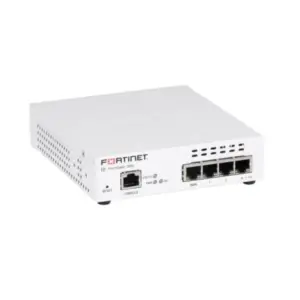
The FML-900G combines enterprise messaging security software with hardware designed for continuous rack deployment. Four copper Gigabit Ethernet interfaces and two Gigabit SFP interfaces provide connection choices for management, mail traffic and resilient network designs. Dual hot-swappable AC power supplies help data-centre teams distribute the appliance across separate power sources where the rack design supports it.
Published performance reaches up to 1.3 million routed messages per hour, 900,000 messages per hour with antispam plus outbreak protection and 650,000 messages per hour with Enterprise ATP under stated laboratory conditions.
Support for up to 500 protected email domains makes the platform useful for large organisations, multi-entity groups and service-provider designs that need separated policy administration.
The listed configuration includes 2 × 4 TB secure encrypted drives with hardware RAID options. Final usable capacity depends on the chosen RAID level and drive arrangement.
Optional email API integration can support Microsoft 365 and Google Workspace use cases. Licensing, tenant design and required functions should be confirmed before purchase.
Security functions include sender and domain reputation, antispam, antivirus, outbreak protection, content disarm and reconstruction, URL analysis, impersonation detection, data-loss prevention, encryption, quarantine, message tracking and policy-based archiving. Not every advanced service is automatically included with bare hardware. Buyers should check the exact bundle code and subscription term to understand which FortiGuard and support capabilities are active on day one.
Technical Specifications
| Specification | FortiMail FML-900G Details |
|---|---|
| Brand / Model | Fortinet FortiMail 900G / FML-900G |
| Recommended Deployment | Mid-to-large enterprise, education and government departments; also relevant to managed or multi-domain environments |
| Copper Interfaces | 4 × 10/100/1000 RJ45 |
| Fibre Interfaces | 2 × Gigabit Ethernet SFP slots |
| Storage | 2 × 4 TB default storage; secure encrypted drives listed |
| RAID | Hardware RAID 0, 1, 5, 10 and hot spare, based on drive count |
| Memory | 16 GB |
| Form Factor | 1U rack mount |
| Trusted Platform Module | Included |
| Power Supply | Dual redundant hot-swappable AC power supplies |
| Protected Email Domains | Up to 500; advanced management licensing may affect domain limits |
| Recipient Policies | Up to 600 per domain / 2,000 per system for incoming or outgoing policy use |
| Server Mode Mailboxes | Up to 1,500 local mailboxes |
| Email Routing Performance | Up to 1.3 million messages per hour, based on stated test conditions |
| Antispam + Outbreak Performance | Up to 900,000 messages per hour, based on stated test conditions |
| Enterprise ATP Performance | Up to 650,000 messages per hour, based on stated test conditions |
| Dimensions | Approximately 1.7 × 17.2 × 24 inches / 44 × 438 × 610 mm |
| Weight | Approximately 28.37 lb / 12.87 kg |
| Average Power Consumption | Approximately 165.56 W |
| Operating Temperature | 10°C to 35°C |
| Cloud Email Integration | Optional Microsoft 365 and Google Workspace email API integration |
| Support and Services | FortiCare and FortiGuard bundles are term and SKU dependent |
Configuration and Buyer Guidance
A FortiMail purchase normally includes more decisions than the appliance model. Start with the mail architecture. Confirm whether the system will sit in gateway mode in front of Microsoft Exchange, work transparently in an existing route, provide server-mode mailboxes, or use API integration with Microsoft 365 or Google Workspace. Each method changes DNS planning, mail-flow rules, firewall policies, certificates, administrator responsibilities and the deployment timeline.
1. Measure Real Mail Volume
Collect peak hourly messages, average message size, attachment patterns and expected annual growth. Include automated notifications, application mail and bulk customer communication.
2. Define Security Services
Decide whether the project needs Base protection or Enterprise ATP functions such as advanced attachment treatment, sandbox-related services, click protection and stronger BEC controls.
3. Plan High Availability
Determine whether one appliance is acceptable or whether two systems are required. Review message queue synchronisation, power separation, network paths and maintenance procedures.
4. Confirm Retention and Storage
Estimate quarantine, log and archive requirements. RAID choice affects usable capacity, resilience and rebuild behaviour, so raw drive capacity should not be mistaken for usable space.
The support term should match the organisation’s procurement and risk policy. One-year terms may reduce the initial commitment but require earlier renewal planning. Multi-year bundles can simplify budgeting and reduce the chance of an overlooked renewal. Buyers should also decide which team will own administration, who can release quarantined messages, how policy changes are approved and whether logs must be forwarded to a SIEM or FortiAnalyzer.
Before ordering, provide FourTeck with the current mail platform, number of protected domains, estimated users, peak hourly volume, average message size, deployment mode, preferred FortiGuard bundle, support duration, high-availability requirement, destination country and expected implementation date. These details make the quotation more accurate and reduce the risk of missing licenses, optics, rack accessories or professional services.
Ideal Business Use Cases
Financial Services and Payment Operations
Banks, insurers, fintech companies and payment providers exchange sensitive customer records, statements and approval requests. Email impersonation can redirect payments or expose credentials. FortiMail policies can help inspect sender identity, suspicious content, attachments and outbound data while maintaining evidence for security review.
Universities and Education Networks
Universities may manage many schools, departments, research units and student domains. High user turnover and open collaboration increase exposure to phishing and malicious documents. A larger appliance can support separated policies, central quarantine, multiple administrators and high message volumes across the institution.
Government and Public Services
Government departments rely on email for citizen communication, procurement, inter-agency documents and service notifications. Dedicated email security can help enforce content rules, detect targeted messages, protect official domains and support auditable handling of suspicious mail.
Healthcare Groups
Hospitals, laboratories and health networks exchange appointment, billing and clinical information. Attackers often exploit urgent medical language. FortiMail can support phishing protection, malware inspection, encryption and data-loss controls as part of a wider health-information security programme.
Managed Service Providers
A service provider protecting several customer domains needs policy separation, delegated administration, scalable quarantine and accurate reporting. Advanced management licensing and multi-tenant planning should be discussed so the operating model matches customer isolation and service-delivery expectations.
Multi-site Enterprise Groups
Manufacturers, logistics firms, retailers and professional-service groups may operate many legal entities and domains. Centralising email security can create more consistent policy, easier reporting and a single escalation path while still allowing specific controls for different subsidiaries.
The appliance may also fit organisations moving from a legacy secure email gateway, consolidating several smaller systems or bringing cloud email protection under local administrative control. Suitability should be confirmed through sizing and design rather than industry name alone. A smaller model may be more economical for a single domain with modest traffic, while a larger platform may be required when inspection depth, future growth or multi-tenant operations are significant.
FortiMail FML-900G Threat Inspection and Email Defence
Effective email defence uses several checks because no single technique can identify every threat. Connection-level controls evaluate the source of a message before the full content is accepted. Sender reputation, IP information, domain reputation, authentication results and protocol behaviour can indicate whether a message is likely to be trusted or suspicious. This reduces unnecessary processing and blocks obvious abuse early in the mail flow.
Content inspection then examines message structure, URLs, attachments, file types, image content and language patterns. Antivirus and outbreak services look for known malicious content and rapidly developing campaigns. Behavioural and heuristic methods help detect suspicious documents or messages that do not match a previously known signature. Content disarm and reconstruction can remove active elements from supported documents, while click-related protection can analyse or rewrite links according to the selected service bundle.
Business email compromise needs special attention because a fraudulent message may contain no malware. It may simply imitate a senior manager, supplier or finance contact and request a payment, password reset or account change. Impersonation analysis, domain authentication, cousin-domain checks and sender-behaviour policies can help identify these attempts. The organisation must combine technology with approval controls, staff awareness and independent verification of sensitive requests.
Buyers should map each desired protection feature to the quoted FortiGuard bundle. The hardware platform provides the foundation, but advanced services and cloud-assisted analysis may depend on active subscriptions. FourTeck can help clarify bundle contents, renewal timing and how the selected services relate to the customer’s threat model.
FortiMail FML-900G Data Protection, Encryption and Policy Control
Email security is also an outbound control problem. Employees may accidentally send customer information, internal financial records, identity documents or confidential files to the wrong person. Malicious insiders or compromised accounts may intentionally move information outside the organisation. Data-loss prevention functions can inspect message content and attachments for selected patterns, file fingerprints and policy conditions before delivery.
A useful data-protection design begins with classification. The security team must know which information is sensitive, where it is used and which departments are allowed to send it externally. Broad blocking rules often create too many false positives and encourage users to seek workarounds. Better policies use defined exceptions, approved destinations, encryption actions, manager review or quarantine where appropriate. Health, finance, government and professional-service organisations should align these rules with their legal and contractual obligations.
FortiMail supports encryption capabilities including server-to-server TLS options, S/MIME-related functions and identity-based encryption workflows, depending on configuration and services. Encryption can protect message confidentiality in transit or provide a controlled method for recipients to access sensitive content. It does not replace correct recipient verification or strong account security, so organisations should combine it with identity controls and user education.
Policy-based archiving and remote storage options may support investigations, record retention and compliance projects. Buyers should confirm whether archiving is required, how long data must be retained, what storage system will be used and who is authorised to search records. These decisions affect capacity, privacy responsibilities and operating cost. FourTeck can help bring the product, license and storage discussion together before purchase.
FortiMail FML-900G High Availability, Management and Reporting
For many organisations, email downtime creates immediate operational impact. Orders may be delayed, support requests may not arrive, suppliers cannot confirm shipments and internal approvals stop moving. High-availability design can reduce dependency on one appliance, but it must be planned carefully. FortiMail supports active-passive and configuration-synchronisation approaches, message queue and quarantine synchronisation, device-failure detection and link-failover functions.
Two appliances alone do not create complete resilience. Network switches, DNS records, upstream mail routes, firewalls, power distribution and internet connectivity also need redundancy. Administrators should document failover behaviour, maintenance steps and recovery tests. Dual hot-swappable power supplies are useful when the rack provides separate power feeds, but they cannot protect against a single upstream circuit or room-wide outage.
Management features include role-based administration, per-domain control, logs, reports, message tracking, quarantine management, SNMP, Syslog and REST API functions. These tools help operations teams delegate routine tasks without giving every administrator full system rights. Message tracking can answer practical questions such as whether an email was accepted, rejected, quarantined, delayed or delivered. Reporting can help management understand spam volume, attack trends and policy activity.
Optional integration with FortiAnalyzer or a third-party logging platform can centralise records and support longer retention. The customer should decide which events need alerts, who reviews reports and how email incidents enter the wider response process. A capable appliance produces valuable information only when people and procedures use it consistently.
What Buyers Should Check Before Purchase
A model number is only the starting point for an enterprise email-security project. Before requesting a quote, buyers should confirm the current mail platform, protected domains, user count, peak traffic, deployment mode, retention expectations and required subscription services. This prevents a quote that looks complete commercially but misses an important technical component.
Configuration Fit
Confirm domain count, mailbox count, peak hourly messages, average message size, attachment profile, cloud or on-premises mail system and expected growth. Ask whether the 900G offers suitable headroom or whether another FortiMail model is more economical.
License and Renewal Scope
Identify the exact FortiGuard bundle and FortiCare term. Check whether cloud API connectors, email continuity, advanced administration, encryption or additional services are included or quoted separately. Record renewal dates and ownership responsibilities.
Infrastructure Readiness
Review rack depth, rails, cooling, dual power feeds, SFP modules, copper cabling, management network, DNS changes, certificates, firewall rules, upstream mail routes and backup procedures before installation begins.
Availability and Warranty
Ask for current lead time, bundle SKU, warranty and FortiCare coverage, replacement process, delivery destination and any project-specific documentation. Do not assume that a bare appliance and a subscription bundle provide the same coverage.
Deployment Responsibility
Decide who will perform routing changes, policy migration, cloud-tenant connection, high-availability setup, user communication, testing and rollback. Professional services should be discussed when internal teams lack FortiMail experience.
Long-term Operating Cost
Budget for renewals, replacement drives, support, staff training, log storage, archive capacity and future growth. A lower initial quote may cost more later when essential services are excluded or renewed separately.
When contacting FourTeck, share the current solution, desired go-live date, country, quantity, high-availability requirement and preferred support term. Include any formal compliance, encryption, archiving or cloud-integration requirements. FourTeck can use this information to guide model confirmation, alternative options and quote preparation.
Africa Availability and Service Support
FourTeck supports enterprise email-security enquiries across Africa with assistance for product selection, configuration review, quotation, delivery coordination and warranty guidance. Availability may vary according to the exact FML-900G SKU, FortiGuard bundle, FortiCare term, supplier position, quantity and delivery destination. Large appliance projects should be planned early because subscription and support choices can be as important as the hardware itself.
The quotation process can include bare hardware, Base Bundle or Enterprise ATP Bundle options, one-year or multi-year support periods, high-availability quantity, cloud email connectors and additional services. FourTeck can also discuss related Fortinet products where the customer needs sandboxing, central logging, firewall integration or broader security-fabric planning.
Delivery coordination is based on destination, shipment method, documentation, project schedule and local import requirements. Warranty handling and support entitlements should be confirmed from the selected SKU and contract rather than assumed from the model name. Use the contact link below to share the business requirement and request current commercial guidance.
Africa Country and Regional Coverage
Businesses across Africa, including Kenya, Uganda, Nigeria, Ghana, Tanzania, Rwanda, Ethiopia, South Africa, Zambia, Botswana, Senegal and nearby regional markets, can contact FourTeck for product availability, configuration guidance and quote assistance. The team can help buyers review the suitable appliance, subscription term, related services, delivery requirements and project quantity according to the organisation’s email environment.
Regional support is particularly useful for groups that operate in several countries but want a consistent email-security standard. A central architecture can still require different delivery schedules, local documentation, implementation partners or support procedures. FourTeck can coordinate the commercial discussion while the customer’s technical team confirms DNS, routing, cloud tenancy, security policy and local operational ownership.
GCC, Middle East and Africa Availability
FourTeck Africa can support product enquiries for African organisations while guiding wider regional technology requirements through connected FourTeck platforms for Africa, GCC and Middle East markets. Businesses with offices or procurement teams in the UAE, Saudi Arabia, Qatar, Oman and Bahrain may need consistent email-security policies across several legal entities and cloud tenants. Availability, delivery, support and configuration options vary by country, selected bundle, quantity and supplier status.
Cross-region projects should define whether one central email gateway will protect all domains, whether each region needs a local appliance, or whether cloud connectors will be used for distributed tenants. Data-residency expectations, DNS ownership, support hours, incident escalation and renewal management should be agreed before purchase. FourTeck can help prepare a commercial discussion that reflects these differences rather than using one generic quote for every location.
Regional references: FourTeck Africa, FourTeck Kenya, FourTeck Uganda and FourTeck UAE.
Other Options Buyers May Consider
The correct product depends on the size and design of the email environment. Buyers should compare neighbouring FortiMail models and related security components instead of selecting the 900G automatically. A smaller appliance may reduce cost for modest traffic, while a larger platform may provide better headroom for very high volumes or more domains.
FortiMail 400F
Suitable for small to mid-sized organisations that need a dedicated appliance but do not require the domain count or processing capacity of the 900G.
FortiMail 2000F
A higher appliance class for large organisations that need more protected domains, mailboxes or processing headroom than the 900G.
FortiMail VM
Useful where the organisation prefers virtual infrastructure, cloud deployment flexibility or a software-defined approach instead of a dedicated hardware appliance.
FortiSandbox
Adds deeper analysis for unknown or suspicious files and can complement email protection when advanced malware investigation is a priority.
FortiAnalyzer
Consider central logging and reporting when email events must be correlated with firewall, endpoint and other Fortinet security records.
FortiGate Firewall
A FortiGate appliance can protect network access and mail-system connectivity while FortiMail specialises in message security and mail policy.
Why Buyers Choose FourTeck
Enterprise email security is a procurement, licensing and deployment decision. FourTeck helps buyers move from a broad requirement such as “we need FortiMail” to a clearer specification that can be quoted and implemented. The discussion can include appliance sizing, support duration, FortiGuard services, high availability, cloud connectors, related products and delivery coordination.
Assistance for organisations, resellers, system integrators, public projects and multi-site enterprise requirements.
Practical questions around mail flow, domain count, message volume, bundle selection and infrastructure readiness.
Structured commercial preparation based on product SKU, term, quantity, destination and required services.
Guidance on delivery planning, project timing and destination information without making unconfirmed stock promises.
Help understanding hardware support, FortiCare coverage and the importance of selecting the correct contract term.
Support for FortiSandbox, FortiAnalyzer, FortiGate and other components where the email project forms part of a wider security design.
FourTeck does not need to force every buyer into the same appliance. The goal is to align the selected product with the organisation’s workload, risk profile, skills and budget. When a smaller model, virtual option or different architecture is more suitable, that alternative can be discussed before the purchase becomes difficult to change.
Frequently Asked Questions
What is the FortiMail 900G used for?
It is used to protect inbound and outbound business email against spam, phishing, malicious attachments, harmful links, impersonation, business email compromise and sensitive-data leakage. It can be deployed as a secure email gateway, transparent appliance, server-mode platform or with optional cloud email integrations, depending on the customer’s architecture and licenses.
Is the FML-900G suitable for a mid-sized organisation?
It can be suitable where the organisation has high message volume, many protected domains, demanding inspection requirements or significant growth plans. A mid-sized organisation with modest traffic may find the FortiMail 400F or a virtual option more economical. FourTeck can help compare the workload against neighbouring models before quotation.
Can FortiMail work with Microsoft 365 or Google Workspace?
FortiMail supports cloud email integration options, including optional API-related capabilities for Microsoft 365 and Google Workspace. The required license, tenant permissions, deployment mode and desired pre-delivery or post-delivery functions should be confirmed. Cloud integration should be planned with the organisation’s mail administrator and security team.
Does the appliance include all FortiGuard services?
Not necessarily. The bare hardware SKU and the different Base or Enterprise ATP bundle SKUs provide different service coverage and support periods. Buyers should request the full bundle code and a clear list of included services. Additional connectors, continuity, administration or specialised services may be quoted separately.
Can two FML-900G appliances be deployed for high availability?
FortiMail supports high-availability functions, including active-passive designs and synchronisation features. A resilient deployment must also account for DNS, mail routes, switches, firewalls, power, internet links and operational procedures. FourTeck recommends planning the complete path rather than treating the second appliance as the only resilience measure.
How much usable storage will be available?
The listed default hardware includes 2 × 4 TB drives, but usable capacity depends on RAID configuration, system allocation, quarantine, logs, archives and retention policy. Raw capacity should not be treated as usable capacity. Buyers with long retention requirements should review local and external storage options during design.
Is delivery support available across Africa?
FourTeck can assist with availability enquiries and delivery coordination for African business locations. Final options depend on destination, quantity, supplier status, bundle choice and project timing. Customers should provide the delivery country and city, required quantity and preferred implementation date when requesting a formal quote.
What information should I provide for a quote?
Share the current email platform, protected domains, users, peak message volume, average message size, deployment preference, desired FortiGuard bundle, FortiCare term, high-availability requirement, cloud connector needs, quantity, destination and target date. These details help FourTeck prepare a more relevant product and service proposal.
Can businesses request bulk or project supply?
Yes. Enterprise groups, government departments, universities, service providers, resellers and system integrators can discuss project quantities, multi-country requirements and paired high-availability deployments. Supply planning should include bundle codes, support terms, delivery schedule, implementation responsibility and any formal tender documentation needed by the buyer.
Need Help Choosing the Right Email Security Platform?
FourTeck can help review protected domains, mail volume, deployment mode, FortiGuard bundle, FortiCare term, high availability, cloud integration, warranty guidance and delivery requirements for your organisation.
Reviews
There are no reviews yet.