
FortiWeb FWB-600F Web Application Firewall in Africa
Protect public websites, customer portals, APIs and digital business services with a dedicated 1U application-security appliance designed for controlled inspection of HTTP and HTTPS traffic. The FortiWeb FWB-600F combines up to 1 Gbps application throughput, hardware SSL/TLS processing, copper and fibre connectivity, local SSD storage and high-availability options for organisations that need more than perimeter firewall rules alone. FourTeck helps procurement and technical teams review traffic, deployment mode, license bundle, redundancy, accessories and regional delivery requirements before quotation.
✓ Africa Delivery Guidance
✓ Bundle & Renewal Planning
✓ Quote Assistance
Request Quote
Check Africa Availability
Quick Product Information
Fortinet
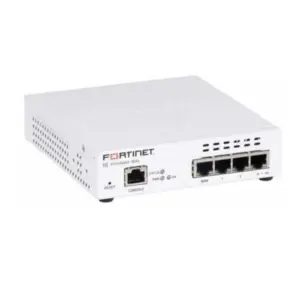
FortiWeb 600F / FWB-600F
Hardware web application firewall
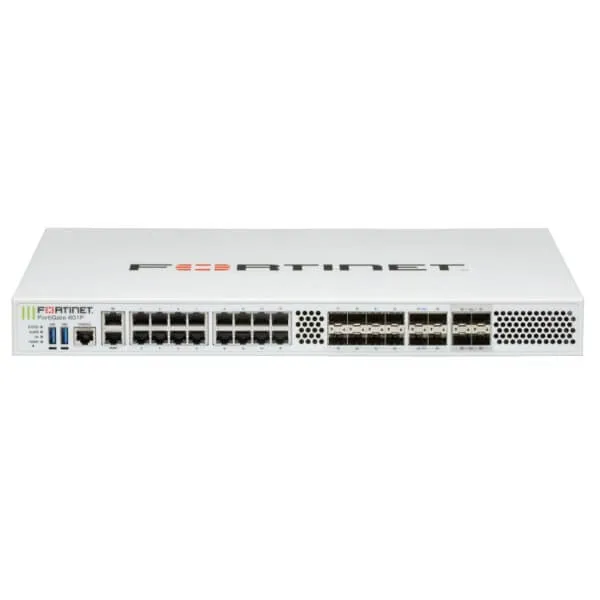
1U rack-mountable appliance
Web application and API protection
Up to 1 Gbps; environment dependent
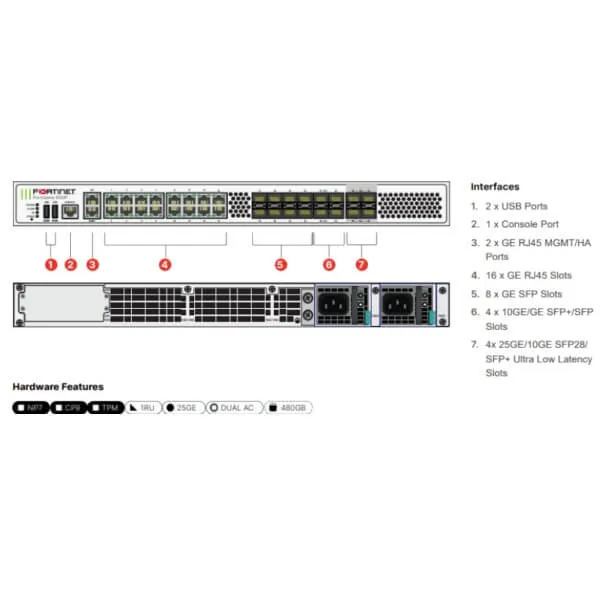
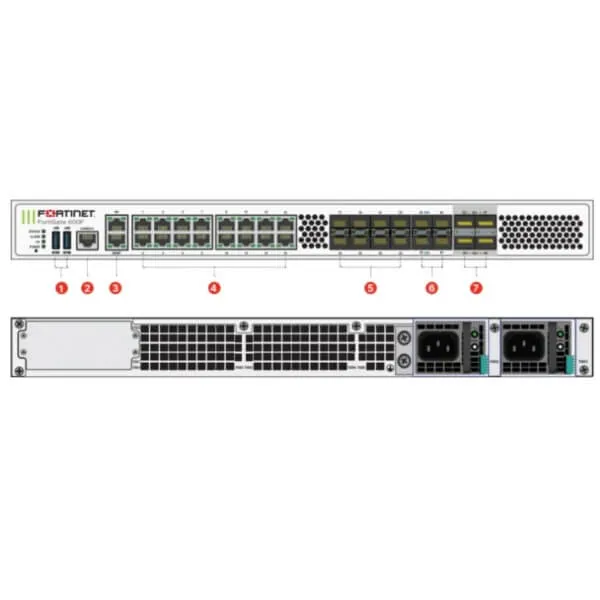
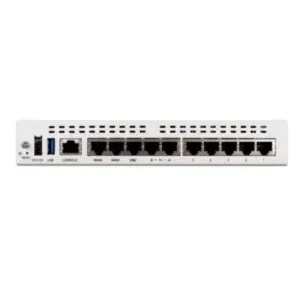
4 GE RJ45 and 4 GE SFP
480 GB SSD
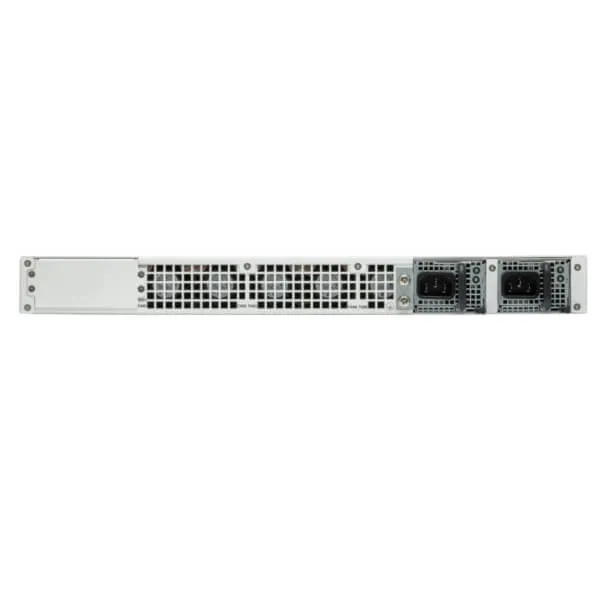
Dual hot-swappable AC supplies
Contact FourTeck for current options
Based on supply route and support term
Licenses, optics and deployment are selected separately
Product Overview
Modern organisations expose more business processes through web interfaces than ever before. Customer logins, payment workflows, booking systems, employee self-service portals, partner dashboards, mobile application backends and machine-to-machine APIs all depend on HTTP or HTTPS. These services can sit in a private data centre, a hosted facility, a virtual environment or a hybrid architecture, yet they share a common risk: a request that looks acceptable to a conventional network firewall can still carry malicious application-layer content. A dedicated web application firewall is designed to inspect that context more closely and apply controls around the behaviour of the protected application.
The FortiWeb FWB-600F Web Application Firewall is a physical appliance for organisations that prefer local control, predictable network placement and an enterprise rack deployment. It can be positioned in front of web servers or application delivery paths so that traffic is evaluated before reaching the protected service. Depending on the licensed services and configured policy, the platform can help address common web attacks, suspicious automated activity, API exposure, malicious file activity, credential abuse and abnormal request patterns. It also supports operational functions that matter during a real deployment, including SSL/TLS handling, application publishing, logging, authentication integration, policy tuning and high availability.
The 600F class is relevant when a small entry appliance would not provide enough throughput, resilience or interface flexibility, but a much larger multi-gigabit platform would add unnecessary cost and complexity. Its mix of four copper Gigabit Ethernet ports, including a bypass pair, and four Gigabit SFP ports allows architects to fit the appliance into copper or fibre segments. A 480 GB SSD supports local operational storage, while hardware SSL/TLS processing helps the system handle encrypted application traffic. Dual hot-swappable power supplies improve rack design options for businesses that can connect the appliance to separate power paths.
For Africa buyers, the right purchase decision includes more than the base SKU. Traffic patterns, SSL transaction rates, number of protected applications, API volume, redundancy, optics, licensing, support entitlement, implementation services and delivery planning all affect the working solution. FourTeck helps technical teams, system integrators and procurement departments convert these requirements into a clear configuration and quotation request.
Key Business Benefits
A capable application firewall should improve security without becoming a daily obstacle for developers, users or operations teams. The value of this appliance is best understood through the business outcomes it can support when it is sized, licensed and tuned correctly.
🔒 Dedicated Application Protection
A purpose-built WAF adds controls for web requests, sessions, forms and APIs that are not normally available through basic routing or port-based rules. This gives security teams a clearer enforcement point for public-facing services.
◆ Safer Digital Services
Customer portals, online payment pages, healthcare systems and government platforms are directly connected to reputation and service continuity. Better filtering can reduce the chance that malicious requests reach vulnerable application components.
⚙ Encrypted Traffic Handling
Hardware SSL/TLS processing helps the appliance inspect protected sessions while reducing avoidable pressure on general processing resources. This matters because most modern business applications now require encrypted access.
✓ Deployment Resilience
High-availability options, a bypass-capable copper pair and dual hot-swappable power supplies provide useful building blocks for organisations that need planned maintenance and failure handling considered from the start.
● Better Security Visibility
Application-focused logs and events help teams see suspicious requests, policy actions and behaviour patterns. This can make investigation more useful than reviewing only network connection records.
↗ Practical Growth Path
Up to 1 Gbps throughput gives many mid-sized and enterprise environments room to consolidate several protected applications on one platform, subject to traffic mix, security policy and encrypted-session demand.
These benefits depend on disciplined deployment. A WAF should not be installed with a generic rule set and forgotten. Teams should map applications, identify normal traffic, define administrative ownership, tune policy exceptions, monitor false positives, review software updates and maintain active service entitlements. FourTeck can help buyers plan the commercial and technical pieces together so the appliance enters production as part of an operating security process rather than as an isolated rack device.
Product Highlights
Designed for a substantial volume of application traffic, with real performance dependent on policy depth, SSL activity, request size and deployment conditions.
Supports inspection of encrypted web traffic using dedicated hardware assistance, an important requirement for HTTPS-heavy services.
Four GE RJ45 ports and four GE SFP ports provide practical connection choices for data-room and hosted-rack designs.
Two RJ45 ports form a bypass pair, giving architects an additional continuity option for supported inline designs.
Local solid-state storage supports appliance operations and event-handling needs within the selected design.
A 1U chassis, front-to-back airflow and dual hot-swappable power supplies suit structured server-room and data-centre installations.
The platform supports active/passive and active/active high-availability approaches as well as clustering options, allowing designers to align the security layer with the availability expectations of the protected applications. It also supports unlimited application licenses at the appliance level and up to 32 administrative domains, which can be useful where separate teams, business units or managed environments require logical administration boundaries. Licensing and service bundles still need to be selected carefully because advanced protection services, support coverage and term length are commercial choices rather than assumptions included with every hardware quote.
The appliance is not a universal answer for every application. A low-traffic website may be better served by a smaller appliance or cloud service, while a high-volume digital platform may require a larger FortiWeb model. The 600F is best viewed as a balanced physical platform for organisations that need enterprise controls, around one gigabit of rated throughput and resilient rack deployment without moving into a higher-capacity chassis.
Technical Specifications
| Specification | FWB-600F Detail | Buyer Note |
|---|---|---|
| Brand / Model | Fortinet FortiWeb 600F | Confirm exact base or bundle SKU. |
| Product Type | Hardware web application firewall | For applications and APIs, not a replacement for every network firewall function. |
| Rated Throughput | Up to 1 Gbps | Actual performance varies by traffic and configuration. |
| Latency | Under 5 microseconds, stated platform metric | Application response also depends on servers, network and policies. |
| RJ45 Interfaces | 4 × GE RJ45, including 2 bypass ports | Map inline links and bypass design before ordering. |
| Fibre Interfaces | 4 × GE SFP | SFP transceivers and fibre type should be confirmed separately. |
| USB Interfaces | 2 | Use according to approved operational procedures. |
| SSL/TLS Processing | Hardware assisted | Size around SSL transactions and cipher requirements. |
| Storage | 480 GB SSD | External logging may still be required by retention policy. |
| Form Factor | 1U rack mount | Allow rack depth, rail space, airflow and cable clearance. |
| High Availability | Active/passive and active/active clustering support | HA normally requires matched appliances and a tested design. |
| Application Licenses | Unlimited at appliance level | Throughput and administrative capacity still define practical scale. |
| Administrative Domains | Up to 32 | Useful for logical separation where appropriately designed. |
| Power Supplies | Dual hot-swappable AC | Connect to independent power paths when resilience matters. |
| Power Input | 100–240V AC, 50–60 Hz | Check local PDU, plug and UPS requirements. |
| Average Power Consumption | Approximately 138.74 W | Use current engineering data for final power budgeting. |
| Dimensions | 44 × 438 × 420 mm | Confirm rack and cable-management clearance. |
| Weight | Approximately 6.8 kg | Plan safe rack installation. |
| Operating Temperature | 0°C to 40°C | Use in a controlled equipment environment. |
| Availability | Configuration and supplier dependent | Request a current quotation and lead-time review. |
How to select the correct configuration
Do not size the appliance only from internet-link speed. The protected traffic path may carry a different volume, and security inspection can be affected by HTTPS use, request rate, response size, bot activity, upload functions and the number of policies. Buyers should collect peak and average throughput, SSL transactions, concurrent sessions, application count, API request volume, expected growth and acceptable failover behaviour. A proof-of-concept or traffic study may be appropriate where workloads are highly variable.
The quote should also state whether one appliance or an HA pair is required, whether copper or fibre links will be used, which SFP modules are needed, the preferred FortiCare term, the desired FortiWeb service bundle and whether installation, certificate migration, rule tuning or administrator handover is part of the project. FourTeck can help organise these details before the commercial request is submitted.
Configuration and Buyer Guidance
A web application firewall is effective when its capacity and policy model match the applications it protects. Begin by documenting each web service: domain name, hosting location, application owner, public or private access, authentication method, certificate arrangement, expected traffic and business importance. This inventory reveals whether the appliance will protect one critical portal, many moderate websites or a mixture of websites and APIs. It also identifies services that require separate change windows or policy exceptions.
1. Measure Real Traffic
Record peak throughput, requests per second, encrypted-session activity, upload size, API calls and seasonal events rather than relying on a nominal WAN speed.
2. Define Availability
Decide whether maintenance or appliance failure can interrupt the application. Critical services may justify an HA pair, redundant switches and independent power feeds.
3. Confirm Connectivity
Choose copper or fibre paths, validate SFP compatibility, map VLANs and routing, and confirm how management access will be isolated.
4. Select Services
Review the available support and security bundles, their term lengths, renewal obligations and which advanced capabilities are required by the application risk profile.
Compatibility also includes operational systems. Confirm identity sources such as LDAP, RADIUS or SAML where relevant; logging destinations; monitoring tools; certificate authorities; vulnerability-management processes; SIEM requirements; backup procedures and administrator access controls. The WAF sits in a sensitive path, so changes should follow an approved process with configuration backup, peer review and rollback steps.
Finally, decide who will tune the platform after installation. Applications evolve, developers add endpoints, marketing teams launch campaigns and APIs change. A policy that is accurate on day one can become restrictive or incomplete later. Assign ownership for event review, exceptions, upgrades, service renewal and periodic policy assessment. FourTeck can help buyers include configuration assistance and support expectations in the initial discussion instead of treating them as last-minute additions.
Ideal Business Use Cases
This FortiWeb appliance is appropriate for organisations that operate valuable web applications and need a controlled on-premise or hosted-rack security layer. The following use cases show where the platform can fit when throughput, license and deployment design have been validated.
Online Banking and Fintech Portals
Protect login pages, account dashboards, payment APIs and partner integrations while giving security teams application-level visibility. Strong change management and compliance-aligned logging remain essential.
Government Digital Services
Support citizen portals, tax systems, licensing services and public information platforms that must remain accessible while filtering suspicious requests and automated abuse.
Healthcare Applications
Add protection for patient portals, appointment services, laboratory interfaces and application APIs, with careful attention to privacy, authentication, logging and availability.
eCommerce and Retail Platforms
Help defend account areas, product search, checkout flows, payment integrations and mobile-commerce APIs from malicious requests, credential attacks and disruptive automation.
University and Education Portals
Protect admissions, learning systems, student records, payment pages and staff services that experience large seasonal traffic changes and many external users.
Logistics and Partner APIs
Secure shipment tracking, customs interfaces, customer dashboards, warehouse systems and partner data exchange where API availability directly affects operations.
The platform can also suit telecommunications companies, managed service providers, insurance firms, hospitality groups and multi-brand enterprises that host several business applications behind a shared security layer. It is less suitable where traffic already exceeds the model class, where only a simple low-volume website needs protection, or where a fully managed cloud service is operationally preferred. The decision should reflect application architecture, internal skills, compliance expectations, outage tolerance and long-term operating cost—not only the hardware specification.
FortiWeb 600F Application and API Protection
The first major strength of the platform is its focus on application behaviour. Network firewalls are essential for segmentation, routing control and broad threat inspection, but web attacks often use permitted HTTP or HTTPS connections. A malicious request can target a form field, manipulate a parameter, call an undocumented API endpoint or send content designed to exploit a weakness in application code. A WAF evaluates these requests using application-aware policies so that the organisation can apply controls closer to the business service.
FortiWeb supports protection approaches for known and unknown vulnerabilities, OWASP-related risks, suspicious clients, bots, credential abuse and API traffic, with exact capabilities depending on software version, license and configuration. Machine-learning features can help build behavioural understanding, but they still require a controlled learning period, event review and security ownership. Teams should not assume that automatic learning removes the need for application documentation or policy validation.
For APIs, the buying conversation should include endpoint discovery, authentication methods, token handling, rate expectations, payload formats and third-party dependencies. Mobile applications and partner systems may communicate differently from browser users, so overly broad rules can create gaps while overly strict rules can interrupt legitimate integrations. Developers, application owners and security administrators should agree on the protected API inventory before blocking policies are enabled.
The business benefit is a dedicated control point that can be tuned to each application’s risk and normal operation. This improves the organisation’s ability to reduce harmful traffic before it reaches application servers while preserving the legitimate customer and partner experience. FourTeck can help buyers frame the required protection scope and service bundle when preparing the quote.
FortiWeb 600F SSL/TLS Processing and Performance
Encrypted traffic is now the standard for business applications, which means a WAF must be designed around HTTPS rather than treating it as an occasional workload. Inspection requires the platform to terminate or otherwise process encrypted sessions according to the deployment mode, apply policy, and then maintain secure communication toward the application. The 600F includes hardware SSL/TLS processing to support this task, but the practical capacity still depends on cipher suites, certificate type, transaction rate, payload size, policy complexity and traffic behaviour.
The stated throughput of up to 1 Gbps is useful for initial model comparison, yet it is not a guarantee for every application mix. A file-download portal, a high-frequency API, an eCommerce site with many small transactions and a media-rich website can all produce different processing demands even at similar bandwidth. Buyers should therefore collect both throughput and transaction information. Seasonal peaks, marketing campaigns, public registration periods and payment deadlines should be included because they may create the highest demand of the year.
Certificate operations also need planning. Determine who owns certificates, how renewals are performed, whether private keys can be imported according to policy, which certificate authorities are used, and how expiration is monitored. In an HA design, certificate and configuration synchronisation should be tested. Teams should also understand how backend encryption, mutual TLS or partner API certificates affect the architecture.
A well-sized deployment gives users responsive access while security policies operate consistently. An under-sized system can become a bottleneck or force teams to reduce inspection, while an excessively large model may tie up budget that could be used for resilience, support or professional services. FourTeck helps buyers compare the rated platform with actual application demand before finalising the order.
FortiWeb 600F High Availability and Operational Control
Application security sits directly in the path of important digital services, so availability must be treated as a design requirement. The platform supports active/passive and active/active high-availability approaches, with clustering options for supported deployments. The correct choice depends on traffic flow, session handling, network topology, operational skills and the acceptable recovery behaviour during maintenance or failure. A second appliance alone does not create resilience; switches, power, routing, certificates, configuration synchronisation and monitoring must also be designed to avoid hidden single points of failure.
The appliance includes two bypass-capable RJ45 ports, which can provide an additional continuity mechanism in an appropriate inline copper design. Bypass behaviour should be reviewed carefully because allowing traffic to pass during an appliance problem may preserve availability but reduce inspection. The organisation must decide whether that trade-off is acceptable for each protected service. Fibre paths and other deployment modes may require a different continuity strategy.
Dual hot-swappable power supplies allow connection to separate PDUs or UPS-backed circuits. This is valuable only when the surrounding rack power is genuinely separated and monitored. Front-to-back airflow, rack depth, ambient temperature and cable management should be confirmed during site preparation. Operational teams should maintain configuration backups, documented administrator roles, software update procedures, certificate-renewal calendars and an incident runbook.
These controls help the business move from appliance ownership to service ownership. The goal is not simply to keep the hardware powered on; it is to maintain a trustworthy protection layer that can be updated, tested and recovered without unnecessary disruption. FourTeck can support the pre-sales checklist so hardware, licensing, redundancy and implementation responsibilities are visible before approval.
What Buyers Should Check Before Purchase
Before requesting a quote, buyers should confirm the required configuration, usage environment, compatibility needs, support expectations and delivery location. This avoids selecting a model only by name or headline throughput. For an application firewall, the most important information comes from the applications themselves: how many services are protected, where they are hosted, how traffic reaches them, which users access them, how much HTTPS traffic is processed, what APIs are exposed and how much downtime the business can tolerate.
Configuration Fit
Provide peak throughput, request rate, SSL transaction profile, application count, API volume, protected domains and expected growth. Ask whether a smaller or larger FortiWeb model is more appropriate.
Compatibility Check
Confirm VLANs, routing, copper or fibre interfaces, SFP type, certificate handling, backend server design, identity sources, logging platform and management network.
License and Renewal
Identify the required FortiWeb service bundle, FortiCare level, term length and renewal budget. Hardware without the intended services may not meet the planned protection scope.
Availability Design
Decide whether one appliance is acceptable or an HA pair is required. Include switches, links, power circuits, bypass behaviour, maintenance windows and rollback procedures.
Required Accessories
List SFP modules, fibre patch leads, rack accessories, power cords, UPS capacity, console access and any external logging or management components needed for deployment.
Implementation Scope
Clarify who will rack the appliance, configure networking, import certificates, create policies, tune false positives, migrate traffic, test failover and train administrators.
Procurement teams should also ask about current product lifecycle, supplier lead time, regional warranty handling, replacement process and whether the quote is for the base appliance or a bundled SKU. When comparing alternatives, use a total-cost view that includes a second HA unit, subscriptions, support, optics, professional services, training and renewal—not only the initial hardware amount. A useful quote request includes the delivery country, quantity, project date, target software environment, preferred term and named technical contact. FourTeck can review this information and help match the order to the business requirement.
Africa Availability and Service Support
FourTeck supports product enquiries across Africa with assistance for model selection, configuration review, formal quotations, delivery coordination and warranty guidance. Availability can vary according to the exact base or bundle SKU, service term, supplier status, project quantity, destination and product lifecycle. For this reason, FourTeck does not treat a catalogue listing as proof that a complete working configuration is immediately available.
A regional enquiry should include both commercial and technical information. Procurement teams can share the required quantity, delivery country, expected order date and preferred support term. Technical teams can add traffic measurements, protected applications, API requirements, high-availability design, interface type and implementation scope. This gives the sales process enough context to request the correct Fortinet order codes and identify missing accessories or services before approval.
FourTeck can also assist buyers who are comparing physical FortiWeb appliances with virtual or cloud-based application protection. The correct deployment model depends on hosting, traffic control, compliance, internal skills and operating preferences. Where a physical 600F is suitable, the discussion can cover appliance supply, bundle selection, optics, rack readiness, power, support entitlement and delivery documentation. Warranty handling depends on the purchased product and support arrangement, so expectations should be confirmed in the quotation.
Africa Country and Regional Coverage
Businesses across Africa, including Kenya, Uganda, Nigeria, Ghana, Tanzania, Rwanda, Ethiopia, South Africa, Zambia, Botswana, Senegal and nearby regional markets, can contact FourTeck for product availability, configuration guidance and quote assistance. Support is suitable for single-application projects, enterprise data-centre deployments, public-sector platforms, financial services, education systems, healthcare portals, retailers, logistics companies and service providers.
Regional projects often involve more than a delivery address. A customer may host applications in one country, operate users across several markets and manage procurement from a central head office. FourTeck helps structure the request around the protected service, deployment site, commercial buyer, installation partner and support owner. This is particularly useful when certificates, application teams and network infrastructure are controlled by different departments.
Delivery timing, customs documentation, warranty routes and service availability vary by location and order configuration. Buyers should therefore request a current review rather than relying on a generic lead time. FourTeck can coordinate the enquiry and help identify suitable alternatives if the requested model, bundle or term is not the best match for the project.
GCC, Middle East and Africa Availability
FourTeck Africa can support product enquiries for businesses across Africa while also guiding regional technology requirements through selected FourTeck platforms for GCC, Middle East and Africa markets. This is useful for organisations with African operating sites and procurement, hosting or management links in the UAE, Saudi Arabia, Qatar, Oman and Bahrain. A company may protect a customer portal used in multiple countries while the application team, data centre and purchasing authority operate from different regions.
Cross-regional projects should clearly identify where the appliance will be installed, where the protected applications are hosted, who owns the support contract and which entity requires the commercial documents. This reduces confusion around currency, delivery, entitlement registration, implementation and warranty expectations. Availability and delivery options depend on country, selected configuration, supplier status and order quantity, while security-service terms should be aligned with the organisation’s renewal process.
Buyers can use FourTeck Africa for Africa-focused enquiries, FourTeck Kenya and FourTeck Uganda for country-level coordination, or FourTeck UAE for GCC-linked requirements. The aim is to give technical and procurement teams a consistent route for reviewing the complete solution rather than splitting hardware, licensing and support into disconnected requests.
Other Options Buyers May Consider
Application-security requirements vary by traffic, hosting and operational model. The following FourTeck resources help buyers compare related products and services without assuming that every project needs the same appliance.
Web Application Firewalls Africa
Review appliance, cloud and managed WAF approaches when deployment model is still being decided.
Fortinet Product Range
Browse related Fortinet appliances, services and supporting security platforms for broader architecture planning.
Fortinet Cybersecurity Solutions
Connect web application protection with firewalls, management, analytics, endpoint and wider security requirements.
Fortinet Support Services
Plan FortiCare, entitlement, renewal and lifecycle support for Fortinet security infrastructure.
FortiGate 3001G
Consider a high-capacity network firewall when the project also requires enterprise perimeter protection and segmentation.
FortiGate 3500G
Review a larger network-security platform for data-centre edge and high-volume enterprise environments.
A network firewall and a web application firewall address different layers of risk, so one should not be substituted for the other without architecture review. Buyers may also compare the 600F with smaller or larger FortiWeb hardware, virtual appliances or FortiAppSec cloud services. FourTeck can help select an option based on traffic, hosting control, resilience, internal skills and support preference.
Why Buyers Choose FourTeck
Enterprise security procurement is easier when the seller understands both the product code and the working environment. FourTeck helps buyers turn a general request into a clearer technical and commercial scope. This is especially important for FortiWeb because the appliance, support contract, security services, optics, high-availability design and implementation tasks may be ordered or planned separately.
Assistance for procurement teams, resellers, integrators, SMBs and enterprise projects.
Review of traffic, interfaces, HA, service bundle and accessories before quotation.
A structured request that reflects the required hardware, term, quantity and destination.
Regional discussion around documentation, destination and project timing.
Clarification based on the selected product, support entitlement and supply route.
Help comparing physical, virtual, cloud and adjacent security options.
FourTeck’s role is to help reduce avoidable purchasing errors: the wrong model class, missing subscriptions, unsuitable optics, unclear HA assumptions, incomplete delivery information or unplanned renewals. The team can work with a buyer’s technical staff or implementation partner to capture the information needed for a useful quotation. Final specifications, availability, pricing and warranty terms should always be confirmed in the issued commercial documents.
Frequently Asked Questions
What is the FortiWeb 600F used for?
It is a physical web application firewall used to inspect and protect HTTP and HTTPS traffic for websites, portals, APIs and mobile application backends. It can help reduce exposure to application-layer attacks, suspicious bots, credential abuse and abnormal requests when the correct services and policies are configured. It complements network firewalls, endpoint security and secure development practices rather than replacing them.
How much throughput does the appliance support?
The Fortinet platform specification lists up to 1 Gbps throughput. Real performance depends on the application mix, HTTPS transaction rate, cipher choices, request sizes, enabled protections and overall configuration. Buyers should compare peak application traffic and transaction data with the model class instead of sizing only from the organisation’s internet-link speed.
Can FourTeck help choose the correct bundle?
Yes. FourTeck can help review the required FortiCare support term and available FortiWeb service bundle based on the organisation’s risk, deployment and operational expectations. The quote request should state whether advanced bot, credential, analytics or data-protection services are needed, because service content and commercial terms can differ between bundles.
Is the FWB-600F available in Africa?
FourTeck supports availability enquiries across Africa. Current supply depends on the exact SKU, bundle, service term, quantity, supplier status and destination. Submit the delivery country, required quantity and project timing for a current review. A formal quotation should be used as the source for confirmed commercial terms and lead-time guidance.
Does it support high availability?
The platform supports active/passive and active/active high-availability approaches with clustering options. A resilient deployment normally requires matched appliances and careful planning for network links, switches, power, certificates, configuration synchronisation and failover testing. FourTeck can help include the HA requirement in the product and quotation discussion.
What ports and storage are included?
The appliance specification includes four Gigabit Ethernet RJ45 ports, with two arranged as a bypass pair, four Gigabit Ethernet SFP ports, two USB interfaces and a 480 GB SSD. SFP transceivers, fibre patching and other deployment accessories should be confirmed separately because they may not be part of the base hardware order.
Can it protect APIs as well as websites?
Yes, FortiWeb is positioned for web application and API protection. Effective API security requires an inventory of endpoints, authentication methods, expected payloads, rate behaviour and partner integrations. The final feature set depends on software, licensing and policy configuration, so buyers should state their API requirements during sizing and bundle selection.
What information should I provide for a quote?
Provide the number of applications and domains, peak throughput, HTTPS transaction profile, API usage, required availability, interface preference, support term, service bundle, quantity, delivery country and project date. Also mention whether installation, certificate migration, policy tuning, HA configuration, testing or administrator handover is required.
Can businesses request project or bulk supply?
Yes. Organisations, resellers and system integrators can request quotations for multiple appliances, HA pairs or multi-site projects. The enquiry should identify quantities, installation locations, bundle terms, required accessories and delivery schedule. FourTeck can help structure the commercial request and identify whether central management, logging or related Fortinet products should also be reviewed.
Need Help Choosing the Right FortiWeb Configuration?
FourTeck can help review application traffic, API scope, SSL/TLS demand, high availability, service bundles, warranty expectations and delivery requirements for your business location. Share your technical brief and procurement timeline to begin a structured quotation.

Reviews
There are no reviews yet.