

Fortinet FortiSandbox FSA-1500G in Africa
Built for security teams that need controlled, on-premises examination of suspicious content, this mid-range sandbox appliance helps organizations detect advanced malware, ransomware, phishing files, evasive code, and previously unknown threats. It combines static inspection, behavior-based dynamic analysis, purpose-built machine learning, threat intelligence, isolated virtual environments, and broad Fortinet Security Fabric integration in a resilient 1U platform.
Request QuoteCheck Africa Availability
Quick Product Information
Fortinet
FSA-1500G
1U on-premises sandbox appliance
Advanced file and behavior analysis
2 to 28 Universal VMs
1 to 120 Universal VMs
4 x GE RJ45 and 2 x 10GE SFP+
2 x 960GB in RAID 1, hot-swappable
Windows 11, Windows 10, and Office 2021 licenses
Subject to current supply, licensing, quantity, and destination
Product Overview
Modern attacks are designed to avoid the controls that stop ordinary viruses. A file may appear harmless during a quick signature check, wait before executing, detect that it is being examined, use trusted applications, download a second-stage payload, or activate only when a particular user action occurs. This creates a difficult gap between known-threat blocking and the investigation required for content that has never been seen before. The FSA-1500G addresses that gap by examining suspicious content through several layers and, where necessary, running it inside isolated virtual environments so security teams can observe behavior without exposing production systems.
The appliance is positioned for mid-range deployments rather than small offices or the largest global security operations centers. It is suitable where file submissions, email attachments, web downloads, endpoint events, and network traffic create more analysis demand than an entry platform can comfortably handle. Fortinet lists effective sandboxing throughput of up to 32,000 files per hour, static analysis throughput of up to 80,000 files per hour, and dynamic analysis throughput of up to 1,500 files per hour under its stated test conditions. Those figures help buyers compare platform classes, but real results depend on file mix, inspection settings, enabled virtual environments, integrations, traffic patterns, and operational policies.
A key benefit of an on-premises appliance is control. Organizations can keep examination close to their security infrastructure, define how files are submitted, integrate the system with existing Fortinet products, and build procedures around local data handling requirements. This can be valuable for financial services, public institutions, healthcare networks, research environments, telecommunications, managed security operations, and enterprises that handle sensitive information. The appliance may work autonomously or as part of a wider Fortinet Security Fabric deployment involving FortiGate, FortiMail, FortiClient, FortiWeb, FortiProxy, FortiADC, FortiNDR, FortiSIEM, FortiSOAR, or FortiAnalyzer, depending on the chosen architecture and supported software versions.
FourTeck helps buyers turn these technical capabilities into a practical purchase plan. The discussion should cover daily submission volume, number of protected users, peak email load, file types, data residency, VM requirements, network interface design, high availability expectations, rack power, cooling, subscriptions, support services, and future scaling. This prevents the common mistake of choosing only by model number while overlooking the licensing and deployment details that determine whether the platform will deliver the expected value.
Key Business Benefits
The value of a sandbox is not simply that it opens suspicious files. The business value comes from giving security teams stronger evidence, reducing exposure to unknown threats, and connecting that evidence to preventive and response controls. The following benefits explain how the platform can support operational risk reduction.
◆ Better Visibility Into Unknown Files
Layered inspection helps teams move beyond a simple allow-or-block decision. Analysts can use observed behavior, file characteristics, indicators, and contextual information to understand why content is suspicious and decide how it should be handled.
◆ Reduced Attack Window
Fast static assessment and accelerated analysis can shorten the time between file arrival and security verdict. Earlier classification supports quicker blocking, isolation, investigation, and policy action before a suspicious item spreads across users or systems.
◆ Scalable Analysis Capacity
Universal VM expansion lets buyers increase local or cloud analysis capacity within the supported limits. This provides a path for handling growth in users, email traffic, endpoints, and protected applications without replacing the appliance immediately.
◆ Stronger Security Fabric Coordination
Integration with Fortinet products can return verdicts, indicators, and threat information to controls already protecting email, endpoints, web applications, internet gateways, and network traffic. This reduces isolated analysis and supports coordinated defense.
◆ Local Control and Data Handling
On-premises deployment gives organizations greater control over where suspicious content is processed, how integrations are designed, and how administrative access is governed. This can support internal policies for sensitive documents and regulated environments.
◆ Resilient Rack Deployment
RAID 1 storage, hot-swappable drives, dual hot-swappable power supplies, front-to-back airflow, and a trusted platform module support enterprise data-center practices where serviceability and infrastructure resilience matter.
For procurement teams, these benefits translate into a platform that can be sized around real security operations rather than purchased as a stand-alone appliance. The strongest outcome comes when the security team defines who will review incidents, how verdicts will be used, which products will submit files, what response actions are expected, and how subscription renewal will be managed over the planned lifecycle.
Product Highlights
The platform combines analysis software, scalable virtual environments, enterprise interfaces, redundant components, and broad file coverage. Its strengths are most useful when buyers understand how each capability fits the intended operating model.
Static and dynamic techniques, machine learning, behavioral inspection, anti-evasion functions, and threat intelligence work together to classify suspicious content.
Supported categories include Windows executables, scripts, Microsoft Office files, PDFs, email files, web content, Android packages, Linux files, macOS files, images with QR codes, and common archives.
Published capacity includes up to 32,000 effective sandboxing files per hour, 80,000 static-analysis files per hour, and 1,500 dynamic-analysis files per hour under stated test conditions.
Fortinet lists up to 320,000 emails per hour for FortiMail-related throughput and up to 80,000 emails per hour through the MTA adapter, subject to its documented test ratios.
Two Universal VM counts are included, with expansion supported up to 28 local VMs and up to 120 cloud VMs within the platform limit and selected licensing model.
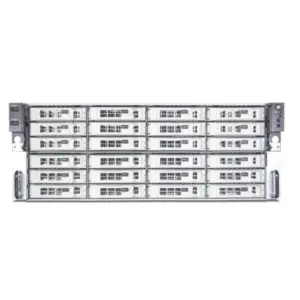
The 1U chassis provides 4 Gigabit Ethernet ports, 2 10GE SFP+ slots, mirrored hot-swap SSD storage, dual redundant power, TPM, and front-to-back cooling.
Performance values are useful for comparative sizing, not a guarantee for every environment. File complexity, enabled inspection stages, virtual machine mix, software release, network behavior, and integration settings can change results. FourTeck recommends using the current Fortinet datasheet and a workload discussion before the final bill of materials is approved.
Technical Specifications
Choose the configuration by looking at submission volume and analysis depth together. A platform may receive many files, but only a percentage may require full dynamic execution. Organizations with heavy email traffic should consider attachment ratios, peak message windows, and FortiMail integration. Endpoint-led deployments should estimate how many suspicious events may be submitted from FortiClient or related controls. Web and application security use cases should confirm supported versions and expected file types. VM capacity should be planned around the operating systems and applications that attackers are likely to target in the organization’s environment. Buyers should also reserve growth capacity rather than sizing only for the first month of operation.
Configuration and Buyer Guidance
A successful purchase begins with a clear workload profile. Start by identifying every system that may submit files or URLs. This could include email gateways, firewalls, endpoints, web application controls, secure web gateways, network detection systems, analyst workstations, or automated security workflows. Estimate normal and peak submission rates separately. A quiet average can hide a large morning email peak, a software distribution event, or an outbreak that produces thousands of suspicious objects within a short period.
Workload
How many files, emails, URLs, endpoints, and users will depend on analysis during normal and peak periods?
Integration
Which Fortinet products and software versions will submit content, consume verdicts, or automate response?
Virtual Environments
Which Windows, Linux, macOS, Android, custom, or industrial environments are needed to represent the organization accurately?
Operations
Who will investigate results, manage exceptions, update policies, and coordinate containment after a malicious verdict?
Licensing deserves the same attention as the appliance. Confirm which threat intelligence subscription, support level, VM expansion, anti-phishing service, or related entitlement is required. Ask how the term aligns with existing Fortinet renewals and whether co-term planning would simplify administration. Buyers should also decide whether analysis must remain local, may use cloud VM expansion, or should use a hybrid approach. That choice affects capacity, data handling, connectivity, and long-term cost.
Infrastructure planning includes rack depth, two power feeds, UPS capacity, airflow direction, cable type, 10GE transceivers, management addressing, DNS, time synchronization, secure administrator access, logging destinations, backup procedures, and change windows. FourTeck can help organize these questions before quotation so the order includes the correct appliance, licenses, optics, cabling, support term, and deployment assumptions.
Ideal Business Use Cases
The appliance is intended for organizations that need a dedicated analysis layer between ordinary prevention controls and full security investigation. It is not a replacement for firewalls, endpoint protection, email security, backups, identity controls, or incident response. It strengthens those layers by providing deeper examination and richer verdicts.
Financial and Payment Networks
Banks, insurance providers, fintech platforms, and payment processors can use sandbox analysis to examine suspicious attachments, downloaded files, and targeted content before it reaches sensitive users or transaction systems.
Government and Public Services
Public institutions handling citizen data, tax systems, identity services, and interdepartmental email can add a controlled analysis layer for targeted documents, phishing content, and unknown executables.
Healthcare and Research
Hospitals, laboratories, pharmaceutical groups, and universities can investigate files that arrive through email, research collaboration, web downloads, or endpoint alerts while keeping analysis within a governed environment.
Managed Security Operations
Service providers and security operations teams can centralize analysis for multiple controls, enrich incidents with behavioral findings, and feed results into case management, orchestration, or response processes.
Email Threat Investigation
Organizations using FortiMail can submit suspicious attachments and related content for deeper examination, helping security teams identify targeted malware and phishing techniques that evade initial screening.
Enterprise Security Fabric
Large businesses can connect sandbox findings with network, endpoint, web, email, analytics, and automation products so suspicious objects are assessed once and the resulting intelligence supports multiple defensive layers.
The best use case is one with a defined response path. Before deployment, decide what happens after a malicious verdict: block the hash, quarantine the message, isolate the endpoint, update firewall controls, search historical logs, notify users, open an incident, or begin forensic review. Technology produces greater value when these actions are agreed in advance.
FSA-1500G Advanced Analysis and Real-Time Verdicts
The first deep capability is the combination of rapid screening and deeper execution. Not every submitted object needs the same treatment. Known malicious files can often be classified quickly, clearly benign content can be filtered out, and suspicious objects can be escalated into more intensive analysis. This staged approach helps the platform use resources efficiently while still examining difficult files in isolated environments.
Static analysis studies a file without relying solely on execution. It can inspect structure, metadata, code characteristics, embedded content, signatures, packers, scripts, macros, indicators, and other attributes. Dynamic analysis then observes what happens when a suspicious object runs in a controlled environment. Security teams may gain visibility into processes, file changes, registry activity, network connections, persistence behavior, command execution, evasion attempts, or additional payload delivery. Machine learning and contextual intelligence help accelerate classification and identify patterns that basic signature matching may miss.
For a buyer, the practical question is not whether the platform uses advanced techniques; it is whether those techniques fit the organization’s traffic and response requirements. A financial institution may prioritize targeted office documents and phishing payloads. A software company may need stronger coverage for scripts and executables. A mobile service provider may need Android analysis. An industrial environment may require custom or operational technology simulation options. The correct VM and subscription plan should reflect the file types, operating systems, and applications actually used by the business.
Analysis speed also affects user experience. If suspicious content is held until a verdict is returned, long queues can delay business. If content is released too quickly, risk may increase. The security architecture should define acceptable wait times, bypass rules, file-size limits, fail-open or fail-closed behavior where applicable, and escalation procedures. FourTeck can help frame these requirements during the buying discussion so capacity planning is linked to real operational expectations.
FSA-1500G Universal VM Scalability
Virtual environments are central to sandboxing because malware behavior can change depending on the operating system, installed applications, language, architecture, and user context. A suspicious document designed for a particular Office version may not reveal its behavior in an unrelated environment. A malicious Android package needs a mobile environment, while a Linux payload requires a different execution context. Universal VM capacity gives the buyer flexibility to build a mix that better reflects the protected organization.
The appliance includes two Universal VM counts and supports expansion up to 28 local VMs. Fortinet also lists cloud VM expansion from one to 120 for this platform. The combined licensing model should be planned carefully because local and cloud capacity serve different purposes. Local environments support controlled on-premises processing and predictable proximity to integrated products. Cloud capacity can provide additional scale or broader environment choices, subject to policy, connectivity, data handling, and subscription requirements. A hybrid model may provide useful flexibility, but it should be approved by security, legal, compliance, and network teams.
More VMs do not automatically produce a better design. Each environment must be maintained, licensed appropriately, and mapped to a real need. Buyers should list the endpoint operating systems, server platforms, common document applications, browser families, language packs, and specialized software used across the organization. Security teams can then prioritize environments most likely to expose targeted behavior. Custom VM requirements should be discussed early because they may involve additional licensing and operational preparation.
Growth planning matters. An organization protecting 1,500 users today may expand to new branches, add an email domain, deploy more endpoints, or connect another Fortinet control. Reserve capacity for that change. Review monthly submission trends after deployment, identify queue pressure, and adjust policies or VM allocation before performance becomes a problem. FourTeck can help buyers compare the 500G, 1500G, 3000G, virtual, cloud, and service options when the expected scale is uncertain.
FSA-1500G Security Fabric Integration and Operations
A sandbox creates the most value when its verdicts influence the rest of the security environment. Fortinet supports integration across several products, allowing suspicious content to be submitted from network, email, endpoint, web, proxy, and application security controls. The analysis result can then enrich detection, support blocking, and improve investigation. This connected model helps organizations avoid treating every alert as an isolated event.
For example, an email attachment submitted through FortiMail may be identified as malicious after dynamic analysis. The verdict can support message quarantine, related indicator blocking, incident creation, and a search for other recipients. A suspicious file detected at an endpoint may be enriched with sandbox behavior and correlated with FortiEDR, FortiClient, FortiSIEM, or FortiAnalyzer data. A web application upload inspected through FortiWeb may be evaluated before it reaches an application workflow. The exact actions depend on supported product versions, licensing, configuration, and security policy.
Operational ownership must be clear. Decide which team administers the appliance, who can submit files manually, who reviews high-risk verdicts, how false positives are handled, how indicators are distributed, how logs are retained, and how administrator activity is audited. Integrate time synchronization, identity controls, role-based access, backups, monitoring, and change management from the beginning. A sandbox that is installed but not incorporated into daily security operations can become an expensive isolated tool.
The hardware supports enterprise deployment with dual hot-swap power, mirrored SSD storage, TPM, and 10GE interface options, but resilience also depends on architecture. Critical environments may require a second appliance, tested recovery procedures, redundant network paths, spare optics, supported firmware practices, and clear escalation contacts. FourTeck can help buyers document the surrounding requirements so the purchase is evaluated as a complete service capability rather than a single rack unit.
What Buyers Should Check Before Purchase
Before requesting a quotation, buyers should confirm the operational requirement, not only the model. Start with the current security architecture. List every Fortinet and non-Fortinet control involved, its software version, the type of content it will submit, and the expected response after a verdict. Confirm whether the deployment is for email security, endpoint protection, web downloads, application uploads, network inspection, analyst-driven malware research, or a combination. These use cases can produce very different file mixes and performance demands.
Configuration Fit
Confirm submission rate, peak volume, user count, dynamic-analysis percentage, local VM mix, cloud expansion, custom environments, and expected growth over the support term.
Compatibility Check
Review FortiOS and connected product versions, interface speeds, transceivers, DNS, routing, certificates, authentication, logging systems, and incident workflows before installation.
Availability and Support
Ask for current lead-time guidance, hardware coverage, FortiCare level, threat intelligence subscription, renewal dates, replacement process, and regional support handling.
Quote Preparation
Share quantity, delivery location, required VM count, subscription term, integrated products, power-cord requirement, optics, rack plan, installation scope, and project deadline.
Long-Term Cost
Include subscriptions, VM expansion, support renewal, electricity, rack space, staff training, integration work, and potential high-availability capacity in the lifecycle budget.
Deployment Readiness
Validate rack depth, dual power feeds, UPS load, front-to-back airflow, cooling, 10GE cabling, management addressing, administrative roles, and maintenance windows.
Similar models can differ substantially in VM limits, throughput, interfaces, storage, power design, and intended customer scale. The smaller 500G may suit lighter workloads, while the 3000G targets much larger enterprise volumes. Virtual, public cloud, platform, or service-based options may be appropriate where hardware ownership is not preferred. FourTeck can help compare these approaches and identify a replacement or alternative when lead time, budget, data handling, or capacity changes the original requirement.
Africa Availability and Service Support
FourTeck supports security appliance enquiries across Africa with assistance for model confirmation, subscription discussion, VM planning, compatible product review, quotation preparation, delivery coordination, and warranty guidance. Availability can vary according to current supplier position, hardware revision, subscription term, order quantity, destination, export requirements, and project schedule. Buyers should therefore confirm the current option before committing to an installation date or renewal deadline.
A complete request should identify the systems that will integrate with the sandbox, the estimated number of users, average and peak file volume, expected email traffic, local and cloud VM requirements, custom environment needs, support level, and whether installation or migration help is required. Include any requirement for SFP+ optics, fiber patch leads, DAC cables, rack accessories, power cords, UPS capacity, or secondary appliances. This information helps reduce commercial revisions and gives technical teams a clearer basis for approval.
FourTeck can also help buyers assess neighboring options when the 1500G is not the correct fit. A smaller workload may be better served by the 500G, while a larger regional SOC or service provider may need the 3000G or another deployment model. The goal is to match the platform to actual analysis demand, data handling policy, response workflow, and lifecycle budget.
Africa Country and Regional Coverage
Businesses across Africa, including Kenya, Uganda, Nigeria, Ghana, Tanzania, Rwanda, Ethiopia, South Africa, Zambia, Botswana, Senegal, and nearby regional markets can contact FourTeck for product availability, configuration guidance, and quote assistance. The team can help buyers review suitable models, licensing options, related Fortinet products, deployment requirements, and project supply needs based on business use.
Regional security projects often involve central procurement and distributed deployment. A group may purchase from one office while installing equipment in a data center, bank, university, government facility, healthcare environment, telecom site, or managed-service platform elsewhere. Share both the commercial billing location and the final delivery location, together with required quantities and project dates. This allows the supply discussion to account for logistics, import handling, support coverage, power-cord standards, documentation, and staged delivery.
FourTeck recommends using one clear product specification for multi-country projects while allowing local adjustments for rack power, internet connectivity, data policy, and integration. This helps regional organizations standardize their security architecture without overlooking operational differences between sites. Buyers can also use FourTeck Kenya and FourTeck Uganda for relevant regional discussions.
GCC, Middle East and Africa Availability
FourTeck Africa can support product enquiries for businesses across Africa while also guiding regional technology requirements through selected FourTeck platforms serving GCC and Middle East markets. This is useful for organizations whose procurement, security architecture, or budget approval is managed in one country while the final deployment occurs in another. Availability, delivery methods, warranty handling, subscription terms, and configuration support may differ by destination and should be confirmed for each project.
Groups operating across the UAE, Saudi Arabia, Qatar, Oman, Bahrain, and African markets may want a common security standard for headquarters, data centers, branches, email platforms, and managed services. A shared standard can simplify policy, training, renewal, and incident response, but capacity should still be sized for each environment. A regional SOC may need a larger platform than an individual country office, while data residency requirements may determine whether local, cloud, or hybrid VM analysis is acceptable.
Buyers can review FourTeck UAE regional technology support together with FourTeck Africa. Provide the deployment countries, quantities, desired support term, security integrations, and expected schedule so the commercial and technical discussion can be coordinated without assuming local stock or identical service conditions.
Other Options Buyers May Consider
Sandboxing is usually one component of a broader security architecture. Buyers may also need firewall inspection, email security, endpoint protection, centralized logging, secure switching, or a different sandbox capacity. The options below provide useful paths for further planning without implying that every product is required.
Fortinet Product Portfolio
Browse the wider brand category when planning firewalls, analytics, access points, switches, and related security infrastructure.
FortiGate 3001G
Consider for high-capacity firewalling, segmentation, VPN, and perimeter protection where sandbox intelligence forms part of a wider design.
FortiGate 3500G
Useful for larger data-center and enterprise security discussions requiring higher-scale firewall performance and coordinated Fortinet controls.
FortiSwitch FS-424E-POE
Suitable for secure access switching and PoE-connected endpoints in Fortinet-oriented branch, campus, and business network designs.
FortiGate FG-40F
A compact firewall option for smaller branches that may consume centrally provided security services rather than host a local sandbox platform.
Complete IT Product Range
Explore servers, storage, UPS systems, networking, endpoint devices, and security products for wider infrastructure projects.
For sandbox alternatives, buyers should compare workload class, deployment location, VM limits, supported file types, subscription structure, data handling, and connected controls. FourTeck can help identify whether the 500G, 1500G, 3000G, virtual appliance, cloud platform, or service-based approach better fits the organization.
Why Buyers Choose FourTeck
Enterprise cybersecurity procurement requires more than locating a part number. The appliance, subscriptions, VM entitlements, support term, connected products, network interfaces, rack environment, and incident workflow must fit together. FourTeck helps buyers organize those decisions before the quotation reaches approval, reducing the chance of missing licenses, choosing the wrong capacity, or discovering infrastructure constraints during installation.
Structured discussion around appliance, subscriptions, accessories, quantity, and project schedule.
Review of workload, local and cloud VM capacity, integrations, interfaces, and expansion needs.
Help gathering the technical and commercial details needed for a clearer approval-ready quotation.
Support for delivery planning, destination details, documentation, and multi-location project discussion.
Clarification of support terms and warranty handling based on the selected supply arrangement.
Assistance aligning firewalls, email security, analytics, switching, endpoint, and infrastructure products.
FourTeck works with business owners, procurement teams, resellers, system integrators, security managers, network engineers, IT directors, and project consultants. Each group needs different information. Procurement may need lead-time and commercial clarity; security teams need capacity and integration detail; facilities teams need power and rack requirements; management needs a clear risk and lifecycle case. The buying process is stronger when these needs are addressed together.
FourTeck does not rely on unverified stock, delivery, or partnership claims. Buyers receive guidance based on the current enquiry, selected configuration, destination, and available supply route. Contact the team early when a deployment date, support renewal, budget cycle, or multi-country rollout creates time constraints.
Frequently Asked Questions
What is the FSA-1500G used for?
It is an on-premises sandbox appliance used to examine suspicious files, URLs, email attachments, executables, scripts, documents, archives, and other supported content. It combines static inspection, dynamic execution in isolated virtual environments, machine learning, behavioral analysis, and threat intelligence to identify advanced malware, ransomware, phishing payloads, evasive code, and unknown threats.
Is the appliance available for African projects?
FourTeck can support product enquiries, configuration review, quotations, and delivery coordination across African markets. Availability depends on current supplier status, selected subscriptions, VM licensing, order quantity, destination, and project timing. Buyers should confirm the current option before scheduling installation or making commitments that depend on a fixed delivery date.
How many virtual machines can it support?
The platform includes two Universal VM counts and supports expansion from 2 to 28 local VMs. Fortinet also lists cloud VM expansion from 1 to 120 for this model. The final mix depends on licensing, required operating systems, data policy, performance goals, and whether the organization chooses local, cloud, or hybrid analysis.
Can FourTeck help with sizing and configuration?
Yes. Buyers can share user count, file submissions, peak email traffic, integrated products, required operating systems, data residency rules, and expected growth. FourTeck can help review whether this model is suitable, whether VM expansion is needed, and whether a smaller, larger, virtual, cloud, or service-based option should be considered.
Which Fortinet products can integrate with FortiSandbox?
Fortinet documents integration with products including FortiGate, FortiMail, FortiClient, FortiWeb, FortiADC, and FortiProxy, with broader security operations connections available through products such as FortiNDR, FortiSIEM, FortiSOAR, and FortiEDR. Supported versions and functions should be confirmed against the current documentation before deployment.
Does the appliance include redundant components?
Yes. The hardware specification lists two hot-swappable power supplies with redundancy and two 960GB drives configured as RAID 1, also hot-swappable. It includes a trusted platform module and uses front-to-back forced airflow. A complete resilience plan may still require redundant network paths, UPS protection, backup procedures, and possibly a second appliance.
What information should be included in a quote request?
Include quantity, delivery country and city, desired support term, expected daily and peak file volume, email throughput, user count, connected Fortinet products, local or cloud VM requirements, custom environment needs, 10GE optics, rack and power details, installation scope, and target deployment date. Clear information helps reduce revisions.
Does the purchase require additional subscriptions?
The hardware includes specified VM counts and Microsoft environment licenses, but operational protection, threat intelligence, support, VM expansion, anti-phishing, or other capabilities may require selected subscriptions and service terms. The exact bill of materials should be confirmed for the intended deployment rather than assuming the base appliance includes every available service.
Can businesses request multiple units or project supply?
Yes. Enterprises, government institutions, service providers, resellers, and integrators can request project or multi-unit supply support. Share the rollout schedule, deployment locations, standard configuration, subscription term, support requirements, and whether delivery will be staged. Larger projects should also define high availability, central management, training, and renewal coordination.
How is the correct model chosen?
Compare analysis throughput, dynamic file volume, VM capacity, email load, user scale, network interfaces, storage resilience, rack environment, data policy, and growth. The 500G suits lighter demand, the 1500G serves mid-range deployments, and the 3000G targets much larger environments. Virtual and cloud models may also fit particular operational or procurement preferences.
Need Help Planning Your Sandbox Deployment?
FourTeck can help review appliance availability, VM capacity, threat intelligence subscriptions, Fortinet integrations, rack requirements, warranty guidance, and regional delivery needs. Share your expected workload and project location for a structured quotation.
Reviews
There are no reviews yet.