

Fortinet FortiSIEM FSM-500G Collector in Africa
Build a cleaner distributed monitoring architecture with a dedicated FortiSIEM collector designed to receive security events, infrastructure logs, and performance information near the systems being monitored. The FSM-500G is intended for organizations that operate remote sites, segmented networks, branch offices, data centres, or managed customer environments and need a purpose-built collection point that works with a wider FortiSIEM deployment.
Request QuoteCheck Africa Availability
Quick Product Information
Fortinet
FSM-500G
FortiSIEM collector hardware appliance
Up to 5,000 events per second
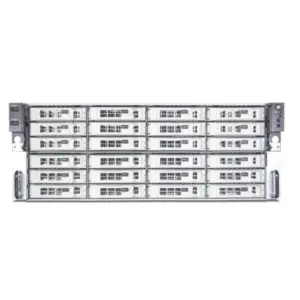
1U rackmount appliance for a standard 19-inch rack
Distributed event, log, and performance-data collection
Remote sites, branches, data centres, segmented networks, and MSSP environments
Support, licensing, and final project configuration must be confirmed
Product Overview
Modern security monitoring rarely happens inside one building. A bank may operate a main data centre, several branches, cloud services, ATM networks, and disaster-recovery facilities. A university may have separate campuses, residence networks, research systems, wireless controllers, and internet gateways. A managed service provider may need to collect information from many customer environments without placing the central analytics platform directly inside every network. In these situations, a dedicated collector provides a practical bridge between local infrastructure and the wider FortiSIEM architecture.
The Fortinet FortiSIEM FSM-500G Collector is purpose-built for this role. It receives events and performance information from devices and systems within reach of the appliance, then participates in the centralized monitoring design managed by FortiSIEM. This approach can reduce the number of direct connections that remote or protected devices must maintain with central components. It can also give network and security teams a clearer way to organize collection by geography, business unit, security zone, customer, or data-centre segment.
The current FortiSIEM ordering guidance identifies the FSM-500G as a collector appliance supporting up to 5,000 EPS. That figure should be treated as a sizing ceiling under the vendor’s stated conditions rather than a promise that every environment will operate at the same practical level. Event size, protocol mix, parsing requirements, network quality, local device behaviour, software version, and overall FortiSIEM design can influence results. A good purchase decision therefore starts with measured or estimated event volume, peak-to-average ratios, device count, required collection protocols, and the expected growth of the monitored estate.
This appliance is especially relevant when monitored assets are behind firewalls, located across wide-area links, or separated from the main security operations environment. The buyer should nevertheless understand that a collector is one component in a larger system. It needs a compatible FortiSIEM deployment, planned network routes, registration with the appropriate platform components, time synchronization, name resolution, secure administrative access, and an operational process for upgrades and support.
FourTeck helps African organizations translate these technical requirements into a practical procurement plan. The discussion can cover whether the collector role is correct, how many collectors may be needed, where each appliance should be placed, what support term is appropriate, whether the existing FortiSIEM version is compatible, and which accessories or rack preparations must be included. This preparation is valuable because the right appliance in the wrong architecture can still create collection gaps, while a properly placed collector can improve visibility and reduce avoidable complexity.
Key Business Benefits
The value of the FSM-500G is not limited to receiving logs. Its business benefit comes from placing collection capacity where it can support visibility, operational control, and expansion without forcing every remote asset to communicate directly with central systems. The following benefits explain why organizations consider a dedicated collector in a distributed monitoring design.
◆ Distributed Visibility
A collector placed near remote devices can receive local logs and metrics without requiring every source to maintain a direct path to the central FortiSIEM components. This supports cleaner monitoring across branches, campuses, data-centre zones, and geographically separated operations.
◆ Scalable Collection Design
Organizations can use collectors as building blocks when the monitored estate grows. Additional sites or network zones can be planned around their own collection points, helping the architecture expand in a more controlled way than repeatedly extending one central collection path.
◆ Reduced WAN Dependence
Local collection can reduce unnecessary direct management traffic across wide-area links. This is useful where branches depend on variable broadband, private WAN services, microwave, LTE backup, or international connectivity and where predictable monitoring traffic matters.
◆ Segmentation Support
The appliance can be positioned inside a defined security zone so local systems send data to a nearby collection point. Security architects can then manage the approved communication path between that collector and the wider FortiSIEM environment rather than opening access from every source.
◆ Better Operational Organization
Collectors can be mapped to business units, subsidiaries, customers, locations, or technical zones. This makes troubleshooting and responsibility assignment easier because the team can identify where collection occurs and which part of the estate depends on each appliance.
◆ Purpose-Built Appliance
A hardware collector provides a defined platform for the collection role, avoiding the need to size, source, and maintain a separate general-purpose server for that function. The buyer still needs lifecycle planning, but the appliance model simplifies hardware identification and support mapping.
These benefits are strongest when the collector is sized and located correctly. A collector that sits behind an unstable link, lacks access to required device networks, or receives more events than planned can become a bottleneck. FourTeck therefore recommends treating collector procurement as part of the full monitoring architecture rather than as an isolated hardware purchase.
Product Highlights
Designed for a defined distributed collection workload, with final sizing based on real event volume and deployment conditions.
The appliance uses a 1U form factor and is supplied for installation in a standard 19-inch rack environment.
Suitable for locations where devices are separated from central FortiSIEM components by firewalls, WAN links, or physical distance.
Deployment includes network setup, system verification, GUI configuration, and collector registration within the FortiSIEM environment.
One of the most important highlights is clarity of role. The FSM-500G does not replace the Supervisor or Worker layer of a full FortiSIEM solution. It is the collection edge of the architecture. That distinction affects budgeting, licensing, support, networking, and implementation scope. Buyers who are starting a new FortiSIEM project should first confirm the central platform design. Buyers expanding an existing environment should review the running software release, appliance compatibility, current collector load, and the way new sites will communicate with central components.
The published hardware guidance also notes that only one hard disk is installed and supported in the appliance. This makes backup of configuration information, documented recovery steps, and appropriate support coverage important operational considerations. The appliance should be installed in a controlled rack environment with stable power, reliable earthing, adequate airflow, and an ambient operating temperature within the documented range. A UPS-backed circuit is strongly advisable for security monitoring infrastructure, particularly where power quality is inconsistent.
Commercially, the current ordering guide indicates that the 500G collector hardware appliance does not require a separate base license SKU. This does not mean the complete FortiSIEM environment is license-free. The organization still needs the appropriate FortiSIEM licensing model and support arrangement for the wider deployment. FourTeck can help review the bill of materials so hardware, support, and platform entitlements are not confused.
Technical Specifications
| Specification Area | FSM-500G Details | Buyer Note |
|---|---|---|
| Brand | Fortinet | Confirm genuine sourcing and serial registration path. |
| Model / SKU | FSM-500G | Use the exact SKU on quotation and purchase order. |
| Appliance Role | FortiSIEM collector hardware appliance | Requires a compatible wider FortiSIEM architecture. |
| Supported Event Rate | Up to 5,000 EPS | Size for peak volume, protocol mix, and future growth. |
| Form Factor | 1U rackmount | Plan standard 19-inch rack space and installation access. |
| Network Interfaces | Four Gigabit Ethernet RJ-45 interfaces, configuration dependent by revision | Confirm port mapping and current hardware revision before deployment. |
| Management Access | Console and local display access supported; GUI configuration after network setup | Use secure administrator credentials and controlled management networks. |
| Storage Note | One hard disk installed and supported | Maintain configuration records and a recovery plan. |
| Rack Accessories | Rail kit, rack ears, console cable, and power/network accessories are identified in the quick-start package | Verify box contents at delivery. |
| Operating Temperature | 0°C to 40°C ambient | Provide adequate cooling and unobstructed airflow. |
| Base License for Appliance | No separate collector hardware base license SKU required in current ordering guidance | Overall FortiSIEM licenses and support still require review. |
| Support / Warranty | FortiCare and service options depend on selected term and region | Confirm entitlement, RMA level, and country handling on the quote. |
Selecting the correct configuration is less about choosing optional processor or memory combinations and more about validating the appliance’s role in the complete FortiSIEM topology. Begin with measured event volume from the proposed site. Where measurements are unavailable, collect device counts and log-source types, then estimate normal and peak EPS. Firewalls, domain controllers, endpoint platforms, network devices, cloud services, and application servers can produce very different event patterns. A branch that normally generates modest traffic may create a sharp burst during an incident, software rollout, or authentication failure.
Buyers should also confirm software compatibility and upgrade requirements. A new collector may need to run a version aligned with the existing FortiSIEM environment before registration. Network teams should reserve management addressing, DNS, NTP, routing, and firewall rules. Facilities teams should confirm rack depth, power connectors, UPS capacity, airflow, and restricted-access controls. These details prevent a common procurement problem: the appliance arrives, but installation is delayed because the surrounding environment was not prepared.
Configuration and Buyer Guidance
A successful collector purchase starts with five groups of information: workload, topology, compatibility, facilities, and support. These areas should be documented before the quotation is approved because each one affects whether the appliance can be installed and used as intended.
1. Workload
What is the normal EPS, peak EPS, number of devices, protocol mix, and expected annual growth? Include new branches, cloud services, security tools, and endpoint expansion.
2. Topology
Where will the collector sit, which networks must reach it, and how will it communicate with the central FortiSIEM environment? Document firewalls, NAT, WAN links, and failover paths.
3. Compatibility
Confirm the running FortiSIEM version, planned upgrade path, supported registration method, and any dependencies on Supervisor or Worker components.
4. Facilities
Reserve 1U rack space, check rack depth, provide controlled temperature, reliable earthing, UPS-backed power, and restricted physical access.
5. Support
Choose a support term that matches the importance of the monitoring service. Clarify RMA handling, response expectations, and who will manage upgrades and troubleshooting.
The most common sizing error is using only the number of devices. Two environments with the same device count can produce very different event volumes. A quiet switch may send occasional status messages, while a busy firewall or endpoint platform can generate many events every second. Event rate should therefore be measured whenever possible. Where the project is new, use a conservative estimate and retain headroom for bursts and growth.
Compatibility review is equally important. A collector must register with the existing FortiSIEM deployment and operate on a supported software path. The implementation plan should include a maintenance window, administrative access, backup of relevant configuration information, and a rollback process. Organizations with strict change management may also need security approval for new network flows, certificate handling, vulnerability scanning exceptions, or asset-registration procedures.
FourTeck can help organize these inputs before quotation. The goal is to produce a bill of materials and deployment note that the procurement team, security team, network team, and facilities team can all understand. This reduces delayed installation, missing support coverage, and unexpected architecture changes after the order has been placed.
Ideal Business Use Cases
Multi-Branch Enterprises
Retailers, banks, logistics groups, and service companies can place collectors near regional infrastructure so branch devices feed a local collection point while the central security team maintains a unified monitoring strategy.
Data-Centre Segmentation
Organizations with separated production, disaster-recovery, hosting, or regulated zones can use a dedicated collector inside an approved segment and control the onward communication path to central FortiSIEM components.
Managed Security Services
MSSPs and integrators can use collectors as part of a structured customer-monitoring architecture where each client or service region requires a defined collection point and clear operational ownership.
Government and Public Sector
Agencies with ministry networks, regional offices, public services, and restricted zones can organize telemetry collection while respecting approved network boundaries and centralized oversight requirements.
Education and Healthcare Campuses
Universities, hospitals, and research institutions can collect events from separate campuses, clinical systems, laboratories, residences, and administrative networks without treating every location as one flat monitoring domain.
Industrial and Remote Operations
Mining, energy, manufacturing, and telecom environments may use collectors near remote operational networks, provided the placement, supported data sources, security zones, and environmental conditions are carefully reviewed.
In a multi-branch design, the collector can act as the local receiving point for firewalls, routers, switches, servers, identity systems, and applications. This does not automatically solve poor WAN quality or guarantee continuous collection during an outage, so the design should document behaviour during link loss and recovery. The business should know how long an interruption can last before monitoring objectives are affected and who is responsible for responding to collector health alerts.
For an MSSP, the appliance can support service separation and clearer capacity planning. Each customer environment may have different event volumes, retention expectations, escalation rules, and change controls. The collector placement should therefore be matched with service documentation, customer firewall rules, and maintenance responsibilities. It should not be treated as a generic box that can be moved between customers without planning.
In regulated environments, local collection may help organizations follow approved network paths, but compliance depends on the complete system rather than the appliance alone. Access control, log integrity, retention, encryption, administrative records, monitoring procedures, and incident response all remain part of the control framework. FourTeck can help buyers identify the appliance and support requirements, while the customer’s security and compliance teams remain responsible for the final governance design.
The best use case is one where the organization already understands why a collector is needed and what central platform will receive its data. Where that architecture is still uncertain, a discovery discussion should come before the purchase order.
Fortinet FortiSIEM FSM-500G Collector: Distributed Event Collection
Distributed collection is the central reason to deploy this appliance. In a small network, many devices may be able to communicate directly with a central monitoring platform. As the organization grows, that approach becomes harder to maintain. Remote sites may be protected by different firewall policies, connected through links with varying latency, or administered by local teams. A collector provides a defined destination for local sources and a controlled path into the broader FortiSIEM system.
This architecture can simplify device onboarding because the network team can standardize where log sources send their data within each location. It can also make troubleshooting more structured. When events stop arriving, the team can check the source-to-collector path, collector health, and collector-to-central path separately. Without this layered design, a single missing event stream may require investigation across a longer and less clearly owned route.
The business value becomes visible during expansion. A new branch, acquired company, or regional data centre can be added with its own collection plan instead of immediately redesigning every central connection. The organization still needs capacity governance. Each collector should have a named owner, documented source list, expected EPS range, software version, network addresses, support status, and monitoring procedure. This prevents uncontrolled growth where collectors are added but not maintained.
Buyers should ask how the collector behaves if the WAN path to central components is interrupted and what operational procedure applies when connectivity returns. They should also define acceptable monitoring gaps for critical systems. The appliance supports the collection architecture, but resilience depends on network design, platform configuration, and operating procedures. FourTeck can help ensure these questions are included during pre-sales planning so the hardware purchase supports a complete operational outcome.
Fortinet FortiSIEM FSM-500G Collector: Rack Deployment and Reliability
A security-monitoring appliance should be installed with the same discipline as a firewall, server, or storage system. The FSM-500G uses a 1U rackmount format intended for a standard 19-inch rack. The installation package guidance identifies rails and rack accessories, but the site still needs appropriate rack depth, stable mounting, safe loading, and adequate working space for installation and service.
Environmental preparation matters. The documented ambient operating range is 0°C to 40°C, and the rack must allow sufficient airflow. In warm climates or crowded equipment rooms, the temperature inside a rack can be higher than the general room temperature. Facilities teams should therefore assess cooling at the actual rack position rather than relying only on a wall thermostat. Dust control, power conditioning, reliable earthing, and restricted access also contribute to long-term reliability.
Power resilience is especially important because the collector contributes to security visibility. An unexpected shutdown during an incident or infrastructure fault can remove a useful source of monitoring information. A suitable UPS should be selected based on the complete rack load, desired runtime, battery condition, and local power quality. Dual power-path assumptions should not be made unless the final hardware revision and site design confirm them.
The quick-start guidance notes that one hard disk is installed and supported. This makes disciplined configuration management important. Administrators should document addressing, registration details, software version, maintenance history, and recovery procedures. They should also keep the appliance under active monitoring so disk, interface, system, or communication issues are detected quickly rather than discovered during an incident investigation.
FourTeck can support the procurement discussion for rack readiness, compatible UPS options, network cabling, and support coverage. Installation work should be performed by personnel familiar with rack safety, electrical requirements, and FortiSIEM configuration. The purpose of these precautions is not to add complexity; it is to ensure the collector remains available when the security team needs it most.
Fortinet FortiSIEM FSM-500G Collector: Management and Architecture Integration
The appliance becomes useful only after it is correctly integrated with the FortiSIEM environment. The setup process includes physical installation, network connection, system verification, GUI configuration, and collector registration. These steps require coordination between security administrators, network engineers, and platform owners because the collector sits at the intersection of device access, management access, and central monitoring communication.
Management planning should begin with a dedicated address, correct subnet and gateway, DNS resolution, and reliable time synchronization. Accurate time is essential for security-event analysis because investigators depend on event sequence and correlation. Administrative access should be limited to approved management networks, and default credentials must be changed during commissioning. The organization should define who can manage the appliance, who can approve upgrades, and how access is reviewed.
Registration with the FortiSIEM platform should be performed using a documented change procedure. The team should verify software compatibility, communication requirements, and the expected device-assignment process. After registration, a controlled group of log sources can be onboarded first. This pilot stage helps validate parsing, event rate, connectivity, timestamps, and monitoring health before the entire site is moved to the new collector.
Operational integration includes more than the initial setup. The collector should appear in health monitoring, maintenance schedules, vulnerability-management scope, asset inventory, support-contract tracking, and incident-response documentation. Firmware or software upgrades should be tested and planned with the central FortiSIEM release path. Configuration changes should be recorded, and the business should know how to restore service after hardware replacement or re-imaging.
FourTeck can help the buyer prepare the commercial and deployment information required for this integration. The final technical implementation should follow current Fortinet documentation and the customer’s approved architecture. This combination of correct hardware, current guidance, and disciplined operations gives the collector a clear and sustainable role.
What Buyers Should Check Before Purchase
Before requesting a quote, buyers should confirm the complete requirement rather than ordering only by model name. The FSM-500G has a clear purpose, but the correct quantity, placement, support term, and implementation scope depend on the environment. A structured checklist helps the procurement team avoid missing licenses, unsupported software combinations, blocked network paths, or rack limitations.
Configuration Fit
Provide current and peak EPS, device count, log-source types, required protocols, and expected growth. Confirm whether one collector is sufficient or whether the architecture needs several appliances.
Compatibility Check
State the existing FortiSIEM version, Supervisor and Worker design, current collectors, planned upgrades, and network security controls that will affect registration or communication.
Availability and Support
Ask for the exact hardware SKU, selected FortiCare term, RMA expectations, destination country, delivery lead-time guidance, and confirmation of how support will be handled.
Rack and Power
Confirm 1U rack space, rack depth, rail compatibility, cooling, earthing, power connectors, UPS capacity, and physical access for installation and maintenance.
Network Preparation
Reserve addresses and define routes, DNS, NTP, firewall rules, management access, source-to-collector flows, and collector-to-central communication paths.
Deployment Scope
Decide who will rack the appliance, perform initial configuration, register it, migrate log sources, validate event flow, document the system, and provide post-installation support.
Buyers should also review long-term operating cost. The hardware purchase is only one part of the investment. Support renewal, staff time, maintenance windows, monitoring, power, rack space, WAN traffic, and lifecycle replacement all contribute to total cost. A lower initial price may not be the best choice if the support term is too short or the architecture needs another collector soon after deployment.
Where a similar or replacement model is being considered, share the current appliance SKU, serial status, software version, average load, and reason for replacement. The requirement may involve capacity growth, end-of-support planning, hardware failure, expansion into a new site, or a wider platform upgrade. Each reason leads to a different recommendation.
For the fastest quotation, provide the destination country, organization name, quantity, required delivery window, support term, FortiSIEM deployment details, EPS estimate, and whether installation assistance is needed. FourTeck can then review the request as a complete business requirement rather than returning a hardware-only line item that leaves important questions unanswered.
Africa Availability and Service Support
FourTeck supports FortiSIEM appliance inquiries across Africa with assistance for product selection, role verification, quotation preparation, delivery coordination, support-term guidance, and deployment planning. Availability can vary according to supplier position, destination, order quantity, support contract, and the commercial status of the exact SKU. For this reason, the sales team confirms current options against the buyer’s project rather than presenting an unverified stock claim.
A useful inquiry should include more than the appliance name. Buyers are encouraged to share the current FortiSIEM version, central architecture, number of sites, expected EPS, destination, quantity, target delivery date, and preferred support period. FourTeck can use this information to clarify whether the FSM-500G is the correct collector, whether multiple units should be considered, and whether any related support or platform items need to appear on the quotation.
Delivery coordination can include commercial documentation, packing and shipment discussion, and destination planning based on the confirmed route. Import procedures, taxes, local compliance requirements, and final delivery arrangements differ by country and should be reviewed during quotation. Warranty and RMA handling also depend on the selected FortiCare service and regional terms, so buyers should request written confirmation before approval.
FourTeck can also help connect the appliance purchase with related cybersecurity planning. Buyers may need FortiSIEM licensing review, Fortinet support renewal, rack and UPS preparation, network-security changes, or implementation assistance. Bringing these requirements together helps the project move from procurement to installation with fewer gaps.
Africa Country and Regional Coverage
Businesses across Africa, including Kenya, Uganda, Nigeria, Ghana, Tanzania, Rwanda, Ethiopia, South Africa, Zambia, Botswana, Senegal, and neighbouring markets, can contact FourTeck for FortiSIEM collector availability, configuration guidance, and quotation assistance. The same appliance may serve very different environments: a bank with many branches, a university with separate campuses, a healthcare group with protected clinical networks, a telecom operator with distributed infrastructure, or an MSSP serving multiple customers.
Regional conditions can affect the deployment plan. Some sites have stable data-centre power and private WAN services, while others rely on mixed broadband, microwave, or mobile backup links. Rack cooling, customs procedures, local support expectations, and project timelines may also differ. FourTeck helps buyers include these practical factors in the requirement so the quotation reflects more than the hardware model.
For country-specific communication, buyers can use the FourTeck Kenya platform, the FourTeck Uganda platform, or the main FourTeck Africa website. Product availability, support handling, and delivery arrangements remain subject to confirmation for the destination and order scope.
GCC, Middle East and Africa Availability
Organizations operating between Africa and the Gulf often need one security-monitoring design across several legal entities, data centres, and branch networks. FourTeck can support product inquiries for Africa-linked operations while coordinating regional technology requirements through appropriate FourTeck platforms for the GCC and Middle East. This is useful for logistics groups, airlines, hospitality operators, banks, professional services firms, telecom providers, and managed service businesses with infrastructure in more than one region.
A company may place collectors in African data centres while central security operations are managed from the UAE, Saudi Arabia, Qatar, Oman, or Bahrain. Another organization may operate its main FortiSIEM platform in Africa and monitor branch systems in Gulf locations. In both cases, the architecture should account for data-routing policy, cross-border connectivity, latency, firewall rules, operational ownership, support contracts, and applicable data-handling requirements.
Availability, delivery options, support entitlement, and commercial terms can vary by country and supplier program. The buyer should identify the final installation location for each appliance rather than using one regional address for a multi-country order. This allows the quotation to reflect delivery routing, support expectations, and project documentation more accurately.
Regional buyers can review FourTeck UAE for Gulf technology coordination and use FourTeck Africa for African project assistance. The objective is a consistent procurement conversation while respecting the technical and commercial requirements of each destination.
Other Options Buyers May Consider
The correct alternative depends on whether the requirement is additional collection capacity, a complete FortiSIEM platform, centralized analytics, broader Fortinet security integration, or a different monitoring approach. The options below help buyers start a useful comparison without assuming that one product replaces another in every architecture.
FortiSIEM Supervisor Appliances
Consider when the project requires central management, correlation, and platform services rather than only a remote collector.
Virtual FortiSIEM Collector
May suit environments with approved virtualization capacity, defined resource allocation, and a preference for software-based deployment.
Fortinet Security Fabric
Useful when the business wants FortiSIEM to form part of a wider integrated security ecosystem across network, endpoint, cloud, and operations.
Fortinet Threat Intelligence Services
Relevant when the project needs richer indicators, threat context, and security-operations enrichment alongside event collection.
FortiAnalyzer
May be considered for Fortinet-focused log analysis and reporting where a full SIEM architecture is not the current requirement.
Ruggedized Security Appliances
Useful for remote or industrial locations where environmental resilience is a primary requirement in addition to monitoring connectivity.
FourTeck can help distinguish between these options based on the business problem. A need for more EPS at a remote site may point to another collector. A need for central correlation may require a Supervisor or Worker design. A need for Fortinet-device reporting may lead to a FortiAnalyzer discussion. A harsh-site requirement may also require environmental protection beyond the standard collector appliance. The buyer should share the desired outcome rather than asking only for the closest model number.
Why Buyers Choose FourTeck
Enterprise security appliances require more preparation than ordinary office equipment. Buyers contact FourTeck because the procurement discussion can include the technical role, support term, delivery requirement, and implementation context rather than stopping at a model and quantity. This approach is particularly useful for FortiSIEM projects, where the wrong assumption about collector, Supervisor, Worker, or licensing roles can delay the entire deployment.
Guidance for enterprise procurement, project quantities, commercial documentation, and multi-site requirements.
Help reviewing EPS, site topology, collector role, rack preparation, and compatibility questions before order.
A structured request covering appliance, support term, quantity, destination, and related project needs.
Destination-based planning for shipment discussion, documentation, and delivery requirements.
Clarification of available FortiCare terms, entitlement expectations, and RMA considerations.
Support identifying central FortiSIEM components, security products, rack accessories, or power protection that may be required.
FourTeck supports SMB, enterprise, public-sector, and service-provider buyers. The engagement can begin with a single collector inquiry or a wider requirement covering multiple sites and related security infrastructure. In either case, the aim is to reduce ambiguity before the purchase order. Clear technical and commercial details help the buyer compare quotations fairly and give the implementation team a more usable handover.
The team does not assume that every customer needs the largest appliance or the longest support term. Recommendations should reflect event volume, risk, lifecycle expectations, internal skills, and budget. Where information is missing, FourTeck can help the customer identify what must be measured or confirmed. This buyer-guidance approach is more dependable than selecting an appliance only from a short product listing.
Availability, lead time, and support handling are confirmed during quotation. Buyers receive a current commercial response based on destination and order scope rather than an unverified promise. This is especially important for project supply, where approval, import, implementation, and support dates must align.
Frequently Asked Questions
What is the FSM-500G used for?
It is a FortiSIEM collector hardware appliance used to receive security events, device logs, and performance information from systems near the appliance. It is commonly placed at a branch, remote site, data-centre zone, or customer environment and works as part of a wider FortiSIEM architecture. It is not a complete stand-alone Supervisor platform.
How much event volume can it support?
Current Fortinet ordering guidance lists support for up to 5,000 events per second. Practical sizing should include normal load, peak bursts, source types, protocol mix, network conditions, and growth. Buyers should avoid using only device count because different systems produce very different event rates.
Can the FSM-500G run FortiSIEM by itself?
No. The appliance is designed for the collector role and requires a compatible FortiSIEM environment with the appropriate central components, licensing, and configuration. A new project should define the Supervisor and Worker architecture before ordering. An expansion project should confirm software compatibility and registration requirements with the existing platform.
Does the collector need a separate base license?
The current FortiSIEM ordering guide states that the 500F and 500G collector hardware appliances do not require a separate hardware base license SKU. The wider FortiSIEM deployment still requires the correct licensing and support arrangement. FourTeck can help review the quotation so collector hardware, platform licensing, and support are clearly separated.
Is it available for businesses in Africa?
FourTeck accepts inquiries from African businesses and can provide current availability guidance, quotation support, delivery coordination, and warranty information. Final availability depends on supplier status, quantity, destination, support term, and order timing. Buyers should share the installation country and required delivery window for a more accurate response.
What should I provide when requesting a quote?
Provide the quantity, destination, expected EPS, number and type of monitored devices, current FortiSIEM version, existing Supervisor or Worker design, planned installation site, required support term, and target delivery date. Mention whether rack installation, network configuration, source migration, or post-installation assistance is also required.
Can FourTeck help with configuration planning?
Yes. FourTeck can help buyers review the collector role, event-volume assumptions, network-path requirements, rack and power preparation, software compatibility questions, support options, and related project items. Final implementation should follow current Fortinet documentation and the customer’s approved security architecture.
What rack and power preparation is needed?
Plan one rack unit in a standard 19-inch rack, confirm physical depth and rail fit, provide adequate cooling, reliable earthing, and stable power. A UPS-backed circuit is advisable for monitoring infrastructure. The documented ambient operating range is 0°C to 40°C, but actual rack temperature should be checked at the installation position.
Can businesses request multiple units for a project?
Yes. Multi-unit and project requests can be discussed for several branches, data centres, customer environments, or regional zones. The design should confirm why each location needs a collector, its estimated load, communication path, and operational owner. FourTeck can help organize the quantities and destination details for quotation.
Are alternatives available if this model does not fit?
Yes. The suitable alternative may be another hardware collector, a virtual collector, a larger FortiSIEM appliance, or a different Fortinet analytics product depending on the requirement. FourTeck can review the business outcome, event volume, infrastructure, and deployment preference before suggesting a quotation path.
Need Help Planning the Right FortiSIEM Collector?
Share your event volume, monitored sites, current FortiSIEM architecture, destination, quantity, and support expectations. FourTeck can help review product fit, current availability, commercial options, and delivery requirements for your organization.
Reviews
There are no reviews yet.