

Fortinet FortiADC FAD-VM Application Delivery Controller in Africa
Deliver business applications with better availability, intelligent traffic distribution, secure access, and virtual deployment flexibility. This software appliance is designed for organisations that need Layer 4 to Layer 7 load balancing, SSL handling, application health awareness, global or local traffic control, and security capabilities without adding a dedicated physical ADC at every site.
Quick Product Information
Fortinet
FortiADC-VM / FAD-VM
Virtual application delivery controller
VM01, VM02, VM04, VM08, VM16, VM32 and VMUL
Application load balancing, availability, acceleration and protection
Private virtual infrastructure or supported public cloud
Enterprise apps, portals, APIs, hybrid services and data centres
Dependent on traffic, sessions, SSL use, features and resilience design
Contact FourTeck for current licensing and delivery options
License, bundle, deployment and warranty-path review available
Product Overview
Modern applications rarely operate as a single server in a single location. A customer portal may use several web servers, an API layer, a database cluster, external identity services, cloud resources, and branch connectivity. When users connect, the organisation needs a dependable way to direct each request to an available resource, maintain sessions where required, reduce pressure on application servers, and respond when a service becomes unhealthy. A virtual application delivery controller places this control layer between users and application resources so traffic can be handled according to service health, content, policy, and business priority.
Fortinet FortiADC FAD-VM Application Delivery Controller combines advanced traffic management with application-aware security functions in a software appliance format. It can support local server load balancing, link load balancing, global server load balancing, content routing, SSL offload, custom health checks, persistence, application acceleration, and controlled access to internal resources. Security capabilities vary by selected license and bundle, so buyers should decide whether the project needs network protection, application security, or the broader AI Security bundle rather than assuming every commercial option includes the same services.
The virtual format is valuable where businesses already operate VMware, Hyper-V, KVM, Xen-based infrastructure, or supported public cloud services. Instead of reserving rack space and physical ports for another appliance, the ADC can be deployed into the existing virtual environment and allocated resources according to the purchased license. This also supports repeatable rollout for private cloud, disaster recovery sites, development environments, branch data centres, and application platforms that must be expanded without waiting for additional hardware shipment.
For Africa buyers, the most important decision is not simply choosing the FAD-VM name. The correct outcome depends on vCPU size, memory allocation, application throughput, concurrent and new connection rates, SSL traffic, Layer 4 or Layer 7 processing, security inspection, high-availability design, public or private cloud placement, and the duration of support or subscription coverage. FourTeck can help translate those technical requirements into a quote-ready bill of materials so procurement teams can compare suitable options on the same basis.
Key Business Benefits
An ADC should improve the way applications serve the business, not merely add another network layer. The value comes from keeping services reachable, assigning traffic intelligently, simplifying secure access, and giving technical teams clearer control over application behaviour. The following benefits show how the platform can support operational outcomes.
◆ Higher Application Availability
Health checks can identify unavailable or degraded back-end services and keep requests away from failed resources. This helps reduce the impact of a single server problem and supports planned maintenance without directing every user toward a component that is being serviced.
✓ Better Use of Server Capacity
Traffic distribution allows multiple application servers to share demand. Businesses can reduce hotspots, use available compute capacity more effectively, and scale the application tier in a more controlled way as user numbers or transaction volumes increase.
🔒 Security Closer to Applications
Selected bundles can add web application protection, reputation services, antivirus, intrusion prevention, credential-stuffing defence, sandbox integration, threat analytics, or advanced bot controls. Placing these functions at the application delivery layer can strengthen protection for exposed services.
⚙ Flexible Virtual Deployment
Virtual appliance licensing supports organisations that prefer software-defined infrastructure. The platform can be positioned in private virtual environments or supported public clouds, allowing the architecture to follow application placement rather than being limited by a fixed physical chassis.
● Improved SSL Resource Handling
SSL offload can move selected encryption and decryption work away from application servers. This can free server resources for business processing while centralising certificate and secure-traffic handling at a controlled point in the service path.
↗ Growth Without Immediate Hardware Replacement
The VM family spans several vCPU sizes. A correctly planned license path helps organisations select a starting point that fits current demand while considering future traffic, application expansion, resilience, and additional security services.
These benefits depend on correct sizing and deployment. A small license supporting a lightly used internal application will not be appropriate for a high-volume public portal with heavy SSL processing and multiple security services. FourTeck can help buyers define measurable requirements before selecting a model, which is more reliable than choosing only by price or vCPU count.
Product Highlights
Traffic decisions can be based on transport and application-layer information, enabling more precise distribution than a basic round-robin service.
The platform can support application traffic across server pools and, when correctly designed, across sites or cloud regions to improve service continuity.
Health checks help determine whether a back-end service is genuinely able to process requests rather than relying only on a simple network response.
Agentless access capabilities can provide a controlled portal for selected internal applications, subject to the chosen design and authentication requirements.
Automation stitches, scripts, APIs, orchestration tools, and integrations can support repeatable application operations and event-driven responses.
Network Security, Application Security, and AI Security offerings allow buyers to align services with risk, compliance, and application exposure.
The product family includes VM01, VM02, VM04, VM08, VM16, VM32, and an unlimited-vCPU option. This gives procurement teams a clear model structure, but the model number alone does not describe real-world capacity. Layer 7 policy complexity, SSL processing, persistence, logging, security inspection, concurrent sessions, traffic peaks, and the virtual host environment can all affect performance.
A further strength is the ability to position application delivery within a wider Fortinet environment. Integrations may involve FortiGate, FortiSandbox, FortiAnalyzer, FortiSIEM, FortiClient, FortiGSLB, and external scanners, depending on architecture and licensing. Buyers should confirm which integrations are required at the quotation stage so the correct licenses, support services, network paths, and implementation responsibilities are included.
Technical Specifications
| Specification | Details |
|---|---|
| Brand | Fortinet |
| Product family | FortiADC-VM software virtual appliance, also referenced by FAD-VM model codes |
| Available vCPU license sizes | VM01: up to 1 vCPU; VM02: up to 2; VM04: up to 4; VM08: up to 8; VM16: up to 16; VM32: up to 32; VMUL: unlimited vCPU support subject to license terms and platform resources |
| Memory guidance | License tables identify model-based allocations, while current deployment guidance recommends 8 GB or more vRAM for best results. Higher memory may be required for session scale and Layer 4/Layer 7 workloads. |
| Primary traffic functions | Layer 4–Layer 7 server load balancing, link load balancing, global server load balancing, content routing, persistence, scripting, and custom health checks |
| SSL functions | Advanced SSL services including offload and related secure-traffic handling; capacity is configuration dependent |
| Application security | Capabilities depend on bundle and services and may include WAF, adaptive learning, web signatures, OWASP-aligned controls, antivirus, IPS, reputation, sandbox, credential-stuffing defence, threat analytics, and bot protection |
| Private cloud platforms | VMware ESXi, Microsoft Hyper-V, KVM, Citrix Xen, and Xen Project environments; supported versions should be confirmed for the intended release |
| Public cloud options | Supported marketplace or cloud VM deployment options can include AWS, Microsoft Azure, Google Cloud, Oracle Cloud, and IBM Cloud, subject to current availability and commercial model |
| Virtual network interfaces | VMware deployment packages can create multiple bridging vNICs; mapping to virtual switches and physical interfaces depends on the target architecture |
| High availability | Supported with appropriate licensing, resources, network design, and deployment configuration |
| Licensing | Perpetual, subscription, BYOL, PAYG, or marketplace options may be available depending on model, platform, region, and selected bundle |
| Management | Web interface, CLI, API and automation capabilities; central management options are available separately for multi-appliance estates |
| Support and services | Dependent on selected FortiCare term, subscription bundle, services, and local procurement arrangement |
| Availability | Contact FourTeck for current model, bundle, renewal, and delivery options |
How to interpret the specification table
A virtual ADC is sized differently from a simple software license. The purchased vCPU entitlement defines one important boundary, but the allocated memory, host CPU performance, virtual networking, expected throughput, SSL transactions, connection rates, security features, and logging design also affect the usable result. Buyers should request sizing against peak traffic and not only daily averages because customer-facing systems often experience short periods of intense demand.
When an application is critical, include redundancy in the design. A single VM on one host can still be affected by host failure, datastore failure, virtual switching issues, or maintenance. High availability may require two licensed instances, independent placement, resilient networks, health monitoring, and tested failover. Ask FourTeck to quote the complete architecture rather than only one license key when continuity is a business requirement.
Configuration and Buyer Guidance
The right configuration starts with the application, not the model code. A procurement request that says only “FAD-VM” leaves unanswered questions about traffic, resilience, security, licensing, and deployment. Before quotation, the technical and purchasing teams should build a simple requirement profile that covers the following areas.
1. Application workload
List the applications, protocols, public URLs, APIs, server pools, and expected user journeys. Note whether traffic requires Layer 4 distribution, Layer 7 content decisions, session persistence, or application-specific health checks.
2. Traffic and sessions
Provide average and peak throughput, concurrent connections, new connections per second, HTTP requests, SSL usage, and seasonal peaks. Include growth estimates for at least the expected planning period.
3. Security requirement
Confirm whether the ADC needs only delivery functions or also web application protection, reputation services, malware inspection, intrusion prevention, bot defence, sandbox integration, credential protection, or analytics.
4. Platform and resources
Identify the hypervisor or cloud, version, host resources, datastore, virtual switching, interface mapping, IP addressing, VLANs, routing, DNS, and management connectivity. Confirm that the environment can support the intended release.
5. Resilience target
Define acceptable downtime and whether the design needs active-passive or another supported HA arrangement, site resilience, global balancing, disaster recovery, redundant internet links, or maintenance without service interruption.
6. Commercial lifecycle
Choose perpetual, subscription, BYOL, PAYG, or cloud marketplace procurement where available. Include support term, service bundle, renewal planning, training, implementation, and any central management requirement.
FourTeck can review this profile with the buyer and help identify the most suitable license level and bundle. This does not replace a formal architecture assessment for complex or regulated environments, but it helps prevent under-sizing, duplicate purchases, missing subscriptions, and deployment delays caused by incomplete information.
Ideal Business Use Cases
The platform is relevant where an application must remain responsive and reachable while traffic is shared across multiple resources. Its virtual form makes it especially practical for organisations that already use software-defined data centres, hosted infrastructure, or hybrid environments.
Customer and Citizen Portals
Online banking, education portals, e-government services, healthcare portals, e-commerce platforms, and customer self-service systems can use traffic distribution and health-aware routing to reduce dependence on one application server.
Enterprise Application Farms
ERP front ends, CRM systems, collaboration tools, document platforms, internal web applications, and middleware services may run across several instances. An ADC can create a stable virtual service while back-end nodes are expanded or maintained.
API and Digital Service Delivery
Businesses exposing APIs to mobile apps, partners, payment services, or branch systems can benefit from controlled routing, SSL handling, health monitoring, and security policies positioned in front of the API tier.
Hybrid Cloud Applications
Where application resources span a private data centre and public cloud, local or global balancing can support a more deliberate distribution strategy. The design must account for latency, data flow, security policy, DNS, and failover behaviour.
Service Provider Platforms
Hosting companies, managed service providers, telecom operators, and cloud service teams can place application delivery functions into virtual infrastructure where capacity can be assigned per environment and centrally managed according to service design.
Disaster Recovery and Secondary Sites
A virtual appliance can support application recovery architecture where secondary systems must be brought online without installing a physical ADC. Licensing, configuration replication, network dependencies, certificates, and failover testing must be included in the plan.
The platform may also support secure agentless access to selected internal applications through an application gateway design. This is useful when remote users need controlled access without exposing the full internal network. The identity source, authentication method, permissions, certificates, portal design, and application compatibility should be assessed before deployment.
FortiADC FAD-VM Traffic Management and Availability
Traffic management is the core reason to deploy an ADC. A basic network load balancer may distribute connections across a list of servers, but business applications often require more context. Users may need to remain on the same back-end instance for a session. Certain URLs may need to reach a specific service. Some servers may be able to answer a ping while the actual application process is unavailable. Maintenance may require a node to stop receiving new sessions while existing sessions complete.
Layer 4 to Layer 7 capabilities allow policy to work at transport and application levels. Content routing, scripting, persistence, and custom health checks can help the ADC make decisions that reflect the real service. For example, a health check can test an application page or transaction rather than checking only whether an IP address responds. When a node fails the required test, the platform can stop sending it new traffic until health is restored.
Global server load balancing extends the availability conversation across sites or regions. It can help direct users toward an appropriate service location according to health and policy. This is useful for multi-data-centre applications, cloud regions, or disaster recovery designs. However, GSLB requires careful planning for DNS behaviour, time-to-live values, replication, data consistency, latency, security, and failback. It should not be treated as a single checkbox.
For the buyer, the practical result is a more controllable service path. The application team can add or remove back-end resources, the network team can monitor service health, and the business can reduce reliance on one server. To size correctly, provide peak traffic, connection behaviour, protocol mix, SSL use, persistence needs, and expected failover conditions.
FortiADC FAD-VM Application Security and Secure Access
Applications face threats that are different from ordinary network connectivity problems. Public portals can be targeted with malicious requests, automated abuse, credential attacks, vulnerable inputs, malware, scanning, and denial-of-service activity. Because the ADC already receives application traffic, it can become a useful point for applying selected controls before requests reach the servers.
Fortinet offers bundle choices with different security coverage. Network Security options can include reputation, antivirus, and intrusion prevention. Application Security options add capabilities such as web security signatures, adaptive learning, credential-stuffing defence, sandbox cloud integration, and data-loss controls. AI Security options can extend coverage with threat analytics and advanced bot protection. Exact services and entitlements must be confirmed in the quotation because bundle names, subscription terms, request limits, and support inclusions can change.
A web application firewall is not a substitute for secure development, patching, identity controls, or application testing. It is an additional protective layer. Strong results require policy tuning, learning review, exception management, logging, certificate management, and coordination with application owners. A default policy applied without understanding the application can either miss risk or block legitimate users.
The Application Access Gateway capability can also provide controlled, agentless access to selected internal resources through a central portal. This may reduce the need to provide broad network access for every remote user. Before purchase, confirm authentication sources, multifactor requirements, application types, user groups, browser compatibility, audit needs, and the relationship with existing VPN or zero-trust access tools.
FortiADC FAD-VM Virtual Deployment, Scale and Operations
The virtual appliance format gives infrastructure teams flexibility, but it also makes the underlying platform part of the ADC design. Host CPU contention, overcommitted memory, datastore latency, virtual switch layout, physical NIC capacity, NUMA placement, snapshots, backups, and hypervisor maintenance can affect an application service that appears to be purely software based. Production deployments should reserve appropriate resources and follow the supported virtual platform guidance.
License sizes run from one vCPU through larger models. The deployment package may initially use a default CPU and memory configuration, but administrators must allocate resources that match the purchased entitlement and real workload. Current guidance recommends at least 8 GB vRAM for best performance, even though license tables may show lower baseline values for smaller models. Session scale and Layer 4 or mixed Layer 4/Layer 7 workloads can require additional memory.
Network interface mapping deserves equal attention. Multiple virtual interfaces can be mapped to port groups and virtual switches to separate management, client-side, server-side, HA, or other traffic. The correct design depends on segmentation, routing mode, VLAN use, security zones, bandwidth, and the physical host network. A technically valid VM with incorrect interface mapping can create loops, asymmetric routing, management exposure, or an unexpected bottleneck.
Operational planning should cover software updates, backups, certificate renewal, configuration change control, monitoring, logs, license validation, FortiGuard connectivity, and support escalation. Closed networks may need a local method for license validation through suitable Fortinet infrastructure. Ask FourTeck to include deployment prerequisites and ongoing responsibilities in the project discussion, particularly for regulated or isolated environments.
What Buyers Should Check Before Purchase
Before requesting a quote, buyers should confirm the required configuration, usage environment, compatibility needs, support expectations, and delivery location. This avoids choosing only by product family or headline price. A complete request helps FourTeck recommend a license and bundle that matches the business requirement and reduces the risk of missing essential services or deployment resources.
Correct Model Selection
Share measured throughput, concurrent sessions, new connections, requests per second, SSL demand, security inspection, and growth. Specify peak values. FourTeck can then compare VM01, VM02, VM04, VM08, VM16, VM32, or VMUL choices.
Compatibility Check
Confirm hypervisor or cloud, release version, CPU architecture, memory, storage, networking, IP scheme, VLANs, DNS, certificates, authentication sources, and related Fortinet systems. Do not assume every old platform release supports the newest software.
Bundle and Renewal
Decide whether the project needs delivery functions only or Network Security, Application Security, or AI Security services. Confirm subscription duration, FortiCare level, renewal responsibility, included limits, and future cost planning.
High Availability Scope
A resilient design may need more than one license, suitable host placement, separate failure domains, dedicated HA links, shared or replicated configuration, redundant routing, and documented failover tests. Ask for the full architecture cost.
Deployment Services
Clarify who will import the VM, allocate resources, map interfaces, configure load balancing, migrate certificates, create health checks, tune security policies, test applications, document the setup, and train administrators.
Quote Preparation
Provide company location, preferred currency, license model, requested term, project deadline, application list, technical measurements, support requirement, implementation scope, quantity, and whether the purchase is new, expansion, replacement, or renewal.
Buyers should also check long-term operational cost. This includes cloud compute where applicable, vCPU and memory reservation, support renewals, security subscriptions, public IP or bandwidth charges, certificate services, monitoring, administrator time, disaster recovery resources, and periodic testing. A lower initial license can become expensive if it must be replaced quickly or if missing services delay the project. FourTeck can help compare a correctly scoped primary option with a suitable alternative so the commercial decision includes both current need and planned growth.
Africa Availability and Service Support
FourTeck supports product inquiries across Africa with assistance for license selection, configuration review, commercial quotation, delivery coordination, and support-path guidance. Availability can vary according to the FortiADC VM size, perpetual or subscription model, security bundle, support term, supplier status, cloud marketplace, currency, order quantity, and destination. For this reason, the page does not present an unverified stock promise or a fixed public price.
A useful inquiry should include the intended deployment platform, application traffic profile, number of applications, expected users, SSL demand, security services, high-availability requirement, and project timeline. When a buyer is replacing another ADC, sharing current throughput, policies, certificates, server pools, health monitors, persistence rules, and failover design can make the recommendation more accurate. For new deployments, FourTeck can help structure the requirement from business objectives and available measurements.
Delivery of a virtual appliance may involve electronic license fulfilment rather than physical shipment, while support documentation, implementation scheduling, and related hardware can follow different timelines. FourTeck can clarify what is included in the quotation, how registration is handled, which support services apply, and what the customer must prepare before installation.
Africa Country and Regional Coverage
Businesses across Africa, including Kenya, Uganda, Nigeria, Ghana, Tanzania, Rwanda, Ethiopia, South Africa, Zambia, Botswana, Senegal, and nearby regional markets can contact FourTeck for product availability, configuration guidance, quote assistance, and project supply coordination. The team can help buyers review suitable license sizes, related security bundles, deployment requirements, renewal planning, and alternative options based on the actual application environment.
Regional procurement often requires more than a single product line. A project may include virtual infrastructure, servers, storage, firewalls, switches, secure internet connectivity, certificates, implementation, and support. FourTeck can discuss these dependencies with the customer so the ADC is not purchased in isolation from the systems that must host, connect, protect, and monitor it.
Commercial terms and fulfilment methods may differ by country. Taxes, currency, license delivery, import requirements for related hardware, service scheduling, and local support arrangements should be confirmed before purchase. Use the FourTeck Africa contact page to share your location and project requirement.
GCC, Middle East and Africa Availability
FourTeck Africa can support product inquiries for businesses across Africa while also guiding regional technology requirements through selected FourTeck platforms for GCC and Middle East markets. Organisations with operations in the UAE, Saudi Arabia, Qatar, Oman, Bahrain, or multiple African locations can discuss a consistent application delivery approach while recognising that licensing, delivery options, implementation scope, warranty handling, and commercial terms may vary by country.
Regional projects benefit from a shared technical baseline. The buyer can define standard VM sizes, security bundles, naming conventions, health checks, logging, certificate policy, administrator roles, and support procedures, then adapt the deployment to each data centre or cloud environment. This reduces configuration drift and makes future upgrades easier to plan. It also helps procurement compare quotations that include equivalent services and support periods.
For wider regional assistance, buyers may review FourTeck Africa, FourTeck Kenya, FourTeck Uganda, or FourTeck UAE. Share the deployment country, preferred commercial model, and implementation expectations so the relevant team can guide the next step.
Other Options Buyers May Consider
Application delivery normally connects with security, analytics, and management. The most suitable related product depends on whether the priority is web application protection, perimeter security, central administration, logging, or an alternative ADC form factor. The following cards help buyers identify adjacent requirements without implying that every project needs every product.
Fortinet FortiWeb
Consider a dedicated web application firewall when the project requires deeper application protection, specialised policy separation, or a distinct security architecture.
Fortinet FortiGate
A next-generation firewall can protect network boundaries, VPN access, branches, and internet traffic around the application delivery environment.
Fortinet FortiManager
Central management can support organisations operating a wider Fortinet estate and needing structured policy administration, change control, and standardisation.
Fortinet FortiAnalyzer
Security analytics and log management can improve visibility, reporting, investigation, and operational review across compatible Fortinet deployments.
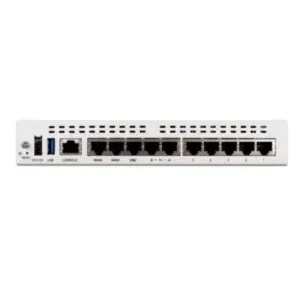
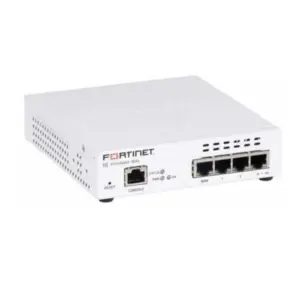
FortiADC Hardware Appliances
A physical ADC may suit environments that prefer dedicated hardware, fixed interfaces, purpose-built acceleration, or separation from the virtual host estate.
Application Delivery Design Services
Architecture, migration planning, health-check design, SSL certificate handling, testing, documentation, and support planning may be required alongside the license.
FourTeck can help determine whether the requirement should use a virtual ADC, hardware appliance, public cloud marketplace image, or a related application security platform. The decision should follow the application architecture, performance measurements, compliance requirements, operations model, and available infrastructure.
Why Buyers Choose FourTeck
Enterprise application delivery purchases are easier when the supplier understands both the commercial license and the infrastructure where it will operate. FourTeck works with business buyers, IT teams, procurement departments, resellers, system integrators, and project managers who need clear product options rather than an unexplained part number.
Guidance can cover the ADC license together with servers, virtual infrastructure, storage, networking, firewalls, UPS systems, and related project components.
FourTeck can help organise workload, sizing, platform, security, resilience, and support information so the buyer requests a complete and comparable quotation.
The team can clarify model codes, bundle choices, license duration, support terms, quantities, and commercial dependencies before the order is placed.
Electronic license fulfilment, documentation, related hardware shipping, implementation schedules, and destination requirements can be reviewed as separate parts of the project.
Buyers can discuss FortiCare coverage, subscription services, renewal planning, escalation needs, and the practical support path for their deployment.
When another model, hardware form factor, or related Fortinet platform fits better, FourTeck can help the buyer compare options without forcing the original request.
FourTeck does not rely on unverified stock statements, fabricated ratings, or one-size-fits-all promises. The aim is to help the customer define the requirement, understand the available route, and move toward a technically suitable quotation. This is especially important for ADC projects because a low-cost license can be the wrong purchase if it excludes required capacity, security services, resilience, or support.
Frequently Asked Questions
What is FortiADC FAD-VM used for?
It is used to distribute application traffic across back-end servers, monitor service health, improve availability, handle SSL traffic, support local or global balancing, and apply selected application security controls. It can front customer portals, enterprise applications, APIs, web services, hybrid cloud platforms, and internal applications that need a stable access point.
Which VM size should my business choose?
The correct size depends on peak throughput, connections, SSL processing, Layer 7 policy, security inspection, logging, memory, growth, and high-availability design. VM01 through VM32 and VMUL options support different vCPU entitlements. Share measured workload details with FourTeck so the recommendation is based on application demand rather than model name alone.
Can it run on VMware, Hyper-V, or KVM?
FortiADC-VM supports several private-cloud platforms, including VMware ESXi, Microsoft Hyper-V, KVM, Citrix Xen, and Xen Project environments. Supported versions and installation files can vary by software release. Confirm the exact hypervisor version, host architecture, resources, and virtual networking before ordering or upgrading.
Is FortiADC FAD-VM available in Africa?
FourTeck accepts inquiries from organisations across Africa and can help with current license availability, bundle selection, support terms, electronic fulfilment, related hardware delivery, and project coordination. Availability varies by model, subscription or perpetual option, destination, supplier status, currency, and quantity, so request a current quotation for the specific requirement.
Does every license include the same security services?
No. Security coverage depends on the selected product bundle and subscription. Network Security, Application Security, and AI Security options can include different FortiGuard services and controls. Confirm required WAF, reputation, antivirus, IPS, sandbox, credential protection, analytics, bot protection, support, and request limits before approving the quote.
Can FourTeck help with sizing and configuration?
Yes. FourTeck can review your platform, traffic, sessions, applications, SSL use, security needs, resilience target, and licensing preference. The team can help organise a quote-ready requirement and discuss implementation scope. Complex environments may also need a formal architecture or professional-services assessment before final deployment.
What information should I send for a quote?
Send the deployment country, hypervisor or cloud, required license model, desired term, number of applications, peak traffic, concurrent connections, SSL demand, security bundle, HA needs, implementation scope, project deadline, and quantity. Existing ADC users should also share current model, utilisation, certificates, policies, and migration expectations.
Does a high-availability design require two licenses?
High-availability licensing and architecture depend on the chosen commercial model and release. Buyers should not assume one license covers every resilient design. A complete quote should confirm the number of instances, host placement, HA links, failover mode, support services, and testing. FourTeck can help clarify the bill of materials.
Can the virtual ADC be deployed in public cloud?
Supported public-cloud options can include AWS, Microsoft Azure, Google Cloud, Oracle Cloud, and IBM Cloud. Commercial choices may include BYOL, PAYG, subscription, or marketplace purchasing. Cloud instance cost, bandwidth, public IPs, storage, regions, and platform limits are separate from the Fortinet license and should be included in the project budget.
Can businesses request bulk or multi-site supply?
Yes. Organisations, service providers, resellers, and project teams can request multiple licenses or a regional rollout. Share the number of sites, standard configuration, local variations, support term, currencies, deployment schedule, and whether central management is required. FourTeck can help structure the inquiry for consistent commercial and technical comparison.
Need Help Choosing the Right FortiADC VM Option?
FourTeck can help you review license size, security bundle, platform compatibility, high availability, support term, availability, and delivery requirements for your business location. Send your workload details for a tailored quotation.
Reviews
There are no reviews yet.