

Grandstream UCM6308A Audio IP PBX in Africa
Build a central voice and collaboration environment for a large user base while retaining practical support for analogue telephones and PSTN lines. The UCM6308A combines high extension capacity, call routing, audio meetings, remote-user tools, endpoint provisioning and business telephony controls in a rack-ready appliance suited to demanding office, service and multi-site communication requirements.
✓ 200 Concurrent Calls
✓ 8 FXS + 8 FXO Ports
✓ Rack or Desktop Deployment
✓ Configuration Guidance
Quick Product Information
Grandstream
UCM6308A
Audio IP PBX and unified communications appliance
Up to 1,500 registered users
Up to 200 concurrent G.711 calls
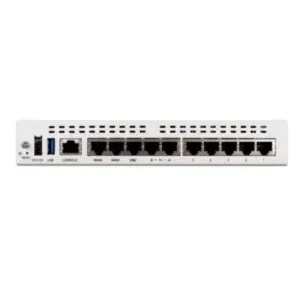
8 FXS and 8 FXO RJ11 ports
Three self-adaptive Gigabit ports with PoE+
Rack mount or desktop
Supplier and configuration dependent
Selection, configuration review, quote and delivery coordination
Product Overview
The Grandstream UCM6308A Audio IP PBX is designed for organisations that want to manage a substantial telephone environment from one on-premise communications platform. It brings together SIP extensions, external trunks, analogue endpoints, incoming call distribution, interactive voice response, voicemail, conferencing, call recording, mobility and administration tools. This is particularly useful where a business has outgrown a small office telephone system but still wants direct control of extension numbering, dial plans, call policies, user permissions and local integration.
Its capacity profile makes it suitable for large offices, campuses, service centres, hospitality properties, education networks, healthcare operations and distributed businesses that need many registered users without running every interaction through separate communications services. Up to 1,500 users can be registered, while the appliance can handle up to 200 concurrent G.711 calls and up to 150 concurrent encrypted SRTP calls. Those figures help planners distinguish between the total number of people who need extensions and the smaller number likely to be on calls at the same time. Correct sizing should consider busy-hour traffic rather than relying only on headcount.
The eight FXS ports allow existing analogue telephones, fax equipment or compatible analogue devices to be connected where required. Eight FXO ports provide a bridge to conventional PSTN lines. This combination is valuable for organisations transitioning gradually from legacy telephony to SIP services, or for sites that need local analogue lines for operational reasons. Each analogue port includes lifeline capability during a power outage when correctly deployed, helping preserve a basic path between designated FXS and FXO connections.
For modern users, the platform supports Grandstream Wave applications and UCM RemoteConnect services, enabling approved users and endpoints to connect from outside the main office environment. It also supports instant messaging, voice meetings and web-based audio meetings. Three Gigabit network interfaces, integrated PoE+ support on the network platform, a built-in NAT router mode, USB ports, SD card support and a rack-ready metal form provide deployment flexibility for communications rooms and structured IT environments.
FourTeck helps buyers move from model selection to a usable communication plan. That includes reviewing extension counts, concurrent call expectations, analogue line requirements, SIP trunk readiness, endpoint mix, network quality, remote access, rack space, power protection, recording retention and implementation support. The aim is to match the appliance to the full telephone environment rather than treating the PBX as an isolated box.
Key Business Benefits
◆ Capacity for Growth
Support for up to 1,500 users gives organisations room to consolidate departments, future sites and new staff under one numbering plan. Buyers can avoid replacing a smaller PBX too early, provided concurrent call traffic and network design are also sized correctly.
◆ Hybrid Line Flexibility
Eight FXO and eight FXS ports help businesses combine traditional telephone services with SIP-based communications. This supports staged migration, legacy device retention and local line continuity without forcing every site to change all endpoints at once.
◆ Central Call Control
Call routes, queues, ring groups, IVR menus, schedules, voicemail and extension policies can be managed from a central interface. This creates a more consistent customer contact experience across departments and reduces fragmented configuration across separate systems.
◆ Remote Work Enablement
Wave applications and RemoteConnect support can extend approved business communications to mobile and remote users. Staff can remain linked to the company extension environment while working away from the main office, subject to licensing, policy and network conditions.
◆ Easier Endpoint Rollout
Grandstream ZeroConfig provisioning helps administrators discover and prepare compatible endpoints with less manual repetition. For larger deployments, this can shorten rollout time and improve consistency across phone settings, extension assignments and firmware policies.
◆ Security-Focused Foundation
Secure boot, unique certificates, random default passwords and support for SRTP, TLS, HTTPS, SSH and 802.1X provide a stronger baseline than an unmanaged telephone system. Effective protection still depends on patching, firewall rules, credential policy and careful remote access design.
◆ Management Visibility
Compatibility with Grandstream Device Management System supports central provisioning, monitoring, troubleshooting and firmware tasks for supported products. This is valuable for organisations managing many endpoints or several locations with a small IT team.
Together, these benefits make the platform more than a high-capacity call controller. It can serve as the operational centre for user extensions, customer-facing call flows, analogue migration, remote access and endpoint management. The commercial value comes from planning the deployment correctly: a well-sized PBX can reduce duplicated systems, simplify administration and support future growth, while a poorly planned installation may still suffer from inadequate bandwidth, weak cabling, unsuitable phones or insufficient power protection.
Product Highlights
Up to 1,500 registered users gives the system a broad operating range for multi-department organisations and consolidated telephone environments.
Up to 200 concurrent G.711 calls and 150 encrypted SRTP calls support busy operational periods when capacity planning is based on real traffic data.
Eight analogue station ports and eight analogue trunk ports simplify mixed deployments involving legacy phones, fax devices or conventional carrier lines.
The system supports unlimited meeting rooms, up to nine simultaneous public rooms and a maximum of 150 participants across active rooms.
Full-band Opus and a broad codec set support modern voice deployments, while jitter-resilience capabilities help maintain intelligibility on imperfect networks.
A full API is available for third-party platform and application integration, including suitable CRM and property-management scenarios subject to implementation requirements.
The appliance is based on Asterisk version 16 and includes a wide set of call-centre, routing, recording, fax, paging, scheduling and user-service features. Final suitability should be confirmed against the exact workflow. Buyers should also distinguish the UCM6308A audio model from video-oriented UCM variants; the audio series is centred on voice, instant messaging and audio/web meetings rather than appliance-hosted video conferencing capacity.
Technical Specifications
| Specification | Grandstream UCM6308A Details |
|---|---|
| Product type | Rack-mountable audio IP PBX and unified communications appliance |
| Maximum users | Up to 1,500 users |
| Concurrent calls | Up to 200 G.711 calls; up to 150 concurrent SRTP calls |
| FXS ports | 8 RJ11 analogue telephone ports with lifeline capability |
| FXO ports | 8 RJ11 PSTN line ports with lifeline capability |
| Network interfaces | Three self-adaptive Gigabit ports, configurable for switched, routed or dual mode, with PoE+ |
| NAT router | Supported in router mode and switch mode |
| Peripheral interfaces | 2 × USB 3.0 and 1 × SD card interface |
| Display | 128 × 32 dot-matrix graphic LCD with Down and OK buttons |
| Voice and fax codecs | Opus, G.711 A-law/U-law, G.722, G.722.1, G.722.1C, G.723.1, G.726-32, G.729A/B, iLBC, GSM and T.38 |
| Quality of service | Layer 2 QoS with 802.1Q and 802.1p; Layer 3 QoS with ToS, DiffServ and MPLS |
| Media and management security | SRTP, TLS, HTTPS, SSH and 802.1X; secure boot, unique certificate and random default password support |
| Provisioning | Grandstream ZeroConfig, encrypted XML provisioning and GDMS compatibility |
| Meeting capacity | Unlimited meeting rooms, up to 9 simultaneous public rooms and up to 150 participants across rooms |
| Power | 2 × DC 12V power jacks; adapter input 100–240VAC, 50/60Hz; output DC 12V, 2A |
| Dimensions | 485mm × 187.2mm × 46.2mm |
| Weight | Approx. 2.538kg unit weight; 3.463kg package weight |
| Mounting | Rack mount or desktop |
| Operating environment | 0–45°C, 10–90% humidity, non-condensing |
| Availability and warranty | Country, supplier and order dependent; contact FourTeck for current guidance |
How to interpret the specification table
Capacity figures are maximum platform limits, not a promise that every deployment will reach them under every codec, recording, encryption, integration or network condition. Buyers should estimate peak concurrent calls, expected encrypted sessions, active meeting participants, recording load and remote endpoints. The eight FXS and eight FXO ports are fixed physical interfaces; additional analogue capacity may require compatible gateways. Storage planning for call recordings should include the selected retention period and backup method rather than relying only on internal or removable media. For reliable service, connect the PBX, network switch, router and carrier equipment to suitable power protection and confirm rack depth, airflow and cable routing before installation.
Configuration and Buyer Guidance
A successful PBX purchase starts with a communication map. Count every person, shared phone, reception console, meeting area, door intercom, fax endpoint and remote user that may require an extension. Then separate total registrations from simultaneous usage. A workforce of several hundred people may need far fewer concurrent call paths, while a contact centre or booking operation may have a much higher busy-hour ratio. Use call records from an existing system where available and add sensible growth capacity.
1. Users and Call Traffic
Confirm registered extensions, peak calls, encrypted calls, queue agents and conference participants. Do not size only from employee count.
2. Trunks and Numbering
List SIP trunks, PSTN lines, DID ranges, outbound caller IDs, emergency routes and failover requirements before configuration begins.
3. Endpoint Mix
Identify reception phones, executive sets, basic desk phones, cordless units, soft clients, analogue devices and conference phones.
4. Network Readiness
Review VLAN design, PoE switch capacity, bandwidth, latency, jitter, firewall policy, QoS and internet resilience for remote calling.
Analogue planning deserves equal attention. Each FXS port is intended for an analogue station-side connection, while each FXO port terminates a compatible analogue carrier line. Confirm local line standards, connector placement and how lifeline pairs should be arranged. If the requirement exceeds eight ports in either direction, discuss gateway options rather than assuming the PBX can accept extra internal modules.
For IP endpoints, check whether selected phones support required keys, Bluetooth, Wi-Fi, headsets, colour displays, sidecars or operator functions. ZeroConfig can simplify Grandstream provisioning, but templates, firmware versions and security policies still need planning. Remote users should be assessed for internet quality, device ownership, authentication and acceptable support methods. UCM RemoteConnect service levels and any associated subscription requirements should be reviewed for the intended number of remote users and devices.
Finally, confirm operational responsibilities. Decide who will manage dial plans, queues, backups, recordings, updates, certificates and security alerts. Include UPS support, secure rack installation, labelled cabling and a documented rollback plan. FourTeck can help turn these questions into a clearer bill of materials and deployment brief.
Ideal Business Use Cases
Corporate Headquarters
A large office can centralise extensions, department queues, reception routing, voicemail and meeting services while keeping a structured dial plan that supports growth and internal mobility.
Customer Service Operations
Configurable queues, automatic call distribution, announcements, agent availability rules, recording and call-detail information support service desks, booking teams and customer contact groups.
Hotels and Managed Properties
The combination of many extensions, analogue connectivity, IVR, wake-up calls, room phones and API integration potential can suit hospitality communications when paired with compatible property systems.
Education Campuses
Schools, colleges and training environments can link administration, security, classrooms, departments and remote staff through a unified extension plan, paging and scheduled call routes.
Healthcare and Clinics
Reception, appointments, wards, laboratories, administration and after-hours routing can be coordinated through queues, ring groups, IVR menus and internal extensions, subject to local privacy requirements.
Multi-Department Enterprises
Businesses with separate sales, finance, logistics, support and management teams can apply consistent numbering, permissions, time conditions and outbound calling policies from one platform.
The appliance can also support branch communication where traffic is consolidated through a central PBX or linked deployment. Suitability depends on WAN quality, failover strategy and the impact of a central outage on remote sites. Some organisations may prefer local survivability or a high-availability design. The system supports hot-standby high availability and local dual deployment, but this requires additional compatible equipment, planning and testing. Buyers should include business-continuity objectives in the original scope rather than adding them after the telephone environment is already live.
Grandstream UCM6308A Capacity and Call Handling
Capacity is the first reason many buyers consider this model, but the numbers need practical interpretation. The platform supports up to 1,500 user registrations, giving administrators enough address space for employees, shared work areas, service extensions and certain integrated endpoints. User capacity does not equal the number of simultaneous calls. The system supports up to 200 concurrent calls using G.711 and up to 150 concurrent SRTP calls. Encryption, codec choice, recording and conferencing can affect resource use, so the deployment should be tested against its most demanding expected scenario.
Busy-hour analysis is more useful than a simple annual headcount forecast. A back-office department may have many registered extensions but limited simultaneous external traffic. A reservations team, support desk or sales operation may use a far larger percentage at once. Internal calls, external trunks, conference participants and remote users all contribute to the operating profile. Call queues should be designed with realistic agent counts, overflow rules, waiting-time messages and alternate routes so customer experience does not depend only on raw call capacity.
Meeting capacity also needs clarification. The platform supports unlimited meeting-room definitions, up to nine simultaneous public rooms and up to 150 participants across all active rooms. This can support team briefings and voice collaboration, but planners should not assume every department can host a maximum-size meeting at the same time. Internet and LAN capacity must also support remote participants. FourTeck can help buyers convert user counts, traffic patterns and meeting requirements into a deployment estimate that leaves sensible operational headroom.
Grandstream UCM6308A Analogue and SIP Connectivity
Many large communication projects are not completely digital. Existing fax machines, lift phones, door units, emergency handsets, room phones or conventional carrier lines may still need to remain in service. The eight FXS ports provide analogue station connections, while eight FXO ports accept compatible PSTN lines. This makes the appliance useful during phased migrations where the organisation wants modern SIP calling and central administration without immediately removing all legacy services.
The lifeline function can link designated analogue ports during a power outage, but it should not be treated as a substitute for a complete continuity plan. Carrier line behaviour, port pairing, cable routes and endpoint power all matter. The PBX, network switches, router, fibre equipment and SIP gateway should be connected to appropriate UPS protection. Where telephone service is operationally critical, consider redundant trunks from separate paths and documented fallback procedures.
SIP trunks provide the scalable side of the design. Confirm registration or IP-authentication requirements, codec compatibility, DID presentation, emergency calling, number portability and firewall rules with the service provider. Quality-of-service markings can prioritise voice across managed networks, but they cannot repair inadequate internet capacity or severe last-mile instability. A pre-deployment voice assessment should measure latency, packet loss and jitter during busy periods. For organisations exceeding the fixed analogue port count, compatible external gateways can provide additional interfaces. FourTeck can help identify whether the requirement is best served by direct ports, gateways, SIP services or a mixed approach.
Grandstream UCM6308A Remote Collaboration and Management
Modern telephone environments must serve users beyond a single building. The Wave app supports desktop, web and mobile access for calling, messaging and meetings, while UCM RemoteConnect can provide secure remote connectivity and NAT traversal for approved endpoints. This allows organisations to keep an on-premise call-control platform while extending selected services to home workers, travelling staff and remote offices.
Remote access should be designed as a managed service rather than an open extension of the office LAN. Define which users need external calling, apply strong credentials, use supported encryption, limit administrative exposure and review logs. Mobile networks and residential internet connections vary widely, so users may experience different audio quality. Headsets, background noise, device performance and local firewall restrictions can also affect the result. Pilot testing with representative users reduces surprises before a broad rollout.
GDMS compatibility adds a central layer for provisioning, monitoring, firmware management and troubleshooting of supported Grandstream products. This is especially useful where many phones are deployed across departments or sites. It does not remove the need for change control, tested firmware, configuration backups and clear administrator roles. Third-party API integration can connect communication workflows with suitable CRM or property platforms, but integration scope, authentication, data handling and vendor support should be confirmed before purchase. FourTeck can help buyers identify which management, remote-user and integration functions belong in the initial project and which can be introduced later.
What Buyers Should Check Before Purchase
Before requesting a quote, buyers should confirm the operational requirement rather than choosing only by model name. Start with the number of extensions, expected peak calls, analogue devices, PSTN lines, SIP trunks, remote users and meeting participants. Include projected growth for the expected service life. The UCM6308A provides substantial capacity, but a smaller model may be more economical for a modest deployment, while a different architecture may be preferable for highly distributed or cloud-first organisations.
Configuration Fit
Confirm user registrations, busy-hour calls, SRTP usage, conference load, recording policy and queue-agent activity. Provide existing call reports where possible.
Compatibility Check
List SIP carriers, analogue lines, phone models, headsets, door systems, fax devices, CRM platforms and network equipment that must work with the solution.
Rack, Power and Cabling
Confirm rack space, airflow, two power inputs, UPS capacity, patching, labelled analogue cabling and protected network connections.
Quote Preparation
Share delivery location, quantity, endpoint list, licence or service needs, installation scope, training expectations and preferred warranty handling.
Ask whether UCM RemoteConnect service tiers are required for the intended remote users and endpoints, and whether recurring service costs should be included in the project budget. Review the selected phone models carefully: basic users may need simple sets, while reception, supervisors and executives may require more line keys, colour displays, headset support or expansion modules. Include PoE switch ports and power budget for every IP phone, access device and related endpoint.
Recording requirements can change storage and compliance planning. Decide which calls may be recorded, how long files must be retained, who can access them and how backups will be protected. Local privacy and employment rules may require notification or consent. The PBX includes recording functions, but storage capacity, retrieval workflow and long-term archiving should be designed separately. Similar care is needed for voicemail-to-email and fax-to-email because messages may contain sensitive information.
Finally, confirm availability, warranty route and replacement planning. Product supply can vary by market and order quantity. Ask whether the quoted unit includes rack accessories, power supplies and the required regional plugs. For project quantities, provide a schedule so sourcing, configuration and staging can be coordinated. FourTeck can also suggest smaller UCM6300 Audio models, related endpoints or gateway options when the original specification does not match the final requirement.
Africa Availability and Service Support
FourTeck supports business communication inquiries across Africa with assistance for product selection, configuration review, quotation, delivery coordination and warranty guidance. Availability may vary according to supplier status, required quantity, power-supply version, accessories and any related endpoint package. The team can help buyers clarify whether they need only the PBX appliance or a complete communication solution that includes IP phones, analogue gateways, PoE switches, racks, UPS protection, cabling, headsets and implementation services.
For a useful quotation, provide the planned delivery location, number of users, peak calls, analogue lines, remote users and preferred phone types. Also indicate whether the project is a new installation, an upgrade from an older PBX or a replacement for an existing UCM platform. This helps identify migration tasks such as number planning, configuration export, endpoint reprovisioning, trunk testing and user training.
FourTeck can coordinate discussions around compatible options, project quantities and deployment requirements. Final warranty terms and delivery arrangements depend on the source, destination and quoted package, so buyers should review these details before approving the order.
Africa Country and Regional Coverage
Businesses across Africa, including Kenya, Uganda, Nigeria, Ghana, Tanzania, Rwanda, Ethiopia, South Africa, Zambia, Botswana, Senegal and nearby regional markets, can contact FourTeck for availability guidance, configuration review and quotation support. The requirement may range from one appliance for a central office to a larger project combining telephone endpoints, PoE switching, structured cabling, racks, power protection and branch connectivity.
Regional procurement often involves differences in carrier services, analogue line standards, delivery routes, power plugs and warranty handling. Buyers should provide the country, final site address, required date, order quantity and installation scope at the beginning of the inquiry. Where the telephone environment spans several countries, describe how branches should call one another, whether each site needs local survivability and which numbers must remain local.
FourTeck can help review suitable models and related products without creating separate duplicated product pages for each market. The goal is one clear regional product reference with practical support for local project conditions, communication-service differences and delivery planning.
GCC, Middle East and Africa Availability
FourTeck Africa can support product inquiries for organisations across Africa while also guiding regional technology requirements through selected FourTeck platforms serving GCC and Middle East markets. Buyers with projects that include the UAE, Saudi Arabia, Qatar, Oman or Bahrain can share the complete regional scope so product versions, delivery routes, warranty expectations and implementation responsibilities can be reviewed together.
Availability and service options may differ by country, quantity and supplier. A multi-country deployment should standardise extension ranges, endpoint templates, firmware policy, security controls and trunk design while still allowing for local carriers and emergency calling. It may also require separate power accessories, local approval processes or on-site partners. Early planning reduces the risk of purchasing identical hardware without accounting for different operating conditions.
Regional resources include FourTeck Africa, FourTeck Kenya, FourTeck Uganda and FourTeck UAE. Use the contact channel most relevant to the purchasing entity and delivery destination.
Other Options Buyers May Consider
The correct model depends on scale, analogue connectivity and collaboration requirements. Buyers with fewer extensions may obtain a better fit from smaller UCM6300 Audio models, while larger endpoint projects may also require compatible IP phones, gateways and network infrastructure. The following options are useful discussion points when building a complete bill of materials.
Grandstream UCM6304A
A smaller audio-series alternative for projects needing up to 1,000 users, 150 concurrent calls and four FXS plus four FXO ports.
Grandstream UCM6302A
Suitable for medium deployments requiring up to 500 users, 75 concurrent calls and two FXS plus two FXO analogue interfaces.
Grandstream GRP Series Phones
Carrier-grade IP phones for basic users, supervisors, reception desks and executive roles, with model selection based on keys, display and connectivity.
Grandstream GXW Gateways
External analogue gateways can extend FXS or FXO capacity when the required port count exceeds the appliance’s built-in interfaces.
Managed PoE Switching
Voice VLANs, PoE budgets, uplink capacity and QoS make the network switch a critical part of a stable IP telephone deployment.
FourTeck can help compare these options based on real requirements instead of assuming the largest model is always the correct choice. A complete quote can combine the PBX, endpoints, gateways, switching, rack accessories and power protection so compatibility and project quantities are reviewed together.
Why Buyers Choose FourTeck
A business telephone system affects customer access, internal coordination, emergency communication and daily productivity. FourTeck approaches the requirement as an infrastructure project rather than a single-item sale. The team can help clarify the relationship between PBX capacity, carrier services, IP phones, analogue devices, switching, internet quality, racks and power protection before a quotation is finalised.
Product and accessory planning for complete communication environments.
Review of users, call traffic, trunks, endpoints and remote access.
Clearer bill-of-material planning for single units and project quantities.
Support for destination, quantity and project schedule discussions.
Explanation of quoted warranty route and documentation expectations.
Assistance selecting phones, gateways, switches, racks and UPS systems.
Pre-sales guidance is valuable when several stakeholders are involved. Management may focus on cost and continuity, IT teams on network design and security, customer-service leaders on queue behaviour, and users on phone features. FourTeck can help capture these requirements in one discussion so the final proposal is easier to evaluate. This does not replace site assessment or professional implementation where required, but it helps reduce obvious selection errors and missing accessories.
For upgrades, share the existing PBX model, extension plan, trunk provider, phone inventory and known problems. For new installations, provide floor plans, department counts and cabling status. Better input produces a more useful quote and a smoother deployment path.
Frequently Asked Questions
What is the UCM6308A used for?
It is used to manage a large business telephone environment with SIP extensions, analogue phones, PSTN lines, call queues, IVR, voicemail, recording, audio meetings, remote users and endpoint provisioning. It suits organisations that need central on-premise call control with capacity for many registered users and substantial simultaneous call traffic.
How many users and calls does it support?
The appliance supports up to 1,500 registered users, up to 200 concurrent G.711 calls and up to 150 concurrent SRTP calls. Actual design should account for codec choice, encryption, recording, conferencing and peak traffic. A proper estimate separates total extensions from the number of users likely to call at the same time.
Can it connect analogue phones and traditional lines?
Yes. It includes eight FXS ports for compatible analogue stations and eight FXO ports for compatible PSTN lines. Each port supports lifeline capability when correctly paired and installed. Requirements beyond eight ports may need external analogue gateways, which should be selected according to port type, capacity and local line conditions.
Does it support remote workers?
Yes. The Wave app supports desktop, browser and mobile communication, while UCM RemoteConnect can provide remote connectivity and NAT traversal for supported users and endpoints. Service tiers, user counts, security policy, internet quality and any recurring costs should be confirmed as part of the project design.
Can FourTeck help choose compatible IP phones?
FourTeck can help match phone types to user roles, including basic desk users, reception staff, supervisors, executives, cordless users and meeting rooms. Selection should consider line keys, display size, headset support, Bluetooth, Wi-Fi, expansion modules, PoE and provisioning compatibility rather than using one phone model for every employee.
Is the product available across Africa?
FourTeck supports regional inquiries and can help with current availability, quotation and delivery coordination. Supply may vary by destination, order quantity, supplier status and required accessories. Provide the delivery location and project schedule so the team can review practical sourcing options without making unsupported stock or delivery promises.
What information is needed for a quotation?
Share the number of extensions, peak concurrent calls, SIP trunks, PSTN lines, analogue endpoints, remote users, phone models, recording requirements, delivery location, quantity and installation scope. It is also useful to include existing network details, rack availability, power protection and the target deployment date.
Does it need a PoE switch and UPS?
The PBX has its own power inputs, while most IP phones are normally powered by PoE switches or individual adapters. A managed PoE switch is recommended for voice VLANs, QoS and easier power administration. Suitable UPS protection should cover the PBX, switch, router and carrier equipment so telephone service is not lost during brief power interruptions.
Can businesses request bulk or project supply?
Yes. Businesses, resellers, integrators and project teams can request quotations for multiple PBX units, endpoint packages and related infrastructure. Provide a phased schedule, site list and standard phone profiles where possible. FourTeck can help review quantities, alternatives and accessories so the project bill of materials is more consistent.
Need Help Planning Your Business Telephone System?
FourTeck can help review capacity, analogue and SIP connectivity, endpoint choices, remote access, warranty guidance and delivery requirements before you approve the order.
Reviews
There are no reviews yet.