

Grandstream HT818 Analog Telephone Adapter in Africa
Move multiple analog telephones or compatible fax devices onto a modern SIP communication platform without replacing every endpoint at once. The HT818 combines eight FXS ports, dual Gigabit network connectivity, practical voice features, secure provisioning, and an integrated NAT router in a compact appliance suited to offices, hospitality sites, service providers, institutions, and distributed business locations.
Request QuoteCheck Africa Availability
Quick Product Information
Grandstream
HT818
Eight-port analog telephone adapter and FXS VoIP gateway
Connecting analog phones or compatible fax devices to SIP services
Offices, hotels, clinics, schools, service providers, retail and branches
Two 10/100/1000 Mbps Ethernet ports
Supplier and configuration dependent
Selection, compatibility, configuration and delivery guidance
Product Overview
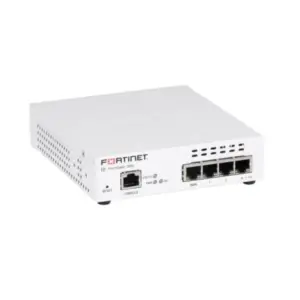
The Grandstream HT818 is a compact gateway for organisations that still depend on analog telephones, traditional fax machines, lobby phones, guest-room handsets, reception instruments, emergency handsets, or other compatible two-wire endpoints but want to use a SIP-based voice platform. Rather than replacing every analog device immediately, a business can connect up to eight endpoints through the unit’s RJ11 FXS interfaces and register them to supported SIP services or an IP PBX. This approach can reduce disruption during a communication upgrade and help a company gain more value from equipment that remains fit for purpose.
The adapter sits between the analog endpoints and the IP network. Each FXS port provides the electrical interface expected by a standard analog telephone, while the network side connects to the organisation’s Ethernet infrastructure. Dual Gigabit ports give deployment teams flexibility when integrating the unit with a router, switch, modem, or nearby workstation. An integrated NAT router is also available for suitable small deployments, although larger business environments commonly place the device behind an existing firewall and managed network so voice traffic, addressing, security, and quality controls can be handled consistently.
For day-to-day calling, the platform supports familiar functions such as caller identification, call waiting, hold, transfer, forwarding, do not disturb, and three-way conferencing. T.38 support can assist with Fax-over-IP deployments when the connected provider, PBX, network, and fax device are configured correctly. Wideband codec support and line echo cancellation are designed to improve voice quality, while network quality-of-service features can help administrators prioritise time-sensitive voice traffic.
The HT818 also addresses administration needs. Two SIP profiles can be assigned across the eight FXS ports, and automated provisioning options can help service providers, system integrators, and multi-site IT teams deploy consistent settings. Secure management and media options include HTTPS, TLS, SIP over TLS, SRTP, SSH, and device-specific security controls. These capabilities are useful when the unit is deployed as part of a managed business communication environment rather than treated as an isolated plug-and-play accessory.
Africa buyers should assess more than the number of ports. The correct decision depends on the PBX or hosted voice service, SIP account design, simultaneous call requirements, fax expectations, network quality, power conditions, cable distances, local support, and future expansion. FourTeck can help review these points, identify suitable related products, coordinate supply, and prepare a quotation based on the destination and project requirement.
Key Business Benefits
The value of an analog telephone adapter is not measured only by port count. A well-matched gateway can simplify migration, protect existing investments, support familiar workflows, and give technical teams a manageable connection point between legacy endpoints and modern voice services.
◆ Preserve Useful Analog Devices
Many businesses still have reliable analog handsets and fax equipment. Eight FXS interfaces allow multiple devices to remain in service while the organisation transitions the voice platform to SIP. This can reduce immediate replacement costs and avoid unnecessary user retraining.
◆ Consolidate Multiple Lines
One appliance can serve up to eight analog endpoints, reducing the number of individual adapters, power supplies, management interfaces, and network connections required. Consolidation can make installation neater and fault investigation easier for support teams.
◆ Support Familiar Call Workflows
Functions such as transfer, hold, forwarding, caller identification, call waiting, do not disturb, and three-way conferencing help users retain familiar telephone behaviour after the back-end service changes from traditional telephony to IP voice.
◆ Improve Deployment Control
Web administration, remote management, syslog, TR-069, and configuration-file provisioning can support repeatable deployments. This matters for service providers, hotel groups, schools, clinics, and businesses managing several sites or many similar endpoints.
◆ Strengthen Voice Security
Support for secure control and media technologies helps administrators protect account credentials and voice sessions when the wider SIP environment is designed correctly. Security remains a shared responsibility across the adapter, PBX, provider, firewall, passwords, and network policies.
◆ Prepare for Network-Based Communications
Moving analog endpoints onto an IP platform can make branch connectivity, central administration, extension planning, call routing, and future communications upgrades easier. The adapter becomes a practical bridge while the organisation modernises at a controlled pace.
Product Highlights
Eight Independent FXS Connections
Eight RJ11 ports provide a compact way to connect several analog telephones or supported fax endpoints. Port-level planning lets administrators assign extensions and calling behaviour according to the selected SIP design.
Two SIP Profiles
Two SIP profiles allow the device to work with suitable account groupings or services. The exact mapping should be reviewed before deployment, especially when different departments, dial plans, providers, or failover requirements are involved.
Dual Gigabit Network Ports
Two 10/100/1000 Mbps Ethernet interfaces provide flexible LAN and WAN connection options. The integrated router can suit selected scenarios, while managed business networks may use the unit as an endpoint behind existing routing and security infrastructure.
Voice and Fax Features
Wideband and narrowband codecs, dynamic jitter handling, echo cancellation, T.38 fax relay, G.711 fax pass-through, caller ID support, and common call features give deployment teams a broad toolkit for compatible environments.
Provisioning and Monitoring
HTTP, HTTPS, TFTP, TR-069, SSH, web management, and syslog support can simplify setup and ongoing administration. The right method depends on the organisation’s scale, security policy, and management platform.
Compact Physical Design
A compact desktop form factor helps place the unit near existing analog distribution points, reception areas, communications cabinets, or branch-office equipment, subject to ventilation, cable management, power protection, and environmental requirements.
Technical Specifications
| Specification | Details |
|---|---|
| Brand and Model | Grandstream HT818 |
| Product Type | Analog telephone adapter and eight-port FXS VoIP gateway with integrated NAT router |
| Telephone Interfaces | Eight RJ11 FXS ports |
| SIP Profiles | Two SIP profiles across eight FXS ports |
| Network Interfaces | Two 10/100/1000 Mbps RJ45 Ethernet ports |
| Voice Codecs | G.711, G.723.1, G.729A/B, G.726, G.722, iLBC and OPUS; codec availability may depend on firmware and configuration |
| Fax Support | T.38 Group 3 fax relay up to 14.4 kbps and automatic switch to G.711 fax pass-through |
| Telephony Features | Caller ID display or block, call waiting, flash, blind or attended transfer, forwarding, hold, do not disturb and three-way conferencing |
| Quality of Service | Layer 2 802.1Q VLAN and 802.1p; Layer 3 ToS, DiffServ and MPLS support |
| Security | SRTP media, TLS/SIPS/HTTPS control, secure provisioning options and security certificate per unit |
| Provisioning and Management | Web browser, HTTP, HTTPS, SSH, TFTP, TR-069, configuration files and syslog |
| DTMF | In-audio, RFC2833 and SIP INFO |
| Power | 100-240 VAC, 50-60 Hz input; 12 V / 1.5 A output adapter |
| Operating Environment | 0°C to 40°C operating temperature; 10% to 90% non-condensing humidity |
| Dimensions and Weight | Approximately 36 × 120 × 180 mm; approximately 356 g |
| Warranty and Availability | Depend on supplier, destination, model revision and selected commercial terms; contact FourTeck for current guidance |
Specifications should be considered together with the planned voice environment. Eight physical ports do not automatically mean eight independent external telephone numbers, eight simultaneous calls, or eight unrelated SIP providers. Account registration, SIP profile mapping, PBX licensing, provider limits, codec policy, bandwidth, dial plan, emergency calling, fax behaviour, and call routing all influence the final result. A buyer should therefore provide the PBX or hosted voice platform, expected number of extensions, call patterns, and any fax requirement before confirming the model.
The local network also matters. Voice traffic is sensitive to latency, packet loss, jitter, unstable internet links, and poor cabling. Where the adapter joins a managed office network, administrators should review VLANs, DHCP, DNS, NTP, firewall rules, quality-of-service policy, remote management access, and backup connectivity. In locations with unstable utility power, a suitable UPS and surge protection plan can help reduce unexpected resets and configuration disruption. FourTeck can help buyers assemble a more complete requirement covering the adapter, PBX compatibility, Ethernet connectivity, power protection, cabling, deployment support, and related endpoints.
Configuration and Buyer Guidance
Start with the communication requirement rather than the product name. Count every analog endpoint that must be connected and note where it is installed. A reception handset, guest-room phone, elevator phone, fax machine, alarm dialler, point-of-sale telephone, and conference-room analog unit may have different signalling, cable, reliability, or compliance needs. Confirm that each endpoint is suitable for an FXS connection and that the planned SIP service supports the required behaviour.
1. Count Active Endpoints
List the number of phones and fax devices needed now, spare capacity required, and whether more analog lines may be added later.
2. Confirm SIP Compatibility
Identify the IP PBX, hosted provider, SIP credentials, registration method, supported codecs, DTMF mode, and any extension licensing.
3. Review Fax Expectations
Fax over IP depends on the full path. Confirm T.38 support at the PBX or provider and plan testing for the actual fax machine and destination.
4. Assess the Network
Check bandwidth, latency, VLAN design, quality-of-service settings, firewall rules, addressing, internet resilience, and remote access policy.
5. Plan Power and Placement
Choose a ventilated location near Ethernet and analog cabling. Consider UPS backup, surge protection, secure mounting, and controlled access.
6. Define Support Ownership
Decide who will configure the device, maintain firmware, protect credentials, document ports, monitor registration, and handle service escalation.
For a small site, configuration may involve one SIP provider, a simple dial plan, and a few analog phones. A larger deployment can require extension templates, port labels, call permissions, emergency routing, central provisioning, failover servers, secure remote management, and change-control documentation. Bulk buyers should also confirm hardware revision consistency, power adapter type, packaging requirements, serial-number capture, staging, destination-specific delivery, and spare-unit strategy. Sharing this information at quotation stage helps FourTeck recommend the correct quantity, accessories, related equipment, and implementation approach.
Ideal Business Use Cases
Hotels and Guest Accommodation
Properties that retain analog guest-room handsets can connect several rooms or service areas to an IP PBX. The gateway may support room extensions, reception calling, housekeeping communication, and internal service workflows. Hotel deployments should verify cable distances, PBX integration, emergency-call policy, power backup, room-change procedures, and the number of ports required per floor or communications cabinet.
Clinics and Healthcare Facilities
Clinics, laboratories, pharmacies, and smaller care facilities may have analog phones at reception desks, nursing stations, treatment rooms, or administrative points. An adapter can support gradual migration to VoIP, but critical communication policies, backup power, network resilience, privacy requirements, and emergency procedures should be reviewed before deployment.
Schools and Training Centres
Education sites can connect analog phones located in offices, staff rooms, security desks, libraries, laboratories, or reception areas. Central SIP management may simplify extension changes across buildings. Buyers should confirm structured cabling, voice VLAN design, call permissions, public-address requirements, and whether a different product is needed for paging or intercom functions.
Retail, Warehousing and Branch Offices
Retail outlets, warehouses, and branches may retain analog phones at counters, dispatch desks, guard stations, loading areas, or manager offices. A central IP PBX can give these endpoints extension dialling and managed routing. Network quality, branch VPN design, internet failover, surge protection, and local support procedures should be planned carefully.
Service Provider Deployments
Managed voice providers and system integrators can use automated provisioning and central administration to deploy repeatable configurations. The eight-port format can suit customers needing several analog lines at one location. Providers should standardise firmware, templates, certificates, passwords, failover servers, monitoring, remote support, and replacement procedures.
Legacy Fax and Specialist Analog Devices
The gateway may be considered where a business must retain compatible fax machines or selected analog devices during a voice migration. Fax reliability must be validated across the actual SIP carrier and network path. Alarm panels, modems, payment terminals, lift phones, and emergency devices may have special requirements and should never be assumed compatible without vendor and service-provider confirmation.
A strong use case has a clear reason for keeping analog endpoints and a clear plan for managing them on the IP network. The HT818 is most useful when eight ports fit the site layout, the SIP environment is compatible, and the organisation benefits from consolidated administration. It may not be the correct choice when only one or two ports are required, when FXO connectivity is needed, when specialist analogue equipment has unsupported signalling, or when the buyer is ready to replace every endpoint with native IP phones. FourTeck can help compare the requirement with smaller ATAs, hybrid gateways, IP PBX platforms, and direct IP endpoints.
Grandstream HT818 Eight-Port Analog Migration
The strongest feature of this model is its ability to bring eight analog endpoints into an IP voice environment through one managed device. This is different from a one-port or two-port adapter intended for a home office or a very small branch. In a hotel corridor, clinic wing, school office block, warehouse administration area, or multi-department branch, eight ports can provide a useful balance between density and simplicity.
Migration projects often fail when the focus is only on connecting cables. A successful transition requires a port plan. Each physical port should have an assigned extension, user or location label, calling permission, caller-ID behaviour, voicemail policy, emergency-call rule, and support owner. Technicians should document the analog cable path and test every handset after registration. Where several ports share one SIP profile, the team should confirm how authentication, routing, simultaneous calls, and failover will behave. This preparation reduces confusion when staff report a problem and allows support teams to identify the affected endpoint quickly.
The eight-port design also supports phased modernisation. A business can keep analog phones in rooms where advanced IP features are unnecessary while installing native IP phones for receptionists, supervisors, contact-centre agents, or executives. Both endpoint types can participate in the same communication system when the PBX and dial plan are designed correctly. This mixed approach can protect budget, reduce waste, and let the organisation upgrade based on operational priority rather than replacing every handset at once.
Buyers should still consider density carefully. If analog endpoints are spread across distant buildings, multiple smaller adapters closer to the cable termination points may be easier than extending long analog runs to one gateway. If many more than eight ports are required, a higher-density gateway or a structured multi-unit design may be more manageable. FourTeck can help map the number and location of endpoints so the selected architecture fits the physical site as well as the SIP platform.
Grandstream HT818 Voice Quality and Fax Handling
Voice quality depends on the complete communication path. The adapter supports a broad codec set, including wideband and bandwidth-efficient options, along with dynamic jitter buffering and line echo cancellation. These features give administrators flexibility, but the best codec is not always the newest or the most compressed. The PBX, carrier, internet link, firewall, remote destination, and user expectation must all support the selected codec. In many business deployments, consistency and interoperability matter more than theoretical bandwidth savings.
Network engineering is equally important. Voice packets should not compete blindly with large backups, software downloads, surveillance traffic, or guest internet usage. A managed switch and router can classify and prioritise voice traffic using VLAN and quality-of-service policies. Stable DNS, NTP, DHCP, and firewall behaviour also contribute to reliable registration and calling. When branch traffic crosses VPN links or public internet connections, latency, packet loss, jitter, and bandwidth contention should be measured rather than guessed.
Fax requires additional care. T.38 is designed to relay fax over IP more reliably than an ordinary compressed voice call, and the adapter can fall back to G.711 pass-through in compatible conditions. However, a feature on the gateway cannot guarantee end-to-end fax success. The sending fax machine, receiving fax system, SIP provider, PBX, firewall, codec negotiation, packet timing, and line settings all influence the result. Businesses that exchange critical legal, medical, financial, or operational documents should test representative destinations before relying on the deployment.
For difficult fax environments, buyers should discuss expected page volumes, international destinations, transmission speed, error correction, and alternative electronic document workflows. FourTeck can help identify the information needed for testing and determine whether the HT818, a dedicated fax service, a different gateway, or a process change is the most suitable option.
Grandstream HT818 Secure Provisioning and Management
An eight-port voice gateway may support several users, rooms, or operational functions, so administration should be treated as part of the communication service. The HT818 provides browser-based management, remote access options, syslog, configuration-file provisioning, TR-069 support, and secure protocols. These capabilities allow a technical team or service provider to establish repeatable configuration standards rather than manually changing every setting without documentation.
A controlled deployment starts with credential management. Default passwords should be changed, administrative access should be restricted, and remote management should only be enabled through an approved method. Configuration and firmware sources must be trusted. Where the environment supports it, HTTPS, SSH, SIP over TLS, and SRTP can help protect management traffic, signalling, and media. Security settings must also align with the PBX and provider; enabling one feature on the adapter does not secure the entire call path.
Provisioning becomes especially valuable for branch networks, hospitality groups, schools, service providers, and bulk projects. A standard template can define SIP servers, codecs, dial plans, time settings, logging, firmware policy, and port behaviour. Site-specific values can then be applied in a controlled way. This reduces configuration drift and makes replacement faster because the approved settings can be restored to a new unit. Change records should identify who modified the configuration, why the change was made, and how it was tested.
Monitoring should cover more than whether the device is powered on. Teams may need to check registration status, network reachability, call failures, authentication errors, firmware state, and unusual access attempts. A spare-unit plan can also be sensible where several business functions depend on one gateway. FourTeck can support buyers with pre-sales configuration review and help define the accessories, network information, and support expectations that should accompany the purchase.
What Buyers Should Check Before Purchase
Before requesting a quote, buyers should confirm the complete operational requirement. Choosing only by model name or port count can lead to missing accessories, incompatible SIP settings, unsuitable cable layouts, unreliable fax performance, or unexpected licensing costs. A short technical review helps ensure the selected adapter matches the real business environment.
Configuration Fit
Confirm how many analog endpoints are active, how many ports should remain spare, how extensions map to the two SIP profiles, and whether all eight ports may be used at the same time. Share the PBX or provider details and the desired call flow.
Compatibility Check
Verify SIP registration, codecs, DTMF, caller-ID format, fax method, firewall policy, and any PBX licence. Specialist analog equipment should be checked with its manufacturer and service provider before connection.
Cabling and Environment
Record the distance between the gateway and every analog endpoint, cable condition, communications-room temperature, available Ethernet port, power socket, UPS coverage, surge risk, and physical security.
Required Accessories
Plan suitable RJ11 leads, Ethernet cables, patching, labels, power protection, rack shelves where needed, compatible PBX or SIP service, and any native IP phones required for users who need advanced features.
Availability and Warranty
Ask which model revision is quoted, what is included in the package, the applicable warranty process, expected delivery coordination, and how a fault would be handled in the destination country. Do not assume identical terms across suppliers.
Long-Term Administration
Decide who manages firmware, passwords, backups, provisioning, logs, spare units, port records, and provider escalations. A low purchase cost can become expensive if ownership and support responsibilities are unclear.
For bulk or project supply, provide the quantity, required delivery schedule, deployment countries, desired hardware revision, staging requirements, labelling format, power-plug expectation, and whether units must be preconfigured. For replacement projects, include the current gateway model, reason for replacement, existing SIP platform, and any features that must be preserved. If the requirement is uncertain, FourTeck can help compare the eight-port model with smaller Grandstream adapters, hybrid gateways, higher-density options, or a full migration to native IP phones.
Africa Availability and Service Support
FourTeck supports product inquiries across Africa with assistance for model selection, port planning, compatibility review, quotation, delivery coordination, and warranty guidance. Availability may change according to supplier status, model revision, order quantity, destination, and project timing. For this reason, buyers should request a current quotation rather than relying on an old public listing or assuming that every market receives the same package and commercial terms.
A useful inquiry should include the number of units, delivery location, required date, PBX or hosted SIP platform, number of analog phones or fax devices, and any configuration support expected. Project buyers should also mention whether equipment will be deployed at one site or distributed across branches. This information helps the FourTeck team review shipping, staging, documentation, accessories, and alternative options where the requested model or quantity is not suitable.
Support scope should be agreed before purchase. Some customers require only hardware supply, while others need compatibility checks, configuration guidance, remote setup coordination, deployment planning, or related equipment such as IP PBX systems, switches, routers, UPS units, and IP phones. Warranty handling can depend on the supply route, manufacturer policy, destination, and condition of the unit. FourTeck can explain the available process for the quotation being considered.
Africa Country and Regional Coverage
Businesses across Africa, including Kenya, Uganda, Nigeria, Ghana, Tanzania, Rwanda, Ethiopia, South Africa, Zambia, Botswana, Senegal, and nearby regional markets can contact FourTeck for product availability, configuration guidance, and quote assistance. The team can help buyers review suitable quantities, related options, deployment requirements, and project supply needs according to the business use case and destination.
Regional planning is particularly important for multi-country projects. Power plugs, import processes, local taxes, delivery routes, warranty handling, installation partners, internet quality, and communication regulations can differ. A central procurement team should provide a site list, quantity by country, target schedule, and technical standard so the proposed supply remains consistent. FourTeck can coordinate the inquiry and help identify where country-specific confirmation is required.
GCC, Middle East and Africa Availability
FourTeck Africa can support product inquiries for businesses across Africa while also guiding regional technology requirements through selected FourTeck platforms serving GCC and Middle East markets. Organisations with offices in the UAE, Saudi Arabia, Qatar, Oman, Bahrain, and African countries can request coordinated guidance for model selection, quantities, compatibility, delivery planning, and related communication equipment.
Regional availability, warranty handling, commercial terms, and delivery options may vary by country, supplier route, product revision, and order size. A buyer planning several destinations should avoid assuming that one quotation automatically applies everywhere. Share a country-by-country quantity list, required delivery dates, and any standard configuration so FourTeck can review the requirement more accurately.
Other Options Buyers May Consider
The correct Grandstream adapter depends on port count, whether FXO connectivity is needed, network interface requirements, and the wider PBX design. Buyers should compare the site requirement before selecting a model solely because it appears similar.
Grandstream HT812
Suitable for smaller sites that need two FXS ports and Gigabit network connectivity. Consider it when eight ports would be unnecessary.
Grandstream HT814
A four-port alternative for branches, offices, or hospitality areas that need more capacity than a basic ATA but less than eight ports.
Grandstream HT813
Consider this hybrid ATA when the design specifically requires one FXS port and one FXO port. It serves a different requirement from an eight-FXS gateway.
Grandstream UCM6302
An on-premise IP PBX option for organisations building a broader unified communications platform around SIP endpoints and gateways.
IP PBX and VoIP Solutions
Browse communication platforms, endpoints, gateways, and deployment support for new offices, upgrades, and branch connectivity.
Network and Power Support
Voice reliability may also require managed switching, routing, cabling, and UPS protection planned around the site environment.
Why Buyers Choose FourTeck
Business communication equipment affects users, customers, branch operations, and support teams. FourTeck approaches the purchase as a solution decision rather than a simple part-number transaction. The team can help buyers clarify port requirements, SIP compatibility, network readiness, power protection, accessories, delivery locations, and support expectations before a quotation is finalised.
Guidance for single-unit purchases, branch rollouts, replacement projects, and bulk requirements.
Pre-sales review of ports, SIP environment, fax needs, network design, and related equipment.
A current quotation based on destination, quantity, supplier status, and requested support scope.
Planning support for delivery locations, project schedules, and multi-site requirements.
Clear discussion of the applicable process and commercial terms for the selected supply option.
Support in comparing smaller ATAs, hybrid gateways, PBX systems, IP phones, switches, routers, and UPS products.
FourTeck works with SMB buyers, enterprises, institutions, resellers, project teams, and system integrators. The most useful starting point is a concise requirement: what must connect, where it will be deployed, which SIP platform is used, how many units are needed, and when the equipment is required. This allows the sales and technical teams to focus on the factors that can prevent an incorrect purchase.
For buyers who already know the exact model, FourTeck can coordinate a quotation and availability check. For buyers who are still comparing options, the team can explain the practical differences between port densities and gateway types without forcing a one-size-fits-all recommendation. Visit the FourTeck services page or use the contact channel to discuss the wider communication project.
Frequently Asked Questions
What is the Grandstream HT818 used for?
It connects up to eight analog telephones or compatible fax devices to a SIP-based VoIP service or IP PBX through eight FXS ports. Businesses use it to retain useful analog endpoints while modernising the communication platform. The final design depends on SIP compatibility, call routing, network quality, power protection, and the type of analog equipment being connected.
Does the adapter support eight separate phone lines?
It provides eight physical FXS ports, but the number of independent telephone numbers, SIP registrations, or simultaneous calls depends on the PBX or service-provider design. The device supports two SIP profiles across the ports. Buyers should describe the required extension mapping and call behaviour so the account and port configuration can be reviewed correctly.
Can it be used with a fax machine?
The unit supports T.38 fax relay and G.711 pass-through, but successful faxing depends on the complete path, including the fax machine, PBX, SIP provider, network, firewall, and remote destination. Critical fax workflows should be tested with representative numbers before the business relies on them for daily operations.
Can FourTeck help with configuration planning?
FourTeck can help review the number of analog endpoints, SIP platform, profile mapping, fax requirement, network connectivity, power protection, and related accessories before supply. The final configuration service and support scope should be agreed in the quotation, because some customers need only hardware while others require broader deployment assistance.
Is the HT818 available for delivery across Africa?
FourTeck supports inquiries across Africa, but current availability and delivery options depend on supplier status, order quantity, destination, model revision, and timing. Send the required quantity, delivery country, and target date for a current quotation. Multi-country projects should include a site list and quantity breakdown.
Does it include an integrated router?
Yes, the adapter includes an integrated NAT router and two Gigabit Ethernet ports. Whether that router function should be used depends on the deployment. Larger business networks often place the gateway behind an existing managed router or firewall so security, addressing, quality of service, and internet resilience remain centrally controlled.
What information is needed for a quote?
Provide the quantity, delivery location, PBX or hosted SIP platform, number and type of analog endpoints, fax requirements, required date, and whether configuration support is needed. Project buyers should add the number of sites, preferred deployment schedule, accessories, staging, labelling, and warranty expectations.
How should the unit be protected from power problems?
Use a suitable UPS and surge-protection plan based on the local power environment and the wider communications equipment. The gateway, network switch, router, modem, and PBX may all need backup power for calling to remain available. A power assessment should consider load, runtime, battery maintenance, grounding, and safe installation.
Which smaller alternatives are available?
Grandstream offers smaller analog adapters such as two-port and four-port models for sites that do not need eight FXS connections. A hybrid model may be more suitable where FXO connectivity is required. The correct choice depends on the number of analog endpoints, network interfaces, PBX design, and future expansion.
Can businesses request bulk or project supply?
Yes. Businesses, resellers, institutions, and system integrators can submit a bulk or project inquiry. Include quantity by location, deployment schedule, configuration standard, required accessories, delivery countries, and any staging or documentation needs. FourTeck can review the request and coordinate a suitable quotation based on current supply conditions.
Need Help Choosing the Right Analog Telephone Adapter?
Share your PBX platform, number of analog endpoints, fax requirements, delivery location, quantity, and target date. FourTeck can help review the requirement, current availability, related equipment, warranty guidance, and quotation options.
Reviews
There are no reviews yet.