

Grandstream HT496 Analog Telephone Adapter in Africa
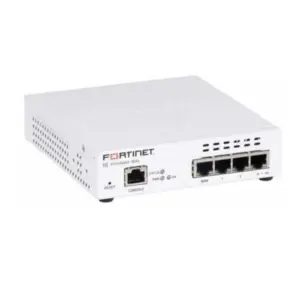
Connect two traditional analog telephones, cordless handsets, or compatible fax devices to a SIP voice service through a compact adapter with two independent FXS ports, two Ethernet interfaces, an integrated router, NAT, DHCP functions, and web-based administration. The HT496 is best considered for legacy replacement, controlled migration, lab, service-provider, and compatibility-sensitive projects where the exact model is still required.
✓ SIP Account Support
✓ Compatibility Review
✓ Africa Quote Assistance
Request Quote
Check Africa Availability
Explore ATA Options
Quick Product Information
Grandstream
HT496 / HandyTone-496
Dual-port SIP analog telephone adapter and integrated access device
2 × FXS RJ11 ports
1 × WAN and 1 × LAN RJ45, documented at 10 Mbps
Legacy SIP migration, replacement, analog phone and fax connectivity
Limited and supplier dependent; confirm before ordering
Archived legacy model; modern alternatives may be recommended
Model verification, configuration guidance, quote and delivery coordination
Depends on source, condition, seller terms, and destination
Product Overview
The Grandstream HT496 is an analog telephone adapter built to bridge conventional telephone equipment with a Session Initiation Protocol voice network. Instead of replacing every analog handset at once, a business can connect standard touch-tone telephones, cordless phone bases, or compatible fax equipment to the two FXS ports. Each port can be assigned a separate SIP account, and the device documentation states that both ports can make calls concurrently. This gives small sites a practical way to serve two analog endpoints from one compact unit when the hosted voice platform, IP PBX, network, and service plan are configured correctly.
The device also combines voice adaptation with basic network functions. It includes a WAN port for connection to an upstream modem, router, or internal network and a LAN port that can connect a computer or another Ethernet device. Its integrated router, NAT, and DHCP capabilities were designed for the network environments common when this model was introduced. Those features can still be useful in a controlled legacy deployment, but modern buyers should assess them against today’s broadband speeds, security expectations, network segmentation practices, and management requirements. The documented 10 Mbps Ethernet interfaces are especially important because they can become a bottleneck if the ATA is placed directly in the data path of a modern workstation or branch network.
The HT496 supports SIP 2.0 and a set of established voice codecs, including G.711, G.723.1, G.729A, G.726, and iLBC, as well as T.38 fax capability in documented configurations. It provides call handling functions such as caller identification, call waiting, hold, transfer, forwarding, mute, and three-way conferencing when supported by the connected telephone and SIP service. Web administration, voice-prompt access, DHCP or static network addressing, NAT traversal using STUN, remote firmware loading, and encrypted configuration-file options were intended to simplify both individual and managed deployments.
For Africa buyers, the key purchasing question is not simply whether the adapter has two ports. The more important issue is whether this archived model is the correct technical and commercial fit. A project may require it because an existing configuration template, service-provider platform, field installation, or replacement standard specifically references HT496. In other situations, a newer Grandstream ATA may provide faster Ethernet, current firmware, stronger security, easier provisioning, and a clearer warranty path. FourTeck helps buyers compare those routes before an order is placed, reducing the risk of receiving a device that cannot register with the intended PBX, lacks the required power adapter, or does not meet current operational policy.
Key Business Benefits
The value of an ATA is measured by the business problem it solves. For the HT496, that value is strongest in legacy continuity, analog endpoint reuse, and two-line SIP connectivity where the model’s capabilities remain appropriate.
◆ Preserve Analog Endpoints
Existing analog telephones, cordless bases, and compatible fax devices can continue to serve a useful role while the underlying call service moves to SIP. This can reduce immediate endpoint replacement in a carefully planned migration.
◆ Two Independent Connections
Two FXS ports and two SIP accounts support separate telephone identities. A small office, remote counter, accommodation unit, or technical bench can connect two analog endpoints without deploying two single-port adapters.
◆ Concurrent Calling
The documented ability for both ports to make calls concurrently helps avoid a shared-line limitation. Actual operation still depends on SIP account configuration, codec bandwidth, PBX policy, internet quality, and service-provider capacity.
◆ Compact Branch Deployment
The small enclosure can fit into reception desks, small communications cabinets, home-office environments, field service kits, and temporary project sites where space is limited and two analog interfaces are required.
◆ Flexible Voice Codec Choice
Support for several established codecs gives technicians options for balancing voice quality and bandwidth. Codec choice must match the PBX and service provider, and some codecs may require licensing or policy approval on the wider platform.
◆ Web and Voice-Prompt Setup
Administrators can access network and account settings through a browser, while the integrated voice-prompt menu supports basic status and configuration tasks. This is useful when no display is available on the connected analog phone.
◆ Exact-Model Replacement
Some service-provider or enterprise environments retain an exact device profile. Sourcing the same model can shorten validation work when the organization already has tested templates, dial plans, and operational procedures for HT496.
Product Highlights
These highlights should be read in the context of the model’s age. A specification that was useful in an earlier broadband environment may not satisfy a modern security or performance policy. The 10 Mbps Ethernet interfaces, legacy firmware branch, older management methods, and unknown storage history of available units all deserve attention. Buyers should also confirm whether the supplied device is new old stock, refurbished, used, provider-locked, or previously provisioned. Reset status, administrator access, MAC address acceptance, power-supply compatibility, and physical port condition can be as important as the headline features.
Technical Specifications
| Specification | Documented Detail | Buyer Note |
|---|---|---|
| Brand / Model | Grandstream HT496 / HandyTone-496 | Verify the label, hardware revision, and firmware before deployment. |
| Product Type | Dual-port SIP integrated access device and analog telephone adapter | Designed to connect analog endpoints to a SIP service. |
| Lines / SIP Accounts | 2 lines / 2 SIP accounts | Both ports can call concurrently when the service permits. |
| Analog Ports | 2 × FXS RJ11 | For analog phones, cordless bases, or compatible fax machines; no FXO port. |
| Ethernet | 1 × WAN RJ45 and 1 × LAN RJ45, 10 Mbps | Avoid placing high-throughput modern data traffic behind the LAN port. |
| Network Functions | Router, NAT, DHCP server/client, static or dynamic addressing, PPPoE, STUN | Use behind a current firewall where possible and review remote access settings. |
| Protocols | SIP 2.0, TCP/UDP/IP, RTP/RTCP, HTTP, ARP/RARP, ICMP, DNS, DHCP, NTP, TFTP, PPPoE | Confirm compatibility with the intended PBX and current security policy. |
| Voice Codecs | G.711 µ-law/A-law, G.723.1, G.729A, G.726, iLBC | Use a codec supported by both the ATA and service provider. |
| Fax | T.38 support documented | Fax success depends on PBX, carrier, codec, network quality, and device settings. |
| DTMF | In audio, RFC2833, SIP INFO | Match the setting to IVR, PBX, and carrier requirements. |
| Call Functions | Caller ID, call waiting, transfer, hold, forward, mute, three-way conference | Feature behavior depends on analog handset flash timing and SIP service configuration. |
| Management | Web interface, voice-prompt menu, encrypted central configuration file, TFTP/HTTP upgrade | Legacy management may require isolation and controlled administrator access. |
| QoS | Layer 2 802.1Q/802.1p and Layer 3 ToS/DiffServ/MPLS support documented | End-to-end prioritisation also requires switch, router, and WAN configuration. |
| Power | Input 100–240 VAC, 50–60 Hz; output 5 VDC, 1200 mA | Use the correct approved adapter and verify plug type for destination country. |
| Dimensions / Weight | 70 × 130 × 27 mm; approximately 0.3 kg | Compact desktop form factor. |
| Operating Environment | 5–45°C; 10–90% humidity, non-condensing | Provide ventilation and surge-protected power in challenging sites. |
| Compliance | FCC, CE, C-Tick documented | Confirm local import and telecommunications requirements where applicable. |
| Lifecycle / Availability | Archived legacy product; limited sourcing | FourTeck can review exact-model sourcing or recommend a current alternative. |
Selecting the correct configuration requires more than matching a model number. Confirm whether the connected endpoint is a basic analog telephone, cordless base, door phone, modem-like device, or fax machine. Verify the number of SIP credentials, simultaneous call entitlement, registration method, outbound proxy, VLAN requirement, codec policy, DTMF mode, caller identification standard, fax transport, and emergency calling process. Also check whether the adapter will sit behind an existing router or operate as a gateway. In most modern networks, placing the HT496 behind a managed firewall and connecting only voice endpoints is generally easier to control than routing workstation traffic through its 10 Mbps LAN interface. Final settings should be validated by the PBX administrator or service provider before a rollout.
Configuration and Buyer Guidance
A successful ATA deployment begins with a clear description of the existing telephone service and the target SIP platform. Buyers should first determine why the exact HT496 is required. If the reason is replacement of a failed unit in a tested fleet, record the existing firmware, provisioning URL, MAC-address registration process, dial plan, and port assignments. If the project is a new migration, compare the model with current alternatives before committing to legacy hardware.
1. Define the Endpoints
List the make and type of each telephone or fax device, the number of lines, ring requirements, caller identification needs, and whether both ports must operate at the same time.
2. Confirm SIP Compatibility
Provide the PBX or hosted service name, SIP server, authentication model, proxy requirements, codec list, DTMF method, NAT traversal method, and any approved-device policy.
3. Review the Network Path
Identify the firewall, VLAN, switch, DHCP scope, internet link, quality controls, and whether the LAN port will carry data. The documented Ethernet rate is unsuitable for many modern user workloads.
4. Check Power and Site Conditions
Confirm the correct 5 VDC, 1200 mA adapter, country plug, surge protection, UPS requirement, ventilation, cable lengths, mounting location, and physical security.
5. Plan for Legacy Risk
Ask about unit condition, reset status, administrator password, firmware integrity, provider lock, return policy, warranty route, replacement lead time, and availability of spare units.
6. Prepare Acceptance Tests
Test inbound and outbound calls, both ports concurrently, caller identification, transfer, hold, voicemail tones, IVR digits, failover, fax transmission, reboot recovery, and configuration persistence.
FourTeck can use this information to determine whether sourcing the legacy unit is justified or whether a modern Grandstream adapter should be proposed. The goal is to avoid selecting by price alone. A lower-cost unit can become expensive when technicians spend hours recovering passwords, replacing missing power adapters, resolving codec mismatch, or discovering that the device cannot meet an organization’s present security policy.
Ideal Business Use Cases
Legacy Fleet Replacement
An organization with existing HT496 configuration templates may require the same unit to replace a failed adapter without redesigning the whole service. Buyers should still validate hardware revision, firmware, and provisioning compatibility.
Small Office Voice Migration
Two analog desk phones can be moved from a traditional line to SIP while staff retain familiar handsets. A modern ATA may be preferable for new projects, but the HT496 can support a controlled legacy requirement.
Fax and Voice Combination
One port may serve a voice handset and the other a compatible fax machine. Successful fax-over-IP requires careful T.38, codec, jitter, and carrier configuration and should be tested with real documents.
Remote Site or Project Office
A compact dual-port adapter can support a reception telephone and a second analog endpoint in a temporary office, remote branch, training site, or field location with suitable internet and protected power.
Service-Provider Lab
Technical teams may retain an archived ATA to reproduce customer issues, test old provisioning profiles, validate dial plans, or support a long-tail subscriber base that still uses the model.
Hospitality and Residential Units
Two basic analog phones can be connected in a small accommodation or managed residential environment when the service design already supports this adapter and modern security controls are applied upstream.
The HT496 should not be treated as a general-purpose modern router, high-speed network switch, or current enterprise security appliance. Its strongest use cases are voice-focused and compatibility-driven. It may also be unsuitable for emergency lifeline requirements unless the complete power, internet, carrier, location, and backup design has been assessed. Organizations should document how emergency calls work during a power failure or internet outage and should not assume that an analog handset connected to an ATA behaves like a traditional powered telephone line.
Grandstream HT496 Dual FXS Port Architecture
The two-port design is the defining capability of this adapter. Each FXS interface supplies the analog telephone connection required by a standard handset or compatible fax device, while the SIP account assigned to that port provides the identity used on the IP voice platform. This separation allows a business to create two extensions, two direct inward dial numbers, or two service roles from one appliance, subject to the PBX and carrier design.
Concurrent calling is important because it means the two ports are not merely alternative sockets for one shared conversation. A receptionist can use one endpoint while another employee or fax device uses the second. Bandwidth planning remains necessary. G.711 offers straightforward voice quality but consumes more bandwidth than compressed codecs. G.729, G.723.1, G.726, or iLBC may reduce bandwidth or behave differently under packet loss, but the selected codec must be enabled and legally usable across the service chain.
The analog side also needs attention. Ring voltage, flash timing, caller identification format, dial tone expectations, and fax behaviour can differ between regions and endpoints. A simple telephone may work immediately while an older cordless base, alarm dialler, point-of-sale modem, or multifunction printer may not. Buyers should avoid assuming that every device with an RJ11 plug is automatically suitable. FourTeck recommends a pilot test with the actual endpoint type, line length, SIP credentials, and service provider before a larger deployment.
Grandstream HT496 SIP, Voice and Fax Handling
The adapter uses SIP 2.0 for registration and call signalling, while RTP carries the media stream. In practical terms, the unit must reach the SIP server, authenticate with the assigned credentials, negotiate an accepted codec, and exchange audio through the firewall and internet path. NAT can complicate this process because private IP addresses and translated ports may not match the addressing carried in SIP messages. The documented STUN support can help in some environments, but modern installations often rely on a session border controller, PBX NAT controls, or a managed firewall policy instead.
Voice quality depends on latency, jitter, packet loss, codec selection, echo control, gain settings, and the quality of the analog endpoint. The device includes digital signal processing functions such as adaptive jitter buffering, packet-loss concealment, voice-activity detection, comfort-noise generation, and automatic gain control. These functions can improve real-world calls, but they cannot repair a severely congested or unstable network. Voice traffic should be prioritised from the local switch through the router and WAN service where possible.
Fax over IP requires even more care. T.38 can convert fax tones into a packet-oriented relay method, but both the ATA and the upstream system must agree on the process. Some providers use G.711 pass-through instead. Transmission speed, error correction, page complexity, packet loss, and timing all affect reliability. Before approving the adapter for business fax, test inbound and outbound pages with the actual remote destinations. Organizations that depend on high-volume, legal, medical, or financial document transmission should also evaluate a managed digital fax service rather than relying only on an archived analog adapter.
DTMF configuration is another common source of failed menus and access codes. The HT496 supports in-audio tones, RFC2833, and SIP INFO. The correct method must match the PBX or carrier. A call can sound normal yet fail when users press numbers for banking, voicemail, conference bridges, or customer service. Acceptance testing should therefore include several external interactive voice systems, not only a basic person-to-person call.
Grandstream HT496 Network and Provisioning Control
The HT496 was designed as an integrated voice and data device. Its WAN port connects to the upstream network, while the LAN port can connect a computer. The internal router, NAT, and DHCP functions can distribute an address and pass data through the unit. This was convenient for small broadband installations when 10 Mbps interfaces were common. In a current office, however, a computer connected behind the ATA may experience a major throughput limit. The device should therefore be used primarily as a voice endpoint behind a modern router unless a legacy topology specifically requires otherwise.
Administration is available through an embedded web interface and a voice-prompt menu. Technicians can configure addressing, SIP server details, user identifiers, authentication, codec order, dial plans, DTMF, time settings, firmware paths, and other behaviour. For managed fleets, the documentation describes TFTP or HTTP firmware delivery and encrypted central configuration files. These tools can reduce manual work, but they also create risk if provisioning servers are exposed, credentials are reused, or old HTTP and TFTP workflows cross untrusted networks.
A secure deployment should isolate the device on a dedicated voice VLAN where possible, restrict management access, block unnecessary inbound WAN administration, use strong unique passwords, log configuration ownership, and limit traffic to approved SIP, media, DNS, NTP, and provisioning destinations. Firmware files should come from trusted archives and be validated before use. Since the model is archived, buyers should not assume it receives current vulnerability fixes. The network design must compensate through segmentation, firewall policy, monitoring, and a documented replacement plan.
Provisioning also affects resale and replacement. A second-hand or provider-supplied unit may automatically contact an old configuration server after reset. It could overwrite local settings or remain locked to a former service. Before purchase, confirm that the device can be factory reset, that administrator access is available, and that no provider ownership restriction applies. This is a practical reason to source through a supplier who can describe unit condition rather than relying only on a photograph.
What Buyers Should Check Before Purchase
Before requesting a quote, buyers should confirm the required configuration, usage environment, compatibility needs, warranty expectations, and delivery location. The exact model name alone does not show whether a unit will register with the intended voice platform, support the connected telephone, include a suitable power adapter, or satisfy current security rules. FourTeck can review these details so the selected route matches the business requirement rather than focusing only on acquisition cost.
Configuration Fit
State whether one or two FXS ports are required, whether both must call at the same time, and whether the endpoints are phones, cordless bases, fax machines, door phones, or another analog device.
Compatibility Check
Provide the PBX or hosted voice platform, SIP authentication details, preferred codec, DTMF mode, VLAN, NAT method, caller identification format, and fax requirements.
Condition and Accessories
Confirm whether the offered unit is unused old stock, refurbished, or used. Ask for the power supply, Ethernet cable, reset status, administrator access, physical port condition, and packaging.
Availability and Warranty
Ask how many units can be sourced, whether all units match the same revision, what testing is performed, which return terms apply, and how warranty claims are handled for the destination.
Security and Firmware
Record the installed firmware and its source. Decide whether the organization permits an archived device, and plan segmentation, restricted administration, monitoring, and eventual replacement.
Quote Preparation
Share quantity, delivery country and city, required date, endpoint types, service platform, plug type, condition preference, tax or import needs, and whether current alternatives may be quoted.
Long-term cost should include more than the unit price. Account for technician time, testing, spare stock, power protection, shipping, customs, possible returns, and migration to a current ATA. For a single replacement in a stable environment, exact-model sourcing may be sensible. For a new multi-site rollout, a current model with supported firmware, faster network interfaces, stronger security, and central management may provide better value. FourTeck can present both options where suitable.
Africa Availability and Service Support
FourTeck supports product inquiries across Africa with assistance for model verification, sourcing review, quote preparation, delivery coordination, and warranty guidance. Availability of an archived adapter may vary by supplier, unit condition, hardware revision, quantity, and destination. A quotation should therefore identify whether the offered unit is unused old stock, refurbished, or used, and whether the required power adapter and accessories are included.
For compatibility-sensitive projects, FourTeck can help compare the HT496 with newer Grandstream ATA options. This is particularly useful when the customer’s main requirement is two FXS ports rather than the exact legacy model. A newer device may offer a cleaner support lifecycle and more appropriate network performance, while the archived model may remain necessary for a tested provisioning profile or direct replacement. The sales and technical review can consider both paths.
Delivery planning should account for import requirements, plug format, shipment value, remote-site access, installation timing, and the possibility that multiple units come from different batches. For project quantities, buyers may request sample testing before accepting the full supply. Warranty handling depends on the source and condition of the unit, so terms should be documented in the quotation rather than assumed from the original manufacturer literature.
Africa Country and Regional Coverage
Businesses across Africa, including Kenya, Uganda, Nigeria, Ghana, Tanzania, Rwanda, Ethiopia, South Africa, Zambia, Botswana, Senegal, and nearby regional markets can contact FourTeck for availability checks, configuration guidance, and quotation support. The team can review suitable models, current alternatives, quantity requirements, delivery considerations, and project timelines. Regional supply conditions can differ, especially for archived hardware, so each request is assessed according to the destination, supplier position, unit condition, and required accessories rather than relying on a general availability statement.
GCC, Middle East and Africa Availability
FourTeck Africa can support product inquiries for businesses across Africa while also guiding regional technology requirements through selected FourTeck platforms for GCC and Middle East markets. Organizations with projects spanning multiple countries can request a coordinated review of model suitability, power accessories, sourcing condition, delivery routes, and replacement options.
Regional inquiries may include requirements for the UAE, Saudi Arabia, Qatar, Oman, Bahrain, and connected business operations in African markets. Availability, delivery options, warranty handling, and configuration support vary by country, supplier status, order quantity, and the lifecycle of the requested device. Archived hardware may require additional lead time or may be available only in limited condition categories.
Buyers can visit FourTeck Africa, FourTeck Kenya, FourTeck Uganda, or FourTeck UAE for the most relevant regional contact route. Providing one consolidated equipment list can help the team recommend consistent current models where legacy availability differs between destinations.
Other Options Buyers May Consider
An exact HT496 replacement can be appropriate when a tested legacy profile is mandatory. For new deployments, buyers should also review current or later-generation Grandstream ATA families. The correct choice depends on the number of analog ports, Ethernet performance, router requirement, fax use, provisioning platform, and support lifecycle.
Grandstream HT802
A compact two-port ATA often considered for modern two-line analog-to-SIP requirements. Confirm current specifications and regional availability.
Grandstream HT812
A two-port ATA with integrated routing capabilities for buyers who need a current equivalent concept rather than an exact legacy replacement.
Grandstream HT814
A four-port ATA option for sites that expect more analog endpoints and want to consolidate beyond the two-port design.
Grandstream HT818
An eight-port alternative for larger analog endpoint groups, hospitality, residential, or branch applications requiring higher density.
Grandstream GXW Gateways
Multiport analog gateways can suit centralized deployments where many extensions must connect to an IP PBX from one location.
Grandstream IP Phones
Replacing analog endpoints with native SIP phones may remove the ATA layer and provide richer call controls, displays, and managed provisioning.
Why Buyers Choose FourTeck
Legacy communication equipment needs a different purchasing approach from current mainstream hardware. A model number may be available from multiple sources, but the units can differ in age, condition, firmware, accessories, lock status, and return terms. FourTeck helps business buyers turn a vague request into a documented procurement requirement.
Assistance for single replacements, project quantities, reseller needs, and multi-site equipment lists.
Review of ports, SIP platform, codecs, fax use, DTMF, network path, and analog endpoint requirements.
Comparison with newer Grandstream ATAs when the customer needs functionality rather than an exact legacy part.
Clearer quotation preparation based on quantity, condition, accessories, destination, timing, and warranty expectations.
Support for practical delivery requirements, plug type, import documentation, and regional project planning.
Clarification of supplier terms and return routes for archived, refurbished, used, or unused old-stock units.
FourTeck’s role is not limited to locating a box. The team can help identify missing information that affects deployment, including whether a modern replacement is more sustainable, whether the network can support voice quality, and whether the customer has a clear acceptance test. This practical review is valuable for SMB buyers, enterprise procurement teams, integrators, resellers, service providers, and project managers who need a traceable purchasing decision.
Frequently Asked Questions
What is the Grandstream HT496 used for?
It connects two analog telephones, cordless bases, or compatible fax devices to a SIP-based VoIP service. Each FXS port can use a separate SIP account, and both ports can make calls concurrently when the service and configuration support that operation. The device also includes legacy router, NAT, DHCP, and web-management functions.
Is the HT496 a current Grandstream model?
No. It appears in Grandstream’s product archive and legacy firmware resources. Buyers should treat it as an archived model and confirm unit condition, firmware, administrator access, accessories, warranty terms, and return policy. For new deployments, FourTeck may recommend a newer Grandstream ATA with current features and a clearer support lifecycle.
Can both analog ports be used at the same time?
The product documentation states that the two FXS ports can use separate SIP accounts and make calls concurrently. Actual results depend on having two valid account configurations or an appropriate PBX design, sufficient service entitlement, acceptable network quality, and compatible codec settings. Concurrent operation should be included in the acceptance test.
Can it support fax machines?
The documented feature set includes T.38 fax support, and an analog fax machine can be connected to an FXS port. Fax reliability varies with the PBX, carrier, network latency, packet loss, error correction, codec, and settings. Buyers should test real inbound and outbound documents before relying on it for business-critical fax communication.
Will it work with any hosted VoIP provider or IP PBX?
The adapter uses SIP 2.0, but universal compatibility should not be assumed. The provider may require a supported-device list, specific authentication, outbound proxy, NAT traversal, codec, DTMF, caller identification, or provisioning method. Share the platform name and technical requirements with FourTeck so compatibility can be reviewed before purchase.
Is the 10 Mbps LAN port suitable for a modern computer connection?
It can pass data, but the documented 10 Mbps interface is far below common modern office network speeds. Connecting a workstation behind the adapter may create a major bottleneck. In most current environments, it is better to connect the ATA as a voice endpoint behind a modern router or switch rather than using it in the main data path.
Is the Grandstream HT496 available in Africa?
Availability is limited and depends on supplier status, condition, quantity, and destination because the model is archived. FourTeck can check sourcing options, clarify whether a unit is unused old stock, refurbished, or used, and coordinate a quotation. A current replacement may also be proposed when it better matches the requirement.
What information should I provide for a quote?
Provide quantity, delivery location, required date, PBX or hosted service, endpoint types, fax requirements, plug type, preferred condition, and whether the exact model is mandatory. Also state whether both ports need simultaneous calling and whether FourTeck may quote newer two-port ATA alternatives. This information improves price, compatibility, and delivery accuracy.
Can FourTeck support bulk or project supply?
FourTeck can review project and bulk requests, but archived products may come from multiple batches or condition categories. Buyers should request sample validation, consistent firmware or hardware revision where needed, documented testing, and spare-unit planning. For larger new deployments, a current centrally manageable ATA family may offer more predictable supply and lifecycle value.
What warranty can I expect?
Warranty depends on the source, condition, seller terms, and destination. Original manufacturer warranty should not be assumed for an archived product. The quotation should state the warranty or return arrangement, testing status, included accessories, and claim process. FourTeck can provide guidance based on the specific supply option offered for the order.
Need Help Choosing the Right Analog Telephone Adapter?
FourTeck can help you review exact-model availability, unit condition, SIP compatibility, fax requirements, power accessories, current replacement options, warranty guidance, and delivery needs for your business location.
Reviews
There are no reviews yet.