

Grandstream HT701 Analog Telephone Adapter in Africa
Preserve a useful analog telephone or fax endpoint while connecting it to a SIP-based voice network. The Grandstream HT701 is a compact one-line ATA created for offices, remote users, service-provider projects, and communication environments that need a practical bridge between traditional analog equipment and IP telephony. FourTeck helps buyers review compatibility, legacy-model availability, deployment requirements, and suitable current alternatives before a purchase decision is made.
Request QuoteCheck Africa Availability
Quick Product Information
Grandstream
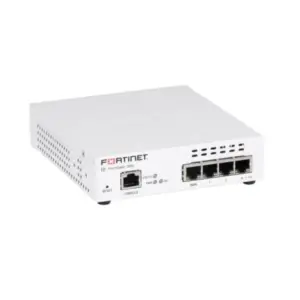
HandyTone HT701
Single-port analog telephone adapter
1 × FXS RJ11 port
1 × 10/100 Mbps RJ45 Ethernet port
1 SIP account and profile
One analog phone or compatible fax endpoint
Legacy model; availability must be confirmed
Model review, quote guidance, delivery coordination
Depends on source, condition, and quoted supply terms
Product Overview
The HT701 solves a specific communication challenge: a business has an analog telephone, fax machine, conference phone, door-entry dialler, or similar endpoint that still performs a useful role, but its voice platform has moved to SIP and Ethernet. Replacing every analog endpoint may be unnecessary, disruptive, or incompatible with an established workflow. A single-port analog telephone adapter creates the electrical interface expected by the analog device and translates its call signalling and voice traffic for an IP-based telephony environment. This allows a conventional handset to behave as an extension or subscriber device on a compatible SIP service.
Grandstream designed this compact adapter around one FXS port and one Ethernet connection. In practical terms, the FXS port supplies the interface for one analog device, while the Ethernet port connects the ATA to a router, switch, or local network with access to the chosen SIP platform. Administrators configure account credentials, proxy details, dial plans, codec preferences, network settings, and call features through the built-in management interface. A voice-prompt menu also supports essential local checks, including identifying the assigned IP address.
For a small branch, remote desk, reception counter, temporary project office, or customer-premises deployment, the one-port format can be easier to control than a larger multiport gateway. Each endpoint remains individually placed and can be configured for the needs of its assigned user or service. Service providers may also value the ability to provision devices centrally, although every deployment should be planned around supported firmware, secure configuration practices, and the capabilities of the selected voice platform.
The product is now part of Grandstream’s archived portfolio, so the purchasing process differs from buying a current model. A quotation may involve remaining new units, refurbished equipment, project returns, or an alternative model. The exact condition, power adapter, Ethernet cable, packaging, firmware, warranty, and source must therefore be documented. Buyers should not select the HT701 only because an old deployment already uses that model number. It may be the correct choice for a like-for-like maintenance requirement, but the current Grandstream HT801 can be more suitable for a new rollout.
FourTeck supports Africa buyers by reviewing the intended analog device, SIP platform, number of endpoints, network environment, power requirements, destination, and deployment timetable. This review helps distinguish between a genuine legacy replacement requirement and a project that would benefit from a newer ATA. It also helps procurement teams request comparable quotations with clear assumptions rather than receiving offers for units of uncertain condition or incomplete accessories.
Key Business Benefits
An ATA is valuable when it protects an existing operational process without forcing a complete endpoint replacement. The following benefits explain where the HT701 can create practical business value when its legacy status and compatibility have been properly reviewed.
◆ Retain Familiar Analog Equipment
Businesses can continue using a suitable existing telephone or fax endpoint while moving the connection onto a SIP service. This can reduce user disruption and avoid replacing a device that still meets a clear operational need.
◆ Focused One-Line Deployment
A single FXS port suits locations that need only one analog extension. The smaller scope makes the device easier to assign, label, document, troubleshoot, and replace than a shared gateway serving several unrelated endpoints.
◆ Standards-Based SIP Integration
SIP support allows the adapter to work with many compatible IP PBXs and hosted voice services when account, codec, dial-plan, security, and network requirements are aligned. Compatibility must still be checked with the selected provider.
◆ Useful Telephony Functions
Call waiting, caller identification, hold, transfer, forwarding, do-not-disturb, message-waiting indication, and three-way conferencing can extend practical IP-PBX features to a conventional analog handset where platform support is available.
◆ Fax Migration Support
T.38 fax relay and G.711 pass-through options provide routes for carrying fax traffic over IP. Results depend heavily on the provider, network quality, remote fax equipment, codec settings, and the way the fax service is implemented.
◆ Central Provisioning Capability
Provisioning through supported network methods can help administrators apply repeatable settings across multiple units. This is useful for managed deployments, but legacy firmware should be reviewed before relying on older security or management behaviour.
◆ Compact Placement
The small enclosure can fit near a desk phone, router, fax device, or communications cabinet. Buyers should still plan safe ventilation, a stable power source, tidy cabling, and protection from dust, moisture, and accidental disconnection.
The strongest benefit is not simply low port count or compact size. It is the ability to solve a clearly defined analog-to-IP requirement with minimal change at the user endpoint. That benefit disappears when a buyer overlooks service compatibility, security, power, condition, or long-term replacement planning. A sound purchase decision therefore combines the adapter’s functional strengths with a realistic assessment of its archived lifecycle position.
Product Highlights
Connects a standard analog telephone or a compatible fax endpoint through an RJ11 cable.
Links the adapter to the local IP network through a standard RJ45 connection.
Designed for a focused single-line subscriber or extension requirement.
Includes common narrowband voice codecs used across established SIP deployments.
Echo cancellation, jitter buffering, packet-loss concealment, comfort-noise generation, and voice activity detection support stable call handling.
Supports protected signalling, media, web access, and encrypted configuration workflows where correctly configured.
The HT701 is best viewed as a specialist bridge for an established analog endpoint rather than a general network router or a multi-line voice gateway. Its one-port architecture is intentionally narrow. It does not provide several independent analog lines, and buyers should not assume that connecting a multi-handset cordless base creates multiple SIP channels. The attached analog equipment shares the single FXS line and single SIP registration assigned to the adapter.
The device also offers visual indicators for power, network access, Ethernet activity, and phone-line status. These indicators help with first-level troubleshooting, especially during installation. Administrators can use the web interface for detailed configuration and can use the integrated voice-response menu from the connected telephone to hear network information or perform selected actions. Because deployed units may carry old configuration files or provider-specific settings, a controlled reset and documented reconfiguration process is advisable before reuse.
Buyers planning fax use should treat T.38 as a capability, not a guarantee. Successful faxing requires aligned support from the voice provider, PBX, remote destination, codec path, and network. Testing with the actual fax machine and destination patterns is more reliable than relying on a feature list alone. Where fax is business-critical, consider a managed fax service or a current ATA supported by the chosen provider.
Technical Specifications
| Specification | Grandstream HT701 Details | Buyer Note |
|---|---|---|
| Product type | Single-port analog telephone adapter | For one analog line requirement |
| Telephone interface | 1 × FXS RJ11 | Connect an analog phone or compatible fax device |
| Network interface | 1 × 10/100 Base-TX RJ45 Ethernet | Requires a wired network connection |
| SIP capacity | 1 SIP account / 1 profile | Confirm provider registration method |
| Voice codecs | G.711 a-law/μ-law, G.723.1, G.726, G.729 variants, iLBC | Available codec use depends on platform and configuration |
| Fax support | T.38 fax relay and G.711 pass-through modes | End-to-end testing is recommended |
| Call features | Caller ID, waiting, hold, transfer, forward, DND, message waiting, three-way conference | Features depend on handset, SIP service, and configuration |
| Voice processing | Echo cancellation, dynamic jitter buffer, PLC, VAD, CNG | Network quality remains important |
| DTMF | In-audio, RFC2833, and SIP INFO options | Match IVR and provider requirements |
| Network functions | DHCP or static IP, VLAN/QoS support, NAT-related settings | Final behaviour can vary by firmware |
| Provisioning | TFTP, HTTP, HTTPS, TR-069 and configuration-file methods | Use secure methods and controlled credentials |
| Security capabilities | TLS/SIPS, SRTP, HTTPS and encrypted configuration support | Check support against legacy firmware and server policy |
| Indicators | Power, Internet, Link/Activity and Phone LEDs | Useful for local status checks |
| Power | 12 V DC adapter; exact supplied adapter rating should be confirmed | Do not substitute an unverified power supply |
| Operating environment | Approximately 0–40°C; non-condensing environment | Keep away from heat, dust, moisture, and unstable power |
| Lifecycle | Archived legacy product | Consider HT801 for a new single-port deployment |
| Warranty and availability | Source and quotation dependent | Confirm unit condition, accessories, return terms, and delivery timing |
Choosing the correct configuration begins with the SIP service rather than the analog handset. Obtain the provider’s supported ATA list, transport requirements, authentication format, proxy or registrar information, codec policy, DTMF mode, fax guidance, NAT traversal method, and security requirements. Then confirm that the firmware installed on the offered unit can meet those requirements. A feature may appear in the historical documentation but still be unsuitable for a modern security policy or a provider that has ended support for older devices.
The analog endpoint also matters. A basic telephone generally presents a simpler requirement than a fax machine, alarm dialler, point-of-sale modem, lift phone, or door-entry controller. These specialised devices may depend on tones, timing, line voltage, polarity behaviour, modem negotiation, or emergency-service requirements that are not equivalent to a normal voice call. Buyers should arrange a technical trial before committing to a large quantity. The trial should cover inbound and outbound calls, caller ID, DTMF interaction, transfer behaviour, power recovery, registration recovery, and any fax or signalling workflow that matters to the business.
Configuration and Buyer Guidance
A successful ATA deployment depends on information from several teams: procurement, network administration, telephony support, the SIP provider, and the owner of the analog device. Before asking for a quotation, define the exact outcome. Is the unit replacing a failed HT701 in an existing managed estate, connecting a single desk phone to a hosted PBX, supporting an occasional fax machine, or forming part of a service-provider rollout? These scenarios have different risk, testing, and lifecycle requirements.
1. Define the Endpoint
State whether the connected device is a telephone, fax machine, cordless base, conference unit, alarm panel, intercom, or other analog equipment. Include manufacturer and model where possible.
2. Confirm the SIP Platform
Provide the hosted voice service or PBX name, supported codecs, registration method, transport, security policy, DTMF mode, and any provider-specific provisioning requirement.
3. Review the Network
Confirm wired Ethernet availability, DHCP or static addressing, VLAN design, firewall rules, internet stability, latency, packet loss, and whether remote administration will be permitted.
4. Plan Power Protection
Voice service stops when the ATA, router, switch, or internet link loses power. Identify any UPS requirement and verify that the supplied 12 V adapter is correct for the unit and destination.
5. Decide on Legacy or Current
Use the HT701 when a documented compatibility or maintenance requirement justifies it. For a new project, compare support lifecycle, firmware, security, and supply continuity with the current HT801.
6. Set Acceptance Tests
List the calls, features, fax destinations, IVR menus, failover events, restart behaviour, and management tasks that must pass before the project is accepted.
For bulk requirements, request a sample from the same proposed supply batch. Record serial numbers, hardware labels, firmware versions, power-adapter ratings, and packaging condition. Apply a controlled configuration rather than importing an unknown old file. Change administrator credentials, disable unnecessary services, use secure provisioning where possible, and place the device on an appropriate voice network segment. Document ownership of ongoing firmware, credential, and provider changes so the adapter does not become an unmanaged point in the communications environment.
Ideal Business Use Cases
Branch-Office Analog Extension
A small branch may need one simple telephone at a reception desk, security point, store room, or service counter. The ATA can present that handset as a SIP extension without deploying a full IP phone at the location.
Like-for-Like Maintenance
An organisation with a documented HT701 estate may require a matching replacement to restore service quickly while a wider migration plan is prepared. The offered unit’s firmware, condition, and power supply should match the maintenance requirement.
Remote Worker Telephone
A remote user who prefers a standard analog handset may connect through a compatible hosted voice service. The home or remote network must provide reliable Ethernet, internet access, correct NAT handling, and power protection.
Controlled Fax Trial
A business can test whether an existing fax workflow operates acceptably over T.38 or G.711 pass-through. This use case requires end-to-end validation and should not be assumed suitable for every provider or destination.
Temporary Project Office
Construction, field, event, and temporary offices sometimes retain familiar analog phones while using an internet-based voice service. The compact ATA can provide one line where equipment mobility and straightforward replacement are important.
Service-Provider Customer Premises
A provider with an existing approved template may use a one-port ATA at customer sites. Central provisioning, controlled firmware, secure credentials, inventory records, and a tested replacement model are essential for scale.
The adapter is less suitable when a site needs several independent analog lines, built-in cellular connectivity, Wi-Fi, Power over Ethernet, integrated failover to the public switched telephone network, advanced high-availability functions, or long-term manufacturer support for a new deployment. It is also not automatically suitable for emergency phones, medical alarms, fire panels, lift systems, payment devices, or regulated safety equipment. Those applications require formal approval from the equipment owner, service provider, installer, and relevant compliance authority.
A useful decision rule is to ask whether the analog endpoint is genuinely worth preserving. If the user only needs an ordinary desk phone and the IP platform supports current SIP phones, a modern IP handset may reduce conversion points and simplify support. If the analog device has a specialised role, the ATA may remain justified, provided the complete workflow is tested. FourTeck can help buyers compare the maintenance value of the HT701 with the operational advantages of a current adapter or native IP endpoint.
Grandstream HT701 Analog-to-SIP Connectivity
The primary feature of the HT701 is its ability to present an FXS interface to a normal analog device while communicating with a SIP system through Ethernet. This matters because analog equipment does not understand IP addresses, SIP registration, RTP media streams, or network authentication. It expects electrical line conditions, dial tone, ringing, hook state, and digit signalling. The ATA handles the conversion between these two operating worlds.
During deployment, the analog device connects to the RJ11 phone port and the network connects to the RJ45 Ethernet port. The administrator then enters the SIP account information supplied by the provider or PBX team. Once registered, the analog handset can make and receive calls according to the configured dial plan and permissions. Incoming SIP calls cause the FXS port to ring the attached telephone. Outgoing digits are collected, interpreted by the dial plan, and sent to the voice platform.
This translation makes the ATA more than a passive cable converter. It participates in call control, media negotiation, codec selection, DTMF transmission, NAT traversal, registration renewal, and feature signalling. A mismatch in any of these areas can produce symptoms such as one-way audio, failed registration, rejected calls, incorrect IVR digits, missing caller ID, or unreliable faxing. Installation should therefore be performed by someone who understands both the analog endpoint and the SIP network.
For business buyers, the main value is continuity. Staff can retain a familiar handset, a branch can preserve a simple one-line setup, and a service provider can support an established customer configuration. At the same time, the conversion layer introduces another powered device and another set of credentials to manage. Label the ATA, document its MAC address and assigned extension, record the configuration owner, secure the administrator interface, and include the unit in routine communication-service testing.
Grandstream HT701 Voice, Fax and Call Handling
Voice quality on an ATA depends on the codec, packet network, analog handset, acoustic environment, and remote endpoint. The HT701 supports a range of established narrowband codecs, allowing it to negotiate with many traditional SIP platforms. G.711 commonly offers straightforward high-bitrate voice carriage on reliable networks, while compressed codecs can reduce bandwidth at the cost of additional processing and possible quality trade-offs. The selected provider may restrict which codecs are allowed, and the codec order should follow the provider’s tested guidance.
The adapter includes mechanisms intended to manage normal packet-network imperfections, including jitter buffering, packet-loss concealment, echo cancellation, voice activity detection, and comfort-noise generation. These functions can improve call stability, but they cannot repair a severely congested or unstable internet link. Voice traffic should receive sensible quality-of-service treatment across the local network, and the connection should be tested during busy periods rather than only when the site is quiet.
Traditional call functions can be accessed from the analog handset using hook flash, feature codes, and platform signalling. Depending on the PBX and configuration, users may place calls on hold, transfer a caller, handle call waiting, forward calls, join a three-way conversation, view caller information on a compatible display, or receive message-waiting indication. Training should be brief but specific because the user experience differs from pressing labelled keys on a modern IP phone.
Fax requires separate attention. T.38 converts fax tones into a packet format designed for IP networks, while pass-through carries the audio through a voice codec. Neither method guarantees success across every provider, firewall, carrier route, and remote fax machine. Test multiple pages, inbound and outbound traffic, international destinations where relevant, and repeated transmissions over several days. When reliable document delivery is critical, maintain an alternative method and record the tested configuration so future changes do not silently break the workflow.
Grandstream HT701 Management and Deployment Control
The management capabilities of an ATA determine whether it remains an orderly communications asset or becomes an undocumented box behind a desk. The HT701 provides a browser-based configuration interface and an interactive voice-response menu. The web interface exposes the settings needed for network access, SIP registration, codecs, dial plans, call features, provisioning, and device administration. The voice menu provides a practical way to hear the assigned IP address and perform selected local actions from the attached handset.
For multiple units, supported provisioning methods can distribute configuration and firmware information from a central server. This enables repeatable deployment, but it also creates responsibility. Configuration files may contain account credentials and server addresses, so storage, transport, access control, and change management must be protected. Use encrypted methods where supported, restrict management access, replace default passwords, and avoid exposing the web interface directly to the public internet.
Legacy equipment deserves additional scrutiny. Older firmware may not meet a current organisation’s cryptographic standards, certificate requirements, vulnerability policy, or provider support matrix. Before deploying a sourced unit, identify its firmware version, obtain approved firmware from a trusted source, review release constraints, and test the upgrade process. Never perform an uncontrolled bulk upgrade across a live estate without validating configuration retention, registration, call handling, fax behaviour, and recovery procedures.
Operational documentation should include the device serial number, MAC address, site, extension, SIP platform, firmware, VLAN, IP-assignment method, power-adapter details, administrator owner, provisioning source, and replacement model. This information helps the support team respond when a unit fails or when a provider changes security settings. For new projects, compare the time needed to maintain an archived model with the benefit of standardising on a current ATA that receives active support and is easier to source consistently.
What Buyers Should Check Before Purchase
Before requesting a quote, buyers should confirm why the HT701 is required and whether a current model would meet the need with lower lifecycle risk. A model number alone does not define a correct solution. The attached analog device, SIP platform, firmware requirements, network conditions, power environment, supply condition, quantity, and expected support period all influence the decision.
Correct Model Selection
Confirm whether the requirement is a true like-for-like HT701 replacement. For a new one-port rollout, compare the HT801. For two or more analog lines, consider a multiport ATA or gateway instead of deploying several unrelated units without a management plan.
Compatibility Check
Ask the SIP provider whether the model and firmware are supported. Verify codecs, DTMF, transport, encryption, authentication, NAT handling, caller ID, emergency calling, fax settings, and any auto-provisioning requirement.
Condition and Accessories
Specify whether only new, unused equipment is acceptable or whether tested refurbished units can be considered. Confirm the correct power adapter, Ethernet cable, packaging, labels, reset status, and any country-specific plug requirement.
Firmware and Security
Record the required firmware version and approved upgrade process. Check whether the device can satisfy the organisation’s password, TLS, certificate, encrypted-media, management-access, logging, and vulnerability standards.
Fax and Special Devices
Do not assume that every fax, alarm, modem, intercom, or access-control device will work. Obtain written compatibility guidance where possible and conduct a realistic trial using the actual endpoint and service route.
Availability and Warranty
Ask for lead time, quantity confirmation, source, warranty duration, return procedure, dead-on-arrival handling, and replacement options. Archived models may not offer the same support terms as current products.
Installation Requirements
Confirm Ethernet cabling, router or switch port, VLAN, IP addressing, firewall policy, UPS capacity, analog cable length, mounting location, ventilation, and who will configure and test each unit.
Quote Preparation
Provide quantity, destination, required condition, attached device, SIP platform, preferred firmware, plug type, project timetable, testing needs, warranty expectation, and whether an HT801 alternative may be quoted.
Long-term cost includes more than the purchase price. Consider engineering time, security review, firmware control, replacement availability, failed fax attempts, user support, and the possibility of migrating again when remaining legacy stock is exhausted. A lower-cost old unit can be economical for a controlled repair, while a current model may provide better value for a new estate. FourTeck can help structure the quotation so buyers can compare a legacy supply option with a current replacement on consistent terms.
Africa Availability and Service Support
FourTeck supports product inquiries across Africa with practical assistance before an order is placed. For the HT701, this begins with confirming whether the buyer needs the exact archived model or simply needs one analog telephone or fax endpoint connected to a SIP service. That distinction influences product choice, supply source, firmware review, warranty expectations, and long-term support planning.
Availability can vary according to requested quantity, acceptable unit condition, source, included accessories, destination, and project timeline. A quotation should clearly identify whether the proposed equipment is new, refurbished, open-box, or otherwise classified. It should also document the power adapter, warranty or return terms, lead time, and any configuration service included. FourTeck does not rely on unsupported stock assumptions; the team reviews the requirement and coordinates current supply information for the requested order.
Configuration support can include reviewing the attached analog device, SIP platform, network connection, security requirements, and fax expectations. Where the legacy adapter is not appropriate or cannot be sourced with acceptable terms, FourTeck can guide the buyer toward a current Grandstream ATA or a higher-port gateway. Delivery coordination is planned around the destination, quantity, documentation, and available logistics route. Warranty guidance is provided according to the quoted source and product condition rather than a generic promise.
Africa Country and Regional Coverage
Businesses across Africa, including Kenya, Uganda, Nigeria, Ghana, Tanzania, Rwanda, Ethiopia, South Africa, Zambia, Botswana, Senegal, and nearby regional markets, can contact FourTeck for product availability, configuration guidance, and quotation assistance. The support process is designed for individual replacements, branch-office needs, reseller inquiries, managed service deployments, and larger project requirements.
Regional procurement can involve differences in plug type, input voltage practice, import documentation, delivery route, taxes, warranty handling, and acceptable lead time. The ATA itself is only one part of the requirement. Buyers may also need the correct Ethernet cable, analog telephone cable, UPS protection, router or switch capacity, SIP subscription, PBX extension, or installation support. Providing the destination and deployment context early helps create a more accurate supply plan.
For legacy equipment, FourTeck may recommend a two-option quotation: one option for the requested model when suitable supply is identifiable, and another for a current alternative. This approach helps the buyer evaluate immediate compatibility against future support and repeatability. Organisations with sites in several countries should also standardise firmware, configuration templates, acceptance tests, labelling, asset records, and replacement procedures. A small single-port ATA can be easy to deploy, but unmanaged variations across many sites can create avoidable support work.
GCC, Middle East and Africa Availability
FourTeck Africa can support inquiries for businesses across Africa while also guiding regional technology requirements through selected FourTeck platforms serving GCC and Middle East markets. Buyers with operations in the UAE, Saudi Arabia, Qatar, Oman, Bahrain, Kenya, Uganda, Nigeria, Ghana, Tanzania, Rwanda, Ethiopia, or South Africa can request coordinated guidance for model selection, delivery planning, and communication-system consistency.
Availability, warranty handling, documentation, plug requirements, tax treatment, and delivery options can differ by country. A legacy model may also be sourced from a different market than a current replacement, creating differences in packaging, power adapter, firmware, and return terms. Multi-country buyers should request a documented bill of materials and acceptance standard so every site receives equipment that meets the same technical and operational requirement.
Regional resources can be explored through FourTeck Africa, FourTeck Kenya, FourTeck Uganda, and FourTeck UAE. The relevant team can help route the inquiry and identify whether an exact HT701 requirement, a current HT801 replacement, or a multiport gateway is the most practical fit.
Other Options Buyers May Consider
A related-product review is particularly important for an archived ATA. The correct alternative depends on port count, routing needs, PSTN integration, fax use, security policy, provider support, and project scale. The options below provide useful starting points without assuming that one model fits every deployment.
Grandstream HT801
A current one-port ATA suited to many new deployments that would previously have used the HT701. Confirm provider support and required firmware.
Grandstream HT802
A compact two-port ATA for requirements involving two analog endpoints or two SIP profiles, subject to platform design.
Grandstream HT812
A two-port ATA with integrated Gigabit routing functions for deployments that require additional network capabilities.
Grandstream HT813
A hybrid model with FXS and FXO interfaces for projects requiring analog telephone and PSTN-line integration.
Grandstream HT814
A four-port ATA for sites that need several analog lines managed in one appliance rather than separate single-port units.
VoIP Gateways and Phones
Explore broader telephony options when the requirement includes many ports, native IP phones, branch PBX functions, or centralised voice architecture.
A buyer replacing one failed unit in an established estate may prioritise exact configuration compatibility. A buyer starting a new project should place more weight on current firmware, vendor support, secure deployment, predictable supply, and the ability to standardise future replacements. FourTeck can prepare alternative options within the same quotation so procurement and technical teams can make a documented decision.
Why Buyers Choose FourTeck
Technology procurement is most effective when the supplier understands the operational requirement behind the model number. FourTeck supports SMB, enterprise, reseller, integrator, education, healthcare, hospitality, retail, and project buyers with pre-sales guidance that connects product choice to real deployment conditions. For a legacy ATA, this means discussing lifecycle and compatibility instead of treating an old model as an ordinary current-stock item.
Assistance identifying supply options that match condition, quantity, accessories, and project timing.
Review of port count, SIP platform, endpoint type, network needs, and current-model alternatives.
Clear preparation of requested and alternative options with relevant commercial assumptions.
Planning support based on destination, order size, documentation, and available logistics.
Explanation of warranty and return handling according to the quoted source and unit condition.
Guidance toward current ATAs, multiport gateways, IP phones, and supporting network equipment.
For project orders, FourTeck can help structure a request that includes sample approval, firmware identification, serial-number capture, accessory verification, configuration scope, acceptance tests, packing requirements, and destination details. This reduces ambiguity between the technical team and procurement team. It also helps avoid ordering a legacy unit that cannot meet a modern SIP provider’s security or support requirements.
FourTeck’s role is to help the buyer reach a practical product decision. Sometimes that decision will support an exact HT701 replacement. In other cases, a current Grandstream ATA or a different architecture will make more sense. The quotation process can show these options clearly so the organisation understands the trade-off between immediate compatibility, purchase cost, support effort, supply continuity, and future replacement planning.
Frequently Asked Questions
What is the Grandstream HT701 used for?
It connects one standard analog telephone or compatible fax device to a SIP-based IP telephony system. The analog device plugs into the FXS phone port, while the ATA connects to the network through Ethernet. It can be used for a branch extension, remote worker handset, controlled fax deployment, service-provider customer endpoint, or like-for-like replacement in an established HT701 estate.
Is the HT701 still a current Grandstream model?
No. It appears in Grandstream’s archived product range, so buyers should treat it as a legacy model. Availability may involve remaining new units, refurbished equipment, or other limited supply. For a new one-port ATA deployment, the Grandstream HT801 may be a more appropriate current option. FourTeck can review whether exact model compatibility or current lifecycle support should take priority.
Can FourTeck help check SIP service compatibility?
FourTeck can help review the information needed for compatibility, including SIP platform, provider support list, firmware, transport, codecs, DTMF, security, NAT traversal, caller ID, dial plan, and fax requirements. Final service approval should come from the selected PBX administrator or hosted voice provider because providers can restrict supported devices and configuration methods.
Does the HT701 support fax machines?
The adapter supports T.38 fax relay and G.711 fax pass-through options. Actual reliability depends on the SIP provider, PBX, network quality, remote carrier path, fax machine, and configuration. Buyers should test the real workflow before purchasing a large quantity. Business-critical faxing should also have an alternative delivery method or managed fax solution.
How many analog devices can connect to one unit?
The HT701 provides one FXS port and one SIP account, so it is designed for one analog line. A cordless base may serve several handsets, but those handsets still share the same analog line and SIP registration. Sites needing two or more independent lines should consider a multiport ATA such as the HT802, HT814, or another gateway matched to the required capacity.
What should be included in a quote request?
Provide quantity, destination country, required unit condition, attached analog-device model, SIP provider or PBX, preferred firmware, plug type, project timetable, warranty expectation, and any installation or testing requirement. State whether a current HT801 alternative may also be quoted. These details help FourTeck identify a more accurate and supportable supply option.
Is delivery support available across Africa?
FourTeck supports regional inquiries and can coordinate delivery planning according to the destination, quantity, product source, documentation, and available logistics route. Delivery timing and cost must be confirmed for the specific quotation. Archived-model supply may take a different route from current Grandstream products, so the buyer should allow time for source and condition verification.
What warranty can buyers expect?
Warranty depends on the proposed source, unit condition, seller terms, and destination. An archived product should not be assumed to carry the same manufacturer coverage as a current model. The quotation should state warranty duration, return process, dead-on-arrival handling, exclusions, and whether replacement stock is available. FourTeck can explain the terms attached to the offered option.
Can businesses request bulk or project supply?
Yes. For a bulk request, FourTeck will need quantity, rollout countries, required condition, configuration responsibility, sample-testing plan, firmware standard, accessory requirements, labelling, packing, and schedule. Because this is a legacy model, buyers should also approve a current alternative and define how mixed batches or future replacements will be managed.
How do I choose between HT701 and HT801?
Choose the HT701 when an established system has a documented need for that exact model and a suitable unit can be sourced with acceptable firmware, condition, and warranty. Choose the HT801 for many new single-port deployments where current availability and ongoing support matter. The final decision should be validated against the SIP provider and the connected analog device.
Need Help Choosing the Right ATA?
FourTeck can help you review exact HT701 availability, unit condition, SIP compatibility, firmware requirements, warranty terms, delivery needs, and current Grandstream alternatives. Share your quantity, destination, analog-device type, voice platform, and project schedule for a practical quotation.
Reviews
There are no reviews yet.