

Yealink W74P in Africa
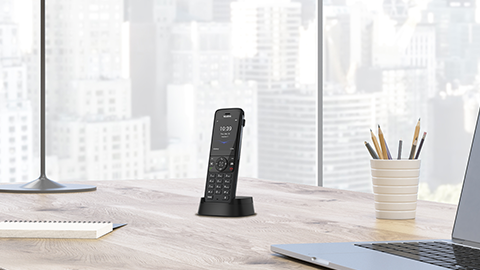
Give mobile employees a dependable way to answer SIP calls away from the desk. This business cordless package combines the compact W70B base station with the W74H handset, helping small and medium organizations build a scalable voice environment for reception teams, supervisors, service staff, clinics, hotels, retail floors, schools and operational workspaces.
✓ Up to 20 calls
✓ Bluetooth 5.1
✓ Configuration guidance
Quick Product Information
Yealink
W74P bundle: W70B + W74H
Single-cell DECT SIP phone system
Mobile staff in small and medium sites
Up to 10 SIP accounts and 20 calls
Up to 10 compatible DECT devices
PoE support on base; adapter options vary
Model and supplier dependent
Quote, configuration and delivery guidance
A Cordless Voice Platform Built Around Daily Movement
Modern business calling is not limited to one desk. A receptionist may need to walk to a meeting room, a clinic coordinator may move between consultation areas, a retail supervisor may spend most of the day on the shop floor, and a hotel operations employee may need to remain reachable while checking guest requests. The W74P package addresses these working patterns by combining SIP telephony with DECT mobility. The base station connects to the data network and the handset communicates wirelessly within the supported DECT coverage area, reducing the need to install a separate fixed telephone at every point where a staff member may work.
The system is intended for small and medium deployments that need professional call features, clearer voice, manageable expansion and practical administration. One W70B base can register up to ten compatible Yealink DECT handsets or headsets, support up to ten SIP accounts and process up to twenty simultaneous calls, with up to two calls per handset. This capacity gives buyers room to start with a modest deployment and add users as departments grow, provided the single-cell coverage area and PBX configuration remain suitable.
The supplied W74H handset contributes features that matter during a working day: HD voice, a full-duplex speakerphone, noise reduction, a color screen, a backlit keypad, vibration alerts, Bluetooth 5.1 and a 3.5 mm headset jack. The battery is rated for up to twenty-four hours of talk time and up to three hundred twenty hours of standby time under ideal conditions. A ten-minute charge can provide around two hours of talk time, which is useful when a handset returns to its cradle briefly between busy periods.
For Africa-based buyers, successful deployment depends on more than the model number. The SIP service, PBX platform, network addressing, PoE availability, building layout, handset quantity, repeater requirement and support expectations should be reviewed before ordering. FourTeck can help translate those practical details into a suitable configuration and quotation, allowing procurement teams to compare the complete requirement rather than only the cost of one handset-and-base bundle.
Key Business Benefits
A cordless voice solution should improve workflow, not simply replace a cable. The following benefits explain how the platform can support real operating needs when it is matched correctly to the site and communication system.
◆ Mobility without losing the extension
Employees can remain connected to the organization’s SIP calling environment while moving around the supported premises. This is valuable for people who divide their time between a desk, counter, corridor, stock room, service area or customer-facing space.
◆ Scalable user capacity
Support for up to ten compatible DECT devices allows a business to begin with one or a few handsets and expand as additional mobile roles are identified. Buyers should still confirm coverage, call traffic and PBX capacity before planning the maximum device count.
◆ Clearer conversations
HD voice, supported wideband codecs, flexible noise reduction and acoustic processing help improve speech clarity. This can reduce repetition during customer calls, internal coordination and supplier discussions, particularly where background activity is present.
◆ Practical all-day usability
Long rated battery endurance, quick charging, vibration alerts and a backlit physical keypad support users who handle frequent calls. Bluetooth and wired headset choices also allow different roles to select a comfortable hands-free method.
◆ Easier administration
Web-based configuration, provisioning methods and over-the-air handset upgrades can reduce repetitive manual work for IT teams. Central planning is especially useful when several extensions, directories and device policies must be prepared consistently.
◆ Better deployment flexibility
The base supports PoE and standard Ethernet connectivity, which may simplify placement where a suitable network switch is available. Optional RT30 repeaters can extend single-cell radio coverage, although the final design should follow a site survey and wall-layout review.
Product Highlights That Matter to Business Buyers
The W70B base is the operational center of the package. It handles SIP registration, call processing, network access and DECT communication with the handsets. Its stated capacity of up to twenty simultaneous calls is useful for teams with several active extensions, but the actual call experience will also depend on the IP PBX, internet service, LAN quality, codec settings and available bandwidth. The base includes one 10/100 Ethernet port and supports IEEE 802.3af PoE, allowing data and power to use one compatible network cable when connected to a suitable PoE switch.
The W74H handset is designed for professional mobility rather than rugged industrial abuse. It offers a 1.8-inch 128 × 160 color display, notification indicators, a backlit keypad and a user interface suited to everyday call handling. Users can place calls, answer, hold, transfer, switch between calls, mute, use do-not-disturb, access voicemail, join three-way conferences and work with local or remote directories when those functions are supported and configured by the phone system.
Headset flexibility is a major distinction. Bluetooth 5.1 supports compatible wireless headsets, while the 3.5 mm jack accommodates supported wired headsets. Vibration alerts help users notice calls in active environments where a ringtone may be less effective. The handset also supports hearing aid compatibility, a full-duplex speakerphone and adjustable receiver and ringer levels.
The solution supports security and management features such as TLS, SRTP, HTTPS, digest authentication, encrypted configuration files, OpenVPN and multi-level configuration access. These functions are valuable, but they must be enabled correctly and supported by the PBX or service provider. Buyers should treat security as a deployment process involving firmware, credentials, VLAN policy and access control rather than a feature that works automatically without configuration.
Technical Specifications
| Specification | Details |
|---|---|
| Brand and model | Yealink W74P package with W70B base station and W74H handset |
| Product type | Single-cell DECT IP phone system for SIP business calling |
| SIP accounts | Up to 10 SIP accounts |
| Call capacity | Up to 20 simultaneous calls; up to 2 simultaneous calls per handset |
| Device capacity | Up to 10 compatible Yealink DECT handsets or DECT headsets |
| Repeater support | Up to 6 optional Yealink RT30 repeaters per base station |
| Indicative DECT range | Up to 50 m indoors and 300 m outdoors in ideal conditions; actual coverage depends on the site |
| Handset display | 1.8-inch 128 × 160 TFT color screen with backlit keypad |
| Audio | HD voice, full-duplex speakerphone, flexible noise reduction, hearing aid compatibility and supported wideband/narrowband codecs |
| Headset connectivity | Built-in Bluetooth 5.1 and 3.5 mm headset jack |
| Battery rating | Up to 24 hours talk time and 320 hours standby time in ideal conditions |
| Quick charging | Approximately 2 hours of talk time from a 10-minute charge under stated conditions |
| Network interface | 1 × RJ45 10/100M Ethernet port; static IP or DHCP support |
| Power | IEEE 802.3af PoE, Class 1; included power accessories may vary by supply package |
| Management | Browser configuration, auto-provisioning, RPS, plug-and-play methods, OTA handset upgrade and log export |
| Security | TLS, SRTP, HTTPS, digest authentication, AES-encrypted configuration support, OpenVPN and role-based configuration access |
| Compatibility note | Use with supported Yealink DECT endpoints and compatible SIP platforms; third-party DECT interoperability should not be assumed |
| Warranty and availability | Dependent on supply route, destination, selected package and applicable seller terms |
The specification table should be used as a planning reference rather than a substitute for a complete deployment review. A buyer choosing one handset for a quiet office has a different requirement from a hotel, clinic or warehouse planning several mobile extensions. Confirm how many staff need dedicated handsets, how many calls may be active at the same time, whether the existing PBX supports the required SIP accounts, and whether the building can be served by one base. Thick walls, metal shelving, reinforced concrete, machinery and multiple floors can reduce practical range. A repeater may help in a single-cell layout, while a larger or multi-building environment may require a Yealink multi-cell platform instead. Also confirm PoE switch availability, VLAN settings, network addressing, preferred headsets, directory integration and whether configuration will be performed by internal IT or a service provider.
Configuration and Buyer Guidance
The correct purchase begins with the working environment. Buyers should describe where users will walk, where the base can connect to the LAN and how many walls or floors separate the important call areas. A simple floor sketch can be more useful than a general statement that the building is “large.” It allows the deployment team to consider the base location, likely dead zones and whether optional repeaters may be needed.
1. Count mobile users
List the people who genuinely need cordless access. Some roles may be better served by fixed SIP phones, while supervisors and operational staff may need dedicated handsets.
2. Review call traffic
Estimate normal and peak simultaneous calls. The system capacity is generous for many SMB sites, but the PBX, trunks and internet connection must also support the planned traffic.
3. Confirm PBX support
Provide the PBX brand, SIP provider, firmware information and provisioning method. Compatibility should be verified before a project depends on a particular calling feature.
4. Plan network and power
Check whether a PoE port is available at the preferred base location. Where it is not, confirm the correct adapter and nearby power provision before installation.
5. Select accessories
Consider belt clips, spare batteries, charging stations, wired or Bluetooth headsets, repeaters and additional handsets. Confirm exact compatibility for every accessory.
6. Define support expectations
Clarify who will provision extensions, test call quality, manage firmware, maintain directories and provide user support after deployment.
A useful quotation should therefore include the bundle quantity, number of extra handsets, repeater requirement, power method, headset preference, delivery destination, desired implementation date and any requested configuration service. Providing this information early helps avoid a quote that appears inexpensive but excludes essential parts.
Ideal Business Use Cases
Reception and office coordination
Reception staff can carry the handset when checking meeting rooms, receiving visitors or coordinating deliveries. Managers and administrators can answer internal or external calls while moving between nearby offices.
Clinics and healthcare facilities
Coordinators, nurses and support teams can remain reachable across consultation areas and administration zones, subject to site coverage and local communication policies. Vibration alerts may help in active settings.
Hotels and hospitality
Front-office, housekeeping coordination, maintenance and guest-service roles can use cordless extensions within supported coverage areas. Directory and transfer functions can improve routing between operational teams.
Retail and showrooms
Supervisors can answer calls while assisting customers, checking stock or moving between a front counter and back office. The physical keypad supports quick everyday call handling.
Schools and training centers
Administrative staff, coordinators and support personnel can stay connected while moving through nearby offices, reception zones and resource areas, without placing a fixed phone at every desk.
Warehouses and service operations
For clean, moderate-duty environments, mobile coordinators can manage calls between dispatch, stock control and administration. A ruggedized handset should be considered where drops, dust or moisture are significant risks.
The platform is strongest where users move inside a defined single-cell area and require normal business calling rather than specialized industrial protection. It may not be the correct choice for very large campuses, independent buildings, harsh outdoor sites or environments that need certified rugged protection. In those cases, FourTeck can help compare a rugged handset bundle or a multi-cell DECT design.
W74P Call Capacity and Scalable Cordless Working
A single base that supports up to ten handsets can serve several departments without creating a separate network connection for every cordless user. This is useful when a business wants mobile extensions for reception, operations, stores, maintenance and management while keeping the calling system centrally administered. Each handset can be assigned according to the PBX design, and the platform can handle up to two simultaneous calls per handset, supporting actions such as answering one call while another is held.
Capacity should not be confused with coverage. Ten handsets can register to the base, but they must remain within an effective radio area. A building with open office space may perform differently from a property with reinforced walls, metal racks, lift shafts or separate floors. Optional RT30 repeaters can help extend a single-cell design, but they should be placed after practical coverage testing. For wider sites where users must roam across multiple coordinated base stations, a Yealink multi-cell platform may be more appropriate.
The W74H handset also supports selected Yealink single-cell and multi-cell bases, which gives organizations a possible path to reuse compatible handsets when moving to a larger architecture. That decision should be planned with current compatibility information, firmware requirements and licensing or provisioning needs. FourTeck can help buyers compare the cost of extending a single base with repeaters against moving directly to a multi-cell solution.
W74P Audio, Alerts and Hands-Free Flexibility
Voice quality affects customer confidence and internal efficiency. The handset supports HD voice, wideband audio options, a full-duplex speakerphone and flexible noise reduction. When the PBX, codec configuration and network support wideband calling, users can benefit from fuller and clearer speech. Noise-reduction processing may also help limit distracting background sound, although no handset can remove every source of noise in a busy environment.
Bluetooth 5.1 gives users a wireless headset option for hands-free work, while the 3.5 mm jack supports compatible wired headsets. This flexibility is useful because different roles have different needs. A receptionist may prefer a lightweight headset for frequent calls, a supervisor may use the handset normally and switch to speakerphone for a brief team discussion, and a mobile service employee may use vibration alerts when the ringtone is difficult to hear.
The physical keypad, notification light and color display support familiar operation without requiring a touchscreen. Rated talk and standby times reduce frequent charging, while quick charging can provide useful emergency capacity during a short break. Battery performance naturally changes with age, signal conditions, Bluetooth use, call volume and charging habits, so organizations with long shifts should plan charging routines and consider spare handsets where communication is mission-critical.
W74P Security, Provisioning and IT Administration
A business phone is part of the network and should be managed accordingly. The system supports encrypted signalling and media options through TLS and SRTP, secure browser access through HTTPS, digest authentication, encrypted configuration files and OpenVPN. These capabilities can strengthen a deployment when the PBX, service provider and administrator use them consistently. Default passwords, outdated firmware or unrestricted management access can still create risk, so the implementation should follow the organization’s normal device-security process.
Provisioning support is useful for repeatable deployment. The platform can work with browser configuration, plug-and-play methods, Yealink RPS and common provisioning protocols. IT teams can prepare account settings, directories, time parameters, network values and feature policies without manually entering every option on every handset. Over-the-air handset upgrades and system log export can also assist maintenance and troubleshooting.
Before purchase, buyers should ask who owns the provisioning responsibility. A cloud PBX provider may have a supported device list and approved firmware. An on-premises PBX may require manual templates. A managed service provider may need the device MAC address or serial information before dispatch. Agreeing on this workflow prevents a common problem: receiving hardware that is physically installed but not ready to register or make calls. FourTeck can help prepare a configuration checklist for the responsible technical team.
What Buyers Should Check Before Purchase
Selecting a cordless phone by model name alone can lead to missing accessories, inadequate coverage or a difficult provisioning process. Before requesting a quote, provide a practical description of the deployment and confirm the following decision points.
Configuration fit
Confirm whether one W70B base and one W74H handset are enough, or whether the project needs additional handsets, repeaters, chargers or a larger multi-cell design.
PBX compatibility
Share the SIP platform, provider name and current extension plan. Ask whether the provider supports automatic provisioning, required codecs and the calling features your users expect.
Coverage reality
Do not assume published maximum range will apply inside every building. Describe walls, floors, metal shelving, equipment areas and the farthest point where calls must remain stable.
Network readiness
Check PoE availability, switch ports, voice VLAN policy, DHCP or static addressing, internet quality, firewall rules and whether quality-of-service settings are required.
Accessories and user roles
Choose headsets according to wearing style and compatibility. Identify users who need vibration, long call endurance or a ruggedized handset rather than a standard business model.
Warranty expectations
Ask which seller terms apply, where support is handled, what documentation is required and whether replacement processing differs by country or supply route.
Deployment responsibility
Decide whether internal IT, a PBX provider or an installer will register devices, test audio, configure directories, update firmware and train users.
Quote preparation
Provide quantities, destination, desired timeline, PBX details, accessory list and support scope. This produces a more complete commercial response and reduces later revisions.
Long-term cost should also be considered. A lower initial bundle cost may not include repeaters, extra charging cradles, headsets, PoE switching, installation time or PBX configuration. Conversely, a well-planned single-cell system can be economical when it covers the required area and supports the expected number of mobile users. FourTeck can help identify whether this model, a rugged alternative or a multi-cell solution is the better match before the purchase is finalized.
Africa Availability and Service Support
FourTeck supports business inquiries across Africa for cordless IP phones, SIP endpoints, headsets, base stations and related communication equipment. Support can include product matching, configuration review, quote preparation, accessory planning, delivery coordination and warranty guidance. The aim is to help each buyer request a complete solution that fits the communication platform and operating environment.
Availability can change according to the selected model, order quantity, supplier status, destination and project schedule. A quotation should therefore confirm the exact bundle, handset version, included power accessories, requested extra devices and any services. Buyers should not assume that a listing confirms immediate local stock or a fixed delivery date. FourTeck can review current options when an inquiry is received and can suggest a suitable alternative where the original requirement cannot be met in the desired form.
For organizations purchasing several units, it is helpful to provide the rollout plan by site, the number of users at each location and the PBX platform that will serve them. This allows the quotation to separate hardware, accessories and service requirements clearly. Warranty guidance can also be explained according to the applicable supply route and seller terms.
Africa Country and Regional Coverage
Businesses across African markets often have similar goals—clearer calling, easier movement, controlled expansion and dependable management—but the correct deployment can differ significantly by building, connectivity, support model and procurement process. FourTeck helps buyers review technical fit before an order is confirmed. This may include comparing a single-cell base against multi-cell options, checking SIP platform support, choosing standard or rugged handsets, confirming PoE and accessories, and preparing a practical bill of materials.
Commercial details also vary. Lead time, selected configuration, warranty route, included accessories and delivery arrangements may depend on supplier status, quantity, project scope and destination. A careful inquiry should state the delivery country, site count, user count, desired handset type, expected call traffic and technical contact. FourTeck can then coordinate product guidance and a quotation without relying on unverified assumptions.
The following sections discuss Tanzania, Libya and Seychelles in more specific business contexts. They are not separate product versions; they show how the same cordless communication platform may be evaluated for different operating patterns. Buyers can also visit the FourTeck Yealink product guide for Africa or use the contact page to share a project brief.
Yealink W74P in Tanzania
For enterprises, schools, healthcare facilities, financial organizations, resellers, integrators and growing offices evaluating Yealink W74P in Tanzania, the first priority should be matching cordless coverage to the real workplace. A reception-and-administration site may require only one base and a few handsets, while a clinic, warehouse or multi-department office may need a more careful radio plan. Buyers should identify the rooms, corridors, stock areas or service counters where staff must answer calls, then confirm where Ethernet and PoE are available for the W70B base. Thick walls, reinforced structures, shelving and multiple floors can reduce practical DECT range, so an optional repeater or a different multi-cell architecture may be required after site review. Procurement teams should also provide the existing PBX or cloud SIP service, extension quantity, expected concurrent call volume and preferred provisioning method. This is particularly important for organizations rolling out several phones across departments, because account setup, directory policies and firmware management can take more time than the physical installation. A useful quotation should list the base-and-handset bundles, extra W74H handsets, headsets, charging requirements, repeaters, power accessories and any configuration support. Delivery coordination and warranty guidance should be confirmed for the selected supply route rather than assumed from a generic listing. FourTeck can help Tanzanian buyers compare the standard business handset with rugged or multi-cell alternatives, prepare a complete requirement and reduce the risk of purchasing equipment that does not fit the building or communication platform.
Yealink W74P in Libya
Organizations considering Yealink W74P in Libya should frame the purchase as a communication-continuity project rather than a simple handset order. The system can suit professional offices, service companies, clinics, education environments, hospitality operations and project teams that need employees to remain reachable while moving within a defined site. Planning should begin with the current voice platform: the buyer should state whether extensions are hosted on a cloud PBX, managed by a telecom provider or operated on premises, and should confirm supported SIP registration, codecs, security settings and provisioning procedures. The next step is to map the physical environment. One W70B base may be sufficient for a compact office, but separate floors, dense walls, metal structures or long corridors can change the result. Optional repeaters can extend a single-cell layout, although large or segmented facilities may be better served by a coordinated multi-cell system. Project buyers should specify the number of mobile roles, peak call activity, headset preferences, PoE availability, network VLAN policy and responsibility for installation. They should also ask which accessories are included, how firmware and configuration will be handled, and what warranty process applies to the proposed supply route. Delivery timing and availability must be confirmed during quotation because they can change by quantity, supplier status and destination. FourTeck can assist with a structured bill of materials, compatible alternatives and technical questions so the selected cordless solution supports operational reliability without depending on assumptions about local stock, transport arrangements or guaranteed project dates.
Yealink W74P in Seychelles
For hospitality groups, professional services, government departments, schools, healthcare providers, financial institutions, retailers and distributed offices assessing Yealink W74P in Seychelles, space efficiency and manageable support are often as important as raw capacity. A compact hotel office, clinic, administration block or service business may benefit from one network-connected base serving several cordless users without installing a fixed phone at every location. The W74H handset’s Bluetooth support, vibration alert, physical keypad and long rated battery life can suit staff who move between nearby guest-service, reception, records, maintenance or coordination areas. However, buyers should still verify the coverage path through walls, stairways and separate structures. Where a property includes several buildings or widely separated operational zones, a single-cell system may not provide the required roaming experience, and a multi-cell design should be considered before committing to quantities. A Seychelles project brief should include the number of sites, users per site, PBX or SIP provider, internet and LAN design, PoE availability, preferred headsets, charging locations and the person responsible for device administration. It is also useful to plan for remote management, documented configuration and spare equipment where voice continuity is important. Delivery coordination, included accessories and warranty guidance should be discussed for the final destination and supply route, without relying on general assumptions about island delivery speed or local inventory. FourTeck can review these details, recommend the appropriate bundle or alternative and prepare a quotation focused on long-term operational fit.
Other Options Buyers May Consider
The right alternative depends on handset durability, user preference and site scale. FourTeck can help compare these options without assuming that one model is universally better. The following links provide practical starting points for related Yealink communication requirements.
Yealink W76P
A cordless W70B bundle with the larger-screen W56H handset, suitable for buyers who prefer a different handset format and established business feature set.
Yealink W77P
A ruggedized cordless package for work areas where the handset may face greater exposure to drops, dust or splashes than a standard office device.
Yealink W75 Mini Multi-Cell
A compact multi-cell direction for sites that need coordinated coverage beyond one base and want users to move across a broader supported area.
Yealink MP58-WH E2
A Microsoft Teams-oriented desk phone option for organizations standardizing collaboration and calling around Teams rather than a general SIP cordless deployment.
A buyer may also combine cordless phones with fixed reception phones, conference devices and professional headsets. Visit the Yealink product overview for Africa to consider a broader endpoint mix, or contact FourTeck with the user roles and PBX platform for a matched recommendation.
Why Buyers Contact FourTeck
Business communication purchases often involve more than the visible phone. A successful deployment may require a compatible PBX, sufficient PoE, suitable network policy, the correct number of SIP accounts, approved firmware, headsets, repeaters, charging accessories and a clear support owner. FourTeck helps buyers organize these details before quotation so procurement and technical teams can evaluate the same complete requirement.
Compare standard, rugged and multi-cell choices according to the user role and physical site.
Review SIP accounts, PBX compatibility, handset quantities, coverage and provisioning requirements.
Build a clearer bill of materials that includes essential accessories and requested services.
Discuss destination, quantities, supplier status and delivery arrangements before confirmation.
Clarify the applicable seller terms and expected support process for the selected supply route.
Assist SMB, enterprise, reseller and integrator inquiries that involve multiple users or locations.
FourTeck does not need to force one model into every requirement. Where the site needs rugged protection, wider roaming or a different collaboration platform, the sales team can discuss alternatives. This buyer-first approach helps reduce configuration mistakes and gives decision-makers a more realistic understanding of the complete deployment.
Frequently Asked Questions
What is this DECT phone system used for?
It provides cordless SIP calling for employees who need to move within an office, clinic, hotel, retail space, school or similar business site. The base connects to the network and PBX, while registered handsets allow users to answer, transfer, hold and manage calls within the supported DECT coverage area.
How many handsets and calls can the system support?
The W70B base supports up to ten compatible Yealink DECT handsets or headsets, up to ten SIP accounts and up to twenty simultaneous calls. Each handset can handle up to two simultaneous calls. Actual deployment suitability also depends on PBX capacity, network quality and radio coverage.
Is the product available for Africa orders?
FourTeck accepts Africa-focused inquiries and can check current supply options. Availability is not fixed and may change according to the exact bundle, quantity, supplier status and delivery destination. Request a quotation with the required number of handsets and accessories for a current commercial response.
Can FourTeck help confirm PBX compatibility?
Yes. Provide the PBX brand, cloud SIP provider, firmware information, account quantity and required calling features. FourTeck can help identify compatibility questions, although final provisioning support may also depend on the PBX vendor or service provider’s approved device policy.
Will one base cover the whole building?
Coverage cannot be guaranteed from floor area alone. Published range figures assume ideal conditions, while walls, floors, metal, machinery and interference can reduce performance. A site review or practical test is recommended. Repeaters may extend a single-cell layout, while large sites may need multi-cell DECT.
Does the handset support Bluetooth headsets?
The W74H handset includes Bluetooth 5.1 and also provides a 3.5 mm headset jack. Buyers should confirm exact headset compatibility and wearing preference before ordering. FourTeck can include suitable headset guidance in the quotation when the user role and expected daily call time are provided.
Can the system be powered through PoE?
The W70B base supports IEEE 802.3af PoE. This can simplify placement by carrying network data and power over one compatible cable. Confirm that the selected switch port provides PoE and that the network location is suitable for radio coverage. Included power adapters can vary by package.
What warranty support is available?
Warranty terms depend on the seller, supply route, destination and selected commercial agreement. Buyers should request written confirmation of the applicable period, coverage conditions and return procedure before purchase. FourTeck can provide warranty guidance linked to the final quotation rather than making a general promise.
Can businesses request bulk or multi-site supply?
Yes. For bulk or multi-site requirements, share the quantity by location, PBX platform, desired accessories, deployment schedule and delivery destinations. FourTeck can structure the quotation around each site and identify whether a single-cell bundle remains suitable or a different architecture should be evaluated.
Need Help Planning Your Cordless Phone Deployment?
Share your PBX platform, user count, site layout, handset quantity, accessory needs and delivery destination. FourTeck can help review the requirement, check current availability and prepare a business quotation for your Africa project.
Reviews
There are no reviews yet.