

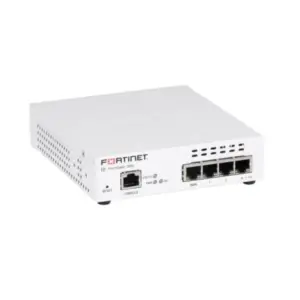
Cisco Meraki MS150-48LP-4G Stackable PoE Switch in Africa
Build a cleaner, centrally managed wired access layer with 48 Gigabit Ethernet ports, four 1 GbE SFP uplinks, a 370 W PoE budget and dedicated physical stacking. This model is designed for branch and campus access networks where IT teams want to connect users, wireless access points, IP phones, cameras and other business endpoints while managing switching through the Meraki Dashboard. FourTeck helps Africa-focused buyers confirm licensing, optics, stack cables, power requirements, deployment fit and commercial details before the order is finalised.
Request QuoteCheck Africa Availability
Buying note: Hardware alone is not the complete deployment. Confirm the applicable Meraki licence, power cord, SFP modules, stacking cables, rack environment, UPS capacity and final destination as part of the quotation.
Quick Product Information
Cisco Meraki
MS150-48LP-4G
Cloud-managed stackable Layer 2 access switch
48 x 10/100/1000 Mbps RJ45
4 x 1 GbE SFP
Up to 30 W per powered port; 370 W total switch budget
2 dedicated stack ports; 80 Gbps stacking bandwidth
Cisco Meraki Dashboard; appropriate licensing required
Branches, office floors, campuses, Wi-Fi, voice and surveillance access
Configuration review, quote assistance, delivery coordination and warranty guidance
Product Overview
Access switching is where everyday business devices meet the rest of the network. Desktops, phones, wireless access points, cameras, printers, meeting-room systems and building devices may all share the same switching layer, so port count alone does not determine whether a model is suitable. Power delivery, uplink design, network segmentation, management method, physical stack growth and operational support all influence the quality of a deployment. The MS150-48LP-4G is positioned for organisations that need a dense 48-port access switch with cloud-based administration, moderate PoE capacity and physical stacking, without requiring 10 GbE SFP+ uplinks on this specific variant.
Its 48 copper ports provide conventional Gigabit access for common business endpoints. A total 370 W PoE budget allows the switch to power a planned mix of compatible devices, while the four 1 GbE SFP interfaces provide fibre-ready uplink options where Gigabit backhaul is appropriate. Two dedicated stacking ports separate stack connectivity from user-facing network links and provide 80 Gbps of stacking bandwidth. This can be useful in network rooms where several access switches must operate as a coordinated physical stack and administrators want a more orderly expansion path than treating every unit as an isolated appliance.
The Meraki Dashboard changes the operating model compared with switches that depend mainly on local command-line administration. IT teams can work with configuration, monitoring, alerts, firmware activity and troubleshooting from the cloud-management environment. That approach can be valuable for organisations supporting several branches, schools with multiple buildings, hotels with distributed network closets, healthcare groups, financial services, professional offices and enterprises where a central team manages sites with limited onsite networking staff. Cloud management does not remove the need for sound network design. The firewall path, management addressing, VLAN plan, cabling, fibre type, licence ownership, administrator roles and change procedures still need to be decided deliberately.
For Africa buyers, FourTeck approaches the model as part of a complete access-layer requirement. A useful quotation should state the number of switches, expected powered devices, total PoE draw, preferred uplink medium, stack size, current Meraki organisation and licensing model, required transceivers, rack layout, power-cord requirement and destination. This reduces the risk of ordering the correct switch chassis but missing the licence or accessories needed for deployment. It also helps determine whether this 4G variant is appropriate or whether a model with faster SFP+ uplinks, a larger PoE budget or multigigabit access would better fit future network growth.
Key Business Benefits
The value of this switch is not limited to the port count shown on the front panel. Buyers should consider how each capability affects operations, expansion and the ability to support edge devices over the full life of the network.
◆ Dense Gigabit Access
Forty-eight copper ports allow one rack unit to serve a substantial group of users and edge devices. For an office floor or branch, that can simplify rack planning and reduce the need to combine several lower-density switches. Spare ports should still be reserved for growth, management devices and unexpected additions.
◆ Practical PoE Capacity
A 370 W switch budget supports a planned mix of powered endpoints such as access points, phones and cameras. The business benefit is reduced dependence on individual power adapters at the edge. The total wattage still needs to be calculated because 48 PoE-capable ports do not mean every port can draw the maximum simultaneously.
◆ Central Cloud Operations
Meraki Dashboard management gives administrators a common operational view across one or many sites. This can make configuration standards, remote diagnostics, firmware planning and client visibility easier to manage than maintaining separate local workflows for every branch switch.
◆ Physical Stack Growth
Dedicated stack ports provide a structured expansion path when one switch is not enough. A growing network room can add compatible MS150 units without consuming normal access or SFP uplinks for the stack connection. Stack cables and physical topology should be included in the bill of materials from the start.
◆ Segmentation and Access Control
Features such as VLAN tagging, 802.1X authentication, access control lists, DHCP snooping and Dynamic ARP Inspection can support a more controlled access layer. These capabilities are most effective when coordinated with firewall policy, identity systems and an agreed network-security design.
◆ Easier Multi-Site Standardisation
A common cloud-managed switching family can help organisations document port profiles, naming conventions, VLAN use and administrator responsibilities consistently across sites. That standardisation can reduce deployment variability and make future branch rollouts easier to support, especially where a central IT team serves several locations.
Product Highlights
The 48LP-4G configuration is best understood as a balanced access-layer model rather than the highest-speed member of the MS150 family. Its 48 Gigabit copper ports suit conventional business endpoints, and the four 1 GbE SFP uplinks are appropriate when upstream bandwidth requirements fit Gigabit fibre. Buyers who know they require 10 GbE fibre uplinks should compare the 4X variants instead of assuming the SFP interfaces on this model are SFP+. That distinction is important for core-switch compatibility, transceiver selection and expected aggregate traffic.
PoE is another area where careful interpretation matters. Cisco places the model in its 30 W PoE class, with a total switch budget of 370 W. The practical design task is to add the maximum draw of every intended powered endpoint and reserve reasonable headroom. A floor with many phones may remain comfortably within budget, while a deployment with numerous access points and cameras can reach the total more quickly. If the project needs substantially more power, the 48FP variant provides a different power profile and should be evaluated rather than overloading the lower-power model.
Physical stacking is a major strength for growth. Two dedicated ports deliver 80 Gbps stacking bandwidth, and MS150 platforms can be arranged in stacks of up to eight switches. This keeps stacking separate from the four SFP uplinks and lets administrators scale a network closet while maintaining a coordinated physical design. Compatible stacking cables are separate accessories and should be selected for the rack layout and distance between units.
The platform also supports Meraki cloud operations, automatic firmware workflows, remote packet capture, SNMP and syslog integration, IPv4/IPv6 access control, 802.1Q VLAN tagging, storm control and static routing. The correct Meraki licence remains part of the purchase requirement. Existing organisations should confirm their current licensing model and feature tier before adding new hardware, because licensing compatibility can affect the final bill of materials and lifecycle cost.
Technical Specifications
| Specification | MS150-48LP-4G Detail | Buyer Note |
|---|---|---|
| Brand / Model | Cisco Meraki MS150-48LP-4G | Confirm the full suffix on the quotation. |
| Product Class | Cloud-managed stackable access switch | Designed primarily for branch and campus access. |
| Copper Access Ports | 48 x 10/100/1000 Mbps RJ45 | Reserve ports for future users and devices. |
| Fibre Uplinks | 4 x 1 GbE SFP | This is the 4G model, not the 10G SFP+ 4X model. |
| Dedicated Management Interface | 1 | Supports local-status access and management tasks. |
| PoE Port Budget | Up to 30 W per powered port | Actual device draw varies by endpoint. |
| Total PoE Switch Budget | 370 W | Calculate the whole powered-device load, not just port count. |
| Stacking Ports | 2 dedicated ports | Compatible stack cables are separate accessories. |
| Stacking Bandwidth | 80 Gbps | Supports physical stack growth within the MS150 family. |
| Switching Capacity | 104 Gbps | Use traffic design to confirm suitability for the intended access layer. |
| Layer 3 Capability | Static routing | Confirm routing requirements if replacing a more advanced Layer 3 platform. |
| Power Input | 100-240 VAC | Order the correct regional power cord where required. |
| Power Load | 36.2 W idle / 460.6 W maximum | Useful for UPS and rack-power planning. |
| Operating Temperature | 0°C to 45°C | Rack cooling and airflow remain important. |
| Storage / Transport Temperature | -20°C to 70°C | Follow handling guidance during storage and deployment. |
| Humidity | 5% to 95% | Use in a suitable indoor network environment. |
| Mounting | Integrated 1U rack mount | Plan rack depth, cable management and ventilation. |
| Dimensions | 1.72 x 19 x 13.38 in / 4.4 x 48.2 x 34 cm | Check cabinet depth before installation. |
| Weight | 11.91 lb / 5.4 kg | Allow for rack handling and stacked equipment weight. |
| Power Supply / Cooling | Fixed internal power supply; fixed internal fan operation | Review redundancy requirements if they are critical to the project. |
| MTBF at 25°C | 1,063,142 hours | Statistical reliability figure, not a service-life guarantee. |
| Supported 1G SFP Examples | MA-SFP-1GB-SX, MA-SFP-1GB-LX10, MA-SFP-1GB-TX | Choose according to fibre type, distance and upstream interface. |
| Licensing | Meraki licence required; Enterprise/Advanced and subscription choices depend on organisation model | Confirm term and tier before ordering. |
Selecting the correct configuration starts with the devices that will connect to the switch. Count ordinary data endpoints separately from powered endpoints, then record the maximum PoE draw of every access point, phone, camera or other powered device. Add a reasonable allowance for growth. A 370 W budget can be effective for mixed business access, but a dense wireless or surveillance deployment may justify a higher-power model. The uplink requirement must also be checked carefully. Four 1 GbE SFP interfaces are a good fit for many Gigabit fibre designs, but they are not a substitute for 10 GbE SFP+ where aggregated traffic or core connectivity requires higher throughput.
Physical deployment matters as much as the logical design. Confirm rack depth, ventilation, UPS sizing, local power-cord requirements, stack-cable length, fibre type and transceiver compatibility. Existing Meraki customers should also identify their organisation licensing model and current tier so the new switch is quoted with a compatible licence. Buyers replacing another switch should provide the old model, current VLAN design, uplink interface, device count and reason for replacement. That information helps FourTeck determine whether this exact model is a direct fit or whether another MS150 or related Meraki access switch would provide a more suitable balance of uplink speed, PoE capacity or future expansion.
Configuration and Buyer Guidance
A successful switch purchase begins with a simple network inventory. List every device expected to connect on day one and every device likely to be added during the planned life of the network. Separate conventional desktops, printers and non-powered equipment from PoE endpoints. Then calculate how many ports will remain free after installation. A 48-port chassis may look generous, but spare ports disappear quickly when wireless access points, cameras, phones, door controllers, meeting-room systems and management equipment are included.
1. Count Ports and Growth
Record current endpoints, planned additions and an expansion margin. Do not size only for occupied desks.
2. Calculate PoE Demand
Use endpoint maximum wattage and compare the total against the 370 W switch budget with headroom.
3. Confirm Uplink Speed
Verify that 1 GbE SFP uplinks are suitable for the upstream core, firewall or distribution layer.
4. Plan the Stack
If several switches share a cabinet, define stack order, cable lengths, rack positions and expected future members.
Compatibility should be reviewed before commercial approval. For fibre links, identify the upstream interface, fibre medium and distance so the correct SFP module can be selected. For power, confirm the regional power cord and UPS output. For management, identify the Meraki organisation, licence model, administrative owner and desired term. If the switch will replace an older unit, document whether that unit performs any routing, DHCP relay, ACL or other functions that must be reproduced.
Finally, decide what kind of deployment support is required. Some organisations only need hardware and licensing, while others need pre-sales design review, staging guidance, rack planning, VLAN migration, fibre matching or wider branch-network coordination. FourTeck can use the same requirement list to prepare a clearer quotation. Providing site count, switch quantity, powered-device list, uplink type, stack size, licence preference, delivery destination and desired support scope at the start helps avoid incomplete quotations and last-minute accessory changes.
Ideal Business Use Cases
This switch fits best where the access layer needs many Gigabit ports, a meaningful but not extreme PoE budget, cloud-based administration and an option to stack multiple units. The use cases below focus on practical deployment patterns rather than assuming the same design will suit every organisation.
Office Floors and Headquarters
A 48-port layout can serve workstations, phones, printers, meeting-room devices and wireless access points from one rack unit. Physical stacking helps where several floors terminate in the same network room and more access capacity is expected later.
Branch Networks
Distributed companies can use Meraki cloud management to maintain a consistent access-switching model across branches. Port profiles, visibility and remote troubleshooting can be coordinated centrally, provided licensing and internet reachability are correctly planned.
Education Campuses
Schools and training facilities often combine classroom devices, administration systems, phones, access points and cameras. The switch can provide dense access connectivity while cloud management helps a small IT team oversee multiple buildings or network closets.
Hospitality Properties
Hotels and serviced properties may need to connect guest Wi-Fi access points, office users, phones and selected operational systems. PoE planning is especially important because wireless and surveillance devices can consume a significant share of the 370 W budget.
Healthcare and Professional Sites
Clinics, professional offices and service organisations can use VLANs and access-control features to separate user groups and device classes. The switch should remain one component of a wider security architecture that includes firewall, identity and endpoint controls.
Voice, Wi-Fi and Camera Aggregation
Mixed edge networks frequently power IP phones, access points and cameras from the same switch. This model can support that pattern when the combined load stays within budget and when the four 1G SFP uplinks provide enough upstream capacity for the expected traffic.
The model is less suitable when the project clearly requires 10 GbE SFP+ uplinks, very high PoE consumption, substantial multigigabit access or advanced Layer 3 campus functions beyond its intended role. In those cases, comparing another MS150 suffix or a different Meraki-managed switching platform can prevent an early replacement. FourTeck can help interpret the requirement before the buyer commits to a part number.
MS150-48LP-4G Cloud Management and Operational Visibility
Cloud management is one of the most important reasons organisations select a Meraki access switch. Rather than treating each device as a separate local management island, administrators work through the Meraki Dashboard to view clients, review port status, adjust configuration, schedule firmware activity and use diagnostic tools. This model can change how a distributed IT team supports branches because many routine tasks can be investigated centrally before a technician is sent to site.
For multi-site environments, operational consistency is a major benefit. IT teams can define naming standards, VLAN assignments, port roles and administrative responsibilities in a repeatable way. A newly installed branch switch can join the same management environment as existing Meraki infrastructure, provided the organisation, network, licensing and internet communication requirements are prepared correctly. That can simplify handover and reduce the chance that every branch develops its own configuration style over time.
Cloud administration should still be governed carefully. Administrator access, multi-factor authentication, ownership of the Meraki organisation, change-control procedures and alert responsibilities need to be defined. The upstream firewall must permit required cloud communication, and the switch needs valid IP connectivity to check in. Licensing is also part of the operating model, not an optional afterthought. Buyers should decide who owns renewals and whether the existing organisation uses a licensing mode and tier that affects the new switch. FourTeck can include these questions in pre-sales planning so the hardware is purchased as part of a manageable lifecycle rather than as an isolated asset.
MS150-48LP-4G PoE Capacity and Edge Device Planning
PoE turns the switch into part of the power architecture for the edge network. Each compatible access point, phone or camera can receive power over Ethernet instead of relying on a separate local adapter. That simplifies installation in many environments, but it also means the switch and its UPS may become responsible for keeping numerous devices alive. The 370 W total budget must therefore be treated as a shared resource rather than a simple feature label.
A useful design begins with the maximum power requirement of every intended endpoint. Add those values, then allow headroom for future devices and transient demand. A large number of low-power phones may consume far less than a smaller group of wireless access points or cameras with heaters, illuminators or additional functions. If the planned total is close to the switch limit from day one, moving to a higher-power model can be more sensible than operating with no expansion margin. This is especially important for network closets expected to absorb future Wi-Fi or surveillance growth.
UPS sizing should reflect the switch’s role as a power source. The administrator should decide which powered devices need to remain operating during a power event and for how long. The switch maximum load, other rack equipment and battery runtime all influence the correct UPS choice. Cabling quality also matters because Ethernet power and data performance depend on suitable structured cabling. FourTeck can review the powered-device list, expected wattage, rack power and future growth as part of the quotation discussion, helping the buyer determine whether this 370 W model has enough practical headroom.
MS150-48LP-4G Uplinks, Stacking and Network Growth
The four SFP uplinks on this model operate at 1 GbE. That can be entirely appropriate for a conventional branch or access-layer design, but the uplink choice should be deliberate. If many endpoints are expected to generate sustained traffic toward servers, internet gateways, storage systems or a core switch, the aggregate demand should be compared with the available uplink bandwidth. Buyers who already know they need 10 GbE fibre should evaluate the 4X variants rather than assuming that all MS150 models provide the same uplink speed.
Fibre compatibility is a separate purchasing decision. The correct SFP depends on the upstream interface, fibre type and distance. Supported examples include short-range and longer-range optical modules as well as copper SFP where applicable. Ordering the switch without confirming the fibre path can delay a project even when the chassis itself is correct. A simple diagram showing the switch, upstream device, fibre medium and approximate distance is often enough to help identify the right transceiver family.
Stacking provides a different form of growth. Two dedicated stack ports and 80 Gbps of stacking bandwidth allow multiple compatible MS150 switches to be connected without consuming the normal SFP uplinks. This can make a network closet easier to expand and administer. Stack cables are not something to choose after the rack has been built: the physical positions of the switches determine the practical cable lengths. Buyers should also leave rack space, power capacity and UPS headroom for planned stack expansion. FourTeck can help translate the intended stack size and rack layout into the accessory list before shipment.
What Buyers Should Check Before Purchase
Before requesting a quotation, buyers should confirm whether this exact suffix matches the network rather than choosing it because the series name and port count look familiar. The first question is uplink design. The 4G model has four 1 GbE SFP interfaces; a project requiring 10 GbE SFP+ should use a different variant. The second question is PoE. A 370 W total budget can support many mixed office deployments, but it must be compared with the maximum demand of the actual powered-device list.
Configuration Fit
Confirm 48 access ports, 370 W PoE and 1G SFP uplinks are sufficient. If any of those limits are uncomfortable, compare another suffix before ordering.
Compatibility Check
Identify fibre type, transceivers, upstream switch or firewall interfaces, VLAN design, rack depth, UPS output and regional power-cord requirement.
Licence and Support
State the current Meraki organisation model and licence tier. Existing environments may have rules that affect which licence should be quoted with the new switch.
Quote Preparation
Provide quantity, destination, endpoint count, PoE loads, uplink medium, stack size, required licence term and any installation or staging needs.
Accessories deserve the same attention as the switch. A stack needs compatible stack cables sized for the rack arrangement. Fibre uplinks need suitable SFP modules. Regional orders may require the correct power cord to be listed separately. If the network room is being upgraded at the same time, check rack depth, patch panels, cable managers, UPS capacity and environmental conditions. A missing accessory can prevent commissioning even when the primary hardware arrives exactly as specified.
Lifecycle cost should include licensing and future expansion, not only the hardware reference price. Consider renewal ownership, spare capacity, expected Wi-Fi upgrades and whether the site may need 10G uplinks later. For replacement projects, tell FourTeck what the old switch does today and why it is being replaced. For bulk or project supply, provide a site-by-site quantity plan rather than one combined number if requirements differ. These details help FourTeck identify the right model, compatible accessories and a sensible alternative if the requested configuration does not match the final design.
Questions Business Buyers Ask About the MS150-48LP-4G
A switch request often begins with a part number but turns into a wider design discussion once port density, PoE load, fibre, licensing and stack growth are considered. The questions below address the practical points an IT manager, procurement team, reseller or project buyer should settle before approving this model.
Is this switch suitable for a full office floor?
Yes, when a 48-port Gigabit access layer matches the endpoint count and the expected traffic fits the uplink design. Count desktops, phones, printers, access points, cameras and spare ports together. If the floor will quickly exceed one chassis, plan the physical stack and rack space at the same time rather than treating expansion as a later problem.
How do I know whether 370 W of PoE is enough?
Add the maximum power requirement of every powered endpoint and compare that total with the switch budget. Leave headroom for later devices and power variation. A phone-heavy office may use modest wattage, while a wireless and camera-heavy deployment can consume the budget much faster. If the design is already close to 370 W, consider a higher-power variant.
Can I use 10G optics in the four uplink slots?
No. This is the 4G variant with four 1 GbE SFP uplinks. If the project requires 10 GbE SFP+ connectivity, evaluate an MS150 4X model instead. This distinction should be confirmed before quoting because it affects upstream interface compatibility, transceiver choice and the amount of traffic the access switch can carry toward the distribution or core layer.
What fibre information should I provide?
Provide the upstream device model, interface type, fibre medium, approximate link distance and connector arrangement. That information helps identify a compatible 1G SFP option such as short-range or long-range optical modules. If the link is copper rather than fibre, mention that as well. Do not order optics only by connector appearance because wavelength and distance still matter.
Does physical stacking require extra accessories?
Yes. The switch provides dedicated stacking ports, but compatible stack cables should be included according to the intended rack layout. Decide how many switches will be stacked now, how many may be added later and where each unit will sit in the cabinet. Cable length is a physical design choice, so the stack plan should be made before the equipment is shipped.
What Meraki licence should be ordered?
The correct licence depends on the organisation’s licensing model, desired term and feature tier. Existing Meraki customers should provide their current organisation details because tier compatibility can matter when adding new switches. New deployments should decide who owns the Meraki organisation, who manages renewals and which feature set is required before the licence is placed on the commercial quote.
Can this model replace an older 48-port switch directly?
It can replace many access-layer switches, but a direct swap should not be assumed. Check the old switch’s uplink speed, routing functions, PoE budget, VLANs, ACLs, transceivers and rack power. If the existing device provides 10G uplinks or advanced Layer 3 functions, the new model may not be equivalent even though both have 48 copper access ports.
How much spare capacity should I plan?
Reserve both physical ports and PoE wattage. A practical margin depends on expected business growth, but buyers should avoid a design that fills nearly every port and consumes nearly all power on the first day. Future wireless access points, cameras, new departments and temporary project devices can change demand quickly. Stack growth should also be considered if the network room is likely to expand.
What should I check about power and UPS capacity?
Treat the switch as both network equipment and a power source for attached PoE devices. The UPS must support the switch, its powered endpoints and other rack equipment for the desired runtime. Also confirm the correct regional power cord, rack power distribution and environmental conditions. If business continuity is important, document which PoE devices must remain active during a power interruption.
What information produces a more accurate quotation?
Send the exact switch quantity, delivery destination, powered-device count and wattage, uplink type, fibre distance, stack size, current Meraki environment, preferred licence term and any required optics or rack accessories. If installation support is needed, add the site count and migration scope. A complete request lets FourTeck quote the deployment package instead of only the switch chassis.
What if the exact configuration is not the best fit?
Compare the requirement, not just the part number. A 4X model may suit faster fibre, a higher-power MS150 may suit dense PoE, and another Meraki family may fit different access or Layer 3 needs. FourTeck can review the reasons behind the request and suggest a related option when the desired port, power or uplink profile changes.
Can one standard model be used across many branches?
Yes, standardisation can simplify support, but identical hardware is not always economical. A large branch may need 48 ports and substantial PoE while a small location could need far less. Organisations can still standardise the management platform and configuration approach while selecting different hardware densities per site. A site-by-site bill of materials often gives better capacity matching and cost control.
How This Switch Fits Common Business Requirements
Some buyers begin with a business problem rather than a switch model. They may need to add wireless access points, replace an aging access layer, consolidate a network room or manage several branches from one platform. The following guide connects those requirements with the practical decisions that determine whether the 48LP-4G is a suitable choice.
Need More Wired Capacity
Organisations adding desks, phones, printers and access devices often need more than a compact switch. Forty-eight Gigabit ports provide a dense access layer, but buyers should include spare capacity rather than filling every port immediately. If growth will require several switches, stacking and rack planning become part of the requirement from the first purchase.
Power Wi-Fi, Phones and Cameras
The switch can supply PoE to a mixed collection of compatible endpoints, reducing the need for individual power adapters. The correct model is defined by total wattage rather than the number of PoE-capable ports. Record device maximum draw and allow headroom so future APs or cameras do not force an unexpected switch replacement.
Centralise Branch Management
Businesses with distributed sites may prefer one cloud management environment instead of separate local administration at every branch. Meraki Dashboard operations can support that model, but licensing, administrator ownership, internet reachability and standard configuration procedures should be settled before rollout so the platform remains manageable after deployment.
Replace an Existing Access Switch
A replacement project should compare functions as well as port count. Capture the old switch’s PoE budget, uplinks, fibre modules, routing tasks, VLANs and stack design. This avoids replacing a 48-port unit with another 48-port unit that cannot reproduce a critical upstream speed or network function.
Prepare a Complete Project Quote
For project procurement, the switch chassis is only one line item. Licence, optics, stacking cables, power cords, rack accessories, UPS capacity and deployment support may also be required. Sharing the site list, quantities and design assumptions helps FourTeck build a more complete commercial response and identify differences between locations.
Plan an Upgrade Path
If future Wi-Fi, surveillance or application traffic is expected to exceed current requirements, review whether 1G uplinks remain appropriate. A buyer who expects rapid growth may prefer a 10G-uplink or multigigabit model now. FourTeck can compare related Meraki options around the expected lifecycle instead of focusing only on today’s load.
Africa Availability and Service Support
FourTeck supports Africa-focused enquiries for Cisco Meraki switching with assistance that begins before the commercial quote. The first step is confirming that the requested model actually matches the network design. For this switch, that means checking the 48-port requirement, 370 W PoE budget, four 1G SFP uplinks, stack plan and Meraki licensing. Where the requirement differs, FourTeck can help compare another MS150 variant or related access-switching option rather than forcing the project around an unsuitable part number.
Availability should be confirmed against the exact hardware SKU, quantity, licence term, required accessories, supplier position and final destination. FourTeck does not need to present a fixed stock promise for every enquiry because commercial conditions can change between a single-switch branch order and a multi-site project. Buyers can request a current quotation that reflects the confirmed bill of materials, including compatible SFP modules, stack cables and regional power requirements where applicable.
Delivery coordination can be discussed once the destination, quantity and order scope are known. For projects, it is useful to provide the required site allocation so hardware and accessories can be matched to the correct location. Warranty guidance should also be reviewed together with Cisco Meraki licensing and support expectations. The licence arrangement can affect operational support and lifecycle planning, so procurement teams should not treat it as an unrelated software line.
To begin, send FourTeck the current network role, endpoint quantity, powered-device list, uplink design, fibre details, stack size, Meraki organisation information and destination. Use the Africa contact page to request a current configuration and quotation discussion.
Africa Country and Regional Coverage
Across African markets, a cloud-managed access switch may be used in very different operating environments: a single professional office, a large campus, a hotel property, a bank branch network, a school, a healthcare facility or a multi-site enterprise rollout. FourTeck supports these enquiries by starting with the technical role of the switch and then translating it into a commercial requirement. That process can include port sizing, PoE calculations, fibre and SFP review, stack planning, licence selection, accessory matching and broader network compatibility.
Regional purchasing should remain flexible because availability, lead time, suitable licence options, accessory requirements and delivery arrangements can vary with the exact model, quantity, supplier status, destination and project scope. A 48-port access-switch request may also change after review if the project actually needs 10G uplinks, a larger PoE budget or different Layer 3 capabilities. FourTeck can help buyers document those differences before a purchase order is raised.
Tanzania, Libya and Seychelles are addressed in more detail below because their typical business environments can lead to different planning priorities. The guidance is deliberately practical rather than making assumptions about local inventory, branch presence or guaranteed delivery timing. The same principle applies across the continent: identify the operational requirement first, confirm accessories and licensing second, then request a quotation based on the actual destination and quantity.
Buyers can also review the wider Cisco Meraki access-switch portfolio and Meraki PoE switching options when the final requirement extends beyond one model.
Cisco Meraki MS150-48LP-4G Stackable PoE Switch in Tanzania
For Tanzanian enterprises, public-sector organisations, schools, healthcare providers, financial institutions, resellers, system integrators and growing offices, the Cisco Meraki MS150-48LP-4G Stackable PoE Switch in Tanzania can be considered where a network room needs high port density, central cloud administration and a balanced PoE budget for edge devices. A practical procurement process should begin with the real endpoint map rather than the switch name. Count wired users, printers, IP phones, wireless access points, cameras and any building or meeting-room devices that will connect, then allow ports for future expansion. PoE planning is equally important: access points and cameras can consume substantially more power than ordinary phones, so the maximum load should be compared with the 370 W switch budget and the available UPS capacity. Fibre design should also be documented because this model uses four 1 GbE SFP uplinks. A buyer planning a faster core connection should identify that requirement early and compare a 4X model instead of discovering the uplink limitation during installation. Rack depth, ventilation, structured cabling and the correct power cord should form part of deployment preparation, especially for projects that combine several switches in one cabinet. FourTeck can help Tanzanian IT and procurement teams review the endpoint count, stack size, supported SFP requirement, licence term, existing Meraki organisation and quantity before preparing a commercial response. Delivery coordination and warranty guidance can then be discussed against the confirmed destination and bill of materials. For a useful quotation, provide the site count, switch quantity per site, powered-device list, fibre distances, preferred deployment sequence and any staging or migration assistance required.
Cisco Meraki MS150-48LP-4G Stackable PoE Switch in Libya
A project evaluating the Cisco Meraki MS150-48LP-4G Stackable PoE Switch in Libya should frame the purchase around operational continuity, configuration control and compatibility with the existing network. The model can serve as a dense access-layer platform for offices, institutional sites, professional facilities, branch networks and project environments, but the technical team should first identify what functions the current switch performs. If an older device provides 10G uplinks, advanced routing, unusual transceivers or a larger PoE budget, those differences must be resolved before a replacement is approved. The 48LP-4G offers 48 Gigabit access ports, four 1G SFP uplinks and a 370 W PoE budget, so the project should map users, phones, access points and cameras against those limits. Where several switches are deployed in one facility, the physical stack design, compatible stack cables, rack positions and future expansion should be documented together. Cloud administration through the Meraki Dashboard can support consistent configuration standards across several sites, but organisation ownership, administrator permissions, licence tier and renewal responsibility should be decided as part of the project rather than after delivery. FourTeck can assist Libya-focused buyers with model validation, SFP selection, stack accessory planning, licence review, quote preparation and delivery coordination once the exact quantity and destination are confirmed. No assumption is needed about local stock or fixed transport timing. Instead, a structured request should include the site role, current core or firewall interface, fibre medium, PoE device list, rack and UPS details, desired licence term and any project documentation or support requirements. That approach produces a clearer bill of materials and helps avoid compatibility gaps during commissioning.
Cisco Meraki MS150-48LP-4G Stackable PoE Switch in Seychelles
The Cisco Meraki MS150-48LP-4G Stackable PoE Switch in Seychelles may suit hospitality groups, professional-services firms, government departments, education providers, healthcare organisations, financial services, retailers and growing businesses that want centrally visible access switching across compact or distributed sites. In these environments, the practical value often comes from combining dense connectivity with remote manageability while keeping the network cabinet organised. A hotel property, for example, might connect office users, phones, wireless access points and selected cameras through several network rooms, while a professional office may use one 48-port switch with room for expansion. The correct decision depends on device count and power draw rather than business category alone. Buyers should record the number and model of powered endpoints because the shared 370 W PoE budget must cover the whole load with sensible headroom. Uplink planning also matters: this model provides 1G SFP rather than 10G SFP+, so organisations with faster aggregation requirements should compare the appropriate alternative before ordering. For compact network rooms, confirm cabinet depth, airflow, cable management and UPS capacity; for multi-site environments, define Meraki Dashboard ownership, licence term, administrator roles and remote support procedures. FourTeck can help Seychelles buyers review these technical details, identify suitable 1G SFP modules and stack cables, prepare a model-specific quotation and coordinate delivery requirements based on the confirmed destination and order scope. Warranty guidance and long-term expansion should be considered at the same time, including spare ports, PoE headroom, future Wi-Fi upgrades and whether another site may later join the same management environment. A well-prepared request gives the project team a complete deployment picture instead of only a switch part number.
Other Options Buyers May Consider
A related switch should be chosen according to the requirement that differs from this model. Some buyers need faster uplinks, others need more PoE, multigigabit access, lower port density or a different place in the network architecture. The links below provide practical routes for comparing the wider Meraki portfolio without assuming one model is universally better.
Cisco Meraki MS150 Series
Compare 24-port and 48-port MS150 variants when PoE budget, 1G versus 10G uplinks or multigigabit access changes.
Cisco Meraki MS130 Series
Consider the MS130 family for cloud-managed Layer 2 access where compact models, different PoE choices or selected multigigabit variants better fit the site.
Meraki Access Switch Portfolio
Use the wider access-switch guide when the project needs comparison across branch, campus, PoE, stacking and higher-performance managed options.
Meraki PoE Switch Options
Useful when powered-device quantity, per-port wattage or total switch power is the main decision factor across the network design.
For a direct alternative, explain what you want to change: more uplink speed, more PoE, fewer ports, multigigabit access, a different licensing approach or stronger Layer 3 capability. FourTeck can use that reason to narrow the comparison instead of presenting a long list of unrelated switches. This is especially useful in replacement projects where the requested model may have been copied from an older bill of materials even though the current network has changed.
Why Buyers Choose FourTeck
FourTeck supports business IT procurement by helping buyers turn a model request into a complete, reviewable requirement. With switching, that often means looking beyond the chassis to the port plan, PoE load, fibre uplinks, licensing, stacking, rack power and deployment environment. This approach is useful for organisations that want to avoid receiving hardware that matches the part number but does not match the actual network.
Help identifying the requested hardware and related items needed for a complete quotation.
Review of port density, PoE capacity, uplinks, SFP modules, stacking and licensing.
Commercial preparation based on quantity, licence term, accessories, destination and project scope.
Delivery requirements can be coordinated after the exact bill of materials and destination are confirmed.
Support and warranty questions can be reviewed together with licensing and supplier terms.
If the requested switch does not fit, related Meraki models can be compared around the actual need.
This can be particularly helpful for SMB, enterprise, education, healthcare, hospitality and project buyers who need one supplier discussion to cover hardware, licences and network accessories. A switch rollout often has linked dependencies: higher PoE affects UPS sizing, different uplink speeds affect optics, stack growth affects rack layout and cloud management affects licensing. Keeping those dependencies visible before purchase makes the quotation easier to approve and the deployment easier to plan.
FourTeck does not need to rely on unsupported claims about fixed stock, guaranteed delivery or universal lowest pricing. The practical value is in helping the buyer request the right configuration for the operating environment. Start with the FourTeck Africa website or contact the sales team with the site and technical requirements.
Frequently Asked Questions
What is the MS150-48LP-4G used for?
It is used as a cloud-managed access switch for business networks that need 48 Gigabit Ethernet ports, PoE for compatible edge devices and physical stacking. Typical connected equipment includes workstations, printers, IP phones, wireless access points and cameras. It fits branch and campus access roles where four 1G SFP uplinks are suitable for the upstream design.
Is the switch available for Africa enquiries?
FourTeck supports enquiries across Africa, including configuration review, quotation and delivery coordination. Current availability should be confirmed using the exact model, quantity, licence term, accessories and destination because supplier conditions can change. The page does not assume ready stock or a fixed delivery date. Send the project details to FourTeck for a current commercial response.
How much PoE power does this model provide?
The model has a 370 W total switch PoE budget with up to 30 W available per powered port. Buyers should calculate the maximum wattage of all intended access points, phones, cameras and other PoE devices together. If the expected total approaches the switch limit, a higher-power variant should be considered to preserve capacity for growth.
Does the model support 10G SFP+ uplinks?
No. The 4G suffix identifies four 1 GbE SFP uplinks on this model. Buyers who require 10 GbE SFP+ should compare an MS150 4X variant. Confirming uplink speed before ordering is important because the wrong suffix can affect core-switch compatibility, optic selection and the amount of aggregate traffic the access layer can carry upstream.
Can FourTeck help with Meraki licensing?
Yes. FourTeck can include licensing guidance in the pre-sales review. The correct licence depends on the Meraki organisation’s licensing model, required feature tier and selected term. Existing customers should provide their current organisation details so the proposed licence can be checked for compatibility. New deployments should also decide who will own the organisation and renewals.
What accessories may be required?
Common requirements can include compatible 1G SFP modules, physical stack cables, the appropriate regional power cord, rack accessories, patching and UPS capacity. The exact list depends on the network design. Buyers should provide fibre type, link distance, stack layout and power requirements so these items can be reviewed before the switch is shipped.
Can several MS150 switches be physically stacked?
Yes. The MS150 family supports physical stacking using dedicated stack ports, and the platform is designed for stacks of up to eight switches. This model provides two dedicated stack ports with 80 Gbps stacking bandwidth. Compatible cables should be selected according to rack position and stack topology, and future members should be considered when planning space and power.
How do I request an accurate quote?
Send FourTeck the required quantity, destination, endpoint count, PoE device list, expected wattage, fibre and uplink details, desired stack size, current Meraki environment, preferred licence term and any installation or staging needs. The more complete the network requirement, the easier it is to prepare a quotation that includes the right switch, licence and accessories.
Are bulk or project quantities supported?
FourTeck can review multi-unit and project enquiries. For several sites, provide the quantity and technical role at each location rather than only one combined total. Different branches may need different PoE budgets, uplink speeds or port densities. A site-by-site requirement helps the project team standardise where sensible while avoiding unnecessary capacity at smaller locations.
What should I consider if this model is not suitable?
Identify the limiting requirement. If you need 10G fibre, compare a 4X variant. If you need substantially more PoE, review a higher-power model. If you need multigigabit access or different Layer 3 features, another Meraki family may fit better. FourTeck can use the project requirements to narrow the alternative instead of recommending a generic substitute.
Need Help Choosing the Right Switch Configuration?
FourTeck can help review port count, PoE load, uplink speed, SFP modules, stacking, Meraki licensing, rack requirements, warranty guidance and delivery details for your Africa project. Send the site count, destination, device list and current network information so the sales and technical teams can prepare a model-specific response.
Reviews
There are no reviews yet.