

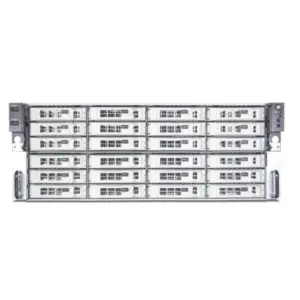
Cisco Meraki MS130-48 Cloud Managed Switch in Africa
Build a structured 48-port access layer for business users, printers, servers, collaboration endpoints and other wired devices while managing the switch through the Meraki Dashboard. The MS130-48 combines forty-eight Gigabit Ethernet access ports with four 1G SFP uplinks in a fanless 1U platform, giving organisations a practical option for dense non-PoE edge connectivity. FourTeck helps Africa buyers confirm the correct license, optics, rack requirements, cabling plan and commercial configuration before an order is finalized.
Request QuoteCheck Africa Availability
Quick Product Information
Cisco Meraki
MS130-48 / MS130-48-HW
Cloud-managed Layer 2 access switch
48 x 10/100/1000 Mbps RJ45
4 x 1GbE SFP
No PoE on standard MS130-48
104 Gbps
Integrated 1U rack mount, fanless
Meraki Dashboard cloud management
Required; tier and term should be confirmed
Quotation, configuration and delivery coordination
Confirmed against final supply and license arrangement
Product Overview
A modern wiring closet often carries a much broader mix of devices than the traditional desktop-and-printer network. Business users may connect workstations, conferencing systems, IP phones with separate injectors, printers, servers, storage appliances, building controllers and other Ethernet endpoints through the same access layer. The Cisco Meraki MS130-48 is designed for this type of dense Layer 2 edge environment where forty-eight Gigabit copper ports are useful and power delivery from the switch itself is not required. Its four 1G SFP interfaces provide fibre or supported copper-transceiver uplink choices toward another switch, distribution point or upstream network device, subject to the correct optics and design.
The switch is managed through the Meraki Dashboard rather than as an isolated local appliance. That operating model can be particularly valuable for organizations responsible for several branches, floors or remote sites because administrators can work with a consistent cloud interface for configuration, monitoring, firmware management and troubleshooting. Features such as VLAN tagging, 802.1X authentication, DHCP snooping, IPv4/IPv6 access-control support, remote packet capture, SNMP/syslog integration and network-wide visibility give the IT team tools to build a disciplined access layer. These capabilities should still be designed alongside the firewall, identity system, wireless infrastructure and upstream routing architecture rather than treated as a replacement for them.
For procurement teams, the main advantage of choosing the exact MS130-48 instead of a family name is clarity. This model is the standard 48-port non-PoE version. It has 104 Gbps switching capacity, a dedicated management interface, fixed internal power supply, fanless operation and integrated 1U rack mounting. Buyers who need 740 W of PoE capacity should move to the MS130-48P, while environments requiring selected 2.5GbE access ports and 10G SFP+ uplinks should evaluate the MS130-48X. That distinction matters because a quotation built around the wrong variant can create missing-power, uplink or licensing issues during deployment.
Across Africa, FourTeck supports business and project enquiries by helping buyers translate network requirements into the correct hardware, license term, SFP selection, power cord, rack plan and accessory list. The aim is to make the purchase specification complete enough for technical and procurement teams to work from the same bill of materials. Availability, lead time and commercial terms can vary by quantity, destination, license model and supplier position, so these points are confirmed during quotation rather than presented as universal promises.
Key Business Benefits
The value of an access switch is measured not only by port count, but by how easily it fits operating procedures, simplifies support and leaves the network ready for predictable growth. The MS130-48 is most useful where standard Gigabit access is sufficient, dense wired connectivity is required and centralized administration is a priority.
◆ Dense Wired Access
Forty-eight Gigabit copper interfaces allow one 1U switch to serve a sizeable group of desktops, printers, local servers, appliances and other independently powered devices. This reduces the need to spread ordinary edge connections across several small unmanaged units.
✓ Centralized Administration
Meraki Dashboard management gives administrators a common place to view status, apply configuration and investigate problems. Multi-site IT teams can standardize naming, VLANs and access policies instead of treating every switch as a separate local management island.
↗ Fibre Uplink Flexibility
Four 1G SFP ports allow the access layer to connect across suitable fibre links or supported transceivers. This can be useful between floors, buildings or racks where copper distance, electrical isolation or cable-path requirements make fibre the practical option.
● Quiet Rack Operation
The standard MS130-48 is fanless. In offices, training rooms, smaller communications areas or other locations where switch noise matters, this can be more comfortable than an actively cooled high-power alternative, provided the operating environment stays within specification.
🔒 Structured Layer 2 Control
VLAN tagging, 802.1X, DHCP snooping and access-control functions help network teams organise endpoint access and reduce common Layer 2 risks. These controls provide stronger operational discipline when combined with identity, firewall and endpoint-security policies.
⚙ Remote Troubleshooting
Cloud visibility and remote packet-capture tools can help support teams distinguish port, cabling, endpoint and upstream issues before dispatching someone to a site. That is especially relevant for organizations supporting locations separated by long travel distances.
These benefits are strongest when the product is matched to the right environment. A site full of access points, phones or cameras may be better served by a PoE model, while a high-throughput wireless edge may justify 2.5GbE and 10G uplinks. The standard MS130-48 should therefore be selected because its Gigabit, non-PoE design fits the requirement, not simply because forty-eight ports are available.
Product Highlights That Matter in a Real Deployment
The MS130-48 belongs to the broader MS130 access-switch family, yet its role is deliberately straightforward: provide a high-density block of standard Gigabit access ports under Meraki cloud management without adding PoE or multigigabit hardware that the site may not need. This makes the model particularly relevant for wired office floors, administrative buildings, computer laboratories, back-office networks and other environments where most endpoints already have their own power supply.
A full 48-port copper access bank suits dense endpoint areas and can reduce fragmentation across multiple smaller switches.
Supported SFP modules can provide fibre or copper uplink choices, with transceiver type and link distance confirmed during design.
The switching fabric is sized for the model’s access and uplink interfaces, supporting practical non-blocking edge connectivity within the published hardware design.
The full-size MS130 models include a dedicated management interface, giving installation teams an additional interface for appropriate management workflows.
Physical planning is also uncomplicated. The chassis uses integrated 1U rack mounting, measures approximately 4.4 x 44 x 25 cm, weighs about 3.69 kg and uses a fixed internal power supply. The published operating-temperature range is 0°C to 45°C. Because it is fanless, rack airflow still deserves attention even though there are no internal fans. Installers should keep ventilation paths clear, observe cabinet thermal conditions and use suitable power protection for the wider network stack.
Meraki licensing should be treated as part of the product configuration. Enterprise and Advanced licensing structures exist for the MS130 family, and organizational rules can affect tier selection. Buyers adding the switch to an existing Meraki organization should verify the licensing model and tier already in use before the purchase order is released. FourTeck can include this check in the quotation discussion so hardware and management rights are planned together.
Technical Specifications
| Specification | Cisco Meraki MS130-48 |
|---|---|
| Brand | Cisco Meraki |
| Model / Hardware SKU | MS130-48 / MS130-48-HW |
| Product Type | Cloud-managed Layer 2 access switch |
| Copper Access Ports | 48 x 10/100/1000 Mbps RJ45 |
| Uplink Interfaces | 4 x 1GbE SFP |
| Dedicated Management Interface | 1 |
| PoE | Not provided on the standard MS130-48 |
| Switching Capacity | 104 Gbps |
| Management | Cisco Meraki Dashboard |
| Layer 2 Functions | Includes 802.1Q VLAN tagging, DHCP snooping, 802.1X and related managed-switch features |
| Integration / Visibility | Remote packet capture, SNMP/syslog integration, dashboard monitoring, automatic firmware handling |
| Power Input | 100–240V AC, 1.5–0.85A, 50–60Hz |
| Published Power Load | 28W idle / 28W maximum |
| Operating Temperature | 0°C to 45°C |
| Storage / Transport Temperature | -20°C to 70°C |
| Humidity | 5% to 95% |
| Mounting | Integrated 1U rack mount |
| Cooling | Fanless |
| Dimensions | Approx. 1.73 x 17.32 x 10 in / 4.4 x 44 x 25 cm |
| Weight | Approx. 8.14 lb / 3.69 kg |
| Supported 1G SFP Families | MA-SFP-1GB-SX, MA-SFP-1GB-LX10 and MA-SFP-1GB-TX; confirm exact link requirement |
| Licensing | Meraki license required; Enterprise or Advanced structure and term depend on the organization model |
| Regional Power Cord | May need to be ordered separately; confirm destination requirement during quotation |
The specification table shows why the standard model should be chosen deliberately. It is a 48-port Gigabit access switch with 1G SFP uplinks and no PoE. That profile is well suited to independently powered endpoints, but it is not the right hardware for every 48-port project. A buyer planning dozens of access points, IP phones or cameras should calculate power requirements and consider a PoE variant. Likewise, a site aggregating high-throughput Wi-Fi, large local data transfers or multiple high-bandwidth services may need 10G uplinks, in which case the MS130-48X deserves review.
SFP selection should be treated as part of the switch configuration rather than a generic accessory purchase. Confirm whether the uplink is copper or fibre, the fibre mode, connector arrangement, link length and the module at the far end. The same discipline applies to licensing: identify whether the switch is joining a new or existing Meraki organization, the licensing model in use, the required tier and the desired commercial term. FourTeck can help align these choices so the quotation contains deployable components rather than hardware alone.
Configuration and Buyer Guidance
A useful switch quotation starts with the network role, not the model number. Before selecting this 48-port platform, count the actual devices expected on day one and during the next stage of growth. Include desktops, printers, servers, access-control appliances, room systems, management interfaces and spare ports. If the requirement is already close to forty-eight active connections, consider whether a second access switch, a higher-level design change or planned expansion would be more practical than consuming every port immediately.
1. Confirm Endpoint Power
The standard MS130-48 does not power connected devices. If the planned network includes PoE phones, wireless access points, cameras or sensors without separate injectors, review the PoE variants before ordering.
2. Size the Uplinks
Four 1G SFP interfaces suit many ordinary access designs, but total traffic, server use, internet capacity and upstream topology should be checked. High concentration may justify an alternative model with faster uplinks.
3. Review Fibre Details
Specify multimode or single-mode fibre, distance, connector type, far-end interface and required transceiver. This avoids discovering after delivery that the selected SFP does not match the installed cable plant.
4. Plan Licensing
Meraki licensing is part of the operating model. State whether the deployment joins an existing organization, the current license structure, preferred term and whether advanced policy capability is part of the project scope.
5. Check Rack and Power
Confirm one free rack unit, suitable depth, ventilation, grounding, a compatible regional power cord and UPS strategy. Fanless operation reduces noise but does not remove environmental planning.
6. Prepare Deployment Data
Provide site count, VLAN plan, uplink topology, authentication requirements, quantity, delivery country and expected rollout approach. A clear brief helps the technical and purchasing teams evaluate the same configuration.
Warranty and support expectations should also be discussed before purchase. The buyer should understand how the selected hardware, Meraki license and supply route fit together, who will administer the Dashboard organization, and whether configuration assistance is needed before or after delivery. These practical questions reduce the risk of buying a technically correct switch that still lacks the license, optics, power cord or project preparation required for deployment.
Ideal Business Use Cases
This switch is most compelling in environments where many wired endpoints need standard Gigabit access and centralized management, but power is supplied independently. The following scenarios illustrate practical fits without assuming that one network design works for every organization.
Office Floors
Administrative floors with desktops, printers, meeting-room systems and local appliances can use the forty-eight copper ports as a consolidated access block. VLANs can separate business functions while the dashboard gives the IT team centralized visibility.
Education Laboratories
Computer rooms, libraries and training facilities often have many independently powered PCs in a compact area. A 48-port fanless rack switch can suit this pattern when Gigabit access and 1G fibre uplinks match the wider campus design.
Branch Aggregation of Wired Users
Larger branches with many desk users can standardize access-port configuration and remote support through Meraki cloud management, helping a central IT team maintain consistent policies across locations without local specialist administration.
Back-Office and Operations Areas
Retail, hospitality and service businesses may have back-office systems, workstations, printers and operational devices that do not require switch-supplied power. These can be separated from guest or public networks through a deliberate VLAN design.
Financial and Professional Offices
Organizations that value consistent configuration, access control and operational visibility can use the switch as part of a broader segmented network with firewalls, identity services and documented change procedures.
Public-Sector Administrative Networks
Government and institutional offices with dense desktop connectivity can benefit from centralized management where multiple buildings or departments are supported by a common IT operations team.
The model is less appropriate when most endpoints need PoE, when multigigabit access is central to the project, or when the access layer requires uplinks faster than 1G. In those cases, reviewing the MS130-48P, MS130-48X or another Meraki switching family can prevent avoidable compromises. FourTeck can help compare these paths based on endpoint type, traffic pattern, fibre design, license environment and expansion plans.
Cisco Meraki MS130-48 Cloud Management and Remote Operations
Cloud management is the feature that most clearly changes how this access switch is operated. Instead of relying on a technician to connect locally to each device, administrators can work through the Meraki Dashboard for configuration, monitoring and troubleshooting. For a single site, this creates a cleaner operating workflow. For a distributed organization, it can be much more significant because a small central network team may need to support dozens of closets or branches without travelling to every location for routine checks.
The practical value begins with standardisation. Port names, VLAN assignments, authentication policy, uplink configuration and device descriptions can follow a consistent method. When a user reports that a workstation or printer has lost connectivity, the support team can review the relevant switch and port, inspect connected-client information and use available troubleshooting tools before deciding whether the fault lies with cabling, the endpoint, authentication, a local configuration or an upstream service. Remote packet capture can be particularly helpful when diagnosis requires traffic-level visibility.
Cloud management does not remove the need for careful deployment. The switch must reach the Meraki cloud, the correct organization and network must exist, licensing must be active and local infrastructure must be prepared for initial connectivity. Firewall rules and addressing should be reviewed where needed. A strong operational plan also defines who owns the Dashboard organization, who can make changes, how templates are approved and how configuration is documented. FourTeck can help buyers include these operational requirements in pre-sales planning rather than treating the switch as a purely physical purchase.
Cisco Meraki MS130-48 Wired Density, VLANs and Access Control
Forty-eight access ports allow the switch to act as a substantial edge block, but useful density depends on how those ports are organised. A flat network where every endpoint shares the same broadcast domain may be easy to install initially, yet it becomes harder to secure, troubleshoot and scale. The MS130 platform supports 802.1Q VLAN tagging, enabling administrators to separate user groups and device classes even when they share the same physical switch. An office might place staff workstations, finance devices, printers, building systems and management traffic in different logical segments.
Authentication and Layer 2 protections add another layer of control. 802.1X can be used as part of an identity-aware access design, while DHCP snooping can help protect the local network from unauthorized DHCP behavior. IPv4/IPv6 access-control support can also contribute to policy at the edge. These functions are not substitutes for a firewall or endpoint controls; their value comes from being coordinated with the rest of the architecture. The upstream router or firewall still needs to enforce inter-VLAN policy where appropriate, and the identity environment needs to be designed for the desired authentication workflow.
Dense port counts also make labeling and documentation important. A 48-port closet becomes difficult to support when cables, wall outlets and dashboard port descriptions do not match. During deployment, teams should map each switch interface to patch-panel positions, endpoint type and VLAN purpose, then maintain those records as users move. FourTeck can support planning discussions around port allocation, VLAN structure and compatible accessories so the physical and logical design develops together.
Cisco Meraki MS130-48 SFP Uplinks and Rack Deployment
The four 1G SFP uplink interfaces deserve as much attention as the forty-eight copper access ports because the access layer ultimately depends on the path toward the rest of the network. A site may use one or more SFP links to connect to an aggregation switch, another wiring closet or an upstream device. The supported module family includes 1G short-range multimode, longer-range single-mode and copper options, but the correct choice depends on cable type, distance, connector arrangement and the interface at the far end. Buyers should not select an SFP simply because it fits the cage.
Bandwidth planning is equally important. A 1G uplink can be entirely suitable for a group of ordinary office users whose combined traffic is modest, especially when most applications are cloud-based and the site internet service is below that threshold. However, forty-eight local devices can generate more aggregate traffic under busy conditions, particularly if the branch accesses local servers, backup systems or shared storage. If expected traffic concentration materially exceeds what a 1G uplink can carry, the design should be revisited before purchase rather than after congestion appears.
Rack planning is straightforward but still needs a checklist. Reserve one rack unit, confirm physical depth, keep ventilation clear, provide a suitable power circuit and consider UPS protection for the switch and upstream equipment. Region-specific power cords may need to be ordered separately. Patch-panel placement, fibre routing and cable-management space should be considered so maintenance remains practical after all forty-eight copper ports are populated. These details can be included in the quote preparation process when buyers share rack, cabling and uplink information with FourTeck.
What Buyers Should Check Before Purchase
A purchase request that contains only “MS130-48” leaves several important questions unanswered. The hardware model tells us the port density, access speed, uplink class and lack of PoE, but it does not define the license term, optics, power cord, rack preparation, VLAN plan or delivery requirement. Business buyers can reduce rework by preparing a short technical brief before asking for the final quotation.
Configuration Fit
Confirm that all planned endpoints are independently powered and that Gigabit access is sufficient. If the project includes PoE or multigigabit requirements, compare the P or X variants before settling on the standard model.
Compatibility Check
Document upstream switch or firewall interfaces, fibre type, transceivers, VLANs, authentication services and the existing Meraki organization. Compatibility should be confirmed across the complete link, not only at the new switch.
Licensing and Support
Specify the licensing model, preferred term and tier. Existing organizations should review tier consistency before adding new MS130 hardware, while new deployments should decide who will own and administer the Dashboard environment.
Accessories and Site Readiness
Check SFP modules, fibre patch leads, copper patching, cable-management hardware, the regional power cord, UPS protection and rack capacity. Missing small accessories can delay an otherwise correct network installation.
Long-term usage cost also extends beyond the hardware purchase. Meraki licensing renewals, optics, installation labour, power protection and future port growth are all part of the operating budget. A non-PoE model may reduce unnecessary hardware cost in a desktop-heavy office, but it can become the wrong choice if the organisation later intends to connect many powered access points or phones. Likewise, a 1G uplink design may be efficient for today’s traffic yet restrictive if the site is about to introduce high-capacity local services. Procurement teams should therefore share expected growth, not only current requirements.
For project supply, include quantity, country, delivery location, preferred rollout period, whether all sites use the same network template and whether installation or configuration support is required. FourTeck can review these details and recommend the appropriate model or a related alternative when the requirement has moved beyond the standard MS130-48 profile.
Practical Questions Business Buyers Ask About the MS130-48
Selecting a managed switch often raises questions that go beyond the headline specifications. The following answers focus on fit, compatibility, licensing, uplinks, deployment and lifecycle planning so technical and procurement teams can decide whether this model matches the actual access-layer requirement.
Who should choose the standard 48-port model?
It suits businesses that need many standard Gigabit wired connections and central Meraki management without PoE. Examples include office floors, computer labs, administrative departments and branches where endpoints already have power. Buyers with a high proportion of phones, cameras or access points should compare PoE variants instead.
Can I use it for wireless access points?
Yes, an access point can pass data through the switch if it has a compatible Ethernet interface, but the standard model will not power it. You would need a suitable injector or another power source. For a deployment with many APs, a PoE model is usually cleaner and should be evaluated on total power budget.
Are four 1G SFP uplinks enough for forty-eight users?
They can be, depending on traffic. User count alone does not determine uplink demand. Review internet speed, local server usage, backups, shared storage, application patterns and simultaneous traffic. A conventional office may be comfortable with 1G uplinks, while a data-heavy site could benefit from an alternative with 10G uplink capability.
What SFP module should I order?
Choose the module by link type and distance. Confirm whether the path is multimode fibre, single-mode fibre or copper; identify the far-end transceiver, connector and required reach; then match a supported 1G SFP. Do not assume that any 1G optic will suit the installed fibre plant or remote equipment.
Does the switch work without a Meraki license?
Licensing is part of the Meraki operating model and should be included in purchase planning. The exact license structure, term and tier depend on the organization’s model and requirements. Existing Meraki customers should review how the new switch fits their current organization before hardware procurement is completed.
Can it join an existing Meraki organization?
Yes, that is a common deployment pattern, but license model and tier consistency need attention. Confirm how the existing organization is licensed, which switch tiers are already present and who has administrative access. This avoids a situation where hardware arrives but the intended licensing arrangement does not align with current policy.
How many spare ports should I keep?
There is no universal number, but deploying at exactly forty-eight required endpoints leaves no room for moves, failures, temporary connections or growth. Estimate likely additions during the expected life of the installation and reserve practical headroom. If the project is already at the limit, redesigning the access layer before purchase may be wiser.
What should I check when replacing an older 48-port switch?
Compare more than port count. Document existing VLANs, trunks, authentication, fibre uplinks, link aggregation, connected-device power requirements, management IP arrangements and any dependencies on local configuration. A direct physical replacement can still fail operationally if the logical and licensing requirements are not recreated correctly.
Is fanless operation useful in an office?
It can be useful where network equipment is close to occupied areas because the switch does not add fan noise. Fanless does not mean ventilation is unnecessary. Keep the rack within the published environmental range, leave airflow paths unobstructed and consider heat produced by neighboring firewalls, UPS systems and other equipment.
What information produces a more accurate quotation?
Provide quantity, delivery country, number of sites, whether devices need PoE, desired license term, current Meraki organization details, uplink medium, required SFPs, power-cord preference and deployment timing. Network diagrams and endpoint counts are especially useful for project orders or replacements involving several closets.
When should I choose the MS130-48P instead?
Choose the PoE variant when the access switch is expected to power compatible endpoints such as phones, cameras and wireless access points. The 48P model keeps the same general 48 x 1GbE and 4 x 1G SFP pattern while adding a published 740 W total PoE budget, so power planning becomes part of the design.
When is the MS130-48X a stronger fit?
The X model is more appropriate when the access layer needs selected 2.5GbE copper ports, 10G SFP+ uplinks and PoE. It should be considered for higher-throughput wireless or edge environments where standard Gigabit access and 1G uplinks would create an avoidable limitation over the expected project life.
These questions also show why product selection should include the wider network. The switch can be technically compatible with Ethernet endpoints yet still be a poor project fit if the power, licensing, rack, uplink or growth assumptions are wrong. FourTeck can help organize these requirements into a clearer bill of materials and recommend an alternative Meraki model when the answers indicate that PoE, faster uplinks or a different port profile would be more appropriate.
How This 48-Port Meraki Switch Fits Common Business Requirements
Some buyers begin with a business problem rather than a specific model. They may need to replace an unmanaged switch, add capacity to an office floor, standardize several branches or gain remote visibility over a wiring closet. The cards below connect those practical needs to the characteristics that should guide product selection.
Need More Managed Wired Ports
A dense office that has outgrown a smaller switch can use forty-eight Gigabit access ports to consolidate independently powered endpoints in one rack unit. Before replacing the old unit, recreate VLAN, authentication and uplink requirements rather than assuming port-for-port physical similarity is enough.
Need Central Visibility Across Sites
Meraki Dashboard management suits organizations that want to administer switches through a common cloud interface. The benefit is strongest when naming, VLANs, permissions and change procedures are standardized so remote visibility translates into repeatable operations.
Need Fibre Between Racks or Floors
Four 1G SFP interfaces provide supported uplink choices, but the optic must match the installed medium and far-end equipment. Fibre distance, mode and connector details should be part of the request so the correct transceiver can be quoted with the switch.
Replacing an Unmanaged Access Layer
Moving to a managed platform creates opportunities for VLANs, authentication, monitoring and better troubleshooting. It also requires configuration ownership. Decide who will build and maintain the dashboard environment, how ports are documented and how policy changes are approved.
Planning for Growth
If the project is close to forty-eight endpoints today, expansion planning matters more than the nominal port count. Reserve headroom or design additional access capacity. Also consider whether future wireless, video or local data traffic will make PoE, multigigabit ports or faster uplinks necessary.
Preparing a Project Quote
A complete request includes hardware quantity, delivery destination, license term, uplink optics, power-cord requirements, site count, rack context and whether configuration support is needed. FourTeck can use that information to match the commercial quote to the technical scope.
Africa Availability and Service Support
FourTeck supports Africa-focused enquiries for Cisco Meraki switching with assistance that begins before the purchase order. For the MS130-48, this can include confirming whether the standard non-PoE version fits the endpoint mix, reviewing license requirements, checking SFP and fibre needs, identifying rack and power-cord considerations and preparing a quotation around the requested quantity. This pre-sales work is important because a 48-port switch can look complete on its own while still depending on licensing, optics and deployment planning.
Availability is confirmed against the actual project rather than presented as a permanent stock statement. Hardware supply can vary with quantity, supplier position and timing, while the commercial configuration can also change depending on the license term, accessories and destination. Delivery coordination therefore starts after the buyer provides the location and required bill of materials. Project buyers should share whether the order is for one site or a multi-location rollout because packaging, scheduling and configuration preparation may differ.
Warranty guidance is handled in the same cautious way. FourTeck can help explain the warranty and support context associated with the proposed supply, while final terms should be confirmed against the exact product and licensing arrangement included in the quotation. Buyers who need installation or switch-configuration guidance can also discuss the scope before ordering so those services are aligned with the physical network. To explore wider Meraki deployment help, see Cisco Meraki switch configuration support and Meraki switch installation planning.
Africa Country and Regional Coverage
FourTeck works with Africa business buyers who need more than a model number on a quotation. A managed-switch project can involve port-count planning, license selection, fibre optics, rack capacity, power protection, configuration ownership and destination-specific commercial requirements. By reviewing these elements before order confirmation, procurement teams can reduce the chance of receiving a switch that is technically genuine yet incomplete for the intended deployment.
The support process is designed to be flexible because no single configuration applies to every organization. A company replacing a legacy access switch may need to document old VLANs and uplinks. A new office may need a clean port plan and dashboard organization. A multi-site project may require standardized naming and license terms across several locations. Accessories, delivery arrangements and commercial lead times can also vary with supplier status, order quantity, destination and project schedule, so these are confirmed at quotation stage rather than assumed in advance.
The three country sections below give additional context for Tanzania, Libya and Seychelles without implying local stock, local branches or guaranteed delivery dates. Buyers elsewhere in Africa can use the same practical approach: define endpoint count, PoE requirements, uplink medium, license expectations, rack conditions and deployment scope, then request a configuration review. For broader Meraki access-layer planning, buyers can also explore the Cisco Meraki MS130 Series in Africa and Meraki port connectivity guidance.
Cisco Meraki MS130-48 Cloud Managed Switch Africa in Tanzania
For enterprises, public-sector organizations, schools, financial institutions, healthcare providers, system integrators and growing offices in Tanzania, a 48-port managed access switch can be a practical way to standardize wired connectivity when a site has many independently powered endpoints. Cisco Meraki MS130-48 Cloud Managed Switch Africa in Tanzania enquiries should begin with a clear endpoint inventory and a view of the network that sits upstream. Procurement teams should count current users and infrastructure ports, leave sensible expansion headroom and confirm whether any planned phones, cameras or wireless access points need PoE. Because the standard MS130-48 does not provide PoE, this distinction should be resolved before the quotation is finalized. Fibre planning also matters where office floors, buildings or communications rooms are linked through optical cabling. The buyer should provide the fibre type, link distance and far-end interface so suitable 1G SFP modules can be included. For deployments joining an existing Meraki estate, the organization’s licensing structure and administration model should be reviewed before new hardware is claimed. Rack space, ambient conditions, grounding, UPS protection and the correct regional power cord are also useful preparation points, particularly for project deployments where equipment is delivered before the installation team arrives. FourTeck can support Tanzanian buyers with configuration review, compatible accessory guidance, license discussion, quotation preparation, delivery coordination and warranty information based on the final supply route. Providing quantity, destination, site count and expected rollout scope helps create a more accurate commercial proposal without relying on assumptions about stock or delivery timing.
Cisco Meraki MS130-48 Cloud Managed Switch Africa in Libya
A Libya deployment should be scoped around continuity, compatibility and project preparation rather than simply replacing one 48-port chassis with another. Cisco Meraki MS130-48 Cloud Managed Switch Africa in Libya may suit an administrative office, service company, education environment, professional organization or multi-site business where standard Gigabit desktop and device connectivity is required under centralized Meraki management. Before procurement, the network team should map the existing VLANs, trunk links, authentication dependencies, fibre paths and any local services that cannot tolerate an unplanned migration. That information helps determine whether the four 1G SFP uplinks are sufficient, whether supported optics match the installed fibre plant and whether a staged cutover is more appropriate than a direct swap. Power requirements must also be separated from data requirements: if phones, cameras or access points currently receive power from the old switch, the non-PoE MS130-48 would not be a functional replacement unless another power method is deliberately introduced. License planning deserves equal attention, particularly when new hardware is being added to an existing Meraki organization with established tiers or co-termination rules. Project buyers should identify quantity, desired license term, deployment locations, accessory requirements, rack conditions and any configuration or installation support expected from the supplier. FourTeck can help review these factors, prepare the commercial specification and coordinate delivery against the agreed destination. Final availability, logistics and warranty arrangements should be confirmed only after the exact bill of materials and project requirements have been agreed, avoiding assumptions about local inventory or fixed delivery dates.
Cisco Meraki MS130-48 Cloud Managed Switch Africa in Seychelles
Hospitality groups, professional services firms, government departments, education providers, healthcare organizations, financial services businesses, retailers and other Seychelles buyers may value a managed switch that can be administered centrally across compact offices or several distributed locations. Cisco Meraki MS130-48 Cloud Managed Switch Africa in Seychelles can fit environments where dense wired Gigabit connectivity is needed and endpoints do not require power from the switch. The fanless 1U design may be useful where communications equipment is installed near occupied spaces, although rack ventilation, ambient temperature and power protection still need to be planned carefully. Multi-site organizations can benefit from consistent dashboard naming, VLAN structures and remote troubleshooting, especially when technical staff are not present at every location, but these operational benefits depend on reliable cloud connectivity and a well-managed Meraki organization. Buyers should review whether 1G fibre uplinks match the traffic expected between the access layer and upstream network, then identify the correct optics for the installed cable. If a hospitality property or campus intends to add many wireless access points, cameras or IP phones, the power requirement should be assessed before choosing the non-PoE version; a P or X variant may fit better. Delivery planning should include the exact destination, quantity, license term, power-cord needs and accessory list so the quotation reflects the complete deployment rather than the switch alone. FourTeck can support Seychelles organizations with model matching, configuration review, license guidance, quotation assistance, delivery coordination and warranty information while final commercial and supply conditions remain tied to the confirmed project scope.
Related FourTeck Products and Suitable Alternatives
The correct alternative depends on why the standard model is not enough. Some buyers need PoE but can keep 1G access and uplinks; others need multigigabit edge connectivity or a broader campus design. The following FourTeck resources help move the conversation toward the right requirement without assuming that a more expensive model is automatically preferable.
Cisco Meraki MS130 Series
Compare compact, 24-port, 48-port, PoE and multigigabit variants when the exact access-layer requirement is still being defined.
Meraki Campus Networking
Useful for organizations planning how access switching, wireless, security and upstream connectivity should work together across a larger site.
Meraki Switch Configuration
Plan VLANs, port naming, uplinks, cloud onboarding and operational standards before switches are rolled into production.
Meraki Switch Installation
Consider rack setup, uplinks, claiming, firmware, port configuration and validation for a more organized deployment process.
Meraki Port Connectivity
Useful when a project needs a better method for mapping endpoints, VLANs, trunks, PoE requirements and uplink relationships.
A buyer choosing among related options should start with the endpoint and uplink requirements. If everything is standard Gigabit and independently powered, the MS130-48 remains a simple fit. If powered devices dominate, compare the 48P. If faster wireless or edge devices need 2.5GbE and the uplink should operate at 10G, compare the 48X. If the switch is part of a larger campus redesign, model choice should follow the architecture rather than drive it.
Why Business Buyers Contact FourTeck
Enterprise networking procurement often fails at the small details: a missing license, the wrong optic, an overlooked PoE requirement, no compatible power cord, or a rack and uplink design that was never discussed before the equipment arrived. FourTeck’s role is to help buyers turn the product name into a more complete purchase requirement. That is especially useful for managed infrastructure where hardware, cloud rights, accessories and deployment procedures are closely connected.
Assistance translating business and technical requirements into a specific hardware and accessory request.
Help reviewing port use, uplinks, optics, licensing and deployment context before the commercial order is confirmed.
A structured quotation can include the hardware, required license and appropriate accessories instead of treating every item as a later add-on.
Delivery arrangements are reviewed against the final destination, quantity, supplier position and agreed bill of materials.
Warranty and support expectations can be discussed against the proposed supply so buyers understand the context before purchase.
When requirements point toward PoE, faster uplinks or different port density, the conversation can move to a more suitable Meraki option.
This support is relevant to SMB buyers, enterprise IT teams, resellers, systems integrators and project procurement groups. The goal is not to overcomplicate the purchase; it is to identify the decisions that would otherwise appear during installation. A concise technical brief usually makes the process faster: quantity, destination, endpoint count, PoE needs, uplink type, license term, rack information and deployment scope. With those details, FourTeck can prepare a clearer quotation and help the buyer understand which items are essential, optional or configuration dependent.
Frequently Asked Questions
What is the Cisco Meraki MS130-48 used for?
It is a cloud-managed Layer 2 access switch for networks that need forty-eight standard Gigabit Ethernet connections. Typical uses include office floors, computer labs, branches, administrative areas and other wired environments where endpoints are independently powered. It is managed through the Meraki Dashboard and includes four 1G SFP uplinks for appropriate upstream connectivity.
Does the standard MS130-48 provide PoE?
No. The standard MS130-48 is the non-PoE model. If the network needs to power compatible IP phones, wireless access points, cameras or other powered devices from the switch, review the MS130-48P or MS130-48X and calculate the required total power budget before ordering.
Is a Meraki license required?
Meraki licensing is required as part of the cloud-management model. The appropriate tier and term depend on the organization’s licensing structure and planned features. Existing customers should review the current Meraki organization before adding hardware, while new deployments should include the license decision in the original quotation rather than treating it as an afterthought.
Can FourTeck help select compatible SFP modules?
Yes. Buyers can provide fibre type, link distance, connector details and the far-end interface so the uplink requirement can be reviewed. Supported 1G SFP options include short-range multimode, longer-range single-mode and copper variants, but the correct module depends on the complete physical link rather than the switch alone.
Is the MS130-48 suitable for a 48-user office?
It may be, but user count should not be treated as a one-to-one port calculation. Printers, room systems, servers, management ports and future growth also consume connections. If all forty-eight ports would be occupied immediately, the access design should allow additional capacity rather than leaving no room for expansion or temporary devices.
Is the switch available for Africa projects?
FourTeck supports Africa-focused enquiries and can prepare a quotation based on model, quantity, license term, accessories and destination. Availability is confirmed against the current project and supplier position rather than stated as permanent stock. Buyers should share the intended delivery country and required timeline when requesting commercial information.
Can FourTeck assist with configuration planning?
Yes. Pre-sales planning can cover port allocation, VLAN structure, uplink choices, SFP compatibility, licensing, rack readiness and deployment scope. The level of assistance depends on the project, so buyers should indicate whether they only need product matching or also want configuration and installation guidance for the final network.
What should be included in a bulk or project request?
Include quantity, number of sites, delivery destinations, required license term, whether every site uses the same design, SFP needs, power-cord requirements and the expected rollout scope. A network diagram or endpoint summary can also help where several switches, uplinks or related Meraki devices form part of the same project.
How do I request a quotation from FourTeck?
Use the FourTeck contact page and provide the product model, quantity, destination, license preference, uplink requirements and any installation or configuration needs. If you are unsure whether the standard, PoE or multigigabit version is right, include the endpoint list and expected traffic profile so the model can be reviewed before pricing is finalized.
Need Help Finalizing Your 48-Port Meraki Switch Requirement?
FourTeck can help review whether the non-PoE MS130-48 matches your endpoint mix, confirm licensing and SFP requirements, discuss rack and deployment considerations, and prepare an Africa-focused quotation based on quantity and destination. Share the network role and project scope so the commercial request reflects the equipment you can actually deploy.
Reviews
There are no reviews yet.