

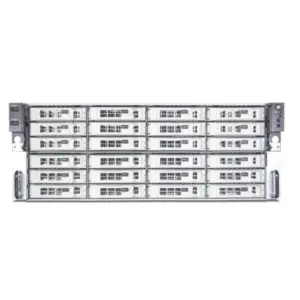
Cisco Meraki MS150-24P-4X Stackable PoE Switch in Africa
Build a business access network around 24 Gigabit Ethernet ports, a 370W PoE budget, four 10 GbE SFP+ uplinks, dedicated physical stacking and the operational simplicity of Meraki Dashboard management. The MS150-24P-4X is aimed at organisations that need dependable wired access for users, wireless access points, IP phones, cameras and other PoE endpoints while keeping room for fibre uplinks, switch stacking and central administration. FourTeck helps Africa buyers confirm the correct model, licence direction, optics, stack cables, rack requirements, power accessories and deployment scope before a commercial order is prepared.
✓ 370W PoE Budget
✓ 4 × 10 GbE SFP+
✓ 80 Gbps Stack Bandwidth
✓ Meraki Dashboard
Request Quote
Check Africa Availability
Availability, final licence choice, accessories and delivery arrangements are confirmed during quotation. FourTeck does not assume local stock or a fixed delivery date before the exact order requirement is reviewed.
Quick Product Information
Cisco Meraki
MS150-24P-4X
Cloud-managed stackable Layer 2 access switch
24 × 10/100/1000 Mbps RJ45
4 × 10 GbE SFP+
Up to 30W per powered port, 370W total switch budget
2 dedicated stack ports, 80 Gbps stacking bandwidth
Cisco Meraki Dashboard and local status access
Integrated 1U rack mount
Configuration review, quote support, delivery coordination and warranty guidance
Product Overview
Modern access switching has to do more than connect desktop computers. A typical office or branch may depend on the same wiring closet for employee workstations, wireless access points, IP phones, cameras, printers, meeting-room systems, access-control devices and links to servers or upstream network equipment. That mix creates three practical demands: enough Gigabit access ports, enough PoE capacity for powered endpoints and enough uplink performance to avoid creating an unnecessary bottleneck when multiple devices are active at the same time.
The MS150-24P-4X addresses that access-layer role with 24 Gigabit RJ45 ports and a total 370W PoE budget. The four 10 GbE SFP+ interfaces provide a useful path to fibre or high-speed copper direct-attach uplinks where supported optics and cabling are selected. This makes the switch a practical fit for a branch or medium-density access cabinet in which ordinary endpoint connectivity remains 1 GbE but the aggregation path needs significantly more bandwidth. Two dedicated stack ports provide 80 Gbps stacking bandwidth, and Cisco documents physical stacks of up to eight compatible MS150 switches. That allows a project to increase port density while keeping a coordinated management model rather than treating every switch as an isolated appliance.
Cloud management is another core part of the design. Cisco Meraki Dashboard provides central configuration, monitoring and troubleshooting functions, including remote packet capture, firmware management, port visibility, VLAN configuration and supported policy controls. The switch also supports capabilities such as 802.1Q VLAN tagging, IPv4/IPv6 access control lists, 802.1X authentication, DHCP snooping, Dynamic ARP Inspection, broadcast storm control, SNMP/syslog integration and static routing. Buyers should still design the complete network carefully: the dashboard does not remove the need for proper VLAN planning, compatible optics, rack ventilation, UPS capacity, firewall integration or cabling documentation.
For Africa procurement teams, the important decision is whether this specific 24-port PoE model matches the connected-device count and growth plan. FourTeck can help review that fit before the quotation is finalised. If the project needs multigigabit access for higher-speed wireless, a 48-port cabinet, a larger PoE budget or a different routing feature set, another MS150 variant or a related Catalyst Meraki platform may be more appropriate. A requirement-led review helps avoid buying a capable switch that still misses the actual power, port or uplink requirement of the site.
Key Business Benefits
The value of this switch comes from how its access ports, power delivery, uplinks, stacking and cloud operations work together. The following benefits translate the technical design into practical decisions for IT managers and procurement teams.
◆ Consolidated Access Connectivity
Twenty-four Gigabit Ethernet access ports give a branch, floor or department a clear wired foundation for PCs, printers, phones, cameras and wireless infrastructure. A well-planned port map can reduce the need for scattered unmanaged switches and make it easier to document which device belongs to which VLAN, business function or physical area.
◆ 370W PoE Budget
A 370W switch-level PoE budget allows the access layer to power many supported endpoints directly over Ethernet. That can simplify deployment of access points, IP telephony, cameras and other compatible devices. Buyers should total the real maximum power requirement of all endpoints rather than dividing the headline budget equally, because a few higher-demand devices can materially change the remaining capacity.
◆ Four 10 GbE Uplinks
Four SFP+ interfaces give network designers several options for connecting the switch upstream, linking to fibre infrastructure or creating higher-bandwidth paths where the wider architecture supports them. This is especially useful when many Gigabit clients share a common uplink or when the access cabinet feeds high-capacity wireless, servers or an aggregation layer.
◆ Physical Stack Expansion
Dedicated stack ports help compatible MS150 units operate as a coordinated group with an 80 Gbps stack connection. For an expanding office or campus, stacking can provide a cleaner growth path than designing every access switch independently. Correct stack members and compatible cables must be confirmed before ordering, especially when a project mixes different model families.
◆ Central Operational Visibility
Meraki Dashboard lets administrators work from a central management interface instead of relying only on local console sessions. That can help teams monitor ports, review events, push supported configuration changes, manage firmware and troubleshoot remote sites. The business benefit is a more consistent operating model across one or multiple locations, provided connectivity and licensing are planned correctly.
◆ Security and Segmentation Controls
Support for VLAN tagging, access control lists, 802.1X, DHCP snooping and Dynamic ARP Inspection gives the switching layer tools for a more structured access design. These features do not replace a firewall or complete security architecture, but they can help the organisation separate user groups, restrict unwanted access and reduce common local-network risks when configured as part of a documented policy.
Product Highlights
The MS150-24P-4X sits in a useful position for organisations that want standard Gigabit access with stronger uplink and expansion capability. It is not a multigigabit access model, so buyers should choose it for environments where 1 GbE to the edge remains appropriate. In return, it combines PoE-powered access, 10 GbE SFP+ uplinks, dedicated stacking and central Meraki administration in a compact 1U chassis.
24-Port Gigabit Edge
All 24 access ports support 10/100/1000 Mbps Ethernet, which fits ordinary business users, VoIP, many cameras, printers and a wide range of current wireless access points.
PoE+ Class Power
Cisco groups this model in the 30W PoE+ range. The switch offers a 370W total PoE budget, so endpoint power planning should be based on actual device requirements and growth.
High-Speed SFP+ Interfaces
Four 10 GbE SFP+ ports support compatible Cisco Meraki optics and direct-attach cables, giving flexibility for fibre distances, rack links and upstream switching design.
Dedicated Management Interface
A dedicated management interface supports access to local status functions, while normal configuration and monitoring are centred on the Meraki cloud-managed operating model.
Compact 1U Chassis
The 24-port chassis is approximately 4.4 × 48.2 × 25 cm and weighs about 3.6 kg, making rack depth and cabinet ventilation easier to plan than with deeper high-density platforms.
Technical Specifications
| Specification | MS150-24P-4X Detail |
|---|---|
| Brand / Model | Cisco Meraki / MS150-24P-4X |
| Switch Type | Cloud-managed stackable Layer 2 access switch with static routing |
| Access Ports | 24 × 10/100/1000 Mbps RJ45 |
| Uplinks | 4 × 10 GbE SFP+ |
| PoE Per-Port Budget | Up to 30W on powered ports |
| Total PoE Budget | 370W |
| Stacking | 2 dedicated stack ports; 80 Gbps stacking bandwidth; up to eight compatible MS150 switches per physical stack |
| Switching Capacity | 128 Gbps |
| Management | Cisco Meraki Dashboard, dedicated management interface, local status functions |
| Network Features | 802.1Q VLAN tagging, IPv4/IPv6 ACLs, 802.1X, DHCP snooping, Dynamic ARP Inspection, broadcast storm control, SNMP/syslog, static routing, remote packet capture |
| Power Input | 100–240 VAC |
| Power Load | Approximately 22.9W idle / 422.2W maximum |
| Power Supply / Fans | Fixed internal power supply and fixed internal fan operation |
| Operating Environment | 0°C to 45°C; 5% to 95% humidity |
| Form Factor | Integrated 1U rack mount |
| Dimensions | Approx. 4.4 × 48.2 × 25 cm (1.72 × 19 × 9.84 in) |
| Weight | Approx. 3.6 kg (7.94 lb) |
| Included Hardware | MS150 switch and rack-mount screw kit; region-specific power cord selection must be confirmed |
| Licensing | Meraki licensing required; available licensing structures and tier names depend on the organisation licensing model and selected term |
| Availability | Model, quantity, licence, accessories and destination dependent; contact FourTeck for current options |
The table describes the specific 24-port PoE model rather than the entire MS150 family. That distinction matters because other members of the series can differ significantly. The 24MP version, for example, introduces multigigabit access and higher per-port power on selected ports, while 48-port variants change access density and may provide either 370W or 740W total PoE budgets. A buyer who only specifies “MS150” can therefore receive a configuration that does not match the required cable speeds, powered-device count or rack design.
Before ordering, count the endpoints by type and power requirement, decide whether any devices need more than 1 GbE access, confirm uplink distance and media, and document whether stacking is required. Fibre choices should be based on the actual building link and approved transceiver compatibility. If multiple switches will be stacked, order the correct stacking cable family and length for the rack layout. Licensing also deserves an early review because Meraki supports several licensing approaches, and an existing organisation may already determine the appropriate tier or model. FourTeck can use these details to prepare a bill of materials that includes the hardware, licence, power cord, optics and stacking accessories rather than quoting the chassis alone.
Configuration and Buyer Guidance
A correct switch purchase begins with a device schedule, not the catalogue name. List every endpoint expected to connect to the 24 access ports and divide them into ordinary data devices and PoE-powered devices. Then estimate growth. If the cabinet already needs 22 active ports, a 24-port switch may leave too little operational headroom for new users, temporary equipment, redundant links or a future wireless expansion. A 48-port model could be more sensible even if the first-day port count is lower.
How many powered devices?
Add the maximum expected draw of access points, phones, cameras and other PoE endpoints. Keep design headroom instead of assuming that 370W can be allocated without regard to peak demand or future additions.
Is 1 GbE enough at the edge?
This model is built around Gigabit RJ45 access. If current or planned access points, workstations or specialist devices require 2.5/5 GbE, compare a multigigabit MS150 variant before finalising the order.
What will use the SFP+ ports?
Define whether each 10G uplink will connect to an aggregation switch, firewall, server, fibre backbone or adjacent rack. The required optic depends on media type, distance and the equipment at the far end.
Will the switch be stacked?
A multi-switch cabinet should identify stack membership, cable lengths and physical layout before procurement. Dedicated stack ports are different from the 10G SFP+ uplinks and require supported stacking cables.
What does the existing Meraki organisation use?
Existing licensing can influence the suitable licence tier and purchasing route. Share the current organisation licensing model and switch licences so the new hardware is quoted consistently.
Is the rack and power environment ready?
Confirm rack depth, ventilation, protected AC power, UPS capacity, patch-panel condition and the correct regional power cord. PoE switches can place a much larger load on a UPS than data-only switches.
For an accurate FourTeck quotation, provide quantity, site count, current switch model, port count, PoE device list, fibre distances, preferred uplink speed, stack requirement, rack information, Meraki licensing position and destination. That information allows the quote to distinguish between essential hardware and optional components, while reducing the chance of discovering missing optics, cables or licences during deployment.
Ideal Business Use Cases
This switch is best considered as a managed Gigabit access platform for environments where PoE endpoints and 10G uplinks matter. It is not a universal fit for every network, but the following use cases show where the combination of 24 access ports, 370W PoE, cloud administration and physical stacking can be especially practical.
Branch Office Access Layer
A branch with employee desktops, printers, phones and several access points can use one switch as the local access layer while the 10G SFP+ ports connect upstream to fibre, a core switch or other supported infrastructure. Central Dashboard management is useful when the branch does not have a full-time network specialist on site.
Wireless and Voice Deployment
Businesses deploying Wi-Fi access points and IP telephony can consolidate both data and power on the switching layer. The key planning task is to calculate total PoE draw and decide whether the connected access points need only 1 GbE or a multigigabit access model instead.
Camera and Access-Control Networks
A security network may connect PoE cameras, door controllers and related devices while using VLANs and ACLs to separate operational traffic from ordinary user networks. Recording bandwidth, camera power draw and the uplink to the recorder or server should be sized carefully before the switch is selected.
Education and Campus Floors
Schools, training centres and campus buildings can use the platform for classrooms, administration, wireless access and VoIP, particularly where several switches in a cabinet may benefit from physical stacking. Port-count growth and high-density wireless requirements should be reviewed before choosing between 24-port, 48-port and multigigabit variants.
Hospitality and Multi-Service Sites
Hotels, managed residences and service facilities may run guest Wi-Fi, staff networks, phones, cameras and back-office systems through the same rack. Central visibility can simplify operations, but a disciplined VLAN plan, UPS design and port map are important because many services depend on the access switch simultaneously.
Growing Multi-Switch Offices
Where one 24-port switch is not enough, compatible MS150 units can be physically stacked. This can give the IT team a cleaner expansion method for additional floors, departments or device groups. Stack compatibility, cable selection and upstream design should be confirmed as a complete topology rather than after the second switch is purchased.
MS150-24P-4X PoE Access and Power Planning
PoE is often the reason a business selects a P-model switch, but the total wattage should be treated as an engineering budget rather than a marketing number. The switch provides a 370W overall power budget for connected PoE devices, with the model positioned in Cisco’s 30W PoE+ group. This gives useful flexibility for many business access points, IP phones, cameras and related devices, yet the real capacity depends on the endpoint mix. Twenty-four devices drawing only a few watts each may fit easily, while a smaller number of higher-demand access points can consume much more of the available budget.
A practical design starts with a list of device models and their maximum or expected power requirement. Add reasonable headroom for replacement hardware and future growth, then compare the total to the available switch budget. If the site is likely to move to higher-power wireless or other 60W-class devices, this particular model may not be the right choice even though it belongs to the same MS150 family as PoE++ variants. The multigigabit MS150-24MP-4X, for example, is designed for different access-speed and power requirements on selected ports.
Power planning extends beyond the switch. The maximum switch load can exceed 400W when PoE demand is high, so the rack circuit and UPS must be sized for realistic operation. A small UPS chosen for a data-only switch may provide much less runtime when it is supporting a fully loaded PoE access layer. Buyers should also decide which endpoints must remain online during an outage. If business-critical access points, phones or cameras depend on the switch, backup-power design becomes part of the network continuity plan rather than a separate electrical purchase.
MS150-24P-4X 10G Uplinks and Physical Stacking
The four 10 GbE SFP+ interfaces are one of the strongest reasons to choose the 4X version instead of a 4G model. A Gigabit access switch can still carry substantial aggregate traffic, and an ordinary 1G uplink may become restrictive when dozens of users, access points, cameras or storage flows converge on the same path. SFP+ gives the network designer a higher-capacity option for connecting to core or aggregation infrastructure, provided the far-end device, transceiver type, fibre and link design support the selected speed.
The uplink decision should be tied to distance and media. Short rack-to-rack links can use compatible direct-attach cabling where appropriate, while multimode or single-mode fibre can support different building and campus distances using supported optics. Cisco lists a range of 1G and 10G modules for the SFP+ models, including short-reach and longer-reach fibre options. Buyers should not choose optics from speed alone; connector type, fibre plant, wavelength, distance and the far-end platform all need to match.
Physical stacking is separate from the SFP+ uplinks. The switch has two dedicated stack interfaces with 80 Gbps stacking bandwidth, and supported MS150 physical stacks can include up to eight compatible units. Stacking can simplify expansion and allow high-speed communication between members, but it requires supported stacking cables such as the current MA-CBL-100G family in suitable lengths. A project should confirm whether stacking is needed, where the switches will sit in the rack and how the stack will connect upstream. FourTeck can help translate the intended topology into a bill of materials covering the chassis, stack cables, optics and uplink design.
MS150-24P-4X Cloud Management, Segmentation and Operations
Meraki Dashboard changes the way the switch is operated day to day. Administrators can manage supported configuration, view ports and clients, monitor events, apply firmware updates and use remote troubleshooting tools from a central cloud interface. That is valuable for an IT team responsible for several branches, because routine visibility does not depend on travelling to each communications room. The switch also includes a dedicated management interface and local status functions for device connectivity and basic troubleshooting.
At the access layer, network controls such as VLAN tagging, ACLs, 802.1X, DHCP snooping and Dynamic ARP Inspection support a more deliberate segmentation model. A business can separate staff, voice, cameras, guest-facing devices and infrastructure traffic instead of leaving every endpoint in one broad broadcast domain. The final design should align with the firewall, DHCP services, authentication platform and organisation security policy. Static routing is supported, but buyers with more advanced campus routing requirements should compare the MS150 role with higher-feature switching platforms.
Licensing is part of the operating model and must be included in procurement planning. Cisco currently documents Enterprise and Advanced licence paths for co-term or per-device organisations, alongside subscription licensing options for the MS150 family. The correct route depends on the customer’s existing Meraki organisation and chosen licensing model. FourTeck can help review those details during quotation so the hardware is not purchased in isolation from the licence term and feature tier required to manage it.
What Buyers Should Check Before Purchase
A switch quote is most useful when it answers the technical questions that affect the complete deployment. Before requesting a price, buyers should confirm how the hardware will be used, what it must connect to and which accessories are essential. This avoids comparing chassis prices that exclude licensing, optics, stack cables or the correct regional power cord.
Configuration Fit
Confirm that 24 Gigabit access ports are enough for the current and projected endpoint count. If the cabinet needs more ports or multigigabit access, another MS150 model may provide a better fit.
PoE Capacity
List each powered device and its maximum requirement. Compare the combined draw with the 370W switch budget and allow headroom instead of planning to run permanently at the theoretical limit.
Uplink Compatibility
Document the upstream switch or firewall, link speed, fibre type and distance. SFP+ modules and direct-attach cables should be selected for both ends of the link, not from the MS150 model alone.
Stack Components
If more than one compatible switch will form a physical stack, identify stack size and rack placement so the correct supported cables and lengths can be quoted with the hardware.
Licensing Position
Share whether the Meraki organisation uses co-term, per-device or subscription licensing and which tier is already deployed. This can influence the correct licence line for the new switch.
Rack and Power
Check 1U rack space, cabinet depth, airflow, AC supply, UPS sizing and the regional power-cord requirement. These practical items are easy to overlook in a hardware-only quotation.
Long-term operating cost should also include the licence term, power consumption, UPS capacity, optics, stacking accessories and the effort required to administer the network. When replacing an older Meraki model, do not assume that its licences, stack cables or optics transfer automatically to the new platform. Confirm compatibility and lifecycle expectations for each component. For project or bulk orders, provide a site-by-site schedule showing quantity, rack location, PoE devices, fibre links and required licence terms. FourTeck can then help separate common components from site-specific items and identify suitable alternatives if the requested configuration does not fit the final requirement.
Questions Business Buyers Ask About the MS150-24P-4X
The following questions focus on selection, compatibility, deployment and commercial preparation. They are designed to help an IT manager or procurement team decide whether this model fits the actual network rather than choosing it only because the port count looks familiar.
Is this switch suitable for an office with access points, phones and cameras?
Yes, when the device count, data speed and power requirement fit its limits. The 24 Gigabit ports can connect ordinary users and PoE endpoints, while the 370W total power budget can support many phones, cameras and access points. The correct answer depends on the exact endpoint models because PoE consumption varies. Build a device-and-wattage list before treating the switch as a complete fit.
How do I know whether 24 ports are enough?
Count active connections, not only employees. Include access points, cameras, phones, printers, servers, uplink-related copper connections and spare ports required for growth or maintenance. A site using 20 to 22 ports on day one may outgrow a 24-port switch quickly. If expansion is expected, compare a 48-port model or a planned stack rather than leaving no practical capacity for new endpoints.
Can the switch support Wi-Fi 7 access points?
It can power and connect supported access points when their Ethernet speed and PoE requirement fit the port capability, but this model provides 1 GbE access and up to 30W per powered port. Many newer high-performance access points benefit from multigigabit Ethernet or higher PoE classes. Check the exact access-point model before deciding that a standard Gigabit PoE switch will deliver the intended wireless performance.
What should I connect to the four SFP+ ports?
Use them for supported 1G or 10G uplinks where the design requires fibre or higher bandwidth, such as links to core switching, aggregation, a suitably equipped firewall or another infrastructure device. Choose the transceiver according to distance, fibre type and the far-end platform. The presence of four interfaces does not mean every port must be populated; reserve capacity can be valuable for future links or redundancy.
Do I need stacking cables if I buy two switches?
Only if the design calls for a physical stack. Two switches can also operate as separate access devices connected through the wider network. If physical stacking is required, order supported stack cables in the correct lengths and verify that the exact models can participate together. The stack interfaces are dedicated ports and do not use the normal SFP+ uplink modules.
Does Meraki Dashboard remove the need for local network planning?
No. Cloud management simplifies administration, monitoring and troubleshooting, but the physical and logical design still matters. You must plan VLANs, IP addressing, uplinks, PoE, cabling, rack power, firewall policies and change control. A mis-sized uplink or undocumented cabling plant remains a problem even when the switch is easy to manage remotely. Dashboard is a management platform, not a substitute for network architecture.
Which Meraki licence should be included?
The correct licence depends on the customer’s Meraki licensing model, organisation and feature tier. Cisco documents Enterprise and Advanced options for traditional licensing structures, as well as subscription licensing choices for the MS150 family. Existing organisations may have consistency requirements. Share the current licensing position, desired term and whether advanced features such as Adaptive Policy are needed so the quote uses the appropriate licence path.
What accessories can be missing from a basic hardware quote?
Common omissions include the region-appropriate power cord, SFP/SFP+ transceivers, direct-attach cables, stacking cables, patch leads and sometimes the Meraki licence itself. The switch includes a rack-mount screw kit, but a complete deployment may require far more than the chassis. Ask for an itemised bill of materials based on the actual topology so procurement can compare like with like.
How should I size the UPS for a PoE switch?
Size it using realistic switch and PoE load rather than the idle figure. The MS150-24P-4X has a much higher maximum load when it is powering endpoints than when it is simply running without PoE demand. Decide the required runtime, add other rack equipment, allow appropriate design margin and identify which powered devices must stay online during an outage. Runtime goals can change the required UPS capacity substantially.
Can this model replace an older Meraki 24-port PoE switch?
It may be a suitable replacement, but compatibility should be reviewed rather than assumed. Compare port count, PoE requirements, uplink modules, stack architecture, rack depth, licensing model, VLAN configuration and the capabilities used by the existing switch. Migration planning should also identify critical endpoints and the maintenance window. If the older environment uses accessories that are not supported on the new model, include replacements in the quote.
What information should I send for an accurate quotation?
Send the required quantity, destination, site count, current network platform, active and future port count, list of PoE devices, uplink type and distance, fibre specifications, stacking requirement, rack details, UPS requirement and Meraki licensing position. If the project includes installation or migration, add a topology diagram, cabinet photographs and the desired change window. These details make the quote more useful than a price for hardware alone.
What should I consider if this exact configuration is not suitable?
Stay within the requirement, not the model name. If you need more ports, consider a 48-port MS150 option. If you need multigigabit access or higher per-port PoE, review the MP variants. If the project needs advanced enterprise routing or a different resilience model, compare Catalyst Meraki switching. FourTeck can help identify a related platform without forcing a 24-port Gigabit design into a requirement it does not fit.
How This Stackable PoE Switch Fits Common Business Requirements
Business buyers often begin with a practical problem rather than a model number: more PoE ports are needed, wireless traffic is growing, an older switch is difficult to manage, fibre uplinks must be added, or several standalone switches need a cleaner expansion path. The MS150-24P-4X can address those needs when its Gigabit access design and 370W power budget match the environment.
Product Purpose
This model provides managed Gigabit access for a 24-port business edge with PoE and 10G uplink capability. It is intended for organisations that want central Meraki operations without moving every endpoint to multigigabit Ethernet.
Buyer Fit
It suits offices, branches, schools, hospitality sites, healthcare facilities and other environments where a moderate number of users and PoE devices share one access cabinet and where remote management or stack expansion has operational value.
Requirement Matching
The decisive numbers are 24 Gigabit access ports, 370W total PoE and four 10G SFP+ uplinks. A requirement that exceeds any of these should trigger a comparison with another model rather than an attempt to work around a capacity mismatch later.
Compatibility
Check the upstream switch or firewall, fibre type, transceiver support, Meraki organisation licensing and stack compatibility. These dependencies determine whether the switch can be integrated cleanly with the existing network without unnecessary replacement work.
Replacement and Upgrade
When replacing an older 24-port PoE unit, compare capabilities one by one: powered-port budget, uplink speed, stacking, rack depth, licence model and active configuration. A successful upgrade preserves required services while improving the parts of the network that actually need change.
Quote Preparation
An accurate commercial request should include hardware quantity, licence term, optics, stack cables, power cord, destination and any installation scope. A site schedule is particularly useful when several locations use different uplink media or PoE device mixes.
Alternative Path
If the access layer needs 2.5/5 GbE, 60W power on selected ports, more than 24 copper connections or a broader Layer 3 role, another MS150 or Catalyst Meraki model can be reviewed. FourTeck can help map the requirement to the appropriate family.
Africa Availability and Service Support
FourTeck supports Africa-focused enquiries for Cisco Meraki switching with assistance that starts before the purchase order. A useful enquiry can include model verification, comparison with nearby MS150 variants, PoE and port planning, licence review, optics selection, stacking accessories, rack requirements and destination details. This is especially important for a cloud-managed platform because the hardware, licensing and deployment design need to be considered together.
Availability can vary with the exact SKU, quantity, licence term, supplier position and destination. FourTeck therefore confirms the commercial position during quotation rather than making a blanket stock claim. Delivery coordination is also based on the final order and location. Buyers planning a multi-site project should provide a schedule showing switch quantity, accessory requirements and intended delivery destinations so the proposal can identify shared components and site-specific differences.
Warranty guidance can be reviewed with the proposed supply route so the customer understands the applicable support process for the selected hardware. FourTeck can also discuss installation, migration and configuration assistance where required. For current information, send the required quantity, desired licence term and destination through the Africa contact team.
Africa Country and Regional Coverage
FourTeck supports business, government, education, healthcare, hospitality, reseller and project enquiries across Africa by helping buyers define the switching requirement before the commercial proposal is confirmed. For this 24-port PoE access switch, the review can include current endpoint count, expected growth, PoE load, uplink architecture, stacking plans, Meraki licensing, optical modules, rack environment, UPS capacity and any installation or migration requirement. That preparation helps the buyer request a complete deployment package instead of receiving a chassis-only quote that leaves important dependencies unresolved.
Availability, suitable licence path, lead time, accessories, warranty handling and delivery arrangements can change according to model, quantity, supplier status, destination and project scope. For multi-location projects, the same switch may be appropriate at some sites but not others. A head office can require more uplink or port density than a small branch, while a camera-heavy site may consume more PoE power than an ordinary user office. FourTeck can review those differences and identify related models where the 24-port configuration is not the best technical fit.
Tanzania, Libya and Seychelles are addressed below because each market can involve a different procurement and deployment pattern. The coverage remains product-focused and does not assume local inventory, branch presence or fixed delivery times. Buyers in any African market can begin with the FourTeck Africa platform or submit the technical requirement through the Africa contact page.
Cisco Meraki MS150-24P-4X Stackable PoE Switch in Tanzania
Cisco Meraki MS150-24P-4X Stackable PoE Switch in Tanzania can be considered by enterprises, public-sector organisations, schools, healthcare environments, financial institutions, resellers, system integrators and growing offices that need a centrally managed Gigabit access layer with PoE and 10G uplinks. A practical Tanzanian deployment should begin by mapping the communications cabinet and the devices that depend on it. Count workstations, printers, IP phones, wireless access points, cameras and other Ethernet endpoints, then separate the devices that require power from those that only need data. This matters because a 24-port switch may look sufficient from the employee count while the real connection total becomes much higher once wireless, voice and security systems are included. The 370W PoE budget should be checked against the exact endpoint models, and the rack power design should include a UPS sized for the expected operating load rather than the idle figure. Where buildings or floors are linked by fibre, buyers should document fibre type, distance and the upstream platform so compatible 10G SFP+ optics can be selected. If several MS150 switches will share one cabinet, physical stacking can offer a structured expansion path, but model compatibility and stack-cable lengths should be established before procurement. FourTeck can help prepare a Tanzania quotation around hardware quantity, licence term, optics, stack cables, regional power-cord requirement, rack conditions and delivery destination. For a replacement project, provide the existing switch models, VLAN plan and critical services so migration requirements are visible before the final order is placed.
Cisco Meraki MS150-24P-4X Stackable PoE Switch in Libya
For Cisco Meraki MS150-24P-4X Stackable PoE Switch in Libya, the buying process is strongest when operational continuity and bill-of-material accuracy are defined before the price request. A company refreshing an office LAN, an integrator planning a client network or an organisation standardising several facilities should identify which services will rely on the switch and what must remain consistent with the existing environment. That can include employee access, VoIP, wireless coverage, cameras, printers, servers and management traffic. The first design question is whether 24 Gigabit ports and a 370W PoE budget provide enough capacity for the required endpoints and planned growth. The next is how the four SFP+ uplinks will be used: fibre type, distance, far-end device and required transceivers should be documented rather than assumed. If the project uses an existing Meraki organisation, licensing must also be reviewed so the new switch follows the appropriate model, tier and term. Rack depth, ventilation, protected AC power and UPS capacity belong in the same planning exercise because a PoE switch supporting critical devices places a different load on the power system from a data-only access switch. Where multiple units are proposed, physical stack design and cable selection should be specified as part of the topology. FourTeck can organise the hardware, licensing, optics, stack accessories, power-cord requirements and delivery destination into a clearer Libya quotation. Availability and delivery coordination are confirmed from the actual order details without assuming local stock, a fixed route or a guaranteed project timeline.
Cisco Meraki MS150-24P-4X Stackable PoE Switch in Seychelles
Cisco Meraki MS150-24P-4X Stackable PoE Switch in Seychelles can suit hospitality groups, professional services, government departments, education providers, healthcare organisations, financial services, retail operations and other businesses that operate compact sites or several distributed locations. In these environments, remote visibility and a tidy rack footprint can be valuable because a small IT team may support more than one property, office or service point. The switch’s 1U form factor, cloud-managed operations and 24 Gigabit access ports can provide a practical foundation for staff devices, phones, access points, cameras and back-office systems when the endpoint count fits the available ports. PoE planning is especially important in wireless-heavy hospitality or multi-service sites: the buyer should total access-point, phone and camera power requirements and verify that the 370W budget leaves reasonable capacity for future additions. For fibre links between floors, buildings or network rooms, the 10G SFP+ interfaces can support higher-speed uplinks with compatible optics selected for the installed media and distance. Where several switches share a cabinet, stacking may simplify growth, but cable length and physical arrangement should be decided before shipment. FourTeck can help Seychelles buyers review the switch model, licence path, optics, power cord, stack components, rack and UPS requirements, delivery coordination and warranty guidance. A useful quotation should state the site count, switch quantity, connected-device mix, existing firewall and wireless platform, fibre details and whether the project is a new installation or a controlled replacement.
Other Options Buyers May Consider
A related model can be the better purchase when the project requires a different uplink speed, more copper ports, a larger PoE budget or multigigabit access. The options below are useful comparison points within the current Meraki switching direction. Final specifications, licences and availability should be confirmed for the selected model.
Meraki MS150-24P-4G
Consider when 24 Gigabit PoE access ports and a 370W power budget are suitable but 1G SFP uplinks are sufficient for the intended topology.
Meraki MS150-24MP-4X
Review this family option when selected access ports need multigigabit speed and higher PoE output for newer wireless or other demanding edge devices.
Meraki MS150-48LP-4X
Useful where the cabinet needs 48 Gigabit access ports, 10G SFP+ uplinks and a 370W total PoE budget rather than a 24-port layout.
Meraki MS150-48FP-4X
Consider when both 48-port density and a larger 740W PoE switch budget are required for a more power-intensive access layer.
Catalyst 9300-M Platforms
Evaluate Catalyst Meraki switching when the project needs a different enterprise performance, resiliency, multigigabit or Layer 3 profile than the MS150 access family provides.
Meraki Switch Installation Support
For new rollouts or replacements, FourTeck can also help scope rack setup, Dashboard onboarding, VLANs, PoE, uplinks, migration and testing.
The purpose of comparing these options is not to declare one model universally better. A 48-port unit may reduce chassis count but provide unnecessary capacity at a small branch. A multigigabit model may be essential for high-performance wireless but add cost where every endpoint is limited to 1 GbE. A lower-speed uplink variant can be economical when the backbone is only 1G, while the 4X model is preferable where 10G uplinks are part of the network design. FourTeck can help buyers align the model family with port count, powered-device load, uplink architecture, licensing and expected growth.
Why Buyers Choose FourTeck
Network procurement becomes more reliable when the commercial request reflects the complete technical requirement. FourTeck works with business buyers to clarify the configuration before the order is finalised, especially for products such as Meraki switches where licensing, PoE, optics and stacking accessories can materially affect the deployment.
Procurement assistance for individual units, multi-switch orders and wider infrastructure projects.
Review of port density, PoE load, uplinks, stack design, rack conditions and compatibility before quotation.
Support identifying the appropriate Meraki licence direction based on the organisation and selected term.
Commercial proposals can be structured around hardware, licences, optics, stack cables, power accessories and destination.
Delivery requirements are reviewed according to the confirmed product, order quantity, supplier position and destination.
Applicable support and warranty expectations can be discussed with the selected supply route before purchase.
FourTeck also supports buyers who are not yet certain that this model is the right match. A procurement request may start with a familiar part number, but the technical review can reveal a need for more ports, multigigabit access, higher PoE output or a different routing profile. In that case, the goal is to identify a suitable related option rather than force the original model into an unsuitable design. For installation and operational support around Meraki environments, buyers can review Cisco Meraki technical support in Africa and Meraki switch installation services.
Frequently Asked Questions
What is the MS150-24P-4X used for?
It is used as a cloud-managed business access switch for connecting up to 24 Gigabit Ethernet endpoints while providing PoE power to compatible devices. Typical connected equipment includes workstations, IP phones, wireless access points, cameras, printers and other Ethernet devices. Four 10G SFP+ ports support higher-speed uplink designs, while dedicated stack ports allow compatible MS150 switches to be physically stacked when more access capacity is required.
How much PoE power does the switch provide?
The model has a 370W total PoE switch budget and is positioned in Cisco’s 30W PoE+ group. The number of devices it can power depends on the wattage required by each endpoint. Buyers should calculate the combined demand of access points, phones, cameras and other powered devices, then leave sensible design headroom. If selected endpoints require higher per-port power, compare the requirement with an appropriate PoE++ model.
Does it support 10 Gigabit uplinks?
Yes. The switch includes four 10 GbE SFP+ interfaces. They can be used with supported optics or direct-attach cabling according to the network design. The correct module depends on link speed, fibre type, distance and compatibility with the device at the other end. FourTeck can help review the intended uplinks so the quotation includes suitable transceivers or cables instead of supplying the switch without the required connectivity accessories.
Can multiple MS150 switches be stacked?
Yes. The MS150 family includes dedicated physical stacking, and Cisco documents stacks of up to eight compatible MS150 switches. This model has two dedicated stack ports with 80 Gbps stacking bandwidth. A physical stack requires supported stacking cables and compatible members. Buyers should confirm the exact models and rack arrangement before ordering because stack accessories are separate from the normal 10G SFP+ uplinks and cable length matters in a real cabinet.
Does the switch require Meraki licensing?
Yes, Meraki licensing must be considered with the hardware. Cisco currently documents several licensing approaches for the MS150 family, including Enterprise and Advanced paths within established licensing structures as well as subscription options. The correct line depends on the organisation’s licensing model, existing switch licences, desired term and required feature level. Share those details with FourTeck so the quotation does not treat the switch as a standalone hardware purchase.
Is the switch available for Africa business orders?
FourTeck accepts Africa-focused enquiries for this Cisco Meraki switch and related networking products. Current availability depends on the exact model, quantity, licence, accessories, supplier position and destination, so the commercial position is confirmed during quotation rather than assumed. Buyers should provide the required quantity and delivery location along with the technical requirement. FourTeck can then review product fit, accessory needs, licensing and delivery coordination for the proposed order.
Can FourTeck help choose between MS150 variants?
Yes. Share the required port count, PoE load, access-port speed, uplink design, stacking requirement and expected growth. FourTeck can help compare 24-port and 48-port variants, 1G and 10G uplink choices, and multigigabit models where appropriate. The goal is to match the switch to the actual deployment. A lower-cost model can be unsuitable if it lacks required capacity, while a higher-specification model can be unnecessary for a simple branch.
What should be included in a complete quote?
A complete quote may include the switch hardware, appropriate Meraki licence, regional power cord, SFP/SFP+ optics or direct-attach cables, supported stacking cables and any installation or migration scope required by the project. The exact list depends on the network. Providing fibre distance, PoE devices, rack layout and existing Meraki organisation information helps prevent omissions and makes it easier to compare commercial proposals on the same technical basis.
Can businesses request project or bulk supply?
Yes. Businesses, resellers, integrators and project buyers can request quotations for multiple switches or multi-site requirements. A site schedule is recommended because port count, PoE load, optics and rack conditions can vary by location. Include quantities, destinations, licence terms and any accessories or technical services required. FourTeck can use that information to organise the quotation around common items and site-specific differences instead of treating every location as an identical copy.
Need Help Choosing the Right Meraki Switch?
Send FourTeck your required quantity, port count, PoE device list, uplink design, stack requirement, licence position and Africa delivery destination. The team can help review model fit, identify missing accessories, discuss warranty guidance and prepare a requirement-based quotation for your business network.
Reviews
There are no reviews yet.