

Cisco Meraki MX67 Security Appliance in Africa
The Cisco Meraki MX67 is a compact security and SD-WAN appliance built for small branches that want centralized cloud management, secure internet access, site-to-site connectivity and clear operational visibility without installing a large rack firewall. Cisco currently recommends the platform for small-branch environments with up to 50 connected client devices. For African business buyers, the most important question is not simply whether the model name is familiar, but whether its current throughput, licensing, interfaces and security capabilities align with the site’s real internet speed, number of users, application mix, VPN traffic and growth plan. FourTeck helps purchasing and technical teams review those factors before a quotation is prepared.
Request QuoteExplore Meraki Deployment Support
Quick Product Information
Cisco Meraki
MX67 / MX67-HW
Cloud-managed security & SD-WAN appliance
Small branch, up to 50 connected client devices
700 Mbps stateful firewall throughput
Up to 400 Mbps maximum VPN throughput in current Cisco documentation
Cisco Meraki Dashboard
Separate Meraki licence required; tier and term depend on use case
Desktop or wall mount
Contact FourTeck for current options, quantity and destination review
Product Overview
Small branches often need many of the same network functions as a headquarters—secure internet access, firewall policy, remote connectivity, site-to-site VPN, traffic control, segmentation and visibility—but they rarely have the same rack space, local IT staff or budget for a complex stack of separate appliances. The MX67 addresses that operational gap by combining security, routing and SD-WAN functions in a compact desktop or wall-mount form factor managed through the Meraki cloud Dashboard. That management model can be especially useful for distributed businesses where one technical team is responsible for several branches and wants consistent policy, monitoring and change control without travelling to every site for routine administration.
Cisco’s current documentation lists a stateful firewall throughput of 700 Mbps, maximum VPN throughput of 400 Mbps and next-generation firewall detection throughput of 400 Mbps, with the platform recommended for small branches of up to 50 connected client devices. Those figures provide a sizing reference, but they should not be treated as a promise that every deployment will deliver the same application experience. Internet circuit speed, traffic mix, encrypted traffic, security services, VPN usage, number of simultaneous clients and firmware capabilities all affect practical performance. A branch with 20 users running mostly productivity applications can create a very different security load from a 20-user site transferring backups, running constant video meetings, hosting guest access and maintaining several site-to-site tunnels.
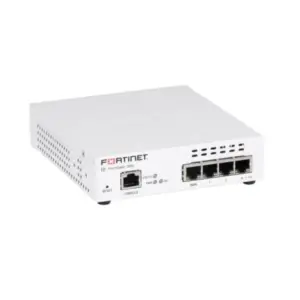
The base MX67 provides a dedicated Gigabit Ethernet WAN interface plus a convertible LAN/WAN Gigabit Ethernet interface. On the LAN side, it provides three dedicated Gigabit Ethernet ports plus the convertible port, giving buyers flexibility for a compact branch design. The standard MX67 does not include integrated Wi-Fi or built-in cellular; those capabilities belong to related variants such as the MX67W and MX67C. That distinction matters because buyers sometimes assume all models in a product family include the same radios or failover options. FourTeck can help confirm the exact hardware variant, power accessories, licence requirement and network role before an order is finalized.
For Africa-focused projects, procurement is usually only one part of the task. A successful deployment also requires clarity around the ISP handoff, local addressing, VLANs, DHCP, security zones, public services, branch connectivity, remote access, content controls, authentication and the cutover from an existing router or firewall. FourTeck supports both the commercial and technical sides of that process, helping buyers prepare a more complete requirement so the requested model is matched to the actual operating environment rather than selected only by headline specifications.
Key Business Benefits
A branch firewall is valuable when it improves security and control without creating unnecessary operational burden. The following benefits explain how the MX67 can support business objectives when correctly sized, licensed and configured.
◆ Centralized Administration
Cloud Dashboard management gives administrators a common place to review supported security, routing, VPN and connectivity settings. For organizations with several smaller sites, this can reduce dependence on local technical staff and make configuration standards easier to maintain.
✓ Secure Branch Connectivity
Meraki Auto VPN and SD-WAN capabilities can support structured connectivity between compatible Meraki sites. The business benefit is simpler branch standardization, especially when head-office applications, shared services or cloud workloads must be reached securely from several locations.
🔒 Layered Security Options
Layer 3/7 firewall controls, content filtering, IDS/IPS and malware-related protections are available according to current platform capabilities and licence choice. Buyers can therefore align the security tier with whether the branch only needs basic secure connectivity or broader internet-edge protection.
↗ Flexible WAN Design
The convertible LAN/WAN port can be used to support a dual-WAN design. For a site with two internet services, this provides a practical route to link balancing or automatic failover where the overall design, addressing and provider handoffs are compatible.
⚙ Remote Troubleshooting
Dashboard tools such as client visibility, traffic information, event logs and remote packet capture can make fault isolation more practical. An IT team can investigate whether a problem relates to WAN connectivity, a policy, a client, a route or an application before arranging onsite work.
● Compact Deployment
At roughly 27 x 130 x 239 mm and about 0.79 kg for the base MX67, the appliance can fit small office environments where a full network rack is not practical. Desktop and wall-mount placement also gives project teams flexibility when planning branch rooms and cabinets.
These advantages depend on the surrounding design. A centrally managed appliance still needs correct VLAN boundaries, firewall rules, licence entitlement, administrator access controls and WAN planning. FourTeck’s role is to help buyers connect the product specification to those practical requirements so that procurement decisions support the branch rather than create a new integration problem.
Product Highlights
The MX67 is positioned as a small-branch appliance rather than a high-density campus or data-centre firewall. Its strongest fit is a site that values centralized management, straightforward branch VPN, application-aware policy and a compact footprint. Current Cisco material lists two Gigabit Ethernet WAN-capable interfaces when the convertible port is used, four Gigabit Ethernet LAN-capable interfaces including that same convertible port, 700 Mbps stateful firewall throughput and support for small branches with up to 50 client devices.
Central configuration and visibility can simplify administration across distributed offices where onsite network expertise is limited.
Designed to support secure site-to-site connectivity and policy-based use of multiple WAN paths in compatible Meraki environments.
Layer 7 policy, content filtering, malware-related controls and IDS/IPS are available according to current licence and platform capabilities.
Fanless-style compact deployment, low power draw, Gigabit Ethernet interfaces and desktop/wall placement suit smaller network rooms and offices.
The standard hardware model does not include Wi-Fi, PoE or integrated cellular. Buyers needing those functions should review related variants or complementary access points and cellular gateways rather than assuming the base unit provides them. This distinction is particularly important for branch projects where the firewall is expected to replace a router, wireless access point and backup modem in one step.
Technical Specifications
| Specification Area | Cisco Meraki MX67 Details |
|---|---|
| Brand / Model | Cisco Meraki MX67, hardware SKU MX67-HW |
| Product Type | Cloud-managed security and SD-WAN appliance |
| Recommended Scale | Small branch with up to 50 connected client devices |
| Stateful Firewall Throughput | 700 Mbps |
| Maximum VPN Throughput | 400 Mbps in the current MX67/MX68 Cisco documentation; Cisco product marketing also lists 300 Mbps site-to-site VPN, so final sizing should use the metric applicable to the intended test and workload |
| Next-Generation Firewall Detection Throughput | 400 Mbps |
| WAN Interfaces | 1 x dedicated GbE RJ45 plus 1 x convertible LAN/WAN GbE RJ45 |
| LAN Interfaces | 3 x dedicated GbE RJ45 plus 1 x convertible LAN/WAN GbE RJ45 |
| Dual WAN | Supported by converting the flexible LAN/WAN interface |
| Integrated Wi-Fi | No on base MX67; review MX67W for integrated wireless |
| Integrated Cellular | No on base MX67; review MX67C for integrated cellular |
| PoE | No |
| Management | Cisco Meraki Dashboard; API availability and features depend on current platform capabilities and entitlement |
| Security / Network Functions | Layer 3/7 stateful firewall, VLAN/DHCP, static routing, NAT, Auto VPN/IPsec, content filtering, IDS/IPS, malware-related protection, traffic shaping, NetFlow, Syslog and remote troubleshooting features according to licence and software capabilities |
| Dimensions | 27 x 130 x 239 mm (H x D x W) |
| Weight | Approximately 0.79 kg |
| Power | 18W DC supply; published base MX67 idle/max load 5W / 14W |
| Operating Environment | 0°C to 45°C; 5% to 95% humidity |
| Mounting | Desktop / wall mount |
| Licensing | Separate Meraki licence required; Enterprise, Advanced Security and Secure SD-WAN Plus options exist in current licensing documentation, with co-termination/subscription rules depending on organisation design |
| Warranty | Cisco documentation lists full lifetime hardware warranty for MX67/68, subject to current Cisco terms and purchase eligibility; accessories have different coverage |
| Availability | Requirement dependent; contact FourTeck for current Africa sourcing, licence and delivery options |
The correct configuration should be chosen from the workload backwards. Start with the internet circuits and expected inspected traffic, then consider VPN demand, number of client devices, guest traffic, cloud applications, video conferencing, backup transfers and any public-facing services. A 700 Mbps stateful firewall figure does not mean every security feature can be enabled at 700 Mbps under every traffic pattern. If the site depends heavily on advanced inspection, encrypted traffic, many tunnels or sustained high utilization, the larger MX family may provide more headroom. Port planning matters as well: using the convertible interface for a second WAN changes the number of available LAN connections, so a managed switch may be required for local devices, VLANs and PoE endpoints. Buyers should also decide whether the base MX67 is correct or whether integrated Wi-Fi or cellular capability points toward another variant. Finally, include the Meraki licence term and security tier in the budget from the beginning. FourTeck can review these factors and help translate them into a supply and configuration requirement before purchase.
Configuration and Buyer Guidance
A small branch does not automatically mean a simple branch. Before selecting the MX67, buyers should understand what the appliance will actually protect and connect. Begin by counting active devices rather than only employees. A 25-person office can easily have more than 50 client devices once laptops, phones, printers, IP phones, cameras, access points, payment terminals and guest equipment are included. Cisco’s sizing guidance uses connected client devices as a key reference, so a realistic inventory helps avoid under-sizing.
How fast are the WAN links?
Document primary and backup circuit speeds, handoff type, public IP addressing and whether the branch expects to use both links simultaneously. The appliance should have enough headroom for present demand and planned upgrades.
Which security services are required?
Decide whether the branch needs basic firewall and VPN functions or deeper content, intrusion and malware-related controls. The licence tier affects both capabilities and recurring cost, so it should be selected deliberately.
What must remain compatible?
List VLANs, DHCP scopes, static routes, public services, third-party VPN peers, authentication dependencies, switches, wireless access points and cloud applications. Migration planning is easier when these dependencies are known before the cutover.
Is growth expected?
If more users, faster circuits or additional branches are likely during the intended lifecycle, compare that future profile with current sizing. Moving to a larger appliance later may cost more than selecting adequate headroom at the start.
Power protection and physical placement also deserve attention. The MX67 is compact, but the branch still needs stable mains power, correct grounding, adequate ventilation and practical cable management. Where network continuity is important, consider a UPS sized for the firewall, switch, ISP equipment and any other critical network components. If deployment services are required, provide the current network diagram, preferred migration window, ISP details and administrator access process with the quote request. These details help FourTeck distinguish a simple hardware order from a branch migration project and prepare the right scope.
Ideal Business Use Cases
The MX67 is most appropriate where the branch is small enough for the published platform scale but still needs enterprise-style security and central administration. It is not limited to one industry; the common factor is a requirement for secure, manageable connectivity in a compact site.
Branch Offices
A regional or satellite office can use the appliance as its internet edge and secure connection point to headquarters or cloud resources. Central management helps a small IT team maintain common policies across sites.
Retail and Service Locations
Retail, service and professional sites can separate staff, guest, payment or operational networks while maintaining VPN connectivity to central systems. The exact design should account for payment-security requirements and application dependencies.
Clinics and Small Healthcare Sites
A clinic may need segmented access for administration, clinical systems, guest Wi-Fi, devices and cloud applications. The firewall can enforce network boundaries while central monitoring supports remote oversight, subject to the organization’s compliance design.
Education and Training Centres
Smaller schools, labs or training locations can use policy, content controls and VLAN separation to manage staff, student and guest traffic. User/device count and bandwidth consumption should be checked carefully because education sites can have high device density.
Hospitality and Guest-Service Sites
Boutique hotels, lodges and small hospitality properties may need to isolate guest traffic from management systems, point-of-sale, CCTV and staff devices. The firewall should be sized for the number of active guest devices as well as employee systems.
Distributed Project Networks
Construction offices, temporary project sites and distributed operational teams can benefit from a repeatable branch template, provided the environment has suitable connectivity and the selected hardware is protected from heat, dust, unstable power and physical damage.
In each case, the appliance should be considered part of a broader branch design rather than a standalone security box. Switch port capacity, wireless coverage, UPS requirements, ISP handoff, endpoint security, DNS, authentication, backup connectivity and licensing all influence the result. FourTeck can help buyers identify when the MX67 is a sensible fit and when a different model or architecture should be reviewed.
Cisco Meraki MX67 Security Appliance: Cloud Management and Operational Visibility
Cloud management is one of the defining characteristics of the Meraki platform. Instead of treating each branch firewall as an isolated device that must be configured locally, the Dashboard provides a central administrative environment for supported configuration, monitoring and troubleshooting. For a company with distributed branches, this can change the operating model: a network engineer can review sites remotely, apply standardized policy, inspect client behavior and coordinate changes without maintaining a separate management system at every location.
That convenience does not remove the need for network discipline. Administrators still need role-based access, appropriate authentication, change control, naming standards, configuration documentation and a clear understanding of which settings affect production traffic. The best branch deployments use the Dashboard as a tool for consistent operations rather than as a reason to skip planning. Site names, VLAN labels, uplink information, public IPs, VPN peers and important policy exceptions should be documented so that another engineer can understand the environment later.
Remote visibility can also shorten troubleshooting time. A user complaint that “the internet is slow” might be caused by the ISP, heavy application use, a failed uplink, DNS, a security policy, a saturated switch port or a local client. Dashboard statistics and remote troubleshooting tools can help narrow the problem before onsite intervention. This is especially valuable in African distributed networks where technical staff may manage locations that are far apart. The practical business benefit is not that every issue becomes automatic; it is that the IT team has better evidence for deciding where to investigate and when local support is actually necessary.
Cisco Meraki MX67 Security Appliance: Firewall, Threat Control and Segmentation
A branch firewall should do more than translate addresses and pass traffic. The MX67 supports Layer 3 and Layer 7 firewall functions, configurable VLANs, DHCP, static routing, NAT and security services such as content filtering, intrusion detection/prevention and malware-related protection according to the active licence and current software capabilities. These functions allow the branch network to be organized around business roles rather than left as a single flat subnet.
Segmentation is often where security features become operationally useful. A small office might separate staff devices, guest wireless, voice systems, printers, CCTV and management interfaces. A clinic may add medical or administrative systems. A retail site may need distinct networks for point-of-sale, back-office systems and visitors. The firewall rules between those groups should follow the minimum access needed for the applications to work. If a printer only needs to receive print jobs from staff, for example, there is usually no reason for it to initiate arbitrary traffic toward sensitive systems.
Advanced security services also need capacity and policy planning. Enabling deeper inspection can change throughput compared with basic stateful firewalling, and some features are tied to the selected licensing tier. Buyers should therefore decide what level of protection is actually required before comparing hardware prices. FourTeck can help map branch requirements—such as web controls, intrusion prevention, malware protection, guest isolation and VPN—to the appropriate licence discussion and appliance sizing. That approach is more reliable than buying the lowest-cost hardware option first and discovering later that the desired security service or subscription term was not included.
Cisco Meraki MX67 Security Appliance: Auto VPN, SD-WAN and Dual-WAN Planning
Branch connectivity is a major reason organizations consider Meraki MX appliances. Auto VPN is designed to simplify secure site-to-site connectivity between compatible Meraki networks, while SD-WAN capabilities can use available WAN paths according to policy and performance conditions. For a business operating multiple branches, this can support a more standardized approach than building every tunnel and routing relationship independently.
The design still begins with topology. Some organizations want every branch to reach a central data centre or headquarters. Others use local internet breakout for cloud applications, direct branch-to-branch communication for specific services, or a hybrid arrangement. The network team should identify which subnets are advertised, whether any addresses overlap, which applications are sensitive to latency or packet loss, and whether third-party VPN peers must remain connected. A clean plan also defines what happens when a primary internet circuit fails and how users experience the transition.
On the base MX67, the convertible LAN/WAN interface allows a second wired WAN connection, but that choice changes local port availability. A site with many wired endpoints will usually place a managed switch behind the appliance rather than connect every device directly. Buyers should also remember that the standard model has no integrated cellular modem. Where cellular backup is required, review the MX67C or a supported external cellular gateway approach. FourTeck can help turn these decisions into a quote checklist covering WAN interfaces, modem or gateway needs, addressing, VPN topology, licence tier, branch count and migration steps.
What Buyers Should Check Before Purchase
Before requesting a quote, buyers should confirm more than the model number. The first checkpoint is scale: count connected client devices, not only staff, and include phones, printers, cameras, access points, guest devices and other networked equipment. Next, document both current and planned internet speeds. A branch buying a 500 Mbps circuit today but planning a gigabit upgrade soon may need to evaluate whether a larger appliance provides more long-term headroom, especially when advanced inspection and VPN traffic are expected.
Configuration Fit
Confirm device count, WAN bandwidth, VPN traffic, security inspection requirements and expected growth. If the branch may exceed the recommended scale, compare a larger MX model before locking the budget.
Compatibility Check
Provide current VLANs, subnets, DHCP, public IPs, NAT rules, third-party VPN peers, authentication dependencies, switch design and ISP handoff details. These items determine how straightforward migration will be.
Licence and Lifecycle
The hardware requires a Meraki licence. Decide the licence model, security tier and term with the overall cost in mind, and confirm how the appliance fits the existing Dashboard organization if other Meraki devices are already deployed.
Accessories and Environment
Check power cord type, UPS protection, wall or desktop placement, nearby switching, cabling and whether Wi-Fi or cellular is required. The base MX67 itself does not include integrated Wi-Fi, PoE or built-in cellular.
Warranty expectations should also be clarified before procurement. Cisco currently documents lifetime hardware warranty for MX67/68 appliances, but buyers should still verify current Cisco terms, purchase eligibility, RMA process and the support path associated with the final supply route. Availability and delivery are separate commercial questions: the requested quantity, destination, licence term and supplier position can all influence a quotation, so avoid assuming a web listing reflects the exact Africa project.
For the most useful quote, provide the exact destination country and city, required quantity, whether the project is new or a replacement, current firewall model, internet speeds, branch count, user/device count, number of VPN peers, preferred licence term and any deadline or installation window. FourTeck can then review whether the MX67 is appropriate, identify missing accessories or licensing, and suggest a related model if the original choice does not match the business requirement.
Questions Business Buyers Ask About the MX67
The right firewall decision usually starts with practical questions about capacity, compatibility, licensing, growth and deployment. The following answers are written for IT managers, procurement teams, resellers and business owners who need to understand how this small-branch platform fits a real environment before they commit to a quote.
Is this appliance suitable for a 20–40 person office?
Often yes, but employee count alone is not enough. Cisco’s sizing reference is based on connected client devices, and a 30-person office may have 60 or more devices once phones, printers, wireless clients, cameras and guest equipment are counted. Check actual client count, traffic and security load before selection.
Can it handle a 500 Mbps internet connection?
The current published stateful firewall figure is 700 Mbps, so 500 Mbps is within that headline metric. Real capacity depends on security inspection, VPN traffic and the application mix. If the branch expects sustained high usage, advanced inspection or a near-term bandwidth upgrade, compare a larger model for headroom.
Does the hardware work without a Meraki licence?
The Meraki platform is licence-based, and the appliance should be budgeted together with a valid licence. Current documentation provides Enterprise, Advanced Security and Secure SD-WAN Plus options, while the licensing model can be co-termination or subscription depending on the organization. FourTeck can help align the licence with the intended security functions and term.
Can I use two internet connections?
Yes. The base unit provides one dedicated Gigabit WAN interface and one convertible LAN/WAN Gigabit interface, enabling a dual-WAN design. Buyers should confirm the addressing and handoff of both ISPs, define failover expectations, and remember that using the convertible port for WAN leaves fewer direct LAN interfaces.
Does the standard model include Wi-Fi?
No. The base MX67 is a wired security appliance. Businesses requiring integrated wireless should review the MX67W or use separate Meraki access points, depending on coverage, capacity and management goals. Separate access points are often preferable when a site needs multiple radios, ceiling placement or broader wireless coverage.
What if the branch needs cellular failover?
The base hardware does not include an integrated cellular modem. Review the MX67C or a supported Meraki cellular gateway approach instead. Carrier bands, SIM requirements, service availability and deployment location should be checked separately; do not assume a cellular variant is compatible with every provider in every country.
Can it replace an existing branch firewall from another vendor?
Yes, if the required functions are supported and the migration is planned. Export or document existing WAN settings, VLANs, routes, DHCP scopes, NAT rules, VPN peers, public services, authentication and policy before cutover. Feature names rarely map one-for-one between platforms, so a design review is more reliable than copying settings blindly.
How should I size VPN requirements?
Identify site-to-site tunnels, remote-access users, expected encrypted traffic and whether business applications depend on continuous connectivity to a central location. Cisco documentation lists up to 400 Mbps maximum VPN throughput, while product marketing references 300 Mbps site-to-site VPN, so the exact workload and metric should be considered when sizing.
What should be checked before adding advanced security services?
Confirm the licence tier, current feature entitlement, performance impact and policy requirements. Content filtering, intrusion prevention and malware-related controls should be deployed with clear rules and monitoring rather than simply enabled without context. The branch must retain enough performance headroom for its normal traffic after inspection is applied.
What accessories may be required?
A project may need the correct regional power cord, UPS, managed switch, Ethernet cabling, wall-mount planning, wireless access points or a cellular gateway. The base appliance has no PoE, so cameras, phones and access points need power from a PoE switch, injector or their own adapters as appropriate.
How do I know when the branch needs a larger MX?
Consider a larger model when the device count approaches the recommended limit, WAN speed is close to the appliance’s practical inspected capacity, VPN traffic is heavy, additional interfaces are required, or substantial growth is planned. A modest amount of spare capacity can be valuable for software changes and unexpected demand.
What information should I send for an accurate quote?
Send quantity, delivery destination, current firewall, user/device count, internet speeds, number of WAN links, VPN topology, required security services, Meraki licence term, switch and wireless needs, installation scope and any project deadline. This allows FourTeck to review the complete requirement rather than pricing hardware in isolation.
How the MX67 Fits Common Business Requirements
Buyers often reach a firewall project with a problem rather than a complete technical specification. The following guide connects common business needs with the decisions that determine whether this appliance is a sensible match.
Secure a Small Office Internet Edge
For a small site that needs firewall policy, routing, NAT, VLANs and internet security in one appliance, the platform can consolidate several branch functions. Confirm client count and security-service load before using the published throughput as a sizing decision.
Connect Branches to Headquarters
Auto VPN can simplify connectivity between compatible Meraki sites. The network plan should still define hub-and-spoke or other topology, advertised subnets, overlapping address risks, failover behavior and any third-party VPN requirements.
Standardize Distributed Locations
Central Dashboard management makes the product attractive for organizations that want repeatable branch templates. Standard naming, VLANs, firewall rules and monitoring can reduce configuration drift when deployed with proper change control.
Replace a Basic Router
Businesses moving from a simple ISP router can gain policy, VPN and visibility, but the migration should preserve required services such as static IPs, port forwarding, DHCP reservations, voice systems and public applications.
Plan for Future Growth
If the site may grow beyond about 50 connected clients, add faster circuits or introduce heavier security inspection, compare a larger MX while the project is still on paper. Replacing a firewall early is usually more disruptive than sizing with realistic headroom.
Prepare a Better Purchase Request
A useful request includes hardware quantity, licence tier and term, WAN details, destination, deployment scope and accessories. This gives procurement a clearer total-cost view and helps technical teams avoid missing subscriptions or infrastructure needed for go-live.
When the exact model is unavailable or unsuitable, the right next step is not to force the project around it. FourTeck can review nearby MX models, wireless or cellular variants, associated Meraki switches and access points, or another firewall family when requirements point in a different direction. The goal is to keep the branch design aligned with the business workload, support model and budget.
Africa Availability and Service Support
FourTeck supports Africa-focused inquiries for branch security appliances with assistance covering product selection, licence review, quotation, configuration planning, delivery coordination and warranty guidance. Availability can vary according to model, quantity, requested licence term, supplier status and destination, so a quotation should be treated as a requirement-specific commercial document rather than an assumption based on a generic web listing.
For an MX67 project, the support discussion should ideally include both hardware and deployment needs. Buyers can request hardware-only supply, but many business projects also need help checking the correct licence, branch topology, current firewall settings, WAN interfaces, VPN design, VLANs, switch capacity, wireless requirements and migration sequence. If the site already uses Meraki switches or access points, the Dashboard organization and licensing approach should be considered so the new appliance fits the existing management environment.
Delivery coordination means reviewing the destination and order scope before commitment. It should not be interpreted as a guarantee of immediate stock, fixed lead time or customs outcome. FourTeck can help prepare the commercial and technical details needed for a realistic supply discussion. Warranty guidance is similarly based on the product, purchase route and current Cisco terms. The objective is to give procurement teams enough information to understand what is included, what is separate and what must be confirmed before purchase.
Africa Country and Regional Coverage
Across Africa, a branch firewall project can vary greatly by organization size, internet service, site role and deployment environment. FourTeck supports buyers by helping them move from a model request to a clearer technical and commercial requirement. That can include checking whether the appliance fits the expected client count and traffic, reviewing the Meraki licence tier and term, identifying compatible accessories, discussing WAN failover, documenting migration dependencies and preparing a quotation that reflects the requested destination and quantity.
The same appliance can play very different roles. One customer may need a single office internet gateway with guest isolation; another may be standardizing twenty branches around Auto VPN; a third may be replacing an older firewall while preserving public services and third-party VPN links. Because of that variation, availability, lead time, accessories, licensing and delivery arrangements should be confirmed against the actual project rather than assumed from a general catalogue description. Where security inspection, client density or bandwidth requirements exceed the practical scale of the MX67, FourTeck can also help review related models.
Tanzania, Libya and Seychelles are covered in greater detail below because their project contexts can differ in business scale, site distribution and operating requirements. In every case, the useful starting point is a short network profile: connected devices, WAN speeds, branch count, VPN needs, licence preference, existing infrastructure and delivery location. Buyers can also review Cisco Meraki branch routing guidance or discuss a tailored requirement through the FourTeck contact team.
Cisco Meraki MX67 Security Appliance in Tanzania
Cisco Meraki MX67 Security Appliance in Tanzania can be relevant for organizations that are opening or upgrading small branch offices, standardizing distributed connectivity, replacing basic internet routers or bringing more structured security to growing business networks. Tanzanian enterprises, schools, healthcare environments, professional offices, financial teams, resellers, integrators and project buyers should begin by documenting the branch rather than selecting a firewall only from staff count. Internet speed, number of connected devices, guest access, cloud applications, voice, CCTV, printers and branch VPN requirements can all change the load. If the office uses dual internet services, the MX67’s convertible LAN/WAN interface can support a second wired WAN path, but the deployment plan should confirm how failover will work and whether a managed switch is needed for local port capacity. Power quality and continuity can also be important operational considerations, so buyers may want to include an appropriately sized UPS for the firewall, switch and ISP equipment instead of protecting only the appliance itself. For procurement, the licence term and security tier should be included from the start because Meraki licensing is part of the operating model, not an optional afterthought. FourTeck can assist with current configuration review, licence guidance, compatible accessories, quotation preparation, delivery coordination and warranty information based on the final supply route. A useful request should state the destination, quantity, current gateway or firewall, WAN speeds, branch count, VPN requirements and whether migration support is expected. That information gives both technical and purchasing teams a clearer basis for deciding whether this model has enough capacity today and sufficient headroom for planned growth.
Cisco Meraki MX67 Security Appliance in Libya
For Cisco Meraki MX67 Security Appliance in Libya projects, the most useful planning approach is to define the branch’s continuity and compatibility requirements before discussing a final configuration. A professional office, education site, warehouse, service organization or distributed company may need the appliance to protect internet access while also maintaining routes to central applications, cloud platforms, remote users or other branches. That means the purchase request should identify primary and secondary ISP handoffs, public addressing, VLANs, internal subnets, NAT rules, existing VPN peers and any applications that cannot tolerate a poorly planned cutover. The compact form factor can suit smaller sites where a large rack platform is unnecessary, but the environment still requires stable power, adequate ventilation, secure physical placement and appropriate switching for wired endpoints. If the organization expects future bandwidth growth or a rising number of connected devices, sizing should include that forecast rather than only current consumption. Licensing deserves equal attention: Enterprise, Advanced Security and Secure SD-WAN Plus options address different needs, so the desired security functions and subscription term should be clear before pricing is compared. FourTeck can support Libyan buyers with technical fit review, compatible option guidance, quote preparation, delivery coordination and warranty information without making assumptions about local stock or fixed delivery dates. Sharing the current firewall model, branch topology, internet speeds, required security services, number of VPN connections and destination gives a more reliable basis for determining whether the MX67 is appropriate or whether a related model offers better long-term headroom.
Cisco Meraki MX67 Security Appliance in Seychelles
Cisco Meraki MX67 Security Appliance in Seychelles can suit compact or distributed business environments where centralized administration and a small hardware footprint are valuable. Hospitality properties, professional services, government departments, education, healthcare, financial services, retail operations and growing small or mid-sized companies may need to protect staff systems while separating guest networks, payment terminals, voice, CCTV or operational devices. In an island-market context, remote manageability can be particularly useful because the IT team may be responsible for multiple properties or sites and may not want routine configuration changes to depend on a local console visit. The MX67 can provide cloud-managed firewalling, VPN and SD-WAN functions, but buyers should still check whether the published small-branch scale matches the number of active client devices and whether internet bandwidth leaves enough performance headroom when security services are enabled. Space planning is straightforward because the appliance supports desktop or wall placement, yet the full branch design should also account for a managed switch, PoE if required by access points or cameras, suitable UPS protection, ISP equipment and any cellular backup approach. The base MX67 does not include Wi-Fi or integrated cellular, so those requirements should be handled through another variant or complementary infrastructure. FourTeck can help Seychelles organizations review configuration, licence term, accessories, compatibility, delivery coordination and warranty guidance as part of a quote request. Providing the site count, connected devices, WAN speeds, existing network equipment and preferred security functions helps determine whether this compact platform offers the right long-term value for the intended business environment.
Other Options Buyers May Consider
A good firewall selection process includes alternatives, especially when user count, bandwidth, port density or integrated connectivity requirements differ from the base MX67. The related options below are not presented as universally better choices; each fits a different branch profile and should be checked against current specifications and licensing.
Meraki MX67W
Related small-branch variant with integrated 802.11ac wireless. Consider it where the branch is compact and built-in Wi-Fi is genuinely suitable for the required coverage and client density.
Meraki MX67C
Related variant with built-in cellular capability. It may suit sites where integrated LTE is part of the resilience plan, subject to country, carrier and band compatibility checks.
Meraki MX68 Family
Useful to review when the branch needs more integrated LAN ports and, on selected variants, PoE or wireless/cellular combinations. Final suitability still depends on bandwidth and security-service load.
Meraki MX75 / Higher Small-Branch Class
Consider a higher platform when the site needs more performance headroom, more interfaces or expects stronger growth. The correct model should be chosen from current Cisco sizing data and the real application profile.
FourTeck can also help match complementary Meraki switches, access points, cellular gateways and implementation support to the branch requirement. Buyers planning a multi-site rollout may benefit from reviewing Cisco Meraki SD-WAN managed service guidance before finalizing hardware quantities and licence terms.
Why Buyers Choose FourTeck
Business IT procurement works best when product selection, commercial terms and deployment requirements are considered together. FourTeck supports that process by helping buyers clarify what they need before an order is submitted. For a branch firewall, that can mean confirming the appliance model, licence type, subscription term, security features, user/device scale, WAN connectivity, VPN topology, switch requirements and delivery location.
A quotation can cover the appliance together with licensing, accessories and related network requirements rather than leaving critical components outside the purchase scope.
Technical teams can share WAN, VLAN, VPN and security requirements so the model decision reflects the real branch architecture.
Delivery discussions are prepared around destination, quantity, supplier status and project scope without making unsupported immediate-stock or fixed-time promises.
Buyers can ask how current Cisco hardware warranty terms, accessories and the selected supply route apply to their order before approval.
FourTeck also supports organizations that are not yet certain which appliance they need. A buyer may arrive with a model name because it was used in another branch or recommended in an older design. If current bandwidth, user count or security requirements point elsewhere, the requirement can be reviewed against related models rather than forcing the original selection. This is useful for SMB buyers, enterprises, resellers, system integrators and project teams that need a technically credible basis for internal approval.
For implementation planning, see Cisco Meraki firewall installation support in Africa. For broader company and service information, visit FourTeck Africa. The objective is to help buyers reduce avoidable selection errors, missing licences and migration surprises before the branch goes live.
Frequently Asked Questions
What is the MX67 mainly used for?
It is designed as a cloud-managed security and SD-WAN appliance for small branches. Typical roles include secure internet gateway, Layer 3/7 firewall, VLAN routing, site-to-site VPN, traffic control and centralized branch management. Cisco currently recommends it for small-branch environments with up to 50 connected client devices, subject to actual workload and security-service requirements.
Is a Meraki licence required?
Yes. The Meraki MX platform is licence-based, so hardware should be budgeted together with the appropriate licence. Current Cisco documentation lists Enterprise, Advanced Security and Secure SD-WAN Plus choices, with licensing architecture depending on whether the organization uses co-termination or subscription. Confirm the desired security features and term before requesting a final price.
Does the base model include Wi-Fi or cellular?
No. The standard MX67 is wired and does not include integrated Wi-Fi or built-in cellular. The MX67W is the related wireless variant, while the MX67C includes integrated cellular capability. Buyers can also use separate access points or a supported cellular gateway where that design better suits coverage, resilience and management requirements.
Can FourTeck help choose the correct licence and model?
Yes. Share device count, WAN speed, number of branches, VPN needs, security services, existing Meraki environment, growth plans and desired licence term. FourTeck can use those details to guide the model and licensing discussion. Final selection should be checked against current Cisco documentation because firmware, features and licensing terms can evolve over time.
Is dual-WAN supported?
Yes. One interface is dedicated to WAN and another Gigabit interface can be converted between LAN and WAN use. This can support link balancing or failover designs. The network team should confirm the ISP handoffs, public addressing and desired failover behavior, and account for the fact that the convertible port will no longer be available as a local LAN port.
What warranty guidance applies?
Cisco’s current MX67/MX68 documentation lists a full lifetime hardware warranty for the appliance, with different coverage for accessories. Buyers should still confirm the current Cisco terms, eligibility, RMA process and how the final supply route affects support handling. FourTeck can include warranty guidance as part of the quotation and procurement discussion.
Can businesses request multiple units for a branch rollout?
Yes. For multi-site projects, provide the branch count, expected device scale per site, WAN standards, common security policy, licence term and whether all locations share the same configuration template. A rollout plan should also address naming, Dashboard organization, Auto VPN topology, spare strategy, staging and delivery destinations before the quantity is finalized.
How do I request a quote for Africa delivery?
Contact FourTeck with the requested quantity, destination, licence term, user/device count, internet speeds, VPN requirements and any installation or migration needs. Availability and delivery arrangements depend on supplier status, configuration, quantity and destination. Providing technical details at the start helps produce a quotation that covers the appliance and required supporting items more accurately.
Need Help Choosing the Right Branch Security Appliance?
FourTeck can help review appliance sizing, Meraki licence options, WAN design, VPN requirements, compatible switching or wireless needs, warranty guidance and Africa delivery considerations. Send your branch profile and destination to start a practical quotation discussion.
Reviews
There are no reviews yet.