

FortiDDoS FDD-1200F DDoS Protection Appliance in Africa
Designed for organisations that cannot afford prolonged interruption to public applications, DNS services, customer portals, payment platforms, remote access, or data-centre connectivity, this FortiDDoS appliance requirement places service continuity at the centre of network defence. FourTeck helps buyers validate the requested model, assess real traffic conditions, plan inline deployment, identify required interfaces and support coverage, and prepare a commercially accurate solution rather than selecting an appliance from model name alone.
✓ Traffic Capacity Review
✓ Africa Delivery Coordination
✓ Support-Term Guidance
Request Quote
Check Africa Availability
Quick Product Information
Fortinet
FDD-1200F, subject to order-code validation
Inline distributed denial-of-service protection appliance
Enterprises, data centres, institutions, hosting and critical online services
Detection and mitigation of disruptive Layer 3 to Layer 7 traffic attacks
Inline design; final topology and bypass plan are configuration dependent
Contact FourTeck for current model, alternative, and supplier options
Configuration review, quote assistance, logistics coordination, and warranty guidance
Product Overview
Distributed denial-of-service attacks aim to make a network, application, DNS platform, public portal, or internet service unavailable by overwhelming infrastructure with traffic, requests, connection attempts, or carefully selected protocol behaviour. The operational impact can extend beyond a security incident. Staff may lose access to cloud applications, customers may be unable to complete transactions, branches may fail to reach central services, and public-facing systems may appear unreliable. A dedicated mitigation appliance is therefore considered when uptime, predictable response, and visibility into attack behaviour are business requirements rather than optional technical features.
The FortiDDoS platform is designed as an inline, purpose-built defence layer that evaluates traffic continuously, learns normal patterns, and reacts when behaviour moves outside expected thresholds. Instead of treating every large flow as identical, the platform is intended to observe numerous network and application parameters, distinguish legitimate demand from malicious floods, and apply focused mitigation. This approach is relevant for organisations that host public applications, operate authoritative DNS, maintain customer portals, expose APIs, provide online education or government services, run financial platforms, or depend on continuous access to business resources.
The requested FDD-1200F model name requires careful commercial validation. Current product families, regional catalogues, and lifecycle references can change, and similar Fortinet names may belong to different solution categories. FourTeck does not substitute specifications from another appliance merely because the number is similar. Before a quotation is finalised, the team reviews the manufacturer part code, supported software train, interface layout, bypass arrangement, inspected throughput, packet-processing capacity, power input, storage, rack size, subscriptions, and support options. This protects the buyer from ordering a device that cannot fit the physical link design or meet the expected attack profile.
In a practical architecture, the appliance normally sits where it can inspect traffic entering and leaving protected networks. Placement must be planned around routers, firewalls, load balancers, upstream providers, VLANs, public address space, link aggregation, fibre type, and high-availability design. The purpose is not to replace a firewall, web application firewall, or upstream scrubbing service. It is to add a specialised layer that can identify and mitigate denial-of-service activity while allowing legitimate traffic to continue whenever the available circuit capacity permits.
For Africa buyers, the decision also includes logistics, support access, replacement strategy, power quality, rack readiness, transceiver sourcing, and the availability of skilled deployment resources. FourTeck helps combine these commercial and technical questions into one buying process. The result is a requirement built around actual bandwidth, packets per second, protected services, growth expectations, and continuity objectives rather than a generic hardware request.
Key Business Benefits
The value of a dedicated DDoS defence platform is best measured by the business services it helps keep reachable, the response work it removes from overstretched teams, and the evidence it provides after an incident. The following benefits should be evaluated against the organisation’s own continuity plan.
◆ Faster Automated Response
Behaviour-based detection can reduce dependence on an administrator manually identifying every flood, writing emergency rules, or waiting for a third party to interpret packet captures. Rapid response matters because many attacks change vectors quickly or stop before a manual investigation is complete. Automation helps the security team concentrate on confirmation, communication, and recovery rather than building controls during the incident.
✓ Service Availability Protection
The appliance is intended to preserve access to legitimate services while harmful traffic is being dropped. This supports customer confidence, employee productivity, transaction continuity, and contractual service commitments. The achievable outcome still depends on upstream bandwidth: no on-premise device can recover traffic that has already been discarded because a provider circuit is completely saturated.
● Multi-Layer Visibility
DDoS activity can target protocols, ports, state tables, DNS behaviour, HTTP elements, or a combination of vectors. A specialised platform gives teams a clearer view of what was attacked, when behaviour changed, which resources were affected, and what mitigation was applied. Better visibility supports incident reporting, capacity planning, customer communication, and post-event improvement.
⚙ Reduced Emergency Rule Work
Broad emergency access-control rules can unintentionally block valid users or entire services. A platform that evaluates detailed behaviour can support more precise mitigation and continuous reevaluation. This helps reduce the operational risk of leaving temporary rules in place after the attack, and it lowers the burden on engineers who would otherwise need to tune protections under pressure.
↗ Growth-Aware Capacity Planning
A properly selected appliance allows the organisation to account for expected internet growth, new applications, additional public address space, higher packet rates, and increased DNS demand. Planning capacity before expansion is usually less disruptive than replacing a mitigation platform after the protected network has already outgrown it. FourTeck reviews both present load and a realistic growth margin.
🔒 Defence in Depth
DDoS protection complements, rather than replaces, firewalls, secure routing, application security, endpoint controls, monitoring, and upstream provider services. When these layers are designed together, each tool has a clearer role. The dedicated appliance focuses on abnormal traffic volume and behaviour while other controls continue to enforce access, application, identity, and content policies.
Product Highlights
Adaptive baselines help the platform understand normal behaviour for protected resources and identify meaningful deviation.
The FortiDDoS family is designed to inspect network, transport, and selected application behaviour instead of relying on a single traffic statistic.
Monitoring both traffic directions can help detect attacks against local services and misuse of local resources in reflected activity.
The platform family includes controls for DNS, NTP, TCP state, UDP reflection behaviour, and other protocol-specific conditions.
Attack logs, summaries, graphs, alerts, and integration options help teams document events and review recurring patterns.
On-premise mitigation can be paired with upstream or cloud diversion when an attack is large enough to threaten circuit capacity.
These platform strengths must be translated into a model that fits the actual network. Throughput alone is not enough. Buyers should review packets per second, traffic port type, number of protected links, link aggregation, bypass needs, concurrent sessions, DNS request volume, protection-profile limits, rack space, power redundancy, and integration with monitoring systems. Small-packet floods may stress a device differently from large application transactions, so both bandwidth and packet rate matter.
Optional reputation services, support packages, replacement services, and management arrangements should also be separated clearly in the quotation. FourTeck can help identify which items are essential for the proposed deployment and which are optional. The objective is a complete bill of materials with no hidden dependence on missing transceivers, fibre types, support contracts, rack accessories, or external bypass components.
Technical Specifications and Validation Notes
| Specification Area | Buyer Guidance for the Requested Appliance |
|---|---|
| Brand | Fortinet |
| Model designation | FDD-1200F as supplied in the enquiry; exact manufacturer order code and current lifecycle position must be confirmed. |
| Product class | Purpose-built inline DDoS detection and mitigation appliance. |
| Protection scope | FortiDDoS family capabilities cover Layer 3, Layer 4, and selected Layer 7 attack behaviour, subject to platform and software support. |
| Detection method | Adaptive traffic baselining, behavioural thresholds, protocol awareness, anomaly inspection, and continuously evaluated mitigation. |
| Inspected throughput | Configuration dependent; confirm against the validated part number and current manufacturer data sheet. |
| Packet-processing rate | Configuration dependent; assess minimum-packet conditions and expected attack packet rate, not bandwidth alone. |
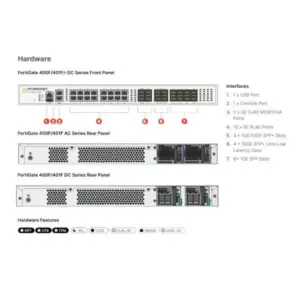
| Traffic interfaces | Exact quantity, speed, media type, supported optics, and bypass arrangement require model validation. |
| Management interfaces | Confirm physical management ports, console access, and out-of-band management design. |
| High availability | FortiDDoS family supports high-availability designs; final mode, appliance quantity, cabling, and failover behaviour must be planned. |
| Bypass protection | Availability and fail-open or fail-closed behaviour depend on interfaces, platform, modules, and deployment design. |
| DNS and NTP protection | Supported across the product family with model-specific capacity and feature differences. |
| IPv4 and IPv6 | Family supports both; confirm policy design, address scope, and software compatibility for the proposed network. |
| Reporting and integration | Attack logs, graphs, SNMP, syslog, email, and RESTful integration are available within the family; verify required targets and versions. |
| Storage | Exact internal storage is configuration dependent and must be confirmed by part number. |
| Power | Confirm AC or DC input, power-supply redundancy, plug type, PDU capacity, and UPS support. |
| Form factor | Rack dimensions, rail kit, airflow, weight, and clearance must be confirmed for the validated appliance. |
| Support and warranty | Select the required FortiCare term and replacement level; regional entitlement and service conditions vary. |
| Availability | Based on confirmed model, lifecycle, supplier status, order quantity, support bundle, and destination. |
The correct configuration is determined by the traffic that must be inspected and the topology through which that traffic flows. Start with normal and peak internet throughput, then add packets-per-second measurements, connection rates, DNS request levels, protocol mix, protected subnets, number of independent links, and expected growth. A device that appears adequate by gigabits per second may still be unsuitable for a high-rate small-packet attack. Conversely, buying only for an extreme theoretical bandwidth may create unnecessary cost if upstream circuits would saturate long before the appliance reaches its processing limit.
Physical connectivity deserves equal attention. Buyers should identify whether links use copper, multimode fibre, single-mode fibre, SFP, SFP+, QSFP, or another interface; whether existing optics are supported; whether bypass is required; and how the appliance will connect during maintenance or failure. FourTeck can review a network diagram and produce a configuration checklist so that hardware, optics, cables, rack items, support coverage, and implementation services are considered together.
Configuration and Buyer Guidance
A DDoS appliance should not be selected by comparing only a single throughput figure. The requirement should begin with a short technical discovery exercise that explains what must remain reachable, what traffic normally looks like, and what failure would cost the organisation. The questions below help turn a product enquiry into a deployment-ready scope.
What must be protected?
List public websites, APIs, VPN gateways, DNS servers, email services, customer portals, payment systems, cloud access paths, public address ranges, and any infrastructure whose loss would stop operations.
How large is normal traffic?
Provide average and peak bandwidth, packet rates, connection rates, protocol distribution, DNS query levels, seasonal peaks, planned application launches, and at least a reasonable future-growth estimate.
Where will it sit?
Show edge routers, firewalls, load balancers, upstream circuits, VLANs, link aggregation, redundant paths, and the proposed inspection point. Inline placement can affect maintenance and failure planning.
What happens during saturation?
If an attack is larger than the internet circuit, local mitigation cannot restore bandwidth already consumed upstream. Discuss provider filtering, diversion, cloud scrubbing, FlowSpec, or other hybrid arrangements.
What resilience is required?
Confirm high availability, bypass behaviour, dual power, separate PDUs, UPS runtime, replacement service, spare optics, maintenance windows, and the acceptable impact of appliance or link failure.
Who will operate it?
Identify administrators, escalation contacts, monitoring platforms, log destinations, incident procedures, reporting needs, training requirements, and responsibility for policy review after deployment.
The buyer should also decide whether the project includes installation, configuration, migration, testing, documentation, administrator handover, and post-deployment tuning. A complete quotation is easier to compare when it separates the appliance, subscriptions, support, optics, cables, accessories, implementation, travel, tax, and delivery. FourTeck can help structure these items so procurement teams understand both the initial purchase and the continuing operational cost.
Ideal Business Use Cases
FortiDDoS technology is most relevant where internet availability has measurable operational, financial, regulatory, or public-service importance. The following use cases show how the solution can fit into different environments without assuming that every organisation needs the same capacity or design.
Financial and Payment Services
Banks, payment processors, digital finance platforms, insurance portals, and transaction services may require uninterrupted customer access and clear incident evidence. A dedicated mitigation layer can protect public endpoints while security teams coordinate with providers and application owners.
Government and Public Platforms
Citizen portals, tax systems, licensing services, public information sites, and digital identity platforms can become visible disruption targets. Planning should include multiple agencies, upstream links, change controls, reporting duties, and service continuity procedures.
Education and Research Networks
Universities and research organisations may expose learning platforms, registration systems, repositories, DNS services, and collaboration tools. Traffic can vary sharply during registration, examinations, or public events, making accurate baseline and peak-capacity data important.
Data Centres and Hosting Providers
Shared infrastructure requires visibility across many protected tenants, subnets, applications, and service profiles. The design should consider segmentation, customer reporting, high availability, link aggregation, upstream mitigation, and operational separation between tenants.
Retail and E-Commerce
Online stores, customer apps, loyalty platforms, and payment paths can lose revenue and trust when unavailable. Seasonal peaks must be treated as legitimate demand, so the mitigation policy should distinguish promotions and campaign traffic from abnormal floods.
Telecom and Digital Service Operations
Providers supporting enterprise services, managed platforms, or regional digital products may use dedicated protection at selected data-centre or service edges. The architecture must align with routing control, customer separation, provider capacity, and the ability to escalate very large events upstream.
Healthcare and Critical Institutions
Hospitals, laboratories, public-health systems, and critical institutions increasingly depend on internet-facing appointment, communication, remote access, and data-exchange services. Availability planning should coordinate cybersecurity, clinical operations, privacy, and emergency procedures.
Large Multi-Site Enterprises
A central data centre may serve branches, remote workers, cloud connections, and shared applications. An attack against the edge can affect every location even when branch equipment remains healthy. Protection should be planned alongside SD-WAN, VPN, firewall, DNS, and provider connectivity.
Not every environment needs a physical appliance. Some organisations may be better served by a virtual model, an upstream provider service, cloud scrubbing, a managed arrangement, or a hybrid design. FourTeck can help compare these approaches according to bandwidth, risk, operational skill, budget, and the location of the protected applications.
FortiDDoS FDD-1200F Behaviour-Based Detection
Traditional security controls often depend on known signatures, fixed limits, or emergency access rules. DDoS traffic is difficult because malicious packets may use valid protocols, spoofed addresses, distributed sources, rapidly changing vectors, and request patterns that resemble legitimate demand. Behaviour-based detection addresses this by learning what is normal for a protected service and measuring current activity against that normal pattern across many parameters.
A baseline is not a single average. Useful baselining can consider direction, protocol, port, connection state, source distribution, destination behaviour, packet size, request rate, DNS characteristics, and other service-specific factors. When an attack starts, the platform can identify the abnormal parameter and apply mitigation while continuing to evaluate whether the condition still exists. Continuous evaluation matters because a fixed block may become unnecessary or harmful after the attack changes.
For the buyer, the practical benefit is reduced dependence on an expert being present at the exact moment an incident begins. It also supports more consistent treatment across nights, weekends, public holidays, and periods of heavy legitimate traffic. However, automation still needs preparation. Protected subnets, service profiles, thresholds, maintenance events, planned campaigns, and escalation procedures should be documented. Administrators need to understand how to review events and when to coordinate with application teams or the internet provider.
FourTeck recommends a staged deployment that observes normal traffic, confirms time and monitoring settings, validates interfaces, tests reporting, and introduces protection with change-control approval. This reduces the risk of treating an unusual but legitimate business event as an attack and gives teams confidence in the platform before it becomes a primary inline control.
FortiDDoS FDD-1200F Inline Performance and Continuity
An inline appliance sees traffic directly, allowing it to detect and mitigate without waiting for a separate diversion process. This can be valuable for short attacks, pulsed attacks, and attacks that switch vectors quickly. Inline operation also means the appliance becomes part of the production path, so performance and failure behaviour must be treated as architecture decisions rather than installation details.
The first performance question is inspected capacity under the type of traffic the organisation actually receives. Large-packet throughput and minimum-packet throughput can produce very different results. Buyers should compare normal bandwidth, peak bandwidth, packets per second, new connection rates, concurrent sessions, DNS traffic, and the size of the upstream circuit. The selected appliance should have operating margin for growth and attack conditions, but it should also be commercially reasonable within the limits of the provider link.
The second question is physical continuity. Bypass ports or external bypass arrangements can allow traffic to pass if the appliance loses power or experiences a failure, depending on the design. High availability can add protection against device failure but also adds appliances, interfaces, optics, cabling, rack capacity, power, licensing, and testing. Fail-open behaviour favours reachability but may allow unmitigated traffic during failure. Fail-closed behaviour favours control but can stop legitimate traffic. The correct choice depends on risk and operational policy.
FourTeck helps document these trade-offs before deployment. The design should show every physical link, fibre type, optic, bypass path, power feed, management connection, monitoring destination, and maintenance procedure. A clear diagram allows procurement, network, security, and data-centre teams to verify that the appliance can be installed without creating an unexpected single point of failure.
FortiDDoS FDD-1200F DNS, Reporting, and Operational Control
DNS is a frequent target and a frequent reflection mechanism because small requests can generate larger responses and public DNS infrastructure is essential to the reachability of many services. FortiDDoS family capabilities include inspection of DNS query and response behaviour, anomaly checks, rate analysis, and controls intended to reduce reflection and flood impact. The exact supported capacity and features must be confirmed for the validated appliance and software version.
Operational control extends beyond dropping packets. Security teams need to know which address or service was targeted, the direction of the traffic, the protocol and port involved, the time the event started, how it changed, what mitigation was applied, and whether legitimate traffic was affected. Dashboards, attack logs, historical graphs, alerts, scheduled reports, SNMP, syslog, email, and API integration help place the appliance within a wider monitoring and incident-response process.
Log retention should be planned carefully. The appliance may store local information, but organisations often need central records in FortiAnalyzer, FortiSIEM, a third-party platform, or an archive. Time synchronisation is critical because inaccurate timestamps make correlation difficult. Access control, administrator authentication, configuration backup, change records, and secure management networks should also be included in the implementation scope.
For buyers, these capabilities create long-term value only when teams can use them. FourTeck can help define required dashboards, alerts, log destinations, reporting recipients, and handover documentation. A useful deployment leaves the organisation with clear ownership, tested escalation paths, and enough knowledge to interpret events rather than simply installing another appliance in the rack.
What Buyers Should Check Before Purchase
Before requesting a final quotation, buyers should confirm that the product name represents the correct current appliance and not a similar Fortinet model from another category. The manufacturer part number is the commercial identity of the product. It determines hardware, interfaces, support entitlement, regional availability, and lifecycle position. FourTeck recommends sharing any existing bill of materials, tender reference, screenshot, previous quotation, or required specification so the model can be validated before procurement approval.
Configuration Fit
Confirm inspected throughput, packets per second, concurrent traffic, protected subnets, service profiles, DNS volume, interface count, interface speed, and growth headroom. Use measurements from the network wherever possible.
Compatibility Check
Verify router, firewall, load balancer, monitoring, fibre, transceiver, link-aggregation, IPv6, syslog, SNMP, API, rack, power, and UPS compatibility. Small accessories can delay a large security project.
Availability and Support
Ask whether the requested model is current, orderable, regionally supported, or replaced. Confirm the support term, response level, replacement method, start date, renewal expectation, and any entitlement registration steps.
Quote Preparation
Provide destination, quantity, required delivery date, organisation type, tax status, preferred currency, support duration, installation requirement, and technical contact. Include a network diagram and link details for accurate sizing.
Licensing and subscriptions should be separated from the base appliance. FortiDDoS can perform core mitigation without every optional reputation service, but a particular security policy may still require IP reputation, domain reputation, premium support, replacement services, or central management. The quotation should explain what each line item does, when it starts, how long it lasts, and what happens at renewal. This helps the buyer understand continuing cost instead of treating the first-year price as the full ownership cost.
Installation requirements should also be explicit. Confirm whether the work includes rack mounting, cabling, optics, base configuration, protected-network definition, learning period, policy review, high-availability setup, bypass testing, monitoring integration, acceptance testing, documentation, training, and post-deployment tuning. Identify who is responsible for router or firewall changes and whether the internet provider must participate.
Finally, ask for replacement guidance if the requested model cannot be supplied. A suitable alternative is not automatically the next model number. It must match capacity, interface media, bypass design, rack constraints, support policy, and budget. FourTeck can present a current option and explain the differences so procurement teams can make a documented decision.
Africa Availability and Service Support
FourTeck supports product enquiries across Africa with assistance for model validation, requirement review, quotation preparation, support selection, delivery coordination, and warranty guidance. Availability can vary according to the confirmed manufacturer code, lifecycle status, selected configuration, supplier allocation, support term, order quantity, import conditions, and final destination. For this reason, a quote request should include enough technical information to confirm the product before commercial terms are issued.
Regional projects often require more than shipping a box. FourTeck can help review the rack environment, power arrangement, optics, cabling, high-availability plan, management access, installation responsibility, and local technical resources. Where remote deployment support is proposed, the site should have a capable hands-on contact, tested out-of-band access, change approval, and a rollback plan. Where on-site support is required, timing and location must be included in the project scope.
Warranty handling depends on the manufacturer entitlement and service package. Buyers should register the appliance correctly, retain serial and purchase records, maintain active support where required, and understand the replacement process for their country. FourTeck can explain the available support choices without promising a response or replacement time that has not been confirmed in the applicable service terms.
Africa Country and Regional Coverage
Businesses across Africa, including Kenya, Uganda, Nigeria, Ghana, Tanzania, Rwanda, Ethiopia, South Africa, Zambia, Botswana, Senegal, and nearby markets, can contact FourTeck for availability review, configuration guidance, quotation assistance, and delivery planning. Coverage is coordinated according to the destination, order size, required support, project schedule, and import or logistics conditions.
A regional buyer should provide the delivery city and country, preferred Incoterm where applicable, consignee details, tax or exemption requirements, and any deadline linked to a tender, data-centre maintenance window, service launch, or security project. For multi-country projects, FourTeck can help standardise the technical bill of materials while identifying country-specific differences in power cords, logistics, support access, and local implementation resources.
Country coverage does not imply local stock or a branch in every market. Each enquiry is reviewed individually. The aim is to give buyers a clear route from technical requirement to validated product, commercial quotation, delivery coordination, and support guidance without repeating the same model selection process for every location.
GCC, Middle East and Africa Availability
FourTeck Africa can support product enquiries for businesses across Africa while coordinating wider technology requirements through relevant FourTeck platforms for GCC and Middle East markets. Organisations with operations in the UAE, Saudi Arabia, Qatar, Oman, Bahrain, and African countries may require consistent appliance standards, common support terms, coordinated logistics, and comparable deployment documentation across several sites.
Regional availability, delivery method, warranty handling, installation scope, tax treatment, and support access can vary by country. A central project team should therefore define the common technical standard and then review local requirements before ordering. This is particularly important for data-centre infrastructure, where power feeds, rack standards, fibre types, internet provider designs, and maintenance procedures may differ even when the same security architecture is intended.
Use FourTeck Africa for Africa-focused enquiries, FourTeck Kenya and FourTeck Uganda for relevant local market guidance, and FourTeck UAE for UAE and selected wider regional requirements. The appropriate team can help align the product request with the destination and project scope.
Other Options Buyers May Consider
Model selection should follow verified capacity, connectivity, lifecycle, and availability. The options below are not automatic substitutes; they are starting points for a technical comparison when the requested designation cannot be confirmed or supplied.
FortiDDoS 200F
A current family option for smaller protected links and enterprise environments. Compare inspected capacity, port media, bypass design, support, and expected growth before selection.
FortiDDoS 1500F
A higher-capacity appliance for enterprise data-centre use. Confirm interface pairs, optical bypass requirements, packet rate, rack space, and current ordering details.
FortiDDoS 1500F-LR
Designed for long-reach optical requirements within the family. Fibre type and transceiver reach must match the site rather than being chosen only from model description.
FortiDDoS 2000F
A larger appliance for higher-rate and multi-link environments. Evaluate upstream capacity, 10/40 Gigabit connectivity, bypass modules, high availability, and operational support.
FortiDDoS Virtual Appliance
A virtual option may suit selected environments with supported CPU, NIC, SR-IOV, and deployment architecture. External bypass and performance conditions require careful review.
Hybrid Cloud Mitigation
A hybrid design combines local detection and mitigation with upstream diversion when attacks threaten circuit capacity. Provider integration and operational ownership must be agreed in advance.
Why Buyers Choose FourTeck
Enterprise security procurement involves more than obtaining a price. The buyer needs confidence that the product identity is correct, the configuration fits the network, required accessories are included, support terms are understood, and delivery expectations are realistic. FourTeck approaches the request as a business infrastructure requirement rather than a simple catalogue transaction.
Assistance for enterprise hardware, security, networking, storage, power, and related infrastructure requirements.
Review of capacity, ports, optics, rack, power, high availability, management, and implementation needs.
A structured bill of materials that distinguishes appliance, support, subscriptions, accessories, services, and logistics.
Destination-aware planning for order quantity, shipment method, consignee requirements, and project schedule.
Help understanding support entitlement, registration, renewal, replacement level, and applicable regional conditions.
Current alternatives are reviewed against the real requirement rather than suggested only by model sequence.
FourTeck supports small specialist requirements as well as larger enterprise and project purchases. For a single appliance, the focus may be model validation and complete accessories. For a regional rollout, the focus may include standardisation, country-specific logistics, support alignment, implementation documentation, and staged delivery. In both cases, the objective is a clear scope that procurement, security, network, finance, and management teams can understand.
FourTeck does not assume stock, claim an unverified partnership status, or promise a support response that has not been confirmed. Availability and service conditions are checked as part of the quotation process. This practical approach helps buyers avoid wrong-model orders, incomplete bills of materials, incompatible optics, unrealistic delivery expectations, and unclear renewal obligations.
Frequently Asked Questions
What is this appliance used for?
It is intended to detect and mitigate distributed denial-of-service attacks that attempt to make networks, DNS services, applications, public portals, or internet resources unavailable. The platform operates as a specialised traffic-protection layer and complements firewalls, application security, monitoring, and upstream provider services.
Is the FDD-1200F model currently available?
Availability must be checked against the exact Fortinet order code and current lifecycle information. The designation supplied in the enquiry may require validation or replacement guidance. FourTeck can review the requirement and identify a current suitable option without assuming that a similarly numbered appliance has the same specifications.
Can FourTeck help size the correct appliance?
Yes. Share normal and peak bandwidth, packets per second, connection rates, protected subnets, DNS traffic, interface types, upstream circuit capacity, growth expectations, and a network diagram. FourTeck can use this information to review the suitable appliance range, connectivity, and high-availability requirements.
Does an on-premise appliance stop every size of attack?
It can mitigate traffic up to the limits of the appliance and available incoming bandwidth. If an attack fully saturates the provider circuit, legitimate traffic may be lost upstream before reaching the device. Large-risk environments should discuss provider filtering, traffic diversion, cloud scrubbing, or another hybrid mitigation arrangement.
What accessories may be required?
The project may need supported transceivers, fibre or copper cables, bypass modules, rack rails, power cords, PDUs, UPS capacity, management cables, high-availability links, and spare optics. Exact requirements depend on the validated appliance, physical topology, interface media, and resilience design.
Are support and subscriptions included with the hardware?
Support, replacement services, reputation subscriptions, and other entitlements may be separate order items. The quotation should show the duration and purpose of each line. FourTeck can help buyers select a suitable term and understand renewal expectations, registration, and regional service conditions.
Can it integrate with existing monitoring tools?
FortiDDoS family capabilities include SNMP, syslog, email alerts, reporting, and RESTful integration. Compatibility should be confirmed for the intended software version and monitoring destination. Buyers should define log retention, alert recipients, time synchronisation, access control, and incident workflow before deployment.
Is high availability recommended?
High availability is often considered where the protected services are critical and the appliance sits inline. The decision depends on acceptable downtime, bypass design, budget, rack space, power, port availability, and maintenance practice. A complete HA plan must include both appliances, licenses, cables, optics, and testing.
How do I request a quotation?
Send FourTeck the required quantity, destination, desired support term, delivery deadline, known part number, internet bandwidth, packet-rate data, protected services, interface details, network diagram, installation scope, and technical contact. This information helps the team validate the product and prepare a more accurate commercial response.
Can businesses request bulk or multi-country supply?
Yes. Bulk and regional enquiries can be reviewed for standard configuration, phased delivery, support alignment, destination requirements, and project documentation. Availability and commercial terms depend on quantity, country, lifecycle status, supplier position, and schedule, so early planning is recommended for multi-site projects.
Need Help Validating the Right FortiDDoS Appliance?
Share your model reference, network diagram, bandwidth, packet-rate expectations, interface requirements, support term, quantity, and delivery location. FourTeck can help confirm the product, review suitable current options, prepare the bill of materials, and coordinate the next commercial step.
Reviews
There are no reviews yet.