

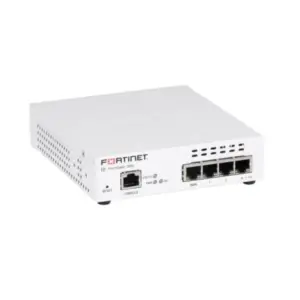
FortiExtender FEX-311F Cellular Gateway in Africa
Build a more resilient branch connection with an indoor CAT16 4G LTE platform that can serve as a primary wireless WAN, a backup link for fixed broadband, or an out-of-band path for remote network administration. The FEX-311F combines cellular flexibility, dual-SIM carrier choice, Gigabit Ethernet interfaces and Fortinet management integration in a compact desktop or wall-mountable design. FourTeck helps business buyers review carrier compatibility, FortiGate integration, support coverage, power accessories and delivery requirements before quotation.
✓ Dual Micro-SIM
✓ PoE or DC Power
✓ Fortinet Management
✓ Africa Quote Support
Request Quote
Check Africa Availability
Quick Product Information
Fortinet
FEX-311F
Indoor cellular WAN gateway and router
Single CAT16 3G/4G LTE modem
Two Micro-SIM (3FF) slots; SIM cards not included
Up to 1 Gbps downlink and 150 Mbps uplink under ideal conditions
1 GE RJ45 WAN, 1 GE SFP WAN and 4 GE RJ45 LAN
IEEE 802.3at PoE or optional 12V/2A adapter
Desktop or wall mounting, indoor use
Standalone, FortiGate-managed or supported cloud management
Subject to model, supplier, quantity and destination
FortiCare and management options selected separately as required
Product Overview
Many branch networks depend on a single fibre, DSL or microwave connection. When that circuit fails, users can lose access to payment systems, cloud applications, voice services, security monitoring and central management. A cellular WAN gateway adds a separate path that does not rely on the same last-mile infrastructure. The FEX-311F is built for this role, providing an indoor LTE connection that can be positioned where radio reception is stronger while linking back to the business network over standard Ethernet.
The unit contains one CAT16 LTE modem and two Micro-SIM slots. A single modem uses one carrier connection at a time, while the second SIM can provide carrier choice or a configured alternate service. This arrangement is useful when a business wants to move between data plans, select a stronger operator for a location, or prepare an alternative carrier without installing another gateway. Actual service depends on the local operator, supported frequency bands, signal quality, network congestion, data plan and deployment environment. The maximum radio rates are laboratory figures rather than guaranteed site throughput, so realistic planning should begin with coverage information and field testing.
Wired connectivity includes a Gigabit RJ45 WAN port, a Gigabit SFP WAN interface and four Gigabit LAN ports. One LAN port accepts IEEE 802.3at power, allowing the gateway to receive data and power over the same Ethernet run. That is valuable when the best LTE location is near a window, high on a wall or away from the main equipment cabinet. An optional 12V/2A power adapter can be used where PoE is unavailable. GPS/GNSS capability, external antennas, signal indicators, Bluetooth-assisted setup and a web interface support practical installation and troubleshooting.
The gateway can operate independently, but its strongest business fit is often within a Fortinet environment. It can be managed through a compatible FortiGate or supported cloud platform, subject to software version and service licensing. In an integrated design, the cellular link can become part of branch failover, SD-WAN policy, remote administration and security workflows. FourTeck assists buyers in mapping these capabilities to the actual requirement rather than treating the model number alone as a complete solution. The review can include FortiGate compatibility, LTE carrier bands, SIM strategy, cabling distance, PoE source, mounting location, support term, rollout quantities and replacement alternatives.
Key Business Benefits
The value of a cellular gateway is not limited to radio speed. It lies in giving the business another practical way to connect, recover and manage remote locations. The following benefits show how the hardware can support operational goals when it is correctly sized and deployed.
◆ More Resilient WAN Design
A cellular path can remain available when a fixed circuit, local trench, provider modem or building handoff fails. Used as a backup route, it helps selected business services continue while the primary connection is restored. The result depends on sound failover policy and independent carrier coverage, but the additional path can materially reduce reliance on one access technology.
◆ Faster Branch Activation
New sites often wait for fibre surveys, permits or civil work. LTE can provide an interim connection for essential systems while the permanent line is arranged. It can later move into a backup role, protecting the value of the initial purchase. This approach is especially useful for temporary offices, retail openings, field projects and relocated teams.
◆ Carrier Choice with Dual SIM
Two SIM slots let the organisation prepare services from different operators or data plans. Because this is a single-modem unit, the SIMs are not two simultaneous radios; one carrier connection is active at a time. Even so, planned SIM switching can improve flexibility when coverage, cost, quota or operator performance varies by site.
◆ Central Operational Visibility
Integration with compatible Fortinet management helps IT teams view link state, signal information and usage alongside other branch controls. A common operational view can simplify troubleshooting, policy changes and multi-site administration. The exact experience depends on the chosen FortiGate, firmware and cloud service arrangement.
◆ Flexible Placement for Better Signal
The gateway can be installed on a desk or wall and powered over Ethernet. This allows the radio hardware and antennas to be positioned closer to a window or other strong-signal area while the FortiGate and switching equipment remain in the secure cabinet. Better placement can reduce the need for long, lossy antenna cables.
◆ Practical Port and Power Options
Gigabit RJ45, SFP and LAN interfaces support several branch designs, while PoE input or optional DC power gives installers a choice. The four LAN ports can connect local equipment or provide direct paths to a high-availability firewall pair, subject to the final topology. These options help reduce unnecessary adapters and simplify physical deployment.
Product Highlights
The installed radio supports theoretical downlink rates up to 1 Gbps and uplink rates up to 150 Mbps. Actual results vary with frequency band, carrier network, signal level, plan, antenna position and congestion.
The modem is designed for broad regional use, but carrier approval and band support must still be checked for each country and operator before purchase or large rollout.
Two 3FF SIM slots support a primary and secondary carrier strategy. SIM cards and mobile data contracts are supplied separately by the buyer or telecom provider.
One Gigabit RJ45 WAN and one Gigabit SFP WAN interface provide useful flexibility for hybrid connections, upstream handoffs and branch architecture.
Multiple LAN interfaces enable direct device connections and can simplify links to FortiGate appliances, switches or local branch equipment.
The 802.3at PoE input can carry power and data through one cable. Installers should use a compliant source and follow local grounding and electrical requirements.
The product is intended for indoor operation from 0°C to 40°C. Outdoor, vehicle or harsh industrial projects require a model and enclosure designed for those conditions.
Front indicators show power, LTE mode, management state, extension status and signal level, helping technicians confirm basic operating conditions during setup.
Technical Specifications
| Specification | Details |
|---|---|
| Brand / Model | Fortinet FortiExtender FEX-311F |
| Product Type | Indoor broadband cellular WAN router and gateway |
| Internal Modem | One CAT16 LTE modem |
| Maximum Cellular Rate | Up to 1 Gbps downlink / 150 Mbps uplink under ideal conditions |
| Cellular Generation | 3G / 4G LTE; not a 5G model |
| SIM Slots | Two Micro-SIM (3FF) slots; one active cellular connection at a time on the single modem |
| WAN Interfaces | 1 × Gigabit Ethernet RJ45 WAN and 1 × Gigabit SFP WAN |
| LAN Interfaces | 4 × Gigabit Ethernet RJ45 LAN |
| PoE | IEEE 802.3at PoE powered, up to 25.5 W input design |
| Optional DC Power | 12V DC, 2A adapter; region-specific adapter may be sold separately |
| Antennas | Four external SMA antennas; GPS/GNSS service supported |
| Additional Interfaces | USB 2.0, console port, Bluetooth setup function, reset/default button and Kensington lock slot |
| Management | Standalone web management, compatible FortiGate management and supported cloud management, subject to firmware and licensing |
| Mounting | Desktop or wall mount |
| Dimensions | Approximately 46.5 × 190 × 199 mm, excluding antenna length |
| Weight | Approximately 0.933 kg |
| Power Consumption | Approximately 14.11 W average and 16.05 W maximum |
| Operating Temperature | 0°C to 40°C |
| Operating Humidity | 5% to 95%, non-condensing conditions required |
| Warranty / Support | Configuration dependent; confirm FortiCare term, replacement level and regional eligibility before order |
| Availability Note | Subject to current supplier status, country, quantity, support selection and product lifecycle |
How to Read These Specifications
The maximum LTE figures describe modem capability in favourable network conditions, not a guaranteed office speed. A site with limited spectrum, weak indoor signal or a congested carrier may deliver far less. Buyers should also separate dual-SIM from dual-modem terminology. This model has two SIM slots but one cellular modem, so it can select or fail over between SIM services rather than maintain two active cellular radios at the same time. Confirm the local band plan, carrier device policy and data package before deployment. Check whether the PoE source can provide IEEE 802.3at power, whether an SFP transceiver is needed, and whether a region-specific DC adapter should be included. Management features can depend on FortiOS, FortiExtender firmware, FortiCare or cloud entitlements, so the final bill of materials should cover hardware, services and accessories together.
Configuration and Buyer Guidance
A successful cellular deployment begins with the workload, not the modem headline. Identify which applications must remain available during a wired outage. A payment terminal, branch firewall management session and voice service need different bandwidth and latency from a full office using video meetings, large cloud files and software updates. Decide whether LTE will carry all traffic, only priority applications or only management traffic. This decision shapes the mobile data plan, failover policy and cost control.
Primary use demands closer attention to monthly data volume, sustained throughput and carrier capacity. Backup use requires tested failover, traffic priorities and a clear return-to-primary policy.
Check coverage at the exact building, supported LTE bands, device acceptance, static or private addressing needs, SIM activation and any restrictions on enterprise routers.
Confirm whether the gateway will run standalone, attach to a FortiGate, use LAN or WAN extension, or use a supported cloud platform. Include required subscriptions.
Plan signal testing, wall or desk mounting, cable route, PoE distance, ventilation, physical security and access for SIM replacement. This is an indoor device.
Define which VLANs and applications use LTE, whether updates are blocked, how VPNs reconnect and how users are informed. Test the policy before production reliance.
Review support duration, hardware replacement expectations, firmware access, technical assistance and the party responsible for mobile carrier troubleshooting.
For multi-site projects, standardise the antenna layout, SIM naming, cable labels, FortiGate templates, monitoring thresholds and spare strategy. One proof-of-concept site can reveal coverage differences, unexpected carrier NAT behaviour, data consumption and physical installation issues before a larger rollout. FourTeck can use the project information to prepare a clearer quotation and identify accessories or service items that are easily overlooked.
Ideal Business Use Cases
The gateway fits sites where fixed connectivity is unavailable, slow to install or too important to leave without an alternative path. Suitability still depends on carrier coverage and the traffic profile.
Retail and Point-of-Sale Continuity
Retail stores can use LTE to keep payment, stock lookup and central communications available when the primary circuit is interrupted. Traffic policies should prioritise transaction systems and limit non-essential downloads so the mobile plan is not consumed by background activity.
Branch Office Backup
Banks, professional services, healthcare administration, education offices and distributed enterprises can add an independent path for cloud access, VPN connectivity and remote support. The design should account for the number of users and applications expected to run during an outage.
Temporary and Rapid-Start Sites
Project offices, construction administration, pop-up service points and newly leased premises can begin operating before a fixed line is delivered. Once permanent broadband is active, the same gateway can remain as a failover device.
Out-of-Band Network Access
IT teams may use a cellular path to reach remote network equipment when the main WAN or routing policy is unavailable. A proper design isolates and secures this access, restricts management sources and ensures the cellular route does not become an uncontrolled bypass.
Remote Service and Monitoring Locations
Small depots, utility rooms, kiosks, ticketing points and monitoring stations may need connectivity without a conventional broadband service. The four LAN ports can support local devices, but environmental conditions must remain within the indoor specification.
SD-WAN Path Diversity
In a compatible Fortinet design, LTE can become an additional path alongside Ethernet services. Policies may steer selected applications according to link health, business priority and cost. This requires compatible FortiGate configuration and careful testing rather than a simple plug-in assumption.
FEX-311F LTE Performance and Signal Placement
CAT16 provides a strong theoretical ceiling for a 4G LTE device, but radio performance is a shared outcome between hardware and environment. The network must offer compatible carrier aggregation, adequate spectrum, suitable bands and sufficient capacity. The building must allow usable signal penetration, and the antennas must be placed correctly. A gateway hidden in a metal rack, basement or internal room can perform very differently from the same unit mounted near a window with clear separation from interference sources.
The PoE input supports this placement strategy. Instead of running long antenna leads from the communications cabinet, an installer can run Ethernet to the gateway and keep the radio close to the antennas. Long RF cables can introduce loss, especially at higher frequencies. Ethernet generally provides a more predictable way to extend the connection within its supported distance. The included mounting approach allows a desk or wall installation, while the signal LEDs give technicians an immediate indication during placement.
For a business rollout, measure more than a single speed test. Check signal stability at different times, latency, packet loss, upload performance, carrier failover behaviour and application response. Test with the same SIM plan intended for production, because consumer and enterprise plans may use different policies. Where multiple sites are involved, record the selected operator, antenna orientation, signal levels and observed throughput for each location. This creates a repeatable deployment standard and helps the support team distinguish a carrier problem from a firewall, cabling or device issue.
FEX-311F Dual-SIM Resilience and Data Control
Dual-SIM capability is often misunderstood. The two SIM slots provide two service identities and can support an operator-selection or failover strategy, but the FEX-311F has one cellular modem. It therefore does not deliver two simultaneous LTE links in the way a dual-modem appliance can. For many branches, that is still useful: the organisation can install services from two carriers, designate a preferred SIM and prepare a second option when coverage, quota or service quality changes.
A good SIM plan considers more than monthly price. Confirm data allowance, overage handling, throttling policy, roaming rules, public or private addressing, inbound connectivity, static IP availability, carrier-grade NAT and device restrictions. Out-of-band administration may require a private APN, VPN initiation or another method that works through the operator network. A backup SIM with no active data contract or an expired subscription does not provide meaningful resilience, so activation and renewal ownership should be documented.
Traffic control is equally important. During a wired outage, operating-system updates, cloud backups, guest Wi-Fi and video streaming can rapidly consume mobile data. A FortiGate or suitable router policy can prioritise transactions, voice, management and essential cloud applications while limiting lower-value traffic. Usage monitoring and alerts should be configured before an incident. FourTeck can help the buyer identify the questions that belong in the mobile carrier discussion and the network policy review, while the telecom operator remains responsible for SIM service, coverage and billing terms.
FEX-311F Fortinet Integration and Remote Management
The gateway can be configured through its own interface, yet many organisations select it because it can participate in a broader Fortinet branch design. When managed by a compatible FortiGate, the cellular connection can be presented within familiar network operations and used with routing, health checks, SD-WAN decisions and security policy. This reduces the need to treat the LTE device as a separate, unmanaged modem.
Integration does not remove the need for planning. Confirm the FortiGate model, FortiOS release, supported FortiExtender firmware and the intended extension mode. Decide whether the device will supply WAN connectivity to one firewall, a high-availability pair or local branch equipment. Establish how administrators will reach the site if the primary WAN is down, how logs and alerts are collected, and who has authority to change SIM or carrier settings. Cloud management may be appropriate for a fleet of sites, but the required entitlement, support service and feature availability should be confirmed in the final quotation.
Operational security also matters. Change default credentials, restrict management access, apply supported firmware, register the product under the correct organisation and protect the SIM compartment and device location. A cellular gateway should strengthen continuity without creating an unmanaged path around security controls. FourTeck can assist with product and licensing selection, while final implementation policies should be approved by the customer’s network and security team or qualified integrator.
What Buyers Should Check Before Purchase
Before requesting a quote, buyers should confirm the usage environment, carrier plan, management method, accessories and support expectations. This prevents a purchase that looks correct by model number but does not fit the actual site.
Configuration Fit
State whether LTE is primary, backup or management-only. Include expected users, critical applications, internet speed target and monthly data volume. Confirm that CAT16 4G, rather than 5G, matches the project.
Carrier Compatibility
Provide the country and preferred mobile operators. Ask the carrier about supported LTE bands, router approval, SIM size, APN details, static IP options, private networking and enterprise data plans.
Power and Cabling
Confirm an IEEE 802.3at PoE source or add the correct 12V/2A regional adapter. Specify whether an SFP module, Ethernet patch leads, PoE injector, surge protection or UPS connection is required.
Fortinet Compatibility
Share the FortiGate model, FortiOS version, HA design and intended WAN or LAN extension approach. Confirm any cloud management license and FortiCare term needed for the rollout.
Installation Environment
This is an indoor unit rated for operation from 0°C to 40°C. Review wall material, ventilation, signal location, cable route, physical security and access to the SIM bay.
Support and Lifecycle
Ask for current product lifecycle status, available FortiCare options, replacement service eligibility and firmware support. Older and newer FortiExtender generations may have different licensing and management paths.
Project Quantity
For bulk deployments, provide site count, delivery schedule, country split, standard accessories, lab-test requirements and spare-unit policy. A phased rollout may reduce deployment risk.
Alternative Model Review
A 5G requirement, outdoor site, vehicle installation or simultaneous dual-carrier need may point to another model. Share these requirements early so a suitable alternative can be quoted.
Africa Availability and Service Support
FourTeck supports product inquiries across Africa with assistance for model selection, configuration review, quotation and delivery coordination. Availability is not assumed from the product name alone. It may vary according to Fortinet lifecycle status, distributor inventory, support entitlement, quantity, destination, import requirements and the accessories included in the order. The team can review a current sourcing option and identify whether an alternative generation is more appropriate when the requested model is constrained.
Pre-sales support can cover the role of the gateway, expected traffic, LTE carrier choice, FortiGate compatibility, PoE power, SFP requirements, support term and rollout schedule. FourTeck can also help structure a bill of materials for multi-site projects so that gateways, power items, transceivers, cables and service coverage are considered together. Mobile SIM services and carrier contracts are normally arranged with the selected telecom operator and are not automatically included with the hardware.
Delivery coordination is based on the confirmed quotation and destination. Warranty handling and replacement processes depend on the purchased support service, regional eligibility and manufacturer terms. Buyers should request written confirmation of the applicable coverage before placing the order, especially for cross-border projects or installations in remote locations.
Africa Country and Regional Coverage
Businesses across Africa, including Kenya, Uganda, Nigeria, Ghana, Tanzania, Rwanda, Ethiopia, South Africa, Zambia, Botswana, Senegal and nearby regional markets, can contact FourTeck for product availability, configuration guidance and quote assistance. The same hardware model can behave differently from one market to another because LTE frequency use, operator certification, data-plan rules, import conditions and service coverage are not identical.
For a country-specific review, provide the intended network operator and deployment location rather than only the national market. Coverage maps are useful, but building construction, terrain, tower capacity and antenna placement affect the real result. Pilot testing is recommended for critical sites or large orders. Regional projects should also identify whether each site needs the same carrier, support term and power arrangement or whether the bill of materials must vary by destination.
FourTeck can coordinate the product inquiry and help compare suitable Fortinet options for branch connectivity, cellular backup and remote management. Final availability, freight, taxes, warranty handling and delivery timing are confirmed through the quotation process.
GCC, Middle East and Africa Availability
FourTeck Africa can support product inquiries for organisations operating across Africa while related FourTeck platforms assist selected requirements in GCC and Middle East markets. Businesses with sites in the UAE, Saudi Arabia, Qatar, Oman, Bahrain and African countries should share the full destination list, because carrier compatibility, regional power accessories, service eligibility and logistics may differ.
A cross-region standard should define the approved gateway model, acceptable carrier bands, FortiGate versions, mounting method, power source, support term and spare policy. Where one product cannot satisfy every environmental or radio requirement, a controlled set of alternatives may be more practical than forcing the same hardware into every site. FourTeck can help organise the product comparison and quotation, while the customer’s telecom providers confirm SIM service and coverage.
Other Options Buyers May Consider
The right alternative depends on radio generation, environment, carrier architecture and management model. The following links help buyers explore related categories and Fortinet solutions without assuming that every project should use the same gateway.
Fortinet Networking Solutions
Explore Fortinet products for branch, secure edge and managed network requirements.
Enterprise Routers and Gateways
Compare wired and wireless WAN platforms for primary access, failover and remote sites.
FortiGate Firewalls
Review firewall platforms that can integrate cellular WAN into branch security and SD-WAN policy.
Network Switches
Find managed switching and PoE options for branch access, segmentation and device connectivity.
Wireless and Branch Connectivity
Consider access points, controllers and connectivity accessories for a complete remote-site design.
Project Configuration Support
Ask for a model comparison when you need 5G, outdoor use, dual active radios or vehicle installation.
Why Buyers Choose FourTeck
Business technology purchases often fail at the boundaries between product, licensing, carrier service, accessories and deployment. FourTeck approaches the inquiry as a complete requirement rather than a single part number. The goal is to help the buyer identify what must be confirmed before the quotation is approved and the equipment is shipped.
Assistance for single-site purchases, branch rollouts, integrators and enterprise procurement teams.
Review of use case, FortiGate environment, power, ports, accessories and management requirements.
A structured quotation based on destination, quantity, support term and delivery priorities.
Planning support for regional destinations, subject to confirmed logistics and import conditions.
Clarification of FortiCare options, service term and regional replacement expectations before order.
Alternative review when the project needs 5G, rugged hardware, dual modem capability or a different lifecycle position.
FourTeck does not replace the mobile operator’s coverage assessment or the customer’s network design authority. Instead, the team helps connect procurement questions with the product information needed for a sound buying decision. This is especially valuable when an order includes multiple countries, support terms or Fortinet components.
Frequently Asked Questions
What is the FEX-311F used for?
It provides 3G/4G LTE connectivity for branch offices, retail sites, temporary locations and remote facilities. It can serve as a primary wireless WAN, a backup for fixed broadband or an out-of-band management path. The final role depends on network design, carrier coverage, data plan and FortiGate or standalone configuration.
Does this model support 5G?
No. The FEX-311F contains a CAT16 4G LTE modem and also supports relevant 3G fallback technologies where carrier networks still provide them. A project requiring 5G should be reviewed against a current 5G FortiExtender model, with attention to regional bands, ports, management licensing and environmental requirements.
Can both SIM cards be active at the same time?
The gateway has two Micro-SIM slots but one cellular modem. It can use one cellular connection at a time and switch between configured SIM services. Buyers who need two simultaneous mobile links, faster carrier failover or active-active cellular paths should ask FourTeck to review dual-modem alternatives.
Can FourTeck help confirm carrier compatibility?
FourTeck can review the published radio specifications and help identify questions for the selected operator. Final confirmation should come from the mobile carrier because band use, device approval, APN service, static addressing and coverage can vary by country, plan and network. A pilot test is recommended for critical or high-volume deployments.
Is a power adapter included?
The unit supports IEEE 802.3at PoE and an optional 12V/2A DC input. Region-specific power adapters may be ordered separately, depending on the supply package. Buyers should state whether a compliant PoE source is already available so the quotation can include the correct power item and plug type.
Can it be managed by a FortiGate?
Yes, the model is designed for integration with compatible FortiGate environments and can also operate in standalone or supported cloud-managed arrangements. Compatibility and available features depend on the FortiGate model, FortiOS release, FortiExtender firmware and service licensing. Share these details before order for a proper review.
Is the gateway suitable for outdoor installation?
The FEX-311F is an indoor product with an operating range of 0°C to 40°C. It should not be exposed directly to rain, dust, extreme heat or other outdoor conditions. Outdoor, industrial and vehicle projects should use a purpose-built rugged model or a professionally engineered enclosure that maintains the required environmental and radio performance.
Is the product available across Africa?
FourTeck accepts inquiries across Africa, but availability depends on supplier status, product lifecycle, quantity, support selection and delivery destination. The team will confirm the current sourcing position through a quotation. Buyers should avoid assuming immediate stock and should provide the planned deployment date, country and quantity.
What should I provide for a quotation?
Send the delivery country and city, quantity, preferred carrier, primary or backup role, current FortiGate model and software, required support duration, power preference, SFP requirement and expected deployment date. For multiple sites, include the country split and whether configuration, staging, lab validation or spare units are needed.
Can businesses request bulk or project supply?
Yes. FourTeck can prepare project quotations for branch rollouts, integrators, resellers and enterprise deployments. A phased schedule, standard accessory list, support term, site data and proof-of-concept plan can improve accuracy. Delivery timing and allocation are confirmed only after the sourcing route, quantity and commercial terms are agreed.
Need Help Planning Cellular WAN for Your Branch?
FourTeck can help you review current availability, LTE carrier requirements, FortiGate compatibility, power accessories, support coverage and delivery needs. Send the project details for a tailored business quotation.
Reviews
There are no reviews yet.