

Fortinet FortiADC FAD-1200F in Africa
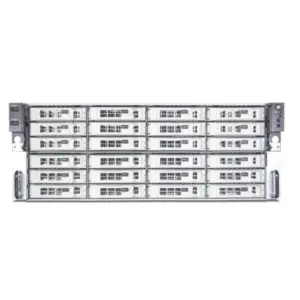
Build a more resilient application front end for critical websites, portals, APIs and business platforms. The FortiADC FAD-1200F combines high-capacity traffic distribution, SSL acceleration, application-aware control and layered protection in a rack appliance designed for demanding data-centre environments. FourTeck supports Africa buyers with configuration review, bundle selection, regional sourcing guidance and practical deployment planning.
✓ Hardware SSL Acceleration
✓ High-Availability Design
✓ Africa Quote Support
Request Quote
Check Africa Availability
Quick Product Information
Fortinet
FortiADC FAD-1200F
Application delivery controller
1U rack appliance
Up to 40 Gbps L4 / 30 Gbps L7
GE copper, GE SFP and 10GE SFP+
Data centres and critical application environments
Confirm model lifecycle and current options
Configuration and quote guidance
Africa and supported regional markets
Product Overview
Applications now sit at the centre of revenue, customer service, public-sector delivery, education, healthcare, logistics and internal productivity. When an application becomes slow or unreachable, the effect can spread quickly: users abandon transactions, staff lose access to systems, call centres face delays and technology teams spend valuable time tracing problems across servers and networks. An application delivery controller is placed between users and application servers to manage that pressure intelligently. It monitors service health, distributes requests, maintains sessions and helps keep traffic away from unavailable or overloaded resources.
The FAD-1200F is built for environments where a basic software load balancer may not provide the required throughput, interface density, SSL capacity or operational separation. Its published performance reaches up to 40 Gbps for Layer 4 traffic and 30 Gbps for Layer 7 processing. The interface layout includes eight Gigabit Ethernet RJ45 ports, eight Gigabit Ethernet SFP ports, eight 10 Gigabit Ethernet SFP+ ports and dedicated management connectivity. This combination gives infrastructure teams flexibility when connecting server networks, upstream switches, management segments and high-speed application paths.
The platform supports more than simple round-robin distribution. Organisations can use health checks, persistence, content-aware routing, SSL offloading, compression, global server load balancing, high availability and security features that may include web application protection, DDoS controls, IP reputation, malware inspection and related services depending on the selected license bundle and software release. The practical value is a controlled point for improving application reachability, response and visibility while reducing unnecessary processing on backend servers.
For Africa buyers, the main purchasing challenge is often not identifying the model name; it is confirming the complete working solution. Transceivers, fibre type, rack space, power redundancy, service subscriptions, support term, application design and local delivery requirements can materially change the order. Model lifecycle also matters because enterprise appliances can move between active sale, limited availability and replacement status. FourTeck therefore approaches this product as a reviewed infrastructure requirement. The team can help verify the requested part number, compare suitable current alternatives where necessary, prepare a structured quotation and coordinate delivery information for the destination country.
Key Business Benefits
A well-selected application delivery controller should improve business outcomes, not merely add another device to the rack. The following benefits explain how the FAD-1200F can contribute to a dependable application architecture when it is correctly sized, licensed and configured.
◆ Application Availability
Health monitoring and traffic distribution help keep users connected to responsive servers. When a server fails a defined health check, traffic can be directed to healthy resources, reducing the operational effect of a single application node failure.
◆ High-Capacity Delivery
Published throughput and connection handling make the appliance suitable for busy portals, transactional platforms and shared services where a smaller controller may create a bottleneck during peak demand or rapid user growth.
◆ Backend Server Relief
SSL offloading, compression and caching-related functions can move repetitive delivery work away from application servers. This helps preserve server resources for business logic, databases and user transactions.
◆ Flexible Connectivity
A mix of copper, SFP and 10GE SFP+ interfaces gives network teams practical choices for connecting different switching layers, fibre paths and server zones without forcing every link into one media type.
◆ Application Protection
Depending on licensing, integrated controls can help defend web applications against common attacks, abusive traffic and reputation-based threats. This adds a security layer close to the application delivery path.
◆ Central Visibility
Monitoring, logging and traffic insight help operations teams understand server health, connection behaviour and application events from a central control point rather than examining each server separately.
◆ Growth Planning
A high-capacity platform can support consolidation of multiple virtual services and planned traffic growth, provided the selected license, software features and architecture are aligned with the expected workload.
Product Highlights
The strongest reason to consider this appliance is the combination of traffic performance, dedicated interfaces and application-focused functions in a single rack platform. It is designed to sit in front of important services and make controlled decisions about where traffic should go, whether a server is healthy, how encrypted sessions are processed and which policies should apply.
Supports traffic distribution decisions across transport and application layers, helping match requests to appropriate backend resources.
Hardware-assisted encryption and decryption can reduce cryptographic workload on application servers and improve inspection visibility.
The platform can support local server balancing and global server load balancing designs for multi-site resilience and response planning.
Published figures include up to one million Layer 4 connections per second and large concurrent connection capacity under laboratory conditions.
Logical separation can help organisations host multiple application groups, business units or service environments on one platform.
High-availability functions and dual internal power supplies support designs that reduce dependence on a single delivery component.
Performance values are normally measured under controlled test conditions. Real results depend on packet size, enabled security services, cipher choice, traffic mix, software version, policies and surrounding infrastructure. Buyers should therefore size the solution using the busiest expected production scenario rather than the headline throughput alone.
Technical Specifications
| Specification | Published Detail | Buyer Note |
|---|---|---|
| Brand / Model | Fortinet FortiADC FAD-1200F | Confirm exact SKU and current lifecycle position. |
| Product Type | Hardware application delivery controller | For data-centre and critical application traffic. |
| Layer 4 Throughput | Up to 40 Gbps | Actual performance depends on traffic and enabled functions. |
| Layer 7 Throughput | Up to 30 Gbps | Size against real HTTP, HTTPS and policy workloads. |
| Layer 4 Connections per Second | Up to 1,000,000 | Laboratory figure; production design requires headroom. |
| Layer 7 Connections per Second | Up to 220,000 | Affected by content inspection and policy complexity. |
| Concurrent Layer 4 Connections | Up to 36 million | Confirm session profile and timeout requirements. |
| TLS / SSL Bulk Throughput | Up to 20 Gbps | Cipher suites and key sizes influence results. |
| Compression Throughput | Up to 20 Gbps | Use when appropriate for content and client behaviour. |
| Network Interfaces | 8 × GE RJ45, 8 × GE SFP, 8 × 10GE SFP+ | Transceivers and cables may be ordered separately. |
| Management Interfaces | 2 × GE RJ45 management, console and USB | Plan a secure out-of-band management network. |
| Memory / Storage | 32 GB RAM / 240 GB SSD | Published hardware configuration. |
| Virtual Domains | Up to 45 | Availability and limits can depend on software and licensing. |
| High Availability | Active-passive and supported HA options | Two appropriately licensed units may be required. |
| Power | Dual internal AC power supplies, 120/230V | Confirm power cords, PDU type and local electrical standard. |
| Operational Power | Approximately 251 W published | Allow rack cooling and UPS capacity margin. |
| Form Factor | 1U rack-mountable appliance | Verify rails, depth and service clearance. |
| Management | HTTPS, SSH, CLI, SNMP and API-related options | Integrate with logging and role-based administration. |
| Security Functions | WAF, DDoS, IP reputation, SSL inspection and related services | Feature access is license and software dependent. |
| Warranty / Support | Depends on chosen FortiCare or bundle term | Confirm entitlement, renewal and replacement terms. |
Throughput is only one sizing input. A deployment with many short SSL sessions may be limited by transactions per second before it reaches bulk throughput. A deployment using complex Layer 7 rules, WAF inspection, compression or multiple security services will behave differently from a simple Layer 4 pass-through design. The right model should be selected using peak traffic, connection rate, concurrent sessions, certificates, expected growth, resilience target and the exact services that will be enabled. FourTeck can help organise these inputs for quotation and model review.
Configuration and Buyer Guidance
An ADC purchase should begin with an application map. List every service that will sit behind the appliance, the user groups that access it, the protocols involved, the expected peak traffic and the consequence of an outage. This provides a far stronger basis for sizing than using daily bandwidth averages. A customer portal may have low average utilisation but experience a sharp peak at payment time, registration opening or month end. The controller must handle those moments with enough margin for inspection and failover.
1. Workload Profile
Confirm HTTP, HTTPS, TCP, UDP, API, DNS or other application traffic, together with peak bandwidth and connection rates.
2. Security Services
Decide whether WAF, IP reputation, DDoS controls, malware inspection, bot protection or other licensed services are required.
3. Resilience Target
Define whether the design needs one appliance, an HA pair, dual upstream switches, redundant power paths and multi-site failover.
4. Network Fit
Review VLANs, routing, BGP or OSPF needs, interface speeds, fibre types, SFP modules and management segmentation.
5. Operations
Plan administrator roles, logs, monitoring, backups, change control, certificate renewal and integration with existing tools.
6. Commercial Scope
State the required support term, bundle type, delivery country, quantity, preferred currency and installation expectations.
Buyers should also examine compatibility with existing firewalls and server architecture. The ADC may be deployed one-arm, two-arm, routed, transparent or in another supported topology. Each approach changes cabling, addressing and failure behaviour. Certificate ownership is another practical issue: identify who manages certificates, where private keys may be stored and which security policies govern renewal. Where hardware security modules are used, integration support should be reviewed early.
Finally, confirm whether the requested FAD-1200F is still the correct commercial choice for a new project. A technically suitable appliance can still be a poor purchase if support duration, replacement availability or future software access does not match the organisation’s planned service life. FourTeck can help compare the requested model with available FortiADC alternatives while preserving the performance, interface and feature requirements that led to the original selection.
Ideal Business Use Cases
The appliance is most relevant where application access directly affects service quality, revenue, operational continuity or regulatory responsibility. It should not be selected simply because it is a large model. The following use cases illustrate environments where its capacity and feature set may be justified after proper sizing.
Financial and Transaction Platforms
Banks, payment providers, insurance portals and fintech platforms may use ADC services to distribute encrypted sessions, maintain application responsiveness and support controlled failover across server pools.
Government and Public Services
Citizen portals, tax systems, licensing services and shared government applications can benefit from health-aware delivery, high connection scale and security controls around externally accessible services.
Universities and Education
Registration portals, learning platforms, student information systems and digital libraries often face concentrated demand at predictable periods. Load balancing helps spread those peaks across available resources.
Healthcare Networks
Hospital groups and health platforms can use application delivery controls to support dependable access to portals, scheduling, internal web systems and integration services, subject to privacy and security design requirements.
Telecommunications and Service Providers
Providers operating large subscriber-facing systems may require high connection rates, multiple virtual services, operational separation and high-speed links between application and network zones.
Enterprise Shared Applications
Large organisations can consolidate delivery for ERP portals, HR services, intranet platforms, customer applications and APIs while maintaining policies, visibility and separate virtual domains.
Multi-Site Disaster Recovery
Global server load balancing can support designs where services are available from more than one data centre, directing users according to health, location, latency or defined operational policy.
E-commerce and Digital Services
Retail, booking, logistics and online service platforms can use application delivery controls to improve resilience during campaigns, seasonal peaks and business-critical transaction periods.
FortiADC FAD-1200F Traffic Management and Workload Handling
Traffic management is the central job of an ADC, but the quality of that management depends on how well the device understands service health and application behaviour. The FAD-1200F can distribute connections using supported algorithms and policies, maintain session persistence where users must return to the same server and perform health checks that go beyond a basic ping. A server may respond to the network while its application process is failing; application-aware checks help detect that distinction.
For a buyer, the important question is how traffic decisions map to the real application. A stateless API may allow requests to move freely across servers, while an older business application may require persistence based on cookies, source address or another method. Some services need content routing so requests for a particular hostname, path or service type are sent to a specialised pool. These rules can improve efficiency, but they also add processing and administrative complexity. The solution design should remain understandable enough for the operations team to support.
Connection rate matters as much as bandwidth. A platform serving large file downloads may push high throughput with relatively few sessions. A login service, payment gateway or mobile API may create many short connections and TLS handshakes. The published connection and SSL figures help indicate the class of workload the appliance can address, but headroom should be reserved for traffic bursts, maintenance events and failover. In an HA design, one unit may need to carry the full production load if its peer is unavailable.
Good workload handling also depends on surrounding systems. Backend servers need sensible capacity, database services must respond quickly, DNS must be reliable and network paths must not be oversubscribed. An ADC cannot repair a fundamentally underpowered application, but it can provide stronger distribution, faster failure isolation and a structured control point for improving the complete delivery path.
FortiADC FAD-1200F SSL Acceleration and Application Protection
Encrypted application traffic protects users and data, but it creates processing work and can hide threats from controls that cannot inspect the session. SSL offloading allows the ADC to terminate or process encrypted connections according to the chosen design, reducing repeated cryptographic work on backend servers. The appliance can then establish protected server-side connections where required. This architecture may improve server efficiency and provide a central location for certificate and cipher policy, but it must be implemented with strong key handling and change control.
Buyers should calculate SSL demand using transactions per second, key type, cipher suites and session behaviour, not only total encrypted throughput. Modern applications may use short-lived API calls that create frequent handshakes. Other systems maintain long sessions and place less pressure on transaction capacity. Security policy can also affect performance: inspection, WAF rules, signature checks and reputation controls add value but consume resources. A realistic sizing exercise models the combined service set that will run in production.
Application protection options vary by bundle and release. Depending on entitlement, FortiADC can provide web application firewall functions, adaptive learning, protection aligned with common web attack categories, DDoS controls, IP reputation, intrusion prevention, malware-related services, credential stuffing defence and advanced bot controls. These capabilities should be selected according to actual risk. An internal application with limited users may need a different policy from a public payment portal exposed to automated attacks.
An ADC security layer does not remove the need for secure code, patched servers, identity controls, firewalls, monitoring and incident response. It complements those controls by applying protection close to the application flow. FourTeck can help buyers identify the license bundle they are requesting and make the commercial scope clear so essential services are not assumed to be included when only the base hardware is quoted.
FortiADC FAD-1200F Resilience, Visibility and Operational Control
Application delivery infrastructure becomes part of the critical path. For that reason, resilience must be designed around the appliance rather than assumed from the presence of redundant components. The FAD-1200F supports high-availability approaches, while dual internal power supplies allow connection to separate power distribution paths. A robust design may also use redundant upstream and downstream switches, separate management access and an HA peer sized to carry production traffic during a failure or maintenance window.
Monitoring is equally important. Operations teams need visibility into real-server health, virtual service status, connection volume, latency, SSL activity, policy events and security alerts. Logs should be sent to appropriate external systems so evidence remains available if the appliance is replaced or becomes unavailable. Role-based access should separate day-to-day application administration from sensitive platform and security changes. Configuration backups and a documented recovery process reduce the time required to restore service after an error.
Virtual domains can help separate services, departments or customers on one platform, but they require governance. Teams should decide who owns each virtual service, how IP addresses are allocated, how certificates are renewed and how changes move from testing to production. Naming standards and documentation are especially useful when dozens of applications share the same appliance. Without them, a powerful controller can become difficult to manage even when its hardware capacity remains sufficient.
Operational control also includes lifecycle planning. Software updates, vulnerability notices, certificate expiry, support renewals, spare components and replacement models should be tracked before they become urgent. The FAD-1200F may be requested for an existing standard, expansion or replacement project, but every new quotation should confirm whether the model and support term can cover the required service horizon. FourTeck can assist with that commercial and technical verification.
What Buyers Should Check Before Purchase
Before requesting a quote, buyers should confirm the required configuration, usage environment, compatibility needs, support expectations and delivery location. An enterprise ADC is a solution made from hardware, software entitlement, support, optics, cabling and architecture. Choosing only by model name can lead to missing licenses, insufficient interfaces, unsuitable power accessories or a platform whose lifecycle does not match the project.
Configuration Fit
Share peak Layer 4 and Layer 7 throughput, connections per second, concurrent sessions, SSL transactions, number of virtual services and expected growth. Include every security and acceleration function that will be enabled.
Compatibility Check
Confirm switch interfaces, fibre type, SFP or SFP+ modules, VLAN design, routing protocols, server addressing, firewall placement, certificate handling, monitoring tools and rack dimensions.
Availability and Support
Ask whether the quote covers base hardware, a security bundle, FortiCare, replacement entitlement and software access. Confirm the model’s current supply status and available support duration.
Quote Preparation
Provide the destination country, quantity, AC or DC preference, required term, currency, delivery target, end-user type and whether professional configuration or installation assistance is expected.
HA Architecture
For critical services, determine whether two units are needed. Check HA licensing, switch diversity, heartbeat links, session synchronisation, failover testing and capacity when one appliance carries the full load.
Lifecycle and Alternatives
Do not assume an older project specification remains the best new purchase. Ask for a current replacement recommendation when support horizon, software access or hardware availability is uncertain.
Accessories deserve separate attention. High-speed optical ports require compatible transceivers and fibre patching. Rack installation may require rails, appropriate depth and front-to-back airflow clearance. Dual power supplies only provide meaningful redundancy when connected to separate protected circuits or PDUs. UPS capacity should include the appliance, attached switches and enough runtime for controlled continuity. Buyers should also plan management access, serial console availability and secure storage for configuration backups.
Long-term cost includes more than the purchase amount. Subscription renewals, support terms, spare optics, maintenance labour, energy, cooling, HA capacity and future migration all affect the investment. A complete quote should clearly identify hardware part numbers, included services, term length and exclusions. This makes comparison easier and reduces surprises after delivery.
Africa Availability and Service Support
FourTeck supports product inquiries across Africa with assistance for product selection, configuration review, quote preparation, delivery coordination and warranty guidance. Availability may vary according to the exact part number, selected service bundle, power version, supplier position, model lifecycle, support term and order quantity. For this reason, the page does not present an unverified stock promise or fixed delivery time.
A useful inquiry should include the intended application, peak traffic, required interfaces, number of appliances, license bundle, support duration and destination. FourTeck can use this information to clarify whether the requested FAD-1200F remains available for the project or whether a newer FortiADC model should be considered. Where an alternative is proposed, the comparison should preserve the important requirements: Layer 4 and Layer 7 performance, SSL scale, interface type, HA design, security functions and management approach.
Delivery coordination can include commercial documentation, destination details and order planning, but import charges, taxes, local compliance and final transport conditions depend on the country and agreed quotation. Warranty handling also depends on the support entitlement and channel terms attached to the supplied product. Buyers should request those details in writing before approval.
Africa Country and Regional Coverage
Businesses across Africa, including Kenya, Uganda, Nigeria, Ghana, Tanzania, Rwanda, Ethiopia, South Africa, Zambia, Botswana, Senegal and nearby regional markets can contact FourTeck for availability checks, configuration guidance and quote assistance. The team can help buyers organise project requirements, review suitable models, identify required licenses and prepare supply information according to the destination and order scope.
Regional projects often involve different electrical standards, import procedures, currencies, delivery routes and support expectations. A multi-country customer may also need consistent part numbers and security bundles across branch locations. FourTeck can help structure the inquiry so each site receives a comparable solution while allowing for local delivery and deployment conditions. Availability is confirmed through the quotation process rather than assumed from a general product listing.
GCC, Middle East and Africa Availability
FourTeck Africa can support product inquiries for organisations across Africa while coordinating wider technology requirements through selected FourTeck platforms serving GCC and Middle East markets. This can be useful for companies with regional headquarters, data centres, subsidiaries or standardised infrastructure across more than one territory.
Requirements may involve Africa locations as well as the UAE, Saudi Arabia, Qatar, Oman and Bahrain. Product availability, delivery arrangements, support entitlement, warranty handling and configuration services can differ by country, supplier and order value. Each quotation should therefore state the intended destination and end-user requirement clearly. No branch stock or local inventory is implied unless it is confirmed in the formal offer.
For multi-region projects, buyers should request consistent documentation for hardware SKUs, license bundles, support start dates, power cords, optics and deployment assumptions. This reduces the risk of receiving similar-looking equipment with different commercial entitlements. Regional coordination is especially valuable when a shared application platform must follow one security and availability standard across several sites.
Other Options Buyers May Consider
The correct alternative depends on whether the priority is higher current lifecycle confidence, more throughput, fewer interfaces, virtual deployment or application security depth. The models and solution categories below are starting points for discussion, not direct one-for-one replacements. Final selection should be based on measured traffic, SSL demand, virtual services, connectivity and required subscription features.
FortiADC 1000G
A current-generation FortiADC option to review for high-performance deployments requiring modern hardware and 10 Gigabit connectivity.
FortiADC 2000G
Suitable for discussion where the project requires more throughput, higher SSL scale or faster 25G and 40G interface options.
FortiADC 420F
A smaller hardware choice for workloads that do not need the FAD-1200F connection scale or interface density.
FortiADC Virtual Appliance
An option for virtualised or cloud-oriented environments where flexible deployment is preferred over dedicated hardware acceleration.
FortiWeb Application Security
Consider a dedicated web application security platform when WAF depth and application protection are the primary project drivers.
FortiGate Data-Centre Firewall
Useful as a complementary security layer when the wider design also requires segmentation, threat prevention and controlled network access.
Why Buyers Choose FourTeck
Enterprise application infrastructure is rarely purchased successfully from a one-line request. Buyers need a supplier that can read the requirement, identify missing commercial elements and ask practical questions before an incorrect product reaches the data centre. FourTeck supports that process for SMB, enterprise, public-sector, education, healthcare, service-provider and project buyers.
Review of requested model, part number, supply route and available alternatives.
Assistance organising traffic, SSL, interfaces, HA, licensing and accessory requirements.
A clearer commercial scope showing hardware, support term, licenses and important exclusions.
Support preparing destination and order details for regional supply inquiries.
Explanation of support entitlement and replacement terms provided with the quoted offer.
Comparison with newer or differently sized products when the original request needs adjustment.
FourTeck does not need to claim that every model is always available to provide value. The useful service is accurate requirement handling. When supply is uncertain, the team can help the buyer understand whether to continue with the requested appliance, adjust the support bundle or evaluate another FortiADC platform. That protects the project from last-minute substitutions that do not match the original design.
For large orders and formal projects, buyers can share a bill of materials, topology, tender specification or technical schedule. FourTeck can use that information to structure the product discussion and identify related needs such as optics, racks, switches, UPS capacity, firewalls and professional services. The result is a more complete procurement conversation rather than an isolated appliance quote.
Frequently Asked Questions
What is the FortiADC FAD-1200F used for?
It is used to manage and protect traffic flowing to business applications. The appliance can distribute connections across servers, check application health, maintain sessions, process SSL traffic and support acceleration and security functions. It is intended for demanding data-centre environments rather than basic office routing.
Is the FAD-1200F available in Africa?
Availability must be confirmed for the exact hardware SKU, power version, license bundle and support term. Supplier status and model lifecycle can change. FourTeck can review the requested configuration, check current sourcing options and recommend a suitable replacement model when the original part is not practical for a new deployment.
Can FourTeck help choose the correct license bundle?
Yes. Buyers should state whether they need core delivery functions, network security, web application protection, bot controls, advanced analytics or other licensed services. FourTeck can help make the requested bundle and term clear in the quotation so the buyer understands which services are included and which require separate entitlement.
Does the appliance include SFP and SFP+ transceivers?
Transceivers should not be assumed to be included with the base appliance. The required modules depend on link speed, fibre type, distance and switch compatibility. Buyers should provide the intended interface plan so suitable optics, fibre patch cords or copper connections can be identified as separate line items where necessary.
How many units are needed for high availability?
Critical deployments commonly use two compatible appliances in an HA design, but the exact architecture depends on the required failover behaviour and licensing. The surviving unit should have enough capacity to handle production traffic during failure or maintenance. Switch, power and management redundancy should also be included in the design.
Will the published 40 Gbps performance be achieved in every deployment?
No. Published values are measured under controlled conditions. Actual performance varies with packet size, connection rate, SSL cipher, WAF rules, security services, compression, logging, software version and traffic mix. Buyers should size the appliance using their busiest realistic workload and reserve margin for growth and failover.
Can this ADC support multiple applications or departments?
Yes, it can host multiple virtual services and supports virtual domain capabilities for logical separation, subject to software and configuration limits. Each application should have defined ownership, health checks, certificates, server pools and change procedures. Clear naming and documentation become increasingly important as more services share the platform.
What information is needed for a quotation?
Provide the destination country, quantity, required AC or DC version, support term, license bundle, peak L4 and L7 traffic, SSL transaction demand, interface plan, HA requirement, project timeline and any installation support needed. A topology or existing bill of materials is also useful for complex deployments.
Can FourTeck suggest a newer alternative?
Yes. If the requested model has limited availability or does not provide the required support horizon, FourTeck can help compare current FortiADC hardware or virtual options. The replacement discussion should match throughput, connection scale, SSL capacity, interfaces, licensing and HA requirements rather than relying on product generation alone.
Can businesses request bulk or project supply?
Yes. Organisations can submit multi-unit, multi-site or tender requirements. Include the required quantities, deployment countries, common configuration, support term and delivery schedule. FourTeck can assist with structured quote preparation and related infrastructure needs, subject to supplier availability, commercial approval and the conditions stated in the final offer.
Need Help Selecting the Right Application Delivery Platform?
Share your traffic profile, SSL requirements, interfaces, license needs, support term and delivery location. FourTeck can review the FAD-1200F request, clarify current availability and prepare a suitable Africa quotation or replacement recommendation.
Reviews
There are no reviews yet.