

Fortinet FortiADC FAD-200F in Africa
The FortiADC FAD-200F Application Delivery Controller helps organisations distribute client requests across application servers, improve service continuity and manage encrypted traffic from a dedicated network appliance. It is intended for business environments where web portals, ERP systems, online services, databases, collaboration platforms or customer-facing applications must remain responsive even when traffic patterns change or an individual server becomes unavailable. FourTeck supports buyers with model verification, configuration review, sourcing guidance, replacement-model discussion and regional quotation assistance.
Request QuoteCheck Africa Availability
Quick Product Information
Fortinet
FortiADC 200F / FAD-200F
1U application delivery controller
L4-L7 traffic distribution and application availability
Data centres, enterprise server rooms and hosted application environments
Gigabit RJ45 and SFP connectivity; confirm supplied revision
Contact FourTeck for current sourcing options
Firmware, licensing and service coverage must be verified
Product Overview
Modern business applications are often delivered from several servers, virtual machines or service nodes rather than one isolated system. That architecture improves capacity and resilience only when incoming connections are directed intelligently. An application delivery controller sits between users and the server pool, accepts client requests, evaluates configured policies and sends each session to an appropriate backend resource. It can also monitor server health, stop forwarding traffic to an unhealthy node and restore that node to service when it becomes available again.
The FAD-200F was designed for this role in small and mid-sized enterprise application environments. Its published hardware class combines Layer 4 and Layer 7 load balancing, SSL handling, traffic management, application acceleration and security functions in a rack-mount appliance. For a buyer, the value is not simply a throughput figure. The appliance can create a controlled front door for business systems, reduce direct exposure of individual servers, apply consistent delivery rules and help applications continue serving users when maintenance or server failure affects one member of a pool.
Typical deployments place the controller in front of web servers, portal servers, business applications, API endpoints or other TCP and HTTP services. Virtual servers present the service address to clients, while real-server pools contain the backend systems. Health checks evaluate whether each server is ready to receive traffic. Persistence rules can keep a user connected to the same application node when session state requires it, while content-routing policies can direct requests according to host names, URLs, source information or other configured criteria.
This model is especially relevant when an organisation already operates the appliance, needs a compatible spare, is expanding a matched environment or has a procurement requirement tied to an existing standard. New projects should also compare current FortiADC models because hardware generations, available bundles, performance levels and software support evolve. FourTeck can help buyers establish whether the requested part number remains the right fit or whether a newer appliance offers a cleaner lifecycle and support path.
For Africa buyers, good selection depends on more than the product label. Power conditions, rack space, fibre and copper interfaces, available transceivers, server-network design, delivery lead time, service entitlement and local implementation skills can all influence the project. FourTeck helps translate those factors into a structured request so technical teams and procurement teams review the same requirement before a quotation is approved.
Key Business Benefits
An application delivery project succeeds when users receive dependable access and administrators gain practical control. The following benefits explain how this appliance class can support business operations when it is sized, licensed and configured correctly.
◆ Better Service Availability
Health monitoring and server-pool control can remove failed nodes from active rotation, helping users reach healthy application resources instead of repeatedly connecting to an unavailable server.
✓ Balanced Server Utilisation
Traffic-distribution methods help spread connections across available systems so one server is less likely to carry the full demand while other resources remain underused.
↗ Application Growth Support
A server pool can be expanded as workload grows. Adding suitable backend nodes may be more practical than replacing one very large server whenever demand increases.
🔒 Centralised SSL Handling
SSL offload planning can move selected cryptographic work away from application servers, simplify certificate handling and create a consistent control point for encrypted service delivery.
⚙ Controlled Traffic Decisions
Layer 7 policies can make routing decisions using application information, enabling more precise handling than simple destination-based forwarding when the design requires it.
● Easier Planned Maintenance
Administrators can remove a server from the pool, perform maintenance and return it to service without changing the public application address or interrupting every user.
These benefits depend on sound architecture. A controller cannot correct an application that stores session data only on one server without a persistence plan, nor can it replace backups, database replication or disaster recovery. It should be treated as one part of a complete availability design that includes resilient servers, network paths, power protection, monitoring, security policy and operational procedures.
Product Highlights
L4-L7 Load Balancing
Supports connection-level and application-aware distribution methods for TCP, HTTP and HTTPS services, allowing administrators to match policy depth to the application.
Health Monitoring
Checks backend service status and can keep failed or unresponsive servers out of active rotation until they pass the configured health test again.
SSL Services
Provides SSL processing capabilities that can support certificate centralisation, offload and encrypted application delivery when correctly configured.
Traffic Acceleration
Compression and connection-handling features can reduce avoidable application overhead and improve the delivery path for suitable workloads.
Application Security Functions
FortiADC software can provide web application, IP reputation, DDoS and access-control capabilities depending on the release, entitlement and selected services.
Administrative Access
Management options commonly include HTTPS, SSH command line, console access and SNMP, supporting both direct administration and monitored operations.
Published performance figures are laboratory maximums rather than a promise for every deployment. Real results vary with connection size, cipher choice, inspection functions, persistence, content rules, logging, health-check frequency, traffic mix and software version. Buyers should size the appliance against the busiest expected period and leave operating headroom for growth, maintenance events and unexpected traffic bursts.
Technical Specifications
| Area | Published FAD-200F Detail | Buyer Note |
|---|---|---|
| Brand / Model | Fortinet FortiADC 200F, order code FAD-200F | Confirm label, revision, serial status and included accessories. |
| Product Type | Hardware application delivery controller | Designed for rack deployment in the application traffic path. |
| L4 / L7 Throughput | Up to 3 Gbps / 2.2 Gbps | Actual performance changes with policy, traffic and software settings. |
| L4 Connections per Second | Up to 100,000 | Use connection-rate data, not bandwidth alone, for sizing. |
| L4 HTTP Requests per Second | Up to 300,000 | Request size and application behaviour affect practical results. |
| Concurrent L4 Connections | Up to 5 million | Session duration can make concurrency more important than peak bandwidth. |
| L7 Connections per Second | Up to 25,000 under stated test conditions | Content rules and persistence add processing work. |
| SSL CPS / TPS | Up to 1,000 with published 2K-key test profile | Modern cipher and key choices may produce different results. |
| SSL Bulk Encryption | Up to 1 Gbps | Review encrypted traffic percentage and certificate design. |
| Compression Throughput | Up to 1.5 Gbps | Compression value depends on content type and client behaviour. |
| Memory / Storage | Published configurations list 4 GB memory and 64 GB SSD | Verify the supplied appliance rather than relying only on listing text. |
| Network Interfaces | Published ordering references list 4x GE RJ45 and 4x GE SFP | Confirm optics, cable type, port plan and appliance revision. |
| Management | HTTPS, SSH CLI, console CLI and SNMP | Restrict management access and back up configuration securely. |
| Form Factor | 1U rack-mount appliance | Check rack depth, airflow, rail or shelf needs and service access. |
| Power | AC appliance; power-supply arrangement is configuration dependent | Confirm cords, voltage, UPS capacity and redundancy requirement. |
| Availability | Previous-generation model; current sourcing must be confirmed | A current FortiADC model may provide a stronger lifecycle path. |
Choose the correct configuration by measuring the application rather than matching a model number to internet speed. Gather peak and average throughput, new connections per second, concurrent sessions, HTTP request rate, SSL transaction rate, certificate type, backend server count and expected growth. Then document the required functions: simple Layer 4 distribution, Layer 7 content routing, persistence, compression, WAF controls, global load balancing, link balancing, high availability and central management. Each enabled function changes the processing profile. For a previous-generation appliance, also verify software support, upgrade path, replacement parts and entitlement transfer rules. Where those points cannot be confirmed, a current model may reduce operational risk even when the older appliance appears less expensive at purchase.
Configuration and Buyer Guidance
A useful quotation starts with a clear application map. List every service that will pass through the controller, including public websites, internal portals, APIs, mail services, ERP interfaces or remote access gateways. Record the front-end protocol and port, the number of backend servers, health-check method, session behaviour and the consequence of downtime. This prevents a generic hardware request from overlooking application-specific requirements.
Traffic Profile
Provide peak bandwidth, requests per second, new connections, concurrent sessions, encrypted-traffic percentage and seasonal peaks.
Application Behaviour
Confirm whether the application is stateless, needs cookie persistence, uses long-lived sessions, WebSockets, large uploads or special headers.
Network Integration
Map VLANs, routing, firewalls, public addresses, DNS, server subnets, fibre optics, copper ports and high-availability links.
Lifecycle Position
Verify supported software, security updates, FortiCare eligibility, hardware condition, replacement availability and migration options.
Buyers should also define who will configure and operate the appliance. Application delivery involves collaboration between network, security, server, application and DNS teams. Decide who owns certificates, who approves routing changes, who monitors health alarms, who performs failover tests and who restores configuration after a fault. Include professional services in the request when the internal team does not routinely deploy load balancers.
Finally, request a bill of materials rather than an appliance-only price. The complete requirement may include power cords, SFP transceivers, fibre patch leads, rack accessories, support entitlement, security services, installation, migration assistance, documentation and administrator training. A lower hardware price can become a higher project cost when essential items are discovered after delivery.
Ideal Business Use Cases
This platform class is most useful where several backend resources deliver one business service and the organisation needs a controlled method for availability, traffic distribution and encrypted access. The following examples show practical situations rather than universal guarantees.
Customer Web Portals
Distribute website sessions across multiple front-end servers, monitor service health and maintain one published service address for customers and partners.
ERP and Business Applications
Provide a managed application entry point for multi-node ERP, finance, workflow or document systems when the application architecture supports load balancing.
E-Commerce Services
Balance shopping, account and transaction traffic while using persistence and health checks suited to the platform’s session design.
Hosted Application Platforms
Support managed service providers or private-cloud teams that deliver several applications and need clear separation between client-facing services and backend pools.
API and Integration Endpoints
Route TCP or HTTP API traffic to available nodes, apply health checks and use content rules where host, path or header information should influence selection.
Maintenance-Friendly Server Pools
Drain or disable individual servers for patching and upgrades while other pool members continue carrying the service, subject to application design.
The appliance is not automatically suitable for every small website. A cloud-managed load balancer, virtual appliance, reverse proxy or current hardware ADC may be more appropriate depending on scale, skills and lifecycle requirements. Conversely, an enterprise application with complex encryption, many concurrent sessions or high availability across sites may require a larger model. FourTeck can help position the request within those choices instead of treating every application as the same workload.
FortiADC FAD-200F Traffic Distribution and Health Monitoring
Load balancing begins with a virtual service that accepts client connections and a pool that contains the real application servers. The controller selects a pool member using the configured method, such as round robin, weighted distribution, least connection or another supported rule. The correct method depends on whether the servers have equal capacity, whether sessions are short or long, and whether one node should receive more traffic than another.
Health monitoring protects the service from sending new sessions to a server that is powered on but unable to deliver the application. A simple ping only proves that an address responds. A better monitor may open the application port, request a specific URL, inspect a response string or perform another service-level test. Buyers should define what “healthy” means for each application. An HTTP 200 response from a login page may be useful, while a database-backed system may require a more meaningful check that confirms dependencies are working.
Persistence is another important design choice. Some applications store user state locally on the selected server. Those services may need cookie, source-address or another persistence method so later requests return to the same node. Other applications externalise session state and can distribute requests more freely. Using persistence without understanding the application can create uneven load, while omitting it can break user sessions. The implementation team should test login, upload, checkout, report generation and other stateful workflows before production cutover.
Business value comes from predictable behaviour during failure and maintenance. Test what happens when a backend service stops, when one network path fails, when a certificate expires and when a pool member is intentionally disabled. A controller that has never been tested under fault conditions may appear healthy until the first real incident. FourTeck can help buyers include testing and handover expectations in the deployment scope.
FortiADC FAD-200F SSL Services and Application Acceleration
Encrypted traffic is now normal for business applications, but it increases processing work and certificate-management responsibility. SSL offload allows the controller to terminate selected client encryption, apply delivery policy and forward traffic to backend servers using encrypted or unencrypted connections according to the approved architecture. This can reduce duplicate certificate work across servers and create a central point for protocol and cipher configuration.
The design must still protect sensitive data. Re-encryption may be required between the controller and servers when traffic crosses shared networks, regulated environments or untrusted segments. Certificate private keys should be protected, access to the appliance should be restricted, and renewal ownership must be documented. Buyers should confirm certificate type, key length, chain requirements, automation method and expected SSL transactions per second because cryptographic workload can become the limiting factor even when network throughput appears sufficient.
Connection reuse, compression and caching-related functions can improve delivery for appropriate traffic, but each feature should be validated against the application. Compression adds value for compressible text content and much less for images or files already compressed. Aggressive connection reuse can change how backend servers log clients. Header manipulation can help application integration but also requires careful testing. Acceleration should be used to remove measurable bottlenecks rather than enabled as a generic checklist.
For this older appliance, modern encryption requirements deserve special attention. Confirm that the intended FortiADC release supports the protocols, ciphers, certificate algorithms and client compatibility required by the organisation. A current replacement may be preferable where policy demands newer cryptographic standards, a longer update lifecycle or greater SSL capacity. FourTeck can help frame that review before the buyer commits to a hardware-only offer.
FortiADC FAD-200F Security, Visibility and Administration
An application delivery controller operates in a sensitive position because it handles client sessions and can see application traffic. Administrative security should therefore be treated as part of the project. Use dedicated management networks where possible, restrict administrator source addresses, apply role-based access, change default credentials, use named accounts and maintain configuration backups. Logs should be sent to an appropriate monitoring platform when retention and investigation matter.
FortiADC software includes application-protection and traffic-security capabilities, but the available functions depend on software release, bundle and entitlement. Features may include web application controls, IP reputation, denial-of-service protections, application access functions and integration with the wider Fortinet environment. Buyers should not assume that every feature is active on every used or hardware-only appliance. Request written confirmation of licenses, service expiry, transferability and update access.
Visibility is valuable for operations as well as security. Connection statistics, server health, response behaviour and traffic trends can help administrators detect a failing pool member, a capacity problem or an unexpected application pattern. Monitoring thresholds should be meaningful. An alert that fires continuously becomes background noise, while a threshold that is too high may miss early warning. The team should document normal traffic, define escalation levels and identify who responds to server, network, certificate and appliance alarms.
Administration also includes change control. Before modifying a virtual server, pool, health check or routing policy, record the current state and maintain a rollback plan. Back up configuration after approved changes and before software upgrades. High availability, when deployed, must be tested rather than assumed. FourTeck can help buyers identify whether the quotation should include configuration, migration, validation, documentation and administrator handover in addition to the appliance.
What Buyers Should Check Before Purchase
Before requesting a quote, confirm why this exact model is required. A buyer replacing a failed unit in a matched high-availability pair has different priorities from a new project selecting an ADC for the first time. Existing environments may depend on configuration compatibility, interface layout or a known software version. New deployments should compare current FortiADC hardware and virtual options because support lifecycle, performance, energy use and available service bundles can outweigh the lower purchase cost of an older appliance.
Configuration Fit
Share peak throughput, connection rate, concurrent sessions, SSL profile, server count, virtual services, persistence needs and expected growth.
Compatibility Check
Confirm rack space, power, airflow, copper and fibre ports, transceivers, VLAN design, routing, firewall policy, DNS and backend-server support.
Availability and Warranty
Ask whether the unit is new, refurbished or used, what warranty applies, whether FortiCare is eligible and what replacement path is offered.
Quote Preparation
Provide destination, quantity, timeline, condition preference, support term, accessories, installation scope and whether a current alternative is acceptable.
Inspect the total lifecycle cost. Include support, security subscriptions, electricity, rack space, optics, spare power supplies, professional services, software upgrades, administrator time and future migration. A unit without active entitlement may be unable to obtain required updates or vendor assistance. A refurbished unit may be appropriate for a lab or short-term continuity need but unsuitable for a critical customer service unless the organisation has accepted the risk and established a spare strategy.
Also clarify the high-availability design. Two appliances do not automatically deliver resilient service. The network must provide independent paths, synchronized configuration, tested failover, suitable address handling and enough capacity for one appliance to carry the full load during maintenance. Share the current topology and expected recovery behaviour with FourTeck so the commercial response can include the right hardware, accessories and implementation discussion.
Africa Availability and Service Support
FourTeck supports application-delivery and enterprise networking inquiries across Africa with assistance for requirement review, current availability checks, quotation preparation, delivery coordination and warranty guidance. Because this appliance belongs to an earlier FortiADC generation, availability may depend on remaining supplier inventory, refurbished channels, project returns or compatible replacement options. The offered condition and support position should be stated clearly before the order is approved.
Buyers can ask FourTeck to compare the requested unit with current FortiADC hardware or virtual appliances. The review can consider performance, SSL workload, interface requirements, software lifecycle, high availability, rack constraints and budget. This is helpful when an older part number appears in a tender or existing asset list but the operational team would benefit from a supported replacement with a longer lifecycle.
Delivery coordination can include destination review, quantity, packaging expectations, import documentation discussion and communication about accessories. Actual delivery options vary by country, supplier route, product condition, order size and project schedule. Warranty handling also depends on the source, entitlement and agreed commercial terms. Buyers should request written confirmation rather than assuming that a hardware label automatically includes active vendor support.
Africa Country and Regional Coverage
Businesses across Africa, including Kenya, Uganda, Nigeria, Ghana, Tanzania, Rwanda, Ethiopia, South Africa, Zambia, Botswana, Senegal and nearby regional markets, can contact FourTeck for product verification, configuration guidance and quote assistance. The team can help central procurement groups gather a consistent technical requirement for several offices while allowing delivery, warranty and implementation details to be reviewed for each destination.
Regional projects often require more than identical hardware. Internet links, data-centre standards, available optics, power quality, rack design, implementation partners and support expectations can differ from one site to another. FourTeck can help buyers prepare a common core specification covering application traffic, security, entitlement and lifecycle, then identify site-specific accessories or deployment services. This approach is more useful than repeating the same product request for every location without checking local conditions.
For multi-country supply, share the legal purchasing entity, delivery destinations, quantity per site, desired timeline, condition requirement and whether the organisation accepts a current replacement model. Early information helps the team review sourcing routes and produce a clearer commercial response.
GCC, Middle East and Africa Availability
FourTeck Africa can support inquiries from organisations whose infrastructure and procurement activities connect Africa with GCC and Middle East operations. Businesses managing data centres, service platforms or regional offices in UAE, Saudi Arabia, Qatar, Oman, Bahrain and African markets may need consistent application-delivery standards while using different commercial and delivery routes.
A regional review can align model selection, performance targets, software policy, support expectations, spare strategy and migration planning. Availability and warranty handling can vary by country, product condition, supplier source, entitlement and order quantity. The correct response may be the requested FAD-200F for compatibility, a newer FortiADC appliance for lifecycle reasons, or a virtual deployment for flexible infrastructure.
Buyers should identify the destination of each unit, preferred invoicing route, project timeline, rack and power requirements, acceptable condition and whether implementation support is needed. FourTeck platforms serving Africa, Kenya, Uganda and the UAE can guide the inquiry to an appropriate regional path without claiming local inventory until it has been confirmed.
Other Options Buyers May Consider
A previous-generation ADC should be compared with current models and related infrastructure before purchase. The right alternative depends on traffic, SSL load, interface speed, service bundle, lifecycle and whether the requirement is hardware replacement or a new architecture. The following options provide useful starting points for discussion.
FortiADC 220F
Current entry hardware option to review for stronger lifecycle, updated platform features and modern bundle availability.
FortiADC 320F
Suitable for projects needing greater L4-L7 and SSL capacity, more headroom or faster interfaces than entry-level models.
FortiADC 420F
Worth considering for demanding encrypted services, higher throughput and environments that require hardware acceleration.
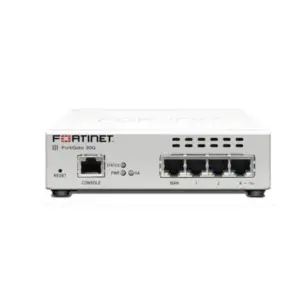
FortiGate 50G
Compact Fortinet security appliance for branch firewall and secure SD-WAN needs rather than dedicated application delivery.
FortiExtender FEX-212F
Cellular WAN option for resilient branch connectivity where application access depends on alternative internet paths.
FortiGate FG-3500G
Enterprise firewall platform for large data-centre security and segmentation projects that may sit beside an ADC.
Why Buyers Choose FourTeck
Application delivery products sit at the intersection of networking, security, servers and business applications. FourTeck helps buyers structure the requirement across those areas rather than treating the appliance as an isolated box. This is useful for procurement teams that receive a part number but still need to confirm condition, lifecycle, entitlement, accessories and implementation scope.
Review model naming, published hardware details, condition and whether a current replacement should be considered.
Turn traffic, SSL, server-pool and network information into a clearer appliance-sizing discussion.
Prepare a commercial request that covers hardware, support, accessories, services, destination and quantity.
Review destination requirements and communicate available supply routes without unsupported stock promises.
Clarify warranty and entitlement based on the actual offered condition and source.
Compare current FortiADC models and associated firewall, connectivity or implementation requirements.
FourTeck supports SMB, enterprise, reseller, integrator and project inquiries. The team can work from a detailed bill of materials or help buyers develop one from the operational need. Clear information at the beginning reduces incorrect model selection, missing optics, unsuitable support terms and rushed lifecycle decisions.
Frequently Asked Questions
What is the FAD-200F used for?
It is a hardware application delivery controller used to distribute client traffic across backend servers, monitor service health, support SSL handling and apply Layer 4 or Layer 7 delivery policies. It is relevant to multi-server web applications, portals, ERP systems, APIs and hosted services where availability and controlled traffic distribution are important.
Is the FortiADC 200F still a current model?
It is a previous-generation model and is not part of Fortinet’s current main hardware ordering line. Availability may therefore be limited or dependent on remaining, refurbished or secondary-channel units. Buyers should confirm software support and compare a current FortiADC model before approving a new deployment.
Can FourTeck help select a replacement?
Yes. FourTeck can review throughput, SSL demand, interface requirements, server count, high-availability design, software lifecycle and budget to discuss current FortiADC alternatives. The closest choice should be based on workload rather than model numbering alone.
Does the appliance include security services?
FortiADC software supports several application-security and traffic-protection capabilities, but active features depend on the software release, license bundle and service entitlement. Ask the supplier to document what is included, the expiry date, transfer eligibility and update access before purchase.
Can it be used in a high-availability pair?
FortiADC deployments can support high-availability designs, but the exact compatibility, software version, licensing and network topology must be checked. Two units should be matched appropriately, and failover should be tested with enough capacity for one appliance to carry the service during maintenance or failure.
What information is needed for a quote?
Share delivery country, quantity, condition preference, application list, peak throughput, connection rate, concurrent sessions, SSL profile, interfaces, server count, high-availability requirement, support term, accessories and installation scope. Mention whether a newer equivalent is acceptable.
Does published throughput equal real application performance?
No. Published values are measured under defined laboratory conditions. Practical performance changes with traffic mix, packet and request size, SSL ciphers, persistence, content rules, logging, security features, software version and network design. Size the appliance with realistic measurements and operating headroom.
Can FourTeck coordinate delivery across Africa?
FourTeck can assist with regional inquiry handling, current availability review, quote preparation and delivery coordination. Options vary by destination, supplier route, product condition, quantity and timeline. Current confirmation is required before the buyer assumes inventory or a delivery date.
What accessories may be required?
The project may need power cords, rack hardware, compatible SFP transceivers, fibre patch leads, copper cabling, a UPS, management connectivity and spare components. Exact accessories depend on the supplied revision, rack design and network interface plan, so request a complete bill of materials.
Can businesses request several units for a project?
Yes. Project buyers, resellers and multi-site organisations can request quantity-based sourcing and replacement-model guidance. Provide the required condition, destination per unit, deployment schedule, support expectations and whether all appliances must use the same revision and software release.
Need Help Choosing the Right Application Delivery Platform?
FourTeck can review FAD-200F availability, hardware condition, software and support requirements, current FortiADC alternatives, accessories, delivery needs and deployment scope for your organisation.
Reviews
There are no reviews yet.