
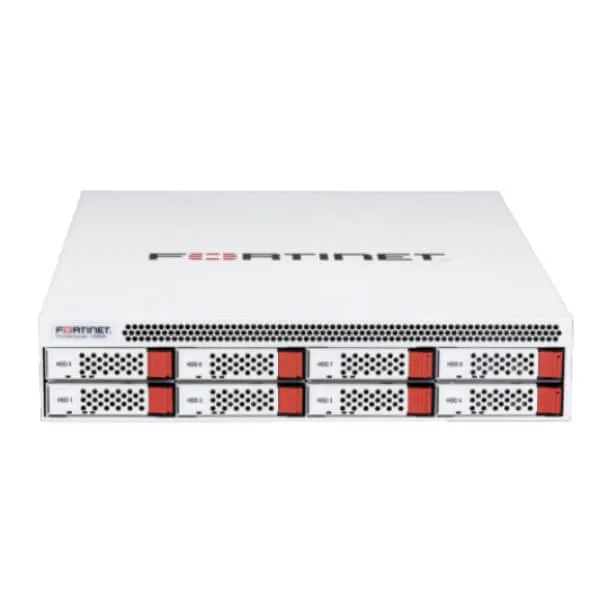
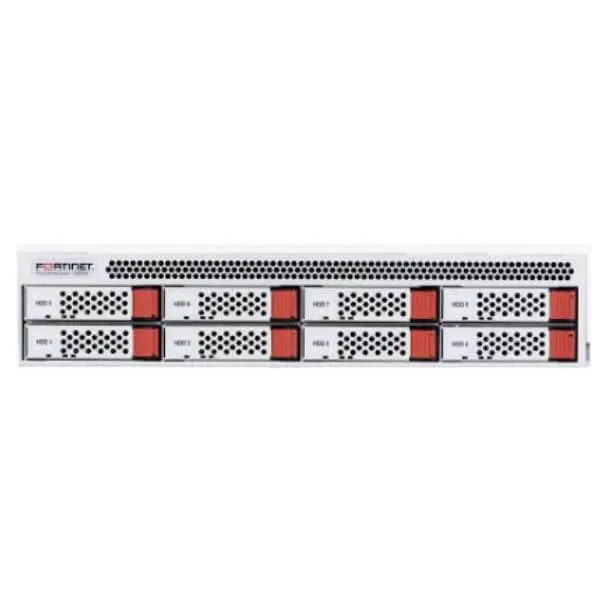
FortiAnalyzer FAZ-1000G Log Appliance in Africa
The FortiAnalyzer FAZ-1000G gives enterprise security teams a dedicated platform for centralized log collection, event analytics, reporting, investigation, automation, and long-term operational visibility. It is intended for organizations whose firewalls, branches, cloud connections, endpoints, email security systems, web protection platforms, and other Fortinet components produce more telemetry than a small logging appliance can manage comfortably. FourTeck supports buyers with sizing, service selection, rack and power planning, delivery coordination, and quotation assistance so the appliance is matched to the real environment.
✓ 32 TB SED Storage
✓ Hardware RAID
✓ Redundant Power
✓ Configuration Support
Quick Product Information
Product Overview
Security devices generate a continuous record of what is happening across the business network. Firewall sessions, malware events, web access, VPN activity, configuration changes, email threats, application use, administrator actions, endpoint alerts, and cloud traffic can all become valuable evidence when a security team needs to investigate an incident or explain a pattern. Without a suitable central platform, those records remain spread across separate appliances, age out too quickly, or become difficult to search during an urgent response.
The FAZ-1000G is designed to bring that information together. It receives and stores security telemetry, creates searchable analytics, supports reporting, and gives operational teams a more coherent view of events across Fortinet deployments. This is particularly useful for organizations with many firewalls, virtual domains, branches, data centers, or customer environments. A central log appliance can help the security operations team move from isolated device checks toward structured monitoring, investigation, compliance reporting, and incident handling.
Capacity is one of the main reasons to consider this model. Fortinet lists support for up to 660 GB of logs per day, an analytic sustained rate of up to 20,000 logs per second, a collector sustained rate of up to 30,000 logs per second, and a maximum of 2,000 devices or VDOMs. These are vendor laboratory figures rather than guaranteed real-world results, so buyers should size the appliance using measured or estimated telemetry from their own environment. Event volume can change sharply when additional inspection is enabled, new branches are connected, retention is extended, or verbose logging is turned on.
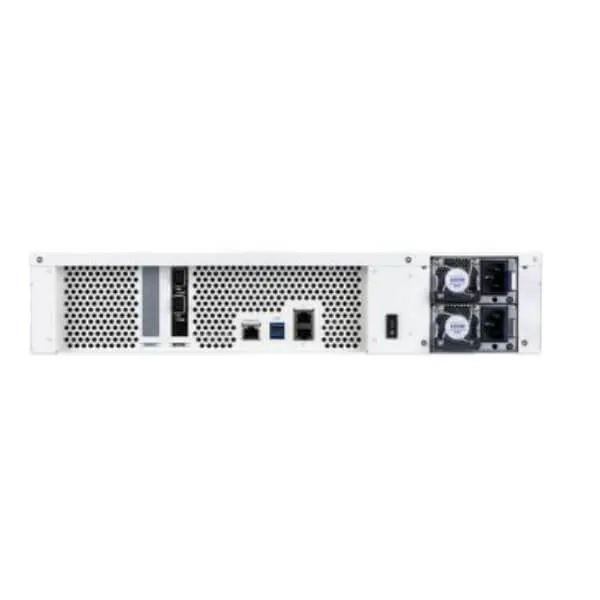
The hardware platform combines eight 4 TB self-encrypting SAS drives with hardware RAID and hot-swap capability. The default RAID 50 layout provides 24 TB usable capacity after RAID. Dual hot-swappable power supplies, removable drives, a trusted platform module, and front-to-back airflow make the appliance suitable for professional rack environments where serviceability and operational continuity matter. Connectivity includes two 2.5GbE RJ45 interfaces and two 25GbE SFP28 interfaces, giving infrastructure teams options for management, log transport, and high-speed network integration.
For Africa buyers, a correct purchase involves more than confirming the model number. The security team should define average and peak log rates, retention policy, number of devices, reporting scope, high-availability expectation, backup method, support term, subscription services, rack depth, cooling, power feed, optics, and delivery timeline. FourTeck can help organize these requirements before quotation so procurement, infrastructure, and security stakeholders have a clearer shared plan.
Key Business Benefits
A logging platform creates value when it helps people make better security decisions, preserve useful evidence, and reduce the time required to understand an event. The following benefits explain how the appliance can support business operations when it is sized, licensed, and deployed correctly.
◆ Centralized Visibility
Collecting logs in one platform helps analysts see activity across branches, security domains, data centers, and cloud-connected environments. This reduces dependence on separate device interfaces and gives the team a more consistent place to investigate alerts, review changes, and build reports.
✓ Faster Investigation
When an incident occurs, teams need to reconstruct what happened, where it began, which systems were involved, and what actions followed. Searchable historical telemetry and event context can shorten that process and help analysts move from a single alert toward a wider timeline.
● Scalable Log Handling
The stated daily capacity and sustained rates give larger organizations room to centralize significant telemetry volumes. Correct sizing can reduce the risk of choosing a small platform that reaches its ingest or storage limit soon after new sites, policies, or devices are added.
⚙ Operational Efficiency
Reusable reports, event handling, automation options, and a consolidated operational view can reduce repetitive manual work. This matters for security teams that must support many sites or customers without expanding headcount at the same rate as infrastructure growth.
🔒 Protected Storage Design
Self-encrypting SAS drives, hardware RAID, hot-swappable disks, and a trusted platform module support a more resilient storage foundation. These capabilities help infrastructure teams plan for disk service, data protection, and controlled appliance operation.
↗ Business Continuity Planning
Redundant power and FortiAnalyzer high-availability options can support designs where log continuity is important. A complete continuity plan should also include backups, network path resilience, change control, capacity monitoring, and tested recovery procedures.
◆ Reporting and Governance
Structured reports can help technical leaders, auditors, and management teams understand security activity over time. Reporting does not replace policy or process, but it can provide evidence for reviews, incident follow-up, service monitoring, and internal governance.
Product Highlights
These headline figures are most useful when they are connected to an actual logging plan. Daily volume is not the same as peak event rate, and usable storage is not the same as guaranteed retention time. Retention depends on the type of logs, compression, analytics settings, database growth, archive policy, event peaks, and operational overhead. The maximum analytics-day figure stated for this appliance is based on continuous receipt at the sustained analytics rate and can increase when the average rate is lower.
Subscription and service options can extend the operational value of the platform. Available options include indicators of compromise and outbreak detection services, SOC automation, enterprise and hardware bundles, operational technology security services, security rating and compliance capabilities, threat intelligence platform services, FortiAI assistance, and SOC monitoring services. Exact entitlements, terms, prerequisites, and renewal costs must be confirmed for the selected order code.
Technical Specifications
| Specification | FAZ-1000G Details | Buyer Note |
|---|---|---|
| Brand / Model | Fortinet FortiAnalyzer FAZ-1000G | Confirm hardware and service order codes. |
| Product Type | Centralized logging and analysis appliance | Designed for on-premises security operations. |
| Daily Log Capacity | Up to 660 GB/day | Measure average and peak volumes before selection. |
| Analytic Sustained Rate | Up to 20,000 logs/second | Vendor sustained test figure. |
| Collector Sustained Rate | Up to 30,000 logs/second | Relevant for collector-mode architecture. |
| Devices / VDOMs | Maximum 2,000 | Device mix and log rate still control final sizing. |
| Maximum Analytics Days | Up to 60 days under stated sustained-rate basis | Lower average volume may extend retention. |
| Form Factor | 2U rackmount | Check rack depth, rails, airflow, and service clearance. |
| Network Interfaces | 2 × 2.5GbE RJ45; 2 × 25GbE SFP28 | Optics and cabling are requirement dependent. |
| Raw Storage | 32 TB using 8 × 4 TB 3.5-inch SAS SED HDDs | Self-encrypting removable drives. |
| Usable Storage | 24 TB after default RAID | Retention must include operational overhead. |
| RAID Support | RAID 0, 1, 5, 6, 10, 50, 60 | Default level is RAID 50. |
| RAID Type | Hardware RAID; hot-swappable | Plan replacement-disk procedures and monitoring. |
| Power Supplies | Redundant hot-swappable AC power supplies | Use separate protected feeds where possible. |
| Trusted Platform Module | Supported | Supports appliance security architecture. |
| Dimensions | 3.46 × 17.24 × 24.41 in; 8.8 × 43.8 × 62.0 cm | Allow rear cabling and front service space. |
| Weight | 49.6 lb / 22.5 kg | Use appropriate rack handling procedures. |
| AC Input | 100–240 VAC, 50–60 Hz, 4 A maximum | Verify PDU connector and local electrical standard. |
| Power Consumption | 251.36 W average; 302 W maximum | Include both feeds and UPS design in planning. |
| Heat Dissipation | 857.73 BTU/hour | Check cooling capacity and rack density. |
| Operating Environment | 0°C to 40°C; 5% to 95% non-condensing humidity | Front-to-back forced airflow. |
| Availability / Warranty | Configuration and supply-route dependent | Confirm current FortiCare term and delivery plan. |
How to interpret the specification table
The correct configuration should be chosen using actual telemetry rather than only the maximum device count. Two environments with the same number of firewalls can create very different log volumes because policies, traffic patterns, enabled security profiles, VDOM design, and reporting needs differ. Buyers should collect current daily averages and peak rates from existing devices, then add realistic growth for new branches, higher internet capacity, additional security controls, and longer retention.
Storage planning should distinguish searchable analytics data, archived logs, backups, and external retention. The default RAID 50 layout provides resilience and usable capacity, but RAID is not a backup. Organizations that require longer evidence retention should design archive or backup workflows and confirm restore procedures. FourTeck can help structure the commercial request around these technical requirements.
Configuration and Buyer Guidance
A successful FortiAnalyzer project begins with a clear statement of what the organization wants to retain, investigate, report, and automate. Model selection based only on the number of connected appliances can lead to under-sizing because a busy data center firewall may produce far more events than several quiet branches. The security team should therefore define a baseline using measured logs per day, logs per second, peak periods, and planned policy changes.
1. Measure the Workload
Record average and peak daily volume, event bursts, device types, VDOMs, and the effect of enabling additional security logging.
2. Define Retention
Separate searchable analytics retention from archive, backup, legal hold, and external storage requirements.
3. Plan Resilience
Decide whether redundant power is enough or whether an HA pair, collector design, backup target, and secondary site are required.
4. Review Services
Confirm FortiCare, IOC, outbreak detection, automation, OT, compliance, threat intelligence, FortiAI, or SOC service needs.
5. Check Infrastructure
Verify rack depth, rails, PDU outlets, UPS capacity, cooling, airflow, SFP28 optics, cabling, and management connectivity.
6. Prepare Operations
Assign administrators, access roles, report owners, alert workflows, backup checks, upgrade windows, and incident escalation paths.
It is also important to verify compatibility with the intended FortiOS, FortiAnalyzer, and connected-product versions. A mature deployment plan should include device authorization, ADOM structure, log forwarding, time synchronization, naming standards, administrative access, certificates, backup configuration, retention policy, report schedules, alert destinations, and acceptance testing. FourTeck can help buyers organize the product and commercial side of these questions before the final order is placed.
Ideal Business Use Cases
The FAZ-1000G fits environments where security data has become operationally important and where teams need more capacity than entry-level logging appliances provide. Suitability still depends on measured volume, retention, and architecture, but the following use cases show where this platform class can deliver practical value.
Enterprise Security Operations Center
A central SOC can use the platform to collect telemetry from many Fortinet devices, review events, support investigation, schedule reports, and give analysts a common operational view. The appliance can become an important data source for daily monitoring and incident response.
Multi-Branch Organizations
Banks, retailers, logistics groups, healthcare networks, universities, and corporate groups can centralize logs from distributed branches. This helps headquarters teams compare activity, identify outliers, and maintain consistent reporting without logging into each site separately.
Managed Security Services
Service providers supporting multiple customers or security domains may use ADOMs, collector and analyzer roles, reports, and structured access to separate operational responsibilities. Capacity and tenant design should be validated carefully before service launch.
Data Center Monitoring
Data center firewalls, segmentation gateways, VPN concentrators, application security systems, and cloud links can produce dense telemetry. A high-capacity analytics appliance helps preserve visibility as traffic and inspection requirements grow.
Incident Investigation and Evidence
Historical logs can help teams trace account activity, policy changes, VPN sessions, blocked threats, and affected systems. The value depends on correct time settings, retention, log completeness, access controls, and documented investigation procedures.
Governance and Scheduled Reporting
Organizations with recurring security reviews can use reports to summarize activity, trends, incidents, policy outcomes, and operational exceptions. Reports should be interpreted by qualified teams and aligned with internal governance requirements.
The appliance may also support operational technology visibility, security rating, threat intelligence, outbreak detection, and automation where the correct services are selected. These capabilities can be valuable in manufacturing, energy, transport, public services, and other complex environments, but they should be evaluated against specific asset types, compliance obligations, security processes, and response resources.
FortiAnalyzer FAZ-1000G High-Volume Log Analytics
Log capacity is the first technical question for most buyers, but the answer must include several dimensions. Daily volume shows how much data enters the platform over twenty-four hours. Logs per second describe the processing rate and reveal whether short bursts could create pressure even when the daily average looks acceptable. The number of devices or VDOMs shows administrative scale, while retention defines how long evidence remains available for investigation and reporting.
This appliance is rated for up to 660 GB of logs per day, with sustained analytic processing of up to 20,000 logs per second and collector processing of up to 30,000 logs per second. Those figures make it relevant for larger Fortinet estates, but buyers should not treat them as a guarantee for every traffic pattern. Database activity, report generation, enabled services, event complexity, search demand, and software version can all affect operational behavior. A safe design includes headroom for growth and unexpected bursts.
Organizations upgrading from a smaller analyzer should review at least thirty days of historical volume, identify peak business periods, and estimate the effect of planned firewall growth. A new data center, expanded VPN service, increased SSL inspection, more detailed application logging, or additional customer environments can materially change telemetry. It is better to size around the future operational state than to reproduce the limits of the existing platform.
Architecture also matters. Some enterprises use collector nodes near remote regions and forward data to a central analyzer, while others deploy an HA pair or a FortiAnalyzer Fabric design. The appropriate model depends on latency, link capacity, local retention, failure domains, and administrative ownership. FourTeck can help buyers prepare a requirements summary for a solution discussion, including measured volume, device count, retention, reporting load, and resilience expectations.
FortiAnalyzer FAZ-1000G Storage, RAID, and Retention
The appliance includes eight removable 4 TB SAS self-encrypting drives for 32 TB raw capacity. With the default RAID 50 configuration, the listed usable capacity is 24 TB. Hardware RAID and hot-swap capability help administrators service failed drives while maintaining a more resilient storage layout. Support for RAID 0, 1, 5, 6, 10, 50, and 60 gives the platform flexibility, although the default design should not be changed without understanding performance, protection, and support implications.
Storage capacity must be translated into an operational retention model. A simple division of usable terabytes by daily gigabytes may not reflect database overhead, compression, reserved space, archive policy, analytics data, event growth, and management needs. The vendor lists a maximum of 60 analytics days when receiving logs continuously at the sustained analytics rate, and notes that this figure may increase if the average rate is lower. Buyers should use their own logs and retention objectives to build a more accurate estimate.
Self-encrypting drives support protection of data at rest within the hardware design, but organizations still need administrative controls, secure credentials, role separation, physical rack security, backup procedures, and disposal processes. RAID protects against certain drive failures; it does not replace backups or an archive strategy. Critical environments should define where configuration backups and long-term logs will be stored, how often they are tested, and who can restore them.
Procurement teams should also plan for replacement drives, support coverage, and service access. The rack must allow front drive replacement and rear cable access. Monitoring should alert the team to degraded arrays or failing disks, and the operating procedure should identify who opens a support case, who approves maintenance, and how rebuild activity is observed. These details turn resilient hardware into a resilient service.
FortiAnalyzer FAZ-1000G Security Operations and Automation
Centralizing logs is only the foundation. The operational value comes from turning data into useful views, event context, investigations, reports, and repeatable response workflows. FortiAnalyzer can support event handling, incident views, reporting, FortiView, log search, and integration with enforcement or management points in the Fortinet ecosystem. This gives security teams a path to move from collecting evidence toward using it consistently.
Available services can add indicators of compromise, outbreak detection, security automation, operational technology analytics, security rating, threat intelligence, FortiAI assistance, and expert monitoring options. These services are not automatically equivalent to a fully staffed SOC. The organization still needs defined responsibilities, tuned alerts, approved playbooks, escalation contacts, maintenance processes, and people who understand the business context of each incident.
Automation is most effective when it begins with well-understood, low-risk actions. Teams can first automate notification, ticket creation, enrichment, or evidence collection before introducing actions that change network policy or isolate systems. Each playbook should have an owner, clear trigger conditions, auditability, rollback planning, and periodic testing. This approach reduces the risk of a noisy event causing an unintended operational impact.
For multi-team environments, administrative domains and role-based access should match organizational responsibility. A managed service provider may require strict separation between customers, while an enterprise may separate regions, business units, or regulated systems. Reporting schedules, alert destinations, and data retention can then be aligned with those boundaries. FourTeck can help the buyer identify relevant product and service options, while final operational design should be completed by qualified security professionals familiar with the organization.
What Buyers Should Check Before Purchase
Before requesting a quote, buyers should confirm the required configuration, usage environment, compatibility needs, support expectations, and delivery location. FourTeck can help review these details so the selected appliance matches the business requirement instead of being chosen only by model name or headline capacity.
Configuration Fit
Provide average and peak log rates, daily volume, device and VDOM count, retention target, report load, and expected growth. Include whether the platform will operate mainly as an analyzer, collector, or part of a distributed design.
Compatibility Check
Confirm supported versions for FortiOS and other connected products, ADOM requirements, network interface speed, transceiver type, authentication, certificates, time sources, backup destinations, and any third-party forwarding need.
Services and Renewal
Identify the required FortiCare term and any IOC, outbreak, automation, OT, compliance, threat intelligence, FortiAI, or SOC service. Ask for the initial term, renewal structure, and prerequisites to avoid incomplete budgeting.
Rack and Power Readiness
Check 2U rack space, 62 cm appliance depth, rail compatibility, front-to-back airflow, separate power feeds, UPS capacity, PDU connectors, cooling, cable routing, and safe handling for the 22.5 kg chassis.
Resilience and Backup
Decide whether a single appliance is acceptable or whether an HA pair, collector layer, secondary site, external archive, and tested configuration backup are needed. Define recovery objectives before purchase.
Availability and Warranty
Ask for current supplier status, lead time, support entitlement, warranty handling route, replacement process, and delivery conditions. Availability can vary by order code, service bundle, quantity, and destination.
Accessories and Add-Ons
Confirm SFP28 optics, fiber type, patch leads, rack rails, power cables, spare drives, external storage or backup requirements, management tools, and professional deployment services where needed.
Quote Preparation
Share legal company name, country and city, quantity, required delivery date, current environment, selected service term, HA need, and implementation scope. Clear information helps the commercial team prepare a more relevant response.
Buyers comparing the FAZ-1000G with smaller or larger models should focus on workload fit. The FAZ-810G offers a lower capacity class, while FAZ-3100G and higher platforms provide significantly more daily ingest and storage. A virtual or cloud option may suit organizations that prefer software-defined deployment. The best choice depends on data sovereignty, infrastructure standards, growth, resilience, operations, and total lifecycle cost.
Africa Availability and Service Support
FourTeck supports product inquiries across Africa with assistance for appliance selection, configuration review, quote requests, delivery coordination, and warranty guidance. Availability may vary based on the hardware order code, selected FortiCare or FortiGuard services, supplier status, project quantity, import process, and delivery destination. For this reason, buyers should request current confirmation before scheduling a migration or committing to a maintenance window.
A useful inquiry includes the expected daily log volume, number and type of Fortinet devices, retention objective, planned architecture, service term, rack location, interface requirement, and high-availability preference. FourTeck can use this information to help identify whether the requested model is appropriate or whether a neighboring FortiAnalyzer appliance, virtual deployment, cloud option, or collector design should also be reviewed.
Delivery coordination can include discussion of destination, documentation, order quantity, packaging, project schedule, and commercial terms. Warranty and support handling depend on the selected entitlement and supply route. Buyers should keep order records, serial details, license information, and support contacts available after deployment so service requests can be handled efficiently.
Africa Country and Regional Coverage
Businesses across Africa, including Kenya, Uganda, Nigeria, Ghana, Tanzania, Rwanda, Ethiopia, South Africa, Zambia, Botswana, Senegal, and other regional markets can contact FourTeck for product availability, configuration guidance, and quotation assistance. The team can help buyers review suitable FortiAnalyzer models, service subscriptions, rack requirements, delivery considerations, and project supply needs based on the actual business environment.
Regional deployments often include different internet links, data centers, branch sizes, regulatory expectations, and technical support resources. A centralized logging design should account for WAN capacity, time synchronization, local collector needs, data retention, administrative ownership, and recovery planning across those locations. FourTeck can help coordinate the purchasing discussion while the customer’s security and infrastructure teams define the final technical design.
GCC, Middle East and Africa Availability
FourTeck Africa can support product inquiries for organizations across Africa while also guiding regional technology requirements through selected FourTeck platforms for GCC and Middle East markets. Businesses operating across the UAE, Saudi Arabia, Qatar, Oman, Bahrain, and African markets may need coordinated hardware standards, support terms, logging architecture, and procurement documentation for multiple locations.
Availability, delivery options, warranty handling, and configuration support can vary based on country, product type, selected service term, supplier status, and order quantity. Cross-region projects should define where the appliance will be installed, where logs will be stored, which teams will administer it, how data will cross borders, and which support route applies. These details can affect both the technical design and the commercial order.
Buyers can use FourTeck Africa for regional inquiries, FourTeck Kenya and FourTeck Uganda for selected local discussions, or FourTeck UAE for GCC-related technology requirements.
Other Options Buyers May Consider
A log appliance normally forms part of a wider Fortinet security architecture. The right related product depends on whether the buyer needs firewall telemetry, centralized policy control, branch protection, higher-capacity security inspection, or a complete management and reporting design.
FortiGate 3001G
For high-capacity enterprise firewall, segmentation, VPN, and data center edge projects that require centralized logging and analytics.
FortiGate FG-3500G
For larger data center security environments where fast interfaces and advanced threat inspection generate significant telemetry.
FortiGate FG-6500F
For very large enterprise or service-provider traffic where logging architecture must be designed around heavy event volume.
FortiGate 60F
For branch offices and smaller locations that need secure internet access, VPN, SD-WAN, and centralized log forwarding.
FortiManager
Consider centralized policy and configuration management when many FortiGate devices must be administered alongside FortiAnalyzer reporting.
FortiAnalyzer VM or Cloud
Review virtual or cloud delivery when data center standards, elasticity, remote access, or software-defined deployment is preferred.
Why Buyers Choose FourTeck
Enterprise security procurement requires coordination between technical, commercial, operational, and regional requirements. FourTeck helps buyers turn a model request into a clearer purchasing conversation. The goal is to identify the appliance, service term, accessories, deployment conditions, and delivery requirements that should appear in the quotation.
FourTeck does not replace the customer’s security architect, implementation partner, or internal approval process. It supports the buying journey by helping stakeholders ask the right questions before purchase. This can reduce the chance of missing services, unsuitable capacity, incomplete accessories, unclear renewal expectations, or delivery assumptions that emerge after the order is approved.
Frequently Asked Questions
What is the FortiAnalyzer FAZ-1000G used for?
It is used to collect, store, analyze, search, and report on security logs from Fortinet environments. Organizations can use it to centralize visibility across firewalls, branches, VDOMs, data centers, and other supported products. It also supports investigation, event handling, reporting, and selected automation or threat intelligence services when the appropriate entitlement is active.
How much log data can the appliance handle?
Fortinet lists up to 660 GB of logs per day, an analytic sustained rate of up to 20,000 logs per second, and a collector sustained rate of up to 30,000 logs per second. These are stated vendor test figures. Actual suitability depends on event mix, peak bursts, reporting activity, software version, services, retention, and future growth.
How much usable storage does FAZ-1000G provide?
The appliance includes 32 TB of raw storage using eight 4 TB self-encrypting SAS drives. With the default RAID 50 layout, the listed usable capacity is 24 TB. Actual retention depends on log volume, compression, database overhead, analytics settings, archive policy, and operational reserve. RAID improves resilience but does not replace a backup plan.
Is the appliance available for Africa projects?
FourTeck can support Africa-based inquiries with current availability checks, configuration discussion, quotation assistance, and delivery coordination. Supply status can vary by hardware order code, service bundle, quantity, country, and supplier channel. Buyers should request confirmation before finalizing project dates, maintenance windows, or procurement approval.
Can FourTeck help size the correct model?
Yes. FourTeck can help organize the sizing discussion around daily log volume, logs per second, device and VDOM count, retention target, report demand, expected growth, HA requirement, and deployment model. The final technical design should be validated using current Fortinet documentation and the customer’s measured environment.
Does the FAZ-1000G support high availability?
FortiAnalyzer supports high-availability designs, and the hardware includes redundant hot-swappable power supplies. Buyers who require continuous log service should discuss whether they need an HA pair, collector architecture, backup target, secondary site, and resilient network paths. High availability should be planned with matching models, supported software, power separation, and tested failover procedures.
Which subscriptions or services may be added?
Available options can include FortiCare support, indicators of compromise and outbreak detection, security automation, operational technology security, security rating and compliance, threat intelligence platform services, FortiAI assistance, and SOC monitoring. Entitlements, prerequisites, term lengths, and renewal costs vary, so the exact order code should be confirmed in the quotation.
What infrastructure is needed for installation?
Plan two rack units, suitable rack depth, rails, front-to-back cooling, separate protected power feeds, UPS capacity, PDU compatibility, management networking, and any required 25GbE SFP28 optics or fiber. The chassis weighs about 22.5 kg and is approximately 62 cm deep, so safe handling and cable clearance should be included in the deployment plan.
How do I request a quotation?
Contact FourTeck with your company name, delivery country and city, quantity, estimated log volume, number of devices or VDOMs, retention requirement, service term, high-availability preference, interface needs, and target deployment date. Clear project information allows the sales and technical teams to prepare a more relevant configuration-based commercial response.
Can businesses request bulk or project supply?
Yes. Organizations can discuss single appliances, HA pairs, multi-region deployments, phased projects, and related Fortinet infrastructure. The inquiry should include quantity, destination, schedule, support term, deployment scope, and whether the project also needs firewalls, management tools, optics, rack accessories, professional services, or long-term renewal planning.
Need Help Choosing the Right FortiAnalyzer Platform?
FourTeck can help you review log volume, storage retention, device count, service subscriptions, high availability, rack requirements, warranty guidance, delivery location, and suitable alternatives before a formal quotation is prepared.
Reviews
There are no reviews yet.