
Fortinet FortiAnalyzer FAZ-150G in Africa
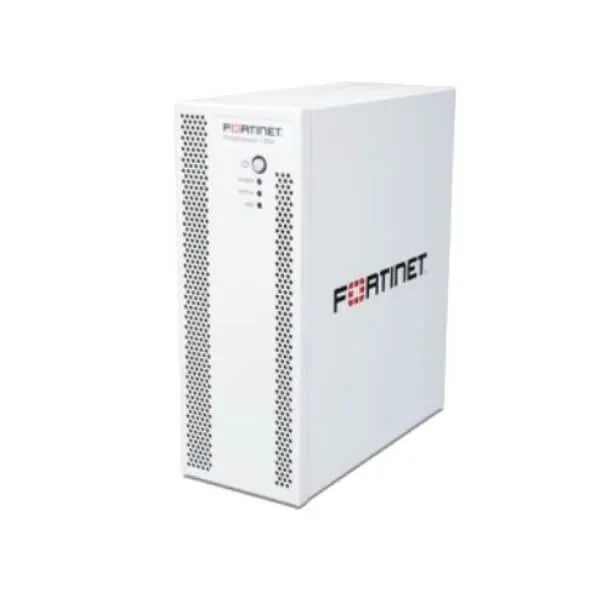
The Fortinet FortiAnalyzer FAZ-150G is a compact, dedicated platform for collecting, retaining, analyzing, and reporting security logs from supported Fortinet environments. It is designed for organizations that have moved beyond basic firewall event viewing and now need a central place to understand network activity, investigate suspicious behavior, produce operational reports, and support stronger security governance. The appliance is especially relevant to businesses with several FortiGate firewalls, branch locations, internal security zones, or compliance-driven reporting requirements that cannot depend only on short local log histories.
Request QuoteCheck Africa Availability
Quick Product Information
Fortinet
FortiAnalyzer 150G / FAZ-150G
Centralized log and analysis appliance
Security logging, analytics, reporting, investigation, and visibility
Growing enterprises, branches, institutions, and security teams
Contact FourTeck for current options
Configuration, quotation, delivery, and warranty guidance
Licenses, services, retention, and final deployment are requirement dependent
Product Overview
Security devices generate a continuous stream of information about connections, policy decisions, blocked threats, user activity, VPN sessions, applications, system events, and administrative changes. When this information stays scattered across individual firewalls and branch appliances, teams can struggle to build a complete picture of what happened. Local storage may also provide only a limited historical view. A centralized FortiAnalyzer appliance addresses that operational gap by collecting logs into one controlled platform where they can be searched, organized, correlated, reported, and retained according to the selected design.
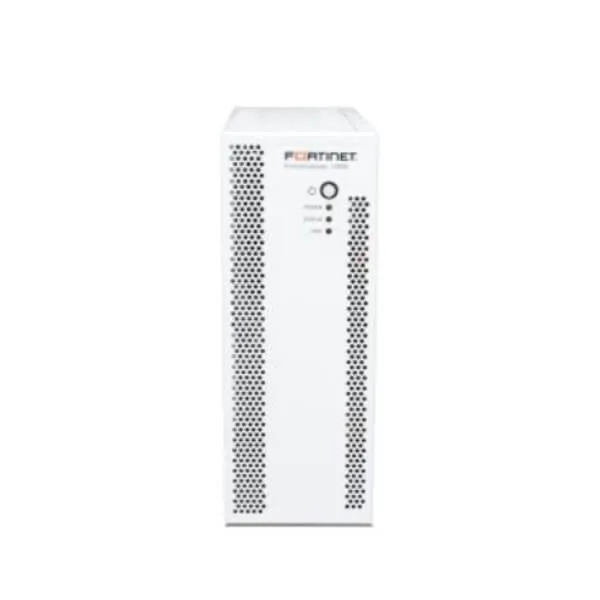
The FAZ-150G is positioned for organizations that need a dedicated physical appliance but do not require the capacity of a larger rack-mounted model. Its desktop chassis suits smaller server rooms, secure communications areas, branch headquarters, and growing security operations environments where space is limited. The platform supports up to 25 GB of logs per day, an analytic sustained rate of 500 logs per second, a collector sustained rate of 750 logs per second, and up to 50 devices or virtual domains. These figures matter because the correct model should be chosen from real log production rather than only the number of users in the business.
For a distributed company, the appliance can become the central reporting and investigation point for several FortiGate devices. For a school, hospital, financial office, manufacturer, logistics group, government unit, or managed services environment, it can help create consistent reporting across separate sites. Security and network teams can use centralized logs to review repeated policy violations, investigate unusual connections, confirm changes, identify recurring events, and prepare evidence for internal audits or management reporting. The value comes from turning raw device events into a more usable operating record.
FourTeck helps buyers connect the appliance specification to the real requirement. This includes reviewing expected daily log volume, retention expectations, number of devices, ADOM design, reporting frequency, license services, support term, power conditions, and future growth. Africa buyers can also request help aligning the platform with related Fortinet components such as FortiGate, FortiManager, FortiSwitch, FortiAP, and Security Fabric planning. The goal is to avoid an undersized deployment, unnecessary capacity, or a quotation that leaves out services and operational details needed after installation.
Key Business Benefits
A log appliance should not be judged only by storage size. Its real value is the improvement it brings to visibility, investigation, reporting discipline, and day-to-day security operations. The following benefits explain why a dedicated platform can be useful for organizations that have outgrown isolated device logging.
◆ Centralized Visibility
Bringing logs from supported security devices into one location gives administrators a clearer operational view. Instead of signing into several appliances to reconstruct an event, teams can work from a centralized history and use consistent reporting across sites.
✓ Better Investigation
Historical records help analysts follow the sequence of an incident, compare activity between devices, and understand whether an event was isolated or repeated. This supports more disciplined troubleshooting and reduces reliance on memory or incomplete local logs.
● Practical Reporting
Scheduled and on-demand reports can help technical teams explain network and security activity to management, auditors, service owners, and project stakeholders. Reporting is most useful when templates, recipients, frequency, and retention are planned before deployment.
↗ Multi-Site Control
Organizations with branches can use a central analytics platform to compare sites, identify repeated policy issues, and standardize the way events are reviewed. This is useful when a small central IT team supports many locations.
⚙ Operational Consistency
A dedicated logging process encourages clearer ownership, routine report review, defined alert handling, and better documentation. These operating habits matter as much as the hardware because ignored logs do not improve security outcomes.
🔒 Evidence Retention
Retained logs can support internal investigations, troubleshooting, policy reviews, and audit preparation. Buyers should size retention from real event volume and business obligations rather than assuming the maximum analytics-day figure will apply to every environment.
✓ Growth Planning
The appliance gives growing Fortinet environments a structured starting point for security operations. As device count or log volume increases, organizations can review larger physical, virtual, or cloud options without losing the discipline built around centralized analysis.
Product Highlights
The Fortinet FortiAnalyzer FAZ-150G combines a compact hardware footprint with dedicated storage and analytics capacity for smaller security operations deployments. Its specification is intended to support environments that need more than simple local device logging but do not yet require the higher daily ingestion rates, interface counts, or rack capacity of larger FortiAnalyzer platforms.
The published daily capacity provides a clear sizing reference for organizations that can measure current and expected log generation across their managed environment.
The sustained analytics rate helps buyers evaluate normal long-running workload suitability rather than relying only on temporary peak behavior.
Collector mode offers a separate sustained reference for architectures that prioritize log reception and forwarding as part of a broader design.
This limit supports many small and mid-sized Fortinet deployments, although buyers should confirm how physical devices, virtual domains, and future additions will be counted.
Two 2 TB drives provide 4 TB raw capacity. With the default software RAID 1 design, usable storage is approximately 2 TB, giving resilience against a single-drive failure while reducing usable space.
The compact chassis is suitable for secure shelves, communications rooms, and smaller server spaces where a full rack model may not be necessary.
Published capacity figures should be treated as sizing guidance, not a replacement for measurement. Log volume changes with enabled security profiles, traffic patterns, event severity, device count, firmware, administrative settings, and the amount of detail retained. A deployment that looks suitable from user count alone may generate more logs than expected if it includes several busy firewalls, intensive application controls, VPN usage, or frequent security events. FourTeck can help review these factors before quotation.
Technical Specifications
| Specification | FAZ-150G Details |
|---|---|
| Brand | Fortinet |
| Model / SKU | FortiAnalyzer 150G / FAZ-150G |
| Product Type | Centralized log and analysis hardware appliance |
| Log Capacity | Up to 25 GB per day |
| Analytic Sustained Rate | 500 logs per second |
| Collector Sustained Rate | 750 logs per second |
| Maximum Devices / VDOMs | 50 |
| Maximum Analytics Days | Up to 90 days at the published sustained analytics rate; actual retention varies with log volume and configuration |
| Form Factor | Desktop |
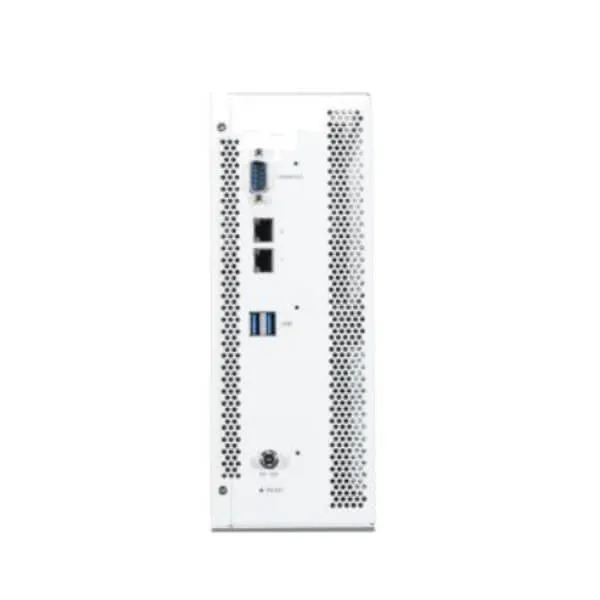
| Network Interfaces | 2 x RJ45 Gigabit Ethernet |
| Raw Storage | 4 TB using 2 x 2 TB drives |
| Usable Storage After RAID | Approximately 2 TB |
| RAID Support | Software RAID 0/1; default RAID level 1 |
| Drive Serviceability | Non-removable hard drives |
| Trusted Platform Module | TPM Gen 2 |
| Dimensions | 9.5 x 3.5 x 8 inches / 24.1 x 8.9 x 20.55 cm |
| Weight | 9.35 lb / 4.24 kg |
| AC Power | 100–240V AC, 50–60 Hz |
| Power Consumption | 36 W average / 43 W maximum |
| Operating Temperature | 0°C to 40°C |
| Humidity | 5% to 95% non-condensing |
| Availability and Warranty | Contact FourTeck for current supply options, selected support term, and warranty guidance |
How to Read These Specifications
Daily log capacity, sustained log rate, device count, and storage must be reviewed together. A deployment can remain below 50 devices and still exceed the daily ingestion target if those devices generate very high event volume. The reverse is also possible: many lightly used virtual domains may remain within the log limit but approach the device ceiling. Retention also depends on how much data arrives, what is stored, how reports and analytics are configured, and whether the platform is receiving bursts or a steady stream. Buyers should collect current log statistics from representative business periods, then add reasonable growth allowance before choosing the model. FourTeck can help turn this information into a practical recommendation and identify whether a larger appliance, virtual platform, or cloud option should be considered.
Configuration and Buyer Guidance
A successful purchase begins with log measurement. Ask the network or security team to review average daily volume, peak logs per second, the number of sending devices, the number of virtual domains, and the amount of historical data that must remain searchable. Measuring only one quiet day can underestimate the requirement. Include month-end processing, security incidents, remote-access peaks, policy changes, vulnerability scans, and periods when threat controls generate more events than normal.
Confirm normal and peak log volume, not only firewall throughput or employee count.
Define how many days of searchable analytics and archived records the business needs.
List every sending device, VDOM, branch, and planned addition for the project period.
Confirm FortiCare and any analytics, automation, IOC, or related service requirements.
The deployment environment also matters. Although the chassis is compact, it should be placed in a controlled, secure area with reliable power, appropriate ventilation, network connectivity, and restricted physical access. The appliance uses a single power supply, so buyers should consider UPS protection and the outage tolerance of the logging function. Because its internal drives are not hot-swappable, maintenance planning and external backup or export strategy should be discussed as part of business continuity. RAID 1 helps protect against a single disk failure, but RAID is not a complete backup policy.
Finally, define who will operate the platform. Decide which administrators need access, who will review alerts, which reports management expects, how often reports will be sent, how incidents will be escalated, and how firmware and configuration changes will be governed. Hardware can centralize information, but people and process determine whether that information leads to action. FourTeck can help procurement and technical teams prepare the appliance, service term, accessories, support expectations, and implementation scope as one coherent request.
Ideal Business Use Cases
Multi-Branch Security Logging
A company with several FortiGate-protected offices can bring event records into a central platform. This helps a head-office team compare branch behavior, investigate common issues, and produce a consistent reporting view without depending on separate local histories.
Internal Audit and Governance
Organizations that need evidence of administrative actions, policy activity, VPN events, or security controls can use retained logs to support internal reviews. The exact retention policy should be aligned with business, regulatory, and legal requirements.
Security Incident Investigation
When suspicious traffic or a policy breach is identified, analysts need historical context. Centralized records can help determine when activity started, which devices observed it, what actions were taken, and whether related events occurred elsewhere.
Managed IT and Security Services
Service teams supporting several customer or business units can use separated administrative domains where appropriate. Correct ADOM and access design should be confirmed before purchase so operational separation matches the support model.
Education and Healthcare Networks
Schools, universities, clinics, and hospitals often operate several network zones and need clearer reporting around internet use, remote access, policy events, and device activity. A central log platform can support investigation and governance while keeping the workflow manageable.
Retail, Logistics, and Distributed Operations
Retail stores, warehouses, depots, and field offices depend on WAN links, VPNs, cloud systems, and segmented devices. Centralized analysis can help identify repeated connection failures, policy blocks, suspicious access, and configuration trends across the operating footprint.
The appliance should not be selected for a use case that exceeds its published capacity. A rapidly growing enterprise, large managed services provider, telecom environment, or high-event data center may require a larger FortiAnalyzer model or a different deployment architecture. FourTeck can help buyers compare capacity classes without assuming the smallest or largest option is automatically correct.
FortiAnalyzer FAZ-150G Centralized Log Management
Centralization changes the way a security team works. Without it, an administrator may need to open several device interfaces, export separate files, compare timestamps manually, and hope that local retention still includes the relevant period. With a dedicated analytics platform, supported device records can be collected into a more consistent structure and reviewed from one operating point. This does not remove the need for good firewall configuration, but it makes the resulting events easier to use.
For business buyers, the main question is whether the appliance can handle the ongoing log workload. The published 25 GB daily capacity and sustained analytics rate of 500 logs per second provide two important measurements. Daily volume relates to storage and ingestion over time, while logs per second reflect the continuous event-processing load. Both should be checked because a network can produce short bursts that look very different from its daily average. Branch count, VDOM use, security profile settings, application control, intrusion prevention, VPN activity, and logging detail all influence the result.
A well-planned deployment also defines log sources and priorities. Teams may decide that critical firewalls, VPN events, administrative changes, and high-severity security events require particular attention. Reports should be built around real operating questions, such as repeated blocked connections, unusual outbound traffic, inactive tunnels, risky applications, or changes made outside approved windows. FourTeck can help buyers discuss platform sizing and the commercial scope, while the customer’s security policy should define how information is reviewed and acted upon.
FortiAnalyzer FAZ-150G Storage and Retention Planning
The appliance includes 4 TB of raw storage from two 2 TB drives. Its default software RAID 1 arrangement mirrors data and provides approximately 2 TB of usable capacity. This design improves resilience against a single drive failure, but the trade-off is that only half of the raw capacity is available for use. Buyers should include this difference in retention calculations and avoid treating the published raw figure as fully usable analytics space.
Retention is influenced by more than disk size. The amount of data received each day, the mix of logs, database overhead, analytics settings, archive policy, report generation, and actual event patterns all affect how long information remains available. The published maximum of up to 90 analytics days is tied to the sustained analytics rate and may increase when average log volume is lower. It should not be treated as a guaranteed retention period for every deployment. A buyer who needs a fixed business or regulatory retention window should validate the expected volume and consider backup, archive, or larger-capacity options.
RAID also should not be confused with backup. Mirroring protects availability when one disk fails, but it does not protect against accidental deletion, corruption, appliance loss, major hardware damage, or a policy mistake. Organizations should decide whether configurations, reports, archives, or selected log data need an external protection method. Power protection is equally important. A suitable UPS can help reduce disruption from unstable electricity, while proper shutdown and maintenance practices support storage integrity. FourTeck can include UPS, environment, and continuity considerations in the buying discussion where required.
FortiAnalyzer FAZ-150G Security Operations and Reporting
Security teams often have plenty of data but limited time. The practical purpose of analytics and reporting is to make that data easier to prioritize. A centralized platform can support dashboards, event review, investigation, scheduled reports, and related operational workflows depending on the software version and selected services. The strongest results come when the organization decides in advance what information matters and who is responsible for reviewing it.
For example, a network team may need weekly reports on VPN availability, bandwidth use, administrative changes, and blocked applications. A security manager may focus on high-risk events, repeated threats, suspicious destinations, and policy violations. Management may prefer a concise monthly view showing major incidents, trends, and actions taken. These audiences should not receive the same report without adjustment. Well-designed reporting reduces noise and turns technical logs into information that supports decisions.
Licensing and service scope must also be understood. Hardware-only orders, support bundles, enterprise protection packages, automation services, IOC capabilities, and other subscriptions can have different order codes and renewal implications. Buyers should confirm which capabilities are included in the selected quotation and which require separate service terms. FourTeck can help clarify the commercial components, renewal duration, support level, and suitable order code before purchase, reducing the risk of receiving hardware that does not match the intended operating plan.
What Buyers Should Check Before Purchase
Before requesting a quote, buyers should confirm the exact model and the expected role of the appliance. The 150G is a desktop analytics platform, while larger models provide higher ingestion rates, greater device scale, more storage, rack mounting, and different redundancy options. Choosing by product family name alone can lead to a mismatch. Provide measured daily log volume, peak logs per second, the number of Fortinet devices and VDOMs, required retention, report frequency, and the expected growth period. These details allow a supplier to determine whether the requested model remains suitable after future branches, security profiles, or new devices are added.
Compatibility and licensing should be reviewed at the same time. Confirm supported firmware versions, the devices that will send logs, administrative domain requirements, and whether the platform must integrate with FortiManager, FortiGate, FortiSwitch, FortiAP, FortiClient, or other Security Fabric components. Ask whether the quotation is hardware only or includes FortiCare, enterprise protection, analytics services, automation, IOC, or other subscription items. Note the service term, renewal date, and what changes after expiry. This is important for long-term cost planning.
Configuration Fit
Share measured log volume, retention goals, device count, VDOM count, reports, and expected growth. Include peak periods and not only a quiet-day average.
Compatibility Check
Confirm firmware, sending devices, ADOM design, management integration, network interfaces, IP addressing, DNS, NTP, and authentication requirements.
Environment and Continuity
Plan secure placement, ventilation, UPS protection, power quality, backup or archive policy, maintenance windows, and the impact of the single power supply.
Quote Preparation
Provide model, quantity, service term, required licenses, installation scope, delivery country, timeline, tax or shipping details, and whether alternatives may be proposed.
Buyers should also ask about required accessories and deployment services. A desktop unit may need a secure shelf, suitable network cabling, UPS protection, and planned connectivity to management networks. Installation may involve initial access configuration, device registration, administrative domains, log forwarding, time synchronization, report setup, access control, backups, and documentation. Warranty handling should be understood through the selected supply route. Availability may change with order code, subscription bundle, quantity, and destination. FourTeck can review these details so the final quotation reflects the working environment rather than only a hardware part number.
Africa Availability and Service Support
FourTeck supports product inquiries across Africa with assistance for model selection, configuration review, quotation preparation, delivery coordination, and warranty guidance. Availability can vary according to the exact order code, hardware or bundle selection, service term, supplier status, quantity, and delivery destination. For this reason, the commercial process begins by confirming whether the requirement is for the base appliance, a support bundle, enterprise protection services, security automation, IOC-related services, or another FortiAnalyzer package.
Technical information is also reviewed before the quote is finalized. Buyers can share current log volume, peak event rate, device and VDOM count, retention goal, FortiOS versions, number of sites, and future expansion plans. FourTeck can use these details to discuss whether the requested appliance is suitable or whether a nearby model should be evaluated. This helps reduce the risk of purchasing a platform that reaches its limit too early or paying for capacity that the organization is unlikely to use.
Delivery coordination and warranty direction depend on the selected supply route and destination. Buyers should request current details rather than assuming local stock, a fixed lead time, or a specific warranty process. Project orders, multi-unit requirements, and deployments that include FortiGate, FortiManager, switching, wireless, UPS, or professional services can be discussed as one coordinated requirement.
Africa Country and Regional Coverage
Businesses across Africa, including Kenya, Uganda, Nigeria, Ghana, Tanzania, Rwanda, Ethiopia, South Africa, Zambia, Botswana, Senegal, and nearby commercial markets, can contact FourTeck for availability guidance, configuration discussion, and quotation support. A single combined regional approach is especially useful for organizations that operate several branches or coordinate IT procurement from a central office.
The buying team can provide the delivery country, city, site count, required quantity, preferred service term, and technical scope. FourTeck can then help align product sourcing, related Fortinet options, project timing, and delivery coordination. Regional availability is not assumed to be identical in every market; supplier position, import process, bundle choice, and destination all affect the final response.
GCC, Middle East and Africa Availability
FourTeck Africa can support inquiries for organizations whose security infrastructure spans Africa, GCC, and Middle East markets. Companies with regional management, shared data centers, or procurement teams connected to the UAE, Saudi Arabia, Qatar, Oman, Bahrain, and African operations often need consistent Fortinet architecture across several countries. The appliance, license term, reporting design, and delivery plan should be reviewed as one regional requirement rather than as isolated box purchases.
Cross-border projects may involve different import processes, power standards, support routes, installation partners, and delivery schedules. Buyers should identify where the appliance will operate, where the security team is located, which devices will send logs, and whether a central platform will serve several countries. Data governance, retention, remote administration, and access control should also be considered when logs cross organizational or geographic boundaries.
Relevant regional references include FourTeck Africa, FourTeck Kenya, FourTeck Uganda, and FourTeck UAE. Availability, warranty handling, delivery options, and configuration services may vary by country, selected package, order quantity, and project scope.
Other Options Buyers May Consider
Organizations often compare the 150G with larger FortiAnalyzer appliances, virtual options, cloud services, and related Fortinet management products. The right alternative depends on log volume, retention, device scale, deployment preference, redundancy, and the team’s operational model. FourTeck can help determine whether the requested hardware is the right fit or one part of a broader Security Fabric design.
FortiAnalyzer 300G
A larger physical appliance for organizations that need higher daily log capacity, more devices, rack mounting, and greater usable storage.
FortiAnalyzer VM
Suitable for buyers that prefer virtual deployment and can provide the required compute, storage, hypervisor, backup, and operational resources.
FortiAnalyzer Cloud
A cloud-based approach for organizations that want centralized logging without managing a local physical appliance, subject to service and connectivity requirements.
FortiManager
A related platform for centralized configuration and policy management. It complements analytics but serves a different management purpose.
FortiGate 60F
A compact branch firewall that can form part of a distributed Fortinet environment requiring central log collection and reporting.
FortiGate 3001G
A high-capacity enterprise firewall for large environments where logging design, analytics scale, and central operations must be planned together.
Buyers can also review Fortinet next-generation firewall solutions when the requirement includes firewall replacement, branch security, VPN, SD-WAN, or a wider security platform refresh.
Why Buyers Choose FourTeck
A security analytics purchase involves more than selecting a box. The hardware must match event volume, device scale, retention, license terms, operational ownership, and delivery requirements. FourTeck helps business buyers organize these details into a clearer procurement request and connect technical decisions with the commercial quotation.
Assistance for single-device orders, branch projects, multi-site requirements, and coordinated security infrastructure purchasing.
Review of daily logs, event rate, devices, retention, licenses, service term, and possible alternatives before quotation.
A structured commercial response based on confirmed order code, quantity, selected bundle, destination, and project timeline.
Guidance for regional supply and delivery planning without making unverified stock or lead-time promises.
Clarification of warranty and support handling according to the selected product package and supply route.
Help aligning FortiAnalyzer with suitable FortiGate, FortiManager, switching, wireless, UPS, and implementation requirements.
FourTeck serves SMB, enterprise, public-sector, education, healthcare, finance, logistics, retail, hospitality, and service-provider buying conversations. The approach is practical: confirm the need, identify missing details, review the correct product class, and prepare a quotation that can be understood by technical, procurement, and finance stakeholders. Buyers remain responsible for final architecture, policy, legal, and compliance decisions, while FourTeck supports the product and supply discussion.
Frequently Asked Questions
What is the FortiAnalyzer 150G used for?
It is used to collect, retain, analyze, and report logs from supported Fortinet environments. Organizations deploy it when they need centralized visibility across firewalls, branches, virtual domains, and related Security Fabric components. It can support incident investigation, operational reporting, audit preparation, event review, and a more consistent process for managing security information.
How much log data can the appliance handle?
The published capacity is up to 25 GB of logs per day, with a sustained analytics rate of 500 logs per second and a collector sustained rate of 750 logs per second. Actual suitability depends on average and peak event volume, report and analytics settings, device count, enabled security profiles, and future growth. Buyers should measure their environment before ordering.
How many devices can connect to the FAZ-150G?
The published maximum is 50 devices or virtual domains. The device ceiling should be checked together with daily log volume because a smaller number of busy devices may still exceed the ingestion target. Future firewalls, branches, VDOMs, and Security Fabric additions should be included in the sizing exercise so the platform has reasonable growth room.
Does the appliance provide 4 TB of usable storage?
It has 4 TB of raw storage from two 2 TB drives. With the default software RAID 1 configuration, usable storage is approximately 2 TB because data is mirrored for resilience. The actual retention period depends on incoming log volume, analytics settings, archive policy, and operating overhead. RAID should not be treated as a complete backup strategy.
Is the FortiAnalyzer FAZ-150G available in Africa?
FourTeck supports Africa inquiries for the appliance and related service bundles. Current availability depends on supplier status, order code, support term, quantity, and delivery destination. Buyers should request a current quotation rather than assuming stock or a fixed lead time. FourTeck can also discuss delivery coordination and suitable alternatives if the requested package is unavailable.
Can FourTeck help with model sizing?
Yes. Buyers can provide average daily logs, peak logs per second, device and VDOM count, retention goal, number of sites, current FortiGate models, and growth plans. FourTeck can use these details to discuss whether the 150G is suitable or whether a larger appliance, virtual deployment, or cloud service should be considered.
Does the base appliance include every FortiAnalyzer service?
No assumption should be made from the model name alone. Hardware-only orders and bundles can include different support and service components. Ask the quotation to state the exact SKU, FortiCare level, term, enterprise protection components, automation services, IOC capabilities, and renewal requirements. FourTeck can help clarify what is included before the order is approved.
What installation preparation is required?
Plan secure placement, reliable power, UPS protection, ventilation, IP addressing, DNS, NTP, network cabling, administrator access, firmware compatibility, device registration, ADOM structure, log forwarding, backups, reports, and documentation. The organization should also define who reviews alerts and reports. Installation scope can be discussed separately from the hardware quotation.
Can businesses request bulk or project supply?
Yes. Procurement teams can request single-unit, multi-unit, multi-country, or broader Fortinet project quotations. Provide the quantity, destination, timeline, selected service term, related firewall or management products, and implementation needs. Availability and commercial terms may differ by order size and region, so every project should be reviewed against current supply conditions.
How do I request a quote?
Use the FourTeck contact page and include the model, quantity, country, required service term, daily log volume, number of devices or VDOMs, retention goal, and preferred delivery timeline. Mention whether you need hardware only, a service bundle, implementation support, UPS protection, or related Fortinet products. This information helps the sales team prepare a more relevant response.
Need Help Choosing the Right FortiAnalyzer?
FourTeck can help review log volume, device count, retention, service bundles, warranty direction, availability, and delivery requirements. Share your current environment and project location to prepare a suitable Africa quotation.

Reviews
There are no reviews yet.