
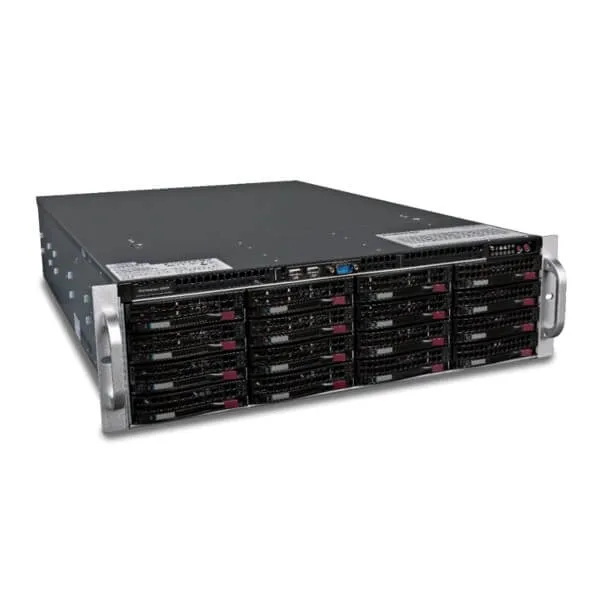
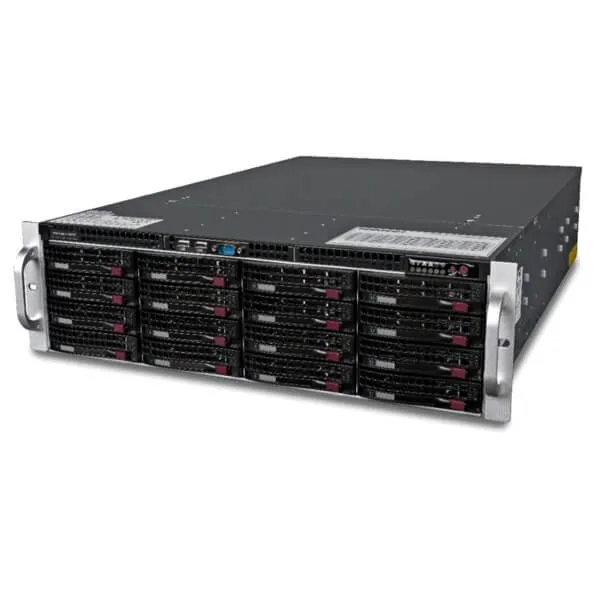
FortiAnalyzer FAZ-3000F Log Appliance in Africa
The FortiAnalyzer FAZ-3000F is a high-capacity, rack-mounted log collection, security analytics and reporting platform for organisations that need to bring large volumes of security telemetry into one controlled operational view. It was designed for substantial Fortinet estates, managed environments, data centres, public institutions and enterprise security operations where log retention, incident investigation, administrative separation and scheduled reporting are central requirements. Because this is now a legacy model, a responsible purchase decision must include lifecycle review, support validation, condition assessment and comparison with current FortiAnalyzer platforms. FourTeck helps buyers examine these points before a quotation is prepared.
Request QuoteCheck Africa Availability
Quick Product Information
Product Overview
Security environments generate a continuous stream of information. Firewalls record connections and policy actions, endpoint products report suspicious behaviour, email security systems document message events, web security products identify application activity, and authentication systems track access. When these records remain scattered across separate devices, investigation becomes slow and reporting becomes inconsistent. The FortiAnalyzer FAZ-3000F was built to centralize that information for larger deployments, giving security and network teams a dedicated appliance for receiving, storing, reviewing and reporting on substantial volumes of operational data.
Its role is different from a firewall. A firewall enforces policy and inspects traffic at the network boundary or between zones. FortiAnalyzer receives and organises the records produced by those security controls. Administrators can use the resulting data to understand what happened, when it happened, which device observed it, which user or system was involved, and whether an event needs deeper investigation. This supports daily monitoring, incident review, audit preparation, capacity planning and management reporting.
The appliance class is aimed at environments with serious logging requirements rather than small offices. It supports thousands of devices or virtual domains, multiple administrative areas, high sustained log rates and a large internal storage platform. These characteristics are useful for financial groups, telecom operators, managed security providers, universities, government networks, healthcare groups and multinational businesses that want to retain security data on premises under a defined operational policy.
For an Africa buyer, the decision should not stop at raw capacity. The platform is a legacy model, which means the buyer must check hardware condition, service eligibility, firmware support, spare availability, power and cooling requirements, data migration needs and the business cost of operating older equipment. FourTeck can help compare the requested unit with newer FortiAnalyzer choices so the organisation understands both the immediate purchase and the longer-term operational path.
Key Business Benefits
A high-capacity log appliance creates value when it turns a large, fragmented stream of technical records into information that security, infrastructure, audit and management teams can use. The following benefits explain the practical business role of this platform.
◆ Centralized Visibility
Collecting logs into one platform reduces the time administrators spend moving between devices. A consolidated view supports faster investigation and more consistent reporting across departments, sites and security products.
✓ Higher Retention Capacity
Large onboard storage helps organisations keep more historical data for investigation, audit and trend analysis. The effective retention period depends on daily log volume, indexing policy, archive settings and selected RAID layout.
⚙ Structured Operations
Dashboards, event handling, reports and administrative domains give teams a repeatable way to monitor separate business units, customers or environments without mixing every operational responsibility into one account.
● Better Audit Preparation
Scheduled and on-demand reporting can reduce manual work when technical teams must demonstrate activity, policy events, administrator actions or security trends to internal reviewers and external auditors.
↗ Scalable Device Coverage
Support for a large device and VDOM count makes the appliance relevant to shared services, managed environments and enterprises that operate many gateways, branches or administrative domains.
🔒 Resilient Hardware Design
Hardware RAID, removable drives and redundant hot-swap power supplies support a more serviceable data-centre deployment. The final resilience level still depends on backup, clustering, monitoring and recovery planning.
These benefits matter most when the appliance is correctly sized and actively managed. Buying excess capacity without a retention policy, incident process, reporting plan or trained administrators does not automatically improve security. FourTeck can help buyers frame the requirement around daily logs, operational staffing, business risk and future platform direction.
Product Highlights
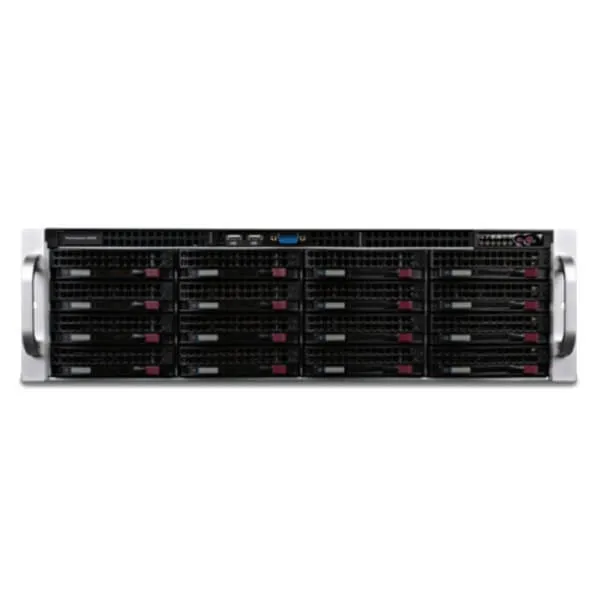
The FAZ-3000F combines a 3RU rack chassis, high-capacity disk subsystem, multiple network interfaces and enterprise serviceability features. Its published platform profile includes up to 3,000 GB of logs per day, an analytic sustained rate of 42,000 logs per second, a collector sustained rate of 60,000 logs per second and support for as many as 4,000 devices or VDOMs. These figures position the appliance for large logging estates, although real-world results depend on software version, log type, indexing, report activity, retention settings and operational workload.
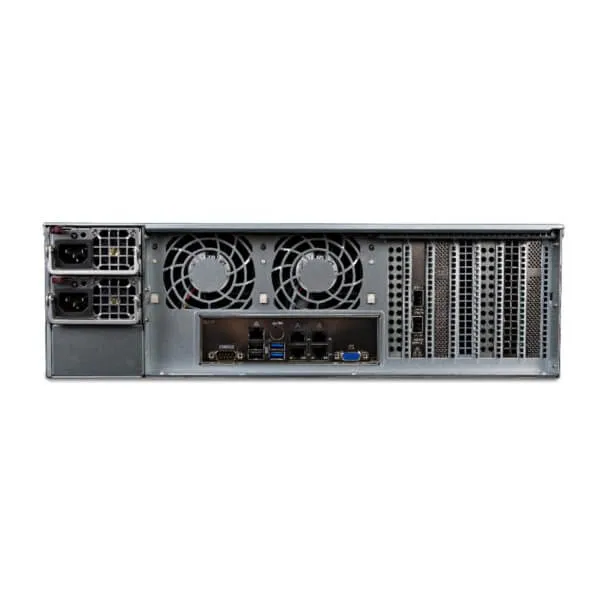
The platform also supports hardware RAID levels including 0, 1, 5, 6, 10, 50 and 60, with RAID 50 listed as the default configuration in the referenced platform generation. Removable drives improve serviceability, while two SFP+ interfaces and four Gigabit Ethernet interfaces provide connectivity choices for management, log transport and architectural separation. Buyers should verify the installed drive count, actual usable capacity, firmware level and physical condition of any available unit because older appliances may differ after years of operation or service history.
Technical Specifications
| Specification | FortiAnalyzer FAZ-3000F Details |
|---|---|
| Brand | Fortinet |
| Model / SKU | FortiAnalyzer 3000F / FAZ-3000F |
| Product Type | Centralized log collection, analytics and reporting appliance |
| Log Capacity | Up to 3,000 GB per day for the later published platform profile |
| Analytic Sustained Rate | 42,000 logs per second |
| Collector Sustained Rate | 60,000 logs per second |
| Maximum Devices / VDOMs | 4,000 |
| Maximum Analytics Days | 30 days at the stated continuous sustained analytic rate; longer retention may be possible at lower average rates |
| Form Factor | 3RU rackmount |
| Interfaces | 4 x Gigabit Ethernet and 2 x SFP+ |
| Raw Storage | 48 TB using up to 16 x 3 TB drives |
| Usable Storage After RAID | Approximately 42 TB in the referenced configuration |
| RAID Support | RAID 0, 1, 5, 6, 10, 50 and 60; hardware RAID with hot-swappable drives |
| Default RAID Level | RAID 50 in the referenced platform profile |
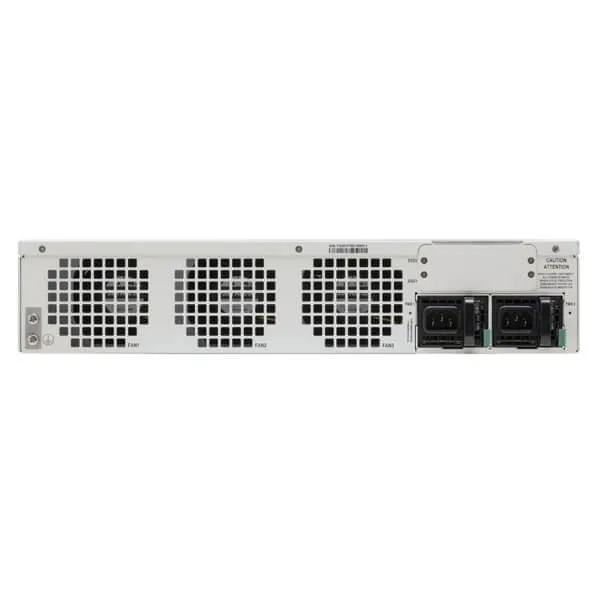
| Power Supplies | Redundant hot-swap AC power supplies |
| Dimensions | 5.2 x 17.2 x 25.5 inches / 13.2 x 43.7 x 64.8 cm |
| Weight | Approximately 76 lb / 34.5 kg |
| AC Input | 100–240V AC, 50–60 Hz, 11.5A maximum |
| Power Consumption | 449W average / 541W maximum in the referenced 12-drive measurement |
| Operating Temperature | 10°C to 35°C |
| Lifecycle and Warranty | Legacy model; confirm current support entitlement, supplier warranty, condition and successor path before purchase |
Specifications describe the platform generation and should be validated against the serial number, installed drive set, hardware revision and software release of the unit being offered. Older FortiAnalyzer documents have shown different daily log figures as the software and platform guidance evolved. For this reason, a buyer should use the latest supported release documentation for the intended deployment and should not assume that every used or refurbished appliance will match the maximum published profile.
Configuration and Buyer Guidance
The correct FortiAnalyzer choice starts with the log environment, not the model label. Ask how many gigabytes of logs the organisation currently generates each day and how quickly that number is growing. Include FortiGate traffic logs, UTM logs, system events, endpoint telemetry, email security records, web application events, authentication records and any supported third-party syslog sources. A sizing exercise that considers only firewall count can understate the real workload because a small number of busy devices may generate more data than hundreds of quiet branches.
Daily Log Volume
Measure average and peak ingestion. Include growth, new branches, additional security services and longer working hours.
Retention Policy
Separate searchable analytics retention from archive retention. Confirm legal, audit and incident investigation requirements.
Administrative Design
Plan ADOMs, tenant separation, administrator roles, device groups and reporting responsibilities before migration.
Lifecycle Decision
Compare acquisition cost with remaining support, replacement parts, energy use, migration effort and future software compatibility.
Rack planning is also important. The appliance is a deep, heavy 3RU system that needs suitable rails, front and rear clearance, airflow, power circuits and maintenance access. Dual power supplies should be connected to independent protected feeds where resilience matters. The 10°C to 35°C operating range and high heat output require a properly managed data-centre environment rather than a crowded office rack.
Finally, confirm migration. If the organisation is replacing an older unit, decide which logs, reports, event handlers, administrator settings and retention data must move. If it is purchasing this model as an interim replacement, define the exit plan to a current appliance or virtual platform. FourTeck can help structure these questions so procurement, security operations and infrastructure teams approve the same requirement.
Ideal Business Use Cases
The FAZ-3000F is most suitable where security information must be collected at scale and retained under an organised operating model. It is not intended as a basic monitoring box for a small branch. Its storage, device count and rack design make sense in environments where dedicated security operations, infrastructure management and audit teams will use the data.
Enterprise Security Operations
A central platform can help analysts review alarms, traffic trends, user activity and device events across headquarters, data centres and branches. The value increases when the organisation has defined triage, investigation and escalation procedures.
Managed Service Environments
Administrative domains and quota planning can support separate customer or business-unit views. Providers must still validate licensing, support rights, data isolation and retention obligations for the intended service model.
Financial and Regulated Networks
Banks, insurers and payment environments often need controlled log retention, administrator accountability, incident evidence and scheduled reporting. The appliance can form part of that process when configured with appropriate access controls and backup.
Government and Public Services
Large public networks may operate many security gateways, departments and service locations. Central analysis can improve visibility, but procurement should include lifecycle, data residency, support and long-term replacement planning.
University and Campus Networks
Complex campuses have diverse user groups, research systems, public services, wireless networks and data-centre resources. Central logs can help teams investigate misuse, connectivity problems and security events across the institution.
Telecom and Multi-Site Operations
Operators with many gateways and regional sites can use a dedicated collector and analyzer architecture to distribute ingestion work, retain regional data and provide a consolidated operational view.
In every use case, the platform should be matched to actual daily log volume, incident workflow, reporting needs and staff capacity. A technically capable appliance cannot replace governance, trained people, secure administrator access, backup or a documented response process.
FortiAnalyzer FAZ-3000F Log Ingestion and Retention
Log capacity is often misunderstood. The figure stated in gigabytes per day describes a platform class, but it does not directly tell a buyer how many days of data will remain searchable. Retention depends on the actual average daily volume, database overhead, reserved system space, RAID usable capacity, analytics-to-archive ratio and the organisation’s policy for deleting or exporting older records. A platform receiving 500 GB per day will retain data differently from one receiving 2,500 GB per day, even when both use the same hardware.
Buyers should separate three questions. First, how much data arrives each day? Second, how long must recent data remain in the analytics database for fast investigation and reporting? Third, how long must archived data be retained for legal, audit or forensic reasons? These periods may be different. Recent searchable data may need faster storage and indexing, while older archives may be moved to another approved repository if the architecture and support model allow it.
Peak rate also matters. A platform may have an acceptable daily total but still face bursts during incidents, policy changes, attacks or business events. The published analytic and collector sustained rates provide a starting point, but the final design should include headroom. Reporting, event correlation, administrator searches and maintenance tasks also consume resources.
FourTeck recommends collecting at least several weeks of current logging statistics before final sizing. Where this information is unavailable, buyers should estimate by device type and then validate after deployment. For a legacy model, add further caution because disk condition, installed memory, firmware support and historical configuration can affect practical performance.
FortiAnalyzer FAZ-3000F Security Analytics and Reporting
Central logging is useful only when teams can turn the data into action. FortiAnalyzer provides views, event handling and reporting functions that can help administrators identify unusual activity, investigate a timeline and present findings to technical or management audiences. The system can receive records from multiple Fortinet products and supported syslog sources, allowing a security team to look across network, endpoint, email, web and authentication activity instead of treating every product as a separate evidence store.
Operational dashboards can support daily monitoring, but they should be tuned around the organisation’s risks. A bank may prioritise administrator actions, remote access, malware events and sensitive application traffic. A university may focus on compromised endpoints, public services, research networks and guest access. A managed provider may require tenant-specific views and quota controls. The platform becomes more useful when event handlers, reports and administrative domains reflect these real responsibilities.
Reporting also needs ownership. A scheduled report that nobody reviews creates little value. Teams should decide who receives each report, what decision it supports, how exceptions are escalated and how long the output is retained. Reports should complement direct investigation rather than replace it, because summary charts may not contain every detail required for incident analysis.
Before purchasing a legacy appliance, confirm which reporting features and integrations are available on the software release that can be supported for the hardware. Newer FortiAnalyzer generations may offer broader automation, data-lake and security operations capabilities. FourTeck can help buyers compare the operational need with both the requested model and current alternatives.
FortiAnalyzer FAZ-3000F Resilience and Administrative Control
The hardware design includes features that support serviceability: removable drives, hardware RAID and redundant hot-swap power supplies. These are valuable in a data-centre environment because failed components can be handled with less disruption than fixed desktop hardware. However, component redundancy is only one layer of resilience. A complete design also needs protected power, appropriate RAID monitoring, tested backups, configuration exports, alerting, documented recovery steps and, where required, a high-availability or distributed collector architecture.
Administrative control is equally important. Log data can reveal user activity, network structure, security incidents and sensitive operational information. Access should therefore follow role-based principles. Analysts may need investigation rights, report users may need read-only access, and platform administrators may need configuration privileges. Shared accounts make accountability difficult and should be avoided where possible. Multi-domain environments should use clear separation so one business unit or customer cannot access another unit’s records.
Change control should cover firmware updates, storage policy, log-source onboarding, report changes, administrator access and integrations. The team should test how the system behaves when a disk fails, a power feed is removed, a log source stops sending or the analytics database reaches a policy limit. These tests reveal whether alerts, documentation and staffing are adequate.
For an older appliance, resilience planning must also include parts and support availability. A redundant component offers limited protection if a replacement cannot be sourced in the required timeframe. FourTeck can help buyers discuss spare strategy, warranty expectations, current support options and whether a newer platform provides a more predictable operating life.
What Buyers Should Check Before Purchase
Before requesting a quote, confirm whether the requirement is specifically for the FAZ-3000F or for the capacity and function that this model once represented. These are not always the same. A buyer may have an old bill of materials, a failed appliance, a standard written several years ago or a migration plan based on a familiar model. In each case, the correct decision may be a replacement unit, a supported refurbished appliance, a newer FortiAnalyzer model, a virtual deployment or a staged migration. FourTeck can help review the business requirement instead of assuming that the original model number remains the best answer.
Configuration Fit
Provide current and expected GB per day, peak log rate, device and VDOM count, retention targets, report load and number of administrators. Confirm whether the platform will operate mainly as an analyzer, collector or combined system.
Compatibility Check
Verify supported FortiAnalyzer software, log-source versions, authentication systems, backup targets, syslog integrations, SFP+ optics, rack depth, rail kit, power cords and cooling. Do not assume that an old configuration will migrate unchanged.
Availability and Warranty
Ask whether the unit is new old stock, refurbished or used; request condition details, serial eligibility, installed drives, warranty terms and return process. Confirm support entitlement before relying on the appliance for a critical service.
Quote Preparation
Share country, destination city, quantity, required condition, support term, installation deadline, current model, migration scope, rack and power details, and whether professional deployment or data transfer assistance is required.
Long-Term Cost
Consider electricity, cooling, spare disks, support renewals, staff time, migration work and the risk of an earlier replacement. A lower purchase price can be misleading when the remaining operating life is short.
Replacement Path
Ask for a current FortiAnalyzer comparison based on capacity rather than model sequence alone. Newer platforms may change log limits, storage design, interfaces, subscriptions and software capabilities.
A well-prepared quotation request reduces the chance of buying an appliance that cannot be supported, does not fit the rack, lacks suitable drives, or provides insufficient retention. FourTeck’s role is to help connect technical evidence with a realistic procurement decision.
Africa Availability and Service Support
FourTeck supports product enquiries across Africa with assistance for model confirmation, lifecycle discussion, configuration review, quotation requests, delivery coordination and warranty guidance. Availability for a legacy appliance may vary significantly. A listing may represent remaining new stock, refurbished equipment, a used unit, a service replacement or a supplier database entry that is no longer active. FourTeck therefore recommends checking the exact source and condition before the buyer plans a deployment date.
For this product class, the sales discussion should include daily log volume, retention target, current Fortinet estate, rack environment, power design, software version, support expectations and migration deadline. Buyers replacing a failed appliance should also explain whether they have a current configuration backup, external archive, high-availability partner or recovery window. These details affect whether a like-for-like unit is appropriate or whether the project should move to a newer appliance or virtual platform.
Delivery coordination can include destination review, freight planning, packaging expectations and documentation required by the receiving organisation. Final warranty handling depends on the supplier route, product condition and commercial offer. FourTeck does not treat a legacy model as a routine shelf item; the aim is to give the buyer a clear understanding of what is being quoted and what must be verified before approval.
Africa Country and Regional Coverage
Businesses across Africa, including Kenya, Uganda, Nigeria, Ghana, Tanzania, Rwanda, Ethiopia, South Africa, Zambia, Botswana, Senegal and nearby regional markets, can contact FourTeck for product availability guidance, configuration discussion and quotation assistance. A central log appliance may be required for a headquarters data centre, national network, telecom platform, banking environment, university campus, managed service operation or multi-country enterprise. The procurement process should reflect the operational role and the destination’s technical conditions.
Country requirements can affect delivery route, customs documentation, power cords, warranty handling, installation scheduling and access to local technical resources. For a heavy 3RU appliance, the receiving site should confirm rack depth, loading, cooling and protected power before shipment. Organisations with multiple countries should also decide whether logs will be centralized in one location, distributed through collectors or retained locally because of policy and connectivity constraints.
FourTeck can help buyers prepare one consolidated requirement for regional projects instead of repeating disconnected orders. Share the deployment countries, number of sites, expected log sources, retention policy, required support term and target implementation schedule. The team can then guide product matching and identify where a newer platform may reduce operational risk.
GCC, Middle East and Africa Availability
FourTeck Africa can support product discussions for organisations operating across Africa while connected regional platforms assist selected requirements in GCC and Middle East markets. Businesses with environments in Kenya, Uganda, Nigeria, Ghana, Tanzania, Rwanda, Ethiopia, South Africa, the UAE, Saudi Arabia, Qatar, Oman and Bahrain may need one security analytics standard across several legal entities and data-centre locations.
A cross-region deployment should examine more than hardware supply. Data residency, log forwarding across borders, retention policy, administrator access, bandwidth between collectors and analyzers, support coverage, import process and replacement lead time can all affect the architecture. An older appliance may be acceptable as a temporary replacement in one location but unsuitable as the standard for a new regional rollout. For this reason, FourTeck encourages buyers to separate emergency recovery needs from long-term platform decisions.
Regional links can help teams begin the correct conversation: FourTeck Africa, FourTeck Kenya, FourTeck Uganda and FourTeck UAE. Availability, delivery, warranty and configuration options remain dependent on country, supplier status, selected platform and order quantity.
Other Options Buyers May Consider
A buyer reviewing this legacy FortiAnalyzer should compare current and neighbouring products before final approval. The right alternative depends on log volume, retention, number of devices, interface requirements, subscription model, rack constraints and migration path. The cards below provide useful FourTeck starting points for a wider Fortinet discussion.
Current FortiAnalyzer Replacement Review
Ask FourTeck to compare current appliance and virtual options against the required daily log volume, storage, support and migration scope.
FortiGate 3001G Africa
A high-end Fortinet firewall reference for organisations planning a broader security fabric with centralized management and analytics.
FortiGate FG-3500G Firewall
Useful for buyers reviewing newer high-capacity security infrastructure that can generate substantial logging and reporting requirements.
FortiGate FG-6300F Firewall
A large data-centre firewall reference for teams planning log architecture alongside high-volume security inspection.
FortiGate FG-50G-DSL
A smaller branch firewall example for organisations building a distributed Fortinet estate with centralized log collection.
Security Architecture Assistance
Use the contact channel for FortiManager, FortiAnalyzer, firewall, switching, licensing, renewal and deployment discussions.
These links are not direct one-for-one substitutes. They help buyers place the logging appliance within the wider Fortinet environment. FourTeck can identify a suitable current FortiAnalyzer platform after reviewing the actual requirement.
Why Buyers Choose FourTeck
Enterprise security procurement is rarely solved by copying a part number into a purchase order. A centralized log platform affects storage, compliance, incident response, network design, power, rack capacity, software compatibility, support renewals and future migration. FourTeck helps buyers bring these factors into the quotation discussion so technical and commercial teams work from the same requirement.
Guidance for enterprise, public sector, education, telecom, healthcare and service-provider purchasing processes.
Review of log volume, retention, device count, rack, power, interfaces, software and migration requirements.
Structured enquiry support for condition, quantity, support term, delivery destination and project timing.
Help comparing the requested legacy model with current alternatives and realistic operating-life considerations.
Discussion of destination, freight, receiving requirements, documentation and project supply planning.
Support for aligning FortiAnalyzer with FortiGate, FortiManager, security services, switching and deployment needs.
FourTeck does not need to present an older appliance as a routine new product. Buyers receive more value when the lifecycle reality is clear, the configuration is verified and a successor path is discussed. This approach helps reduce wrong purchases, missing accessories, unsupported deployments and unplanned replacement costs.
Frequently Asked Questions
What is the FortiAnalyzer FAZ-3000F used for?
It is used to centralize security logs, provide analytics and dashboards, support event investigation, generate reports and retain historical data from Fortinet products and supported log sources. The platform was designed for large environments with substantial daily log volume, many devices or VDOMs, formal reporting needs and dedicated security or network operations teams.
Is the FAZ-3000F a current model?
It should be treated as a legacy platform rather than a routine current-generation purchase. Buyers must verify the offered unit’s condition, serial eligibility, firmware support, remaining service options, replacement parts and supplier warranty. FourTeck can also compare current FortiAnalyzer alternatives so the organisation can judge whether a legacy unit is appropriate for recovery, replacement or long-term deployment.
How much log data can the appliance handle?
The later published platform profile lists up to 3,000 GB of logs per day, a 42,000 logs-per-second analytic sustained rate and a 60,000 logs-per-second collector sustained rate. Earlier documents may show different capacity guidance. Final sizing should therefore use the software release supported by the specific unit and the organisation’s real log mix, reporting load and retention policy.
How long can logs be retained?
Retention is not a fixed number because it depends on daily ingestion, usable storage, RAID overhead, analytics allocation, archive policy and database activity. The referenced profile lists up to 30 analytics days at the stated sustained rate. Lower average log volume may allow longer retention, while heavy indexing, reports and additional data sources can reduce it.
Can FourTeck help choose a replacement model?
Yes. FourTeck can review daily and peak log volume, device count, retention target, existing software, administrative domains, rack requirements, support expectations and migration scope. Based on those details, the team can guide a comparison with current FortiAnalyzer appliances or virtual options instead of choosing a successor only by a similar model number.
What should be checked on a used or refurbished unit?
Check serial number, hardware revision, drive count, drive health, RAID status, power supplies, fans, interface condition, rails, firmware version, administrator access, configuration reset, support eligibility and supplier warranty. Ask for clear condition information and confirm whether replacement drives or power components can be sourced within the organisation’s required service window.
Is delivery support available across Africa?
FourTeck can support Africa-based enquiries with quotation preparation and delivery coordination. The exact route, timing, documentation, warranty process and commercial terms depend on the product source, condition, destination and order quantity. Buyers should provide the delivery country, city, receiving contact, required date and any import or institutional documentation before final approval.
Does the appliance include redundant hardware?
The platform profile includes hardware RAID, removable hot-swappable drives and redundant hot-swap power supplies. These features improve serviceability but do not replace backup, monitoring, spare planning or a tested recovery design. Critical environments should consider whether a second appliance, collector architecture or migration to a supported current platform is required.
What information is needed for a quotation?
Share the model, required condition, quantity, country, destination city, daily log volume, device or VDOM count, retention period, current software, rack and power details, desired support term, migration requirement and target installation date. Mention whether the request is an emergency replacement or a planned new deployment because the recommended path may differ.
Need Help Choosing the Right Log Analytics Platform?
FourTeck can help review the FAZ-3000F requirement, current availability, lifecycle position, log capacity, storage and retention needs, support expectations, migration options and delivery requirements. Share your project details for a structured Africa quotation and replacement discussion.
Reviews
There are no reviews yet.