
Fortinet FortiAnalyzer FAZ-300G in Africa
The FortiAnalyzer FAZ-300G gives security and network teams a dedicated platform for collecting, retaining, analyzing, and reporting on logs from a growing Fortinet environment. It is designed for organizations that need more than basic appliance-level event viewing and want a structured way to bring firewall, branch, user, application, VPN, and threat activity into one operational workspace. FourTeck supports buyers with capacity review, service-bundle guidance, rack and power planning, delivery coordination, and quotation assistance for Africa projects.
✓ 8 TB Raw Storage
✓ 1U Rackmount Design
✓ Configuration Review
Request Quote
Check Africa Availability
Quick Product Information
Fortinet
FAZ-300G
Centralized log and analysis appliance
Up to 100 GB of logs per day
8 TB raw; 4 TB usable after default RAID 1
Enterprises, institutions, regional groups, SOC teams and managed environments
Contact FourTeck for current model and bundle options
Support term, optional services, retention and redundancy should be confirmed before order
Product Overview
A security appliance can block traffic, apply policies, inspect sessions, and protect users, but the long-term value of those controls depends on visibility. When an organization operates many firewalls, virtual domains, branch links, remote-access services, cloud connections, and protected applications, important events are distributed across multiple devices. Administrators may spend too much time opening separate consoles, exporting local reports, comparing timestamps, and trying to build a complete incident story from incomplete records. A dedicated FortiAnalyzer platform is designed to bring that operational evidence together.
The FAZ-300G is a mid-range hardware appliance built for centralized log collection, analytics, reporting, investigation, and security operations support. Fortinet specifies capacity of up to 100 GB of logs per day, an analytic sustained rate of 2,000 logs per second, a collector sustained rate of 3,000 logs per second, and support for up to 180 devices or VDOMs. These figures position the appliance for organizations with a meaningful Fortinet footprint that is too large for informal logging but does not require the much larger storage and ingest levels of top-tier FortiAnalyzer systems.
For business buyers, the value is not only the number of logs stored. The appliance can help create a consistent place for security teams to review events, examine trends, prepare management reports, support audit discussions, investigate suspicious behavior, and understand how firewall policies affect real users and applications. Central records can also improve operational continuity because knowledge does not remain locked inside one administrator’s browser session or one device’s local disk.
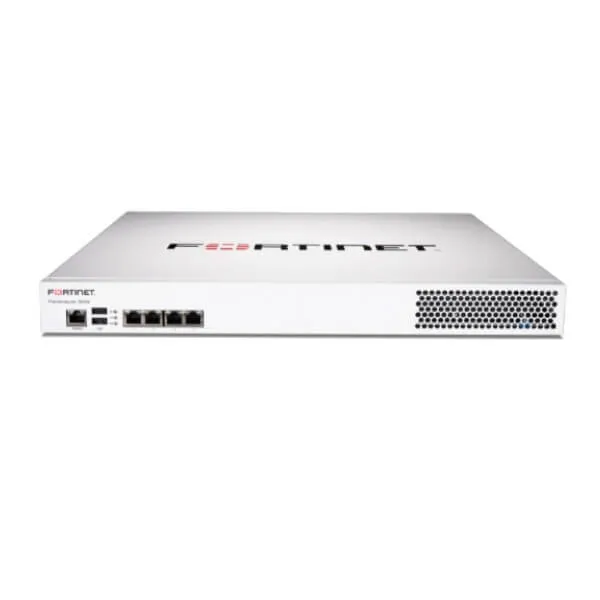
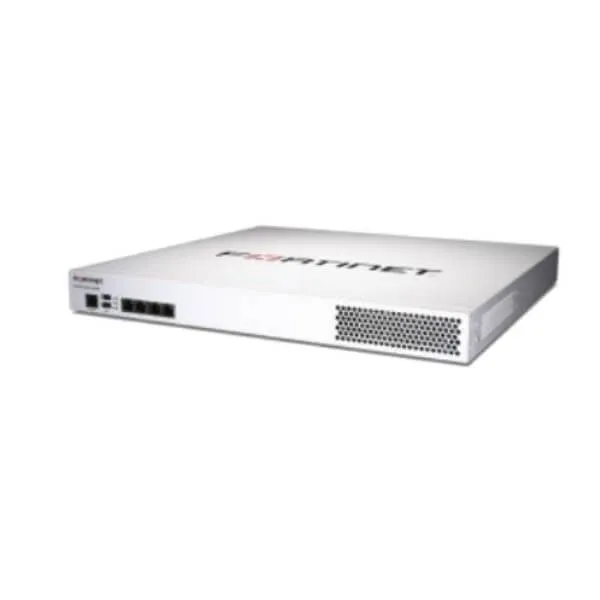
The hardware is designed for a standard rack environment. It uses a 1U form factor, four Gigabit Ethernet RJ45 interfaces, two 4 TB drives for 8 TB of raw capacity, and software RAID with RAID 1 as the default arrangement. Under the default RAID design, Fortinet lists 4 TB of usable storage. Buyers should understand this difference before purchase because raw capacity and usable capacity are not the same. Retention also depends on daily ingest, log type, analytics settings, archive policy, compression behavior, and the proportion of events retained for active analysis.
FourTeck helps organizations translate these details into a practical requirement. A useful quotation conversation should cover daily log volume, expected growth, device and VDOM count, required reporting period, investigation workflow, optional FortiGuard services, rack conditions, support term, and delivery destination. This approach helps buyers select a solution based on the work it must perform rather than choosing only by product family or headline storage.
Key Business Benefits
A centralized analytics appliance should make security information more useful, reduce operational friction, and help teams make better decisions. The following benefits explain how this platform can support day-to-day business security when it is sized and configured correctly.
◆ Central Visibility
Collecting records from multiple Fortinet devices into one platform gives administrators a broader view of users, applications, VPN activity, policy events, threats, and network behavior. This reduces the need to investigate each firewall separately and supports more consistent operational review across branches and departments.
✓ Faster Investigation
When an incident occurs, analysts need timelines, related events, source and destination context, and evidence from more than one enforcement point. Central log retention helps teams move from a single alert toward a fuller understanding of what happened, which systems were involved, and where follow-up action is required.
● Structured Reporting
Scheduled and on-demand reporting can help technical teams communicate security conditions to managers, auditors, risk teams, and business owners. Reports become more useful when they are based on consistent centralized data rather than screenshots or manually combined exports from several appliances.
↗ Operational Efficiency
A shared analytics platform can reduce repetitive work for administrators who manage many sites. Central dashboards, reusable reports, event handlers, and standard review processes help security teams spend less time moving between devices and more time evaluating issues that may affect business operations.
⚙ Capacity for Growth
Support for up to 100 GB of daily logs and up to 180 devices or VDOMs gives growing environments room to consolidate a meaningful Fortinet estate. Buyers should still forecast expansion carefully, because new branches, additional security services, and more detailed logging can increase ingest faster than device count alone suggests.
🔒 Better Record Retention
Dedicated storage gives the organization a clearer retention strategy than relying only on local firewall disks. With 8 TB raw capacity and 4 TB usable under the default RAID 1 arrangement, teams can plan active analytics and record availability around measured daily volume and business requirements.
Product Highlights
The FAZ-300G combines a practical rack footprint with capacity intended for established Fortinet environments. It is not simply an external hard drive for firewall logs. The platform is designed around centralized collection, analytics, reporting, event review, and security operations workflows. Its role is to turn large volumes of technical records into information that administrators and analysts can use.
Optional services and bundles may extend the operational value of the platform, including FortiGuard IOC and outbreak detection, security automation, enterprise protection, security rating and compliance functions, threat intelligence platform services, FortiAI capabilities, OT security services, and managed monitoring options. These are not automatically included with every hardware purchase. The exact entitlement, term, and order code should be confirmed during quotation.
Technical Specifications
| Specification | FAZ-300G Detail | Buyer Note |
|---|---|---|
| Brand / Model | Fortinet FortiAnalyzer FAZ-300G | Confirm exact order code and service bundle. |
| Product Type | Centralized log and analysis appliance | Designed for Fortinet security operations and reporting workflows. |
| Daily Log Capacity | Up to 100 GB/day | Measure current volume and include expected growth. |
| Analytic Sustained Rate | 2,000 logs/second | Documented sustained analytics rate under stated conditions. |
| Collector Sustained Rate | 3,000 logs/second | Relevant when planning collection and forwarding roles. |
| Maximum Devices / VDOMs | 180 | Count virtual domains as well as physical appliances. |
| Maximum Analytics Days | 50 days at the sustained analytics rate | Can increase when average log rate is lower; retention is workload dependent. |
| Form Factor | 1U rackmount | Confirm rack depth, rails, airflow, and service access. |
| Network Interfaces | 4 x RJ45 Gigabit Ethernet | Plan management, log intake, backup, and network separation as required. |
| Raw Storage | 8 TB using 2 x 4 TB drives | Raw capacity differs from usable capacity. |
| Usable Storage | 4 TB after default RAID | Default RAID 1 prioritizes mirrored protection over full raw capacity. |
| RAID | Software RAID 0/1; default RAID 1 | Drive replacement and recovery procedures should be planned. |
| Removable Drives | No | Consider maintenance planning and backup strategy. |
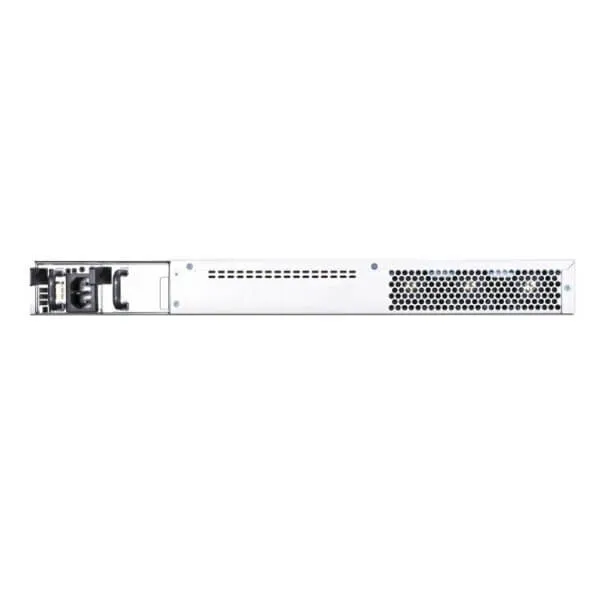
| Power Supply | 100–240V AC, 50–60Hz; optional redundant hot-swap power option | Confirm included power configuration and regional cords before order. |
| Power Consumption | 90.1W average / 99W maximum | Useful for UPS and rack power planning. |
| Dimensions | 4.4 x 43.8 x 41.6 cm | Height x width x depth. |
| Weight | 10.2 kg | Allow safe handling and adequate rack support. |
| Operating Environment | 0–40°C; 20–90% non-condensing humidity; front-to-back airflow | Use a ventilated, controlled rack environment. |
| Trusted Platform Module | TPM Gen 2 | Hardware generation should be confirmed against the supplied unit. |
The most important sizing input is measured daily log volume, not the number of firewalls alone. Two organizations with the same device count can produce very different data volumes because one may enable detailed traffic logging, web filtering, intrusion prevention, VPN events, DNS security, application control, endpoint telemetry, and multiple virtual domains. The other may record only selected security events. Buyers should collect recent averages and peak periods from the current environment, then include growth for new branches, higher internet use, more security services, and longer operating hours.
Retention should also be separated into active analytics, archive expectations, backup needs, and legal or policy requirements. The documented maximum analytics period assumes sustained ingest at the stated rate. Lower average volume can extend the period, while heavier logging or different analytics settings can shorten it. FourTeck can help buyers prepare a capacity discussion, but final design should be confirmed by the responsible security architect or qualified implementation team.
Configuration and Buyer Guidance
A successful purchase begins with a clear logging design. Before selecting the appliance, determine which devices will send records, what types of events must be retained, how much data is generated on an average day, and how much the environment may grow during the expected service life. Device count should include FortiGate virtual domains and other supported sources, because a large number of logical environments can create operational scale even when the physical appliance count appears modest.
1. Measure Daily Volume
Use actual log data where possible. Review average, peak, and projected volume rather than relying only on a rough device count.
2. Define Retention
Separate active investigation needs from archive or external backup requirements. Confirm how many days or months different records must remain available.
3. Review Optional Services
IOC, outbreak detection, automation, compliance, threat intelligence, FortiAI, OT, and managed services depend on selected subscriptions or bundles.
4. Confirm Infrastructure
Check rack depth, cooling, front-to-back airflow, UPS load, power cords, network ports, VLANs, management access, and backup connectivity.
Support terms should be treated as part of the solution rather than an afterthought. Procurement teams should ask which FortiCare level is included, how long it runs, what software and technical assistance it covers, and how renewal will be handled. A hardware-only price may appear lower but can create a very different operational outcome from a package that includes the required support and security services.
Organizations should also decide who will administer the platform, who will review alerts and reports, how administrator access will be protected, and how configuration backups will be maintained. A centralized analytics system delivers better value when ownership, review frequency, escalation procedures, and report audiences are defined before deployment. FourTeck can assist with product and bundle guidance, while implementation responsibility should be assigned to trained technical personnel.
Ideal Business Use Cases
The appliance is most useful where security records must support real operational work. It can serve different sectors, but the common requirement is centralized visibility across multiple enforcement points and enough log volume to justify a dedicated platform.
Multi-Branch Enterprises
Retail groups, logistics companies, financial networks, hospitality businesses, healthcare groups, and professional organizations can consolidate logs from distributed FortiGate deployments. Central records help a regional security team understand branch activity without depending on local staff to export information from each site.
Security Operations Teams
Internal security teams can use centralized events, dashboards, reporting, and investigation tools to support daily monitoring and incident review. Optional services may extend automation and threat context, depending on the selected entitlement and operational maturity of the organization.
Regulated and Audited Environments
Banks, public-sector organizations, education institutions, healthcare providers, and enterprises with formal governance programs may need consistent security records and repeatable reports. The platform can support those workflows, although retention, access control, and report design must be aligned with applicable policy requirements.
Data Center and Campus Security
Organizations using FortiGate appliances for data center edge protection, internal segmentation, campus control, VPN concentration, or cloud connectivity can centralize event evidence from several security zones. This helps analysts see related activity across perimeter, internal, and remote-access controls.
Managed Security Operations
Service providers and system integrators may consider the appliance for supported customer environments where device count and log volume fit the platform. Tenant separation, access controls, reporting boundaries, support terms, and service design should be reviewed carefully before using it for managed operations.
Incident and Forensic Support
Central records can help technical teams reconstruct timelines, review policy actions, examine suspicious destinations, compare activity across sites, and preserve evidence for follow-up. The quality of this use case depends on correct time settings, sufficient logging, protected administrator access, and a documented retention process.
FortiAnalyzer FAZ-300G Centralized Log Collection
Central collection is the foundation of the platform. Every firewall, virtual domain, branch, and protected network creates a stream of operational evidence. Those records can include traffic sessions, policy actions, VPN events, administrator changes, web activity, application use, intrusion events, malware detections, system status, and other Fortinet telemetry. When these records remain only on individual devices, investigation becomes slower and retention can vary from one location to another.
The FAZ-300G is documented for up to 100 GB of logs per day and a sustained collector rate of 3,000 logs per second. These are capacity indicators, not a promise that every environment will experience the same outcome. Real performance depends on software version, database activity, report workload, event mix, configuration, and the balance between collection and analytics. Buyers should use measured data and include headroom rather than designing exactly at the maximum.
Network design matters as well. The four Gigabit Ethernet interfaces can support separation between management, log intake, backup, or other planned traffic, subject to final configuration. Administrators should decide which networks can reach the appliance, how devices will authenticate and send logs, how time synchronization will be maintained, and whether traffic must cross constrained WAN links. Branch sites with limited connectivity may require careful forwarding and bandwidth planning.
For business leaders, centralized collection creates a more dependable operational record. It helps reduce gaps created by inconsistent local storage and gives security staff one place to begin review. However, value depends on governance: teams need rules for onboarding new devices, maintaining time accuracy, protecting the management interface, reviewing failed log sources, and validating that critical systems are still reporting.
FortiAnalyzer FAZ-300G Analytics and Reporting
Collecting logs has limited value unless teams can turn them into useful findings. Analytics and reporting help administrators move from raw technical records toward patterns, trends, summaries, and evidence that can support decisions. A network engineer may need to understand VPN stability or policy usage. A security analyst may need to examine suspicious activity. A manager may need a concise view of recurring risks, blocked threats, user activity, or branch conditions.
Fortinet documents a sustained analytics rate of 2,000 logs per second for this model and a maximum of 50 analytics days when logs arrive continuously at that sustained rate. The period can increase when average volume is lower. Buyers should not treat 50 days as a fixed retention promise because actual results depend on ingest, database use, report activity, event type, and system configuration. A practical design should define which records need rapid searchable access and which can move into a longer-term archive or backup process.
Reporting should be planned around real audiences. Technical reports may include detailed events, policy changes, VPN behavior, application activity, or threat findings. Management reports should be shorter and explain business impact, recurring conditions, and required action. Audit-oriented reports may need controlled schedules, consistent date ranges, secure distribution, and documented ownership. Building too many reports without a review process can create noise rather than clarity.
FourTeck encourages buyers to define the first set of dashboards and reports before implementation. This makes it easier to confirm whether the selected capacity, optional services, and administrative model fit the requirement. It also helps the organization assign responsibility for reviewing results and following up on exceptions instead of treating the appliance as a passive storage destination.
FortiAnalyzer FAZ-300G Storage, RAID and Retention
Storage planning is one of the most important buying decisions because raw disk size does not directly equal the amount of log history available for active use. The FAZ-300G includes two 4 TB drives for 8 TB of raw capacity. Fortinet lists software RAID 0 and RAID 1 support, with RAID 1 as the default. Under the default mirrored layout, usable storage is 4 TB. The mirror provides protection against a single-drive failure scenario, but it does not replace an external backup, archive, or disaster recovery strategy.
The drives are listed as non-removable, which affects maintenance planning. Buyers should understand the service process, warranty path, backup arrangement, and expected recovery procedure before the appliance enters production. Optional redundant hot-swap power may be available, but the included power configuration must be confirmed in the specific quotation and order code. A design should never assume that every redundancy option is included by default.
Retention is driven by more than capacity. Daily ingest, traffic logging depth, enabled security profiles, number of devices, virtual domains, report workload, analytics database behavior, and archive policy all influence the result. Peak periods also matter. An organization may generate much more data during an incident, a network change, a seasonal sales period, or a large remote-work event. Capacity planning should include those conditions.
A sound retention design separates operational analytics from long-term evidence. Recent records may need quick query and dashboard access, while older data may be moved to an approved archive or backup location. Buyers should define the business reason for each period, the responsible owner, access controls, and restoration expectations. This creates a clearer cost model and reduces the risk of purchasing storage without a workable information lifecycle.
What Buyers Should Check Before Purchase
Before requesting a quote, buyers should confirm the required capacity, usage environment, compatibility needs, warranty expectations, and delivery location. The model name alone does not show whether the appliance will retain enough history, support the expected number of virtual domains, include the correct service entitlement, or fit the organization’s rack and power design. FourTeck can help review these details so the selected package matches the operational requirement.
Capacity Fit
Provide average and peak GB/day, logs per second where available, device count, VDOM count, and the expected growth over three to five years. Include new branches, security services, cloud connections, and logging changes already planned.
Compatibility Check
Confirm supported FortiOS and FortiAnalyzer versions, source device compatibility, management network design, time synchronization, authentication, backup destination, and any third-party log requirements before deployment.
Services and Renewal
Clarify whether the offer is hardware only, includes FortiCare, or includes an enterprise protection package. Ask which optional services are active, how long they run, what renewal will cost, and who manages renewal dates.
Rack and Power
Verify rack depth, rails, front-to-back airflow, UPS capacity, power cords, optional redundant power requirements, cable routes, available switch ports, and secure physical access to the appliance.
Deployment Scope
Decide whether the purchase includes installation, initial setup, device onboarding, report creation, administrator training, migration from an older platform, testing, documentation, or only hardware and licensing.
Quote Preparation
Share product quantity, delivery country, required support term, current environment, daily log volume, retention target, optional services, implementation timeline, and any procurement documentation needed for approval.
Buyers comparing this model with the FAZ-150G, FAZ-810G, virtual FortiAnalyzer, or cloud options should focus on ingest capacity, usable storage, appliance ownership, support model, expected growth, resilience, and operational skills. A smaller platform may reduce initial cost but leave little room for new sites. A larger platform may provide more headroom but require a higher budget and more rack resources. FourTeck can help identify a sensible shortlist, while the final technical selection should be approved against measured requirements.
Africa Availability and Service Support
FourTeck supports product inquiries across Africa with assistance for model selection, capacity review, quote preparation, delivery coordination, and warranty guidance. Availability can vary according to supplier status, hardware revision, selected service package, order quantity, and destination. Because the FAZ-300G may be supplied as hardware only or within a package that includes FortiCare and optional enterprise services, buyers should request a quotation that clearly identifies every included line item.
A complete request should state whether the organization needs one appliance or a project quantity, the preferred support term, the daily log volume, the number of devices and VDOMs, the required retention period, and any optional IOC, automation, compliance, threat intelligence, OT, managed monitoring, or FortiAI functions. This information helps reduce delays caused by incomplete part numbers or unclear entitlement expectations.
Delivery planning should include the destination country, city, site access requirements, import or procurement documentation, delivery deadline, and any rack-readiness constraints. FourTeck can coordinate the commercial discussion and help buyers understand what must be confirmed before the order is finalized. Warranty handling depends on the supplied product, support term, purchase route, and applicable service conditions, so exact coverage should be documented in the quotation.
Africa Country and Regional Coverage
Businesses across Africa, including Kenya, Uganda, Nigeria, Ghana, Tanzania, Rwanda, Ethiopia, South Africa, Zambia, Botswana, Senegal, and other regional markets can contact FourTeck for availability guidance, configuration review, quotation support, and delivery coordination. Requirements may come from banks, government agencies, universities, healthcare groups, telecom operators, logistics companies, retailers, manufacturers, hospitality businesses, service providers, and regional enterprises. FourTeck can help each buyer prepare the device count, VDOM count, daily ingest estimate, retention target, service term, and destination details needed for a clearer commercial response. Regional supply conditions differ, so final timing, warranty route, included accessories, and support entitlement should always be confirmed in the formal offer rather than assumed from a general product listing.
GCC, Middle East and Africa Availability
FourTeck Africa can support inquiries for organizations operating across Africa while also guiding regional technology requirements through connected FourTeck platforms for GCC and Middle East markets. Regional groups may standardize Fortinet security operations across offices in the UAE, Saudi Arabia, Qatar, Oman, Bahrain, Kenya, Uganda, and other business locations. In these projects, the key requirement is often consistent logging, reporting, administrator access, support terms, and incident workflows across more than one country.
Availability, delivery options, warranty handling, and service entitlements may vary by country, supplier route, order quantity, and selected bundle. Buyers should state where the appliance will be installed, where procurement approval will take place, which entity requires the invoice, and whether the same reporting design will support several regional sites. These details can affect part-number selection, logistics, documentation, and support planning.
Other Options Buyers May Consider
The right choice depends on daily ingest, storage, retention, device count, operating model, and available infrastructure. Buyers may also need supporting Fortinet security products rather than a larger analytics appliance. The following links help procurement and technical teams explore related FourTeck options.
Fortinet Cybersecurity Solutions
Review the wider Fortinet ecosystem for firewalling, central management, analytics, endpoint, wireless, and security operations planning.
Fortinet Threat Intelligence Services
Useful for teams considering IOC enrichment, outbreak visibility, threat context, and related Fortinet security operations services.
FortiGate 3001G Enterprise Firewall
Consider for high-capacity data center edge and enterprise security projects that need centralized logging and reporting alongside the firewall.
FortiGate FG-3500G
A related high-capacity Fortinet platform for organizations designing major security, segmentation, and regional connectivity environments.
FortiGate FG-6500F
Suitable for very large data center and service-provider security projects where high-volume firewall telemetry may feed a centralized analytics design.
Business Firewall Solutions
Discuss compatible FortiGate options, logging architecture, management requirements, and related Fortinet products with FourTeck.
Why Buyers Choose FourTeck
Enterprise security purchases are easier when commercial and technical questions are handled together. FourTeck helps buyers move from a model request to a clearer requirement by reviewing capacity, support terms, optional services, delivery details, and related infrastructure. This is especially important for analytics appliances because a part number does not reveal how much log data the organization creates, how long it must be retained, or how reports will be used.
Assistance for organizations, institutions, resellers, integrators, and project procurement teams.
Review of log volume, device count, retention, rack conditions, and service requirements.
Clear commercial preparation based on quantity, destination, term, bundle, and project schedule.
Guidance for destination details, procurement documents, and delivery planning.
Clarification of support terms and warranty route based on the selected supply package.
Help comparing adjacent FortiAnalyzer capacity, virtual options, cloud approaches, and supporting Fortinet products.
FourTeck does not rely on unverified stock, price, or support claims. The team can provide current information during the quotation process and help buyers document what is included. That gives procurement, technical, and management stakeholders a stronger basis for approval. For the best response, share measurable requirements and project deadlines at the beginning of the inquiry.
Frequently Asked Questions
What is the FortiAnalyzer FAZ-300G used for?
It is used to collect, retain, analyze, and report on security and network logs from Fortinet environments. Organizations can use it to centralize records from multiple firewalls or virtual domains, support investigations, schedule reports, review events, and improve visibility across branches, data centers, remote access, and protected applications.
How much log data can the FAZ-300G handle?
Fortinet documents capacity of up to 100 GB of logs per day, a sustained analytic rate of 2,000 logs per second, and a sustained collector rate of 3,000 logs per second. Real results depend on configuration, event mix, reporting workload, software version, and how the appliance is used, so measured data should guide sizing.
How much usable storage does the appliance provide?
The appliance includes 8 TB of raw capacity using two 4 TB drives. With the default software RAID 1 configuration, Fortinet lists 4 TB of usable storage. Retention depends on daily ingest, analytics activity, event type, compression, and archive policy, so usable capacity should be evaluated against the organization’s measured logging profile.
How many devices can connect to the FAZ-300G?
Fortinet lists support for up to 180 devices or virtual domains. Buyers should count VDOMs as well as physical appliances and should also consider daily log volume. An environment may remain below the device limit but still generate high ingest because of detailed traffic logging, multiple security services, or heavy user activity.
Is the FortiAnalyzer FAZ-300G available in Africa?
FourTeck supports Africa inquiries for this appliance. Current availability depends on supplier status, hardware revision, selected support package, optional services, quantity, and delivery destination. Buyers should request a formal quotation and include the country, quantity, preferred support term, daily log volume, and required delivery timeline.
Can FourTeck help select the correct FortiAnalyzer model?
Yes. FourTeck can help compare the request against daily ingest, device and VDOM count, retention target, rack environment, budget, and expected growth. The discussion may include smaller or larger hardware models, virtual FortiAnalyzer, or cloud-based approaches where appropriate. Final technical approval should follow measured requirements and the intended operating model.
Are FortiCare and security services included?
They depend on the selected part number and bundle. The appliance may be quoted as hardware only, with FortiCare, or with an enterprise package that includes additional services. Buyers should confirm the exact term, entitlement, renewal path, and included functions in writing before approving the purchase.
What information is needed for a quotation?
Provide the number of appliances and VDOMs, average and peak GB per day, retention objective, preferred support term, optional services, delivery country, quantity, implementation deadline, and whether installation or migration assistance is required. Sharing this information early helps FourTeck prepare a more accurate and complete commercial response.
Can businesses request bulk or project supply?
Yes. Organizations, resellers, integrators, institutions, and regional groups can submit project requirements. The request should include quantity, destination, procurement documents, rollout schedule, support term, and whether several sites will share one logging design. Project availability and delivery planning are confirmed through the quotation process.
Need Help Choosing the Right Log Appliance?
FourTeck can help you review product capacity, device count, retention requirements, service options, warranty guidance, and delivery needs for your business location. Share your current Fortinet environment and expected growth for a more useful quotation.

Reviews
There are no reviews yet.