
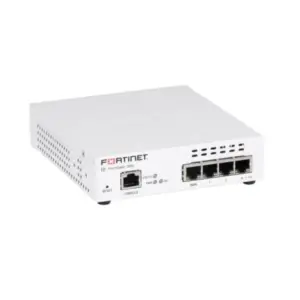
FortiAnalyzer FAZ-3100G Log Appliance in Africa
Built for organisations that generate security telemetry at data-centre scale, this 3RU Fortinet appliance brings centralized log collection, analytics, reporting, threat investigation and automation into a dedicated platform. It is suited to large enterprises, service providers, regulated institutions, managed security teams and multi-site environments where security data must remain available, searchable and operationally useful.
✓ 64 TB Raw Storage
✓ Hardware RAID
✓ Dual Hot-Swap Power
✓ Quote and Configuration Support
Check Africa Availability
Quick Product Information
Fortinet
FAZ-3100G
Centralized log and security analytics appliance
Security data collection, analytics, reporting and automation
Large enterprise, service-provider and regulated environments
Up to 3,000 GB per day
64 TB raw; 56 TB usable after default RAID
Contact FourTeck for current options
Africa-focused project coordination
Configuration, bundle and quotation guidance
Based on selected support term and supply route
Subscriptions and services are selection dependent
Product Overview
Security teams rarely suffer from a lack of data. Their challenge is turning millions of events from firewalls, endpoints, applications, cloud workloads and infrastructure systems into information that can be searched, correlated, reported and acted upon. A large environment may generate a continuous stream of connection records, policy events, threat alerts, administrator actions, authentication activity, vulnerability findings and system-health messages. When this information remains fragmented across individual devices, investigations take longer and management receives an incomplete view of risk.
The FAZ-3100G is designed to become a central security data platform for organisations with substantial telemetry volume. It collects and normalizes logs, supports dashboards and reports, provides analytics for investigation, and can form part of a broader security operations workflow. Fortinet positions the FortiAnalyzer family as a unified data lake with SIEM and SOAR capabilities, threat intelligence integration, automation content and support for both Fortinet and compatible third-party sources. For a buyer, the practical value is a clearer operating model: the security team can review events from a shared platform rather than opening many independent consoles during an incident.
This appliance class is not intended for a small office that only needs occasional firewall reports. Its capacity, rack footprint and storage design make it relevant to enterprise data centres, managed service providers, regional security operations centres, banks, telecom environments, government platforms, universities, healthcare groups, manufacturing networks and other organisations that need high-volume collection with predictable on-premises storage. The platform supports up to 3,000 GB of logs per day and a stated maximum of 4,000 devices or virtual domains. Those numbers should be treated as planning boundaries rather than automatic guarantees because log format, analytics workload, retention policy, report generation and active services all affect the final design.
The hardware uses a 3RU rackmount chassis with sixteen 4 TB self-encrypting SAS drives, hardware RAID, hot-swappable storage, redundant hot-swap power supplies and high-speed SFP28 connectivity. This physical resilience matters because the platform may hold evidence required for incident response, audit work and operational troubleshooting. A failure in one drive or one power supply should not automatically turn into a loss of visibility, although buyers still need independent backup, archive and disaster-recovery planning.
FourTeck supports the purchasing process by helping buyers translate security requirements into a quote-ready specification. Useful inputs include the number and type of log sources, average and peak ingestion volume, required retention period, compliance expectations, reporting schedule, high-availability approach, support term, public-cloud archive requirements and target implementation date. This preparation helps prevent a hardware-only purchase that later lacks the correct services, storage policy or operational plan.
Key Business Benefits
A centralized analytics appliance should make security operations more useful, not simply create another storage location. The benefits below connect the platform’s technical capabilities with the outcomes procurement teams, security leaders and infrastructure managers normally expect.
◆ Centralized Security Visibility
Bringing telemetry into a shared platform helps analysts connect activity across devices and services. Instead of checking one firewall, then another console, then a separate report server, the team can work from a consolidated view. This improves investigation consistency and gives managers a clearer picture of events affecting the wider environment.
● High-Volume Log Handling
Support for up to 3,000 GB per day gives large organisations room to collect data from extensive deployments. Adequate ingestion capacity reduces the pressure to discard useful records too early and supports a more complete security picture, provided sizing also accounts for peak periods, analytics activity and growth.
✓ Faster Investigation Workflows
Search, correlation, dashboards and event context help security teams move from a raw alert toward a documented incident. Faster access to related records can reduce time spent gathering evidence manually, allowing analysts to focus on impact, containment and recovery decisions.
⚙ Automation for Repeated Tasks
Event handlers, automated workflows and available response playbooks can reduce repetitive manual work. Automation is especially valuable for lean teams that need consistent alert handling, notifications and escalation without increasing headcount at the same rate as log volume.
▣ Reporting and Audit Support
Scheduled and on-demand reports help technical teams, auditors and management review security activity from different perspectives. Retention policies and role-based access can support internal controls, regulatory evidence and recurring operational reporting when the deployment is configured correctly.
↗ Scalable Operating Model
Analyzer and Collector modes allow architects to separate log reception from analytics in larger designs. This helps organisations build a distributed collection model where remote or high-volume sources forward data to a central analytics tier while preserving a consistent operational process.
🔒 Resilient On-Premises Storage
Hardware RAID, hot-swappable drives and redundant power supplies support continuity for a platform that may hold important investigation records. These features reduce single-component exposure, while a separate archive and backup strategy protects against site-wide failure or retention-policy mistakes.
Product Highlights
The 3100G platform combines high ingestion capacity with a storage architecture intended for continuous enterprise operation. Its stated analytic sustained rate is 42,000 logs per second, while Collector mode is rated at 60,000 logs per second. The distinction matters: an Analyzer spends resources indexing, correlating and presenting security information, while a Collector can focus more heavily on receiving and forwarding data. A design that separates those roles may provide better scale for organisations with many sites or high-volume sources.
Large-scale daily ingestion capacity.
Broad source coverage for major estates.
Capacity after the default RAID layout.
High-speed connectivity for data movement.
The storage system includes sixteen 4 TB 3.5-inch SAS self-encrypting drives and two 1.92 TB NVMe SSDs, with the official specification listing 64 TB of storage and 56 TB usable after RAID. Supported RAID options include 0, 1, 1s, 5, 5s, 6, 6s, 10, 50 and 60, with RAID 50 shown as the default. The drives are removable and the RAID subsystem is hardware based and hot swappable.
Optional service paths may include FortiGuard IOC and outbreak detection, security automation, an enterprise bundle, OT security functions, attack-surface rating and compliance capabilities, a threat-intelligence platform extension, FortiAI services and managed monitoring. Buyers should not assume these services are included with appliance-only hardware. Each quote should state the service term, support level and included subscriptions clearly.
Technical Specifications
| Specification Area | FAZ-3100G Details |
|---|---|
| Brand | Fortinet |
| Model | FAZ-3100G |
| Product Type | Centralized log and security analytics appliance |
| Daily Log Capacity | Up to 3,000 GB per day |
| Analytic Sustained Rate | 42,000 logs per second under stated test conditions |
| Collector Sustained Rate | 60,000 logs per second under stated test conditions |
| Maximum Devices / VDOMs | 4,000 |
| Maximum Analytics Days | 30 days at the stated sustained analytics rate; longer retention may be possible at lower average rates |
| Form Factor | 3RU rackmount |
| Network Interfaces | 2 × GE RJ45 and 2 × 25GE SFP28 |
| Raw Storage | 64 TB using 16 × 4 TB 3.5-inch SAS self-encrypting HDDs, plus 2 × 1.92 TB 2.5-inch NVMe SSDs |
| Usable Storage After RAID | 56 TB |
| RAID Support | RAID 0, 1, 1s, 5, 5s, 6, 6s, 10, 50 and 60 |
| Default RAID | RAID 50 |
| Drive Serviceability | Removable, hardware RAID, hot swappable |
| Power | Redundant hot-swap power supplies; 100–127V at 10A or 200–240V at 5A |
| Power Consumption | 395 W average / 510 W maximum |
| Dimensions | 13.0 × 44.0 × 65.0 cm (height × width × length) |
| Weight | 31.57 kg |
| Airflow | Front to back |
| Operating Temperature | 0°C to 40°C |
| Management and Services | FortiAnalyzer platform; optional services and bundles are selection dependent |
| Availability | Contact FourTeck for current Africa supply, support-term and delivery options |
These figures should guide initial sizing, but the final configuration must reflect actual log-source behaviour. Average daily volume can hide short peaks caused by attacks, software upgrades, audit events or temporary troubleshooting. Retention also depends on how much data is kept in analytics form, how much is archived, and whether logs are compressed, forwarded or backed up externally. Buyers should review at least several weeks of log statistics where possible, then include growth allowance for new sites, additional endpoints and more detailed security policies.
Power, rack depth and airflow deserve the same attention as software capacity. The chassis is 65 cm deep and weighs more than 31 kg, so the rack, rails, floor loading and installation process should be suitable for enterprise hardware. Dual power supplies are most useful when connected to separate protected feeds, and a planned UPS or PDU arrangement helps preserve logging during utility disturbances.
Configuration and Buyer Guidance
A correct purchase begins with a logging profile, not a model name. Before requesting a quotation, identify which systems will send data, how much each source generates and what the organisation expects to do with that information. Firewall traffic logs, endpoint alerts, email-security events, cloud telemetry and third-party syslog can have very different volume patterns. A design based only on device count may therefore be misleading.
1. Measure the Workload
Record average and peak GB/day, event rate, source count and expected growth. Use actual monitoring data where available rather than a rough estimate.
2. Define Retention
Separate searchable analytics retention from long-term archive requirements. Compliance, investigation and legal needs may require different storage periods.
3. Choose the Architecture
Decide whether one appliance is sufficient or whether Collector nodes, high availability, cloud archive or disaster-recovery replication should be included.
4. Confirm Services
Clarify FortiCare, enterprise protection, automation, IOC, outbreak detection, compliance, OT and FortiAI options before commercial approval.
5. Review Integration
Confirm source compatibility, firmware versions, syslog format, API connectivity, authentication, time synchronization and network routing.
6. Plan Operations
Assign administrators, report owners, incident workflows, backup responsibility, patch windows, alert review and renewal management.
The quote should clearly distinguish appliance-only hardware from bundled hardware and service subscriptions. A lower initial hardware number may exclude important support or analytics services. Conversely, an extensive bundle may include functions the organisation will not use immediately. FourTeck can help the buyer compare service terms and identify whether a one-year, three-year or five-year approach fits the procurement cycle and operating budget.
Physical deployment should also be discussed early. Confirm rack units, rack depth, rail availability, front-to-back cooling, power connector requirements, UPS capacity, dual-feed design, 25GbE optics or DAC cables, management network access and secure administrator authentication. These practical details often determine whether installation proceeds smoothly after delivery.
Ideal Business Use Cases
This appliance is most valuable where security data has operational, regulatory or commercial importance. The following examples show how different organisations may use the platform, subject to correct sizing and active services.
Enterprise Security Operations Centre
A central SOC can collect telemetry from firewalls, endpoints, email systems, authentication services, applications and cloud environments. Analysts gain a common workspace for alert review, event correlation, investigations and executive reporting.
Managed Security Service Provider
A service provider may use administrative domains and structured collection to separate customer environments while maintaining centralized operations. Capacity planning must include customer growth, reporting schedules and retention commitments.
Financial and Regulated Networks
Banks, insurers, payment platforms and regulated enterprises often need detailed event retention, administrator accountability and repeatable reports. The platform can support those processes when policies, access controls and archive procedures are configured to match the organisation’s obligations.
Government and Public Services
Public platforms may span data centres, departments, remote sites and citizen-facing services. Central analytics can improve incident coordination and provide evidence for internal review, provided the deployment follows applicable data-handling requirements.
Telecom and Service Infrastructure
High device counts and continuous traffic can create large log volumes. A dedicated appliance helps operations teams retain visibility while separating analytics work from the individual enforcement systems that generate the events.
Critical Infrastructure and OT
Energy, utilities, manufacturing and transport environments may need security monitoring across IT and operational systems. Optional OT-related services can add relevant analytics, but source compatibility and operational safety must be validated before deployment.
University and Healthcare Groups
Large campuses and healthcare groups often have many departments, user populations, specialist systems and remote facilities. Central collection can help security teams investigate activity across a diverse estate without depending only on local device logs.
Multi-Site Enterprise Monitoring
A regional company can consolidate records from headquarters, branches, data centres and cloud services. Collector mode may help distribute ingestion while a central Analyzer maintains reporting and investigation functions.
The platform can also support troubleshooting and capacity planning because network and system logs reveal performance trends, service interruptions and unusual patterns. Security and infrastructure teams should agree on data ownership, retention and access rules so operational use does not weaken confidentiality or overwhelm the analytics workload.
FortiAnalyzer FAZ-3100G High-Volume Analytics
Ingestion capacity is the first reason many buyers review this platform, but useful analytics requires more than receiving messages quickly. The system must parse, index and correlate records while analysts run searches, dashboards and reports. Fortinet’s stated 42,000-log-per-second analytic sustained rate gives architects a reference for continuous operation, while the 60,000-log-per-second Collector rate reflects the lighter processing role of a collection tier.
A real environment rarely generates a perfectly even flow. A malware outbreak, network failure, policy change or authentication problem can create sudden bursts. Log sources may also become more verbose after a firmware update or during troubleshooting. Buyers should therefore capture peak events per second as well as daily totals. Allowing sensible headroom can protect report performance and prevent the platform from operating continuously near its limit.
Analytics design also depends on data quality. Consistent time synchronization, correct device naming, organized administrative domains, accurate parser selection and controlled source onboarding make investigations more reliable. When timestamps are wrong or duplicate sources use inconsistent names, even a powerful appliance can produce confusing results. A deployment plan should therefore include source inventory, time-server validation, naming standards and test searches before the platform becomes the main evidence source.
FourTeck can help buyers frame the commercial requirement around the expected workload, but internal security owners should define what success looks like. Useful measures may include report completion time, alert triage time, retention compliance, onboarding time for new devices and the percentage of critical sources that are actively monitored.
FortiAnalyzer FAZ-3100G Resilient Storage Design
Security logs can become evidence during an incident, a source for audit reporting or the only record of an administrator action. Storage resilience therefore has direct business value. The appliance uses sixteen self-encrypting SAS drives and hardware RAID, with 56 TB of usable capacity under the stated default layout. Hot-swappable drive support helps service teams replace a failed unit without treating every disk issue as a full shutdown.
RAID improves availability, but it is not a backup. It cannot protect against accidental deletion, malicious administrative action, platform compromise, a building-level event or a retention policy that removes data too early. Buyers should decide whether important records need secondary archive, off-appliance backup or public-cloud storage. The recovery process should be tested, documented and assigned to a named operational owner.
Retention calculations should distinguish raw capacity from usable capacity and from effective retention after database overhead and analytics activity. The official maximum of 30 analytics days is tied to continuous ingestion at the sustained analytics rate; an organisation with lower average volume may retain data longer. Conversely, heavier indexing, rapid growth or additional source types can reduce the practical period. This is why capacity planning should use measured data and a documented growth assumption.
The storage policy should also state which records remain searchable, which move to archive and which may be deleted. Security, legal, privacy and compliance stakeholders may have different priorities. Resolving those requirements before implementation prevents the platform from becoming either an uncontrolled data warehouse or an undersized system that cannot meet investigation needs.
FortiAnalyzer FAZ-3100G Automation and SecOps Integration
A mature security operation needs to move from visibility to action. FortiAnalyzer can support event handlers, correlation rules, notification workflows and available SOAR playbooks that help teams respond consistently. Common examples include opening a ticket, sending an alert to the correct group, enriching an event with threat context or triggering an approved action through another Security Fabric component.
Automation should begin with well-understood, low-risk tasks. A workflow that sends a notification is easier to govern than one that changes access policy automatically. Security leaders should define approval boundaries, test conditions, rollback procedures and audit records before enabling response actions. This helps the organisation gain efficiency without introducing uncontrolled change into production systems.
Optional services can extend the platform with IOC and outbreak detection, automation content, threat-intelligence integration, compliance functions, OT analytics or FortiAI assistance. These capabilities may improve investigation speed and analyst productivity, but the commercial quote must state exactly which services are licensed and for how long. Renewal planning is important because an expired entitlement may reduce access to updates or advanced functions even though the hardware remains installed.
Integration planning should cover FortiGate, FortiManager, endpoint products, email security, identity systems, cloud workloads and supported third-party sources. The desired workflow, not the number of logos in a diagram, should determine which integrations are configured. FourTeck can help identify related products and service options during the buying process so the appliance is considered as part of the wider security architecture.
What Buyers Should Check Before Purchase
Before requesting a quote, buyers should confirm the required configuration, usage environment, compatibility needs, support expectations and delivery location. The model may be technically powerful, but a successful purchase depends on matching the appliance to the real security operation instead of selecting it only by storage size or a headline ingestion number.
Configuration Fit
Provide average and peak GB/day, events per second, device count, VDOM count, retention target, report frequency and expected three-year growth.
Compatibility Check
List Fortinet and third-party sources, firmware versions, syslog formats, APIs, authentication methods, time servers and required integrations.
Availability and Warranty
Confirm appliance route, service term, support level, delivery expectation, warranty handling and replacement process for the selected country.
Quote Preparation
State whether the requirement is hardware only, a one-, three- or five-year bundle, high availability, archive service, installation support or project supply.
Buyers should also ask how similar models differ. A smaller FortiAnalyzer may cost less but provide insufficient retention or ingestion headroom. A larger platform may add capacity the organisation cannot use during the planned lifecycle. Virtual and cloud options may be better where hardware ownership, rack capacity or geographic collection requirements favour a software-based approach. FourTeck can help review alternatives when the first model requested does not align with the measured workload.
Required accessories should appear in the same discussion. These may include SFP28 transceivers, fibre patch leads, DAC cables, rack rails, appropriate power cords, UPS capacity, PDUs and management cabling. Installation may also require IP addressing, DNS, NTP, administrator identity integration, certificate planning, firewall rules for source communication and secure backup destinations.
Long-term cost includes more than the purchase price. Support renewals, advanced services, storage archive, replacement parts, staff training, professional services, power use and rack space all contribute to lifecycle cost. A three- or five-year bundle can simplify budget planning, but the organisation should still track renewal dates and confirm which services remain valuable.
For bulk, managed-service or multi-country projects, share the deployment schedule, number of appliances, site roles and whether each unit will run as Analyzer, Collector or part of a resilient design. Clear information allows the commercial response to separate base hardware, subscriptions, accessories, delivery and implementation elements.
Africa Availability and Service Support
FourTeck supports product inquiries across Africa with assistance for model validation, configuration review, quotation, delivery coordination and warranty direction. Availability can vary according to appliance version, service bundle, support term, supplier status, destination, accessories and order quantity. Enterprise security appliances should therefore be confirmed against the current requirement rather than assumed to be available in every bundle at all times.
The most useful inquiry includes daily log volume, number of devices, analytics retention, archive requirements, preferred term, high-availability need and target delivery window. FourTeck can use those details to help determine whether the requested model is suitable or whether a smaller, larger, virtual or cloud-based option deserves review.
Support guidance may include FortiCare direction, enterprise protection options, IOC and outbreak services, automation, compliance capabilities, OT functions, public-cloud backup and managed monitoring. Final entitlement depends on the selected SKU and contract. Buyers should request a line-by-line commercial description so technical and procurement teams understand what is included.
Africa Country and Regional Coverage
Businesses across Africa, including Kenya, Uganda, Nigeria, Ghana, Tanzania, Rwanda, Ethiopia, South Africa, Zambia, Botswana, Senegal and nearby regional markets can contact FourTeck for availability guidance, configuration discussion and quote assistance. The team can help buyers review suitable Fortinet models, support terms, delivery requirements, rack readiness and related security products based on the planned environment.
Regional projects often involve a head office in one market, operational sites in several others and procurement approval from a shared finance team. In that situation, logging architecture should account for WAN reliability, local collection, data-governance rules, time zones, administrator roles and disaster recovery. A centralized appliance may remain at the main data centre while Collectors or source-side buffering support remote locations.
FourTeck encourages buyers to provide the final delivery country, installation location, quantity, preferred service term and project deadline. This information supports clearer commercial coordination and avoids repeating the same country wording across separate product pages.
GCC, Middle East and Africa Availability
FourTeck Africa can support product inquiries for organisations across Africa while also guiding regional technology requirements through selected FourTeck platforms serving GCC and Middle East markets. Businesses with operations in the UAE, Saudi Arabia, Qatar, Oman, Bahrain and African markets may use shared technology standards, central purchasing or cross-regional security operations.
A regional deployment may require one logging policy, consistent report formats and coordinated subscription dates across several countries. Delivery options, warranty handling, services and configuration support can vary by route, so the quote should identify the final destination and the office responsible for procurement. Where data residency is important, the architecture should also state where logs are stored and who can access them.
Other Options Buyers May Consider
A logging project often sits beside firewall, management and branch-security requirements. These FourTeck pages provide useful paths for organisations building a broader Fortinet environment or comparing the central platform with the devices that generate and manage security data.
FortiGate FG-3500G Firewall
Suitable for high-capacity data-centre firewalling where extensive security telemetry may be forwarded to a centralized analytics platform.
FortiGate 3001G
A related high-end Fortinet firewall option for enterprise edge, data-centre and large network designs requiring central reporting.
FortiGate 50G
Useful for branch environments that need firewalling, VPN and Fortinet security services while forwarding logs to a central team.
FortiGate 31G
A compact security appliance for smaller sites that may participate in a wider Fortinet logging and reporting architecture.
Buyers may also consider FortiManager for centralized configuration and policy administration, FortiAnalyzer virtual appliances for software-defined deployment, FortiAnalyzer Cloud for cloud-based collection, or higher-capacity hardware where the measured workload exceeds this model’s planning range. FourTeck can help discuss which approach fits the operating model rather than forcing every requirement into a single appliance.
Why Buyers Choose FourTeck
Enterprise security procurement involves technical, financial and operational stakeholders. The security team wants reliable analytics. Infrastructure teams need rack, power and network clarity. Finance needs a transparent quotation. Procurement needs the exact SKU, term and delivery route. FourTeck helps connect those requirements before the order is approved.
Clear product identification for enterprise buying teams.
Discussion of capacity, retention, bundles and deployment needs.
Commercial preparation based on the stated project scope.
Route and destination discussion without unsupported stock claims.
Guidance based on the selected support term and supply channel.
Support for firewalls, management, cloud and branch options.
The FourTeck approach is consultative without making unsupported promises. Availability is confirmed against the chosen configuration. Warranty guidance depends on the support term and purchase route. Delivery planning depends on the destination and project timing. This gives buyers a realistic basis for approval while preserving room to compare suitable alternatives.
FourTeck also helps make the inquiry more efficient. When the buyer shares log volume, source count, retention, bundle preference, delivery country and implementation window, the sales discussion can focus on the right appliance and services instead of repeatedly asking for missing information.
Frequently Asked Questions
What is the FAZ-3100G used for?
It is used to collect, store, analyse and report on security logs from large environments. Typical users include enterprise security operations centres, service providers, regulated institutions and multi-site organisations. The appliance helps analysts investigate incidents, review trends, generate reports and automate selected workflows from a centralized platform rather than relying only on local logs from individual devices.
How much log data can it handle?
The official specification lists support for up to 3,000 GB of logs per day, with an analytic sustained rate of 42,000 logs per second and a Collector sustained rate of 60,000 logs per second. Real results depend on source type, event size, enabled analytics, reports, retention policy and overall configuration, so measured workload data should guide final sizing.
Is it available for Africa projects?
FourTeck can assist with Africa-focused inquiries, model confirmation, quotation, delivery coordination and warranty direction. Availability depends on appliance status, selected bundle, support term, destination, quantity and accessories. Buyers should request current confirmation and provide the final delivery location, target date and preferred service term so the response reflects the actual project.
Can FourTeck help with configuration planning?
Yes. FourTeck can help buyers organize the commercial requirement around daily log volume, device count, retention target, service bundle, high availability, archive needs, rack power, network interfaces and delivery details. Final technical deployment should still be validated by qualified security and infrastructure personnel who understand the organisation’s data, compliance and incident-response requirements.
Does the appliance include all analytics services?
Not necessarily. Appliance-only hardware and bundled offers can include different support and service entitlements. Options may cover FortiCare, enterprise protection, IOC and outbreak detection, security automation, compliance, OT functions, threat-intelligence extensions or FortiAI. The quotation should identify the exact SKU, term and included services so the buyer can compare offers correctly.
How should retention be calculated?
Start with measured average and peak daily volume, then separate searchable analytics retention from long-term archive. The appliance lists 56 TB usable after the default RAID and up to 30 analytics days at the stated sustained rate. Lower average ingestion may extend retention, while growth, indexing and reporting can reduce it. Include a reasonable expansion allowance.
Is RAID the same as backup?
No. RAID helps the appliance continue operating through certain drive failures, but it does not protect against deletion, platform compromise, site loss or a retention mistake. Important logs may require separate archive, off-appliance backup or cloud storage. Recovery procedures should be tested so the organisation knows how to access evidence during an incident.
What information is needed for a quote?
Provide the model, quantity, delivery country, daily log volume, peak event rate, device or VDOM count, retention target, source types, required support term, service bundle, high-availability need, archive requirement, accessories and planned deployment date. This information helps FourTeck prepare a clearer response and recommend an alternative when the requested model does not match the workload.
Can businesses request project or bulk supply?
Yes. Enterprises, system integrators, managed security providers and multi-site organisations can request project supply. The inquiry should state how many appliances are required, whether they will operate as Analyzers or Collectors, which service terms must align, and whether accessories or deployment coordination are part of the project. Availability and commercial terms require current confirmation.
How do I choose between hardware, virtual and cloud options?
Choose according to data location, ownership preference, rack capacity, scaling model, disaster recovery, operational skills and budget. Hardware offers dedicated on-premises capacity. Virtual deployment can fit an existing compute platform. Cloud services reduce local hardware requirements. FourTeck can help compare the commercial paths, while the security architecture team validates performance, governance and integration.
Need Help Choosing the Right Log Analytics Platform?
Share your daily log volume, device count, retention requirement, preferred support term, delivery location and implementation window. FourTeck will help review model suitability, service options, quote details and project coordination.
Reviews
There are no reviews yet.