
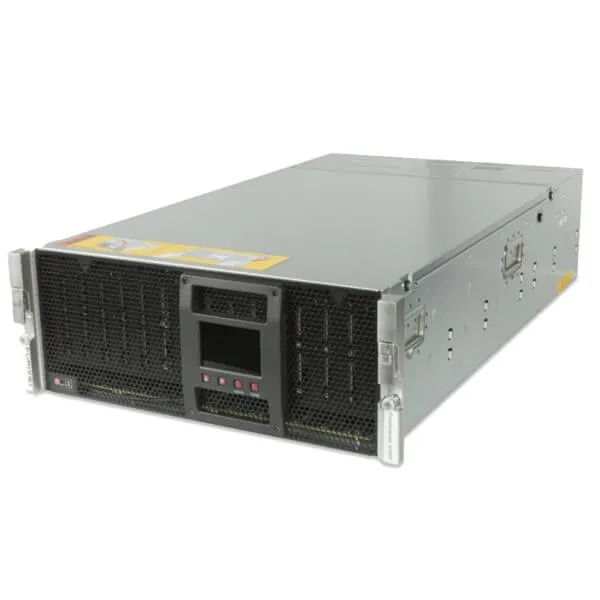
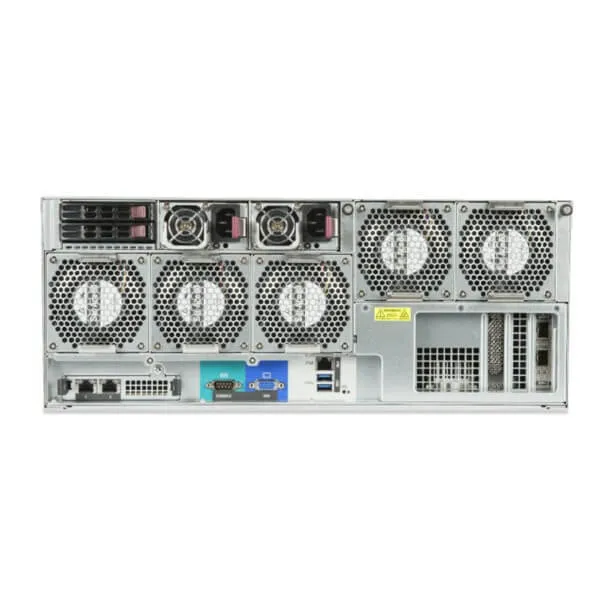
FortiAnalyzer FAZ-3700F Log Appliance in Africa
The FortiAnalyzer FAZ-3700F is designed for organisations that need to collect, retain, analyse and report on very large volumes of security events from distributed Fortinet and compatible infrastructure. Its 240 TB storage platform and high daily log-processing capability make it relevant for data centers, large enterprises, service providers, public-sector environments, financial institutions and regional groups that require a dedicated security analytics platform rather than lightweight local logging.
Request QuoteCheck Africa Availability
Quick Product Information
Fortinet
FAZ-3700F / FortiAnalyzer 3700F
Centralized log and security analytics appliance
240 TB raw storage platform
Up to 8,300 GB per day in published model material
2 x 1GE RJ45 and 2 x SFP+ slots
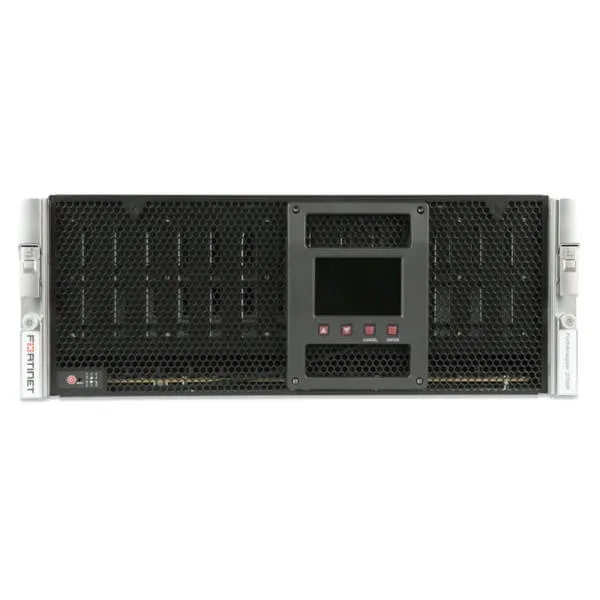
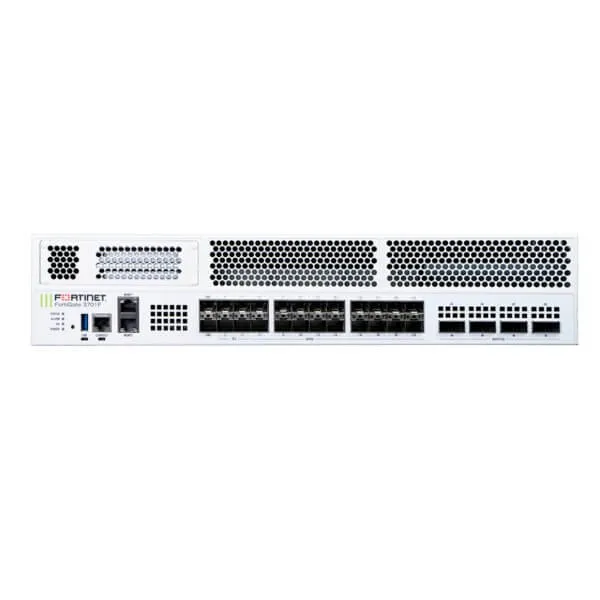
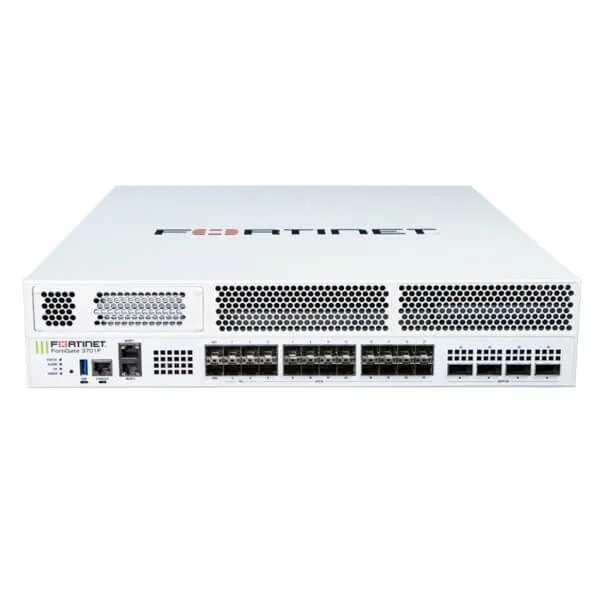
4U rackmount appliance
Contact FourTeck for current lifecycle and supply options
Product Overview
Security infrastructure can create an enormous volume of records. Firewalls generate traffic, threat, VPN, application and system events. Endpoint tools add device and user telemetry. Email, web, identity and cloud systems contribute further alerts. When this information remains scattered across individual appliances, investigation becomes slower, reporting becomes inconsistent and long-term retention is difficult to control. A dedicated FortiAnalyzer platform brings this information into a central operational view so security and network teams can work from a more organised evidence base.
The FAZ-3700F was built for the upper end of that requirement. Its large disk platform is intended for environments where log volume and retention cannot be handled comfortably by a small appliance. Published product material identifies 240 TB of storage and a maximum log-handling figure of up to 8,300 GB per day. Those figures make the appliance relevant for large Fortinet estates, managed security operations, multi-tenant environments, large administrative-domain counts and organisations that need months of searchable or archived records. Actual usable capacity is lower than raw capacity because system space, RAID behaviour, analytics allocation, archive policy and operational reserves must be considered during design.
FortiAnalyzer is more than a storage target. The platform supports central visibility, event correlation, dashboards, reports, alert handling, incident investigation and workflow assistance. Depending on the installed FortiAnalyzer version, active licenses and integrated products, teams can use it to review threat activity, monitor network behaviour, maintain audit evidence and build repeatable reporting for technical and management audiences. It can also operate in Analyzer or Collector roles, allowing larger designs to distribute ingestion, forwarding, analytics and reporting tasks across multiple systems.
For Africa buyers, procurement requires careful lifecycle and compatibility review because this is an established F-generation platform and newer FortiAnalyzer models may also be available. FourTeck helps customers confirm whether the exact appliance remains the correct choice, whether an available unit has the required support eligibility, which software release is appropriate, and whether a current-generation alternative would provide a better long-term support path. This practical review protects the buyer from selecting only by storage size or an attractive part number without checking firmware, contract, power, rack and operational requirements.
Key Business Benefits
A large log appliance should improve daily security work, not simply add another rack device. The following benefits explain how this platform can support business operations when it is correctly sized, licensed and integrated.
◆ Central Evidence Store
Central collection reduces the time analysts spend moving between separate firewalls and security tools. A common log repository supports more consistent investigation, retention and access control.
✓ Longer Retention Planning
Large raw storage gives enterprises more room to balance searchable analytics data with lower-cost archives. This supports incident review, operational history and audit evidence over longer periods.
● Faster Investigation
Structured dashboards, event handlers and drill-down workflows can help teams move from a high-level alert to related traffic, devices and users without manually collecting logs from every source.
⚙ Multi-Domain Operations
Administrative domains can separate customers, business units, countries or security zones. This is useful for managed services and large groups that need delegated access and independent policies.
↗ Reporting Efficiency
Scheduled and customised reports can support executives, auditors, security teams and operations managers with consistent information rather than ad-hoc exports from individual appliances.
🔒 Operational Control
Role-based administration, data policies, backup routines and central monitoring help organisations maintain clearer ownership of security information and reduce uncontrolled local log storage.
The business result depends on design quality. A 240 TB appliance can still deliver poor retention if every device logs unnecessary events, if analytics and archive quotas are not planned, or if reporting jobs are allowed to compete with ingestion during peak periods. FourTeck therefore encourages buyers to define daily volume, growth, compliance needs, searchable retention, archive retention, number of devices and expected report workload before treating capacity as a fixed number of months.
Product Highlights
Designed for high-volume analytics and archive requirements where smaller appliances may not provide sufficient retention headroom.
Published model guidance positions the system for very large daily ingestion, subject to software release, analytics workload and deployment design.
A 4U chassis with many SAS drives supports professional data center deployment, but requires careful rack depth, weight, cooling and power preparation.
Suitable for environments with many managed devices, numerous administrative domains and central reporting responsibilities.
The front-end network connectivity includes two 1GE RJ45 interfaces and two SFP+ slots. These are management and log-transport connections rather than data-plane firewall ports, so selection should focus on reliable integration with management networks, collectors and secure logging paths. The platform supports central event analysis, report creation, alerting, log forwarding and data-policy control through FortiAnalyzer software capabilities. Buyers should confirm the exact feature set against the target firmware release because software functions evolve and some newer capabilities may require current subscriptions or newer hardware.
The appliance is especially valuable when the organisation needs predictable on-premises custody of security records. Banks, government departments, telecom operators, universities, healthcare groups and service providers may prefer a dedicated system because retention policy, data location, administrative access and integration can be managed within the organisation’s own data center. At the same time, the age and lifecycle of the model should be part of the decision. FourTeck can help compare exact-model sourcing with a newer FortiAnalyzer appliance or virtual deployment so the final choice reflects support duration, budget and growth rather than storage capacity alone.
Technical Specifications
| Specification Area | FAZ-3700F Details |
|---|---|
| Brand | Fortinet |
| Model | FortiAnalyzer 3700F / FAZ-3700F |
| Product Role | Centralized log collection, analytics, reporting and security-operations appliance |
| Storage | 240 TB raw storage, commonly described as 60 x 4 TB SAS drives |
| Published Log Capacity | Up to 8,300 GB per day; practical performance depends on software, analytics, reports and deployment design |
| Managed Scale | Large enterprise and service-provider environments; published listings commonly reference up to 10,000 managed devices |
| Network Interfaces | 2 x 1GE RJ45 and 2 x SFP+ slots |
| Form Factor | 4U rackmount chassis for a standard 19-inch rack |
| Approximate Dimensions | 437 mm wide x 767 mm deep x 178 mm high; verify rack clearance and rail kit |
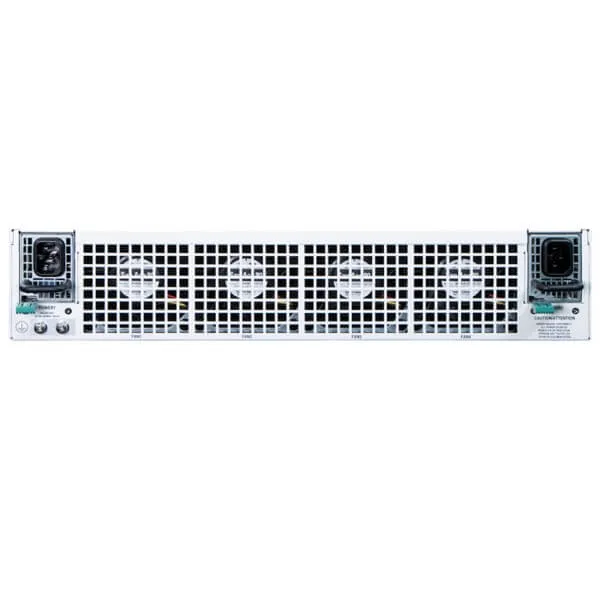
| Power | Data center power planning required; model documentation notes 200–240V input for the 3700F platform |
| Management | FortiAnalyzer administration, ADOMs, dashboards, event handling, reports, data policies and integrations according to installed release and licensing |
| Support | FortiCare and related services are contract dependent; eligibility must be confirmed for the offered unit |
| Availability | Contact FourTeck for current supply route, lifecycle status, suitable alternatives and delivery guidance |
Specification figures describe the model class, not a guaranteed retention period. FortiAnalyzer reserves part of the disk for system operation, reports and safety margin, while RAID and filesystem design influence usable capacity. Buyers should calculate retention using realistic daily volume, peak bursts, compression assumptions, analytics-versus-archive allocation and growth. A security team that needs ninety days of searchable logs and one year of archives will size differently from a managed service provider that needs separate customer quotas and heavy scheduled reporting.
The interface count also deserves practical review. The appliance does not need the same port density as a firewall because it receives management traffic and logs rather than carrying production packets. However, network teams should plan resilient management paths, link speed, VLAN separation, routing, firewall policies, secure administration and any Collector-to-Analyzer forwarding. Power is a critical check: published FortiAnalyzer material specifically notes that the 3700F should connect to a 200–240V source. Rack depth, chassis weight, rail support, cooling and safe maintenance access must be confirmed before shipment.
Configuration and Buyer Guidance
Start with log volume. Measure average and peak GB per day from existing FortiGate, FortiClient, FortiMail, FortiWeb, FortiSandbox, FortiManager, syslog and other sources. Avoid estimating only from device count because two firewalls of the same model can produce very different volumes depending on traffic, enabled policies, severity levels, session logging and user activity. Include expected growth from new branches, cloud services, endpoints and inspection features.
Retention Target
Define how many days must remain searchable for fast investigations and how many months or years can remain as archived evidence.
Device and ADOM Count
List managed devices, virtual domains, customers, departments and countries that may require separate administrative boundaries.
Reporting Load
Identify daily, weekly and monthly reports, compliance templates, executive summaries and custom datasets that will consume processing resources.
Support and Lifecycle
Confirm software support, FortiCare eligibility, target release and replacement horizon before approving an older-generation appliance.
Next, choose the deployment role. A single system can act as an Analyzer, but larger estates may use Collectors near log sources and forward to a central Analyzer. This can reduce WAN pressure, improve ingestion resilience and separate log receiving from report generation. Multi-site organisations should examine link quality, outage tolerance, local buffering and data-sovereignty expectations. Managed service providers should plan customer separation, delegated administration, quota policies and reporting schedules before importing devices.
Review integration requirements. Confirm the FortiOS and FortiAnalyzer versions supported by existing Fortinet products, authentication methods for administrators, SIEM forwarding, ticketing or notification workflows, backup destinations and network time sources. Decide whether third-party syslog sources are important and whether parsing or custom fields will be required. A technically compatible source may still need rule and report work before its logs become operationally useful.
Finally, prepare the data center. The chassis is deep and heavy because of its disk density. Check cabinet depth, rail compatibility, floor loading, airflow, service clearance, 200–240V power, redundant feeds, PDU connectors, UPS capacity, heat removal and maintenance access. FourTeck can help buyers turn these details into a complete request so the quotation addresses the appliance, support term, delivery plan and suitable current alternatives rather than only the base part number.
Ideal Business Use Cases
Enterprise Security Operations
Centralise firewall, endpoint, email, web and infrastructure records so analysts can investigate incidents, review trends and maintain consistent reports across large business units.
Managed Security Services
Use administrative domains and quotas to separate customer environments, control delegated access and generate customer-specific operational reports from a shared platform.
Financial and Regulated Environments
Support evidence retention, incident review, change monitoring and periodic reporting where organisations must demonstrate that security events are collected and managed consistently.
Telecom and Service Provider Networks
Handle high event volumes from many network segments, customer services and security gateways while maintaining operational separation and central investigation workflows.
Government and Public Infrastructure
Maintain on-premises control of security records, central reporting and role-based administration for distributed agencies, campuses or service platforms.
Universities and Large Campuses
Consolidate events from internet gateways, data centers, faculties, residences, wireless services and remote sites while supporting different operational teams.
The platform can also support large healthcare groups, logistics operators, mining companies, energy organisations, hospitality groups and multi-country enterprises. The common requirement is not simply “many users.” It is a combination of large log volume, multiple security devices, long retention, complex reporting and the need for central operational control. A smaller business with only a few firewalls may receive better value from a lower FortiAnalyzer model, FortiAnalyzer-VM or a cloud-based option. FourTeck can help distinguish these cases before budget is committed.
For disaster recovery, organisations should decide whether they need a second FortiAnalyzer, external backups, log forwarding to another site, or a Collector architecture. Storage redundancy inside one chassis does not replace a wider continuity plan. The right design considers appliance failure, site outage, database recovery, configuration backups, report continuity and how quickly analysts must regain access to historical records.
FortiAnalyzer FAZ-3700F High-Volume Log Processing
The headline capacity of up to 8,300 GB per day is important, but it should be interpreted correctly. Log receiving is only one workload. FortiAnalyzer also inserts records into its analytics database, indexes fields, applies event rules, generates reports, maintains archives, serves dashboard queries and may forward data to other systems. Peak bursts can be much higher than daily averages, especially during attacks, firmware changes, network failures or major business events. Good sizing therefore includes both sustained volume and peak behaviour.
Organisations should measure current data whenever possible. Export real daily figures from an existing FortiAnalyzer, FortiGate Cloud, SIEM or log platform. Separate routine traffic logs from security events, system records and endpoint telemetry. Review whether all current logging is necessary and whether policy changes could reduce noise without weakening visibility. Removing low-value records can improve retention and investigation quality, but disabling useful traffic or threat logs simply to fit storage can create blind spots.
Collector and Analyzer roles are valuable in large designs. A Collector can receive and archive logs close to the source, then forward them to an Analyzer that focuses on correlation and reporting. This arrangement can improve geographic resilience and distribute ingestion work. It can also support countries or business units with different link quality and retention rules. The topology should define what happens during WAN failure, how long logs remain buffered, which system is authoritative and how duplicate or delayed events will be handled.
FourTeck recommends including a three-year growth view in the sizing discussion. Add planned firewalls, endpoints, cloud workloads, branches and security services. Consider whether more encrypted inspection, application control or endpoint integration will increase event volume. A platform that is comfortable at installation but permanently saturated after one year will create operational pressure and shorten the useful life of the investment.
FortiAnalyzer FAZ-3700F Storage and Retention Control
The 240 TB figure represents raw installed storage, not the exact capacity available to a customer for logs. The system uses space for FortiAnalyzer operation, report files, database functions and safety margin. RAID protection also affects usable space. Fortinet guidance for current platforms notes that a percentage of disk capacity is reserved for system use and unexpected quota overflow. Buyers should therefore avoid dividing 240 TB by daily volume and assuming the result is a guaranteed number of retention days.
Retention design normally separates analytics data from archive data. Analytics data is indexed and ready for faster searches and reports, but it consumes more processing and storage overhead. Archive data can preserve a longer record at lower operational cost, though restoration or detailed analysis may take more work. A bank investigating suspicious activity may need ninety days of instantly searchable records, while an auditor may require one or more years of preserved archives. A service provider may need different quotas for each customer based on contract.
Data policies should be documented before deployment. Define which devices receive priority, what happens when quotas fill, which logs can expire, who can change retention and how alerts are generated when consumption grows unexpectedly. Trend reporting helps teams see whether a new firewall, noisy rule or business expansion is consuming more space than planned. Regular review is important because log behaviour changes as networks, applications and threats change.
Backup remains separate from retention. RAID protects against certain disk failures, but it does not protect against accidental deletion, corruption, administrator error, appliance loss or site disaster. Configuration backups, external report copies, log forwarding and disaster-recovery procedures should be considered according to business risk. FourTeck can help buyers identify the procurement implications, while the customer’s security and infrastructure teams should define the formal data-protection policy.
FortiAnalyzer FAZ-3700F Reporting, Analytics and Operations
Central reporting turns raw events into information that different teams can use. Network engineers may need bandwidth, VPN and device-health reports. Security analysts need threat, intrusion, malware and incident views. Compliance teams may need evidence mapped to organisational controls. Executives usually need a concise summary of exposure, trends and response activity. FortiAnalyzer supports dashboards and reports that can be scheduled or customised according to the installed release and licensed services.
Report design should be purposeful. Generating every available report for every device can waste resources and produce documents that nobody reads. Begin with decisions the organisation needs to make. A weekly branch-security report might identify repeated threats, failed VPNs, risky applications and devices that stopped sending logs. A monthly management report might summarise incident categories, response time, top risks and capacity trends. An audit report should use agreed periods, device scope and evidence controls so results are repeatable.
Event handlers and automation can reduce manual monitoring by turning selected patterns into alerts or workflow actions. The best rules are specific enough to identify meaningful behaviour without creating constant false positives. Teams should define ownership, severity, notification path, ticket handling and closure evidence. Automation should support analysts, not hide decisions or create uncontrolled changes. Integrations with email, ticketing, SIEM, FortiSOAR or other systems may require additional configuration and services.
Administrative design is equally important. Use separate roles for platform administration, security analysis, report viewing and customer access where appropriate. Protect management access with secure authentication, restricted networks and documented change control. Review firmware and content updates through a maintenance process. FourTeck can assist with product and support selection, while deployment should be completed by qualified teams familiar with the customer’s data, compliance and incident-response responsibilities.
What Buyers Should Check Before Purchase
Before requesting a quote, buyers should confirm the required configuration, usage environment, compatibility needs, support expectations and delivery location. The appliance should be chosen because it fits a measured security-operations requirement, not only because it offers a large storage number. FourTeck can help review these details so the selected option matches the project and does not arrive with missing support, power, rack or migration requirements.
Configuration Fit
Share daily and peak log volume, searchable retention, archive retention, device count, ADOM count and report workload. Include three-year growth rather than only today’s figures.
Compatibility Check
Confirm FortiAnalyzer software release, supported FortiOS versions, third-party sources, authentication, backup targets, SIEM forwarding and any Collector architecture.
Rack and Power
Verify 4U rack space, approximately 767 mm chassis depth, rail support, service clearance, cooling, 200–240V power, PDU connectors and UPS capacity.
Support and Lifecycle
Ask whether the offered unit is new, refurbished or available through another route, and confirm FortiCare eligibility, software access, warranty path and lifecycle position.
Migration Plan
Define how devices, ADOMs, reports, event handlers, archives and administrator roles will move from the existing platform, including rollback and downtime expectations.
Alternative Model Review
Compare current-generation FortiAnalyzer appliances, virtual options and cloud services when long-term support, power efficiency, NVMe acceleration or newer interfaces matter.
A complete quote request should include the buyer’s organisation type, country, city, quantity, target deployment date, current FortiAnalyzer model, current and projected GB per day, retention targets, number of Fortinet devices, support-term preference, rack and power readiness, integration requirements and whether professional migration assistance is needed. For project or bulk supply, add the required bill of materials, commercial-document format, delivery sequence and acceptance requirements.
Africa Availability and Service Support
FourTeck supports Fortinet product inquiries across Africa with assistance for model confirmation, configuration review, quote preparation, delivery coordination and warranty guidance. Availability for the FAZ-3700F may vary because the model’s lifecycle position, supplier route, support eligibility, physical condition, quantity and destination can affect what can be offered. Buyers should request current confirmation rather than assuming that a web listing represents immediately available inventory.
The support conversation can include log sizing, retention planning, support-contract options, suitable current alternatives, rack and power readiness, shipment requirements and migration scope. For an established model, it is especially important to confirm whether the quote covers hardware only, hardware with an eligible support term, or a refurbished unit with a different warranty route. FourTeck will help clarify the commercial position so procurement and technical teams can evaluate the same offer.
Delivery coordination depends on country, import process, order quantity, chassis weight and the selected logistics route. Large rack appliances may require careful packing, handling, insurance and site receiving arrangements. Buyers should identify loading access, cabinet location and any restricted delivery windows before dispatch. Warranty handling also depends on the exact supply route and selected contract, so the expected process should be confirmed in writing before purchase.
Africa Country and Regional Coverage
Businesses across Africa, including Kenya, Uganda, Nigeria, Ghana, Tanzania, Rwanda, Ethiopia, South Africa, Zambia, Botswana, Senegal and nearby regional markets can contact FourTeck for availability discussion, model guidance and quotation support. The team can help customers review whether this high-capacity appliance suits a national data center, regional headquarters, telecom environment, government platform, bank, university, managed service operation or multi-country Fortinet deployment.
Regional projects may have different power standards, import processes, delivery lead times, support expectations and data-residency requirements. A group with several countries may prefer local Collectors and a central Analyzer, while another may need separate appliances because of legal or operational boundaries. WAN quality, cross-border data transfer, administrator roles and disaster recovery should be included in the design before the hardware location is finalised.
FourTeck can also assist system integrators, resellers and procurement teams that need structured product information, alternative models, commercial documentation and project quantities. The most useful inquiry includes the destination, quantity, current platform, expected log volume, retention target, preferred support term and deployment schedule. This allows the sales discussion to focus on the real requirement instead of repeating location phrases or offering a one-size-fits-all configuration.
GCC, Middle East and Africa Availability
FourTeck Africa can support product inquiries for organisations across Africa while selected FourTeck regional platforms assist related requirements in GCC and Middle East markets. Businesses with operations in UAE, Saudi Arabia, Qatar, Oman, Bahrain and African countries may need one security-operations design but different procurement, delivery and support arrangements in each location. Availability and contract handling can vary by country, selected configuration, supplier status and quantity.
Regional groups should decide whether logs will remain within each country, be forwarded to a central data center or be split between local Collectors and a central Analyzer. This affects WAN capacity, resilience, data policy, administrator access and regulatory review. Procurement teams should also coordinate contract terms and renewal dates so one site does not lose support while another remains covered.
Other Options Buyers May Consider
The exact model may be appropriate for an installed-base expansion, a standardised estate or a project that specifically requires its 240 TB platform. Other buyers may receive better lifecycle, efficiency or software value from a newer FortiAnalyzer appliance or a virtual deployment. FourTeck can help compare the operational requirement rather than forcing every project into the same hardware choice.
FortiAnalyzer 3700G
Consider for high-volume projects seeking a current-generation platform with updated storage architecture and connectivity.
FortiAnalyzer 3500G
Suitable where a lower daily ingestion tier and smaller storage platform may meet enterprise reporting needs more efficiently.
FortiAnalyzer-VM
Useful for organisations that prefer virtual infrastructure, flexible licensing and storage supplied by their own data center platform.
FortiGate FG-3500G
A high-capacity firewall option for data center edge security that can feed rich telemetry into a FortiAnalyzer design.
FortiGate 3001G
Relevant for enterprise and data center networks that need high-speed firewalling with central analytics and reporting.
FortiGate FG-6500F
A very high-capacity security appliance for heavy traffic environments where central logging and investigation are essential.
Selection should compare daily log rate, storage, interface generation, power draw, software support horizon, migration effort and contract cost. A newer model may cost more initially but provide a longer supported life and better performance per rack unit. An exact replacement may reduce migration risk but require more careful support verification. FourTeck can help present these trade-offs for technical and procurement review.
Why Buyers Choose FourTeck
Enterprise security-appliance procurement involves technical, commercial and operational stakeholders. Security teams want visibility and retention. Infrastructure teams need rack, power and network compatibility. Finance teams need a clear quotation and renewal view. Procurement teams need accurate part identification, delivery details and support terms. FourTeck helps connect these requirements before the purchase is approved.
Assistance for enterprise hardware, security platforms and related infrastructure requirements.
Help reviewing capacity, retention, software, support, rack and power requirements.
Clearer commercial preparation for single units, projects, resellers and bulk requirements.
Discussion of destination, logistics route, handling requirements and delivery schedule.
Clarification based on offered condition, supplier route and selected support contract.
Comparison with newer FortiAnalyzer appliances, virtual options and related Fortinet products.
FourTeck does not treat a high-capacity log appliance as an isolated box. The enquiry may include FortiGate sources, FortiManager administration, FortiAnalyzer Collector design, SIEM integration, storage policy, UPS capacity, rack planning, support renewal and migration. By collecting this information early, buyers can reduce the risk of an incomplete bill of materials or a platform that cannot be supported for the expected project life.
Frequently Asked Questions
What is the FAZ-3700F used for?
It is used to collect, store, analyse and report on security logs from large Fortinet and compatible environments. It suits organisations that need central investigation, scheduled reporting, multi-domain administration and long retention for very high daily log volumes.
How much storage does the appliance provide?
Published specifications list 240 TB of raw storage. Usable log capacity will be lower because RAID, system reserves, reports, databases and safety margin consume space. Retention should be calculated from measured daily volume and the planned balance between analytics and archive logs.
What daily log rate can it support?
Model material lists up to 8,300 GB per day. Real performance depends on the FortiAnalyzer release, report workload, event handling, peak bursts, database activity, source mix and deployment topology. Buyers should size from measured data rather than only the maximum figure.
Is it suitable for a small business?
Usually not. The 4U chassis, 240 TB storage and high ingestion class are intended for large enterprises, data centers, service providers and multi-tenant operations. Smaller organisations may be better served by a lower appliance, FortiAnalyzer-VM or a cloud option.
Can FourTeck help with capacity planning?
Yes. FourTeck can help buyers organise daily volume, retention targets, device count, ADOMs, reporting needs, support term, rack and power information for a product-selection and quotation discussion. Final deployment design should be validated by qualified technical teams.
Does the platform require special power planning?
Yes. FortiAnalyzer documentation notes that the 3700F must connect to a 200–240V power source. Buyers should confirm PDU connectors, redundant feeds, UPS capacity, rack cooling and local electrical standards before delivery.
Is the model available in Africa?
FourTeck can assist with current availability checks and suitable alternatives. Supply depends on lifecycle position, offered condition, support eligibility, quantity, destination and supplier status. Request confirmation before purchase approval or project scheduling.
Can it work with non-Fortinet log sources?
FortiAnalyzer can receive supported third-party and generic syslog data, but usefulness depends on parsing, fields, reports and the installed software release. Buyers should list required sources and confirm integration expectations before selecting the platform.
How should buyers request a quote?
Send the delivery country and city, quantity, current log platform, average and peak GB per day, retention period, device count, support-term preference, rack readiness and deployment date. Include whether migration, configuration or a newer alternative should be quoted.
Can businesses request project or bulk supply?
Yes. Enterprises, resellers, integrators and public-sector buyers can request project quotations. Share quantities, delivery phases, bill-of-material requirements, commercial-document needs and acceptance timelines so FourTeck can review the request with the appropriate supply route.
Need Help Planning Your FortiAnalyzer Purchase?
FourTeck can help you review log volume, retention, device scale, lifecycle, support options, rack power, delivery requirements and suitable alternatives for your business location.
Reviews
There are no reviews yet.