
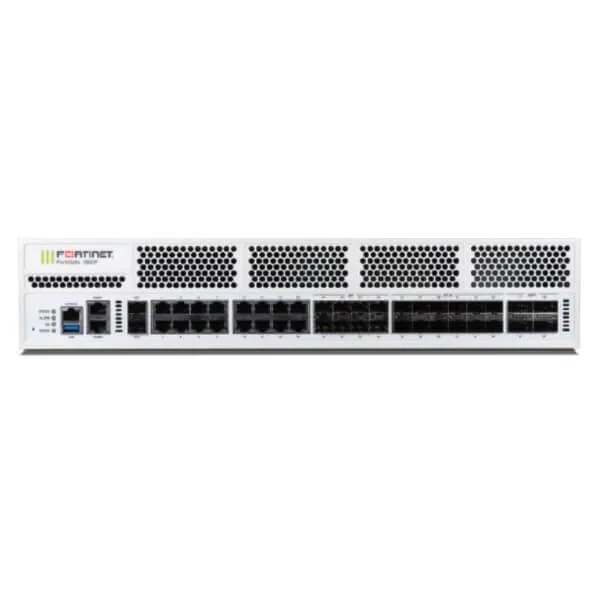
Fortinet FortiAnalyzer FAZ-800F in Africa
The Fortinet FortiAnalyzer FAZ-800F is a rackmount platform for central log collection, security analytics, reporting and operational visibility across Fortinet-focused environments. It is designed for organisations that need more control over security evidence than individual appliance logs can provide. FourTeck helps buyers review daily log volume, device count, retention requirements, firmware compatibility, support status, rack readiness and the practical case for choosing this mature model versus a newer FortiAnalyzer generation.
✓ Lifecycle Review
✓ Africa Delivery Coordination
✓ Quote Assistance
Request Quote
Check Africa Availability
Quick Product Information
Fortinet
FortiAnalyzer 800F / FAZ-800F
Centralized log and analysis appliance
1U rackmount
16 TB using four 4 TB drives
8 TB after default RAID 10
Logging, analytics, reporting and investigation
Mid-size and large Fortinet environments
Contact FourTeck for current options
Lifecycle and entitlement confirmation required
Product Overview
Security appliances produce a constant stream of events: accepted sessions, blocked connections, administrator changes, authentication attempts, malware detections, web-filter actions, intrusion alerts, VPN activity and system health messages. When each firewall or security device keeps its information separately, analysts can struggle to build a reliable timeline across many sites. The FAZ-800F was created to centralize that evidence so security and infrastructure teams can search, report and investigate from one operational platform rather than signing in to every device individually.
Its value is strongest in organisations with a meaningful Fortinet footprint. A company may operate head-office firewalls, branch FortiGate appliances, remote VPN gateways and other Security Fabric components. Bringing logs into a dedicated FortiAnalyzer can make policy review, incident reconstruction and management reporting more consistent. The appliance also separates long-term analytical work from the production firewall, reducing dependence on limited local storage and giving security staff a dedicated environment for retained evidence.
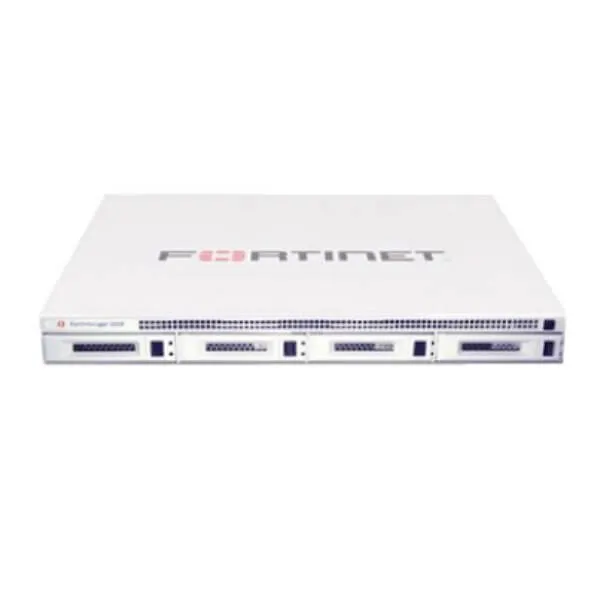
The hardware is a 1U rackmount system with four Gigabit Ethernet copper interfaces and two Gigabit SFP interfaces. It contains 16 TB of raw disk capacity across four removable drives. The standard RAID 10 arrangement provides 8 TB of usable capacity, balancing redundancy and disk performance. Fortinet’s published platform figures for this generation identify 300 GB per day of logs, an analytic sustained rate of 8,250 logs per second, a collector sustained rate of 12,000 logs per second and support for up to 800 devices or VDOMs. These numbers are planning references, not a promise that every deployment will obtain the same retention period or response time. Log size, event mix, SQL use, report schedules, enabled services, database growth and operational practices all influence real results.
The buying decision now requires additional care because the 800F is not a current-generation platform. Organisations may encounter residual new units, refurbished hardware, installed-base replacements or secondary-market offers. The commercial price alone does not show whether a unit is a safe purchase. Buyers should verify serial-number status, hardware condition, support eligibility, software compatibility, disk health, entitlement transfer, remaining vendor lifecycle and the availability of future updates. In many new projects, a current FortiAnalyzer model or a virtual deployment may provide a clearer long-term route.
FourTeck supports this assessment by connecting the model specification to the real business requirement. The team can review whether the appliance is intended as a primary analyzer, a collector at a regional site, a temporary replacement, a lab system or part of a migration plan. This prevents a mature product from being selected only because the model number appears familiar or an online listing looks inexpensive. The right outcome may be a carefully verified FAZ-800F, a newer appliance, a FortiAnalyzer virtual machine or a phased architecture using collectors and a central analytics platform.
Key Business Benefits
◆ Central Evidence Repository
Central collection helps analysts preserve and search security records from many devices without relying only on each appliance’s local disk. This supports more consistent investigations, operational reviews and reporting across distributed environments.
✓ Better Incident Reconstruction
A shared timeline makes it easier to follow a suspicious event from an internet-facing firewall to a branch tunnel, administrator action or internal segment. Teams can reduce the time spent collecting exports from separate devices before analysis begins.
● Dedicated Log Storage
Sixteen terabytes of installed storage and eight terabytes of usable RAID 10 capacity give businesses a dedicated retention platform. This can be more practical than increasing local storage on every firewall or keeping important evidence on short-lived device logs.
⚙ Structured Reporting
Centralized reporting can help security leaders, auditors and management teams receive consistent information on traffic, threats, administrator activity and operational trends. The exact reports available depend on software version, data sources and licensing.
↗ Multi-Site Visibility
Organisations managing branches can review activity across sites from a central platform. This supports standard operating procedures, shared investigation methods and clearer oversight when local offices do not have a dedicated security analyst.
🔒 Operational Separation
Moving analytics and reporting to a dedicated appliance separates those workloads from production firewall functions. Security teams gain a purpose-built place to investigate data while network administrators continue to manage active traffic policies.
✓ Migration Planning Value
For installed-base customers, a verified 800F can sometimes support continuity, temporary replacement or controlled migration. The value depends on lifecycle, entitlement, firmware and storage health rather than hardware capacity alone.
These benefits depend on correct sizing and disciplined operation. A centralized analyzer does not automatically create an effective security operations process. The organisation still needs logging policies, time synchronization, account controls, storage monitoring, backup planning, report ownership, alert handling and procedures for escalation. FourTeck can help the buyer define the appliance requirement and identify implementation questions that should be resolved before deployment.
Product Highlights
A reference point for estimating log ingestion, subject to event profile, deployment mode and system configuration.
Published sustained analytical rate for this model generation under defined test assumptions.
Useful when assessing a collector role, but complete architecture sizing should consider the wider log path.
A high-level maximum that must be weighed against log volume, report demand and retention objectives.
Four removable disks support RAID 0, 1, 5 and 10 choices, with RAID 10 used as the default arrangement.
Four GE RJ45 and two GE SFP interfaces support integration into common enterprise rack environments.
The strongest highlight is not one specification in isolation; it is the combination of dedicated storage, centralized workflow and Fortinet ecosystem integration. For an established deployment, that combination can simplify log collection and help analysts move from scattered events to a more coherent operational view. However, buyers evaluating a new installation should compare the 800F with supported current-generation appliances. Newer models may use more recent storage technology, support different ingestion rates, provide improved platform security and offer a longer service horizon.
Technical Specifications
| Specification | FAZ-800F Details |
|---|---|
| Brand | Fortinet |
| Model | FortiAnalyzer 800F / FAZ-800F |
| Product Type | Centralized log collection, analytics and reporting appliance |
| Logs per Day | 300 GB/day published platform figure |
| Analytic Sustained Rate | 8,250 logs per second |
| Collector Sustained Rate | 12,000 logs per second |
| Managed Devices / VDOMs | Up to 800 maximum |
| Maximum Analytics Days | 30 days at the published sustained analytics rate; longer retention may be possible at lower average log rates |
| Form Factor | 1U rackmount |
| Network Interfaces | 4 × GE RJ45 and 2 × GE SFP |
| Raw Storage | 16 TB using 4 × 4 TB drives |
| Usable Storage | 8 TB after default RAID 10 |
| Drive Serviceability | Removable, hardware RAID, hot-swappable drives |
| Supported RAID Levels | RAID 0, 1, 5 and 10; default RAID 10 |
| Power Supply | 100–240 V AC, 50–60 Hz; no redundant hot-swap power supply in the base platform specification |
| Power Consumption | 108 W average / 186 W maximum |
| Heat Dissipation | 634 BTU/hour |
| Dimensions | 1.75 × 17.44 × 22.16 inches / 4.4 × 44.3 × 56.3 cm |
| Weight | 28.6 lb / 13.0 kg |
| Operating Temperature | 0°C to 40°C |
| Humidity | 20% to 90% non-condensing |
| Lifecycle Note | Mature-generation model; confirm current support and entitlement before purchase |
| Availability | Configuration, condition and supplier dependent |
A specification table should be the beginning of sizing, not the end. Daily log volume is the most important commercial input because it influences appliance load, retention and the suitability of the model. Device count can be misleading: ten high-throughput firewalls may produce more data than hundreds of lightly used branch devices. Buyers should measure actual daily ingestion where possible, identify peak periods, estimate growth, decide how many days of searchable analytics are required and define whether older data will be archived elsewhere.
Storage design also needs context. Eight terabytes usable does not mean eight terabytes remain permanently available for raw logs. System data, analytics databases, indexes, reports, firmware and operational reserve all affect capacity. Retention should therefore be validated using Fortinet sizing guidance and real log samples. FourTeck can help structure the questions for the customer’s Fortinet administrator or implementation partner before the quotation is finalized.
Configuration and Buyer Guidance
The correct configuration depends on the security environment, not simply the number printed on the appliance. A buyer replacing an existing FAZ-800F has a different requirement from an organisation building a new security operations platform. Replacement projects may prioritize compatible firmware, fast restoration and preservation of existing workflows. New projects should place more weight on lifecycle, future releases, expansion and the ability to obtain support throughout the planned service period.
1. Measure Log Volume
Collect average and peak daily logs from the existing platform. Include growth from new branches, VPN usage, cloud workloads and deeper security inspection.
2. Define Retention
Separate searchable analytics retention from archive retention. Compliance teams may need longer evidence storage than the appliance should keep in its active database.
3. Confirm Data Sources
List every FortiGate, VDOM and supported source. Note software versions, high-availability pairs, administrative domains and whether third-party logs are part of the plan.
4. Review Rack and Power
Allow 1U rack space, correct rail support, front-to-back airflow, suitable UPS protection and the operational impact of a non-redundant base power-supply design.
5. Check Network Design
Decide management, log-ingestion and administrative paths. Confirm whether copper or fibre interfaces, VLANs, routing, firewall policy and time synchronization are prepared.
6. Validate Lifecycle
Request evidence of hardware condition, serial status, software eligibility, entitlement transfer and remaining support. Do not assume an unopened box automatically has usable services.
The buyer should also decide who will implement the appliance. Tasks may include rack installation, initial hardening, network addressing, administrator roles, certificate setup, device authorization, ADOM design, log-forwarding rules, report schedules, backups, archive targets, notifications and migration from an older analyzer. These activities can consume more project time than mounting the hardware. Clarifying responsibility before purchase avoids a situation where the unit arrives but cannot enter production safely.
Ideal Business Use Cases
Enterprise Security Operations
Security teams can consolidate logs from multiple Fortinet devices, investigate event sequences, run recurring reports and maintain a common operating view. The appliance is most useful where staff actively review the data rather than storing logs without a defined process.
Multi-Branch Organisations
Banks, retailers, logistics groups, NGOs, education networks and service companies with many offices can bring branch firewall activity into one environment. Central visibility helps a shared IT team support locations that have limited local security expertise.
Incident and Forensic Review
Retained logs help analysts reconstruct authentication failures, administrator changes, blocked connections, malware alerts and unusual traffic paths. Effective forensics still depends on synchronized time, complete log coverage and controlled access to evidence.
Audit and Management Reporting
Organisations that need regular summaries can use centralized data to prepare reports for internal governance, technology leadership and audit discussions. Report content must be matched to the relevant policy and regulatory requirement.
Regional Collector Role
In a distributed architecture, the appliance may be considered as a collector that receives logs near regional sites and forwards data to a central analytics environment. Architecture compatibility and support should be confirmed for the intended software version.
Installed-Base Replacement
An organisation already running the same model may seek a replacement unit to restore service while preparing a migration. This is a narrow but practical use case, provided condition, entitlement and software compatibility are validated.
Lab, Training or Migration Staging
A mature appliance may support controlled testing, administrator training or migration rehearsal where production support expectations are limited. The unit should still be secured, isolated appropriately and maintained within the organisation’s risk policy.
The appliance is less suitable when the organisation needs a long new support horizon, higher-speed interfaces, substantially larger daily ingestion, advanced current services or a platform that must remain in production for many years without an early refresh. In those circumstances, a current FortiAnalyzer hardware model or virtual subscription should be evaluated first.
FortiAnalyzer FAZ-800F Centralized Log Analytics
Centralized analytics changes the way teams work with security data. Without an analyzer, a firewall administrator may search one device at a time, export files manually and combine evidence in spreadsheets. That method can work for a small office, but it becomes slow and inconsistent as the environment grows. A dedicated FortiAnalyzer collects records into a shared platform, applies structured storage and lets authorized users perform investigation and reporting from one location.
For operations teams, the practical gain is context. A single denied connection may not be important, but repeated activity across several devices, users or time periods can reveal a broader pattern. Central data also helps compare normal activity with unusual events. Analysts can review how a security alert relates to VPN use, traffic changes, policy actions or administrative activity. The quality of that context depends on log completeness and correct time synchronization across every contributing system.
The FAZ-800F’s published analytic sustained rate of 8,250 logs per second should be treated as a sizing reference. The database workload is affected by report generation, searches, event handling, retention and the composition of incoming logs. Peak rates can also differ greatly from daily averages. A company may generate most events during business hours, during backup windows or when a threat outbreak causes additional logging. Sizing should therefore include headroom instead of matching the average figure exactly.
FourTeck can help buyers prepare a log profile before quotation. Useful inputs include current GB per day, peak logs per second, number of devices, expected growth, searchable retention, archive requirement, report schedules and analyst count. This information makes it easier to decide whether the model still fits or whether a newer appliance will reduce operational risk.
FortiAnalyzer FAZ-800F Storage, RAID and Retention
Log analytics is a storage-intensive workload. The 800F uses four 4 TB drives for 16 TB of installed capacity. Under the default RAID 10 arrangement, 8 TB is usable. RAID 10 mirrors and stripes data, providing redundancy and disk performance at the cost of half the raw capacity. Fortinet also lists RAID 0, 1 and 5 support, but changing the RAID level affects protection, performance and usable space. The correct choice should follow the supported design and the organisation’s recovery objectives.
Hot-swappable removable drives improve serviceability because a failed disk can be replaced without dismantling the entire appliance. That does not remove the need for monitoring or backups. RAID protects against certain drive failures; it is not a substitute for configuration backups, off-appliance archives or disaster recovery. Accidental deletion, corruption, ransomware, chassis failure and site loss require separate controls.
Retention planning should distinguish active analytics data from archive data. Security analysts need recent information indexed and searchable for fast investigations. Older records may be kept in a lower-cost repository when policy requires longer preservation. Keeping every log online indefinitely can increase database load and reduce operational efficiency. A tiered approach can give analysts fast access to recent events while preserving older evidence through a managed archive process.
Before buying a used or residual unit, request evidence of drive condition and RAID health. Enterprise disks have finite service lives, and replacement availability should be reviewed. A low purchase price can become expensive if the appliance arrives with degraded disks, unsupported firmware or no practical route to compatible spare parts. FourTeck can help include condition and storage-health questions in the quotation process.
FortiAnalyzer FAZ-800F Deployment and Operational Control
Successful deployment involves more than connecting Ethernet cables. The appliance should be placed in a protected management zone, synchronized to a trusted time source and administered through named accounts with appropriate roles. Device authorization, certificate use, trusted hosts, management access and backup schedules should follow the organisation’s security policy. Administrative access must be logged and reviewed because the analyzer contains sensitive evidence about users, systems and network activity.
The four copper interfaces and two SFP interfaces give designers flexibility, but interface assignment should be documented. Some organisations separate management traffic from log ingestion. Others use routed networks or dedicated security segments between branches and the analyzer. The network must permit reliable delivery while preventing unnecessary exposure. Firewalls, access-control lists and monitoring should protect the appliance without blocking required Fortinet communications.
Power and cooling deserve attention. The platform is designed for 0°C to 40°C operation with front-to-back airflow. At up to 186 W and 634 BTU per hour, it should be included in UPS, rack power and cooling calculations. The base specification does not include redundant hot-swap power supplies, so the design has a single-appliance power consideration. Organisations that require continuous logging may need a broader high-availability or collector strategy rather than assuming one chassis can meet every continuity objective.
Operational ownership should be assigned before go-live. Someone must monitor disk health, ingestion, database status, alerts, failed reports, backups, certificates and firmware advisories. Security teams should also decide how incidents are escalated and how long reports are retained. A well-run FortiAnalyzer becomes part of the organisation’s security process; an unmanaged appliance can become an expensive archive that no one uses effectively.
What Buyers Should Check Before Purchase
Before requesting a quote, buyers should confirm whether they need this exact model or simply need a FortiAnalyzer with similar capacity. The difference matters because the 800F is a mature platform with a limited remaining lifecycle. A like-for-like replacement may be justified for continuity, but a new deployment should usually compare a current-generation appliance and virtual options. The commercial review must include more than the chassis price: support eligibility, software compatibility, drive condition, migration effort, spare availability and expected service period can materially change the total cost.
Model and Lifecycle Fit
State whether this is a replacement, expansion, temporary bridge, lab unit or new production deployment. Ask for the applicable lifecycle dates and the software release that the target environment requires.
Hardware Condition
Confirm new, refurbished or used condition; serial-number status; disk health; power-supply condition; cosmetic state; included rails; power cords; packaging and any inspection report.
Entitlement and Warranty
Ask whether support can be transferred or attached, what warranty is supplied by the seller, how failed drives are handled and which services remain legally and technically available.
Compatibility Review
List FortiGate models, firmware versions, ADOMs, collectors, authentication sources, reporting requirements and any current analyzer from which data or configuration must be migrated.
Capacity and Growth
Provide actual daily GB, peak rate, device count, retention requirement and growth forecast. Avoid sizing only from the maximum number of devices or the raw storage figure.
Deployment Scope
Clarify who supplies rails, SFP modules, patch cords, rack space, UPS capacity, IP addressing, firewall rules, configuration, migration, testing, documentation and administrator training.
Alternative Model Guidance
Ask for a current FortiAnalyzer comparison. A newer model may reduce lifecycle risk even if the initial quote is higher, particularly for a multi-year production deployment.
Quote Preparation
Share delivery country, quantity, desired condition, required support term, implementation need, project timeline and whether this is a direct replacement or architecture redesign.
A strong quote should clearly separate hardware, support, services, accessories, delivery and implementation. It should also identify assumptions, especially where the requested model has reached a mature stage. This gives procurement teams a realistic basis for approval and helps avoid receiving hardware that cannot be supported or integrated as expected.
Africa Availability and Service Support
FourTeck supports inquiries across Africa for centralized logging appliances, Fortinet security platforms and related infrastructure. Assistance can include requirement review, model confirmation, daily log sizing, configuration discussion, quotation preparation, delivery coordination and warranty guidance. For a mature product such as the FAZ-800F, the team can also help buyers ask the right lifecycle and condition questions before committing funds.
Availability can vary significantly. A listing may represent residual new stock, a refurbished unit, an installed-base spare or a device offered without active services. FourTeck does not treat these conditions as interchangeable. The quotation process should state the offered condition, included accessories, warranty route and any support limitations. Where the exact model is not appropriate, the team can guide the buyer toward a current FortiAnalyzer appliance or a virtual option that better matches the required service period.
Delivery planning may cover commercial documentation, destination requirements, order quantity and project timing. Final availability, lead time and warranty handling depend on the source, unit condition and delivery location. Buyers should request current confirmation rather than relying on old catalogue information.
Africa Country and Regional Coverage
Businesses across Africa, including Kenya, Uganda, Nigeria, Ghana, Tanzania, Rwanda, Ethiopia, South Africa, Zambia, Botswana, Senegal and nearby markets, can contact FourTeck for product inquiry support, model review, quotation assistance and delivery coordination. Regional buyers may include banks, government departments, universities, telecom operators, healthcare groups, mining businesses, logistics companies, NGOs, retailers, system integrators and enterprise IT teams.
For multi-country projects, buyers should provide the number of sites, preferred delivery structure, installation responsibilities, required documentation and whether all locations will send logs to one central platform. Network latency, bandwidth, data-residency policy and security architecture may influence whether a single central analyzer, regional collectors or multiple platforms are more appropriate. FourTeck can help frame these questions during the commercial discussion.
GCC, Middle East and Africa Availability
FourTeck Africa can support product inquiries for organisations whose technology operations span Africa, GCC and Middle East markets. Businesses connected to UAE, Saudi Arabia, Qatar, Oman, Bahrain and African branches may need a consistent commercial discussion covering model selection, delivery routing, support expectations and standardization across regions. Availability and warranty handling can differ by country, supplier and product lifecycle, so each project should be reviewed individually.
Regional platforms can be explored through FourTeck Africa, FourTeck Kenya, FourTeck Uganda and FourTeck UAE. These links help buyers reach the appropriate regional channel while keeping technical requirements aligned.
When several countries are involved, provide a consolidated equipment list, destination schedule, support expectations and any requirement for installation, migration or remote assistance. A centralized project brief can reduce inconsistent model selection and help ensure that the logging architecture works as one system rather than a collection of unrelated purchases.
Other Options Buyers May Consider
The right alternative depends on whether the customer needs a current analytics platform, a replacement for an installed unit or a wider Fortinet Security Fabric project. FourTeck can help compare hardware generations, virtual deployment and related security appliances without assuming that the lowest acquisition cost is the best long-term decision.
FortiAnalyzer 800G / 810G Class
Current-generation nearby models for buyers seeking a longer lifecycle, updated hardware and a clearer new-deployment path.
FortiAnalyzer Virtual Appliance
Suitable where the organisation prefers virtual infrastructure, elastic resource planning or cloud-aligned deployment instead of a dedicated chassis.
Fortinet FortiGate 60F
A branch firewall option for organisations building a Fortinet environment that may later send logs to a central analyzer.
Fortinet FortiGate 3001G
A high-capacity security appliance for large environments where firewalling, segmentation and centralized log planning are part of one project.
Fortinet FG-3500G
A data-center firewall platform relevant to large Security Fabric designs that require serious traffic inspection and central visibility.
Architecture and Migration Support
Useful when the buyer needs to move from a legacy analyzer, redesign retention or choose between appliance, VM and collector roles.
Why Buyers Choose FourTeck
FourTeck helps business and public-sector buyers connect technical specifications to procurement reality. This is especially important for mature enterprise hardware, where condition, entitlement and lifecycle can matter more than a headline capacity figure. The team can help buyers document the requirement, compare practical options and prepare a quotation request that includes the information needed for responsible approval.
Assistance for appliance, accessory, service and project-supply requirements.
Help structuring log volume, retention, device count and deployment inputs.
Practical review of mature hardware and current-generation alternatives.
Clear separation of hardware, support, delivery, accessories and services.
Support for Africa and linked multi-country business requirements.
Guidance based on offered condition, seller route and available entitlement.
FourTeck supports procurement teams, IT managers, resellers, system integrators and project buyers. The objective is to reduce wrong-model selection, missing accessories, unclear support terms and avoidable deployment delays. Final technical design and configuration should be completed by suitably qualified personnel with access to the customer’s environment and current Fortinet documentation.
Frequently Asked Questions
What is the FortiAnalyzer 800F used for?
It is used to collect, store, analyze and report on security logs from Fortinet-focused environments. Organisations can use it for central visibility, incident investigation, recurring reports, retained evidence and multi-site operational review. Its usefulness depends on correct data-source configuration, retention planning, administrator access and an active process for monitoring and responding to events.
How much log data can the appliance handle?
Fortinet’s specification for this generation lists 300 GB per day, 8,250 analytic logs per second and 12,000 collector logs per second. These are platform references under defined conditions. Real performance and retention depend on event size, peak rate, searches, reports, database workload, software version, services and operational reserve.
Does 16 TB mean all 16 TB is usable for logs?
No. The appliance contains 16 TB raw storage across four 4 TB drives. With the default RAID 10 arrangement, the published usable capacity is 8 TB. System files, databases, indexes, reports and operational reserve also consume capacity, so retention should be calculated from actual log volume rather than raw disk size alone.
Is the FAZ-800F still a good choice for a new project?
It can fit specific replacement, migration, lab or short-horizon requirements, but it is a mature model. A new production project should compare current FortiAnalyzer hardware and virtual options. Buyers should evaluate support horizon, software compatibility, entitlement, condition, spare availability and expected service life before choosing the older platform.
Can FourTeck help size the correct FortiAnalyzer?
Yes. FourTeck can help buyers organize the inputs needed for sizing, including daily GB, peak logs per second, device and VDOM count, searchable retention, archive requirement, growth, report schedules and deployment role. Final sizing should be confirmed against current Fortinet guidance and the customer’s real data profile.
What should be checked when buying a refurbished unit?
Confirm serial status, disk health, RAID condition, power-supply condition, included rails and cables, cosmetic condition, seller warranty, firmware access, entitlement transfer and return terms. Ask for a clear inspection report. A refurbished unit should not be approved only from a product photo or model description.
Can the appliance support multiple branches?
Yes, subject to capacity, network design and software compatibility. Branch firewalls can send logs to a central analyzer or through a collector architecture. Buyers should assess WAN bandwidth, latency, resilience, data-residency policy, peak log volume and what happens when a link is unavailable.
Does the appliance include installation and migration?
Hardware supply and implementation are separate unless a quotation states otherwise. Installation may include rack work, network setup, hardening, device authorization, ADOM design, backups, reporting and migration. Buyers should define the required scope so services, responsibilities, testing and documentation are clearly priced.
How do I request an Africa quotation?
Contact FourTeck with the required model, quantity, delivery country, preferred condition, current log volume, retention goal, device count, software environment, support expectation and project timeline. Mention whether the requirement is a replacement or a new deployment. This helps the team prepare a more accurate commercial response and suggest alternatives when needed.
Can businesses request bulk or project supply?
Yes. Resellers, integrators and multi-site organisations can request quantity-based assistance, delivery coordination, accessories, related Fortinet products and configuration review. For mature hardware, project supply may involve mixed availability or alternative models, so buyers should allow time for condition and lifecycle verification before final approval.
Need Help Choosing the Right FortiAnalyzer?
FourTeck can help you review FAZ-800F availability, lifecycle, storage condition, log sizing, deployment requirements and current-generation alternatives for your organisation.
Reviews
There are no reviews yet.