

FortiManager FMG-200G Management Appliance in Africa
Bring policy administration, configuration control, device onboarding, firmware coordination, and operational workflows into one dedicated platform. This 1U appliance is designed for organisations managing a growing Fortinet estate and needing repeatable processes across branches, campuses, data centres, and distributed business networks.
Request QuoteCheck Africa Availability
Quick Product Information
Fortinet
FMG-200G
Centralized management appliance
Up to 30 devices or VDOMs
8 TB raw; 4 TB usable with default RAID 1
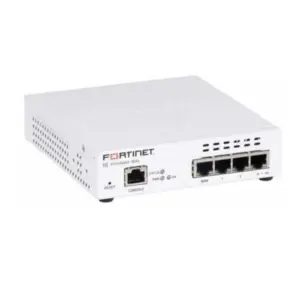
4 x RJ45 Gigabit Ethernet
1U rackmount
Optional redundant AC power supply
Subject to supplier status, quantity, and destination
Selection, quote, delivery, and warranty guidance
Product Overview
Managing a single firewall directly may be practical for a small office. Managing many security gateways, branch appliances, virtual domains, switches, wireless components, and policy objects individually becomes a different operational challenge. Configuration drift appears, administrators repeat the same work, firmware planning becomes inconsistent, and change approval can become difficult to audit. A centralized platform addresses these issues by giving the network and security team a structured place to organise devices, templates, policy packages, administrative domains, backups, and deployment activity.
The FMG-200G occupies an important position for organisations that have outgrown device-by-device administration but do not require the capacity of a much larger management appliance. Its limit of up to 30 devices or VDOMs makes it relevant to multi-branch companies, regional institutions, education networks, healthcare groups, financial organisations, managed service teams, government departments, and industrial businesses with a controlled number of Fortinet-managed locations. Each VDOM counts toward the licensed device total, so sizing must be based on the real logical estate rather than only the number of physical appliances.
The appliance provides a dedicated hardware environment for central management. It can help administrators create standard policy packages, reuse objects, apply configuration templates, coordinate firmware tasks, monitor deployment status, maintain revisions, and support approval-oriented workflows. This does not remove the need for skilled engineering. Instead, it gives the engineering team a more disciplined operating model where changes can be prepared, checked, approved, and installed across the correct targets.
For Africa buyers, the value is often connected to distributed operations. A business may have headquarters in one country, branches in several cities, remote sites with limited local technical staff, and different internet links at each location. Central management reduces the need to perform every task independently. It also helps the organisation document how policies are applied across the estate and prepare for growth without immediately redesigning the management layer.
FourTeck supports buyers by reviewing the device count, VDOM count, current FortiOS versions, expected branch growth, logging requirements, rack environment, power design, support plan, and deployment responsibility. This review matters because the correct purchase is not determined by model name alone. It is determined by whether the platform fits the operational scale and the team has a realistic plan for migration, administration, backup, and ongoing change control.
Key Business Benefits
The strongest reason to deploy a dedicated management appliance is not simply to place more devices on one screen. The business value comes from creating repeatable network operations, reducing inconsistent changes, improving visibility, and giving technical teams a clearer way to manage distributed security infrastructure.
◆ Consistent policy control
Reusable policy packages and central objects help teams apply approved security standards more consistently. This is valuable when branches must follow the same access, VPN, segmentation, and administrative rules while still allowing site-specific exceptions.
◆ Faster branch onboarding
Templates and structured provisioning can reduce repetitive setup work when new locations are added. The technical team can prepare standard settings, verify the intended design, and deploy with fewer manual differences between sites.
◆ Better change discipline
Central revisions, install previews, and workflow processes help administrators understand what will change before production deployment. This supports stronger internal controls and makes planned maintenance easier to communicate.
◆ Operational visibility
A single management plane gives engineers a clearer view of device status, configuration state, policy deployment, and administrative activity. This reduces the time spent moving between independent interfaces during routine work.
◆ Scalable administration
The platform supports organisations that are adding branches or logical domains but remain within the supported capacity. Central administration gives the business a more orderly growth path than repeatedly expanding ad hoc management practices.
◆ Reduced configuration drift
When teams use approved templates and shared objects, accidental differences are easier to identify. Reducing drift improves troubleshooting because engineers can compare sites against a known standard rather than undocumented local changes.
◆ Improved team collaboration
Role-based access and workflow-oriented operations help separate preparation, review, and installation tasks. This is useful where network engineers, security managers, auditors, and external support teams have different responsibilities.
Product Highlights
This appliance combines centralized management software with a compact hardware platform sized for a controlled Fortinet estate. Its 1U form factor allows deployment in a standard rack, while four RJ45 Gigabit Ethernet interfaces provide management connectivity. The system includes 8 TB of raw storage from two 4 TB drives. Under the default RAID 1 arrangement, usable capacity is 4 TB, providing mirrored protection rather than the full raw capacity.
Appropriate for mid-sized environments after the complete logical estate is counted.
Separates central management from general-purpose server workloads and hypervisor dependencies.
Supports standardised configurations, shared objects, and repeatable deployment processes.
A second AC power supply can be selected when the rack design requires improved power resilience.
The platform is also relevant for software lifecycle work. Security teams can coordinate firmware planning, review supported versions, schedule changes, and maintain configuration revisions. For SD-WAN estates, centralized management can simplify the use of common settings and deployment patterns across branches. For wireless and switching environments connected through the Fortinet Security Fabric, the management layer can provide a broader operational context than separate local administration.
Capacity should be treated carefully. A physical FortiGate with multiple VDOMs consumes more than one managed unit because each VDOM counts as a licensed network device. Buyers should also separate management storage from a full analytics requirement. The appliance can retain management and log-related data within its supported limits, but organisations needing deeper event analytics, long retention, reporting, incident investigation, or security operations workflows should evaluate a suitable FortiAnalyzer design alongside it.
Technical Specifications
| Specification | FMG-200G details | Buyer relevance |
|---|---|---|
| Brand and model | Fortinet FMG-200G | Confirm the exact hardware and support SKU on the quotation. |
| Product role | Centralized network and security management appliance | Used to manage supported Fortinet devices and policy operations from one platform. |
| Managed capacity | Up to 30 devices or VDOMs | Each VDOM counts toward the licensed total; calculate current and future demand. |
| Log allowance | 2 GB per day shown in the current appliance data sheet | Evaluate FortiAnalyzer when longer retention or deeper analytics is needed. |
| Raw storage | 8 TB using 2 x 4 TB drives | Raw capacity is not the same as usable protected capacity. |
| Usable storage | 4 TB after default RAID 1 | Mirroring protects against one drive failure while reducing usable capacity. |
| Supported RAID | RAID 0 and RAID 1; default RAID 1 | RAID 1 is the practical choice where data protection is preferred. |
| Form factor | 1U rackmount | Check rack depth, airflow, rail planning, and service access. |
| Network interfaces | 4 x RJ45 Gigabit Ethernet | Plan management VLANs, redundancy, and out-of-band access as required. |
| Console | RJ45 console port | Useful for initial setup and local recovery access. |
| Security hardware | Trusted Platform Module, Gen2 | Supports hardware-based protection of cryptographic material. |
| Power supply | 100–240V AC, 50–60Hz; optional redundant AC supply | Confirm whether the second supply is included in the selected order. |
| Power consumption | 90.1W average; 99W maximum | Use maximum draw for UPS and rack power planning. |
| Dimensions | 4.4 x 43.8 x 41.6 cm | Verify rack depth and cable clearance before installation. |
| Weight | 10.2 kg | Relevant for rack loading, transport, and handling. |
| Operating range | 0°C to 40°C; 20% to 90% non-condensing humidity | Use controlled rack cooling and avoid dusty or humid installation spaces. |
| Airflow | Front to back | Align with the data-centre hot-aisle and cold-aisle design. |
Choosing the correct configuration requires more than checking the device limit. Buyers should identify every physical Fortinet device, every VDOM, expected additions during the next three to five years, and any lab or disaster-recovery units that may also need management. The team should then confirm the FortiManager release that supports the required FortiOS versions and hardware models. A mixed estate may require planned ADOM versions, staged firmware upgrades, or temporary compatibility arrangements during migration.
Storage planning should be based on management requirements and realistic log volume. The appliance provides 8 TB raw capacity, but the protected default layout provides 4 TB usable. Where compliance, security operations, reporting, or long retention is important, a dedicated FortiAnalyzer appliance or service may be a better place for analytics. Power design should also be confirmed. The second power supply is optional, so organisations needing dual feeds should include it in the order and connect each supply to independent power paths where practical.
Configuration and Buyer Guidance
A successful purchase begins with an accurate inventory. Count all managed physical appliances, virtual appliances, and VDOMs. Do not assume that one chassis always equals one managed unit. If a firewall contains several VDOMs, each logical domain consumes capacity. Add planned branches, replacement units, test systems, and future projects. A platform that fits today but reaches its limit after the next rollout can create an avoidable upgrade requirement.
1. Estate size
How many devices and VDOMs exist now, and how many are likely within the expected service life?
2. Version compatibility
Which FortiOS versions and hardware models are running, and which FortiManager release supports them?
3. Logging design
Will the appliance keep only operational logs, or does the business need dedicated analytics and long retention?
4. Resilience
Is an optional second power supply required, and does the rack provide independent power feeds and UPS protection?
5. Administration model
Who will prepare, approve, and install changes, and what role separation is required?
6. Migration scope
Will existing devices be imported gradually, and is there a documented rollback plan for the first deployments?
Buyers should also decide whether the platform will be deployed as a standalone manager or as part of a larger operations design. An organisation may pair it with FortiAnalyzer for analytics, connect it to authentication services for administrator control, integrate it with ticketing or automation processes, and use backup procedures that protect configuration data. The rack environment should provide appropriate cooling, front-to-back airflow, grounding, cable management, and secure physical access.
FourTeck can review these requirements before quotation. Share the device list, VDOM count, firmware versions, country, delivery city, rack conditions, preferred support term, and whether the project includes migration or implementation. This information allows the commercial and technical discussion to focus on a suitable solution rather than only a hardware part number.
Ideal Business Use Cases
The appliance is designed for environments where several Fortinet-managed systems must operate under a common administrative method. It is most useful when the organisation has enough complexity to justify central control but remains within the supported device and VDOM capacity.
Multi-branch enterprises
Retail groups, professional services firms, logistics companies, and regional businesses can standardise branch firewall, VPN, routing, and security settings while retaining controlled local differences.
Education and campus networks
Universities and colleges can manage security devices across campuses, faculties, data centres, and remote learning sites with a clearer change process and shared policy objects.
Government and public institutions
Departments with distributed offices can use central policy administration to improve standardisation, administrative accountability, and planned deployment across locations.
Financial and regulated organisations
Banks, insurers, and payment organisations can strengthen change control by separating policy preparation, review, approval, and installation roles across security operations.
Healthcare groups
Hospital and clinic networks can coordinate site connectivity, secure access, segmentation, and branch policy while reducing inconsistent local administration.
Managed security operations
Service teams managing several customer or organisational domains can use ADOM separation, templates, shared objects, and controlled workflows within supported scale.
Industrial and remote-site networks
Mining, energy, agriculture, and manufacturing groups can standardise remote-site configurations where local technical staff may be limited and central engineering support is important.
SD-WAN administration
Organisations operating Fortinet secure SD-WAN can coordinate branch templates, policy packages, and staged changes across a distributed WAN design.
The platform should not be selected only because several firewalls exist. The strongest use case appears when the team wants a repeatable management framework: standard naming, shared objects, controlled templates, documented revisions, planned firmware activity, and consistent policy installation. Smaller environments with very few devices may prefer another deployment model, while estates that will exceed 30 devices or VDOMs should evaluate a larger FortiManager appliance or a suitably licensed virtual or cloud option.
FMG-200G Centralized Policy and Configuration Control
The first major capability is central policy administration. In a distributed estate, the same address objects, services, VPN definitions, security profiles, and access rules may appear across many devices. When each firewall is managed separately, administrators can create slightly different versions of the same object or apply policies in a different order. These differences complicate troubleshooting and make it harder to prove that branches follow the approved design.
Central policy packages provide a structured way to reuse common controls. A team can define global standards, create device groups, maintain shared objects, and install approved policy packages to selected targets. This approach does not force every branch to be identical. Local sections and device-specific settings can still be managed where the business requires them. The benefit is that exceptions are visible and intentional rather than hidden inside separately maintained configurations.
Configuration templates extend the same principle beyond firewall rules. Administrators can prepare common settings for system parameters, interfaces, routing, SD-WAN, authentication, and other supported features. New branches can begin from an approved baseline, reducing repetitive manual work. Existing branches can be compared against the intended standard and corrected through controlled change activity.
For the business, this improves consistency and lowers operational risk. A security manager gains clearer oversight of how policy is applied. A network engineer spends less time repeating routine configuration. A procurement team gets more value from a multi-site Fortinet investment because the devices can be operated as an estate rather than as unrelated boxes. The result still depends on disciplined design. Poorly planned templates can distribute errors quickly, so organisations should test changes, use install previews, maintain backups, and apply role-based approval before production rollout.
FMG-200G Workflow, Automation, and Change Governance
The second major capability is the ability to organise change as a process rather than an isolated administrator action. Security infrastructure supports critical business communication, internet access, remote connectivity, cloud applications, and inter-branch traffic. A small configuration error can interrupt operations across multiple sites. The management platform helps teams prepare changes, review intended differences, maintain revisions, and install to defined targets with greater control.
Workflow functions are particularly relevant where one engineer should not have unrestricted responsibility for every stage. A preparer may build a policy change, a reviewer may check technical impact and compliance, and an approver may authorise installation during a maintenance window. Role-based access can limit what each administrator sees and changes. This supports stronger internal governance for financial services, government, healthcare, education, and other environments where administrative accountability matters.
Automation can also reduce routine workload. Templates, scripts, connectors, and standard deployment actions help the team perform repetitive tasks more consistently. The goal is not to automate without oversight. It is to remove avoidable manual variation while keeping approval and validation where risk requires them. A safe automation plan starts with a tested standard, clear target selection, pre-change backup, expected-result checks, and a rollback path.
Firmware management belongs in the same governance model. The team can review compatibility, stage upgrades, schedule maintenance, and track device status. Mixed hardware generations and FortiOS versions require careful planning, especially when ADOM versions or feature support differ. FourTeck recommends documenting the current estate before migration and confirming the release path with current Fortinet documentation and support guidance. Central management improves control, but it does not replace version compatibility checks or change-window planning.
FMG-200G Storage, Hardware Security, and Rack Deployment
The third major capability is the dedicated hardware foundation. Some organisations prefer an appliance because it separates management from general-purpose server infrastructure. The management platform does not compete with unrelated virtual machines for host resources, and the team can plan its rack, network, power, backup, and lifecycle as a distinct operational system.
The unit includes two 4 TB drives for 8 TB raw capacity. With the default RAID 1 layout, the data is mirrored and 4 TB is usable. This is an important procurement distinction. Quoting only the raw number can create incorrect expectations about available protected capacity. RAID 1 is appropriate for resilience against a single drive failure, but it is not a complete backup strategy. Administrators should export or replicate critical configuration data according to organisational recovery policy.
Trusted Platform Module Gen2 hardware helps protect cryptographic material used by the appliance. Physical security remains necessary. The unit should be installed in a locked rack with controlled administrator access, documented console procedures, secure management VLANs, restricted source addresses, strong authentication, and monitored administrative activity.
Rack planning should account for its 1U height, 41.6 cm depth, 10.2 kg weight, front-to-back airflow, and maximum 99W power draw. The operating environment must stay between 0°C and 40°C with non-condensing humidity. The optional redundant power supply should be ordered when the design requires two feeds. In that case, each supply should connect to a separate protected power path where practical. A UPS should be sized using the maximum draw and the required runtime, not only the average consumption.
What Buyers Should Check Before Purchase
Before requesting a quote, buyers should confirm the complete operating requirement. The model name identifies the appliance, but it does not determine whether the platform fits the estate, whether the selected support term is correct, or whether additional components are needed. A short technical review can prevent capacity problems, missing accessories, incompatible software plans, and unexpected deployment work.
Configuration Fit
List all devices and VDOMs, add expected growth, and confirm that the total remains within 30. Include disaster-recovery units, test appliances, and planned branches.
Compatibility Check
Provide FortiGate models, FortiOS versions, virtual platforms, and connected Fortinet products. The deployment plan must use a FortiManager release compatible with the existing estate.
Availability and Warranty
Confirm the required FortiCare term, response level, destination, quantity, and desired delivery schedule. Availability varies with supplier status and selected service options.
Quote Preparation
Share the country, delivery city, organisation type, managed-device list, VDOM count, support term, and whether migration or implementation assistance is required.
Required Add-ons
Check whether the order needs a second power supply, rack accessories, console cable, UPS capacity, authentication integration, FortiAnalyzer, or professional services.
Deployment Responsibility
Decide who will rack the unit, configure management networking, import devices, establish ADOMs, migrate policies, test installs, document changes, and train administrators.
Buyers should also ask how this model differs from larger FortiManager appliances and virtual or cloud options. A larger appliance may be preferable when the estate will exceed the supported capacity, when higher storage or interface requirements exist, or when long-term growth is uncertain. A virtual deployment may suit organisations with mature hypervisor operations and a preference for software-defined infrastructure. A hardware appliance may be preferred where dedicated resources, predictable rack deployment, and separation from the server platform are important.
Long-term cost should include more than the initial unit. Consider FortiCare renewal, optional power redundancy, UPS and rack resources, administrator training, migration services, ongoing backup, and potential analytics requirements. FourTeck can help buyers compare the practical options and prepare a quote that reflects the actual project rather than an incomplete hardware-only request.
Africa Availability and Service Support
FourTeck supports product enquiries across Africa with assistance for model selection, capacity review, commercial quotation, delivery coordination, warranty guidance, and deployment planning. Availability may vary according to supplier status, selected support term, destination, quantity, and the timing of the order. For this reason, buyers should request a current quotation rather than relying on a general online indication.
The enquiry process is most effective when the buyer provides a clear managed-device inventory. Include physical FortiGate appliances, virtual firewalls, VDOMs, branch locations, current firmware versions, planned additions, and any related FortiSwitch or FortiAP management requirements. FourTeck can use this information to help determine whether the 30-device or VDOM capacity is sufficient and whether a larger appliance, virtual platform, or cloud option should be considered.
Delivery planning should cover the destination country and city, receiving requirements, customs or import considerations, rack readiness, power standards, and the expected installation date. The technical team should have management IP addresses, DNS and NTP settings, administrator authentication, backup procedures, and a migration plan prepared before arrival. Where implementation support is required, the scope should state whether the work includes rack installation, initial configuration, device import, policy migration, workflow setup, firmware planning, testing, and documentation.
Warranty guidance depends on the selected FortiCare service and the terms applicable to the destination. FourTeck can help buyers identify the support option included with the proposed SKU and explain which additional services are being quoted. This avoids confusion between hardware supply, software entitlement, technical support, and professional deployment work.
Africa Country and Regional Coverage
Businesses across Africa, including Kenya, Uganda, Nigeria, Ghana, Tanzania, Rwanda, Ethiopia, South Africa, Zambia, Botswana, Senegal, and nearby regional markets can contact FourTeck for product availability, configuration guidance, and quote assistance. The team can help buyers review suitable management capacity, support terms, delivery requirements, and related Fortinet options based on the real business environment.
Regional projects often include more than one destination. A company may manage branches in several countries while maintaining its network operations team at a central headquarters. In this situation, the management design should consider internet reliability, management-path security, time zones, maintenance windows, local technical access, and the process for recovering a remote appliance that becomes unreachable. Centralized administration can improve consistency, but the project still needs resilient connectivity and a documented local support procedure.
For cross-border supply, buyers should provide the final delivery location, required quantity, expected project date, and the organisation responsible for import and receiving. Availability and warranty handling can differ by country, so these details should be reviewed before the purchase order is issued. FourTeck can coordinate the enquiry and help the customer understand which parts of the requirement relate to hardware, support, licensing, implementation, or ongoing operations.
Africa-focused buyers can explore the Fortinet product range for Africa, review related FortiGate solutions, or send a project brief through the FourTeck contact page.
GCC, Middle East and Africa Availability
FourTeck Africa can support enquiries for organisations operating across Africa while also guiding regional technology requirements through connected FourTeck platforms serving GCC and Middle East markets. Businesses with sites in the UAE, Saudi Arabia, Qatar, Oman, Bahrain, and African markets may need a consistent management architecture even when procurement, delivery, and support arrangements differ by country.
A cross-region design should begin with the complete device and VDOM count, not a separate estimate for each office. The organisation should identify which team owns the central platform, where it will be hosted, how administrators connect securely, and whether local regulations or internal policies affect log handling, remote access, or change approval. The selected support and warranty terms should also match the location where the hardware is installed.
Availability, delivery options, warranty handling, and configuration support may vary based on country, product type, supplier status, selected service, and order quantity. Buyers can use FourTeck Africa for regional enquiries, visit FourTeck Kenya or FourTeck Uganda for country-focused guidance, and review FourTeck UAE for GCC requirements.
For a multi-country quotation, provide the legal purchasing entity, delivery destinations, quantities, required support terms, desired project timeline, and whether the deployment will use one central management appliance or separate regional systems. FourTeck can then help coordinate the commercial discussion and identify practical configuration questions before order confirmation.
Other Options Buyers May Consider
The correct central management platform depends on scale, deployment preference, storage needs, and operational responsibility. Buyers should compare neighbouring FortiManager models and related Fortinet systems before finalising the order. The options below are not presented as direct replacements in every case; they solve different parts of the wider management and security operations requirement.
FortiManager 410G
Consider for a larger estate that needs significantly more managed capacity and storage than the 200G class.
FortiManager VM
Suitable for organisations preferring virtual infrastructure, flexible licensing, and integration with an established hypervisor platform.
FortiManager Cloud
May suit teams that prefer a cloud-delivered management service and want to reduce local hardware administration.
FortiAnalyzer
Recommended for buyers requiring deeper log analytics, reporting, incident investigation, and longer retention.
FortiGate appliances
The managed firewalls remain the enforcement layer. Select branch and data-centre models according to traffic, users, VPN, and security services.
FortiGate 3001G
A high-capacity enterprise firewall option for data-centre and large-network security requirements.
The management decision should be made together with the firewall and analytics design. A larger FortiManager may prevent an early capacity upgrade. A VM or cloud deployment may align better with the organisation’s infrastructure strategy. FortiAnalyzer may be necessary when compliance and security operations require more than the management appliance’s log allowance. FourTeck can help compare these choices using the actual estate and project roadmap.
Why Buyers Choose FourTeck
Enterprise management products are rarely successful as box-only purchases. The hardware must match the device estate, software versions, operational process, rack environment, and support expectation. FourTeck approaches the enquiry as a business technology requirement and helps buyers clarify the information needed for a useful quotation.
Assistance for organisations, institutions, project buyers, resellers, and system integrators.
Review of device count, VDOMs, versions, storage, power, and deployment scope.
Commercial discussion based on the exact model, support term, quantity, and destination.
Planning support for receiving location, project timing, and regional supply requirements.
Clarification of the proposed FortiCare service and the distinction between support and implementation.
Guidance on larger managers, virtual options, FortiAnalyzer, FortiGate, UPS, and rack needs.
Pre-sales consultation can reduce procurement mistakes. Buyers sometimes request the model without confirming whether VDOMs consume capacity, whether the second power supply is optional, or whether an analytics platform is required. FourTeck helps bring these questions into the discussion before the order. This supports more accurate budgeting and a smoother handover from procurement to the technical team.
FourTeck also supports different buyer profiles. An IT manager may need architecture guidance. A procurement officer may need a clear SKU and support term. A finance team may need a complete cost view. A system integrator may need project quantities and delivery coordination. By collecting the right information early, the quotation can reflect the real business requirement without making unverified claims about stock, delivery speed, or local warranty conditions.
Frequently Asked Questions
What is the appliance used for?
It is used to centralize management of supported Fortinet devices and VDOMs. Network and security teams can organise policy packages, shared objects, configuration templates, device onboarding, firmware activity, revisions, and controlled deployment from one platform instead of administering every device independently.
How many devices can it manage?
The hardware data sheet lists support for up to 30 devices or VDOMs. Each VDOM counts as one licensed network device, so buyers must count logical domains as well as physical appliances. The planned total should include expected growth, test systems, and disaster-recovery units.
Is it available for Africa projects?
FourTeck accepts enquiries across Africa and can help review current supplier availability, selected support options, destination, quantity, and delivery requirements. Availability changes over time, so buyers should request a current quotation using the exact project location and required schedule.
Does it provide 8 TB of usable storage?
No. The appliance contains 8 TB raw capacity from two 4 TB drives. The default RAID 1 layout mirrors the drives and provides 4 TB usable capacity. Buyers needing deeper analytics or long log retention should also consider a suitable FortiAnalyzer design.
Can FourTeck help confirm compatibility?
Yes. Provide the FortiGate models, FortiOS versions, VDOM count, virtual platforms, and related Fortinet devices. FourTeck can help structure the pre-sales review, while final software compatibility should be confirmed against the current Fortinet release documentation and support guidance.
Is the second power supply included?
The current hardware data sheet identifies the redundant AC power supply as optional. Buyers who need dual power feeds should ensure the second supply is included in the quotation and plan independent UPS-backed power paths where the rack design allows.
How do I request a quote?
Send FourTeck the destination country and city, required quantity, device and VDOM count, current firmware versions, preferred support term, expected project date, and whether implementation support is needed. This helps the team prepare a more complete and relevant commercial response.
Can it manage SD-WAN branches?
It can support centralized administration for compatible Fortinet secure SD-WAN environments, including common templates, policy packages, and coordinated changes. The design should still account for branch connectivity, firmware compatibility, routing, VPN topology, and the operational process used for remote recovery.
Is FortiAnalyzer required?
Not for basic centralized management, but it may be strongly recommended when the organisation needs advanced analytics, reporting, longer retention, incident investigation, or security operations workflows. The two products have complementary roles and should be sized against separate management and logging requirements.
Can businesses request bulk or project supply?
Yes. Project buyers, resellers, system integrators, and multi-country organisations can submit quantity requirements. The request should include delivery destinations, schedule, support terms, related Fortinet products, and whether the order is part of a phased rollout or a single deployment.
Need Help Choosing the Right Management Platform?
FourTeck can help review managed-device capacity, VDOM usage, compatibility, storage expectations, support terms, rack requirements, delivery needs, and suitable alternatives for your organisation.
Reviews
There are no reviews yet.