
FortiMail FML-3000F Email Security Appliance in Africa
Protecting a large email environment requires more than a basic spam filter. The FortiMail FML-3000F is a high-capacity, rack-mounted security platform for organizations that need controlled inspection of inbound and outbound messages, resilient infrastructure, detailed policy enforcement, and a practical path for managing phishing, malicious attachments, impersonation, data leakage, and other email-driven risks. FourTeck helps business buyers evaluate the appliance, supporting services, deployment design, and regional supply requirements before a purchase decision is made.
✓ Dual power architecture
✓ Deployment and licensing guidance
✓ Africa delivery coordination
Request Quote
Check Africa Availability
Availability, subscription bundle, accessories, support term, and final configuration depend on the project requirement. FourTeck can prepare a matched proposal after reviewing your mail flow and deployment plan.
Quick Product Information
Fortinet FortiMail
FML-3000F
2U email security appliance
Large enterprise, university, ISP and carrier environments
Inbound and outbound email threat protection
2 × 2 TB SAS, with additional drive options
4 × GE RJ45, 2 × GE SFP, 2 × 10GE SFP+
Dual hot-swappable AC power supplies
Project and supplier dependent
Sizing, bundle, quote, delivery and warranty guidance
Product Overview
Email remains one of the most important communication channels in modern business, but it is also a preferred path for fraud, credential theft, malware delivery, impersonation, and unauthorized movement of sensitive information. A high-volume organization cannot rely only on user awareness or the basic filtering included with a mail platform. It needs a dedicated control layer that can inspect message flow, apply consistent policy, track activity, and give security teams enough information to investigate suspicious events without slowing normal business communication.
The FortiMail FML-3000F addresses this requirement with an on-premises appliance intended for the largest corporate, university, internet service provider, and carrier environments. The platform can sit in gateway, transparent, or server-oriented deployment designs depending on the mail architecture. It supports inbound and outbound inspection, policy control by domain and recipient, centralized quarantine, mail queue management, reporting, encryption options, data loss prevention functions, and integration paths for broader Fortinet security operations. Organizations can use it to strengthen protection around Microsoft Exchange, hybrid mail environments, Microsoft 365, Google Workspace, and other supported systems, subject to the selected services and deployment design.
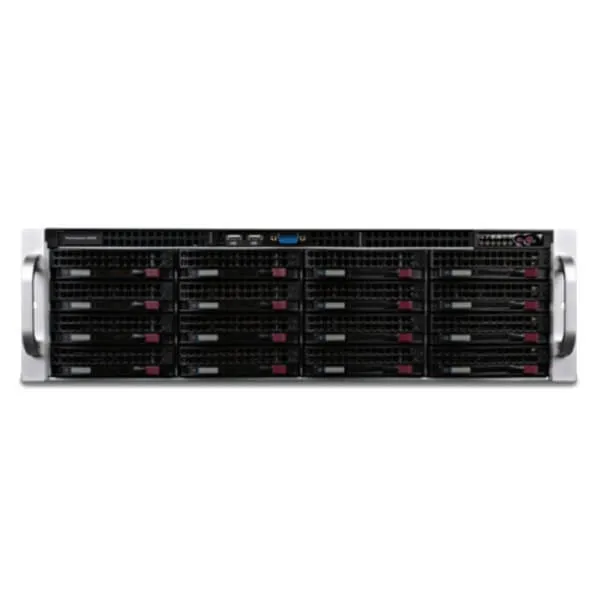
Hardware capacity is a major reason buyers consider this model. The appliance includes 64 GB of memory, dual hot-swappable power supplies, hardware RAID capability, 4 TB of default SAS storage, and high-speed network interfaces including two 10 Gigabit SFP+ ports. Fortinet publishes an email routing figure of up to 3.5 million messages per hour and lower figures when more intensive security services are enabled. Those values come from controlled testing with stated message-size assumptions, so real production sizing must account for average message size, attachment volume, encryption, policy complexity, archive activity, cloud API scanning, traffic peaks, and the selected FortiGuard services.
For Africa-based buyers, the purchasing task is not simply to select a hardware code. A complete proposal may involve the base appliance, a FortiCare term, a FortiGuard Base or Enterprise ATP bundle, optional cloud email API integration, transceivers, additional drives, high-availability planning, rack and power readiness, implementation services, and delivery coordination. FourTeck helps procurement and technical teams review these elements together so that the quotation reflects the required operating model rather than an incomplete hardware-only purchase.
Key Business Benefits
◆ Capacity for demanding mail flow
Large organizations experience traffic peaks, bulk notifications, automated application mail, and heavy attachment use. A high-capacity appliance provides room to inspect and route substantial message volumes while helping the security team maintain consistent policy across many business units and domains.
◆ Layered email threat defence
Multiple inspection methods can assess sender reputation, authentication, message structure, URLs, files, image content, malware indicators, and suspicious behaviour. This reduces dependence on a single detection method and gives administrators more control over how different risks are handled.
◆ Better control of impersonation
Executive fraud and supplier impersonation often use familiar names, look-alike domains, or misleading reply addresses. FortiMail policies and impersonation analysis help organizations inspect these signals and apply stronger controls around high-risk identities and external senders.
◆ Outbound data protection
Email security is not only about blocking incoming attacks. Data loss prevention, encryption options, file fingerprinting, sensitive-data detection, and policy-based control can help reduce accidental or unauthorized disclosure through outbound messages.
◆ Operational visibility
Detailed message tracking, event logs, built-in reports, quarantine workflows, and external logging support give security and messaging teams a clearer view of what was accepted, blocked, delayed, quarantined, or released. This supports troubleshooting and incident review.
◆ Resilient hardware design
Dual hot-swappable power supplies, hardware RAID options, redundant interface support, and high-availability deployment modes help organizations design a stronger service around a communication system that staff, customers, and partners use throughout the working day.
Together, these benefits make the platform relevant where email is treated as business-critical infrastructure rather than a simple collaboration tool. The value comes from combining processing capacity, policy depth, threat intelligence services, hardware resilience, and administrative control. Buyers should still size the system against their real environment and confirm which capabilities are included in the selected license bundle.
Product Highlights
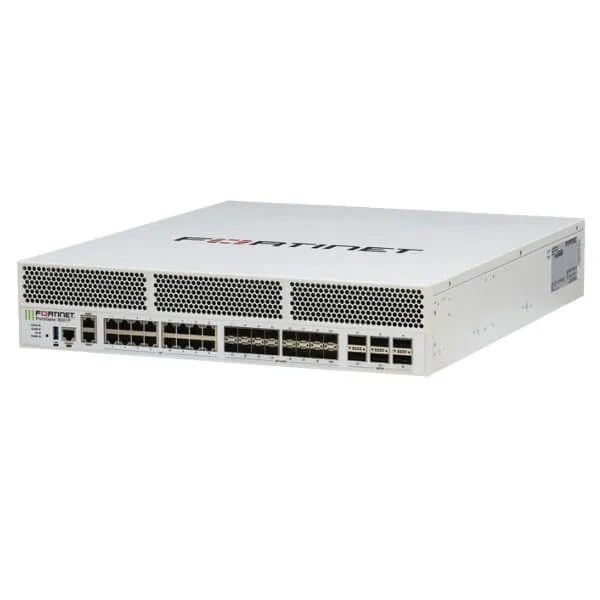
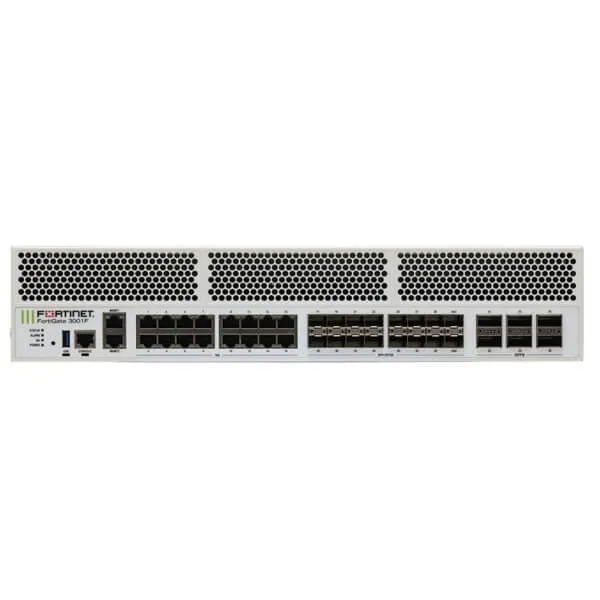
The appliance is built around a 2U rack form factor for controlled deployment in enterprise data centres and larger server rooms. Its network layout provides four copper Gigabit Ethernet ports, two Gigabit SFP ports, and two 10 Gigabit SFP+ ports. This mix supports flexible connection to core switching, management networks, mail infrastructure, and redundant paths, provided the correct transceivers and cabling are included in the design.
Fortinet lists support for up to 2,000 protected email domains, up to 3,000 local server-mode mailboxes, and extensive recipient-based policy capacity. Actual design should consider domain associations, policy structure, and administrative responsibilities.
Available service bundles can include antispam, antivirus, outbreak protection, sandbox-related inspection, click protection, content disarm and reconstruction, business email compromise controls, encryption, data loss prevention, and archiving capabilities.
The default configuration uses two 2 TB SAS drives, while the chassis can support additional drives depending on the final build. RAID options include levels 1, 5, 10, and 50 with hot-spare support based on drive count.
The platform supports REST-based management, external syslog, SNMP, optional FortiAnalyzer reporting, cloud email API integration, Security Fabric workflows, and integration with related Fortinet security products.
A buyer should view these highlights as building blocks, not as an automatic deployment plan. The correct design depends on the mail platform, location of mail servers, internet links, redundancy target, storage retention, cloud integration, security policy, and support expectations. FourTeck can help translate these technical choices into a clear bill of materials and project scope.
Technical Specifications
| Specification | FortiMail FML-3000F Details |
|---|---|
| Recommended deployment | Largest corporate, university, ISP and carrier environments |
| Form factor | Rack mount, 2U |
| Copper interfaces | 4 × 10/100/1000 RJ45 |
| Fibre interfaces | 2 × GE SFP and 2 × 10GE SFP+ |
| Memory | 64 GB |
| Default storage | 2 × 2 TB SAS, with support for additional drives depending on configuration |
| RAID management | Hardware RAID 1, 5, 10, 50 and hot spare, based on drive count |
| Power supplies | Dual hot-swappable AC supplies |
| Trusted Platform Module | Supported |
| Protected email domains | Up to 2,000; advanced management licensing may change domain capacity |
| Recipient-based policies | Up to 1,500 per domain and 7,500 per system, incoming or outgoing |
| Server-mode local mailboxes | Up to 3,000 |
| Email routing performance | Up to 3.5 million messages per hour in stated laboratory conditions without queuing, based on 100 KB messages |
| Antispam plus outbreak performance | Up to 2.6 million messages per hour under stated test conditions |
| Enterprise ATP performance | Up to 2.1 million messages per hour under stated test conditions |
| High availability | Active-passive and active-active configuration synchronization options, subject to deployment design |
| Cloud email API integration | Optional support for Microsoft 365 and Google Workspace integration services |
| Dimensions | Approximately 88 × 440 × 745 mm |
| Weight | Approximately 25.3 kg |
| Power source | 100–240 VAC, 50–60 Hz |
| Average power consumption | Published average approximately 485.1 W |
| Operating temperature | 10°C to 35°C |
| Availability and warranty | Supplier, bundle, contract term and country dependent; confirm with FourTeck |
Performance figures are useful for comparison, but they should never be treated as a guaranteed production result. Real throughput changes with message size, attachment type, encryption, content scanning, cloud API activity, archive settings, mail queue behaviour, policy complexity, and network conditions. The final configuration should be validated against peak traffic rather than only an average daily message count. Storage should be sized around quarantine, logging, archive policy, retention period, growth, and the chosen RAID level. Buyers should also check rack depth, airflow, power feed redundancy, transceiver type, cabling, and upstream switching capacity before delivery.
Configuration and Buyer Guidance
A correct purchase starts with a mail-flow profile. Record the number of inbound and outbound messages during normal periods and during the busiest hour. Include average message size, percentage of messages with attachments, typical attachment types, number of protected domains, use of shared domains, number of mail gateways, and whether internal mail also requires inspection. This information helps determine whether the appliance has enough capacity after all required security services are enabled.
1. Map the email platform
Identify Exchange, Microsoft 365, Google Workspace, hybrid mail, hosted mail, application relays, internet-facing gateways, and internal routing dependencies.
2. Select the deployment mode
Gateway, transparent, server, and cloud API designs have different network, routing, integration, and operational requirements. Confirm the intended mode before the bill of materials is approved.
3. Define the security bundle
Review whether the project needs the Base bundle, Enterprise ATP capabilities, cloud email connectors, advanced administration, continuity, image analysis, or other add-on services.
4. Plan resilience
Decide whether one appliance is acceptable or whether a high-availability pair is required. Include redundant switching, separate power feeds, mail routing failover, configuration synchronization, and operational testing.
5. Size retention and storage
Define quarantine duration, logging retention, archive scope, expected growth, and external storage requirements. Usable capacity changes with the chosen RAID level and installed drive count.
6. Confirm implementation responsibility
Clarify who will rack the unit, configure network interfaces, change MX records, migrate policies, test failover, integrate directories, and train administrators.
The purchasing team should also ask for the exact SKU list, subscription duration, support level, delivery terms, warranty handling process, replacement expectations, and renewal schedule. A lower initial quotation can become more expensive if required services, optical modules, storage, implementation, or high-availability hardware are excluded. FourTeck can help consolidate these items into a more complete proposal.
Ideal Business Use Cases
Large enterprise email gateways
A group with many divisions, domains, mail routes, and regional offices can centralize inspection and policy control while maintaining role-based administration and detailed message tracking.
Universities and education networks
Universities often support large user communities, multiple faculties, research groups, student populations, automated systems, and diverse sender patterns. Strong filtering and domain-level policy can improve control without treating every user group identically.
Service provider and carrier platforms
Providers that deliver managed mail or security services may require multi-domain scale, high message capacity, centralized quarantine, reporting, and optional advanced administration for tenant-oriented operations.
Government and regulated organizations
Public-sector and regulated environments can use policy-based inspection, encryption options, data loss prevention, archiving, message tracking, and controlled administrative access as part of a wider information-protection programme.
Hybrid cloud email protection
Organizations combining on-premises mail systems with Microsoft 365 or Google Workspace can evaluate gateway and optional API-based controls to improve visibility across a mixed environment.
Business email compromise reduction
Finance, procurement, executive offices, and supply-chain teams are frequent targets for impersonation and payment fraud. Domain controls, sender checks, content analysis, and incident tracking can strengthen the defensive process.
These use cases are most suitable when the organization has the technical staff, data-centre space, power, network design, and operational processes required for an on-premises appliance. A smaller organization or a team that prefers a service model may be better served by a lower-capacity appliance, a virtual deployment, or FortiMail cloud services. FourTeck can help compare these routes without assuming that the largest appliance is automatically the correct answer.
FortiMail FML-3000F High-Volume Threat Inspection
The first major strength of this model is the ability to process substantial mail flow while applying layered inspection. Email routing alone is not the demanding task; the workload increases when the system must analyse reputation, sender authentication, message headers, URLs, attachments, document content, image content, malware indicators, encryption status, data patterns, and policy exceptions. Fortinet therefore publishes separate performance figures for simple routing, antispam plus outbreak protection, and Enterprise ATP processing.
For buyers, the practical lesson is to size against the security profile that will actually be enabled. A system that routes millions of small messages in a laboratory may process fewer messages when production traffic contains large PDF files, compressed archives, office documents, encrypted content, or complex rules. Cloud API scanning has a different capacity profile from gateway traffic. Queuing, retry behaviour, quarantine operations, reporting, and archiving can also influence real-world performance.
A useful sizing exercise separates normal volume, peak-hour volume, emergency peaks, and expected three-year growth. It should identify message-size distribution rather than relying on a single average. The security team should document which controls are mandatory and which can be applied selectively by domain, sender group, recipient group, or risk class. FourTeck can use this information to help confirm whether the FML-3000F, another FortiMail model, a virtual appliance, or a cloud service is a better operational fit.
FortiMail FML-3000F Resilience and Storage Architecture
Email systems sit at the centre of customer communication, internal approvals, payment instructions, support requests, legal notices, and automated application alerts. An email security gateway therefore needs a resilience plan that extends beyond the appliance itself. The FML-3000F contributes dual hot-swappable power supplies, hardware RAID options, redundant interfaces, device-failure detection, queue synchronization, and high-availability operating modes. These features allow architects to build a more durable design, but they do not remove the need for upstream redundancy.
A high-availability deployment should consider two appliances, independent switch paths, redundant power circuits, appropriate mail exchanger priorities, monitoring, configuration synchronization, maintenance procedures, and periodic failover testing. The organization should also define what happens when internet connectivity, DNS, a mail server, a cloud service, or an upstream firewall becomes unavailable. Email continuity is an end-to-end service objective rather than a single product feature.
Storage planning is equally important. The default pair of 2 TB SAS drives provides 4 TB of raw capacity, but usable capacity depends on RAID selection. Additional drives can support higher capacity or different resilience goals. Quarantine growth, archive policy, log retention, message queues, reporting data, and future expansion must be considered. Organizations using external storage or iSCSI should evaluate network isolation, performance, backup, access control, and recovery procedures.
Before ordering, buyers should confirm the number of drives, RAID target, spare-drive policy, rack depth, rail requirements, airflow direction, weight, power draw, and replacement process. FourTeck can help include these physical and operational items in the commercial discussion so that the appliance arrives as part of a workable infrastructure plan.
FortiMail FML-3000F Policy, Visibility and Integration
Large organizations rarely have one simple email policy. Finance may need strict impersonation controls, legal teams may require encryption, human resources may handle protected personal information, marketing may send bulk campaigns, applications may relay automated mail, and service-provider tenants may need separated administration. FortiMail supports policy structures by domain and recipient, role-based administration, authentication integration, centralized quarantine, and flexible actions. This allows administrators to apply different controls where the business risk justifies them.
Visibility supports both daily operations and incident response. Detailed message tracking can show how a message was handled, while activity logs and reports help administrators understand blocked threats, quarantine behaviour, configuration changes, and delivery issues. External syslog, SNMP, REST interfaces, and optional FortiAnalyzer integration allow selected events and operational data to become part of broader monitoring and security workflows.
The value of integration increases when the organization already uses Fortinet products. FortiMail can share indicators and work with technologies such as FortiSandbox, FortiAnalyzer, FortiSIEM, FortiSOAR, and the wider Security Fabric, subject to licenses and supported versions. Optional Microsoft 365 and Google Workspace API services can extend inspection beyond traditional gateway controls, including post-delivery actions and internal mail analysis in supported designs.
Integration should still be planned carefully. Buyers need to confirm directory services, single sign-on, mail routing, DNS records, certificate handling, API permissions, logging destinations, incident processes, and administrator roles. A technically capable platform produces the best result when it is connected to clear operating procedures and trained ownership.
What Buyers Should Check Before Purchase
Before requesting a quote, buyers should confirm the required configuration, usage environment, compatibility needs, warranty expectations, and delivery location. The model name alone does not define the complete solution. A reliable proposal should state the exact appliance SKU, support and security bundle, subscription term, optional services, storage configuration, accessories, implementation scope, and renewal obligations.
Configuration Fit
Provide peak messages per hour, average message size, attachment profile, domain count, mail platform, retention need, and forecast growth. Ask whether published capacity is suitable with every required service enabled.
Compatibility Check
Confirm mail-server versions, Microsoft 365 or Google Workspace requirements, directory integration, network addressing, DNS changes, certificates, SFP/SFP+ optics, switch compatibility, external storage, and monitoring systems.
Availability and Warranty
Ask for supplier status, delivery estimate, country-specific logistics, support coverage, hardware replacement route, return conditions, registration requirements, and the process for warranty or support escalation.
Quote Preparation
State whether the request is for one appliance or an HA pair, the preferred contract term, destination country, tax status, delivery address, installation need, training need, and expected project date.
Buyers should also ask about long-term operating cost. Subscription renewals, support upgrades, additional drives, spare power supplies, optics, implementation, training, and future capacity expansion can materially change the project budget. Where the organization already owns Fortinet infrastructure, include those models and software versions so that integration can be reviewed. Where an older FortiMail is being replaced, provide the existing model, policies, domain count, archive size, and migration window. FourTeck can help compare a direct replacement, a larger or smaller appliance, a virtual platform, and cloud alternatives so that the final decision reflects operational value rather than only the initial price.
Africa Availability and Service Support
FourTeck supports FortiMail product inquiries across Africa with assistance for model selection, configuration review, bundle clarification, quotation, delivery coordination, and warranty guidance. Availability can vary with the appliance version, supplier channel, subscription term, order quantity, destination, and project timing. For this reason, the most useful inquiry includes both technical requirements and commercial details.
A request should identify the expected message volume, mail platform, number of protected domains, need for high availability, desired FortiGuard service level, support term, cloud API requirement, storage expectation, and implementation responsibility. FourTeck can then help determine whether the FML-3000F is appropriate and whether the proposal needs extra drives, power components, transceivers, installation services, or a second appliance.
Delivery coordination may include review of destination details, order documentation, import requirements, freight options, and receiving arrangements. Warranty and support handling depend on the selected contract and country, so buyers should request written clarification before placing an order. FourTeck does not rely on unverified stock or delivery promises; the team can confirm the current commercial position when preparing the quote.
Africa Country and Regional Coverage
Businesses across Africa, including Kenya, Uganda, Nigeria, Ghana, Tanzania, Rwanda, Ethiopia, South Africa, Zambia, Botswana, Senegal, and other regional markets can contact FourTeck for product availability, configuration guidance, and quote assistance. The team can help buyers review suitable models, related security products, deployment requirements, and project supply needs based on business use.
Regional procurement often involves more than freight. Buyers may need a quotation in a preferred currency, clear delivery terms, documentation for internal approval, advice on subscription duration, a support route, and a realistic implementation schedule. Data-centre readiness also differs by location. Rack depth, stable power, cooling, redundant circuits, optical modules, cabling, and internet connectivity should be checked before the appliance is shipped.
For multi-country groups, FourTeck can discuss whether the email-security design will be centralized in one data centre or distributed across several locations. A centralized design may simplify policy and operations but can introduce dependency on regional connectivity. A distributed design may improve local resilience but requires more hardware, licensing, administration, and monitoring. The correct choice depends on mail routing, regulatory expectations, latency, disaster-recovery policy, and the skills available to operate the environment.
GCC, Middle East and Africa Availability
FourTeck Africa can support product inquiries for businesses across Africa while also guiding regional technology requirements through selected FourTeck platforms for Africa, GCC, and Middle East markets. Organizations with operations in the UAE, Saudi Arabia, Qatar, Oman, Bahrain, Kenya, Uganda, Nigeria, Ghana, Tanzania, Rwanda, Ethiopia, and South Africa may need coordinated product selection for a common security architecture.
Availability, delivery options, warranty handling, and configuration support vary by country, product bundle, supplier status, and order quantity. A regional group should provide the intended deployment location, billing entity, delivery destination, required support term, and implementation schedule. It should also explain whether one appliance will protect users across multiple countries or whether each region will operate separate mail gateways.
Useful FourTeck resources include the Africa technology platform, Kenya business IT platform, Uganda business IT platform, and FourTeck UAE. These regional points can help procurement teams route inquiries while keeping the technical requirement consistent.
Other FourTeck Solutions Buyers May Consider
Email protection is most effective when it connects with the wider security architecture. Buyers reviewing this appliance may also need network firewalls, advanced malware analysis, centralized reporting, incident-response tools, endpoint protection, or a different FortiMail deployment size. The following FourTeck resources can support a broader comparison.
Fortinet Cybersecurity Solutions
Review the wider Fortinet portfolio for coordinated network, email, endpoint, application, and security-operations requirements.
FortiSandbox Support
Useful for organizations that need deeper analysis of unknown files and coordinated malware-verdict workflows.
Fortinet FortiGate Firewalls
Consider perimeter security, VPN, secure routing, application control, and integration with the Fortinet Security Fabric.
FortiGate 3001G Enterprise Firewall
A high-capacity firewall option for large networks that may sit alongside enterprise email-security infrastructure.
FortiMail Virtual or Cloud Options
A virtual or hosted approach may suit organizations that prefer flexible infrastructure, operating expenditure, or reduced on-site hardware ownership.
Suitable alternatives should be compared by message volume, deployment model, operational ownership, security bundle, retention, integration, high availability, support term, and total cost. FourTeck can help buyers avoid an unfair comparison between a hardware-only price, a bundled appliance, a subscription service, and a cloud platform.
Why Buyers Choose FourTeck
Enterprise security procurement is easier when technical and commercial questions are reviewed together. FourTeck works with business buyers to clarify the intended use, match the model and bundle, identify missing accessories, prepare a structured quotation, and coordinate the next steps. The goal is not to promote the largest configuration; it is to reduce the risk of buying hardware that does not match the mail environment or omits essential services.
Assistance for corporate, education, government, service-provider, and project procurement requirements.
Review of appliance size, deployment mode, security bundle, storage, high availability, and related accessories.
A clearer bill of materials that can be used for technical review, budget approval, and procurement comparison.
Support for destination details, supplier availability, order documentation, and delivery planning.
Clarification of support term, product registration, escalation route, and replacement expectations based on the selected contract.
Help identifying firewalls, sandboxing, reporting, storage, optics, and implementation services that may be required.
FourTeck supports both single-product requests and wider projects. For a large email-security deployment, the team can coordinate discussions around sizing, licensing, migration, installation, support, and regional delivery. Buyers remain responsible for confirming internal technical approvals, security policy, legal requirements, and the final vendor contract.
Frequently Asked Questions
What is the FortiMail FML-3000F used for?
It is an enterprise email security appliance for inspecting inbound and outbound messages. Organizations can use it to reduce spam, phishing, malware, malicious links, impersonation, ransomware delivery, and business email compromise while applying data-protection, encryption, quarantine, reporting, and policy controls. It is intended for very large mail environments rather than small offices.
How much email traffic can the appliance process?
Fortinet publishes up to 3.5 million routed messages per hour, up to 2.6 million with antispam plus outbreak protection, and up to 2.1 million with Enterprise ATP under stated laboratory conditions using 100 KB messages. Actual capacity varies with message size, attachments, enabled services, cloud API use, policy complexity, encryption, storage activity, and network conditions.
Does the FML-3000F include security subscriptions?
The base hardware and bundled offers are separate ordering choices. A complete deployment commonly requires FortiCare and a FortiGuard Base or Enterprise ATP service bundle. Optional services may include cloud email API integration, advanced administration, continuity, image analysis, or other capabilities. Confirm the exact SKU and term in the quotation.
Can it protect Microsoft 365 or Google Workspace?
FortiMail supports cloud email protection through gateway approaches and optional API integration services for Microsoft 365 and Google Workspace. The correct method depends on the tenant design, mail routing, permissions, internal-mail scanning needs, and selected subscription. FourTeck can help identify the required service and implementation scope.
Is high availability supported?
FortiMail supports active-passive and active-active configuration-synchronization options, including queue and quarantine synchronization features in supported designs. A resilient deployment usually requires two appliances plus redundant switching, power, DNS and mail-routing logic, monitoring, and tested operational procedures. Request an HA bill of materials rather than assuming one appliance provides full service continuity.
How much storage is included?
The standard hardware profile includes two 2 TB SAS drives, giving 4 TB of raw storage. The chassis supports additional drives depending on configuration. Usable capacity depends on drive count and RAID level. Buyers should size quarantine, archive, logs, queues, retention, growth, and external storage before selecting the final drive layout.
Is the appliance available for delivery in Africa?
FourTeck can support availability checks and delivery coordination for business customers across Africa. Current lead time depends on supplier status, bundle, quantity, destination, and project schedule. The team can provide a quotation after confirming the required configuration and receiving the delivery details. Unverified stock or same-day delivery should not be assumed.
Can FourTeck help choose the correct configuration?
Yes. Share peak message volume, average message size, protected domains, mail platform, cloud integration, retention policy, high-availability target, preferred support term, destination, and implementation needs. FourTeck can help review the appliance, security bundle, storage, accessories, related products, and commercial scope before preparing the quote.
What information should be included in a bulk or project request?
Provide quantity, deployment locations, whether the design is standalone or high availability, contract duration, required services, delivery countries, implementation timeline, tax or procurement requirements, and the responsible technical contact. For replacement projects, include the current model, software version, domain count, storage use, policy count, and migration window.
How do I request a FourTeck quote?
Use the FourTeck contact page and describe the business requirement, destination, expected message volume, mail environment, preferred support term, and required delivery date. A sales representative can then clarify technical and commercial details and prepare a proposal. The final price depends on hardware, services, contract term, accessories, quantity, and logistics.
Need Help Planning Enterprise Email Security?
FourTeck can help review message volume, deployment mode, subscription bundle, high availability, storage, connectivity, warranty guidance, and Africa delivery requirements. Share your environment and project timeline to receive a more complete proposal.

Reviews
There are no reviews yet.