
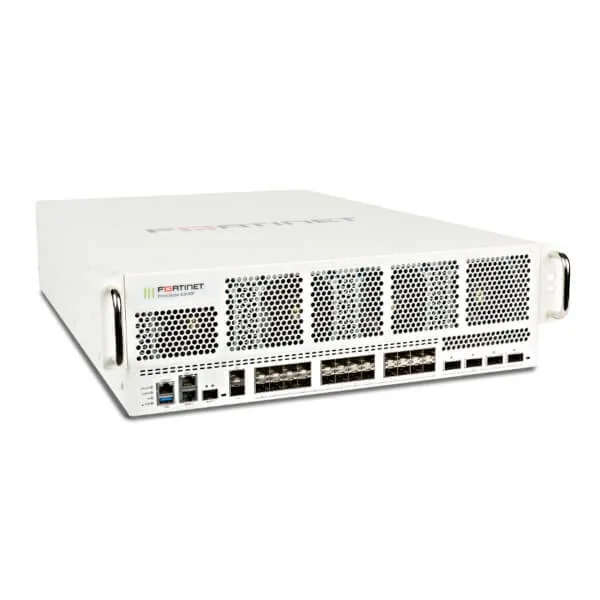
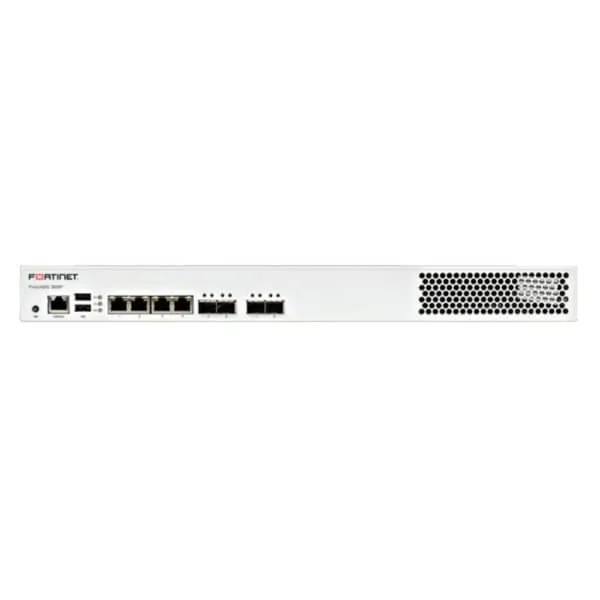
FortiAuthenticator FAC-300F Identity Appliance in Africa
The FAC-300F gives growing organisations a dedicated platform for centralising user authentication, strengthening remote and administrative access, enabling multi-factor authentication, supporting single sign-on and sharing trusted identity information with Fortinet Security Fabric components. It is designed for businesses that have moved beyond scattered login systems and now require a controlled, auditable identity layer for employees, contractors, branches, applications, wired networks, wireless services and VPN access. FourTeck helps buyers translate user counts, directory design, token plans, application requirements and regional delivery needs into a practical quotation.
Request QuoteCheck Africa Availability
Quick Product Information
Fortinet
FAC-300F
Identity and access management appliance
1,500 local and remote users
3,500 with supported upgrade licences
MFA, SSO, RADIUS, TACACS+, certificates and identity services
1RU rack-mountable appliance
Contact FourTeck for current options
Product Overview
Identity has become one of the most important control points in a modern business network. Firewalls, endpoint protection and secure applications are valuable, but each system still depends on knowing who is attempting access, whether that person should be trusted, and what level of access should be allowed. As companies add cloud services, remote work, contractors, branch offices, wireless users and outsourced support teams, relying on separate passwords and disconnected authentication servers creates operational friction and security gaps. The FAC-300F is intended to bring these identity services into one managed appliance.
The platform can authenticate users through established enterprise protocols and can serve both Fortinet-centred and mixed-vendor environments. It supports RADIUS and TACACS+ for network and administrative authentication, LDAP for directory integration, SAML and OIDC for federated application access, Fortinet Single Sign-On for identity sharing with FortiGate, and certificate services for managed devices and secure VPN use. Multi-factor options can include FortiToken Mobile, hardware tokens, email or SMS one-time passwords, client certificates and FIDO2 methods, depending on the chosen design and licences.
For procurement teams, the appliance is more than a server-shaped box. The useful capacity starts with a 1,500-user base licence and can be expanded to 3,500 users through supported hardware user upgrades. It also supports up to 3,000 FortiTokens, 300 user groups, 10 certificate authorities and 7,500 user certificates. These figures make it relevant for mid-sized enterprises and larger organisations that want a defined identity platform without moving immediately to the highest-capacity FortiAuthenticator hardware.
FourTeck supports buyers by reviewing the actual access environment before a quotation is prepared. Important inputs include active and future user counts, remote users, FortiGate devices, RADIUS clients, administrator accounts, wireless networks, cloud applications, directory sources, token methods, certificate needs, high-availability expectations and support terms. This approach helps the business purchase a system that fits the intended deployment rather than selecting an appliance only because the model name appears suitable.
Key Business Benefits
The strongest value of a central identity appliance is not a single feature. It is the ability to simplify multiple access decisions while giving security and infrastructure teams a clearer operational model. The following benefits explain how the platform can improve day-to-day control when it is sized, integrated and governed correctly.
◆ Centralised Authentication
A shared authentication platform can reduce the need to maintain separate user stores and login rules for every network service. This gives IT teams a better place to standardise access, investigate failures and apply changes across multiple systems.
🔒 Stronger User Verification
Multi-factor authentication adds another proof step beyond a password. This is valuable for VPN users, administrators, finance teams, executives and other groups whose accounts could expose sensitive resources if credentials are stolen.
↗ Better Remote Access Control
Remote staff and service providers can be authenticated through planned policies instead of broad password-only access. The business can combine user groups, MFA, certificates and firewall rules to create a more disciplined remote-access design.
⚙ Mixed Environment Integration
Support for RADIUS, TACACS+, LDAP, SAML, OIDC and certificate standards helps the appliance work with existing network devices, directories and applications. This protects prior investment and supports phased deployment.
● Scalable User Planning
The 1,500-user starting point and 3,500-user upper limit allow organisations to plan growth without replacing the appliance at the first increase in headcount. Upgrade timing can be aligned with actual onboarding and project demand.
✓ Operational Resilience
Dual drives in RAID 1 protect local storage from a single-drive failure, while active-passive high availability and configuration synchronisation can support a more resilient design when a second appliance and the correct architecture are included.
Product Highlights
The appliance combines identity services, local storage and enterprise integration in a 1RU form factor. Its four copper Gigabit Ethernet interfaces allow network separation and management planning without requiring specialised optical interfaces. Two 1 TB hard drives operate in RAID 1, providing mirrored storage for the platform. A Trusted Platform Module supports hardware-based trust functions, and the power design uses a 300W auto-ranging supply with an optional dual-supply arrangement for buyers who need added power resilience.
1,500 users included, expandable to 3,500.
Support for up to 3,000 FortiTokens.
500 base RADIUS clients, expandable to 1,166.
10 CA certificates and up to 7,500 user certificates.
The protocol set is a major strength for organisations with mixed infrastructure. RADIUS can authenticate wired, wireless and VPN users. TACACS+ can support central administration control for compatible network equipment. LDAP connects established directory services. SAML and OIDC help extend identity to modern applications and federation workflows. EAP-TLS and certificate enrolment options can support device-aware access designs. Fortinet Single Sign-On can provide identity context to FortiGate so firewall policy can be written around known users and groups instead of depending only on IP addresses.
Exact functions depend on the installed FortiAuthenticator version, enabled licences, external services and configuration. Buyers should confirm required authentication methods, token types, certificate workflows, user upgrades, support entitlement and integration compatibility before placing an order. FourTeck can help organise that discussion and prepare a quotation that reflects the complete project rather than hardware alone.
Technical Specifications
| Specification | FAC-300F Details |
|---|---|
| Brand / Model | Fortinet FortiAuthenticator FAC-300F |
| Product Type | Centralised identity and access management hardware appliance |
| Network Interfaces | 4 x 10/100/1000Base-T copper RJ-45; no SFP interfaces |
| Local Storage | 2 x 1 TB hard disk drives configured as RAID 1 |
| Trusted Platform Module | Yes |
| Local + Remote Users | 1,500 base / 3,500 upper limit with supported upgrade licences |
| FortiTokens | Up to 3,000 |
| RADIUS Clients | 500 base / 1,166 upper limit |
| User Groups | 300 |
| Certificates | 10 CA certificates; up to 7,500 user certificates |
| Authentication and Federation | RADIUS, TACACS+, LDAP, SAML 2.0, OAuth/OIDC, Fortinet SSO and certificate-based methods; exact capability depends on software version and configuration |
| Management | HTTPS, CLI and direct DB9 console |
| High Availability | Active-passive HA and configuration synchronisation |
| Form Factor | 1RU rack mountable |
| Dimensions | 44 x 438 x 422 mm |
| Weight | 8.2 kg |
| Power Supply | 300W auto-ranging 100–240V; optional dual 1+1 arrangement |
| Power Consumption | 82.35W average / 131.23W maximum |
| Operating Environment | 0°C to 40°C; 5% to 90% non-condensing humidity; front-to-back airflow |
| Warranty / Support | Depends on selected FortiCare term, supply route and region; confirm during quotation |
| Availability | Subject to current supplier status, configuration, quantity and destination |
Configuration should be selected around the number of identities that will be managed, not merely the current employee count. Include remote users, contractors, administrators, service accounts, students, guests and future branch staff where they will depend on the platform. Buyers should also count RADIUS clients such as firewalls, wireless controllers, switches, VPN gateways and other network access servers. A project that begins below 1,500 users may still need upgrade headroom if onboarding is rapid or if multiple business units will join the platform. Storage, high availability, token licensing, certificate volume and support entitlement should be evaluated at the same time so the final design is operationally complete.
Configuration and Buyer Guidance
A successful identity project starts with a clear access map. List the people, systems and locations that need authentication, then separate them into practical groups. Employees may need wired, wireless, VPN and application access. Administrators may require TACACS+ control and stronger MFA. Contractors may need time-limited access to selected resources. Students, guests or customers may require different onboarding rules. This mapping determines whether the appliance will manage local users, query external directories, act as an identity provider, proxy authentication to another service or use a combination of these approaches.
Count Identities Correctly
Include full-time staff, temporary users, administrators, contractors, branch personnel and future onboarding. Avoid sizing only around the number of office desks.
Choose MFA Methods
Decide whether users need mobile tokens, hardware tokens, email or SMS codes, client certificates or FIDO2 methods. Costs and user experience differ by method.
Review Directory Sources
Document Active Directory, LDAP, cloud identity services and local user stores. Confirm connectivity, certificate trust and group mapping before deployment.
Plan Resilience
Decide whether a single appliance is acceptable or whether active-passive high availability, redundant power and tested recovery procedures are required.
The organisation should also assign operational ownership. Someone must manage user enrolment, token replacement, certificate renewal, authentication policies, backups, software updates and incident review. Large deployments may need separate roles for security, network operations, service desk and application teams. FourTeck can help buyers identify these dependencies during the quotation process so hardware, licences, support and implementation services are discussed together.
Ideal Business Use Cases
The appliance is suitable where a business needs a dedicated identity layer that can serve multiple access points. It is not limited to one firewall or one application. Its value increases when the organisation can standardise authentication across network, remote-access and application environments while maintaining clear user groups and ownership.
Multi-Branch Enterprise Access
Head offices and branches can use a central identity service for VPN, firewall, switch and wireless authentication. Group-based policies can reflect departments, locations and support responsibilities while reducing separate user databases.
Remote and Hybrid Workforce
MFA and federation can strengthen access for staff working from homes, hotels, customer sites and field locations. The project can cover VPN, cloud applications and administrator access under a coordinated policy.
Universities and Training Campuses
Education environments can authenticate staff, students, laboratories, wireless users and administrators while supporting certificate-based access, guest workflows and separate identity groups for different faculties or services.
Healthcare and Financial Services
Hospitals, clinics, banks and insurers can apply stronger verification to sensitive systems, remote support, privileged accounts and regulated workflows. The exact design should be aligned with internal policy and compliance obligations.
Government and Public Services
Departments with distributed users and controlled administrative access can use central authentication, certificates and identity-aware policies to improve consistency across offices and shared infrastructure.
Managed IT and Service Providers
Providers supporting multiple customer environments can use structured administrator authentication and group control, subject to architecture, licensing and tenancy requirements. Careful separation and audit design are essential.
Other practical uses include securing network administrator logins through TACACS+, providing RADIUS authentication for wired and wireless access, sharing user identity with FortiGate, issuing certificates for managed devices, enabling SAML access to internal or cloud applications and creating guest accounts for controlled visitor access. FourTeck recommends confirming each use case during design because the authentication method, licences, integration work and support effort can differ considerably.
FAC-300F Centralised Authentication and MFA
Centralising authentication allows the organisation to create a consistent decision point for network access. Instead of every firewall, wireless platform or application maintaining its own independent user list, those systems can send authentication requests to a managed identity service. This does not remove the need for directories or application controls, but it gives security teams a clearer way to connect identity sources, user groups, authentication rules and access systems.
Multi-factor authentication strengthens this model by requiring an additional proof step. A stolen password may no longer be enough to open a VPN, administrator portal or sensitive application. The appliance can work with FortiToken options and other supported methods, including one-time passwords, client certificates and FIDO2 approaches. The correct method depends on the user population. Mobile tokens may suit general staff with managed phones. Hardware tokens may be preferred for selected administrators or users without compatible mobile devices. Certificates may be useful where managed endpoints need strong device identity. Email or SMS methods can provide flexibility but should be evaluated against security policy, reliability and ongoing cost.
Implementation should consider enrolment, replacement, lost devices, user departure, emergency access and helpdesk workload. A technically strong MFA design can still fail operationally if users cannot recover access or if administrators bypass controls during urgent support. FourTeck can help the buyer identify these practical requirements before procurement so token quantities, licensing, implementation and support expectations are visible from the beginning.
FAC-300F Single Sign-On and Identity Federation
Single sign-on can reduce repeated login prompts while helping an organisation centralise authentication policy. The appliance can support SAML and OAuth/OIDC-based federation roles, allowing compatible applications and services to rely on a trusted identity flow. It can also act as an identity provider or proxy in supported designs. This is useful when users need access to multiple internal and cloud applications, but the business wants fewer isolated passwords and more consistent authentication controls.
Fortinet Single Sign-On serves a different but related purpose. It can collect user and group information and share identity context with FortiGate devices. Firewall policies can then recognise known users or groups rather than treating every connection only as an IP address. This supports more meaningful access rules for departments, administrators, contractors and high-risk roles. The design can improve policy clarity, but it requires accurate directory groups, reliable user mapping and careful testing of shared devices, terminal servers, roaming users and network address changes.
Federation projects should begin with an application inventory. Record each application, protocol, user group, authentication source, session requirement and logout behaviour. Confirm whether the application supports SAML, OIDC, RADIUS or another method and whether it needs signed assertions, certificates, claim mapping or multi-factor enforcement. This preparation reduces delays during implementation and helps procurement understand whether professional configuration services are required in addition to the appliance.
FAC-300F Certificate Services and High Availability
Certificate services can help an organisation verify managed devices and users without depending solely on passwords. The appliance supports certificate authority functions, X.509 certificate handling and enrolment protocols such as SCEP. Certificates can be used in wired and wireless 802.1X designs, VPN authentication, device onboarding and secure administration workflows. They can also support EAP-TLS, where the network validates a certificate presented by a user or endpoint before granting access.
Certificate deployment requires governance. The business should define who can request a certificate, how identity is checked, how certificates are delivered, how long they remain valid, when they are renewed and how they are revoked after device loss or staff departure. It should also protect the certificate authority, maintain backups and document recovery procedures. The platform supports up to 10 CA certificates and 7,500 user certificates, but capacity alone does not replace lifecycle planning.
Identity services can become business-critical once many access systems depend on them. Active-passive high availability and configuration synchronisation allow a second compatible appliance to take part in a resilient architecture. Buyers should confirm that the full design includes the required hardware, licences, network paths, virtual IP planning, power protection and failover testing. RAID 1 protects against a single local drive failure, while an optional second power supply can improve power resilience. These measures address different failure scenarios and should be combined with configuration backup, monitoring and documented support escalation.
What Buyers Should Check Before Purchase
Before requesting a quote, buyers should confirm the full authentication scope rather than submitting only the appliance model. Start with the current number of people who require access and add expected growth over the intended service life. Separate standard users, privileged administrators, remote workers, contractors, guests and service accounts because their authentication methods and support needs may differ. Confirm whether the base 1,500-user capacity is sufficient or whether user-upgrade licences should be included from the first phase.
Configuration Fit
Provide user count, RADIUS client count, token quantity, certificate volume, user groups, application list and expected growth. State whether high availability and dual power are required.
Compatibility Check
List directories, FortiGate models, switches, wireless controllers, VPN platforms and applications. Confirm supported protocols and current software versions before migration.
Availability and Support
Confirm appliance lead time, FortiCare term, warranty handling, upgrade licences, token delivery, regional logistics and the process for technical escalation.
Deployment Readiness
Prepare rack space, power, network interfaces, management IPs, DNS, NTP, certificates, firewall rules, directory accounts, backups and a test plan.
Buyers should also ask whether a newer related model is more appropriate for a new project. Fortinet lists an FAC-300G alongside the FAC-300F, with the same base and upper user limits but updated storage technology. The correct choice can depend on regional availability, lifecycle plans, support dates, budget and compatibility. FourTeck can help compare current options without assuming that the lowest purchase figure is automatically the best long-term decision. For a clear quotation, share the delivery country, quantity, preferred support term, required go-live date, directory environment, token method and whether configuration services are expected.
Africa Availability and Service Support
FourTeck supports Fortinet identity product inquiries across Africa with assistance for product selection, capacity review, quotation preparation, delivery coordination and warranty guidance. Availability can change according to supplier status, product lifecycle, support term, optional user licences, token quantities and order volume. For that reason, the page does not present a fixed stock promise. Buyers can submit their intended configuration and destination so current options can be checked against the real requirement.
Pre-sales support can include a review of user count, RADIUS clients, FortiGate integration, directory type, SAML or OIDC applications, certificate requirements, high-availability plans and power redundancy. FourTeck can also help identify whether the appliance should be quoted with FortiCare, user upgrade licences, FortiToken products, a second high-availability unit, configuration services or related network security products. This reduces the risk of receiving an incomplete quotation that omits a necessary licence or accessory.
Delivery coordination depends on destination, import process, quantity, supplier route and commercial terms. Warranty support may depend on the FortiCare contract and the regional supply path. Buyers should retain serial numbers, entitlement records, invoices and deployment documentation after delivery. For project orders, provide the expected schedule, site count and whether units will be delivered to one central location or distributed to several offices.
Africa Country and Regional Coverage
Businesses across Africa, including Kenya, Uganda, Nigeria, Ghana, Tanzania, Rwanda, Ethiopia, South Africa, Zambia, Botswana, Senegal and nearby regional markets can contact FourTeck for Fortinet identity appliance availability, configuration guidance and quotation support. The same appliance may serve very different environments: a university may focus on wireless and student authentication, a bank may prioritise administrator MFA and certificate-based access, a logistics group may need branch VPN authentication, and a healthcare provider may need controlled access for staff and third-party support teams.
Regional procurement should include practical details beyond the model number. Buyers should provide the delivery country, final destination, quantity, required commercial documents, preferred support term and expected deployment date. Projects covering several countries should identify whether procurement will be centralised or handled locally, whether all sites use the same directory and firewall design, and whether installation will be performed by one technical team. This information helps FourTeck prepare a more useful commercial response and reduces uncertainty around logistics and deployment.
Power quality, rack conditions, cooling, internet connectivity and technical skills can differ between sites. A resilient identity service should therefore include appropriate UPS protection, tested backups, monitoring, documented recovery and clear support ownership. FourTeck can help buyers discuss the surrounding infrastructure and suitable alternatives where the FAC-300F is not the best fit for the final user count or lifecycle plan.
GCC, Middle East and Africa Availability
FourTeck Africa can support product inquiries for organisations operating across Africa while also guiding regional procurement through selected FourTeck platforms serving GCC and Middle East markets. This is useful when an African branch reports to a regional office, when applications are hosted in another country, or when a group wants one authentication standard across several territories. Buyers coordinating requirements between Africa, UAE, Saudi Arabia, Qatar, Oman or Bahrain should explain which office will purchase, where the appliance will be installed, which users will authenticate and who will own technical support.
Cross-regional projects often involve directory connectivity, site-to-site VPN, cloud applications and different support teams. The design should confirm time synchronisation, DNS, certificate trust, network latency, failover and data-handling policies. Commercial planning should also confirm invoice currency, delivery terms, import responsibility, warranty route and the location from which support will be managed. Availability and services can vary by country, appliance generation, support entitlement and quantity.
Other Options Buyers May Consider
Identity requirements vary by user scale, preferred deployment model, hardware lifecycle and existing Fortinet architecture. FourTeck can help compare related options so buyers do not force one appliance into every project. The links below provide useful context for a wider Fortinet security design and for organisations deciding between appliance, cloud and integrated approaches.
Fortinet Identity Security Solutions
Review FortiAuthenticator, FortiToken, FortiPAM, FortiNAC and cloud identity choices for broader access-security planning.
Fortinet Cybersecurity Portfolio
Connect identity management with firewalls, endpoint security, secure access, logging and related Fortinet technologies.
FortiGate FG-41F Firewall
A compact Fortinet firewall option for smaller branches that may use central identity and MFA services.
Fortinet Configuration Services
Plan firewall, VPN, policy and remote-access configuration around a stronger user authentication design.
For direct alternatives, buyers may compare the FAC-300G for updated hardware in the same user-capacity range, the FAC-800F or FAC-800G for much larger deployments, FortiAuthenticator virtual appliances for software-defined environments, and FortiAuthenticator Cloud for cloud-delivered identity services. Final selection should consider user limits, token counts, storage, hardware lifecycle, data location, high availability, subscription preference and internal operational skills.
Why Buyers Choose FourTeck
FourTeck works with IT managers, security teams, procurement departments, system integrators and project buyers who need more than a model number. Identity products can be difficult to quote because hardware capacity, user licensing, token methods, support terms and integration services are closely connected. FourTeck helps organise these requirements into a purchasing discussion that is easier for both technical and commercial stakeholders to review.
Structured assistance for appliance, licence, token, support and accessory requirements.
Review of users, protocols, directories, applications, high availability and deployment scope.
Commercial preparation based on quantity, delivery destination, support term and project schedule.
Support for Africa inquiries and selected cross-regional requirements linked with GCC operations.
Clarification of support entitlement and warranty handling based on the selected supply route.
Comparison with newer, larger, virtual or cloud options when the requirement changes.
The goal is to help the buyer avoid common procurement errors: ordering hardware without support, undercounting users, forgetting token licences, omitting high-availability components, choosing an appliance near its capacity ceiling, or assuming every application supports the same federation protocol. FourTeck can also help coordinate the conversation between procurement and the technical team so the bill of materials reflects how the identity service will actually be used.
Frequently Asked Questions
What is the FAC-300F used for?
It is used to centralise authentication, multi-factor authentication, single sign-on, RADIUS, TACACS+, certificate services and identity sharing across business networks. Organisations can connect directories, FortiGate firewalls, wireless systems, switches, VPN services and compatible applications so access decisions use trusted user and group information.
How many users does the appliance support?
The hardware includes a base licence for up to 1,500 local and remote users. Supported hardware user-upgrade licences can raise the upper limit to 3,500 users. Buyers should count employees, administrators, contractors and other managed identities, then allow for growth during the expected deployment life.
Can it provide multi-factor authentication?
Yes. FortiAuthenticator supports several MFA methods, including FortiToken options, one-time passwords, client certificates and FIDO2 approaches, depending on licences and configuration. The right method should be selected according to user type, device availability, security policy, support workload and ongoing operating cost.
Does it work only with Fortinet products?
No. It integrates closely with the Fortinet Security Fabric, but it also supports widely used standards such as RADIUS, TACACS+, LDAP, SAML and OIDC. Compatibility should still be confirmed for each third-party application, network device and software version before implementation.
Is high availability supported?
The platform supports active-passive high availability and configuration synchronisation. A resilient deployment requires a second compatible appliance, correct network and power design, tested failover, backup procedures and support planning. High availability should be included in the project scope rather than assumed from one unit.
Can FourTeck help with configuration planning?
Yes. FourTeck can review user capacity, RADIUS clients, directories, MFA methods, FortiGate integration, certificate requirements, rack and power needs, high availability, support terms and implementation scope. Configuration service availability and deliverables can then be included in the quotation discussion.
Is the product available across Africa?
FourTeck supports inquiries across African business markets. Current availability depends on supplier status, appliance lifecycle, quantity, optional licences, FortiCare term and delivery destination. Buyers should share the country, quantity and expected schedule so current sourcing and delivery options can be reviewed.
What information is needed for a quote?
Provide the number of users, expected growth, RADIUS clients, FortiToken quantity, required authentication methods, directory type, FortiGate models, application list, high-availability requirement, support term, delivery location, quantity and desired implementation date. These details help prevent missing licences or accessories.
Should a buyer consider the FAC-300G instead?
The FAC-300G is a related current-generation option with the same 1,500-user base and 3,500-user upper limit but different storage technology. The best choice depends on availability, lifecycle, support dates, budget and deployment policy. FourTeck can help compare current ordering options before purchase.
Can businesses request project or bulk supply?
Yes. Organisations and integrators can request multi-unit or multi-site supply support. Share site count, central or distributed delivery details, support terms, installation schedule and whether all locations will use the same identity design. This helps coordinate commercial and deployment planning more effectively.
Need Help Choosing the Right Identity Appliance?
Share your user count, authentication methods, directories, FortiGate environment, high-availability needs, support term and delivery location. FourTeck will help review the requirement, current product options and quotation path for your organisation.

Reviews
There are no reviews yet.