

Fortinet FortiClient VPN in Africa
Give remote employees, travelling professionals, administrators and distributed teams a protected path to approved company resources. Fortinet FortiClient brings encrypted remote access, FortiGate integration and optional centrally managed security controls into one endpoint client, with the final capability set determined by the chosen edition, subscription and deployment design.
Request QuoteCheck Africa Availability
Quick Product Information
Fortinet
FortiClient VPN / FortiClient secure access agent
Remote-access VPN and endpoint secure-access software
Remote users, hybrid teams, administrators, contractors and mobile staff
SSL VPN and IPsec support, depending on platform and edition
Standalone or FortiClient EMS-managed, based on selected licence
Configuration dependent; current commercial ordering includes device-based packs
Subject to edition, term, supplier status and order quantity
Licence guidance, quote preparation, renewal review and deployment planning
FortiToken entitlement and some advanced services may require separate purchase
Product Overview
Fortinet FortiClient is an endpoint software family designed to connect users securely to business resources and, in licensed editions, extend visibility, policy enforcement and endpoint security into the Fortinet Security Fabric. The VPN function is especially relevant for organisations whose employees no longer work from one protected office. Staff may be at home, at a customer site, travelling between countries, supporting a branch after hours or using a mobile device to reach an internal application. In each case, the business needs an encrypted connection, clear authentication rules and a controlled destination rather than simply exposing internal services to the public internet.
The product can be discussed in several forms, and this is where purchasing confusion often begins. A free VPN-only client may be sufficient for a limited requirement where individual users connect to a FortiGate and the organisation does not need central endpoint management. A commercial standalone edition offers an entry-level supported route for smaller deployments. Licensed FortiClient subscriptions add centrally managed capabilities through FortiClient EMS and can include VPN and zero-trust access functions, web filtering, vulnerability-related controls, cloud application protection or endpoint security features according to the selected edition. These are not interchangeable descriptions. A buyer should decide whether the requirement is simply an encrypted tunnel, a supported small deployment, a managed secure-access programme or a broader endpoint protection rollout.
For a business operating across Africa, remote access planning often has to account for mixed bandwidth quality, staff using different operating systems, branches behind varying internet services, external support teams and procurement managed from another country. A stable deployment therefore depends on more than installing a client. The FortiGate configuration, authentication method, certificates, multifactor controls, DNS behaviour, split-tunnel or full-tunnel policy, application access rules, logging expectations and user support process all matter. The endpoint client is one part of the complete access design.
FourTeck helps translate these requirements into a purchase-ready specification. Buyers can share the number of endpoints, preferred subscription term, current FortiGate model, expected VPN protocol, whether EMS is already deployed, operating-system mix, desired central management and support expectations. From there, FourTeck can assist with licence mapping, related Fortinet product guidance, quote preparation and availability communication. This approach is useful for small companies setting up remote access for the first time, multi-branch enterprises standardising access, service providers supporting customer environments and organisations replacing an unmanaged collection of VPN profiles with a clearer operating model.
Key Business Benefits
The value of a remote-access platform is measured by how well it protects business activity without creating unnecessary friction. FortiClient can support that balance when the selected edition, FortiGate policy and user process are planned together.
🔒 Encrypted Access to Business Resources
A properly configured VPN creates an encrypted tunnel between the endpoint and the organisation’s FortiGate environment. This helps users reach internal systems, file services, administration portals or approved network segments without publishing those resources openly. The business benefit is controlled connectivity for people who must work beyond the physical office perimeter.
◆ Better Support for Hybrid Work
Remote and hybrid teams need a predictable method for connecting to the applications required for daily work. A standard client and documented profile can reduce improvised access methods, personal workarounds and inconsistent settings. This helps IT teams support users more efficiently while giving employees a familiar path to authorised resources.
✓ Central Policy and Visibility Options
Licensed FortiClient deployments managed through EMS can give administrators a more structured way to provision configurations, apply policies and review endpoint status. Central management is valuable when the organisation has many users, repeated configuration changes, multiple branches or compliance requirements that make manual profile handling difficult to control.
⚙ Flexible Deployment Paths
Businesses can begin with a limited VPN requirement and later review managed VPN, zero-trust access or endpoint protection editions as needs grow. The ability to choose cloud or on-premises EMS options for applicable licences helps organisations align the management platform with internal skills, data-handling preferences and infrastructure strategy.
● Stronger Authentication Planning
FortiClient can participate in access designs that use user credentials, certificates and multifactor authentication. This matters because a VPN tunnel is only as trustworthy as the identity controls behind it. Stronger authentication can reduce reliance on passwords alone and help protect access when a user works from an unfamiliar or potentially exposed location.
↗ Better Long-Term Licence Control
A planned subscription model gives procurement and IT teams clearer visibility over endpoint count, renewal dates, edition coverage and future growth. FourTeck can help map the licence pack to the actual requirement, reducing the risk of ordering too few endpoints, selecting the wrong management model or discovering that an expected feature sits in another edition.
Product Highlights
Designed to support encrypted access between supported endpoints and FortiGate environments.
Protocol support depends on client platform, release and deployment configuration.
Licensed editions can extend beyond traditional network-level VPN toward application-focused access policies.
Can work with supported authentication designs, including FortiToken-related workflows where separately entitled.
FortiClient EMS can be deployed through cloud or on-premises options for suitable commercial subscriptions.
Higher editions can add web filtering, vulnerability functions, CASB-related controls, endpoint protection and other services.
FortiClient is not a single fixed package with one universal feature list. The free VPN-only client, commercial standalone edition, VPN/ZTNA subscription, EPP/ATP edition and managed service tier address different business needs. Buyers should therefore avoid selecting a product based only on the name shown in a download page or reseller catalogue. The correct choice depends on whether the organisation needs technical support, central provisioning, zero-trust access, endpoint posture, advanced endpoint protection or managed monitoring.
Current Fortinet ordering guidance uses device-based licensing for commercial FortiClient subscriptions and presents pack sizes for smaller and larger environments. It also distinguishes cloud-managed and on-premises deployment paths. FortiToken entitlement is not automatically included with FortiClient licensing, so multifactor authentication requirements should be reviewed separately. Direct movement between cloud and on-premises commercial SKUs may require new licensing rather than a simple in-place change, making the original management decision important for long-term planning.
For buyers, the practical highlight is choice with structure. A small business may need a supported remote-access client for a limited team. A growing company may require central profile deployment and reporting. A regulated enterprise may need secure access, endpoint posture, advanced protection and documented lifecycle control. FourTeck helps identify which path fits the present requirement while leaving room for realistic growth.
Technical Specifications and Licence Reference
| Specification Area | FortiClient Reference | Buyer Note |
|---|---|---|
| Brand | Fortinet | Part of the wider Fortinet secure networking and endpoint portfolio. |
| Product Family | FortiClient | Edition and release must be confirmed before quotation. |
| Primary Use | Secure remote access, VPN, endpoint visibility and optional endpoint protection | Capability depends on selected tier. |
| VPN Protocols | SSL VPN and IPsec support | Platform, version and FortiGate configuration dependent. |
| Authentication | User authentication, certificates and supported multifactor workflows | FortiToken or identity services may require separate entitlement. |
| Central Management | FortiClient EMS for licensed deployments | Cloud or on-premises option based on selected SKU. |
| Commercial Licence Model | Device-based subscriptions | Current ordering guidance includes packs such as 25, 500, 2,000 and 10,000 devices. |
| Operating Systems | Windows, macOS, Linux and mobile platforms, subject to edition | Confirm exact feature parity and supported release for each platform. |
| Windows Resource Guidance | Compatible system, memory and storage requirements vary by release | Review current Fortinet release notes before rollout. |
| Zero-Trust Access | Available in suitable licensed editions | Requires supporting Fortinet architecture and policy design. |
| Endpoint Security | Available in EPP/ATP and managed tiers | Not part of every VPN-only option. |
| Support and Warranty | Software support depends on commercial edition and service term | Confirm entitlement, term and support route in the quote. |
| Availability | Configuration dependent | Subject to SKU, term, supplier status and order quantity. |
How to read this specification table
FortiClient should be purchased as a software entitlement matched to a defined deployment, not as a generic downloadable utility. The table gives a reference framework rather than promising that every capability exists in every installer. Before ordering, confirm the endpoint count, required operating systems, VPN protocol, management platform, authentication method, support term and whether the business needs only remote access or a wider secure-access and endpoint-security programme.
For a small environment, the buyer may compare the free VPN-only client with the commercial standalone edition. The decision should consider support expectations, number of users and the operational cost of configuring endpoints individually. For a managed deployment, review whether FortiClient EMS should be hosted in FortiCloud or installed on premises. That choice affects ordering, administration and future licence changes. Larger organisations should also decide whether users need only VPN and zero-trust access, or whether endpoint protection, cloud application controls, forensics options or managed services are required.
The quoted licence must cover the intended device population and subscription duration. A business with shared devices, seasonal staff or rapid hiring should include reasonable growth rather than licensing only today’s exact count. Renewal planning should begin before expiry, especially where remote access is essential to payroll, operations, customer support or administration. FourTeck can help structure the requirement so the final commercial SKU reflects the real deployment instead of an incomplete product name.
Configuration and Buyer Guidance
A successful remote-access purchase begins with a clear description of the work users need to perform. Avoid starting with the licence name alone. List the applications, servers, network segments and administrative tools that remote users must reach. Then identify whether access should be available from company-owned devices only, whether contractors need separate policies and whether some resources should remain inaccessible even after the VPN connects.
1. Count Users and Devices
Confirm active endpoints, future growth, shared computers, mobile devices and any temporary project users.
2. Define the Management Model
Choose individual standalone configuration or centrally managed deployment through FortiClient EMS.
3. Confirm the FortiGate Environment
Share firewall model, FortiOS version, existing VPN configuration, internet bandwidth and current authentication source.
4. Review Endpoint Platforms
List Windows, macOS, Linux, Android and iOS usage because feature support can differ by platform and release.
5. Plan Authentication
Decide whether passwords, directory integration, certificates, FortiToken or another multifactor method will be used.
6. Set the Subscription Term
Align licence duration with the project budget, rollout schedule, support requirement and renewal calendar.
The tunnel design also needs attention. Full-tunnel policies send user traffic through the corporate security gateway, while split-tunnel designs send only selected business traffic through the VPN. Each approach has security, performance and user-experience implications. DNS resolution, route conflicts, local printer access, voice or video traffic, cloud application paths and connection quality can all affect the result. These are deployment decisions rather than licence features, but they influence whether users consider the solution reliable.
For centrally managed environments, discuss profile provisioning, update control, logging, endpoint tags and administrator roles. Decide who can change policies, who supports failed connections and how users receive secure onboarding instructions. A licence purchase without an operating process can leave the IT team with many endpoints but no consistent support method. FourTeck can help buyers prepare the commercial and technical questions that should be answered before the order is finalised.
Ideal Business Use Cases
FortiClient fits organisations that need to extend controlled access beyond the office without treating every user, device and application in the same way. The following scenarios show how the client can support practical business operations when paired with an appropriate FortiGate and identity design.
Remote Office Employees
Finance, HR, sales and operations staff can connect to approved internal resources from home or another work location. The organisation can provide a defined client profile instead of asking users to rely on consumer remote-control tools or exposed web interfaces.
Travelling Executives and Field Teams
Mobile staff can use encrypted connectivity when working from hotels, customer locations or temporary project sites. Strong authentication and certificate planning can help protect access when the local network is outside the organisation’s control.
IT Administration and Support
Authorised engineers can reach management interfaces, servers or support tools through a controlled tunnel. Access policies should limit administrators to the systems needed for their role and should be reviewed alongside logging and multifactor requirements.
Contractors and Outsourced Services
External accountants, application specialists or maintenance providers may need temporary access to a restricted resource. A separate user group and narrow policy can provide better control than sharing broad internal credentials or opening permanent public access.
Multi-Branch Business Operations
Head-office IT teams can standardise remote user access across branches while FortiGate appliances handle site connectivity. Licensed central management can help maintain consistent endpoint profiles as the number of users and locations grows.
Business Continuity and Emergency Access
When users cannot reach the main office because of travel disruption, local incidents or building access problems, a prepared remote-access service can support continuity. The design should be tested before an emergency and should include support contacts and recovery procedures.
The product is also relevant to educational institutions supporting administrative teams, healthcare organisations enabling approved access to business systems, logistics companies with field and warehouse users, hospitality groups with regional management, professional-services firms handling client work and retailers supporting branch applications. Suitability depends on the application, data sensitivity, endpoint ownership, authentication design and internet conditions. FortiClient should not be treated as permission to give every remote user unrestricted network access. The best deployment uses role-based policies, clear user groups and limited routes so each person reaches only what the business has approved.
Fortinet FortiClient VPN Secure Tunnel and Authentication
The first deep-dive area is the secure tunnel itself. A VPN client establishes an encrypted path between the endpoint and the remote gateway so data crossing an untrusted network is not sent as ordinary open traffic. In a Fortinet environment, the FortiGate typically acts as the gateway and applies the policies that determine which users can connect, how they authenticate and which internal destinations they can reach.
SSL VPN and IPsec are both common secure-access methods, but the right choice depends on the FortiGate design, client platform, current software release and business policy. Compatibility should be confirmed before a large deployment because feature support can vary between Windows, macOS, Linux and mobile clients. Older configuration assumptions may also become unsuitable after software changes. For example, organisations relying on legacy IPsec behaviour should review current release notes and migration guidance instead of assuming that every historical protocol remains supported indefinitely.
Authentication deserves equal attention. A password-only connection may be easy to deploy, but it can expose the business if credentials are stolen. Certificates can help identify managed endpoints, while multifactor authentication can require an additional proof of identity. FortiToken-related access may be part of the final design, but token entitlement is separate from standard FortiClient licensing and should be quoted accordingly. Directory services, identity platforms and user-group mapping should also be reviewed so access can be removed promptly when employment or contractor status changes.
The business outcome is not simply encryption. It is a controlled connection that combines identity, device context, routing and firewall policy. FourTeck encourages buyers to document required applications, user groups, connection locations and support procedures before ordering. This gives the implementation team a clear security objective and helps the procurement team understand why the licence, authentication components and FortiGate configuration must be considered together.
Fortinet FortiClient VPN Central Management and Policy Control
A small team may configure each client manually, but that approach becomes difficult to maintain as the number of endpoints increases. Users may save different gateway addresses, change settings, miss updates or receive inconsistent troubleshooting instructions. When remote access is important to daily operations, the business needs a repeatable method for distributing configurations and controlling changes.
FortiClient EMS provides the central management path for licensed deployments. Depending on the selected commercial SKU, EMS can be deployed through a cloud option or installed on premises. Administrators can use it to organise endpoints, provision profiles and support broader FortiClient capabilities. The exact functions depend on the subscription edition. VPN/ZTNA licences focus on secure access and related controls, while EPP/ATP and managed tiers extend into endpoint protection and service functions.
The management choice should be made early. Cloud management can reduce the need to maintain a local EMS server and may suit distributed teams, while on-premises management may be preferred where the organisation wants direct control of the management platform within its own environment. The correct decision depends on internal infrastructure, security policy, internet dependency, administrative skills and future integration plans. Current ordering guidance notes that direct upgrades between on-premises and cloud SKUs are not a simple switch, so an unplanned change can require new licensing.
Policy control also affects user experience. Profiles can define gateway details, connection behaviour, certificates, access settings and other agent functions. A disciplined rollout should include pilot testing, staged deployment, documented rollback and a help-desk process. IT teams should know how to collect diagnostics without asking users to disable security controls. Procurement teams should know how endpoint growth and renewal timing will be handled. FourTeck helps buyers ask these operational questions before selecting the licence so central management becomes a practical benefit rather than an unused feature.
Fortinet FortiClient VPN Zero-Trust Access and Endpoint Growth
Traditional VPN access often connects a user to a network segment and then relies on firewall rules to restrict movement. Zero-trust access takes a more application-focused approach by evaluating identity and device conditions before granting access to a specific resource. FortiClient’s licensed secure-access capabilities can support this direction when combined with the necessary Fortinet infrastructure and policy design.
For the buyer, the important question is whether the present requirement is only remote network connectivity or whether the organisation wants a longer-term path toward application-level access and endpoint posture. A company with a few remote users may be satisfied with a simple VPN profile. A growing enterprise with contractors, cloud applications and many branch devices may need more granular control, central visibility and consistent endpoint assessment. Buying the wrong edition can either create unnecessary cost or leave the business without capabilities it expected to use.
FortiClient editions can also extend into vulnerability-related functions, web filtering, cloud application controls, endpoint inventory, removable-media control and advanced endpoint protection. These capabilities do not automatically appear in every remote-access licence. They belong to defined solution tiers and should be evaluated as part of the wider security roadmap. An organisation already using FortiGate, FortiAnalyzer, FortiManager or other Security Fabric components may gain additional operational value from integration, but that benefit depends on correct architecture and active management.
Growth planning should cover licence count, endpoint ownership, operating-system mix and the team responsible for daily administration. Device packs should leave sensible room for new hires, replacement computers and project staff. The renewal calendar should align with other Fortinet subscriptions where possible. FourTeck can help customers compare a limited VPN requirement with a managed secure-access or endpoint-security programme so the final purchase supports both immediate work and realistic future expansion.
What Buyers Should Check Before Purchase
Before requesting a quote, buyers should confirm the complete access requirement rather than submitting only the words “FortiClient licence.” Similar product names may refer to a free client, supported standalone software, a VPN/ZTNA subscription, an endpoint protection edition or a managed service. The following checks help FourTeck identify the correct commercial path and reduce the risk of missing licences, authentication components or deployment work.
Correct Edition
State whether the requirement is VPN only, supported standalone access, managed VPN/ZTNA, endpoint protection or a fully managed endpoint service.
Device Count
Provide the number of endpoints now, expected additions during the term and whether mobile devices are included.
FortiGate Compatibility
Share firewall model, FortiOS release, active support status and the VPN method currently configured or planned.
Management Location
Choose cloud or on-premises EMS for applicable commercial licences and consider internal hosting, skills and change-control policy.
Authentication Components
Confirm whether certificates, directory services, FortiToken or another multifactor system is required and whether those entitlements already exist.
Operating Systems
List Windows, macOS, Linux and mobile platforms so feature support and installer planning can be checked accurately.
Support Expectation
Define who will deploy the client, support failed connections, maintain policies and handle renewals after the initial purchase.
Quote Preparation
Provide country, required term, endpoint count, management choice, FortiGate details, project date and any existing Fortinet contracts.
Buyers should also ask whether installation, profile creation, firewall configuration, identity integration, user onboarding or testing is included in the commercial offer. Software entitlement and professional services are different items. A licence can provide the right to use a feature, but it does not automatically design the access policy or resolve every network issue. Cabling and rack requirements are generally tied to the FortiGate rather than the endpoint client, but power, internet capacity and high-availability planning at the VPN gateway can still affect the project.
Long-term cost includes renewals, endpoint growth, authentication services, management hosting, support labour and user training. FourTeck can also help review suitable replacement or alternative paths when the requested edition is unavailable, has changed, or does not match the desired feature set. Sharing complete information at the start allows a more accurate quote and gives the implementation team a clearer path from licence activation to dependable daily use.
Africa Availability and Service Support
FourTeck supports Fortinet secure-access enquiries across Africa with assistance for licence selection, endpoint-count review, subscription-term planning, FortiGate compatibility questions, quote requests and deployment preparation. Availability can vary because FortiClient is offered through several commercial editions and device packs. The final quote depends on the exact solution tier, cloud or on-premises management, subscription duration, optional services, supplier status and order quantity.
Regional buyers can contact FourTeck whether the requirement is a small supported standalone deployment, a managed VPN/ZTNA rollout or a wider endpoint-security project. The buying conversation may include current FortiGate model, FortiOS version, number of remote users, operating systems, authentication method, existing EMS instance, desired management platform and project timeline. This information helps the team identify the appropriate commercial SKU instead of quoting a product that shares the FortiClient name but provides a different capability set.
FourTeck can also assist with renewal guidance and expansion planning. A customer adding employees, branches or contractors may need additional device capacity or a co-term approach that aligns new entitlements with an existing renewal date. Organisations moving from basic remote access toward zero-trust or endpoint protection should review edition differences before ordering. Delivery for software usually involves electronic entitlement and account coordination, while any related firewall, token or infrastructure items may follow separate logistics. Country-specific fulfilment, tax documentation, payment terms and service scope should be confirmed in the quotation.
Africa Country and Regional Coverage
Businesses across Africa, including Kenya, Uganda, Nigeria, Ghana, Tanzania, Rwanda, Ethiopia, South Africa, Zambia, Botswana, Senegal and nearby regional markets, can contact FourTeck for FortiClient availability, licence guidance and quotation support. The team can help customers review user count, endpoint platforms, FortiGate compatibility, management preferences and project timing before a commercial offer is prepared.
A regional rollout may serve a head office, several branches, field teams and contractors operating under different internet conditions. FourTeck can help organise these requirements into one licence and deployment discussion while keeping country-specific logistics, invoicing and implementation scope clear. Availability is not assumed from the product name and should be confirmed for the selected edition, subscription term and device pack.
GCC, Middle East and Africa Availability
FourTeck Africa can support secure-access enquiries for organisations operating across Africa while coordinating selected technology requirements through FourTeck platforms serving GCC and Middle East markets. This is helpful when a regional headquarters in the UAE, Saudi Arabia, Qatar, Oman or Bahrain manages procurement for users or branches in African countries. The commercial decision may involve one finance team, a separate technical team and endpoints distributed across several locations.
Cross-border projects require clear information about licence ownership, account registration, deployment country, endpoint count, support contacts and renewal responsibility. A licence purchased for one business entity should be mapped carefully when users belong to different subsidiaries or managed environments. FourTeck can help organise the quotation discussion and direct customers to the suitable regional channel when required. Availability, electronic delivery, warranty handling for related hardware and implementation support may vary by country, selected product and order scope.
Regional buyers can review the FourTeck Africa technology platform, the Kenya business support channel, the Uganda technology channel or the UAE regional platform according to the procurement route. The objective is to keep the licence, customer account, deployment plan and renewal process aligned from the beginning.
Other Options Buyers May Consider
Remote access is normally part of a wider security design. Buyers may need a FortiGate gateway, a broader Security Fabric plan, central management or a different FortiClient edition. The following FourTeck resources help place the software requirement in context without forcing every customer into the same solution.
Fortinet Cybersecurity Solutions
Useful for buyers reviewing remote access together with firewalling, secure networking, endpoint protection and subscription planning.
Fortinet Security Fabric
Suitable when FortiClient will connect with FortiGate, analytics, management, switching, wireless or other coordinated controls.
FortiGate Firewall Family
A useful reference when the organisation also needs the remote-access gateway, branch firewall or VPN concentration platform.
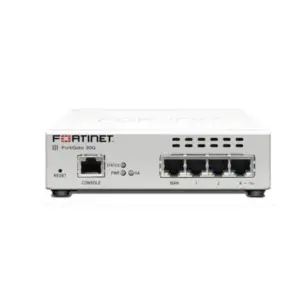
FortiGate 50G
A compact branch firewall option for organisations combining secure internet access, VPN and Fortinet services at smaller sites.
FortiGate 31G
Another small-site Fortinet route that may suit compact environments after bandwidth, user count and service needs are reviewed.
FortiClient EMS and Licensed Editions
Best for organisations that need central endpoint management, policy deployment, VPN/ZTNA controls or broader endpoint functions.
A suitable alternative is not always another VPN product. The real requirement may be a higher-capacity FortiGate, central management, multifactor authentication, application-level access or a managed endpoint service. FourTeck reviews the surrounding environment so the selected product supports the business objective rather than solving only one visible symptom.
Why Buyers Choose FourTeck
Software licensing can look simple until similar editions, support terms and deployment options appear in the quotation. FourTeck helps business buyers convert a technical requirement into a structured order. The team focuses on the user count, endpoint platforms, current Fortinet environment, management choice, authentication design, subscription duration and expected support level.
Product conversations are connected to real operating requirements rather than catalogue names alone.
Buyers receive help identifying edition, device count, management path and related Fortinet components.
Commercial requests can include term, quantity, country and project timeline for a clearer response.
Electronic entitlement and related hardware logistics are discussed according to country and order scope.
Support entitlement, renewal expectations and related hardware coverage can be reviewed before purchase.
FourTeck can assist SMB, enterprise, project and multi-country procurement conversations.
FourTeck does not assume that the largest licence or the most advanced edition is automatically the right choice. A small supported deployment may meet the need for one customer, while another requires central management and zero-trust access. The recommendation should reflect the actual workload, internal skills and risk level. This approach helps avoid paying for unused functions or discovering too late that a required control was not included.
The team can also help customers prepare for renewal. Licence dates, endpoint additions, FortiGate support status and identity services should be reviewed together where possible. For project buyers and system integrators, FourTeck can organise the commercial discussion around phased rollout, multiple sites and defined delivery milestones. The goal is clearer purchasing, fewer configuration surprises and a more practical path from quotation to implementation.
Frequently Asked Questions
What is FortiClient VPN used for?
It is used to create encrypted remote connections between supported endpoints and a FortiGate environment. Businesses use it for home workers, travelling staff, administrators, contractors and branch support. The exact functions depend on the client edition, operating system, FortiGate configuration and licence. Licensed editions can extend beyond basic VPN into central management, zero-trust access and additional endpoint controls.
Is FortiClient available as a free VPN client?
Fortinet provides a VPN-only client for limited remote-access use, but businesses should distinguish it from commercial standalone and EMS-managed editions. The free client does not provide the same central management, support entitlement or broader security features as licensed subscriptions. FourTeck can help compare the options when the organisation is unsure whether a free download is sufficient for the intended deployment.
Can FourTeck help select the correct licence?
Yes. Share the endpoint count, subscription term, operating systems, FortiGate model, EMS preference, required VPN type and whether zero-trust or endpoint protection is needed. FourTeck can use this information to guide the licence discussion and prepare a more accurate quote. Final SKU selection remains dependent on current Fortinet ordering options and supplier confirmation.
Does FortiClient require a FortiGate firewall?
For FortiGate-based remote access, the client connects to a FortiGate configured as the VPN gateway. Broader FortiClient functions may also integrate with FortiClient EMS and other Fortinet services. The required architecture depends on whether the project is basic VPN, managed VPN/ZTNA, endpoint protection or a wider Security Fabric deployment. FourTeck can help review related firewall requirements.
Is multifactor authentication included?
FortiClient can support multifactor authentication workflows, but FortiToken entitlement is not automatically included with standard FortiClient licensing. Token licences, identity services and authentication configuration should be reviewed separately. Buyers should state whether they already own FortiToken or another supported identity solution so the quotation and deployment plan can account for the complete access design.
Can FortiClient be centrally managed?
Licensed FortiClient deployments can be managed through FortiClient EMS. Depending on the selected SKU, EMS may be cloud-hosted or deployed on premises. Central management can help provision profiles, apply policies and maintain endpoint visibility. The exact capabilities depend on the edition, so buyers should confirm whether they need VPN/ZTNA only or broader endpoint-security functions.
Is FortiClient available across Africa?
FourTeck supports enquiries across African markets. Availability depends on the commercial edition, device pack, subscription duration, management model, supplier status and order quantity. Software delivery may be electronic, while related hardware or authentication items follow their own logistics. Buyers should provide the deployment country and business entity details so the correct regional quotation path can be confirmed.
How do I request a FortiClient quote?
Send FourTeck the number of endpoints, preferred term, FortiGate model, current FortiOS version, required operating systems, management preference, authentication method and deployment country. Also mention whether this is a new installation, renewal or expansion. These details allow the sales and technical teams to identify the likely licence path and reduce delays caused by incomplete product descriptions.
Can businesses request bulk or multi-site supply?
Yes. Commercial FortiClient ordering supports device-based packs suited to small, medium and large deployments. Multi-site buyers should share total endpoint count, country locations, management design, rollout phases and renewal expectations. FourTeck can help organise a project quotation and discuss whether one central EMS environment or separate management instances are more appropriate for the business structure.
Need Help Choosing the Right FortiClient Edition?
Share your endpoint count, FortiGate model, operating systems, preferred subscription term, management choice and deployment country. FourTeck can help review availability, licence options, authentication requirements, renewal planning and the related products needed for a workable remote-access solution.
Reviews
There are no reviews yet.