

FortiDeceptor Deception Security in Africa
FortiDeceptor helps organisations identify attackers who have entered or are exploring the network by presenting believable decoy systems, credentials, services, files and operational assets that should never be touched during normal business activity. Interaction with those deception assets creates a strong security signal, giving security operations teams valuable context for investigation, containment and response before a threat reaches important production systems.
✓ IT, OT, IoT and Cloud Coverage
✓ Configuration Review
✓ Africa Quote Assistance
Request Quote
Check Africa Availability
Ask for Configuration Support
Quick Product Information
Fortinet
FortiDeceptor
Distributed deception and breach-detection platform
Hardware, virtual appliance, public cloud and service-based options
SOC teams, enterprises, regulated organisations and critical infrastructure
Early detection of reconnaissance, credential abuse and lateral movement
Configuration dependent by model, VLAN coverage and decoy plan
Based on selected FortiCare, subscription and project services
Contact FourTeck for current Africa options
Product Overview
Many security controls are designed to stop known threats at the perimeter, inspect traffic, protect endpoints or correlate events. Those controls remain essential, but modern attackers often work patiently after gaining an initial foothold. They may test credentials, scan internal services, move between systems, query identity infrastructure, search file shares or investigate operational networks before they take an action that creates an obvious alarm. FortiDeceptor adds a different kind of visibility by placing realistic but non-production assets where an intruder expects to find valuable systems. Because legitimate users and applications have no reason to engage with these assets, an interaction can become a high-confidence indicator that deserves immediate attention.
The platform can create a distributed deception environment using decoy virtual machines, emulated services, lures, fake credentials, documents and tokens. These elements are designed to resemble the organisation’s real infrastructure closely enough to attract human attackers and automated malware. When activity reaches a decoy, the platform records what happened, enriches the event with contextual details and can support containment workflows. This gives analysts a more focused starting point than a large queue of unrelated warnings. Instead of asking whether every alert represents a real attack, the team can investigate behaviour that has already crossed into an environment where normal business activity should not occur.
FortiDeceptor fits into layered security programmes for enterprises, financial institutions, healthcare groups, public-sector networks, universities, telecom providers, industrial sites, utilities, data centres and multi-branch organisations. It can be relevant where legacy assets cannot run endpoint agents, where network segmentation is complex, where operational technology has strict availability requirements or where a security operations centre needs earlier warning of lateral movement. It is not a replacement for firewalls, endpoint protection, identity controls, backup or security monitoring. Its value comes from adding a deceptive surface that helps reveal adversaries who have evaded or bypassed another control.
Deployment flexibility is an important buying consideration. FortiDeceptor is available in hardware, virtual and service-based approaches, with public-cloud support and options for central management across multiple appliances. The correct design depends on the number of VLANs or network segments, the type of assets to imitate, the required decoy count, whether Windows decoys are needed, the location of sensitive systems and the desired response integrations. A small proof of concept and a wider enterprise rollout do not require the same bill of materials.
For Africa buyers, FourTeck can help translate those technical choices into a practical procurement plan. The team can review the requested coverage, existing Fortinet Security Fabric components, virtual infrastructure, cloud platforms, operational technology needs, project schedule and support expectations before preparing a quote. This reduces the risk of purchasing only by product family name without confirming the capacity, licence, appliance, subscription and deployment services needed for the actual environment.
Key Business Benefits
The platform’s features matter most when they are connected to operational outcomes. The following benefits explain how deception technology can support a broader security programme rather than operating as an isolated tool.
◆ Earlier Warning of Internal Activity
Decoys can reveal scanning, credential testing and movement inside the environment before an attacker reaches a real database, application server or production control system. Earlier warning gives the response team more time to validate scope, protect affected assets and interrupt the attack path.
◆ High-Confidence Security Signals
Normal users should not access deception assets. When a person, script or malware process interacts with one, the resulting event is usually more meaningful than a generic network anomaly. This can help analysts prioritise investigations and reduce time spent triaging low-value notifications.
◆ Visibility for Difficult-to-Monitor Assets
Operational technology, embedded devices and older systems may not support modern endpoint agents. Deception can add network-level observation around those environments without requiring software to be installed on every protected asset, subject to correct architecture and deployment planning.
◆ Better Investigation Context
Interaction records can show which service was targeted, how the attacker behaved and what indicators were observed. Richer context helps a security operations team understand technique, likely intent and affected network areas instead of responding to an alert with very little supporting evidence.
◆ Automated Containment Support
FortiDeceptor can work with security controls and orchestration processes to isolate compromised endpoints or trigger response actions. Automation can reduce the delay between detection and containment, provided policies are tested carefully and aligned with business continuity requirements.
◆ Scalable Coverage Across Segments
Different hardware and virtual options support broader deployment across multiple VLANs, sites and environments. This allows organisations to begin with sensitive zones and extend coverage over time as their operational process, security maturity and budget develop.
◆ Ransomware and Credential-Abuse Detection
Fake files, credentials and systems can expose suspicious encryption activity, stolen credential use and unauthorised access attempts. The goal is to create safe indicators that reveal malicious behaviour before important production data or identity services are affected.
Product Highlights
FortiDeceptor is built as a distributed deception platform rather than a single traditional honeypot. The difference is important for procurement teams: a business deployment can use multiple decoy types, tokens, lures and services across network segments so that the deceptive surface reflects the structure of the real environment. The system can support IT, operational technology, internet-of-things and cloud use cases, allowing security teams to plan coverage around servers, workstations, industrial protocols, embedded assets and public-cloud networks.
Hardware, virtual appliance, public-cloud and service-based options support different infrastructure strategies.
Linux, SCADA, IoT, cloud and custom decoys can be planned according to the selected subscription and design.
Activity against deceptive assets can generate contextual evidence for faster investigation and response.
Integration can extend alerts and response into Fortinet Security Fabric and compatible SIEM, SOAR, EDR and sandbox workflows.
Multiple appliances can be managed through a central design when the correct management licensing and architecture are selected.
New or adapted decoys can be introduced as network assets, vulnerabilities and threat priorities change.
Exact features, decoy entitlements, supported platforms and capacity can change by model and software release. Buyers should use the current datasheet, ordering guide and final quotation to confirm the required combination rather than assuming every option is included in every purchase.
Technical Specifications
The table below summarises the product family for early procurement discussion. FortiDeceptor is offered in several deployment forms, so the final specification is configuration dependent. Confirm the selected model, current software release, subscription quantity and network design before issuing a purchase order.
| Specification Area | FortiDeceptor Family Guidance |
|---|---|
| Brand | Fortinet |
| Product Type | Distributed deception security and breach-detection platform |
| Deployment Forms | Hardware appliance, virtual appliance, public cloud and FortiDeceptor-as-a-Service options |
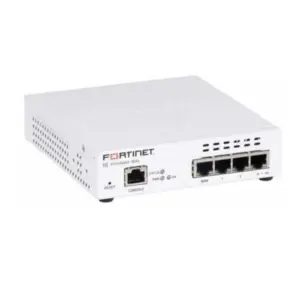
| Current Hardware Families | Edge 100G, Rugged 100G and 1000G; availability and generation should be confirmed |
| Maximum Decoy VMs | Model dependent; current platform guidance includes up to 8 on Rugged 100G and up to 20 or more on selected 1000G generations |
| VLAN / Network Segment Coverage | Configuration dependent; selected options can support up to 48 or 128 VLANs, with licensing based on network coverage |
| Decoy Types | Linux, SCADA, IoT, cloud and custom decoys; Windows decoys may require additional licensing in on-premises deployments |
| Deception Services | Decoy systems, lures, deception tokens, asset discovery, incident monitoring and attack analysis |
| Response Integration | Fortinet Security Fabric plus compatible SIEM, SOAR, EDR and sandbox workflows; confirm connectors for the intended release |
| Virtual Platform Guidance | Selected VMware, KVM, Hyper-V and public-cloud environments; current compatibility should be validated before deployment |
| VM Resource Baseline | Current guidance starts from 12 virtual CPUs, 16 GB memory and 200 GB storage, with production sizing based on deployed deception VMs |
| Central Management | Available for multi-appliance designs with appropriate licensing; management design is not required for every deployment |
| Support and Services | Based on selected FortiCare, subscription term, FortiGuard services and project support |
| Warranty | Dependent on hardware model, FortiCare term, supply route and regional service conditions |
| Availability | Contact FourTeck for current model, subscription, lead-time and regional supply guidance |
How to interpret the specification table
The largest number in a datasheet is not automatically the right buying target. A security team should first identify the network segments that deserve deception coverage, the decoy types required, the expected number of sites and whether the design must scale through central management. Virtual deployments also need adequate compute, memory, storage and interfaces. Windows decoys can introduce separate licence requirements, while service-based deployment changes how infrastructure and operations are handled. FourTeck can help build a bill of materials after reviewing these inputs.
Configuration and Buyer Guidance
A successful deception project begins with a coverage plan, not with the appliance alone. Buyers should map the systems that would be attractive to an attacker and decide where a deceptive presence can produce the clearest signal. High-value areas often include identity services, data centres, server VLANs, administrative networks, research environments, finance systems, backup infrastructure, industrial segments and remote sites. The design should also consider how an attacker might move from a compromised user endpoint toward those assets.
1. Define the protected environment
List network segments, sites, cloud networks and operational zones. This determines VLAN coverage, appliance placement and the likely subscription quantity.
2. Choose realistic decoy types
Select decoys that resemble the real systems an attacker would expect to find, including server, workstation, industrial, IoT or cloud identities.
3. Review integrations
Confirm which firewall, endpoint, SIEM, SOAR, sandbox and ticketing systems will receive events or perform containment actions.
4. Plan operational ownership
Decide who monitors incidents, validates alerts, tunes the deployment, maintains decoys and approves automated response actions.
5. Size for growth
Allow for future network segments, new sites, cloud expansion and additional decoy requirements so the platform does not become undersized after the first phase.
6. Confirm support expectations
Agree on subscription duration, FortiCare level, update process, remote assistance, training needs and local project responsibilities.
For virtual deployments, the buyer should also confirm hypervisor version, available CPU and memory, storage performance, network interface design, backup policy and administrative access. For hardware, review rack or desktop placement, power, environmental conditions, interface requirements and delivery logistics. A proof of concept can help validate decoy realism, signal quality and workflow integration before a wider rollout, but the proof-of-concept scope should be representative enough to test real operational questions.
Ideal Business Use Cases
Deception security is most useful where an organisation wants to detect behaviour that should not occur during legitimate operations. The following scenarios show how the platform may fit into broader security architecture when configured correctly.
Security Operations and Threat Hunting
SOC teams can use deception events as high-priority leads for investigation. The detailed interaction can support threat hunting, incident scoping and response decisions without relying only on signatures or broad anomaly detection.
Ransomware Early Detection
Lure files and decoy systems can reveal suspicious encryption, credential use or lateral movement that may occur before ransomware reaches critical data. Response workflows can then isolate the affected endpoint when policies permit.
Operational Technology Visibility
Manufacturing, utilities, mining, energy and transport organisations can place suitable decoys around industrial environments where legacy systems and specialised protocols make endpoint monitoring difficult or operationally sensitive.
Insider-Threat Indicators
Access to deceptive credentials, files or systems may highlight unauthorised exploration by an internal account. Such events still require careful investigation and appropriate governance, but they can provide a focused signal.
Cloud and Hybrid Infrastructure
Cloud decoys and virtual deployment options can extend deception into hybrid environments, helping teams observe suspicious access across data-centre, campus and public-cloud network segments.
Identity and Credential Abuse
Deceptive credentials and identity-related lures can expose attempts to use stolen credentials, query sensitive resources or move toward privileged systems after an initial compromise.
Segmentation Validation
A deception deployment can help reveal unexpected paths between network zones. This can support investigation into policy gaps, misconfiguration or unauthorised connectivity that may not be visible from documentation alone.
Distributed Branch and Campus Networks
Organisations with many sites can use centralised architecture and remote deception coverage to gain earlier warning from branches, campuses and regional facilities without treating each location as an isolated security programme.
FortiDeceptor Early Detection and High-Fidelity Alerts
Traditional detection systems often process enormous amounts of legitimate traffic and endpoint behaviour. That broad visibility is necessary, but it can create a difficult prioritisation problem. A deception asset has a narrower purpose: it exists to be discovered and touched by an attacker, not by normal business workflows. This changes the meaning of an interaction. A connection to a decoy server, an attempt to use a fake credential or encryption of a lure file can signal that a device or account is behaving outside expected boundaries.
For a security team, the practical benefit is not simply another alert. The benefit is a signal that can carry useful context about the source, destination, service, action and sequence of events. Analysts can compare that evidence with firewall logs, endpoint telemetry, identity records and network data to determine whether the event represents malware, an internal scan, a misconfigured tool or active adversary behaviour. Because the deception environment is controlled, it can also provide a safer place to observe tactics than a production server containing real data.
The quality of the signal depends on thoughtful placement. Decoys should resemble the surrounding assets and appear in locations that an attacker would naturally investigate. If they are too obvious, isolated or unrealistic, a skilled intruder may avoid them. If they are placed carelessly, legitimate scanners or administrative tools may create noise. A mature deployment therefore includes asset discovery, naming conventions, realistic services, maintenance procedures and documented exclusions for approved security testing.
When these details are planned well, FortiDeceptor can shorten the path from suspicious internal activity to a focused investigation. This is especially valuable for organisations that need to reduce attacker dwell time, improve evidence quality and give a small security team a clearer set of priorities during a fast-moving incident.
FortiDeceptor IT, OT, IoT and Cloud Coverage
Enterprise infrastructure rarely fits into one technology category. A bank may operate modern virtual servers beside legacy applications. A manufacturer may connect office users, industrial controllers, engineering workstations, cameras and remote maintenance systems. A university may combine research equipment, student networks, cloud services and departmental servers. Deception coverage must reflect this diversity if it is to attract the same paths an attacker is likely to explore.
FortiDeceptor supports a range of decoy types for information technology, operational technology, internet-of-things and public-cloud environments. Linux, SCADA, IoT, cloud and custom decoys can be used according to the selected deployment. This allows the security team to present systems and services that resemble real assets without exposing production data. Custom decoys are particularly relevant where the organisation runs specialised applications or industry-specific systems that would not be represented well by a generic server image.
In operational technology, non-intrusive design is critical. Security teams cannot treat a production line, power process or building-control network like a normal office VLAN. The decoy plan should be reviewed with operations engineers, safety owners and system vendors. Network placement, protocols, polling behaviour and automated response must be tested so that the deception layer does not create operational risk. The platform can add visibility around unpatched or difficult-to-monitor assets, but it must be introduced through controlled change management.
Cloud environments introduce different questions. Buyers should map virtual networks, accounts, regions, identity paths and shared services. A cloud segment may be counted differently from a traditional VLAN for licensing, and the organisation should confirm how decoys are deployed, managed and connected to the existing security operations process. The goal is consistent visibility across hybrid infrastructure, not separate alert islands that different teams cannot correlate.
FourTeck can help buyers document these environments before quotation so the selected platform aligns with the actual mix of IT, OT, IoT and cloud assets instead of assuming a standard campus-only design.
FortiDeceptor Response, Integration and Security Operations
Detection creates value only when the organisation can act on it. FortiDeceptor can integrate with Fortinet Security Fabric components and compatible third-party security tools, allowing deception events to become part of a wider investigation and response workflow. Depending on the chosen architecture and software release, an alert may be sent to monitoring, analytics, orchestration, endpoint or sandbox systems for correlation and action.
One important capability is the potential to quarantine a compromised endpoint after it engages with a deception asset. This can limit lateral movement and reduce the chance that the attacker reaches additional systems. Automated containment should not be enabled casually. The organisation must define confidence thresholds, exclusions, approval paths and recovery procedures. A critical production device, clinical workstation or industrial endpoint may require a different response policy from a standard office laptop.
Integration also improves investigation context. A SIEM can correlate a deception event with authentication logs, firewall sessions and endpoint activity. A SOAR platform can open a case, enrich indicators, notify responders and execute a tested playbook. An EDR system may provide process-level details from the source device. A sandbox can analyse suspicious files associated with the incident. The deception signal becomes the trigger that helps bring these separate sources together around a specific event.
Procurement teams should ask for a connector and workflow review during the design phase. Product families and versions evolve, and a connector name alone does not guarantee that every desired action is supported. Confirm the event fields, direction of communication, authentication requirements, network ports, certificate handling, API limits and tested release combinations. Also define who owns each integration after implementation, because an unmaintained workflow can fail silently when another platform is upgraded.
A strong operational plan connects technology, process and responsibility. FourTeck can help buyers identify the integration questions that should be answered before deployment so the platform becomes part of the incident-response lifecycle rather than another dashboard that analysts must monitor separately.
What Buyers Should Check Before Purchase
Before requesting a quote, buyers should confirm the usage environment, network coverage, decoy requirements, licensing model, integration goals and operational ownership. Choosing only by the FortiDeceptor family name can lead to missing subscriptions, insufficient VLAN coverage, unsuitable hardware, under-sized virtual resources or unexpected Windows licensing requirements.
Configuration Fit
Confirm whether the project requires Edge 100G, Rugged 100G, 1000G, virtual appliance or service-based deployment. Share the number of sites, network segments, protected zones and expected growth.
Compatibility Check
Validate hypervisor or cloud support, firewall and Security Fabric versions, SIEM or SOAR connectors, endpoint response tools, identity infrastructure and management access requirements.
Licensing and Renewal
Review the subscription term, licensed VLAN quantity, FortiCare level, FortiGuard services, central-management seats and any Windows decoy licences. Ask how renewal growth will be calculated.
Deployment Requirements
For hardware, confirm rack, desktop, power, interfaces and environment. For virtual deployment, confirm CPU, memory, storage, network interfaces, backup and administrative access.
Operational Readiness
Identify the team that will monitor incidents, maintain decoys, investigate events, approve containment and review the platform after network changes.
Warranty and Support
Ask which FortiCare option applies, how hardware replacement is handled, what remote assistance is included and which responsibilities remain with the buyer or implementation partner.
Project and Bulk Supply
For multi-site or phased rollouts, provide site count, rollout dates, delivery locations, appliance quantity, central-management design and acceptance criteria.
Quote Preparation
Share your network diagram, VLAN or segment count, cloud scope, decoy types, existing Fortinet products, required integrations, support term and delivery country for a clearer quotation.
Buyers should also consider long-term operating cost. Deception coverage may expand as new sites and cloud networks are added, and subscription quantities should be reviewed annually. Training, change management, integration maintenance and incident-response testing are part of the real project cost even when they are not listed as appliance line items. FourTeck can help review these points so the selected option matches the organisation’s security programme instead of being chosen only by initial purchase value.
Africa Availability and Service Support
FourTeck supports FortiDeceptor inquiries across Africa with assistance for product selection, deployment-model review, licence planning, quotation, delivery coordination and warranty guidance. Availability can vary by hardware generation, virtual or service-based option, subscription duration, supplier status, order quantity and destination. For that reason, the page does not present a fixed stock promise or a universal configuration.
A useful inquiry should include the number of protected network segments, the expected number of sites, existing virtual platforms, cloud environments, operational technology scope, required integrations and preferred support term. FourTeck can use those details to help distinguish between appliance, virtual and service-based approaches and identify the current order codes that match the project.
Delivery coordination may include documentation review, commercial quotation, supplier lead-time guidance, destination planning and project scheduling. Warranty handling depends on the selected FortiCare service, appliance type and supply route. Buyers should confirm all support and replacement conditions in the final proposal, particularly for critical infrastructure and multi-country deployments.
Send FourTeck your network coverage, deployment preference and integration requirements for a structured quote discussion.
Contact FourTeck Sales
Africa Country and Regional Coverage
Businesses across Africa, including Kenya, Uganda, Nigeria, Ghana, Tanzania, Rwanda, Ethiopia, South Africa, Zambia, Botswana, Senegal and other regional markets can contact FourTeck for availability guidance, configuration review and quotation support. A regional request may involve a single head office, an industrial site, a bank branch network, a university campus, a government environment or a multi-country enterprise rollout.
The same product family can require a different design in each environment. A cloud-first company may prefer virtual or service-based deployment, while a data centre may need a dedicated appliance and central management. A mining or manufacturing site may require rugged hardware and carefully planned OT decoys. FourTeck can help buyers compare these options and coordinate project requirements without creating repeated country-specific product pages.
Regional delivery, support and warranty conditions should always be confirmed in the final quotation. Import requirements, project schedules, supplier lead times and service availability can vary by destination and order scope.
GCC, Middle East and Africa Availability
FourTeck Africa can support product inquiries for organisations across Africa while also guiding regional technology requirements through selected FourTeck platforms serving GCC and Middle East markets. Businesses with operations in the UAE, Saudi Arabia, Qatar, Oman, Bahrain and African countries may need a coordinated procurement approach for standard configuration, licensing, central management and support.
Regional projects should define where appliances or virtual instances will be deployed, which team will manage them, how events will be routed to a shared security operations centre and whether data-residency or cloud requirements affect the design. Availability, delivery options, warranty handling and configuration support can vary based on country, product type, selected model, subscription, supplier status and order quantity.
Other FourTeck Solutions Buyers May Consider
Deception security normally works beside perimeter, segmentation, endpoint and security-operations controls. The following FourTeck pages provide related Fortinet options that may form part of a wider architecture. They are not direct replacements for FortiDeceptor; each addresses a different layer of the security programme.
FortiGate 31G
Compact next-generation firewall for branches and smaller business sites that need secure internet access, VPN and policy control.
FortiGate FG-81F-Bypass
Branch security appliance option for organisations reviewing bypass, VPN, SD-WAN and FortiGuard bundle requirements.
FortiGate 3001G
High-capacity enterprise firewall for data-centre edge, segmentation and high-volume inspected traffic environments.
FortiGate Rugged FGR-60F
Rugged firewall option for field, industrial and operational environments where placement conditions differ from an office network.
FortiGate FG-41F
Desktop next-generation firewall for smaller offices and distributed networks requiring secure access and VPN planning.
FourTeck Cybersecurity Assistance
Discuss a complete requirement that may include firewalling, deception, endpoint, logging, orchestration and support services.
Why Buyers Choose FourTeck
Cybersecurity procurement often fails when a product code is treated as the complete solution. Deception platforms require decisions about architecture, coverage, licensing, integration, support and operational ownership. FourTeck approaches the inquiry as a business and technical requirement rather than only a request for a box.
Assistance identifying the current appliance, virtual or service option that matches the requested deployment.
Review of network segments, decoy scope, virtual resources, integrations and management requirements.
A structured commercial discussion based on quantity, subscription term, project location and delivery requirements.
Regional planning for documentation, lead times and destination requirements without unsupported delivery promises.
Clarification of FortiCare, hardware support and replacement conditions in the final proposal.
Help aligning deception with firewall, endpoint, analytics and security-operations tools where appropriate.
FourTeck supports SMB, enterprise, public-sector, education, healthcare, financial, industrial and service-provider buyers. The aim is to help the customer avoid a wrong model, missing licence, incompatible design or incomplete project scope. Final specifications, commercial terms, warranty and delivery commitments are confirmed through the approved quotation.
Frequently Asked Questions
What is FortiDeceptor used for?
It is used to create decoys, lures and deceptive assets that attract suspicious internal activity. When an attacker, compromised account or malware process interacts with those assets, the platform can generate a high-confidence alert and provide investigation context. It is commonly added to layered security programmes for lateral-movement detection, credential-abuse visibility, ransomware warning and protection around IT, OT, IoT and cloud environments.
Is FortiDeceptor available in Africa?
FourTeck supports Africa inquiries for FortiDeceptor hardware, virtual and service-based options. Availability depends on the requested model, subscription term, supplier status, quantity and destination. Buyers should provide the deployment scope and delivery country so FourTeck can review current options, prepare a suitable quotation and explain the expected support and warranty conditions.
Can FourTeck help choose the correct deployment model?
Yes. The choice between Edge, Rugged, 1000G, virtual appliance and service-based deployment should be based on network coverage, environment, virtual resources, site count, decoy types and management preference. FourTeck can review these details before quotation and help identify the current order codes and subscriptions that fit the requirement.
How is FortiDeceptor licensed?
Licensing can depend on the deployment model, subscription duration and number of network segments or VLANs covered. Multi-appliance environments may require central-management licensing, and Windows decoys can require additional licences for selected on-premises deployments. The final bill of materials should be checked against the current ordering guide because licensing rules and product bundles can change.
Does FortiDeceptor replace a firewall or endpoint security platform?
No. Deception security complements firewalls, endpoint protection, identity controls, backups, monitoring and incident-response tools. It adds a controlled deceptive surface that can expose attackers who have bypassed another control or are moving inside the environment. A complete security programme still needs prevention, segmentation, recovery and operational processes.
Can it be used in operational technology environments?
Yes, the platform supports OT and SCADA deception use cases, including rugged appliance options. Deployment should be planned with operations and safety teams because industrial networks have strict availability and change-control requirements. Decoy protocols, placement, scanning behaviour and automated response must be validated so the security project does not disrupt production or critical services.
Can FortiDeceptor integrate with existing security tools?
It can integrate with Fortinet Security Fabric components and compatible third-party SIEM, SOAR, EDR and sandbox tools. The exact connector, event fields and automated actions depend on product versions and architecture. Buyers should confirm compatibility for the intended releases and test response workflows before enabling automatic containment in production.
What information is needed for a quote?
Provide the number of sites, network segments, cloud networks, protected zones, preferred deployment model, required decoy types, existing Fortinet products, integration targets, support term and delivery location. A network diagram and a short description of the security operations process can help FourTeck prepare a more accurate configuration discussion.
Can businesses request multi-site or project supply?
Yes. Multi-site, phased and regional projects can be discussed with FourTeck. The request should include appliance or virtual quantities, central-management requirements, rollout schedule, destination countries and acceptance criteria. Project supply may require separate planning for licensing, delivery, implementation, training and post-deployment operational support.
How should buyers plan warranty and ongoing support?
Confirm the selected FortiCare term, hardware replacement conditions, subscription renewal date, update responsibility and support contact process. Virtual and service-based deployments have different support considerations from hardware appliances. The final quotation should state the applicable service level and any implementation or managed-service work supplied separately.
Need Help Planning a FortiDeceptor Deployment?
FourTeck can help review platform availability, appliance or virtual options, VLAN coverage, decoy requirements, integrations, support terms and delivery needs for your organisation. Share your environment and project scope to begin a structured quotation discussion.
Reviews
There are no reviews yet.