


Quick Product Information
A Practical Overview of FortiPAM
Privileged accounts are different from ordinary employee accounts. A standard user may open email, access approved files and work inside assigned business applications. A privileged user can change firewall rules, reset passwords, create new administrators, modify databases, access production servers, alter cloud resources or manage systems that affect an entire organisation. Because these accounts carry more power, a stolen password, an unmanaged shared login or an unrecorded vendor session can create a much larger business risk than a normal account problem.
FortiPAM is designed to place control between the privileged user and the sensitive target. Instead of giving every engineer a permanent administrator password, the organisation can store credentials in a protected vault, apply rules that determine who may request access, require approval where needed, launch authorised connections without revealing the secret, and record what happens during the session. This changes privileged access from an informal exchange of passwords into a governed business process with ownership, timing, traceability and review.
The platform can support a wide range of targets and workflows. Typical environments include Windows servers, Linux or Unix systems, network equipment, databases, web consoles, file-transfer services and selected operational technology systems. Fortinet documents support for common connection methods such as RDP, SSH, VNC, Telnet, MSSQL, SMB and SCP, together with custom launcher options for requirements that are not covered by a standard method. Authentication can be connected to directory and identity services, while integrations with products such as FortiClient EMS, FortiToken, FortiAuthenticator and FortiSandbox can extend device validation, multifactor authentication and file inspection capabilities.
For African organisations, the purchasing challenge is rarely limited to choosing a product name. Buyers must decide whether a hardware appliance or virtual deployment is more appropriate, how many users or concurrent sessions are required, which systems will be onboarded first, whether high availability is needed, how vendor access will be handled, and which support or security subscriptions belong in the commercial package. FourTeck helps translate those technical decisions into a practical quotation so that procurement, security, infrastructure and finance teams can work from the same requirement.
Key Business Benefits
The value of privileged access management is not simply that passwords are stored in another application. The larger benefit is that powerful access can be treated as a controlled service with clear responsibility, stronger verification and evidence for later review. The following business outcomes explain why organisations introduce FortiPAM into security and infrastructure programmes.
🔒 Reduce Credential Exposure
Privileged passwords, SSH keys, API tokens and certificates can be stored and managed centrally rather than copied into spreadsheets, tickets, chat messages or personal notes. Users can be connected to approved assets without seeing the underlying secret, helping reduce accidental disclosure and uncontrolled reuse.
◆ Enforce Least Privilege
Access can be aligned with role, target, schedule, approval and business purpose. This allows a contractor to receive only the permissions needed for a defined task instead of broad access that continues after the work is complete.
● Improve Audit Readiness
Session records, access requests, approvals, secret activity and administrative events create a stronger evidence trail. Security and audit teams can investigate who accessed a system, when the access occurred and what actions were performed.
⚙ Automate Routine Controls
Policy-driven password generation, verification and rotation can reduce repetitive manual work. This is especially useful for service accounts and shared technical credentials that are difficult to manage consistently across many systems.
↗ Govern Third-Party Access
Vendors and external engineers can be authenticated, limited to declared resources and monitored during approved sessions. This supports remote support without giving third parties permanent visibility into the wider environment.
✓ Support Operational Continuity
Controlled emergency access, resilience planning, high-availability options and documented recovery procedures can help businesses maintain administrative access during incidents without abandoning governance.
These benefits become more meaningful when deployment is tied to real business processes. A bank may use the platform to govern database administrators and payment-system support. A telecom operator may control access to network devices and operational platforms. A hospital may protect clinical infrastructure and vendor maintenance accounts. A managed service provider may separate customer environments and prove which engineer performed each action. In every case, the objective is to reduce uncertainty around powerful access while keeping authorised technical work practical.
Product Highlights That Matter to Buyers
Secure Vault and Secret Lifecycle
FortiPAM can protect passwords, SSH keys, API tokens and certificates while supporting check-out, check-in, verification and rotation workflows. Buyers should identify which secret types exist today and which systems can support automated password changes before finalising the rollout scope.
Session Control and Recording
Authorised administrators can monitor active sessions, record activity and use filtering controls for selected commands or applications. Recording requirements should be sized with storage, retention, privacy policy and audit needs in mind.
Identity and Access Integration
Support for SAML, RADIUS, LDAP and Active Directory helps organisations connect privileged access to existing identity structures. FortiToken and FortiAuthenticator options can add stronger authentication, while FortiClient EMS can contribute endpoint posture context.
Service Account Discovery
Automated discovery and policy-based management can help teams find unmanaged credentials and reduce dependence on manually maintained service-account lists. A successful project should include application-owner testing so password rotation does not interrupt dependent services.
Hardware and Virtual Options
Buyers can evaluate dedicated appliances or virtual-machine subscriptions. Hardware may suit organisations wanting a packaged platform with defined capacity, while virtual deployment may fit existing data-centre standards, cloud strategy or phased adoption.
Fortinet Ecosystem Alignment
Integration with selected Fortinet identity, endpoint and security technologies can support coordinated authentication, device validation and file inspection. The exact value depends on the products already deployed and the licences included in the project.
Technical Specifications and Deployment Options
| Area | FortiPAM Details | Buyer Note |
|---|---|---|
| Product Type | Privileged access management and secure remote access | Confirm whether PAM, secure remote access or both are required. |
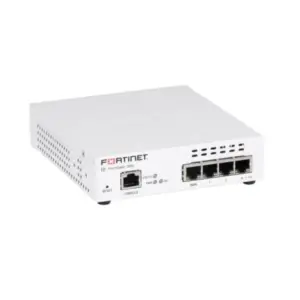
| Deployment Choices | FPA-1000G, FPA-3000G and FortiPAM virtual-machine licensing options | Final choice depends on capacity, virtualisation policy and resilience design. |
| Hardware Base Users | FPA-1000G: up to 50 base users; FPA-3000G: up to 100 base users | Stackable user upgrades are available; verify current order codes. |
| Virtual Licensing | Named-user tiers and concurrent-logon-session tiers, depending on selected subscription | These models should not be mixed without design confirmation. |
| Credential Protection | Encrypted secret storage, password policies, check-out and check-in, scheduled rotation and verification | Rotation support depends on target type and integration testing. |
| Session Methods | RDP, SSH, VNC, Telnet, MSSQL, SMB, SCP and other supported launchers | Confirm every required target protocol before purchase. |
| Authentication | Local users, LDAP, RADIUS, SAML, Active Directory and selected Fortinet MFA integrations | Directory readiness and identity ownership should be documented. |
| Monitoring | Active-session monitoring, recording, replay, event logs and audit reports | Retention policy and storage demand are configuration dependent. |
| Security Controls | Role-based access, approval workflows, command filtering, ZTNA integration, DLP and antivirus options | Capabilities may require associated licences or integrations. |
| High Availability | Supported options vary by appliance or virtual subscription | A separate licence or matched node may be required. |
| Support and Warranty | FortiCare and related support terms based on selected SKU | Confirm entitlement, duration and renewal ownership in the quote. |
| Availability | Configuration dependent | Contact FourTeck for current options and delivery planning. |
The specification table should be used as a planning guide rather than a substitute for a final bill of materials. FortiPAM licensing can be organised around hardware capacity, hardware user upgrades, named-user virtual-machine tiers or concurrent-session virtual-machine tiers. Buyers should first determine how many individuals need accounts, then estimate how many will be logged in at the same time. A company with many occasional administrators may prefer a concurrent approach, while an organisation that wants clearly assigned access for a stable group may find named-user licensing easier to govern. High availability, disaster recovery, security services, endpoint integration and support duration must also be reflected in the commercial design. FourTeck can help validate current order codes before quotation because subscription bundles and product options may change over time.
Configuration and Buyer Guidance
A privileged access project should begin with an inventory of people, systems and risk. Buying only by user count can lead to an incomplete design because two organisations with the same number of administrators may have very different needs. One may manage a few Windows servers inside a single data centre. Another may support hundreds of network devices, cloud consoles, databases, branch systems and third-party vendors across several operating companies.
1. Count Privileged Identities
List named administrators, service-desk staff, database teams, security engineers, application owners, external vendors and emergency accounts. Separate regular users from people who require elevated rights.
2. Map Target Systems
Document servers, directory services, network devices, databases, cloud platforms, web consoles, file-transfer systems and operational assets. Record the connection method and credential type for each target.
3. Define Approval Rules
Decide which access can be automatic, which requires manager or system-owner approval, and whether sensitive actions need multiple approval levels. Include after-hours and emergency scenarios.
4. Plan Retention
Determine how long access logs and session recordings must be retained. Consider internal policy, audit expectations, privacy rules, storage demand and investigation procedures.
5. Review Integration
Confirm directory services, MFA, endpoint management, ticketing, automation and security tools. Integration requirements should be included early so they do not appear as unexpected work after purchase.
6. Establish Recovery
Document high availability, backup, disaster recovery, break-glass access and ownership of emergency credentials. The design must remain secure while still allowing authorised recovery during an outage.
The project team should also decide who will operate the platform after deployment. A PAM solution needs policy owners, credential onboarding procedures, periodic access reviews, failed-rotation handling, certificate management, platform upgrades and renewal tracking. A clear operating model prevents the system from becoming another security tool that is installed but not maintained. FourTeck can support the commercial and planning conversation, but the buyer should assign internal responsibility for approvals, system ownership, compliance review and day-to-day administration.
Ideal Business Use Cases
Banking and Financial Services
Control access to payment platforms, databases, core systems, firewalls and administrative consoles. Approval workflows and recorded sessions can support stronger separation of duties and investigation of sensitive changes.
Telecom and Service Providers
Govern access to network infrastructure, management platforms, customer environments and remote operations. Different engineering teams can receive access according to role, service window and assigned target.
Healthcare Groups
Protect privileged accounts used for hospital systems, clinical applications, infrastructure and vendor maintenance. Controlled sessions help reduce the risk created by shared support credentials.
Government and Public Sector
Introduce formal access requests, role-based permissions and audit records for systems that support citizen services, finance, identity, communications and administrative operations.
Industrial and OT Environments
Provide controlled remote access to approved operational assets, engineering systems and maintenance interfaces. Access windows and session oversight can help reduce unmanaged vendor connectivity.
Managed Service Providers
Separate client access, assign technicians to authorised systems, record support activity and reduce the need to distribute customer passwords across service teams.
Universities and Education Networks
Manage privileged access for identity platforms, campus networks, student systems, research infrastructure and third-party application support while maintaining clear technical accountability.
Multi-Branch Enterprises
Centralise control over local administrators, branch firewalls, servers and support vendors while applying consistent access policies across distributed business locations.
FortiPAM is most valuable where privileged work is frequent, shared credentials are difficult to govern, external support is common, or the impact of an administrator mistake is high. It may also be introduced as part of a wider identity-security or zero-trust programme. The first phase does not need to include every system. Many organisations begin with the highest-risk accounts, such as domain administrators, firewall administrators, database administrators and remote vendors, then expand to service accounts and additional platforms after the operating process is proven.
FortiPAM Credential Vaulting and Automated Rotation
A privileged access programme often begins with a simple question: where are the administrator credentials today? In many organisations, the honest answer includes spreadsheets, password managers, ticket notes, scripts, application configuration files, email messages and the memory of experienced staff. The problem is not only that these locations may be insecure. It is also difficult to know which password is current, who has copied it, whether it has been changed after an employee left, and which applications will stop working if the secret is rotated.
FortiPAM provides a controlled location for passwords, keys, tokens and certificates, together with policies for access and lifecycle management. A user can request an approved connection to a target while the platform supplies the credential without displaying it. This reduces the number of people who need to know permanent secrets. Check-out and check-in workflows can provide temporary use, while password changers and scheduled rotation can help keep credentials from remaining unchanged for long periods.
Automation requires preparation. Service accounts are often embedded inside scheduled tasks, middleware, database jobs or application services. Changing a password without updating every dependency can cause an outage. Buyers should therefore plan discovery, ownership and testing before enabling rotation at scale. Start with accounts whose dependencies are well understood, validate rollback procedures, and create alerts for failed changes. Application teams should participate because they know where credentials are used and which maintenance windows are safe.
The business result is stronger credential hygiene with less manual distribution. Security teams gain visibility, infrastructure teams receive a repeatable process, and auditors can see how sensitive secrets are approved and changed. FourTeck can help buyers identify the correct FortiPAM deployment and licensing tier, but the organisation should define which credential groups will be onboarded first and who will own each rotation policy.
FortiPAM Session Monitoring, Approval and Audit
Knowing that a user logged in is not always enough. A privileged session may involve configuration changes, file transfers, database queries, account creation, software installation or commands that affect many users. FortiPAM can monitor and record supported sessions, maintain event and secret logs, provide playback for recorded activity and allow authorised administrators to review or terminate active connections. Selected command and application filtering controls can also restrict actions that are not appropriate for the assigned task.
Approval workflows add business context before access begins. A request can identify the user, target, reason and time window. The system owner or security team can decide whether the request is appropriate, and higher-risk resources can require more than one approval level. This is useful where duties must be separated or where external vendors should only connect during a planned maintenance period. Emergency access can be designed separately so that urgent recovery remains possible without turning every privileged account into a permanent exception.
Recorded sessions can support investigations, training and audit review, but retention should be planned carefully. Video and detailed activity records consume storage, and some environments may have privacy or labour requirements that govern monitoring. Buyers should define who can view recordings, how long evidence is retained, how exports are protected and how access to the monitoring platform itself is reviewed. A strong control system must also protect its own administrators.
For business leaders, the main advantage is accountability. Technical teams can continue working, while the organisation gains a reliable answer to questions about who accessed a critical system and what happened during the session. That evidence can reduce uncertainty after an incident and help demonstrate that privileged work follows approved processes.
FortiPAM Secure Remote Access and Fortinet Integration
Remote support is essential for modern infrastructure, but it often creates unmanaged access paths. Vendors may request VPN accounts, shared administrator passwords or direct connectivity to equipment. Staff may connect from home, branch offices or customer sites. FortiPAM can provide a more controlled approach by authenticating the user, applying least-privilege rules, limiting the session to approved targets and recording activity where required. Clientless web launchers and supported native methods can help match different technical workflows.
Fortinet integrations can extend this model. FortiAuthenticator and FortiToken options can strengthen user verification and support multifactor authentication. FortiClient EMS integration can add endpoint posture validation so that access decisions consider whether the connecting device meets policy. FortiSandbox integration can be considered for deeper inspection of selected file-transfer activity. These connections can be useful for organisations already operating Fortinet security technologies, but each integration should be reviewed for licensing, version compatibility and operational ownership.
The solution can also support distributed environments through gateway and resilience options, helping organisations manage secrets and sessions across separate networks or geographies. This is important for companies with central security teams but locally hosted systems. Network routing, firewall policy, DNS, certificates, latency and disaster-recovery design should be checked before deployment. A PAM platform cannot overcome an incomplete network architecture, so connectivity planning belongs in the project from the beginning.
FourTeck can help buyers coordinate the commercial side of a Fortinet identity-security project, including hardware or virtual selection, user tiers, support terms and related products. The technical implementation should then be based on a documented access model that covers employees, vendors, devices, target systems and emergency procedures.
What Buyers Should Check Before Purchase
Before requesting a quote, buyers should confirm the operational requirement instead of selecting only by product family or a published entry-level licence. The same FortiPAM name can represent different hardware appliances, named-user subscriptions, concurrent-session subscriptions, support terms and security-service combinations. A clear requirement helps FourTeck prepare a more accurate commercial option and reduces the risk of missing licences, resilience components or deployment work.
Configuration Fit
Provide the number of named users, expected concurrent logins, target systems, secret count, session-recording requirement and preferred deployment platform. State whether the project needs hardware, a virtual machine or both for primary and recovery sites.
Compatibility Check
List required operating systems, network devices, databases, web portals, authentication services, connection protocols and Fortinet products. Confirm software versions and directory design before assuming every integration is automatic.
Availability and Support
Ask for current lead time, subscription duration, FortiCare entitlement, upgrade rights, renewal date, high-availability requirement and delivery scope. Availability can change by model, quantity and sourcing route.
Required Add-Ons
Review rack rails, power and network connectivity for appliances, compute resources for virtual deployment, additional HA licences, security services, MFA, endpoint integration and professional deployment assistance.
Long-Term Operating Cost
Consider annual or multi-year subscriptions, support renewals, storage growth, administrator time, training, integration maintenance and expansion. The lowest entry price may not represent the complete project cost.
Quote Preparation
Share company location, delivery point, project deadline, deployment preference, user count, target count, authentication method, resilience requirement and support term. Include any mandatory procurement documentation.
Buyers should also ask how similar licensing models differ. Named-user licensing is based on the number of created users in the selected tier, while concurrent licensing focuses on how many users are logged in at the same time. These approaches solve different commercial problems and should be selected using actual usage patterns. Hardware appliances include defined base capacities and may use stackable user upgrades. High availability can require matched nodes or additional entitlement, so resilience should never be assumed from a single-item quote.
A replacement or alternative may be appropriate when requirements are smaller, larger or more identity-focused than a full PAM deployment. Some organisations first need MFA or central authentication; others require broader network access control or a larger privileged-access design. FourTeck can help identify the most suitable Fortinet path after reviewing the business need, existing infrastructure and project budget.
Africa Availability and Service Support
FourTeck supports FortiPAM enquiries across Africa with assistance for product selection, deployment-model review, user and session licensing, quote preparation, delivery coordination and support-term clarification. Availability may vary according to the hardware appliance, virtual subscription, licence duration, required user tier, security services, project quantity and supplier conditions at the time of order.
A productive enquiry should include more than the product name. Buyers can share the number of privileged administrators, estimated concurrent sessions, planned target systems, directory environment, MFA requirement, high-availability design, preferred support term and deployment location. This information helps determine whether the requirement fits an FPA appliance, a named-user virtual licence, a concurrent-session virtual licence or a phased project.
FourTeck can also help coordinate related commercial items such as FortiCare, security services, hardware user upgrades, additional licences for resilience and compatible Fortinet identity or endpoint components. Warranty and subscription guidance is based on the selected order code and should be confirmed in the final quotation. Installation, migration and policy design may require a separate scope depending on project complexity.
Africa Country and Regional Coverage
Businesses across Africa, including Kenya, Uganda, Nigeria, Ghana, Tanzania, Rwanda, Ethiopia, South Africa, Zambia, Botswana, Senegal and other regional markets, can contact FourTeck for Fortinet privileged-access product enquiries, configuration guidance and quotation support. The team can help buyers review licence tiers, deployment choices, related identity-security products, delivery requirements and multi-site project needs.
Regional projects often involve a head office, remote branches, data-centre systems, cloud services and vendors located in different countries. FourTeck helps keep the purchasing conversation structured by collecting the common technical requirement first and then coordinating country-specific delivery or documentation needs. For dedicated regional support paths, buyers may also use the Kenya FourTeck platform or the Uganda FourTeck platform where relevant.
GCC, Middle East and Africa Availability
FourTeck Africa can support product discussions for organisations whose technology purchasing connects Africa with GCC and Middle East operations. Regional headquarters, finance teams or security managers in the UAE, Saudi Arabia, Qatar, Oman and Bahrain may be responsible for systems used by African subsidiaries, branches or project sites. A consistent privileged-access design can help these organisations govern administrator and vendor access across mixed environments.
Availability, delivery options, licence terms, warranty handling and configuration support may vary by country, deployment type, order quantity and supplier route. Cross-regional projects should document which entity will purchase the licence, where the appliance or virtual system will be deployed, who will own the support entitlement and which teams will approve privileged access. Clear commercial ownership reduces confusion during renewals and technical escalation.
Buyers coordinating procurement through Gulf offices can review the FourTeck UAE platform, while Africa-focused requirements can continue through FourTeck Africa. The recommended route depends on invoicing, delivery, support ownership and the location of the final deployment.
Other FourTeck Solutions Buyers May Consider
Privileged access management is often one part of a wider identity and network security programme. The most suitable related product depends on whether the immediate problem is administrator credentials, user authentication, endpoint posture, firewall protection or branch connectivity. The following FourTeck references can help buyers build a connected plan.
Fortinet Identity Security Solutions
Useful for buyers comparing FortiPAM with FortiAuthenticator, FortiToken, cloud identity and network access options.
Fortinet FortiGate Firewall
Consider when privileged access must be aligned with secure networking, VPN, segmentation and perimeter protection.
FortiGate 50G
A compact next-generation firewall option for secure branch environments that may also require controlled administrator access.
FortiGate 31G
Suitable for compact office and branch security discussions where firewall administration should be included in privileged-access planning.
A buyer does not need to select every related component at once. The correct sequence depends on risk. An organisation with exposed administrator passwords may prioritise FortiPAM. A company with weak VPN login may begin with MFA. A branch network using consumer-grade routing may need firewall replacement before broader identity controls. FourTeck can help organise the requirement into immediate, near-term and future phases.
Why Buyers Choose FourTeck
Enterprise security purchases are easier when technical and commercial teams share the same definition of the requirement. FourTeck helps buyers move from a broad request such as “we need FortiPAM” to a structured discussion about users, concurrent sessions, target systems, deployment model, subscription term, resilience, integration and delivery. This reduces the chance that a quotation contains only an entry licence while leaving essential project items unresolved.
Guidance for procurement teams, technical teams and project buyers working through complex enterprise product families.
Help comparing hardware, virtual, user-based and concurrent-session options before the quotation is finalised.
A clearer bill of materials based on the intended environment, support term and business deadline.
Support for delivery planning, project quantities and cross-border commercial communication where applicable.
Clarification of support entitlement, subscription duration, renewal ownership and product-specific terms.
Assistance identifying suitable Fortinet identity, firewall, endpoint and security components around the PAM requirement.
FourTeck does not replace the buyer’s internal security governance. The organisation remains responsible for access policy, risk acceptance, system ownership and operational administration. The value of FourTeck support is in making the product-selection and purchasing path clearer, especially where multiple teams, countries or implementation partners are involved.
Frequently Asked Questions
What is FortiPAM used for?
FortiPAM is used to control privileged accounts and secure remote administrative access. It can store sensitive credentials, apply access policies, manage approvals, rotate passwords, launch supported sessions without exposing secrets, monitor user activity and create audit records. Organisations use it for administrators, service accounts, vendors and other users who require elevated access to critical systems.
Is FortiPAM available in Africa?
FourTeck supports FortiPAM enquiries for African organisations. Availability depends on the selected hardware appliance or virtual subscription, user tier, concurrent-session tier, support duration, required services, order quantity and current supplier conditions. Buyers should request a current quotation rather than relying on a general product-family price.
Can FourTeck help choose the right licence?
Yes. FourTeck can help buyers compare appliance capacity, hardware user upgrades, named-user virtual licensing and concurrent-session virtual licensing. The recommendation depends on how many people require accounts, how many will log in at the same time, whether high availability is required and which integrations belong in the project.
Does FortiPAM support session recording?
FortiPAM supports monitoring and recording for supported privileged sessions, along with event logs and replay capabilities. The exact experience depends on the connection method and configuration. Buyers should plan storage, retention, privacy controls and authorised reviewer access before enabling large-scale recording.
Can FortiPAM manage service-account passwords?
FortiPAM includes capabilities for discovering, onboarding and rotating supported service-account credentials through policy. Successful automation requires dependency mapping and testing because a password change can interrupt applications, tasks or services that still use the old secret. Start with well-documented accounts and establish rollback procedures.
Can vendors receive controlled remote access?
Yes. FortiPAM can be configured to authenticate external users, limit them to declared resources, apply approvals and monitor their sessions. The organisation should define vendor identity, access windows, permitted targets, support purpose, recording policy and account removal process before onboarding third parties.
Does FortiPAM work with MFA and directory services?
FortiPAM supports common authentication approaches including LDAP, RADIUS, SAML and Active Directory integration, with selected Fortinet options for multifactor authentication and identity workflows. Compatibility should be verified against the organisation’s versions, topology, certificate requirements and chosen licences.
Should we choose hardware or a virtual machine?
Hardware can suit buyers who prefer a dedicated appliance with defined capacity and packaged infrastructure. A virtual machine may suit organisations with established virtualisation standards, private cloud operations or phased adoption. The decision should consider resilience, compute resources, storage, backup, security policy and operational ownership.
What information is needed for a quotation?
Share the number of privileged users, expected concurrent sessions, target systems, deployment preference, required protocols, MFA and directory environment, high-availability needs, support term, delivery country and preferred project date. Mention whether the requirement is new, an expansion, a replacement or a renewal.
Can businesses request project or bulk supply?
Yes. Organisations can request support for multi-site deployments, phased user growth, hardware pairs, virtual subscriptions and related Fortinet components. Project buyers should provide quantities, deployment locations, timelines, technical standards and commercial documentation requirements so FourTeck can coordinate a suitable response.
Need Help Planning Your Privileged Access Project?
FourTeck can help review product availability, appliance or virtual options, licence tiers, support terms, resilience requirements and delivery needs. Share your privileged-user count, concurrent-session estimate, target systems and preferred deployment model to begin a tailored quotation.
Reviews
There are no reviews yet.