
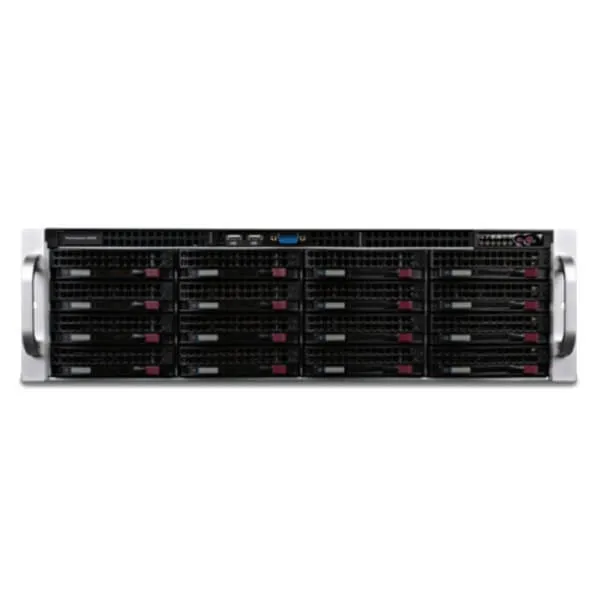
Fortinet FortiSandbox FSA-3000F in Africa
The FortiSandbox FSA-3000F is a high-capacity on-premises sandbox platform for organisations that need controlled analysis of suspicious files, advanced malware, ransomware delivery attempts, evasive payloads and unknown threats. It is built for demanding security operations where email, web, endpoint, network-share and application traffic can generate large numbers of files requiring rapid classification and deeper behavioural inspection. FourTeck helps business buyers review the requested appliance, current lifecycle position, service subscriptions, virtual-machine capacity, integration requirements, rack readiness and suitable replacement paths before a commercial decision is made.
Request QuoteCheck Africa Availability
Quick Product Information
Fortinet
FortiSandbox FSA-3000F
Enterprise sandboxing hardware appliance
Advanced file analysis and unknown-threat detection
Large enterprises, SOC teams, banks, government, service providers and cloud platforms
4 × GE RJ45 and 2 × 10GbE SFP+ interfaces
8 default virtual machines; expansion options are license dependent
Dual hot-swappable redundant power supplies
Subject to lifecycle, supplier and configuration confirmation
Model review, quote preparation, integration planning and warranty guidance
Product Overview
Modern organisations receive files through many channels: email attachments, web downloads, collaboration systems, customer portals, network shares, application uploads, removable media, managed endpoints and third-party integrations. Traditional signature checks remain important, but they may not provide enough context when a file is new, deliberately obfuscated, password protected, packed, altered to avoid automated tools or designed to behave differently when it detects a test environment. The FortiSandbox FSA-3000F was created for the point where a security team needs deeper evidence before deciding whether an object is safe, suspicious or malicious.
The appliance combines rapid pre-execution inspection with dynamic analysis in isolated virtual environments. Static techniques can examine structure, reputation, code characteristics and other indicators without running a sample. Files requiring more investigation can then be executed inside controlled virtual machines so the platform can observe process activity, registry changes, network callbacks, attempted persistence, dropped files and other behaviour. This layered approach is useful because a threat may look harmless when viewed only as a file but reveal malicious intent when it runs, contacts external infrastructure or changes the operating environment.
For a business buyer, the value is not limited to finding malware. A properly integrated sandbox can improve the quality of decisions made by firewalls, secure email gateways, endpoint tools, web security products and security operations workflows. FortiSandbox can receive submissions from connected systems, return verdicts, share indicators and generate detailed analysis material that helps an investigation team understand what happened. It can also support API, ICAP, network-share and sniffer-based workflows, allowing organisations to place deeper inspection into different parts of the technology environment.
The FSA-3000F belongs to a mature hardware generation and should therefore be purchased with lifecycle awareness. New projects should not select it only because the model appears in an older bill of materials. Buyers need to confirm whether the requirement is for an existing deployment expansion, a like-for-like replacement, a controlled spare, a lab system or a fresh enterprise rollout. FourTeck can help compare the requested unit with currently supported alternatives, identify subscription implications and prepare a quote that reflects the real use case rather than the model name alone.
Key Business Benefits
A sandbox appliance should be evaluated by the operational improvement it can bring to a security programme. The following benefits explain how the platform can support real teams, processes and risk decisions.
◆ Deeper Unknown-Threat Inspection
Suspicious files can be examined beyond a simple signature match. Static and behavioural techniques help uncover ransomware, evasive executables, malicious documents, scripts and payloads that may not be clearly identified at first contact. This gives security teams stronger evidence for blocking, escalation and incident response.
◆ High-Volume Enterprise Processing
The platform was designed for organisations with substantial file and email traffic. Published figures for this generation include effective sandboxing capacity measured in thousands of files per hour, helping large environments analyse more submissions without treating every object as a manual investigation.
◆ Better Security Tool Coordination
Integration with Fortinet products and supported third-party workflows enables verdicts and indicators to move into the wider control environment. The result can be faster blocking, clearer investigation context and less dependence on disconnected manual checks across email, web, endpoint and network teams.
◆ Actionable Investigation Detail
Analysis reports can show processes, callbacks, file changes, registry activity, network behaviour and indicators associated with a suspicious object. This helps analysts move from a simple alert to a more informed response, supporting containment, threat hunting and communication with management or affected teams.
◆ Controlled On-Premises Analysis
An on-premises appliance can suit organisations that need direct control of the analysis environment, data handling, connectivity and integration design. It may be relevant where compliance, data residency, sensitive document handling or operational policy makes a dedicated local platform preferable to a fully hosted service.
◆ Expansion and Cluster Planning
Virtual-machine capacity can be expanded through the appropriate licensing model, while high-availability and cluster functions support larger operational designs. Buyers can plan for rising submission volumes, additional operating-system profiles and stronger service continuity instead of replacing the whole platform at the first sign of growth.
Product Highlights
Published effective sandboxing throughput under stated test conditions.
Published static-analysis throughput for rapid file assessment.
Published dynamic-analysis throughput for deeper behavioural inspection.
Local analysis capacity with licensed expansion options.
Published sniffer-mode throughput under the referenced product generation.
Hot-swappable supplies for enterprise rack resilience planning.
These figures should be treated as sizing references rather than guaranteed production results. File composition, enabled inspection methods, virtual-machine mix, concurrency, software release, integration design and network conditions can affect actual performance. The platform also supports Windows analysis, custom operating-system options and additional environments through the appropriate configuration. Buyers should confirm the exact software release and licensed VM package because the set of available guest systems and services can change over time.
The hardware includes four copper Gigabit Ethernet interfaces and two 10GbE SFP+ interfaces for management, integration, high availability, file submission and traffic workflows. The quick-start design shows front-accessible storage bays, console access, USB ports and redundant rear power modules. Rack space, airflow, power feeds, optical transceivers and isolated analysis connectivity should be planned before installation.
Technical Specifications
| Specification Area | FSA-3000F Details |
|---|---|
| Brand and Model | Fortinet FortiSandbox FSA-3000F |
| Product Class | Enterprise on-premises sandboxing and advanced threat analysis appliance |
| Effective Sandboxing Throughput | Up to 6,720 files per hour under the vendor’s stated test method |
| Static Analysis Throughput | Up to 60,000 files per hour under stated conditions |
| Dynamic Analysis Throughput | Up to 2,500 files per hour under stated conditions |
| User Sizing Reference | Up to 6,000 users based on the referenced vendor sizing ratio |
| FortiMail Processing Reference | Up to 120,000 emails per hour under the referenced attachment ratio |
| MTA Adapter Throughput | Up to 60,000 emails per hour |
| Sniffer Mode Throughput | Up to 9.6 Gbps under stated conditions |
| Default Local Virtual Machines | 8 VMs |
| Local VM Expansion | License dependent; referenced generation supports expansion to as many as 72 local VMs |
| Cloud VM Expansion | Subscription and software dependent; referenced options support up to 200 cloud VMs |
| Network Interfaces | 4 × GE RJ45 network interfaces and 2 × 10GbE SFP+ interfaces |
| Management and Access | Web GUI, limited CLI, console connection, administrator accounts, backup and restore functions |
| Integration Methods | Fortinet Security Fabric, API, ICAP, network shares, file upload and sniffer workflows |
| Power | 2 hot-swappable redundant AC power supplies; 100–127/200–240 VAC, 50/60 Hz |
| Deployment Format | Rack-mount enterprise appliance with rail-mount installation support |
| Availability and Lifecycle | Mature generation; current supply and support eligibility must be confirmed |
| Configuration Note | Performance, guest systems, services and expansion depend on software release and selected licenses |
Choosing the correct configuration requires more than matching a published throughput number. A buyer should estimate how many files arrive during normal and peak periods, what percentage needs dynamic execution, which operating-system profiles are required, whether the workload comes mainly from email or from mixed sources, and how quickly verdicts must be returned to connected controls. The analysis queue, file types and business risk all influence the practical capacity required. An environment receiving many office documents may behave differently from a software repository, customer-upload portal or malware-research lab. FourTeck can help translate the workload into a model and subscription discussion, including whether an existing FSA-3000F should be expanded or replaced by a newer platform.
Configuration and Buyer Guidance
A sandbox purchase should begin with the security workflow, not the appliance label. Start by identifying where suspicious files originate and what must happen after a verdict is produced. A FortiMail deployment may submit attachments for analysis and wait for a response. A FortiGate environment may send selected files observed in network traffic. A customer portal may need API-based submission. A SOC may upload samples manually or monitor network shares. Each workflow creates different timing, capacity and integration requirements.
1. Measure Submission Volume
Estimate normal and peak files per hour, average file size, source systems and expected growth. Do not size only by employee count.
2. Define Analysis Depth
Confirm which files need static inspection, dynamic execution, multiple guest environments, password handling or specialist review.
3. Map Integrations
List FortiGate, FortiMail, FortiWeb, FortiClient, ICAP clients, APIs, network shares, SIEM platforms and response tools.
4. Review Lifecycle
Confirm whether the project requires this exact generation, an expansion license, a spare unit or a newer supported model.
Licensing is a critical part of the design. Buyers should confirm the base services, analysis engine updates, threat intelligence, support level, guest operating-system rights, Office components, local VM expansion, cloud VM options and renewal term. A hardware-only quote can appear attractive while leaving the organisation without the services required for production use. It is also important to understand which licenses are tied to the appliance, which are subscription based and whether they can be renewed for the desired period under current lifecycle rules.
Infrastructure preparation should cover rack depth and load, airflow, separate power feeds, UPS or PDU capacity, grounding, management addressing, DNS, default gateway, update access and the isolated path used by analysis virtual machines. The malware-outgoing interface should be designed carefully so suspicious code can be observed without creating a route into trusted production resources. Security teams should document firewall rules, proxy behaviour, logging destinations, administrator roles and incident-response ownership before the appliance is placed into service.
Finally, define the success criteria. Useful measures may include time to verdict, number of malicious submissions detected, queue depth, percentage of files requiring dynamic analysis, reduction in manual investigation, integration reliability and time taken to distribute indicators. FourTeck can help buyers prepare the information required for a meaningful quote and identify missing accessories or services before purchase approval.
Ideal Business Use Cases
Financial Services and Payment Environments
Banks, insurers, fintech platforms and payment providers receive high-value documents and messages while operating under strong risk controls. Sandbox analysis can add evidence when attachments, downloads or uploaded files appear unfamiliar, helping the SOC make faster and more defensible decisions.
Large Enterprise Email Protection
Organisations with substantial mail volume can use the appliance with secure email workflows to analyse suspicious attachments and links. The goal is to identify malicious documents, scripts and payloads before they reach a user or move deeper into the network.
Customer Upload and File-Sharing Platforms
Cloud storage providers, collaboration services, document portals and business applications may receive files from external users. API, ICAP or network-share workflows can provide an additional inspection layer before content is distributed, stored or opened by employees and customers.
Government and Regulated Organisations
Public-sector, defence-adjacent, healthcare and regulated environments may prefer dedicated on-premises analysis where data handling, audit, connectivity and operational policy remain under direct organisational control. Final suitability depends on local rules and the approved security architecture.
Security Operations and Threat Research
SOC and incident-response teams can use behavioural reports, indicators, packet captures and sample traces to understand suspicious activity. The platform can support triage, threat hunting, escalation and the creation of blocking or detection actions across connected tools.
Service Provider and Multi-Tenant Security
Managed service providers and large shared infrastructures may need central analysis capacity for multiple business units or customer environments. Multi-profile adapters, cluster planning and structured administration can help separate workflows while maintaining a common analysis platform.
The appliance is not necessary for every organisation. A smaller business with limited file volume may be better served by a cloud-based service or a lower-capacity platform. A new large deployment may be better aligned with a current-generation model. The FSA-3000F is most relevant when the exact generation fits an existing architecture, expansion plan, controlled replacement requirement or lifecycle-approved procurement strategy. FourTeck can help compare those options without forcing the project into the wrong hardware class.
FortiSandbox FSA-3000F Multi-Layer Threat Analysis
The first major strength of the platform is its layered analysis method. Many files can be evaluated quickly through reputation, signature, structural and machine-learning-based checks. This is important because sending every object directly into a full virtual execution environment would create unnecessary delay and resource use. Fast inspection helps separate obvious clean or known malicious content from samples that deserve deeper investigation.
When a sample requires dynamic analysis, the system can execute it inside an isolated guest environment and monitor what it does. The platform can observe spawned processes, attempted registry changes, file creation, persistence techniques, command-and-control communication, suspicious URLs, downloaded content and other actions. Anti-evasion capabilities are designed to identify behaviour intended to detect or avoid a sandbox, such as sleep calls, unusual process checks or environment awareness. This matters because advanced threats are often engineered to remain dormant when they suspect they are being analysed.
The business benefit is greater confidence. A firewall or email gateway may know that a file is uncommon, but the sandbox can provide behavioural context that helps explain why it should be blocked. A SOC analyst can review the chain of events instead of relying only on a filename or hash. The resulting indicators can then support broader containment, including blocking related URLs, domains, callbacks or files in connected systems.
Buyers should ask which analysis engines and services are included in the proposed subscription, how frequently the platform receives updates, which guest systems are available, and how the organisation will handle samples that cannot be executed automatically. The value of the hardware depends on current services and a maintained operating process, not only on processor capacity.
FortiSandbox FSA-3000F Integration and Automated Response
A sandbox becomes more useful when it is part of the security architecture rather than an isolated investigation box. The FSA-3000F can receive files from FortiGate, FortiMail, FortiWeb, FortiADC, FortiProxy and FortiClient workflows, depending on the software versions and deployment design. It can also connect with third-party environments through APIs, ICAP adapters, network shares and supported security integrations.
This connectivity allows an organisation to build a repeatable process. A suspicious attachment can be submitted automatically. The sandbox can inspect it, return a verdict and provide analysis detail. Connected controls can then block or quarantine the object, while the SOC receives the evidence required for investigation. Indicators can be shared to improve protection across other points in the environment. This reduces the need for an analyst to download every suspicious file, move it into a separate lab and manually communicate the result to other teams.
The platform supports reporting and operational visibility through dashboards, logs, event details and analysis artefacts. Reports can include behaviour mapped to recognised attack techniques, sample traces, packet capture information and indicators in structured formats. Remote logging to FortiAnalyzer, FortiSIEM or syslog platforms can help centralise monitoring. API access can support custom workflows, ticket enrichment and response automation where the organisation has the appropriate development and security controls.
Integration planning should include version compatibility, authentication, submission limits, expected response time, failure handling and ownership. Buyers should confirm what happens when the sandbox is unavailable, how queued files are treated, whether traffic continues, where logs are retained and which team maintains the connectors. FourTeck can help scope these questions before purchase so the appliance is not delivered without a workable integration plan.
FortiSandbox FSA-3000F Capacity, Resilience and Operations
The third major strength is the ability to support a substantial enterprise workload. The referenced platform includes eight default local analysis virtual machines and licensed expansion paths. Additional capacity can allow more simultaneous analysis, a broader mix of guest systems or stronger support for peak submission periods. Cloud VM expansion may also be available depending on the subscription and software generation.
Capacity planning must consider more than the number of VMs. Dynamic analysis time, file mix, operating-system profile, queue behaviour and repeat submissions all influence the result. A single complex document may require more investigation than many ordinary files. Some organisations need a quick verdict to support inline prevention, while others use the appliance for asynchronous investigation and can tolerate a longer queue. The correct design should match the required decision time.
Hardware resilience includes dual hot-swappable power supplies and support for high-availability clustering. Each power supply should be connected to a separate source where the rack design allows, ideally through appropriately sized UPS or PDU infrastructure. High availability also requires network design, matching configuration, licensing, monitored interfaces and tested failover procedures. Buying two appliances does not create resilience unless the deployment is configured and maintained correctly.
Day-to-day operations should cover administrator access, backup, signature and engine updates, virtual-machine image health, storage monitoring, queue review, failed analyses and alert handling. Teams should define who approves software upgrades, how maintenance windows are scheduled and what evidence is retained for audit or incident investigation. Capacity reports can help determine whether the current platform is sufficient or whether expansion and migration should be planned.
Enterprise note: because this model is from an earlier generation, a capacity increase should be compared against the operational and support value of moving to a current platform. A newer appliance may provide a cleaner lifecycle, higher performance and more modern guest support than adding licenses to an ageing system.
What Buyers Should Check Before Purchase
Before requesting a quote, buyers should confirm the exact purpose of the purchase, the current deployment state, compatibility requirements, support expectations and destination. The model name alone does not show whether the project needs a base appliance, an expansion license, a service renewal, a spare component or migration to a newer generation. FourTeck can help review these details so the selected option matches the business requirement.
Configuration Fit
Share files per hour, peak queue volume, file types, required guest systems, source products, dynamic-analysis percentage and target verdict time.
Compatibility Check
Confirm FortiOS, FortiMail, FortiWeb, FortiClient, API, ICAP, SIEM and other connector versions before selecting the appliance or software release.
Licenses and Renewals
Identify the security service bundle, support level, VM expansion, guest operating-system rights, cloud capacity and desired subscription term.
Lifecycle Position
Ask whether the exact hardware can still be ordered, renewed and supported for the planned ownership period, and compare the current replacement option.
Rack and Power Readiness
Verify rack depth, rail compatibility, equipment weight, cooling, two power feeds, UPS capacity, grounding and maintenance access.
Network Isolation
Plan management, update, submission, HA and malware-outgoing networks so analysis traffic cannot expose trusted production systems.
Accessories and Spares
Confirm optical transceivers, fibre type, power cords, rails, spare disks, replacement power supply policy and any site-specific rack accessories.
Quote Preparation
Provide country, delivery location, quantity, required date, current serial or model, support term, integration list and whether migration services are needed.
Long-term cost should include support and security subscriptions, VM or cloud expansion, rack power, operational time, replacement parts, migration work and the risk of owning hardware near the end of its commercial life. A lower acquisition figure can be misleading if the appliance cannot receive the desired service term or requires a second platform soon after deployment. For an existing customer, it may still be practical to extend a controlled environment. For a new customer, the newer FortiSandbox generation may provide better value and a longer service horizon. FourTeck can prepare both paths for comparison.
Africa Availability and Service Support
FourTeck supports FortiSandbox enquiries across Africa with assistance for product identification, configuration review, lifecycle checks, quote preparation, delivery coordination and warranty guidance. Availability can vary according to the requested model, service bundle, supplier status, order quantity, destination and permitted support term. The FSA-3000F should therefore be treated as a project item that requires confirmation rather than an assumed shelf product.
For an existing deployment, FourTeck can help identify whether the requirement concerns an appliance, power supply, storage component, VM expansion, support renewal or a broader migration. For a new deployment, the team can compare the requested unit with a current FortiSandbox platform and discuss the practical differences in capacity, lifecycle and subscription structure. This helps procurement teams avoid approving an older model when the security team actually needs a current design.
Delivery planning can include destination details, import requirements, project deadlines, rack readiness and coordination with the implementation team. Warranty and support depend on the final supply route, product status and selected service. FourTeck does not assume that every unit can receive the same term, so the commercial response should state the supported option clearly.
Africa Country and Regional Coverage
Businesses across Africa, including Kenya, Uganda, Nigeria, Ghana, Tanzania, Rwanda, Ethiopia, South Africa, Zambia, Botswana, Senegal and nearby regional markets can contact FourTeck for availability checks, configuration guidance and commercial assistance. Support may cover a single enterprise appliance, replacement planning, multi-site security projects, managed-service infrastructure or expansion of an existing Fortinet environment.
Regional buyers should share the delivery country, destination city, required quantity, current security products, preferred support term and target deployment date. This information allows the team to assess the supply route and prepare a response that accounts for lifecycle, licensing and logistics. Cross-border projects may require additional planning for import documents, delivery coordination, local implementation resources and warranty handling.
FourTeck can also connect product planning with regional resources through FourTeck Kenya and FourTeck Uganda where relevant. The purpose is to create a clear procurement path, not to make unverified claims about local inventory.
GCC, Middle East and Africa Availability
FourTeck Africa can support product enquiries from organisations operating across Africa while also coordinating selected technology requirements through regional FourTeck platforms serving GCC and Middle East markets. Businesses with offices or data centres in the UAE, Saudi Arabia, Qatar, Oman and Bahrain may need a common security design, aligned service terms and coordinated procurement across more than one country.
A regional sandbox project should define where files are analysed, which countries submit content, whether data can cross borders, how administrators connect, where logs are retained and which team owns the response process. These issues can be more important than the appliance location itself. Buyers should also confirm whether each country requires separate import, warranty or support handling.
Availability, delivery options, service eligibility and configuration support may vary by market, model generation and quantity. FourTeck can help gather the technical and commercial information before routing the request through the most suitable regional channel. Buyers with broader requirements can review FourTeck UAE for connected regional enquiries while using the Africa team for African project coordination.
Other Options Buyers May Consider
A complete threat-analysis design often includes the sandbox, secure gateways, reporting platforms and current replacement options. The following FourTeck references can help buyers continue the evaluation without treating the appliance as a stand-alone purchase.
FortiSandbox Support Services
Useful for deployment, renewal, integration, troubleshooting and migration discussions around the wider FortiSandbox environment.
FortiGate 3001G
A high-capacity Fortinet firewall option for data-centre edge security, segmentation and threat-inspection projects that may integrate with sandbox services.
FortiGate FG-3500G
Suitable for large enterprise and service-provider security architectures requiring modern high-speed firewall connectivity and inspection planning.
FortiGate FG-40F-3G4G
A compact branch firewall reference for organisations building a wider Fortinet environment across distributed offices and remote sites.
For a direct successor discussion, ask FourTeck to compare the FSA-3000F with the current FortiSandbox 3000G platform or other available deployment models. A newer appliance may provide substantially higher processing capacity, more modern guest support and a longer lifecycle. Cloud, hosted and virtual options may also suit organisations that do not want to maintain dedicated hardware.
Why Buyers Choose FourTeck
Enterprise security procurement involves more than receiving a part number and a unit price. FourTeck helps buyers turn a technical requirement into a purchase plan that considers model fit, lifecycle, service subscriptions, compatibility, delivery and long-term operation. This is particularly important for a mature appliance where an apparently simple quote may hide limits on new orders or renewal terms.
Structured assistance for enterprise, public-sector, service-provider and project buyers.
Review of workload, integrations, virtual-machine needs, network design and accessories.
Commercial preparation based on quantity, destination, service term and project timeline.
Guidance on mature models, replacement platforms and support-term limitations.
Regional logistics discussion without unverified stock or delivery promises.
Clear explanation that coverage depends on product status, supply route and selected service.
FourTeck can support both technical and procurement stakeholders. Security teams can discuss file volume, analysis workflow and integration. Infrastructure teams can review rack, network and power requirements. Procurement teams can clarify order codes, quantities and delivery. Management can compare the risk of extending an older system with the cost and operational value of moving to a current platform.
The objective is to help the customer avoid the common problems associated with complex security purchases: wrong model generation, missing subscription, inadequate capacity, incompatible software, absent transceivers, incomplete power planning or an ownership period that extends beyond available support. A well-prepared quote should make these assumptions visible before the purchase order is issued.
Frequently Asked Questions
What is the FortiSandbox FSA-3000F used for?
It is an enterprise sandbox appliance used to analyse suspicious files, unknown malware, ransomware payloads, malicious documents and evasive code. It combines rapid inspection with controlled behavioural execution and can return verdicts and indicators to connected security products. It is commonly considered for high-volume email, web, file-sharing, SOC and regulated on-premises environments.
Is the FSA-3000F available for new projects in Africa?
Availability must be confirmed because this is a mature product generation and current supplier status can vary. FourTeck can check whether the exact appliance, a service renewal, an expansion item or a suitable replacement can be quoted for the destination. New projects should compare the requested model with a current FortiSandbox platform before approval.
How many virtual machines are included?
The referenced FSA-3000F configuration includes eight default local analysis virtual machines. Expansion can be available through the correct license package, with the referenced generation supporting additional local and cloud VM capacity. The exact guest operating systems, Office components and maximum supported count should be confirmed against the proposed software release and subscription.
What performance should buyers expect?
Published figures for the model include up to 6,720 effective sandboxed files per hour, 60,000 static analyses per hour and 2,500 dynamic analyses per hour under stated test conditions. Real performance varies with file type, analysis depth, virtual-machine mix, concurrency, software release, network design and enabled services, so workload-based sizing is recommended.
Can it integrate with FortiGate and FortiMail?
Yes, FortiSandbox is designed to integrate with Fortinet Security Fabric products including FortiGate and FortiMail, with support also available for other Fortinet platforms and third-party workflows. Compatibility depends on the installed versions and configuration. Buyers should provide their current product models and software releases so the integration can be checked before purchase.
Does the appliance require security subscriptions?
Production value depends on the selected FortiSandbox services, updates, threat intelligence, support and VM rights. A hardware-only purchase may not include everything needed for ongoing analysis and updates. FourTeck can help identify the relevant service bundle, support term, expansion requirements and renewal limitations for the requested lifecycle stage.
What network and rack preparation is needed?
Plan rack space and depth, rails, airflow, equipment weight, two independent power feeds, UPS or PDU capacity, grounding, management addressing, update access and isolated malware-analysis connectivity. The appliance includes copper and 10GbE interfaces, so compatible transceivers and fibre may be required. The outgoing analysis network should not provide uncontrolled access to trusted production systems.
Can FourTeck help with configuration and migration?
FourTeck can support pre-sales review, model comparison, licensing discussion, integration planning, delivery coordination and migration scoping. The exact implementation service depends on country, project size and required partner resources. Share the existing FortiSandbox model, connected products, file volume, target architecture and timeline so the team can prepare the right level of assistance.
What is the current replacement direction?
For a new high-capacity on-premises project, buyers should evaluate the current FortiSandbox 3000G generation or another current deployment model. The right replacement depends on file volume, guest systems, integration, data-residency needs and budget. FourTeck can compare the requested FSA-3000F with a newer appliance, virtual, hosted or cloud option.
Can businesses request bulk or multi-country supply?
Yes, organisations can submit multi-unit or regional project requirements. The request should include countries, delivery locations, quantities, deployment schedule, service term, integration design and whether each site needs separate hardware. FourTeck can coordinate the commercial review, although final availability, logistics and warranty handling may differ between markets.
Need Help Choosing the Right Sandbox Platform?
FourTeck can help review the FSA-3000F requirement, current availability, lifecycle position, subscription needs, integration design, replacement options and delivery requirements for your organisation.

Reviews
There are no reviews yet.