
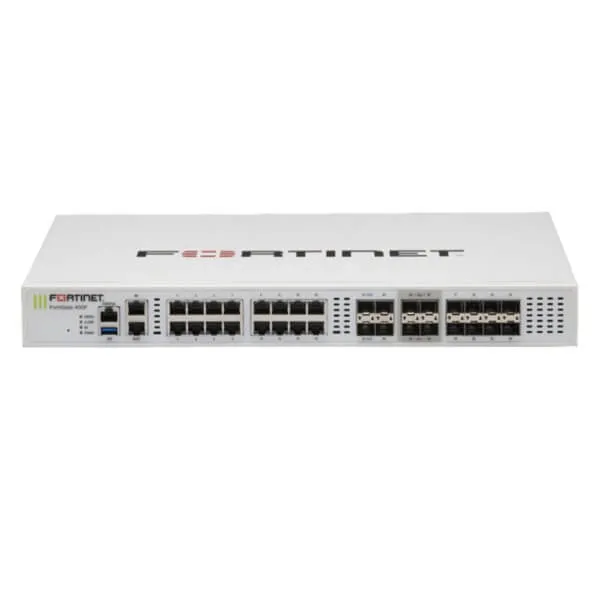
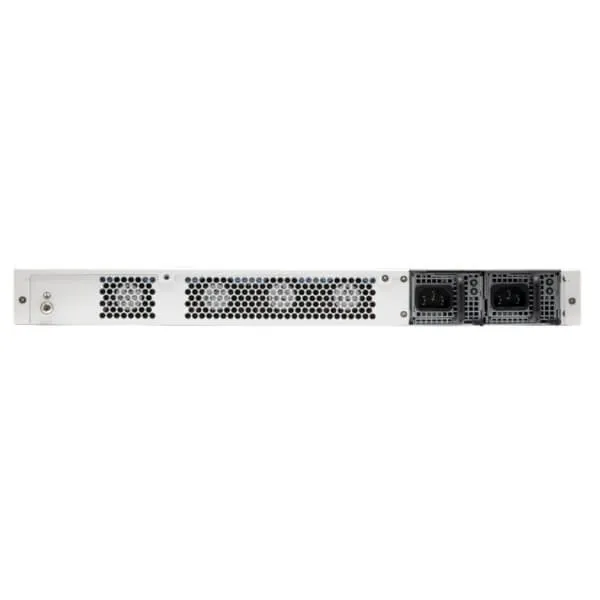
Fortinet FortiWeb FWB-400F Web Application Firewall in Africa
Protect customer-facing websites, portals and APIs with a dedicated 1U application-security appliance designed for organisations that need deeper control over HTTP and HTTPS traffic. The FWB-400F combines layered threat detection, machine-learning-assisted application modelling, API protection, bot mitigation, virtual patching and operational reporting in a platform sized for mid-range application traffic. FourTeck helps buyers connect the appliance specifications to the real deployment, licensing, availability and support requirements of the business.
✓ API and Bot Protection Planning
✓ Africa Delivery Coordination
✓ Quote and Configuration Support
Request Quote
Check Africa Availability
Quick Product Information
Fortinet
FortiWeb 400F / FWB-400F
1U web application firewall appliance
Up to 500 Mbps; performance varies by traffic and configuration
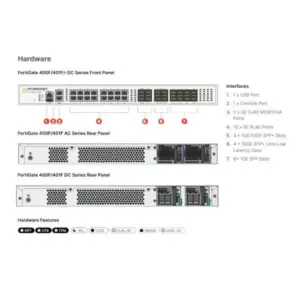
4 GE RJ45 and 4 GE SFP
480 GB SSD
Enterprise websites, portals, APIs and online services
Contact FourTeck for current Africa options
Based on selected FortiCare term and supply route
Licenses, services and deployment scope must be confirmed
Product Overview
Modern organisations expose more business functions through the web than ever before. Customer self-service, online payments, partner portals, staff applications, mobile backends, booking systems, learning platforms, healthcare services and government portals all depend on HTTP, HTTPS and API traffic. A conventional network firewall remains important, but it does not understand every application request in the same depth as a dedicated web application firewall. The Fortinet FortiWeb FWB-400F Web Application Firewall is designed to sit in this application path and inspect requests before they reach protected servers.
The appliance applies several layers of defence. Traditional controls can validate protocols, use attack signatures, assess source reputation and enforce application policies. Machine-learning-assisted modelling can then examine traffic behaviour and help identify anomalies that do not match the normal use of the application. This layered approach is useful because public applications face both familiar attacks and new patterns that may not be fully addressed by a single static rule set. The goal is to reduce malicious traffic while keeping legitimate customers, staff and business partners able to use the service.
API security is also central to the platform. Many businesses now use APIs for mobile applications, payment services, logistics integrations, identity systems and communication between internal platforms. These interfaces can be difficult to inventory and may change faster than traditional website pages. FortiWeb supports API discovery and protection functions that help teams build a clearer view of exposed interfaces, validate supported schemas and apply policies to API traffic. The exact outcome depends on software version, license entitlement, application design and configuration, so buyers should discuss the required features before selecting a bundle.
The 400F hardware model is positioned between entry appliances and larger FortiWeb systems. It provides a 1U rack form factor, four Gigabit copper ports, four Gigabit SFP ports, 480 GB SSD storage and an up-to-500-Mbps throughput rating under Fortinet test conditions. It supports active-passive and active-active clustering options and lists unlimited application licenses, giving organisations room to plan protection for several application services without choosing the platform only by application count. Real throughput can vary with encrypted traffic, enabled protections, request size, logging, application behaviour and policy complexity.
For Africa buyers, the appliance should be treated as part of an application-security project rather than an isolated box. The project may involve reverse-proxy placement, routing, certificates, DNS, server pools, application owners, developers, incident responders and change-control teams. FourTeck helps bring these requirements into the quotation conversation. This reduces the risk of selecting the wrong appliance, missing a service subscription, overlooking high availability, or reaching installation day without the needed rack, optical, cabling, certificate and network information.
Key Business Benefits
A web application firewall creates value when it improves protection without turning normal application use into a constant support problem. The benefits below connect the platform capabilities to practical business outcomes.
🔒 Dedicated Application Defence
A dedicated WAF examines web requests at the application layer, helping organisations identify attack patterns that may pass through ordinary network controls. This gives security teams a focused policy point for public websites, portals and APIs.
◆ Support for Unknown Threat Patterns
Application modelling and anomaly detection help the platform look beyond known signatures. This can improve the organisation’s ability to respond to unusual requests and newly emerging attack behaviour while policies are tuned for legitimate users.
↗ Better API Visibility
API discovery and schema-aware controls help teams understand and protect interfaces used by mobile apps, partners and internal systems. Better visibility is valuable when APIs are changing quickly or have not been fully documented.
● Bot Abuse Reduction
Bot mitigation can help limit credential stuffing, automated scraping, fake account activity and abusive form submissions. The business benefit is lower attack noise and less disruption to customer login, checkout and enquiry workflows.
⚙ Operational Control
FortiView dashboards, reporting, role-based administration and integration options help teams investigate events, review policy behaviour and share useful information with application owners, management and incident responders.
✓ Virtual Patching Support
When a software fix cannot be deployed immediately, application-layer controls can help reduce exposure while development teams test and release the permanent correction. This supports safer change management for critical or legacy applications.
◆ Deployment Flexibility
The appliance can be planned for common reverse-proxy and network deployment patterns, with high-availability options for environments that cannot depend on a single inspection point. Correct architecture review remains essential.
These benefits are strongest when the deployment is based on application discovery, traffic measurement and staged policy activation. A WAF that is installed with generic rules but never tuned may either miss business-specific risk or create unnecessary blocking. FourTeck therefore encourages buyers to plan ownership, monitoring and change procedures alongside hardware and subscription selection.
Product Highlights
The FWB-400F is built for organisations that need a physical application-security appliance with clear rack deployment, local storage and a balanced mid-range throughput position. Its main strengths are not limited to hardware ports. The value comes from the combination of traffic inspection, application learning, API controls, bot defence, visibility and integration with a wider security environment.
A stated system-performance rating for the appliance; actual results vary by traffic, services and configuration.
Combines signatures, protocol validation, reputation, application policies and machine-learning-assisted anomaly detection.
Supports visibility and protection for API-based business communication, mobile backends and integration services.
Helps distinguish legitimate use from automated abuse through several detection and response methods.
Supports resilience planning when the project requires more than one appliance and correctly designed network paths.
Fits enterprise server rooms and data centres with front-to-back airflow, a single power supply and standard rack mounting.
The appliance lists unlimited application licenses and 32 administrative domains, which can be useful for organisations or service environments that need logical separation. However, unlimited application licensing does not mean unlimited throughput. Every protected application contributes traffic, sessions, logging and policy work. The final design should use measured peak traffic, expected growth and the amount of encrypted inspection rather than application count alone.
Technical Specifications
| Specification Area | FortiWeb 400F Details | Buyer Note |
|---|---|---|
| Brand and Model | Fortinet FortiWeb 400F, SKU FWB-400F | Confirm hardware-only or bundled order code. |
| Product Type | Web application firewall for web application and API protection | Not a replacement for all network firewall functions. |
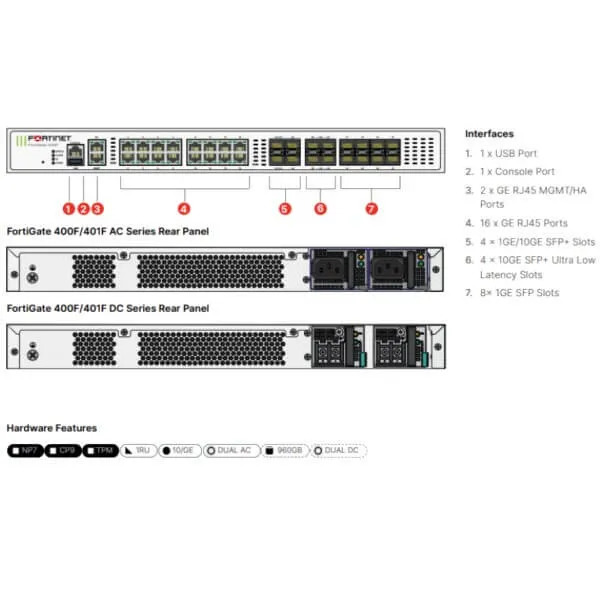
| Network Interfaces | 4 GE RJ45 ports and 4 GE SFP ports | Confirm copper, fibre, transceiver and cabling plan. |
| USB Interfaces | 2 | Use according to approved administration procedures. |
| Storage | 480 GB SSD | Review logging and retention expectations separately. |
| Form Factor | 1U rack-mountable appliance | Allow suitable rack depth and airflow clearance. |
| Trusted Platform Module | Included | Supports platform security functions. |
| Power Supply | Single power supply | Plan appliance-level HA if higher resilience is required. |
| Throughput | Up to 500 Mbps | Real performance is traffic and configuration dependent. |
| Latency | Less than 5 ms under stated test conditions | Application experience depends on full network path. |
| High Availability | Active-passive and active-active clustering | Requires correct appliance, license, cabling and network design. |
| Application Licenses | Unlimited | Capacity still depends on aggregate traffic and policies. |
| Administrative Domains | 32 | Useful for logical separation and delegated administration. |
| Dimensions | 44 × 438 × 420 mm | Confirm rack depth and cable space. |
| Weight | 5.4 kg | Use suitable rack support and handling practice. |
| Power Input | 100–240V AC, 50–60 Hz | Confirm power cable type for destination. |
| Average Power Consumption | 127.33 W | Include in UPS, PDU and cooling planning. |
| Operating Temperature | 0°C to 40°C | Use in a controlled equipment environment. |
| Airflow | Front to back | Align with rack hot-aisle and cold-aisle design. |
| Availability and Warranty | Configuration and supply-route dependent | Request current confirmation before approval. |
The throughput figure should be used as a sizing reference, not a promise for every application. HTTPS decryption, response sizes, upload scanning, bot checks, API validation, attack-signature depth, logging and the number of simultaneous requests can change practical capacity. Buyers should collect recent traffic data from load balancers, web servers, cloud platforms or monitoring tools. Measure normal and peak periods, identify growth events such as enrolment, payroll, ticket sales or campaigns, and include headroom for future services. Where the application must remain available during maintenance or appliance failure, discuss a two-appliance design and the surrounding switches, routes, health checks and certificates.
Configuration and Buyer Guidance
A successful purchase begins with application information. The model name alone cannot show whether the appliance is suitable for the organisation. Procurement and technical teams should prepare a short requirement document before asking for a final quotation. This improves model selection, reduces revision cycles and helps the supplier include the correct service term and accessories.
1. Measure Traffic
Provide average and peak inbound application traffic, expected growth, HTTPS percentage, large upload or download patterns, and seasonal events that create unusual demand.
2. List Protected Services
Identify websites, portals, APIs, mobile backends, web services and administrative interfaces. Note which services are public, partner-only or internal.
3. Confirm Architecture
Document DNS, public addresses, reverse proxies, load balancers, server pools, cloud links, certificates, routing and whether the WAF will be inline or use another supported mode.
4. Decide Availability Level
Choose whether a single appliance is acceptable or whether the service requires active-passive or active-active clustering, power separation and tested failover.
5. Review Service Entitlements
Confirm FortiCare and FortiGuard requirements, subscription duration, desired security services, renewal ownership and contract registration process.
6. Plan Operations
Assign administrators, monitoring responsibility, log review, rule approval, emergency bypass procedures, backup schedules and coordination with developers.
Compatibility review should include switch interfaces, SFP requirements, certificate format, DNS ownership, server health checks, authentication systems, API schemas and any external security platform that must receive logs or alerts. Buyers should also discuss implementation. Some teams only require supply, while others need remote configuration guidance, policy migration, staged testing or structured handover. FourTeck can use these details to prepare a more relevant quote and identify where specialist services may need separate scoping.
Ideal Business Use Cases
The 400F is relevant where a business runs important web applications and wants a dedicated physical WAF with controlled on-premises or data-centre placement. Suitability still depends on measured traffic, protection depth, availability needs and the final license package.
Online Banking and Financial Portals
Protect customer login, transaction, account and partner services from common web attacks, automated abuse and suspicious request patterns while supporting detailed event review.
eCommerce and Payment Workflows
Apply focused controls to storefronts, checkout pages, customer accounts, search functions and APIs that connect payment, inventory and logistics services.
Government and Citizen Services
Support application protection for online forms, licensing systems, tax portals, identity services and public information platforms that may experience heavy or unpredictable demand.
Healthcare Applications
Help protect appointment systems, patient portals, laboratory interfaces, insurance integration and administrative applications where sensitive information and continuity matter.
Education and Learning Platforms
Secure student portals, learning systems, admission pages, examination services, payment functions and APIs used by mobile education applications.
Enterprise Resource Portals
Protect externally accessible ERP, HR, procurement, reporting and partner applications while separating policy and administration across business units where required.
Hosting and Managed Services
Use administrative domains and application policies to organise protection for multiple services, subject to throughput, operational separation and contract requirements.
Mobile and Partner APIs
Discover and protect APIs that support mobile apps, B2B workflows, logistics tracking, payment integration and digital-service ecosystems.
Organisations should avoid choosing a WAF only because their industry is listed here. A small application with low traffic may suit another platform, while a service with heavy encrypted traffic or rapid growth may need a larger model. The application architecture, internal skills, support model and required recovery time all influence the correct decision.
FortiWeb FWB-400F Layered Application Protection
Web application attacks rarely follow one simple pattern. Some exploit known vulnerabilities, some abuse normal functions, and others probe the application until they find an unexpected response. Layered controls help address this variety. The appliance can use attack signatures, IP reputation, protocol validation and other policy checks as an initial defence. Traffic that passes those controls can be evaluated against learned application behaviour to identify anomalies that deserve blocking or investigation.
For a buyer, the important point is that machine learning does not remove the need for application knowledge. Administrators still need to understand login pages, uploads, search forms, APIs, partner traffic, maintenance windows and legitimate unusual events. During a major campaign, registration period or payment deadline, the traffic pattern may change. Good operations combine platform learning with communication between security teams and application owners.
The business outcome is stronger control with a structured path for tuning. Organisations can begin with monitoring, review what the appliance identifies, approve policies and move carefully toward blocking. This is safer than enabling aggressive rules on a critical service without understanding normal behaviour. FourTeck can help buyers include policy planning and staged deployment discussions when preparing the project scope.
FortiWeb FWB-400F API Discovery and Protection
APIs have become the connection layer for modern business. A mobile application may call dozens of endpoints. A logistics platform may exchange status information with customers and partners. A financial system may expose payment, identity and reporting functions through separate services. When these interfaces grow quickly, security teams may not have a complete inventory, especially where development teams deploy changes frequently.
FortiWeb can observe application traffic and support API discovery, giving administrators a starting point for identifying exposed interfaces. It can also use positive security concepts and schema validation for supported OpenAPI, XML and JSON structures. This helps the organisation define what a valid request should look like instead of relying only on a list of known attacks. Integration with development and delivery processes can help keep policy aligned as an API changes, but the organisation must define ownership and testing procedures.
Before purchase, buyers should document whether they need API discovery only, active schema enforcement, rate controls, authentication awareness, bot defence or integration with a development pipeline. They should also identify who owns the schemas and how updates will be approved. These questions affect the configuration effort more than the number of physical ports. FourTeck can help turn them into a clear requirement for quotation and deployment planning.
FortiWeb FWB-400F Bot Mitigation and Security Visibility
Automated traffic is not automatically malicious. Search crawlers, uptime monitors, integration tools and business automation can be legitimate, while credential-stuffing tools, scrapers, spam bots and account-creation scripts can create risk and cost. Effective bot defence must therefore distinguish behaviour rather than simply block every automated request. FortiWeb combines several methods, including machine-learning-assisted analysis, thresholds, deception, behaviour tracking and challenges where appropriate.
This matters to customer experience. A bank or retailer cannot protect an account page by blocking real customers during peak use. A university cannot stop automated abuse by making every student complete repeated challenges. The policy should apply stronger responses to suspicious behaviour while allowing approved services and normal users to continue. That balance requires observation, exceptions and regular review.
FortiView dashboards, real-time information, logging and reporting give administrators a way to examine activity and explain policy results. For larger operations, logs may also need to reach central monitoring, reporting or incident-management platforms. Buyers should confirm retention, export, alerting, role separation and investigation procedures before deployment. Visibility creates value only when someone is responsible for using it.
What Buyers Should Check Before Purchase
Before requesting a quote, buyers should confirm the required configuration, application environment, compatibility needs, support expectations and delivery location. The right choice should be based on business service requirements rather than model name or headline throughput alone. FourTeck can help review these details so the order is less likely to miss a subscription, accessory, resilience component or implementation requirement.
Configuration Fit
Confirm peak traffic, HTTPS proportion, number of applications, API volume, file-upload behaviour, enabled protections and expected growth. Include enough headroom for campaigns and service expansion.
Compatibility Check
Review server platforms, load balancers, DNS, certificates, SFP modules, switches, routes, authentication systems, log platforms and any Fortinet Security Fabric integration required.
Availability and Warranty
Ask whether the requirement needs one appliance or a cluster, what FortiCare term applies, how support incidents are handled and how warranty service depends on the supply route.
Quote Preparation
Provide delivery country, quantity, desired service term, implementation scope, target date and whether the project requires hardware-only pricing or a complete bill of materials.
Licensing deserves specific attention. FortiGuard services can be purchased individually or through available bundles, and support terms may be offered for different durations. The quotation should identify the exact order code, included services, contract length, renewal date and registration responsibility. A hardware-only comparison may look less expensive but may not include the protection or support expected by the security team. Conversely, a broad bundle should not be selected without confirming that the organisation plans to use and operate the included services.
Infrastructure details are equally important. The appliance uses a single power supply, so organisations with strict continuity requirements should consider a clustered design rather than assuming internal power redundancy. Confirm rack space, front-to-back airflow, UPS capacity, PDU outlets, power cords, copper patching and SFP optics. For fibre connections, record speed, connector, distance and compatible transceiver requirements. Missing small accessories can delay a deployment even when the main appliance has arrived.
Finally, define the operational owner. Decide who will review alerts, approve rule changes, coordinate with developers, maintain certificates, register contracts, manage firmware and lead incident response. Buyers requesting a quote should share whether they need supply only, remote assistance, implementation, migration, training or ongoing managed support. This makes the commercial response clearer and helps avoid assumptions on both sides.
Africa Availability and Service Support
FourTeck supports FortiWeb enquiries across Africa with assistance for model selection, traffic and architecture review, license discussion, quotation preparation, delivery coordination and warranty guidance. Availability can vary by appliance, service bundle, contract term, supplier movement, destination, quantity and project schedule. Buyers should therefore request current confirmation rather than planning around an unverified stock assumption.
A useful enquiry includes the protected applications, measured traffic, high-availability requirement, preferred support duration, delivery country and target installation date. For project purchases, include whether the business needs one appliance, a resilient pair, optical modules, rack accessories, deployment services or related Fortinet management and reporting products. FourTeck can help organise these requirements into a clearer commercial discussion.
Warranty and support handling depend on the selected FortiCare term and supply route. The final quotation should state the exact order code and service duration. Buyers should retain purchase documents, serial-number records and contract registration information so support can be managed correctly after delivery.
Africa Country and Regional Coverage
Businesses across Africa, including Kenya, Uganda, Nigeria, Ghana, Tanzania, Rwanda, Ethiopia, South Africa, Zambia, Botswana, Senegal and nearby regional markets, can contact FourTeck for product availability, configuration guidance and quotation support. Regional projects may involve a single data centre, an application-security refresh, a government digital service, a financial platform, a university system or a multi-country business portal.
Delivery and support arrangements differ by country, supply route and service term. Buyers should share the final destination, required commercial documents, quantity, installation schedule and any multi-site standardisation need. FourTeck can help review suitable options and coordinate the buying conversation without creating separate model choices for every location.
GCC, Middle East and Africa Availability
FourTeck Africa can support product enquiries for organisations operating across Africa while also guiding regional technology requirements through selected FourTeck platforms serving GCC and Middle East markets. This can be useful for businesses that maintain shared application standards, central procurement or common security policies across offices in Africa, the UAE, Saudi Arabia, Qatar, Oman and Bahrain.
Regional procurement should still be handled country by country where warranty, tax, delivery, import, power-cord and support conditions differ. A central technical standard can define the appliance, license and policy requirements, while each commercial quote confirms the destination-specific route. FourTeck can help buyers organise these discussions and identify where a separate regional quotation is required.
For wider company information, buyers can visit FourTeck Africa, FourTeck Kenya, FourTeck Uganda or FourTeck UAE. Availability, configuration and warranty handling remain dependent on the selected product and destination.
Other FourTeck Solutions Buyers May Consider
Application protection usually sits within a wider security and network architecture. The related options below can help buyers compare deployment paths, perimeter protection and supporting infrastructure. They are not direct replacements in every project; the correct choice depends on whether the requirement is application-layer protection, network security, switching or a larger firewall platform.
Web Application Firewall Solutions
Review appliance, cloud, virtual and managed WAF approaches for different hosting and operational requirements.
FortiGate 31G
A compact next-generation firewall for branch internet protection, VPN and secure networking rather than dedicated mid-range WAF deployment.
FortiGate FG-3500G
A high-capacity enterprise firewall platform for data-centre edge, segmentation and large-network security projects.
FortiSwitch FS-424E-POE
A managed access switch that can support secure network connectivity for offices and infrastructure environments.
A complete design may include a network firewall at the perimeter, a dedicated WAF before application servers, switches for resilient connectivity, central logging and carefully controlled management access. FourTeck can help buyers map which products serve each role so that application security is not confused with ordinary perimeter firewalling.
Why Buyers Choose FourTeck
Buying an application-security appliance involves several teams. Security staff focus on threat coverage and policy. Network engineers focus on placement, interfaces and failover. Developers focus on application behaviour and release cycles. Procurement teams need an exact order code, commercial terms and delivery plan. Management wants risk reduction without disruption to customers. FourTeck helps connect these viewpoints before the order is finalised.
Assistance organising product, quantity, destination and project requirements.
Review of traffic, architecture, interfaces, HA and service considerations.
Clearer preparation of hardware, subscription and accessory requirements.
Commercial discussion based on destination, quantity and supply route.
Direction based on selected FortiCare term and purchase documentation.
Help identifying firewalls, switches, management tools and alternatives where relevant.
FourTeck’s role is to make the buying conversation more practical. That includes asking for information that improves the quote, explaining where specifications are configuration dependent, and avoiding unsupported claims about stock, delivery or warranty. Whether the customer is an SMB with one public portal or an enterprise with several critical applications, the aim is to support a more informed selection process.
Frequently Asked Questions
What is the FortiWeb 400F used for?
It is used to protect web applications and APIs by inspecting HTTP and HTTPS traffic before requests reach protected servers. It can support attack-signature detection, protocol validation, reputation checks, anomaly detection, API controls, bot mitigation, virtual patching, reporting and other functions based on software version, services and configuration.
Is the FWB-400F a normal network firewall?
It is a dedicated web application firewall focused on application-layer traffic. It does include some network-security functions, but it should not automatically be treated as a replacement for a FortiGate or another perimeter firewall. Many organisations use a network firewall and a WAF together because they protect different parts of the traffic path.
How much traffic can the appliance handle?
Fortinet lists system throughput of up to 500 Mbps for this model under stated test conditions. Actual performance depends on HTTPS decryption, enabled protections, file sizes, request mix, logging, policy complexity and application behaviour. Buyers should size the appliance using measured peak traffic and include growth and resilience headroom.
Can it protect APIs and mobile application backends?
Yes, FortiWeb supports API discovery and protection capabilities, including supported schema validation and positive security concepts. The project should identify API endpoints, schemas, authentication methods, expected request rates and development ownership. Feature availability and the exact deployment approach depend on the selected services and FortiWeb software version.
Does the appliance support high availability?
The platform supports active-passive and active-active clustering. High availability requires more than purchasing two units. The design must consider matching software and entitlements, network paths, switch connections, certificates, health checks, routing, power separation, monitoring and tested failover procedures. FourTeck can help include these requirements in the quotation discussion.
What information is needed for a quote?
Share average and peak traffic, HTTPS percentage, number and type of applications, API use, required availability, desired support term, delivery country, quantity and target deployment date. Also state whether you need hardware only, service subscriptions, SFP modules, implementation assistance or a complete resilient bill of materials.
Is FortiWeb FWB-400F available in Africa?
FourTeck supports enquiries across the region, but availability varies by supplier status, bundle, support duration, quantity and destination. Contact the sales team for current confirmation. The quotation should identify the exact order code, service term, delivery route and warranty guidance rather than relying on an unverified availability statement.
Can FourTeck help with configuration planning?
FourTeck can help review model fit, traffic information, deployment architecture, high-availability needs, licensing, interfaces, accessories and quotation requirements. Detailed implementation, migration, policy tuning or managed services may require separate technical scoping, depending on the customer environment and the level of assistance requested.
What warranty and subscription choices should buyers review?
Buyers should confirm the FortiCare support term, required FortiGuard services, contract duration, registration process, renewal owner and included coverage. Hardware-only and bundled order codes can differ considerably. The final quote should state exactly what is included so that technical and procurement teams approve the same requirement.
Can businesses request project or bulk supply?
Yes. Businesses, system integrators and procurement teams can request project quotations for multiple appliances, clustered deployments or multi-country requirements. Provide quantities, destinations, service terms, accessories and implementation timing. Larger projects benefit from a bill-of-material review so each site receives compatible hardware, licensing and support documentation.
Need Help Choosing the Right Application-Security Appliance?
Share your application traffic, API requirements, high-availability plan, service term, delivery country and target deployment date. FourTeck can help review the requirement, confirm current availability options and prepare a suitable quotation for your business.

Reviews
There are no reviews yet.