
Fortinet FortiWeb FWB-1000F Web Application Firewall in Africa
The FortiWeb FWB-1000F is designed for organizations that depend on public websites, online services, business portals, mobile application back ends, APIs, payment workflows, and partner platforms that must remain protected without creating an avoidable performance bottleneck. It gives security teams a dedicated control point for examining web and API traffic, applying application-aware policies, handling encrypted sessions, supporting virtual patching, and improving visibility into attacks aimed at business-critical services. FourTeck supports buyers with model validation, bundle selection, high-availability planning, deployment review, quotation assistance, and regional delivery coordination.
✓ Hardware SSL/TLS Processing
✓ High-Availability Support
✓ Africa Project Guidance
Request Quote
Check Africa Availability
Ask for Configuration Support
Quick Product Information
Fortinet
FortiWeb FWB-1000F
Web application and API firewall appliance
Up to 2.5 Gbps, configuration and test conditions dependent
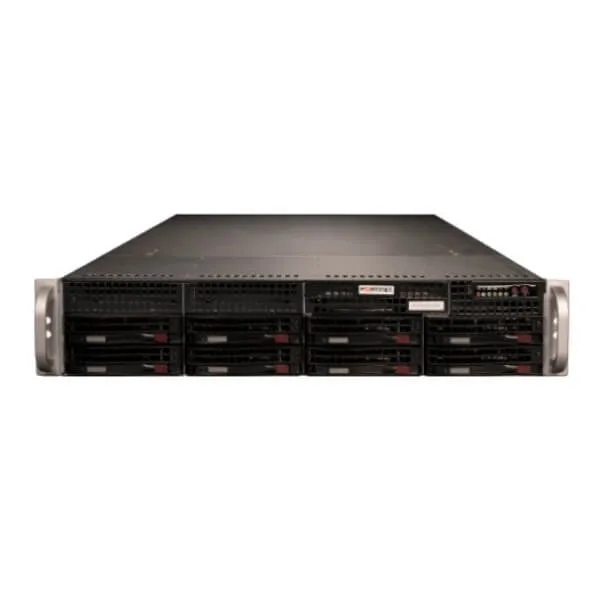
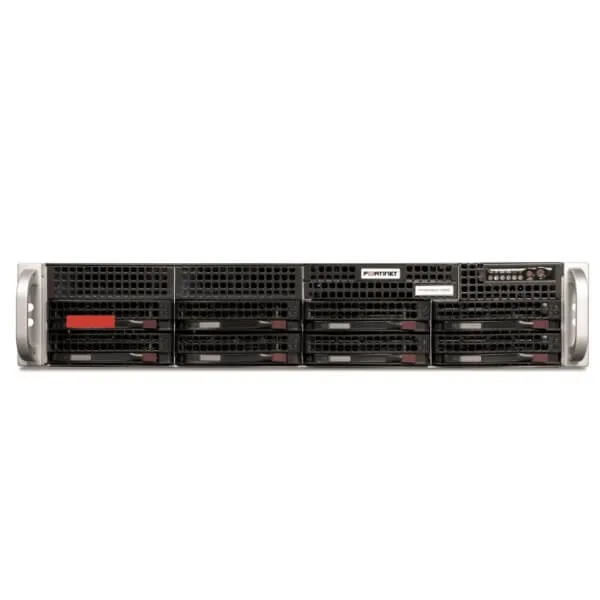
2U rack-mountable appliance
Protection of websites, portals, APIs, and web services
Contact FourTeck for current Africa options
Selection, licensing, deployment, and warranty guidance
Product Overview
Modern businesses expose more than simple brochure websites. Customer account portals, online payment pages, mobile APIs, partner gateways, business-to-business integrations, booking systems, learning platforms, healthcare portals, digital government services, and cloud-connected applications all create valuable entry points. These systems often process sensitive data and must remain available while handling legitimate traffic from many locations. A network firewall can control connections and broad traffic policies, but application-layer threats require deeper understanding of HTTP, HTTPS, sessions, requests, cookies, forms, APIs, and application behavior. The FortiWeb 1000F provides a dedicated layer for this job.
The appliance sits in front of protected web infrastructure and evaluates traffic before it reaches application servers. Depending on the selected configuration and services, it can use signatures, protocol validation, reputation intelligence, application profiling, machine-learning analysis, bot controls, API discovery, virtual patching, file inspection, authentication support, and traffic management functions. This layered approach is valuable because application attacks can look like normal web requests until their structure, context, frequency, or behavior is examined. The objective is not merely to block traffic. It is to allow legitimate users to reach business services while reducing the exposure created by malicious requests, automated abuse, vulnerable code, compromised credentials, and unwanted data movement.
The FWB-1000F is positioned for demanding enterprise environments rather than small standalone websites. Its rated throughput, hardware-assisted encrypted traffic processing, interface mix, local storage, dual power supplies, and high-availability options support data center and large business deployments where continuity matters. Organizations may deploy it for a single strategic application group, several application domains, a shared data center platform, or a controlled service environment. The final design depends on traffic volume, SSL/TLS usage, number of applications, protected APIs, policy complexity, expected growth, and whether one appliance or an HA pair is required.
For Africa buyers, a correct purchase requires more than choosing the model name. FourTeck helps teams translate business requirements into a practical appliance and subscription request. This may include checking whether Standard, Advanced, or Enterprise services are appropriate; reviewing rack and power conditions; confirming transceivers and cabling; planning certificate handling; deciding on deployment mode; estimating protected domains; reviewing log and reporting needs; and considering integration with FortiGate, FortiSandbox, FortiAnalyzer, vulnerability scanners, authentication systems, and application delivery workflows. This preparation reduces the risk of an incomplete order and gives procurement, security, infrastructure, and application teams a clearer basis for approval.
Key Business Benefits
◆ Dedicated Application Defense
A purpose-built WAF gives the security team controls that understand web requests, sessions, application paths, APIs, and user behavior. This helps address risks that may pass through general network rules because the connection itself appears valid.
◆ Support for Encrypted Traffic
Hardware SSL/TLS processing helps the platform examine encrypted application traffic while supporting certificate and offload planning. This matters because most public application use is encrypted and cannot be protected well when inspection is avoided.
◆ Better Protection During Patching Delays
Virtual patching can help reduce exposure after a vulnerability is identified but before application code can be repaired and released. This gives development and operations teams breathing room without treating the WAF as a replacement for secure coding.
◆ API Visibility and Control
API discovery and protection can help organizations understand exposed interfaces, validate expected formats, and apply policies to machine-to-machine traffic. This is important for mobile services, integrations, and digital platforms that rely heavily on APIs.
◆ Operational Resilience
Dual hot-swappable power supplies and clustering options support resilient deployment designs. Buyers can plan an active/passive or active/active architecture based on maintenance requirements, application tolerance, network design, and budget.
◆ Reduced Noise for Security Teams
Machine-learning and analytical capabilities are intended to distinguish meaningful threats from normal variation in application use. Better tuning and contextual visibility can help teams spend less time reviewing low-value events.
These benefits become valuable when the appliance is sized and configured around the real application environment. A WAF that is purchased without traffic analysis, certificate planning, policy ownership, logging decisions, and administrator training can become a passive monitoring box or a source of operational friction. FourTeck encourages buyers to involve security, application, network, and procurement stakeholders before quotation so that the selected bundle and deployment plan support the full business requirement.
Product Highlights
2.5 Gbps HTTP/HTTPS Rating
The official model guidance lists up to 2.5 Gbps for HTTP and HTTPS throughput. Actual results vary with policy depth, encryption, traffic profile, logging, enabled services, and system conditions.
Enterprise Interface Mix
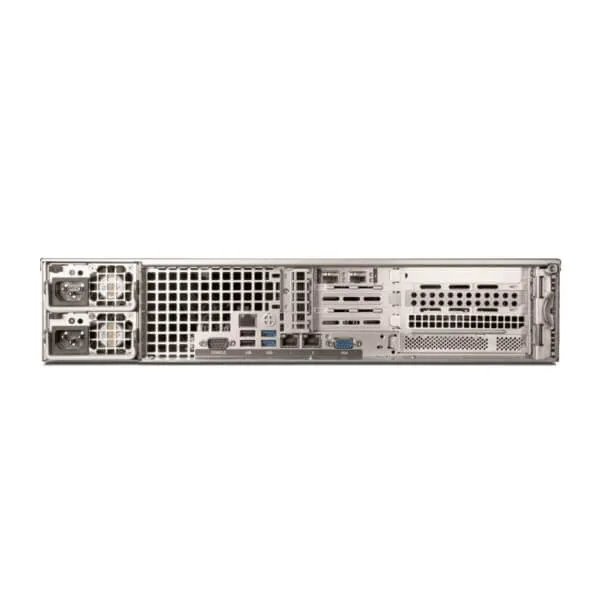
The platform includes eight GE RJ45 bypass ports, four non-bypass SFP GE ports, two 10G SFP+ ports, management connectivity, and USB interfaces for rack deployment flexibility.
Dual Local SSD Storage
Two 480 GB SSDs support local system and operational requirements. Logging and retention plans should still be reviewed, especially where external analytics or long-term reporting is required.
Flexible Deployment Modes
FortiWeb supports reverse proxy, transparent, offline sniffing, and WCCP-related deployment approaches. The correct mode depends on network design, routing control, application ownership, and change tolerance.
Important configuration note: security services vary by bundle. Standard services generally cover core web security, IP reputation, and antimalware functions; advanced bundles add capabilities such as cloud sandbox integration, credential-stuffing defense, and threat analytics; enterprise bundles can add advanced bot, client-side, and data-loss controls. Buyers should confirm the exact current bundle contents and order code before purchase because service packaging can change over time.
Technical Specifications
| Specification | FortiWeb FWB-1000F Details |
|---|---|
| Brand and Model | Fortinet FortiWeb FWB-1000F |
| Product Class | Enterprise web application and API firewall appliance |
| HTTP Throughput | Up to 2.5 Gbps under stated test conditions |
| HTTPS Throughput | Up to 2.5 Gbps with 2048-bit key test profile; actual performance varies |
| Machine-Learning Domains | Up to 32 in current ordering guidance; confirm software and license conditions |
| RJ45 Interfaces | 8 x GE RJ45 bypass ports |
| Fiber Interfaces | 4 x SFP GE non-bypass ports and 2 x 10G SFP+ ports |
| Management | Dedicated management connectivity, web interface, CLI, REST API, SNMP, syslog, email monitoring, and centralized options depending on design |
| SSL/TLS Processing | Hardware-assisted processing |
| Storage | 2 x 480 GB SSD |
| Form Factor | 2U rack mount, rack flanges supported |
| Power Supply | Dual hot-swappable AC power supplies |
| Input Power | 100–240V AC, 50–60 Hz |
| Average Power Consumption | Approximately 140 W in published model data; workload conditions affect use |
| High Availability | Active/passive and active/active clustering support |
| Dimensions | Approximately 88 x 430 x 501.2 mm |
| Weight | Approximately 12.8 kg |
| Operating Environment | 0°C to 40°C, front-to-back airflow, 5% to 90% non-condensing humidity |
| Service Bundles | Standard, Advanced, and Enterprise options; exact inclusions and terms must be confirmed |
| Warranty and Support | Based on selected FortiCare term, bundle, and supply route |
Buyers should treat published throughput as a sizing reference, not a guaranteed production result. Real performance changes with encryption level, request size, response size, enabled policies, machine-learning profiles, bot controls, file scanning, logging, traffic spikes, API behavior, and high-availability design. A safe purchase process begins with measured application traffic and an allowance for growth. It should also consider whether the WAF will perform load balancing, SSL offload, authentication, content routing, caching, or other application-delivery functions in addition to security inspection. FourTeck can help collect these details and prepare a configuration request that is easier for technical and finance teams to review.
Configuration and Buyer Guidance
The correct configuration starts with the protected application estate. List every public website, customer portal, API gateway, payment page, mobile back end, partner interface, and internal web service that may pass through the appliance. For each service, record its normal and peak traffic, HTTPS use, certificate ownership, authentication method, hosting location, expected growth, and outage tolerance. This provides a more reliable basis for sizing than counting users alone because application traffic can be generated by customers, partners, scripts, bots, mobile devices, and automated integrations.
Traffic Profile
Confirm average and peak throughput, requests per second, encrypted traffic percentage, upload activity, large responses, seasonal peaks, and expected growth.
Application Count
Document domains, subdomains, APIs, virtual servers, certificates, protected paths, and separate business owners so policy scope is clear.
Availability Design
Decide whether a single appliance is acceptable or an HA pair is required. Include switch paths, bypass behavior, power feeds, and maintenance windows.
Bundle Selection
Match Standard, Advanced, or Enterprise services to bot risk, credential abuse, client-side protection, sandboxing, threat analytics, and data-control needs.
Integration Plan
Review FortiGate, FortiSandbox, identity systems, scanners, logging platforms, SIEM tools, load balancers, DNS, cloud links, and change-management requirements.
Operational Ownership
Identify who tunes policies, approves exceptions, monitors alerts, manages certificates, coordinates application changes, and responds during an incident.
A good quotation should clearly state the hardware model, quantity, service bundle, support term, requested accessories, optical modules if needed, rack requirements, delivery location, and implementation scope. It should also separate product supply from professional services so the buyer understands what is included. FourTeck can assist with this requirement mapping and help identify missing information before the order reaches final approval.
Ideal Business Use Cases
Digital Banking and Payment Services
Banks, fintech platforms, insurers, and payment providers can place the appliance in front of customer portals, online transaction services, payment pages, and APIs where account abuse, injection attacks, credential threats, bots, and availability risks require dedicated controls.
Government and Citizen Portals
Public agencies can protect tax, licensing, registration, identity, permit, education, and citizen-service applications. The deployment should include change coordination because public portals often connect several departments and third-party systems.
Healthcare and Patient Platforms
Hospitals, laboratory groups, insurers, and telemedicine providers can protect appointment systems, patient portals, results platforms, APIs, and partner integrations while coordinating privacy, availability, and access-control requirements.
E-Commerce and Retail Platforms
Online stores, marketplaces, loyalty portals, and omnichannel retailers can use WAF controls to protect login, search, checkout, product, customer, and payment workflows from automated abuse and application-layer attacks.
Education and Learning Systems
Universities, training groups, and education platforms can protect admissions, student portals, learning systems, examination services, digital libraries, and mobile APIs that experience heavy seasonal demand.
Service Providers and Shared Hosting
Managed service providers, hosting companies, and large enterprise data centers can use administrative domains and shared controls to protect several application groups, subject to architecture, licensing, tenant separation, and operational policy.
The appliance is also relevant for logistics portals, airline booking systems, utility customer platforms, telecom self-service applications, manufacturing partner portals, ERP web front ends, public APIs, and business collaboration services. Suitability depends on measured traffic and required controls. A smaller FortiWeb model may be enough for a limited application set, while a larger model may be required for higher traffic, more protected domains, stronger growth expectations, or extensive inspection. FourTeck can help compare neighboring models without forcing a purchase based only on the product label.
FortiWeb FWB-1000F Machine-Learning Application Protection
Traditional web protection often begins with known attack signatures, reputation lists, protocol validation, and fixed rules. These controls remain important because many attacks follow recognizable patterns. The challenge is that every real application has its own normal behavior. A banking form, university admissions page, airline search function, and logistics API all accept different inputs and produce different traffic patterns. An overly broad rule can allow unwanted activity, while an overly strict rule can block customers and create support incidents.
FortiWeb’s machine-learning approach is designed to build a behavioral understanding of protected applications and evaluate requests against expected use. This can help distinguish normal traffic, harmless variation, and suspicious behavior that may represent an attack. For the buyer, the practical value is improved protection with less dependence on endless manual exception lists. It can also help security teams investigate why an event was treated as risky instead of seeing only a generic block message.
Machine learning does not remove the need for deployment discipline. The learning period should reflect genuine application use, and policy owners must understand planned application changes. A major software release, new API, altered form, seasonal campaign, or customer migration can change normal behavior. Teams should define how application owners notify the security group, how new policies are tested, how blocking is introduced, and how false-positive reports are handled. In sensitive environments, the WAF may begin in a monitoring or learning mode before enforcement is tightened.
The 1000F ordering guidance lists support for a defined number of machine-learning domains, so buyers should count the applications and domain structures that require separate modeling. FourTeck can help clarify whether the planned domain count, traffic profile, and administrative model fit the appliance or whether a different model should be considered. This avoids a common mistake: assuming one appliance name automatically covers every portal, API, and future project without considering policy scale.
FortiWeb FWB-1000F API Discovery and Protection
APIs connect mobile applications, customer portals, payment services, partner systems, cloud platforms, logistics tools, identity services, and internal automation. They can be difficult to protect because they may not have a visible user interface and can change frequently as development teams release new functions. An organization may also have undocumented or forgotten endpoints that remain reachable. API discovery helps create a clearer inventory by observing traffic and identifying the interfaces that applications actually use.
Protection becomes stronger when the WAF understands the expected structure of API requests. Schema validation can help check whether JSON, XML, or other supported formats match the defined request model. Positive security policies can reduce the risk of accepting unexpected fields, methods, data types, or values. This is especially important for financial transactions, identity workflows, customer records, and machine-to-machine integrations where malformed or manipulated requests may create business risk even when the network connection is legitimate.
A useful API protection project should involve application developers, security teams, and operations staff. Developers can supply OpenAPI or related specifications, identify sensitive endpoints, explain authentication flows, and communicate release changes. Security teams can define abuse controls, logging, rate limits, schema requirements, and response procedures. Operations teams can plan routing, certificates, high availability, monitoring, and rollback. This shared ownership is more effective than placing a WAF in front of APIs without understanding how the services work.
Before requesting a quote, buyers should estimate API traffic separately from ordinary browser traffic, identify external and internal consumers, note file uploads, record authentication methods, and list expected peaks. FourTeck can use this information to discuss whether the FWB-1000F’s performance and service options match the project. The result is a clearer procurement decision and a deployment plan that supports the application lifecycle rather than becoming disconnected from it.
FortiWeb FWB-1000F High Availability and Encrypted Traffic Handling
A web application firewall often sits directly in the path of important customer and partner traffic. That position makes availability planning essential. The 1000F supports active/passive and active/active clustering approaches, but the right design depends on the application architecture, network topology, session handling, operational skills, and maintenance goals. An HA pair can reduce the risk associated with hardware failure and planned maintenance, but it also adds requirements for power, rack space, cabling, switching, synchronization, monitoring, and testing.
Dual hot-swappable power supplies support power resilience within each appliance. Buyers should still connect them to separate protected power paths where the data center design allows. The appliance uses front-to-back airflow and occupies 2U, so rack placement should account for cooling, service access, cable routing, and adjacent equipment. Bypass interfaces may help selected inline designs, but bypass behavior must be understood in the context of the organization’s security policy. Some businesses prefer traffic continuity during a fault; others require fail-closed behavior for sensitive services.
Encrypted traffic is another major planning area. The platform includes hardware SSL/TLS processing, which helps inspect HTTPS traffic and can support offloading functions. However, certificate ownership, private-key protection, TLS policy, cipher requirements, application compatibility, HSM integration, and compliance controls must be reviewed. Security and application teams should decide where encryption is terminated, whether traffic is re-encrypted to the servers, how certificates are renewed, and who is authorized to handle keys.
FourTeck recommends that buyers include HA architecture, power design, certificate process, network diagrams, and maintenance expectations in the quotation discussion. This prevents the purchase from being treated as a single box when the real requirement is a resilient application-security service. It also helps identify whether installation, migration, testing, documentation, and administrator training should be included as separate project services.
What Buyers Should Check Before Purchase
Before requesting a quote, buyers should confirm the requirement in enough detail to avoid an under-sized appliance, missing subscriptions, incompatible interfaces, an incomplete HA design, or unexpected implementation work. The model name is only the starting point. The full purchase includes hardware, services, support term, network accessories, certificates, operational responsibility, and deployment readiness.
Configuration Fit
Provide measured peak traffic, HTTPS percentage, protected domain count, API traffic, file uploads, application growth, logging needs, and required security functions. Leave capacity headroom for releases and seasonal demand.
Compatibility Check
Review switching, routing, VLANs, DNS, load balancers, server platforms, certificate systems, authentication, vulnerability scanners, Fortinet products, SIEM tools, and application deployment workflows.
License and Renewal
Confirm the required Standard, Advanced, or Enterprise bundle, the contract length, renewal process, FortiCare level, included services, optional subscriptions, and the budget impact after the initial term.
Rack and Power
Reserve 2U rack space per appliance, confirm front-to-back cooling, protected power feeds, PDU capacity, cable management, service clearance, and whether a second appliance is required for resilience.
Accessories and Links
Confirm SFP or SFP+ optics, fiber type, patch leads, copper cabling, management connections, rack hardware, console access, and any network changes required to place the appliance in traffic.
Deployment Services
Define who will install, migrate, import certificates, create policies, tune learning profiles, test failover, document the system, train administrators, and support the first production period.
Availability and Warranty
Ask for current lead time, supply route, support entitlement, hardware replacement terms, regional handling, shipment requirements, and the process for raising technical cases.
Quote Preparation
Share company name, country, delivery city, quantity, preferred contract term, HA requirement, application summary, expected timeline, installation need, and any existing Fortinet environment.
Long-term cost should include renewals, administrator time, monitoring, policy tuning, certificate management, power, rack space, training, and potential professional services. A lower initial quote may not represent the most suitable option when it excludes essential subscriptions or implementation work. FourTeck helps buyers compare complete requirements so the commercial decision reflects usable business value rather than hardware price alone.
Africa Availability and Service Support
FourTeck supports FortiWeb enquiries across Africa with assistance for requirement review, model selection, subscription planning, quotation preparation, delivery coordination, and warranty guidance. Availability can vary because enterprise security appliances are affected by the selected bundle, support term, regional distribution, supplier allocation, project quantity, and delivery destination. Buyers should request current confirmation rather than assume that a listed model or service term is immediately available.
The support process can begin before the commercial quote. FourTeck can help the customer prepare traffic information, protected application details, API requirements, high-availability expectations, rack and power conditions, interface needs, and desired security services. This creates a cleaner request for both the buyer and supplier. It also helps reveal whether the FWB-1000F is the correct size, whether a smaller or larger FortiWeb platform should be considered, and whether professional services are needed for deployment.
For project orders, delivery coordination may include confirmation of destination, consignee information, shipment method, documentation, import requirements, and site readiness. Warranty and support depend on the selected FortiCare and service bundle, so the quote should state the term and entitlement clearly. FourTeck can guide the buyer through these questions without making unsupported stock or delivery promises.
Africa Country and Regional Coverage
Businesses across Africa, including Kenya, Uganda, Nigeria, Ghana, Tanzania, Rwanda, Ethiopia, South Africa, Zambia, Botswana, Senegal, and other regional markets can contact FourTeck for current product options, configuration guidance, quotation assistance, and delivery coordination. The buying requirement may come from a bank protecting online services, a government agency securing citizen portals, a university supporting digital learning, a healthcare group managing patient systems, a retailer operating an online platform, or a service provider protecting customer applications.
Regional projects often involve different technical and commercial stakeholders. A data center team may manage rack and network access, an application group may own certificates and releases, a security team may define policies, finance may approve subscriptions, and procurement may coordinate shipment. FourTeck can help organize the information needed for a complete quote, particularly when the deployment supports several offices or countries from one central platform.
Buyers should share the intended delivery country, final installation location, quantity, preferred support term, project deadline, application profile, and any requirement for an HA pair. For multi-country rollouts, it is helpful to state whether the appliances will be centrally purchased or delivered separately, who will provide deployment services, and how support cases will be coordinated. This level of planning improves clarity before order confirmation and helps reduce delays caused by missing commercial or technical details.
GCC, Middle East and Africa Availability
FourTeck Africa can support product enquiries for organizations operating across Africa while also guiding regional technology requirements connected with UAE, Saudi Arabia, Qatar, Oman, Bahrain, and wider Middle East business operations. Cross-region projects are common where a group has management, procurement, hosting, or security teams in one region and application users or branches in another. The important requirement is a consistent technical design and a clear commercial route for supply, support, licensing, and deployment.
Availability, delivery options, warranty handling, and service terms may vary by country, selected bundle, supplier route, and order quantity. Buyers should confirm whether the appliance will be installed in a local data center, a regional co-location facility, or an enterprise site. They should also state whether one security team will manage all appliances, whether central logging is required, and whether application policies need to be standardized across regional platforms.
Regional FourTeck resources can support the buying conversation through FourTeck Africa, FourTeck Kenya, FourTeck Uganda, and FourTeck UAE. The appropriate route depends on the project location and commercial requirement.
Other Options Buyers May Consider
A complete application-security design often includes more than one product. The following FourTeck resources help buyers review connected Fortinet solutions and neighboring security requirements. Final suitability depends on application architecture, traffic, management model, and project scope.
Fortinet Security Fabric Solutions
Useful for organizations planning coordinated security across firewalls, application protection, endpoints, switching, wireless, logging, and management.
Fortinet FortiSandbox Support
Relevant where suspicious files, uploads, and advanced malware analysis need to connect with wider Fortinet inspection workflows.
FortiGate 3001G Enterprise Firewall
Consider for high-capacity network-edge security, segmentation, VPN, and broader threat inspection around enterprise data center environments.
FortiGate FG-3500G Firewall
A related high-end firewall reference for organizations planning large perimeter, core, and data center security projects.
Africa IT Product Catalogue
Browse related infrastructure, cybersecurity, server, networking, storage, and business technology product pages.
FourTeck Project Assistance
Use the contact channel to compare models, confirm service bundles, discuss availability, or prepare a project-specific quotation.
For neighboring FortiWeb models, buyers may compare smaller platforms where traffic and domain counts are limited or larger platforms where application volume, inspection depth, protected services, or growth demand more capacity. The decision should be based on a sizing review rather than the assumption that a larger appliance is always preferable. FourTeck can help identify a suitable comparison set and request current order information.
Why Buyers Choose FourTeck
Enterprise application security purchases require a balance of technical accuracy and commercial clarity. FourTeck helps buyers create that balance by focusing on the information needed to select, quote, deliver, and deploy the product responsibly. The objective is not to push a model without context. It is to understand what the business is protecting, how the application environment works, and what must be included for the solution to be useful after installation.
Guidance for hardware, subscriptions, accessories, support terms, and project quantities.
Help reviewing traffic, domains, APIs, HA, interfaces, rack needs, and deployment modes.
A structured requirement list for clearer commercial review and fewer missing items.
Regional support for destination details, project timing, and supply communication.
Clarification of support term, entitlement, renewal, and hardware-service expectations.
Assistance connecting FortiWeb with firewalls, sandboxing, analytics, and project services.
FourTeck supports SMB, enterprise, government, education, healthcare, financial, telecom, and service-provider buyers with a practical pre-sales approach. Customers can request help when they are replacing an older WAF, adding protection to a new portal, expanding an existing Fortinet environment, preparing an HA deployment, reviewing a renewal, or comparing appliance and virtual options. The final recommendation remains configuration dependent and should be confirmed against current Fortinet documentation and supply information.
Frequently Asked Questions
What is the FortiWeb FWB-1000F used for?
It is used to protect web applications, websites, APIs, portals, mobile back ends, and related online services from application-layer threats. Depending on the selected bundle and configuration, it can apply signatures, reputation checks, machine-learning analysis, API controls, bot protection, virtual patching, authentication support, file inspection, and application-delivery functions.
Is the appliance suitable for high-traffic enterprise applications?
The model is rated for up to 2.5 Gbps HTTP and HTTPS throughput under published test conditions and is designed for enterprise deployment. Suitability depends on real peak traffic, encryption, enabled services, request patterns, application count, growth, logging, and HA design. FourTeck recommends a sizing review before purchase.
Can FourTeck help choose the correct service bundle?
Yes. FourTeck can help compare Standard, Advanced, and Enterprise bundle requirements based on web security, IP reputation, antimalware, sandboxing, credential-stuffing defense, threat analytics, advanced bot protection, client-side controls, and data-loss needs. Exact inclusions and order codes should be confirmed at quotation time.
Does FortiWeb FWB-1000F support high availability?
Yes. The platform supports active/passive and active/active clustering. A resilient design normally requires two appliances plus appropriate switching, cabling, power separation, synchronized configuration, testing, and maintenance procedures. The correct topology should be planned around application session behavior and outage tolerance.
Can it protect APIs as well as websites?
Yes. FortiWeb includes API discovery and protection capabilities, with support for policy approaches such as schema validation and positive security models depending on configuration. Buyers should provide API traffic estimates, specifications, authentication methods, sensitive endpoints, and release processes so the deployment can be designed correctly.
Is the product available for delivery across Africa?
FourTeck supports enquiries across Africa, but availability depends on the selected appliance bundle, support term, supplier status, project quantity, and delivery destination. Contact FourTeck with the required quantity, country, city, preferred term, and project date for current supply and delivery guidance.
What information is needed for a quote?
Provide company and delivery details, quantity, protected applications, peak traffic, HTTPS share, API use, domain count, required bundle, preferred support term, HA requirement, interface needs, rack and power conditions, desired implementation services, and target deployment date. This helps produce a more complete proposal.
Does the appliance include dual power and local storage?
Published model data lists dual hot-swappable AC power supplies and two 480 GB SSDs. Buyers should confirm rack PDU capacity, protected power paths, airflow, service access, logging requirements, and whether external analytics or long-term log retention is also needed.
Can businesses request bulk or project supply?
Yes. Organizations can request multiple appliances for HA pairs, data centers, regional platforms, or phased projects. Include the quantity by location, common configuration, support term, deployment schedule, and whether centralized management or professional services are required. FourTeck can help coordinate the commercial requirement.
Need Help Choosing the Right FortiWeb Configuration?
FourTeck can help review application traffic, protected domains, API exposure, service bundles, high availability, rack requirements, warranty guidance, and delivery needs before your organization approves the purchase.

Reviews
There are no reviews yet.