
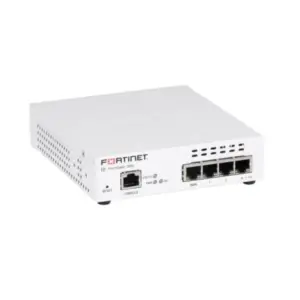
FortiSandbox FSA-3000G Sandbox Appliance in Africa
Built for organisations that handle large volumes of email attachments, uploaded documents, shared files, downloads and application content, this enterprise sandbox appliance adds a dedicated analysis layer for suspicious objects that may evade conventional controls. It is designed for security teams that need high analysis throughput, substantial local virtual-machine capacity, scalable cloud expansion and close integration with a wider Fortinet environment. FourTeck helps procurement and technical teams review the appliance, associated subscriptions, deployment design, rack requirements, delivery route and support expectations before a quotation is approved.
Request QuoteCheck Africa Availability
Quick Product Information
Fortinet
FSA-3000G / FortiSandbox 3000G
Enterprise sandboxing hardware appliance
Unknown-file analysis and advanced malware detection
Large enterprises, SOC teams, service providers and regulated organisations
8 included, expandable up to 150
Expandable up to 200, subject to licensing
Contact FourTeck for current supply options
Selection, licensing, integration and quote assistance
Subscriptions, VM expansion and deployment scope are configuration dependent
Product Overview
Modern attacks are often packaged to look ordinary. A malicious document may resemble an invoice, a recruitment file or a supplier quotation. An executable may wait for a user action, inspect its environment or delay activity to avoid quick detection. Web downloads and shared files may contain embedded links, scripts or macros that do not appear dangerous during a simple signature check. A dedicated sandbox addresses this challenge by examining suspicious content through several analysis stages and, where required, observing behaviour inside an isolated virtual environment.
The FSA-3000G is positioned for large organisations that need considerably more capacity than an entry or mid-range appliance. It supports up to 160,000 effective sandboxing files per hour under the manufacturer’s stated test conditions, up to 320,000 files per hour for static analysis and up to 12,000 files per hour for dynamic analysis. Its design can also support very high FortiMail-related processing volumes and a large user environment. These figures are useful for capacity planning, but real results depend on file mix, enabled services, analysis policy, software version, integration design and operational workload.
This platform fits best where file inspection is a business-critical security function rather than an occasional task. A bank may need deeper examination of customer and supplier attachments. A cloud-storage provider may need to assess uploads before wider distribution. A university may receive large volumes of documents from students, researchers and external partners. A government department may process files from public portals. A managed security provider may need a central analysis service for multiple customer environments. In each case, capacity, response time, privacy, integration and administrative workflow must be considered together.
FourTeck helps buyers move from a model request to a complete purchasing discussion. That process can include sizing, local and cloud virtual-machine requirements, advanced analysis subscriptions, Microsoft guest operating-system licensing, storage and power preparation, Fortinet Security Fabric integration, delivery coordination and support-term review. This is especially important because the appliance may be quoted with different service terms and expansion options. A clear requirement reduces the chance of ordering the hardware without the licenses, capacity or deployment services needed for production use.
Key Business Benefits
A high-capacity sandbox should improve more than threat-detection statistics. It should support faster security decisions, reduce exposure from unknown content and fit into the organisation’s existing controls without creating an unmanageable operational burden. The following benefits explain the practical value buyers should evaluate.
◆ High Analysis Capacity
Large file volumes can overwhelm smaller platforms and create queues that delay verdicts. Higher processing capacity gives enterprise security teams more room to inspect email attachments, web downloads, uploaded documents and shared files while preserving operational responsiveness during busy periods.
✓ Better Zero-Day Readiness
Unknown threats do not always match known signatures. Static and dynamic examination can reveal suspicious structure, behaviour, network activity and system changes, helping analysts make a more informed decision about files that would otherwise remain uncertain.
⚙ Scalable Virtual Machines
The appliance starts with eight Universal VM counts and can be expanded for a much larger local analysis environment. This enables buyers to plan broader operating-system coverage, more parallel analysis and future growth rather than replacing the platform too early.
● Stronger Email Protection Workflow
High FortiMail-related throughput is valuable for organisations that receive substantial message volumes. Suspicious attachments can be sent for deeper examination while the wider mail-security workflow controls delivery according to the returned verdict and configured policy.
↗ Connected Security Operations
Integration with FortiGate, FortiMail, FortiWeb, FortiClient, FortiProxy and related tools can create a more coordinated response. Verdicts and threat information become useful across multiple controls instead of remaining isolated inside one appliance.
🔒 On-Premises Control
A dedicated appliance can be attractive where organisations want local analysis capacity, controlled data handling and closer alignment with internal security procedures. The final design should still review privacy, retention, connectivity and cloud-expansion choices.
Product Highlights
The appliance combines enterprise processing capacity with hardware features intended for data-centre deployment. Buyers receive a two-rack-unit platform with eight 10 Gigabit Ethernet SFP+ interfaces, four 2 TB drives arranged as RAID 10, hot-swappable storage, a Trusted Platform Module and dual hot-swappable power supplies. The hardware design supports front-to-back airflow and is built for standard rack environments where power resilience, service access and controlled cooling matter.
Effective sandboxing throughput under stated test conditions
Static analysis throughput under stated test conditions
Dynamic analysis throughput under stated test conditions
Expansion range depends on purchased licenses
Cloud expansion subject to service and licensing choices
Manufacturer estimate based on defined email and dynamic-scan ratios
The base appliance description includes four Windows 10, four Windows 11 and one Office 2021 license allocation, together with eight Universal VM counts. Buyers should confirm current ordering rules, advanced-analysis subscriptions, guest operating-system requirements and expansion quantities at quotation stage. Manufacturer performance values are obtained in controlled conditions; production results will vary according to workload, file composition, policy, integration and software release.
Technical Specifications
| Specification Area | FSA-3000G Details |
|---|---|
| Brand | Fortinet |
| Model | FortiSandbox 3000G / FSA-3000G |
| Product Type | Enterprise sandboxing hardware appliance |
| Local VM Capacity | 8 included; expandable up to 150 with applicable licensing |
| Cloud VM Expansion | Up to 200, subject to the selected service and licenses |
| Effective Sandboxing Throughput | Up to 160,000 files per hour under manufacturer test conditions |
| Static Analysis Throughput | Up to 320,000 files per hour under manufacturer test conditions |
| Dynamic Analysis Throughput | Up to 12,000 files per hour under manufacturer test conditions |
| FortiMail Throughput | Up to 1,600,000 emails per hour under the stated test ratio |
| MTA Adapter Throughput | Up to 320,000 emails per hour |
| Sniffer Mode Throughput | Up to 9.6 Gbps |
| User Sizing Reference | Up to 28,800 users based on the manufacturer’s defined workload ratio |
| Form Factor | 2RU rack appliance |
| Network Interfaces | 8 x 10 Gigabit Ethernet SFP+ slots |
| Storage | 4 x 2 TB in RAID 10; hot-swappable |
| Hardware Security | Trusted Platform Module |
| Dimensions | 88 x 438 x 650 mm; approximately 3.5 x 17.2 x 25.6 inches |
| Weight | Approximately 20 kg / 44 lb |
| Power Supplies | Dual 100–240V AC, 50/60 Hz; redundant and hot-swappable |
| Power Consumption | Approximately 471.9 W average / 542.4 W maximum |
| Airflow | Front to back |
| Operating Environment | 0°C to 40°C; 10% to 90% humidity, non-condensing |
| Included Base VM Licenses | 4 x Windows 10, 4 x Windows 11 and 1 x Office 2021 allocation, subject to current ordering terms |
| Availability | Contact FourTeck for current appliance, subscription and delivery options |
Configuration should be selected from the real workload rather than the maximum table values alone. Buyers need to assess the percentage of files that will proceed to dynamic detonation, the number of Fortinet devices submitting objects, peak-hour email volumes, file size distribution, required operating-system coverage and the response workflow used by analysts. Local VM expansion, cloud capacity, advanced subscriptions and Microsoft guest licenses should be included in the commercial plan. Rack depth, dual power feeds, cooling, optics and management connectivity must also be confirmed before installation.
Configuration and Buyer Guidance
A correct purchase starts with the content path. Identify where suspicious files originate and which systems will submit them. Email may be the largest source, but public portals, file-sharing applications, endpoint tools, web gateways and network security devices can produce substantial additional demand. Each integration has different latency expectations and response actions, so the proposed design should document submission, verdict return, quarantine, blocking, administrator review and escalation.
Workload Volume
Estimate files and messages during normal and peak periods. Include growth, new digital services and any plan to connect additional Fortinet products after the first deployment.
Analysis Depth
Decide which objects require static checks only and which should proceed to dynamic detonation. Aggressive policies increase resource use and may affect verdict time.
VM and License Scope
Confirm required operating systems, application profiles, local VM quantity, cloud expansion and subscription term. Base allocations may not cover every file type or business application.
Integration Readiness
Document FortiGate, FortiMail, FortiWeb, FortiClient, FortiProxy, FortiAnalyzer and other systems that will exchange files, events or threat information.
Data-Centre Preparation
Verify two rack units, 650 mm chassis depth, front-to-back airflow, dual AC feeds, cooling, management access and the correct SFP+ connectivity.
Support and Operations
Define firmware ownership, backup procedure, incident workflow, administrator roles, reporting, escalation, replacement handling and subscription renewal responsibility.
FourTeck recommends sending a concise architecture summary with the quote request. Include current security products, expected submissions, email count, user count, preferred local VM capacity, cloud policy, subscription term, country, quantity, rack location and implementation timeline. This information allows the commercial response to address the whole requirement rather than only the base appliance.
Ideal Business Use Cases
The appliance is intended for environments where unknown-file analysis needs scale, central control and integration with established security operations. It is not normally selected for a small office with occasional suspicious files. The strongest fit is an organisation that can define where content enters, how verdicts will be used and who will respond when malicious behaviour is identified.
Financial Services
Banks, insurers, payment platforms and fintech firms exchange invoices, statements, onboarding files and regulatory documents. Sandboxing can add deeper examination for attachments and uploads that may contain targeted malware or credential-stealing content.
Cloud and File-Sharing Providers
Platforms that accept customer uploads need a scalable method to assess suspicious content. The appliance can support controlled analysis before files are shared with more users or moved into downstream systems.
Government and Public Portals
Departments receiving forms, tenders, applications and citizen documents can use a sandboxing layer to investigate unknown objects while maintaining an auditable security workflow.
Universities and Research Networks
Large education environments exchange diverse file types across staff, students, laboratories and external partners. Central analysis can help security teams investigate suspicious downloads and documents across a broad user population.
Healthcare Groups
Hospitals and health networks handle supplier files, referrals, insurance documents and administrative attachments. Deeper inspection helps reduce exposure to ransomware delivery and malicious document campaigns.
Managed Security Services
Service providers can evaluate a central platform for high-volume analysis across supported customer workflows. Capacity, tenant separation, reporting, licensing and service commitments need careful design before purchase.
Telecom and Large Enterprise SOCs
High-volume security operations may receive suspicious objects from multiple gateways, data centres and business units. A dedicated enterprise appliance helps consolidate analysis and align verdicts with the incident-response process.
Digital Commerce and Logistics
Customer uploads, shipping documents, customs files and supplier attachments create a broad attack surface. Sandboxing can support safer handling of documents that move between many external parties.
FortiSandbox FSA-3000G AI-Assisted Threat Analysis
The central value of a sandbox is its ability to examine more than a file name or known signature. Static analysis can inspect structure, metadata, embedded components, scripts, macros, packers and other indicators without executing the object. This stage is valuable because it is fast and can eliminate known-safe or clearly malicious files before the resource-intensive dynamic stage.
When further investigation is required, dynamic analysis executes the object inside an isolated environment and observes behaviour. Analysts may gain evidence from process creation, file changes, registry activity, network communication, command execution, persistence methods and attempts to avoid detection. Machine-learning-assisted models and behavioural engines can support classification when an object does not match an existing signature but acts in a suspicious way.
For a buyer, the practical question is how fast the organisation needs a verdict and what happens next. An email gateway may hold an attachment until a decision is returned. A web application may quarantine an upload. A firewall may block a related indicator. A SOC analyst may open a report and start an investigation. These workflows have different acceptable delays and false-positive tolerances.
The high throughput of this appliance is intended to reduce the chance that enterprise file volumes create an analysis bottleneck. However, policy still matters. Sending every object to full detonation can consume unnecessary resources, while weak policies can miss high-risk content. FourTeck can help buyers discuss the expected file mix, required operating systems, integration points and response process so the platform is sized around actual security decisions.
FortiSandbox FSA-3000G Scale and Virtual-Machine Expansion
Sandbox capacity is closely connected to virtual-machine availability. Each active environment can analyse a file while other environments handle additional jobs. More local VMs support greater parallelism, broader operating-system coverage and a larger number of custom analysis profiles. The 3000G starts with eight Universal VM counts and can be expanded up to 150 local VMs with the appropriate subscriptions and guest operating-system licenses.
This expansion path matters when the organisation expects growth. A business may begin with email and firewall integration, then later add web application uploads, endpoint submissions and file-sharing services. Without sufficient VM capacity, the queue can increase during peak demand. Expansion gives the buyer a way to add analysis resources without immediately changing the entire appliance.
Cloud VM expansion can extend the available pool up to 200, depending on service selection and licensing. Cloud capacity may help with elasticity, but it also introduces questions about connectivity, data handling, jurisdiction, resilience and operating cost. Some organisations prefer local analysis for sensitive files, while others value cloud scale. A hybrid approach may be considered where policy can separate workloads appropriately.
Buyers should not assume that the maximum VM number is included in the base hardware price. Expansion subscriptions, Microsoft guest licenses, Office versions and advanced-analysis services are separate commercial considerations. The quote request should state the preferred local count, operating systems, cloud policy, term length and anticipated future growth. FourTeck can then help align hardware, subscriptions and renewal planning into one procurement view.
FortiSandbox FSA-3000G Security Fabric Integration
A sandbox becomes more useful when it is connected to the controls that see suspicious content and can act on the verdict. Fortinet environments may use FortiGate for network security, FortiMail for email protection, FortiWeb for web application traffic, FortiClient for endpoint workflows, FortiProxy for secure web access and FortiAnalyzer or FortiSIEM for operational visibility. The exact integration depends on software versions, licenses and architecture.
The submission workflow should be designed before production. Teams need to decide which files are forwarded, whether delivery is held while analysis runs, how verdicts are returned, which indicators are shared and who handles uncertain or high-risk results. Automation can speed response, but an incorrect policy may block legitimate business files or allow suspicious content to pass without adequate review.
Version compatibility is another important buying point. Existing FortiGate, FortiMail, FortiWeb and FortiClient deployments may run different software releases. Buyers should document those versions and verify supported integration paths. Network routing, certificates, DNS, time synchronisation, management access and security policies must also be prepared so the appliance can communicate reliably.
FourTeck supports the early planning conversation by helping the buyer list connected products, expected submission sources, required verdict actions and any central reporting platform. This allows the quotation and deployment scope to reflect the full security workflow, including professional services or additional licenses where they are needed.
What Buyers Should Check Before Purchase
Before requesting a quote, buyers should confirm the required capacity, integration environment, support expectation and data-centre readiness. Selecting by model name alone can leave important items outside the order, especially VM subscriptions, guest operating-system licenses, Office versions, transceivers, rack preparation and deployment services.
Configuration Fit
Provide peak files per hour, email volume, user count, connected systems and the percentage expected to require dynamic analysis. These values help determine whether the base VM count is sufficient.
Compatibility Check
List Fortinet products, firmware releases, network zones, authentication, certificates and management tools. Compatibility should be confirmed before planning the production cutover.
Licenses and Renewal
Clarify Advanced AI or standard subscription choice, Universal VM expansion, Windows and Office licensing, support term and the annual or multi-year renewal budget.
Rack and Power
Confirm two rack units, chassis depth, rail compatibility, dual AC feeds, cooling, front-to-back airflow and enough capacity for the stated average and maximum power draw.
Network Accessories
The eight SFP+ slots require a deliberate connectivity plan. Confirm optics, fibre type, link distance, switch compatibility and whether separate management connections are required.
Availability and Warranty
Ask for current supplier status, lead time, support entitlement, replacement process and regional warranty handling. Do not assume the hardware and every subscription share the same availability.
Deployment Scope
Decide who will rack, configure, integrate, test, document and hand over the platform. Include change windows, rollback planning and analyst training in the implementation discussion.
Quote Preparation
Share country, city, quantity, required term, target VM count, integrations, delivery date and implementation needs. Better input produces a clearer commercial response.
Long-term cost should include subscription renewals, guest licenses, expansion capacity, power consumption, rack space, optics, support and staff time. A lower initial hardware figure may not represent the complete operating requirement. FourTeck helps buyers review these details so procurement, security and infrastructure teams can approve a more complete solution.
Africa Availability and Service Support
FourTeck supports enterprise sandbox enquiries across Africa with assistance for product identification, capacity discussion, subscription matching, configuration review, commercial quotation, delivery coordination and warranty direction. Availability can vary according to supplier position, selected support term, Universal VM quantity, Microsoft license requirements, destination, order quantity and project schedule.
Because this is a project-oriented security appliance, buyers should allow time for architecture review and complete bill-of-material preparation. The base hardware may be only one part of the order. Advanced analysis services, VM expansion, guest operating-system licensing, optics, rack accessories and professional implementation may need separate line items.
FourTeck can help technical and procurement teams combine those details into a practical request. Share the business use case, expected submissions, connected Fortinet products, desired support period, country and timeline. The team can then guide the next commercial step without making unverified stock or delivery promises.
Africa Country and Regional Coverage
Businesses across Africa, including Kenya, Uganda, Nigeria, Ghana, Tanzania, Rwanda, Ethiopia, South Africa, Zambia, Botswana, Senegal and nearby markets, can contact FourTeck for product availability, configuration guidance and quotation assistance. Regional demand often comes from banking, telecom, government, education, healthcare, logistics, managed services, cloud platforms and large corporate groups that process high volumes of external content.
Each destination can involve different delivery routes, procurement procedures, taxes, support expectations and implementation schedules. A buyer should therefore provide the delivery city, required quantity, intended deployment date and any country-specific documentation needs at the start of the enquiry. Multi-country projects should also explain whether appliances will be managed centrally or operated by separate local security teams.
FourTeck can help regional buyers review a common architecture while allowing for local connectivity, power, rack and operational differences. This creates a more consistent procurement discussion for enterprises expanding security controls across several offices or data centres.
GCC, Middle East and Africa Availability
FourTeck Africa can support product enquiries for African organisations while connected FourTeck platforms help with regional technology discussions across GCC and Middle East markets. Businesses operating between Africa, UAE, Saudi Arabia, Qatar, Oman and Bahrain may need consistent licensing, security policy, support terms and procurement documentation across locations.
A cross-region deployment should address where files are analysed, how threat information is shared, which team manages the platform and whether privacy or residency requirements affect local and cloud VM use. Delivery options, warranty handling, installation support and service availability can differ by country, so each site should be identified in the project plan.
Other Options Buyers May Consider
Not every organisation requires the highest-capacity hardware model. Some projects are better served by a smaller FortiSandbox appliance, a virtual deployment or a cloud service. Others need supporting Fortinet products to complete the detection and response workflow. The cards below provide useful starting points for comparison and internal navigation.
FortiSandbox Support Guidance
Useful for buyers comparing appliance, virtual and cloud-linked sandboxing approaches or reviewing renewal and integration support.
Fortinet Cybersecurity Solutions
A broader reference for firewall, email, endpoint, management, analytics and advanced-threat protection planning.
FortiGate FG-3500G
Consider for high-capacity firewalling, segmentation, VPN and inspected traffic at enterprise or data-centre scale.
FortiGate 3001G
Suitable for organisations that also need a high-end Fortinet firewall with extensive interface capacity and local storage.
FortiSandbox 1500G
A mid-range hardware option that may suit organisations with lower file volume and smaller local VM requirements.
FortiSandbox 500G or VM
Smaller appliance and virtual options can be considered for modest workloads, labs, branch use or phased adoption.
Why Buyers Choose FourTeck
Enterprise security procurement crosses several teams. Security analysts care about detection quality and verdict workflow. Infrastructure teams care about rack depth, power and network interfaces. Procurement needs a clear product code and commercial term. Finance wants to understand recurring subscriptions. Management expects the solution to reduce business risk without disrupting operations. FourTeck helps connect these requirements before an order is approved.
Clear product identification and commercial preparation for enterprise buyers.
Capacity, VM, integration, rack and licensing questions reviewed before quotation.
Support for building a more complete bill of materials and project request.
Regional guidance based on destination, quantity and current supplier route.
Help understanding support term, replacement path and regional handling.
Discussion of FortiGate, FortiMail, FortiWeb, management and analytics requirements.
FourTeck does not rely on unsupported claims about stock, price or delivery speed. The team helps the buyer request current information and understand which details can change according to configuration, supplier status and destination. This consultative approach is especially useful for large security appliances where one missing subscription or infrastructure requirement can delay the entire deployment.
Frequently Asked Questions
What is the FSA-3000G used for?
It is an enterprise sandbox appliance used to analyse suspicious files, documents, executables, email attachments, downloads and uploaded content. It combines rapid static checks with dynamic behaviour analysis inside isolated virtual environments. The platform is intended for organisations that need high processing capacity and integration with security products that can submit files and act on the returned verdict.
Is this appliance available for African projects?
FourTeck can assist with enquiries, configuration discussion, quotation and delivery coordination across African markets. Current availability depends on supplier status, quantity, selected subscription, VM expansion, guest operating-system licensing, destination and project schedule. Buyers should request confirmation before approving budgets or implementation dates.
How many local virtual machines are supported?
The hardware includes eight Universal VM counts and can be expanded up to 150 local VMs with applicable subscriptions and guest licenses. The correct quantity depends on expected file volume, parallel analysis needs, operating-system coverage and future growth. The maximum capacity is not automatically included in the base hardware purchase.
Can FourTeck help with configuration planning?
Yes. FourTeck can help review file and email volume, user population, local and cloud VM requirements, integrations, rack space, power, optics, support term and deployment scope. Final technical design should be validated against current Fortinet documentation and the buyer’s production environment.
Does the appliance integrate with other Fortinet products?
It can integrate with supported FortiGate, FortiMail, FortiWeb, FortiClient, FortiProxy and related Fortinet solutions. Compatibility depends on product version, license and deployment design. Buyers should provide their current product models and software releases so the integration path can be checked before purchase.
What subscriptions or licenses may be required?
Requirements can include a standard or Advanced AI subscription, Universal VM expansion, Windows guest licenses, Office licenses and FortiCare support. The exact bill of materials depends on the number and type of analysis environments, desired term and integration scope. Current ordering guidance should be reviewed before the quote is approved.
What rack and power preparation is needed?
Plan for a two-rack-unit chassis approximately 650 mm deep, front-to-back airflow, suitable rails, adequate cooling and dual 100–240V AC feeds. Average consumption is listed around 471.9 W with a stated maximum around 542.4 W. Data-centre teams should verify rack depth, circuit capacity and maintenance access.
How should buyers choose between 500G, 1500G and 3000G models?
Compare peak file volume, dynamic-analysis demand, email throughput, user population, local VM requirement, cloud expansion and expected growth. Smaller appliances may provide adequate capacity for modest environments, while the 3000G is intended for large enterprise workloads. FourTeck can help structure the comparison from the stated business requirement.
Can organisations request bulk or project supply?
Yes. Enterprises, government bodies, service providers, system integrators and regional groups can submit quantity-based enquiries. Include deployment countries, appliance quantity, support term, VM capacity, integrations and target schedule. Multi-unit projects should carefully assign subscriptions and licenses to the correct appliance during ordering and registration.
How do I request a quotation?
Use the FourTeck contact page and provide your country, delivery city, quantity, required support period, expected files per hour, email volume, user count, existing Fortinet products, preferred VM capacity and implementation timeline. These details help the team prepare a more complete commercial response and identify any required licenses or accessories.
Need Help Choosing the Right Sandbox Configuration?
FourTeck can help review analysis capacity, local and cloud VM requirements, Fortinet integration, subscription term, rack preparation, warranty guidance and delivery requirements for your organisation.
Reviews
There are no reviews yet.