

FortiSIEM FSM-2000F Supervisor in Africa
Build a consolidated security and operations monitoring foundation with a dedicated FortiSIEM appliance designed to collect, normalize, correlate and present events from diverse business systems. The FSM-2000F can operate as a Supervisor or Worker within supported FortiSIEM designs, making it relevant for organizations that need centralized incident visibility, network and application awareness, compliance reporting and coordinated investigations. Because this is a previous-generation model, the correct hardware condition, licenses, support entitlement, software compatibility and replacement options should be confirmed before procurement.
✓ License Guidance
✓ Africa Delivery Coordination
✓ Replacement Model Advice
Request Quote
Check Africa Availability
Quick Product Information
Fortinet
FSM-2000F
FortiSIEM all-in-one hardware appliance
Supervisor or Worker, architecture dependent
Centralized event collection, correlation and operations visibility
Device and EPS licenses purchased separately
2U rack mount
Previous-generation model; verify sourcing and support
Requirement review, quote and delivery coordination
Depends on seller, condition and selected support contract
Product Overview
Modern organizations generate a continuous flow of security, performance and operational data. Firewalls, switches, wireless systems, servers, databases, cloud platforms, identity services, applications and endpoints all produce information that can help identify threats or explain service problems. The challenge is that these sources often use different formats, different alerting methods and different management consoles. Security teams may see suspicious authentication activity while network teams investigate latency and system administrators review server errors, yet the events may be connected. A dedicated FortiSIEM platform is designed to bring those signals together so the organization can investigate with a broader operational picture.
The FSM-2000F is an all-in-one FortiSIEM hardware appliance that can be deployed as a Supervisor or Worker according to the approved architecture. In a single-node design, the Supervisor coordinates administration, analytics and event processing functions. In a larger distributed design, collectors can receive data closer to remote sites, while workers and external storage choices can be introduced according to scale, retention and resilience requirements. This flexibility is valuable for institutions that have several branches, mixed technology vendors, a private data center, cloud workloads or a growing security operations function.
The platform is not simply a log archive. Its business value comes from transforming varied telemetry into normalized events and using correlation, rules, dashboards, incident workflows and contextual information to help teams detect conditions that may be missed when systems are viewed separately. It can support use cases such as monitoring privileged activity, observing infrastructure health, identifying unusual access, examining configuration changes, reviewing flow data, supporting audits and investigating incidents across multiple technology layers.
For Africa buyers, appliance selection should be treated as an architecture decision rather than a simple hardware purchase. Event volume, device count, retention period, remote-site connectivity, collector placement, licensing model, support contract, rack power, cooling and replacement strategy all affect the final solution. The FSM-2000F is a previous-generation model, and current Fortinet ordering information focuses on newer appliances. That does not automatically make an existing unit unusable, but it means buyers should confirm hardware condition, software eligibility, entitlement transfer, upgrade path and long-term support before committing funds.
FourTeck can help procurement teams compare the requested appliance with current FortiSIEM options, identify the information needed for sizing and coordinate a practical quote. The aim is to avoid a purchase that looks correct by model number but lacks the required license, storage design, collector capacity or support coverage.
Key Business Benefits
The value of a SIEM appliance is measured by how effectively it helps people understand risk, service impact and operational conditions. The following benefits explain why organizations may consider a dedicated platform for security and infrastructure monitoring.
◆ Unified Operational Context
Bringing security alerts, logs, performance metrics, flow information and configuration activity into a common system helps teams move beyond isolated warnings. Analysts can connect an identity event with a server condition, a network change or an application alert, reducing the time spent switching between consoles.
◆ Faster Incident Investigation
Normalized events, correlation rules and searchable historical data give responders a structured way to examine what happened, when it happened and which systems were involved. Better context can shorten the path from an initial alert to a defensible investigation timeline.
◆ Security and Availability Awareness
Many business interruptions have both performance and security dimensions. A unified platform can help IT and security teams review service degradation, device health, authentication behavior and threat indicators in the same operational environment rather than treating them as unrelated problems.
◆ Audit and Reporting Support
Centralized event retention and structured reporting can assist organizations that need evidence for internal control reviews, regulatory obligations or customer assurance processes. The appliance is not a substitute for governance, but it can provide an important source of monitored activity and incident records.
◆ Scalable Data Collection
Collector-based architectures let organizations place data collection closer to branches, segmented networks or remote environments. This can improve resilience, reduce direct exposure of monitored systems and provide a clearer growth path when event volume expands beyond a simple single-node design.
◆ Better Use of Specialist Time
Security engineers, network administrators and application owners often spend valuable time gathering information before they can solve a problem. Centralized discovery, dashboards and correlated events can reduce manual evidence collection and help specialists focus on prioritization and response.
◆ Investment Control Through Sizing
A hardware-based platform provides defined capacity, but the final cost depends on licenses, support and architecture. Proper sizing helps buyers avoid paying for an oversized system or discovering too late that retention, EPS or device requirements exceed the selected design.
Product Highlights
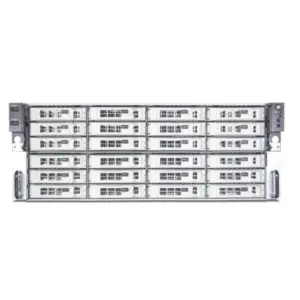
The FSM-2000F combines the physical resources needed for a dedicated FortiSIEM node with the software role required to coordinate monitoring and analytics. Verified specifications identify a 2U rack chassis, an Intel Xeon E5-2620 v3 processor, 32 GB of DDR4 memory, four Gigabit Ethernet interfaces and twelve 3 TB drives providing 36 TB raw capacity. Fortinet documentation lists approximately 23.4 TB of usable event data storage and a benchmark of up to 15,000 events per second when collectors are used under stated test conditions. Real-world throughput and retention depend on enabled features, event complexity, data sources, indexing, database choice and deployment design.
With collectors and all features enabled under documented conditions.
Twelve 3 TB drives with about 23.4 TB listed as usable event data storage.
Role selection depends on whether the design is all-in-one or distributed.
Hardware purchase alone does not provide device, EPS or support entitlement.
The platform can ingest information from a wide range of infrastructure and security sources, normalize it into events and make it available for rules, dashboards, searches and incident handling. It can support IPv4, IPv6 or dual-stack network configuration, and the hardware installation process includes rack mounting, network setup, system verification, role selection and license registration. Organizations should plan these steps before the appliance reaches the data center so that rack space, power, management addresses, DNS, time synchronization, collector registration and database decisions are ready.
A particularly important highlight is the model’s lifecycle position. Buyers may still find units in secondary channels or existing estates, but procurement should include a formal check of serial number status, hardware condition, entitlement eligibility, supported software release and future replacement path. For new projects, the newer FSM-2200G may be the more appropriate comparison. FourTeck can help evaluate whether the requested model fits an existing standardized deployment or whether a current platform offers a safer operational horizon.
Technical Specifications
| Specification | FSM-2000F Details |
|---|---|
| Brand | Fortinet |
| Model / SKU | FSM-2000F |
| Platform Type | FortiSIEM all-in-one hardware appliance |
| Deployment Role | Supervisor or Worker, configuration dependent |
| Processor | Intel Xeon E5-2620 v3, 6 cores / 12 threads, 2.40 GHz |
| Memory | 32 GB DDR4, 4 x 8 GB |
| Network Interfaces | 4 x Gigabit Ethernet RJ45 |
| Console / USB | DB9 console; 2 x USB 2.0 and 2 x USB 3.0 |
| Raw Storage Capacity | 36 TB using 12 x 3 TB drives |
| Usable Event Data Storage | Approximately 23.4 TB as listed in product documentation |
| Performance Benchmark | Up to 15,000 EPS with collectors under documented conditions |
| UEBA Telemetry | Supports up to 500 licensed agent-based UEBA telemetry endpoints in documented product positioning |
| Dimensions | 3.5 x 17.2 x 25.6 inches / 89 x 437 x 648 mm |
| Weight | 58 lb / 26.3 kg |
| Form Factor | 2U rack mount |
| AC Input | 100–240V AC, 50–60 Hz |
| Power Consumption | Approximately 285.7 W average / 310.5 W maximum |
| Heat Dissipation | Approximately 1093.55 BTU/h |
| Operating Temperature | 10°C to 35°C |
| Operating Humidity | 8% to 90%, non-condensing |
| Safety Certifications | FCC Part 15 Class A, RCM, VCCI, CE, UL/cUL, CB |
| Licenses Included | No device or EPS licenses included; licenses must be purchased separately |
| Support and Warranty | Configuration dependent; verify hardware support, product support and seller terms |
| Availability | Previous-generation model; current condition, entitlement and sourcing require confirmation |
Choosing the correct configuration starts with measured data. Buyers should collect average and peak EPS from existing log sources, estimate the number of monitored devices and endpoints, identify high-volume systems and decide how long searchable data must remain online. It is also important to distinguish raw storage from usable event storage, because redundancy, database overhead, indexing and retention policies reduce the capacity available for events.
Network design matters as much as appliance specifications. Remote sites may need collectors to buffer events, reduce cross-site polling and maintain data collection during temporary WAN interruptions. A distributed design can also separate collection from analytics and storage, but it adds deployment and support complexity. FourTeck can help turn the buyer’s device inventory, EPS estimates and retention requirements into a clearer bill of materials before a quote is finalized.
Configuration and Buyer Guidance
A FortiSIEM purchase should begin with the monitoring outcome the organization wants to achieve. Some buyers need a centralized source for audit evidence. Others are building a security operations center, consolidating network and security monitoring, supporting an MSSP model or replacing an older platform. The intended outcome determines the event sources, analytics, retention, staffing and integration requirements.
1. Measure Event Volume
Document average EPS, peak EPS and expected growth. Include firewalls, identity systems, servers, cloud services, applications and security tools.
2. Define Retention
Specify how much data must remain searchable, how much may be archived and which regulatory or investigation requirements apply.
3. Count Licensed Assets
Separate devices, endpoints, advanced agents and EPS requirements. Hardware capacity and license entitlement are different purchasing elements.
4. Plan Collectors
Review branch locations, firewalled zones, data sovereignty needs and WAN resilience to determine collector placement.
5. Confirm Integrations
List ticketing, identity, notification, firewall, cloud and endpoint integrations that must be tested during deployment.
6. Verify Lifecycle
For this model, confirm serial status, software eligibility, replacement parts, support options and compatibility with the target release.
The appliance also requires suitable physical infrastructure. Confirm two rack units of space, cabinet depth, rail compatibility, power feed, UPS capacity, heat load and data-center temperature. Review whether redundant power arrangements are available and whether the proposed rack position allows safe cable management and drive access. Because the unit weighs approximately 26.3 kg, installation should be planned with appropriate handling practices.
Finally, decide who will own tuning after deployment. A SIEM becomes useful when data sources are validated, noisy rules are adjusted, incidents are assigned, dashboards reflect business priorities and retention is monitored. Procurement should therefore include implementation responsibility, administrator training, documentation and an operational handover rather than treating the appliance as a self-running box.
Ideal Business Use Cases
The FSM-2000F is most relevant where an organization needs a dedicated on-premises or controlled-data-center foundation for consolidated security and operations visibility. The following use cases show where the platform can fit, subject to proper sizing and licensing.
Security Operations Center
A SOC can use the platform to centralize events, apply correlation rules, investigate incidents and maintain dashboards for monitored infrastructure. The value is strongest when alert ownership, escalation and tuning processes are already defined.
Multi-Site Enterprise Monitoring
Organizations with branches, warehouses, campuses or regional offices can use collectors to gather local data and forward it to the central FortiSIEM design. This supports a consistent view without requiring every remote system to communicate directly with the Supervisor.
Financial and Regulated Environments
Banks, insurers, payment businesses and other regulated organizations may need centralized records of authentication, configuration and security activity. FortiSIEM can contribute evidence and monitoring, while policy, controls and retention must be aligned with applicable obligations.
Government and Public Services
Public institutions can use a dedicated appliance to monitor mixed infrastructure across departments and service locations. Careful role-based access, change control and local data-handling requirements should be included in the design.
Higher Education and Campus Networks
Universities and colleges operate large, diverse networks with many users, devices and applications. Unified event and performance awareness can help teams investigate account misuse, service issues and infrastructure changes across academic and administrative systems.
Healthcare Infrastructure
Hospitals and health groups can bring together logs from identity, network, server and security systems to support incident response and operational continuity. Sensitive-data controls and clinical system compatibility require careful planning.
Managed Security Services
Service providers may use FortiSIEM features to monitor multiple customer environments. Tenant separation, licensing, collector placement, service-level commitments and analyst workflows must be designed before onboarding customers.
Infrastructure Performance Correlation
IT operations teams can use performance and availability information alongside security events to understand whether a service issue is caused by capacity, configuration, connectivity or malicious activity.
FortiSIEM FSM-2000F Event Correlation and Analytics
The central purpose of the platform is to convert large volumes of diverse telemetry into information that can be searched, correlated and acted upon. Logs from a firewall, an authentication service and a server may each look ordinary when viewed alone. When they occur in a meaningful sequence, they may indicate account compromise, lateral movement or a service-impacting change. Correlation allows the system to evaluate events together rather than treating every message as an isolated alert.
This matters because raw event volume can overwhelm analysts. A SIEM architecture must reduce noise without hiding important activity. Rules, thresholds, baselines and contextual asset information help the team prioritize events that deserve investigation. The platform can also support dashboards and ad-hoc searches so analysts can move from a high-level signal to specific users, hosts, devices or time ranges.
The business benefit depends on tuning. Default rules provide a starting point, but every environment has different administrative tools, maintenance windows, remote-access patterns and critical assets. Teams should identify high-value systems, define expected behavior, create exceptions carefully and review false positives. Without this work, even capable correlation technology can produce excessive alerts or miss organization-specific risks.
When considering this appliance, buyers should ask how many rules will run, which data sources will provide reliable timestamps, whether asset discovery will be used, how incident priorities will be assigned and who will maintain the content. The hardware provides processing and storage resources, but the operational outcome comes from accurate data onboarding and disciplined use.
FortiSIEM FSM-2000F Scalable Collection and Deployment
A distributed collection model is useful when monitored systems are located across branches, cloud networks, restricted zones or separate data centers. Collectors can gather data close to the source and forward it to the central platform. This reduces the number of direct connections into sensitive zones and can provide buffering when WAN links are unstable. It also helps organizations standardize collection while maintaining a central view.
The published 15,000 EPS benchmark for the FSM-2000F assumes the use of collectors. That detail is important: buyers should not interpret the headline number as a guaranteed single-box result for every environment. Event size, parsing complexity, enabled analytics, database configuration, retention and simultaneous searches all affect real performance. Peak bursts may be significantly higher than the daily average, so sizing should include margin for incidents, software changes and future data sources.
The appliance can be deployed in an all-in-one configuration or as part of a cluster-oriented design. An all-in-one approach may be simpler to operate but concentrates roles and capacity. A distributed approach can provide greater scale and separation, although it requires more components, external storage decisions and stronger operational skills. The correct choice depends on business criticality, recovery objectives and the expected growth of monitored infrastructure.
For Africa deployments, connectivity between sites should be assessed realistically. Branches may have variable bandwidth, high latency or intermittent links. Collector placement, local buffering, firewall rules, DNS and time synchronization should be tested before full onboarding. FourTeck can help buyers prepare a site list and data-flow plan so the quote includes the architecture components required for reliable collection rather than only the central appliance.
FortiSIEM FSM-2000F Storage, Retention and Evidence
Storage capacity is one of the most misunderstood parts of SIEM sizing. The appliance is documented with 36 TB of raw storage, but usable event data storage is approximately 23.4 TB. The difference reflects the realities of disk layout and platform use. Even the usable figure should not be treated as the final retention result, because actual days of searchable data depend on event rate, event size, compression, indexing, database behavior and administrative policies.
A buyer should define retention in tiers. Recent data may need to remain online for fast investigation, older information may be archived, and some event classes may require longer preservation than others. High-volume but low-value telemetry can consume capacity rapidly. Before onboarding every possible source, teams should decide which events support detection, compliance or troubleshooting and which can be filtered responsibly.
Retention also has an operational dimension. Investigators need timestamps that are accurate across systems, consistent time zones, protected access and documented export procedures. A large archive is less useful if event sources are not synchronized or if administrators cannot retrieve evidence efficiently. Backup and disaster-recovery planning should address configuration, custom content, incident records and external storage where applicable.
Organizations replacing an older platform should compare historical retention needs with the capabilities of current FortiSIEM models or virtual and cloud options. The FSM-2000F may fit an existing standardized environment, but a new project should evaluate lifecycle, energy use, storage design and support horizon together. FourTeck can help review daily data estimates and identify whether a newer appliance or alternative deployment model provides a better long-term fit.
What Buyers Should Check Before Purchase
Before requesting a quote, buyers should confirm whether they need this exact model for an existing standardized environment or whether they are planning a new FortiSIEM deployment. The FSM-2000F is a previous-generation appliance, and current procurement should include a lifecycle and entitlement review. A lower hardware price can be misleading if the serial number cannot receive the required software, product support or replacement service.
Configuration Fit
Confirm average and peak EPS, device count, endpoint count, retention, collector quantity and whether the unit will operate as Supervisor, Worker or all-in-one node.
Compatibility Check
Verify the target FortiSIEM release, supported database design, integrations, network addressing, rack depth, power, cooling and interoperability with existing collectors.
Availability and Warranty
Ask whether the unit is new, refurbished or used; request serial and condition details; and confirm seller warranty, hardware support and product support separately.
Quote Preparation
Provide the deployment country, site count, required delivery date, project quantity, preferred license model, support term and implementation expectations.
Buyers should also ask for a complete bill of materials. The base appliance does not include device or EPS licenses. Depending on the design, the project may require a hardware base license, additional device or endpoint capacity, EPS licensing, advanced agents, FortiCare hardware coverage, FortiSIEM product support, collectors, rack accessories, power cables and implementation services. Missing any of these can delay activation even when the appliance has arrived.
For replacement purchases, confirm why the existing unit is being replaced. A failed drive, expiring support, performance limit or software upgrade requirement may lead to different solutions. It may be more practical to replace a component, migrate to a newer hardware model or redesign the deployment. FourTeck can help review the requested part number against the business requirement so procurement is based on operational fit rather than model familiarity alone.
The most useful quote request includes an event-source list, estimated EPS, retention target, number of locations, current FortiSIEM version, license details and rack environment. This information allows a supplier to identify gaps early and propose a more complete solution.
Africa Availability and Service Support
FourTeck supports FortiSIEM inquiries across Africa with practical assistance for model selection, architecture review, quotation, delivery coordination and replacement planning. Availability for the FSM-2000F can vary because it is a previous-generation model. Any offer should identify the unit’s condition, serial status, included accessories, license scope, support entitlement and seller warranty before the buyer approves the order.
For organizations that already use this appliance, FourTeck can help clarify whether the requirement is for a direct replacement, spare unit, expansion worker or migration project. Existing license ownership and software version are important. A replacement chassis may need entitlement transfer or validation, while a new deployment may be better served by a current appliance such as the FSM-2200G. The recommendation should consider project lifespan, budget, service criticality and the buyer’s internal FortiSIEM skills.
Delivery planning can include destination, import requirements, packaging, insurance, rack-site readiness and coordination with the implementation team. Cross-border lead times vary by country, supplier status and order quantity, so delivery dates should be confirmed on the formal quotation rather than assumed from an online listing.
FourTeck can also help the buyer assemble the information required for a complete FortiSIEM request: monitored devices, EPS estimates, retention, site topology, collector count, license preference and support term. This reduces the risk of receiving a quote for hardware that cannot be activated or scaled as intended.
Africa Country and Regional Coverage
Businesses across Africa, including Kenya, Uganda, Nigeria, Ghana, Tanzania, Rwanda, Ethiopia, South Africa, Zambia, Botswana, Senegal and nearby regional markets, can contact FourTeck for product availability, configuration guidance and quote assistance. The team can help buyers review whether an FSM-2000F sourced for an existing deployment is operationally suitable or whether a newer FortiSIEM appliance offers a stronger long-term path.
Regional requirements differ. Some projects prioritize local log retention, others require centralized monitoring across borders, and many must account for WAN reliability, import timelines, power quality and limited on-site specialist availability. A good design should therefore include collector placement, remote administration, UPS protection, spare strategy, documentation and knowledge transfer. FourTeck can coordinate these procurement questions while the buyer’s technical team or implementation partner validates the final architecture.
For multi-country deployments, provide a site list, expected event volume per location and the preferred central data-center location. This helps determine whether one Supervisor, multiple collectors, workers or a different current platform is appropriate. Regional supply is subject to supplier confirmation, quantity and destination, and no stock or delivery promise should be assumed until it appears on the approved quotation.
GCC, Middle East and Africa Availability
FourTeck Africa can support product inquiries for businesses across Africa while also guiding regional technology requirements through selected FourTeck platforms serving GCC and Middle East markets. Organizations operating in the UAE, Saudi Arabia, Qatar, Oman, Bahrain and African countries may need a coordinated approach to specifications, licensing and delivery, especially when the FortiSIEM environment spans several legal entities or data centers.
Availability, delivery options, warranty handling and configuration support vary by country, product condition, supplier status and quantity. For a previous-generation appliance, the quote should state whether the unit is new, refurbished or used and whether any Fortinet entitlement is included. Buyers should not assume that hardware support in one country automatically transfers to another location.
Regional teams can begin with FourTeck Africa, while requirements connected to the Gulf can be reviewed through FourTeck UAE. Country-focused inquiries can also use FourTeck Kenya and FourTeck Uganda. These links help route the request, but final supply, support and logistics are confirmed through the quotation process.
A regional project brief should include destination countries, delivery sequence, license ownership, data-residency expectations, implementation responsibility and support term. This gives the supplier enough context to avoid fragmented quotes and helps the buyer plan a consistent FortiSIEM operating model.
Other Options Buyers May Consider
The correct alternative depends on whether the requirement is a direct replacement, a new deployment, additional collection capacity or a broader Fortinet security operations project. Buyers should compare role, capacity, lifecycle, license compatibility and support rather than selecting an alternative only by headline performance.
FortiSIEM FSM-2200G
Current-generation all-in-one hardware option for organizations evaluating a supported replacement path and higher documented EPS capacity.
FortiSIEM FSM-500G Collector
Suitable where the main requirement is distributed event collection rather than a Supervisor-class appliance.
FortiAnalyzer
A Fortinet log management and analytics platform that may fit organizations focused on Fortinet Security Fabric logging and reporting use cases.
FortiManager
Centralized Fortinet device management for organizations whose main need is policy administration and configuration control rather than full SIEM capability.
FortiSOAR
Security orchestration and response technology for teams seeking automated playbooks and case workflows alongside a SIEM platform.
Fortinet Security Products
Browse related Fortinet firewalls, management, analytics and security operations products for a coordinated architecture.
A direct product comparison should be based on the required role. A collector is not a Supervisor replacement, FortiAnalyzer is not identical to FortiSIEM, and FortiManager addresses a different management problem. FourTeck can help map the business requirement to the appropriate product family and identify when multiple components are needed.
Why Buyers Choose FourTeck
Enterprise security purchases often fail at the boundaries between hardware, licenses, support and implementation. FourTeck approaches the request as a complete business requirement. The team can help identify whether the buyer needs a replacement appliance, a current-model migration, collectors, additional licensing or a broader security operations design.
Assistance for single-unit, project and multi-site procurement requirements.
Review of model role, event volume, retention, collectors and infrastructure needs.
Clear request preparation covering hardware, licenses, support and delivery.
Planning based on destination, quantity, supplier status and project timing.
Help distinguishing seller warranty, FortiCare hardware coverage and product support.
Evaluation of current models when a legacy appliance is not the safest choice.
FourTeck does not treat the model name as the complete specification. The team can ask for the buyer’s EPS, device count, retention period, current version and site topology, then use that information to make the quote more relevant. This helps reduce the risk of missing licenses, choosing the wrong node role or underestimating storage.
For a previous-generation appliance, sourcing transparency is especially important. Buyers should receive condition details, serial information where appropriate, included components and support terms before approval. FourTeck can coordinate these checks and present suitable alternatives when the requested unit does not provide a practical support horizon.
Frequently Asked Questions
What is the FortiSIEM FSM-2000F used for?
It is an all-in-one FortiSIEM hardware appliance used to centralize event collection, correlation, incident monitoring, infrastructure visibility and reporting. Depending on the architecture, it can operate as a Supervisor or Worker. Organizations use it to bring together information from networks, servers, applications, identity systems, endpoints and security tools for more coordinated investigation and operations management.
How many events per second can the appliance support?
Fortinet documentation lists a performance benchmark of up to 15,000 EPS when collectors are used and all features are enabled under stated conditions. Actual performance depends on event size, parsing, active rules, searches, database design, retention and collector architecture. Buyers should size the system using average and peak EPS from their own environment rather than relying only on the headline benchmark.
Are device and EPS licenses included?
No. The appliance hardware does not include device or EPS licenses. These must be purchased separately according to the number of monitored assets, endpoints, agents and required event capacity. Hardware support and FortiSIEM product support may also be separate. A complete quote should clearly identify every required license and support component.
Is the FSM-2000F still suitable for a new project?
It may fit an existing standardized deployment or a specific replacement need, but it is a previous-generation model. New projects should compare it with current FortiSIEM appliances and verify lifecycle, software eligibility, support and replacement parts. FourTeck can help determine whether the requested model is practical or whether a newer option provides a better operational horizon.
What storage capacity does the appliance provide?
The documented raw storage is 36 TB using twelve 3 TB drives, with approximately 23.4 TB listed as usable event data storage. Actual retention depends on EPS, event size, compression, indexing, database behavior and policy. Buyers should calculate online and archive retention targets before deciding whether the local storage design is sufficient.
Can FourTeck help with architecture and configuration?
Yes. FourTeck can help collect the information needed for sizing, including device count, average and peak EPS, retention, site topology, collector needs, license model and support term. Final technical validation and implementation may involve the buyer’s FortiSIEM specialist or deployment partner, but the procurement process can be structured around a more complete requirement.
Is the appliance available for delivery across Africa?
FourTeck can support inquiries across Africa, but availability varies by product condition, supplier status, quantity and destination. Because the FSM-2000F is an older model, current sourcing must be confirmed. Any quotation should state condition, included accessories, warranty, license scope and delivery terms rather than implying automatic stock.
What information should I provide for a quote?
Provide the delivery country, quantity, required date, current FortiSIEM version, existing hardware role, device count, endpoint count, average and peak EPS, retention target, number of sites, collector requirements, preferred support term and whether installation is needed. This allows the quotation to include more than the base appliance.
What warranty should buyers expect?
Warranty depends on the unit’s condition, seller terms and selected support contracts. A seller warranty is not the same as FortiCare hardware coverage or FortiSIEM product support. Buyers should request written confirmation of the warranty period, return process, serial eligibility, replacement service and geographic coverage before approving the order.
Can businesses request bulk or project supply?
Yes. Project buyers can request multiple appliances, collectors, related Fortinet products, licenses and delivery coordination. For multi-site supply, include the destination list, deployment sequence, site-specific event volume and support expectations. FourTeck can help consolidate the request and identify where current-generation alternatives may be required.
Need Help Choosing the Right FortiSIEM Platform?
FourTeck can help you review the FSM-2000F request, current availability, hardware condition, licensing, support, replacement options and delivery requirements for your business location. Share your device count, EPS, retention and site details for a more complete quotation.
Reviews
There are no reviews yet.