

FortiVoice FVE-200F Phone System in Africa
Bring office extensions, incoming lines, call routing, voicemail, conferencing and branch communication under one centrally managed business phone platform. The FortiVoice FVE-200F is aimed at organisations that need capacity for up to 200 endpoints and want practical control over everyday voice communication without building a complicated collection of separate PBX components. FourTeck helps buyers confirm the current FVE-200F8 order code, supported trunks, phone requirements, deployment accessories, support term and delivery plan before the commercial offer is prepared.
✓ 24 VoIP Trunks
✓ Configuration Guidance
✓ Africa Quote Support
Quick Product Information
Fortinet FortiVoice
FVE-200F; current order code FVE-200F8
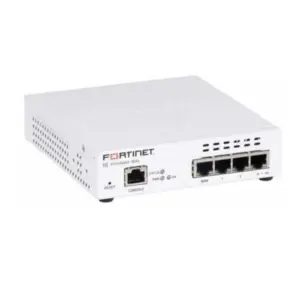
1U enterprise IP PBX and unified communications appliance
Up to 200 endpoints and 24 VoIP trunks
Eight FXO ports for supported analogue lines
Growing offices, campuses, hospitality, services and regional operations
Contact FourTeck for current supply options
Model review, quote help, delivery coordination and warranty guidance
Product Overview
Business calling remains a core operating system for many organisations even when messaging and video meetings are widely used. Sales teams need reliable numbers for customers. Reception staff need to transfer calls quickly. Service desks require queues and clear routing. Managers need visibility into call activity. Remote workers may need secure extensions. Branch offices need a practical way to communicate without maintaining unrelated telephone systems at every site. A structured IP PBX brings these functions together and gives the IT team one place to manage how calls enter, move through and leave the organisation.
The FortiVoice FVE-200F Phone System is a physical unified communications appliance designed for this type of mid-sized environment. Its current Fortinet order code is FVE-200F8. The “8” identifies the eight built-in FXO interfaces used for supported traditional telephone lines, while the platform also supports SIP-based voice services. Fortinet lists capacity for 200 endpoints and 24 VoIP trunks, making the appliance relevant to organisations that have outgrown a small-office PBX but do not yet require a multi-thousand-user communications platform.
The system provides a broad set of call-handling capabilities rather than only extension-to-extension dialing. Auto attendants can guide callers to departments. Ring groups can distribute calls across selected employees. Queues can organise waiting callers for service teams. Individual and group voicemail can keep messages tied to the correct user or function. Conference bridges support planned internal and external discussions. Rule-based dial plans help administrators control how numbers and routes are used. Call detail records, reports and live status information give IT teams better visibility than a collection of unmanaged analogue systems.
Security and administration also matter. FortiVoice supports password policy controls, role-based management, secure voice options such as SIP over TLS and SRTP, scheduled backups, remote logging and web-based administration. These controls do not eliminate the need for good network design, strong credentials, reliable certificates and appropriate firewall rules, but they give the organisation a stronger starting point for protecting business conversations and managing change.
For buyers in Africa, the appliance decision normally involves several connected questions. Which local or SIP carrier will provide the lines? How many phones are required on day one? Will branches use office peering? Is call recording needed, and how much retention is expected? Are FortiFone handsets, softclients, analogue gateways or additional licences required? Does the server room have rack space, UPS protection and suitable cabling? Who will design the dial plan and complete user provisioning? FourTeck helps turn these questions into a practical supply and deployment requirement so the quotation covers the real project rather than only the base hardware.
Key Business Benefits
A phone-system purchase should be evaluated by the business outcome it supports. Capacity figures are important, but the stronger value comes from giving employees a consistent calling experience, helping customers reach the right team and reducing the daily effort required to manage extensions and routing.
◆ Central Call Control
Administrators can organise extensions, routes, schedules, attendants, queues and user privileges from one platform. Central control reduces the confusion created when departments use unrelated telephone devices and calling rules.
◆ Better Customer Routing
Auto attendants, ring groups and queues help direct callers to the right people. This supports a more professional front desk, reduces unnecessary transfers and gives busy service teams a clearer way to handle demand.
◆ Growth Without Immediate Replacement
Capacity for up to 200 endpoints gives many organisations room to expand beyond the first deployment. Planning headroom can reduce the need to replace the full PBX when new staff, departments or branches are added.
◆ Flexible Line Strategy
Eight FXO ports support selected analogue-line requirements, while VoIP trunk capacity supports SIP-based services. This flexibility can help businesses migrate in stages rather than changing every line and handset in one step.
◆ Multi-Location Communication
Office peering, shared phone books and remote extensions can help distributed teams communicate through a coordinated system. The benefit is strongest when numbering, security and WAN quality are planned consistently.
◆ Clearer Operational Visibility
Call logs, status monitoring, reports and alerts give administrators evidence for troubleshooting and capacity review. Better visibility helps teams identify failed routes, missed calls, unusual patterns and configuration issues.
◆ Stronger Administration Practices
Role-based access, password policies, scheduled backups and secure management options support better governance. These controls help reduce accidental changes and make system ownership easier to document.
The final business value depends on implementation quality. A poorly designed dial plan, weak network, unsuitable carrier, missing UPS or untested failover process can reduce the benefit of capable hardware. FourTeck therefore encourages buyers to treat the appliance, phones, network, trunk service, configuration and support plan as one communications project.
Product Highlights
Suitable for a structured mid-sized deployment with room for departments, shared areas and selected remote users.
Provides SIP trunk capacity for organisations moving toward carrier-delivered IP voice services.
Supports selected analogue-line connectivity for migration, fallback or local carrier requirements.
Fits standard communications or server racks where controlled power, cabling and ventilation are available.
Fortinet lists a wide range of built-in PBX functions, including SIP and analogue extensions, remote extensions, auto attendants, voicemail, voicemail-to-email, ring groups, conference bridges, call forwarding, transfer, hold, pickup, paging, intercom, follow-me rules, direct inward dialing, schedules, caller ID handling, music on hold and call detail records. Advanced management functions include auto-provisioning, directory integration, phone-book synchronisation, web administration, traffic capture, system alerts and multi-location support.
Not every possible capability is identical across every FortiVoice release, model, licence or regional carrier arrangement. Call-centre and hotel or property-management functions may require additional licensing. Softclient quantities should be confirmed. Recording capacity depends on call volume, retention and storage design. Local survivability requires a correctly planned gateway and branch architecture. Buyers should therefore verify the functions that are mandatory for the project rather than assuming every platform-level feature is included in the base appliance quotation.
Technical Specifications
| Specification | FVE-200F / FVE-200F8 Detail | Buyer Note |
|---|---|---|
| Brand | Fortinet FortiVoice | Confirm current supply route and support entitlement. |
| Current Order Code | FVE-200F8 | Hardware-plus-support bundle uses a related BDL order code. |
| Product Type | Enterprise IP PBX and unified communications appliance | Requires network, trunk and endpoint planning. |
| Extensions / Endpoints | Up to 200 | Leave capacity for growth, common areas and test devices. |
| VoIP Trunks | 24 | Carrier channels and PBX trunks are related but not identical sizing measures. |
| Concurrent Calls | Up to 45 in current published capacity | Size using busy-hour calling patterns, not extension count alone. |
| Traditional Lines | 8 x FXO | Confirm line type, regional compliance and carrier presentation. |
| Analogue Extensions | No built-in FXS ports | Analogue devices may need a suitable FortiVoice gateway. |
| Network Interfaces | 2 x 10/100/1000 RJ45 | Plan VLANs, addressing, QoS and secure management access. |
| Local Storage | 1 x 250 GB | Recording retention and backups require separate calculation. |
| RAID | Not listed for this model | Do not treat local storage as a complete backup strategy. |
| Auto Attendants | Up to 20 | Map main numbers, languages and schedules before configuration. |
| Conference Bridges | 10; up to 8 attendees per bridge | Confirm whether external collaboration tools are also required. |
| Call Centre Agents | Up to 20 with applicable licensing | Agent functions, reporting and licence scope must be quoted. |
| Form Factor | 1U rack mount | Allow rack space, airflow, earthing and UPS protection. |
| Dimensions | 44 x 432 x 270 mm | Confirm rack depth and cable clearance. |
| Weight | Approximately 4.54 kg | Use correct mounting hardware. |
| Power Supply | Single | Add suitable UPS and recovery planning. |
| Support and Warranty | Configuration dependent | Confirm FortiCare term, replacement service and regional handling. |
How Buyers Should Read These Figures
Two hundred extensions does not mean two hundred people can make external calls at the same moment. Extension capacity describes registered endpoints, while concurrent-call and trunk capacity determine how many active conversations the platform and carrier arrangement can support. A professional-services office may have many employees but relatively few simultaneous calls. A booking desk, clinic, support centre or sales operation may generate a much higher busy-hour ratio. Buyers should provide expected peak activity, not only total headcount.
The eight FXO ports are valuable where traditional lines remain part of the design, but they do not provide FXS connections for analogue phones, fax machines or paging interfaces. Those devices may require a compatible gateway. Likewise, the 250 GB drive is useful for system functions and selected recordings, but retention must be calculated from codec, call duration, recording policy and backup requirements. The final configuration should be validated against the current software release, ordering guide and regional telecom rules.
Configuration and Buyer Guidance
The correct phone system is chosen by workload, integration and operating expectations rather than the model name alone. Before requesting a quotation, build a simple requirement document that both the technical team and procurement team can understand.
How Many Endpoints?
Count desk phones, reception consoles, meeting rooms, common areas, warehouses, gatehouses, remote workers, test devices and planned growth. Leave headroom rather than designing at the published limit.
What Is the Busy Hour?
Estimate the maximum simultaneous internal and external calls. Include queues, conferences, remote users, branch traffic and seasonal peaks. This determines whether trunk and concurrent-call capacity are adequate.
Which Carrier Services?
Document analogue lines, SIP trunks, DIDs, number-porting plans, emergency calling requirements and failover routes. Carrier interoperability and local regulation should be confirmed before cutover.
Which Endpoints?
List executive, reception, standard-user, cordless, conference and softclient needs. Phone features, power requirements, switch capacity and user experience should match each role.
Recording and Compliance?
Decide who is recorded, how consent is handled, how long files are retained, who can access them and where backups are kept. Local law and company policy may affect the design.
Resilience Expectations?
Plan power protection, internet failover, gateway survivability, configuration backups, spare phones and recovery ownership. A single power supply makes external resilience measures especially important.
Network readiness is equally important. Voice traffic should be considered in the LAN design, with appropriate VLANs, QoS, PoE capacity, DHCP options, DNS, NTP, firewall policies and secure remote access. A phone system can be sized correctly yet still deliver poor quality when switches are overloaded, cabling is damaged, internet jitter is high or voice traffic competes with backups and large downloads. Buyers should include the network team in the project before hardware arrives.
FourTeck can help review the requirement and organise the quote around the base appliance, FortiCare support, FortiFone handsets, FortiVoice gateways, licences, rack accessories, UPS needs and deployment scope. Clear information at the beginning reduces the risk of missing items and makes approval easier for finance, IT and management.
Ideal Business Use Cases
Corporate and Regional Offices
A headquarters or regional office can use the platform to manage reception, department numbers, internal extensions, voicemail, schedules and outgoing routes. Shared administration makes staff changes and department moves easier to control.
Professional Services
Legal, accounting, engineering and consulting firms often depend on direct numbers, receptionist transfers and reliable voicemail. Structured call reporting can also help investigate missed client calls and service responsiveness.
Hotels and Hospitality
Hospitality sites can consider the appliance where front-desk communication, guest-service departments and room-related workflows are important. Property-management functions require applicable licensing and integration review before purchase.
Schools and Campuses
Administration, reception, finance, security, departments and selected classrooms can share one extension plan. Paging, schedules and emergency-zone planning should be designed around the campus network and safety procedures.
Clinics and Healthcare Services
Appointment teams, reception, laboratories, pharmacies and administrative offices can use queues and ring groups to distribute incoming calls. Call privacy, recording rules and continuity deserve careful attention.
Retail and Distribution Operations
A central office can connect purchasing, logistics, warehouse, service desks and branch contacts through a consistent numbering plan. Multi-location communication can reduce dependence on personal mobile numbers for routine internal calls.
Contact-Focused Departments
Small customer-service or booking teams may use call queues, agent functions and reporting. The published twenty-agent scale and required call-centre licensing should be checked against growth and reporting expectations.
Multi-Site Organisations
Businesses with branches can plan office peers, shared directories and remote extensions. WAN stability, security policy, number ownership and local survivability determine whether the design remains practical during an outage.
The appliance is not automatically suitable for every two-hundred-person organisation. A company with very high call concurrency may need a larger model. A cloud-first team may prefer a hosted service. A business with many analogue extensions may need multiple gateways. An organisation requiring redundant power or larger local storage may prefer a higher-capacity FortiVoice platform. FourTeck can help identify these gaps before the quotation is finalised.
FortiVoice FVE-200F Call Routing and User Experience
The first measure of a business phone system is whether callers reach the right person with the least friction. Call routing turns a collection of numbers and phones into a working customer journey. The system can use auto attendants to present clear choices, schedules to change behaviour after hours, direct inward dialing to reach selected users, ring groups to call several employees and queues to organise demand when staff are busy.
Good routing begins before configuration. The business should map its main published numbers, departments, opening hours, public holidays, emergency contacts, overflow destinations and escalation paths. Reception may answer all calls during normal hours, while after-hours calls go to voicemail or an on-call team. A service queue may overflow to another department after a defined period. Finance may require direct numbers but no public menu option. These rules should be written in business language before being translated into PBX settings.
User experience also depends on endpoint choice. Receptionists may need a larger display, programmable keys and operator-console functions. Managers may need line appearances and easy conferencing. Warehouse teams may prefer cordless devices. Remote staff may need a softclient or secure external extension. Meeting rooms require speakerphone quality appropriate to room size. Standardising every user on one handset can appear simple, but role-based endpoint selection usually produces a better result.
Numbering is another long-term decision. A clean extension plan leaves room for departments, branches and future growth. For example, each location can receive a defined range, while shared services use memorable numbers. Emergency extensions and paging groups should not conflict with ordinary user numbers. The plan should be documented so future administrators understand why numbers were allocated.
FourTeck can help buyers prepare the hardware and licensing part of this design by confirming the appliance, endpoint quantities, phone types, gateway needs and support term. The actual dial-plan build may be included in a deployment scope or handled by the customer’s communications specialist. In either case, a written call-flow document should be part of project acceptance.
FortiVoice FVE-200F Secure Management and Visibility
Voice systems deserve the same disciplined administration as servers, switches and firewalls. They contain user accounts, phone books, call records, routes and configuration data. They may be reachable by remote extensions or SIP carriers. Weak passwords, exposed management interfaces, incorrect firewall rules and abandoned accounts can create avoidable risk.
FortiVoice provides role-based management, password-policy functions, event alerts, scheduled backups, command-line access, web administration, logging and monitoring capabilities. Secure signaling and media options can include SIP over TLS and SRTP when the endpoints, carriers, certificates and configuration support them. These controls help, but the organisation still needs operating procedures. Administrators should use named accounts where possible, restrict management access, change default credentials, protect backup files, review logs and document all external integrations.
Visibility supports both troubleshooting and service improvement. Real-time call status can help identify whether trunks are busy or endpoints are unavailable. Call detail records show when calls were placed, answered or missed. Reports can reveal busy periods, queue performance and patterns that justify additional staff or carrier channels. Network traffic capture can support diagnosis when signaling or audio behaves unexpectedly. Alerts can notify administrators of important system events.
Data handling should be governed carefully. Call records may contain personal or commercially sensitive information. Recordings can be even more sensitive. Access should be limited to authorised roles, retention should be defined, and exports should be protected. The business should understand applicable privacy, employment and telecom requirements before enabling broad recording.
A practical management plan names the system owner, backup administrator, support contact and change approver. It identifies how often backups are tested, how firmware changes are scheduled, how certificates are renewed and how users are removed when they leave. FourTeck can help buyers understand the support entitlement and commercial renewal path, while the customer or implementation partner maintains the day-to-day governance process.
FortiVoice FVE-200F Multi-Site Resilience and Continuity
Communication continuity is not provided by the PBX alone. The appliance depends on power, network switches, internet links, carriers, DNS, internal routing and endpoint availability. A resilient project identifies each dependency and decides what should happen when it fails.
The FVE-200F8 uses a single power supply, so a correctly sized UPS is a basic requirement. The UPS should support the PBX, relevant switches, gateways, router or firewall and essential phones for the required period. A generator may provide longer continuity, but the transition process should be tested. Power protection should also consider earthing and surge risk, especially at sites with unstable utility service.
Carrier diversity is another layer. Organisations may combine SIP trunks with selected analogue lines, or use separate internet providers for primary and backup voice paths. The correct approach depends on number portability, emergency calling, local regulation and the carrier’s failover capability. A backup link that uses the same physical route as the primary may not provide real diversity. These details should be discussed with the service provider before the PBX cutover.
For branches, Fortinet supports multi-location functions and local-survivability designs with appropriate FortiVoice gateways. The objective is to preserve selected local calling when connectivity to the central system is interrupted. This requires compatible hardware, correct provisioning and a clear definition of which services remain available. It should not be assumed simply because the central appliance supports office peering.
Configuration backups and recovery documentation complete the continuity plan. The business should know where backups are stored, who can restore them, how a replacement appliance would be obtained and which carrier credentials or certificates are required. A recovery exercise is more valuable than an untested file. FourTeck can support quotation and warranty guidance for the appliance, while the customer’s technical team or implementation partner defines the broader business-continuity procedure.
What Buyers Should Check Before Purchase
Before requesting a quote, buyers should confirm the required capacity, usage environment, compatibility needs, support expectations and delivery location. Phone-system projects often encounter delays because the initial request includes only the appliance name while omitting endpoints, licences, gateways, carrier details, cabling, power protection and configuration work. FourTeck can help review these points so the selected package matches the operating requirement instead of relying only on model and price.
Configuration Fit
Provide total endpoints, busy-hour calls, queues, attendants, conferences, remote users, recording scope and expected growth. This confirms whether capacity has enough margin.
Carrier Compatibility
List SIP providers, analogue lines, DIDs, number porting, emergency calling and failover expectations. Regional carrier support should be checked before deployment.
Phones and Accessories
Confirm desk phones, reception devices, cordless units, conference phones, headsets, softclients, gateways, rack items, cables and UPS equipment.
Network Readiness
Review PoE switch capacity, voice VLANs, QoS, WAN quality, firewall rules, DHCP, DNS, NTP, remote access and rack conditions.
Licence and Renewal
Identify FortiCare term, softclient quantities, call-centre functions, property-management needs and any services that renew separately from the hardware.
Installation Scope
Clarify rack installation, dial-plan design, phone provisioning, carrier coordination, migration, testing, training, documentation and post-cutover support.
Warranty Expectations
Confirm the selected FortiCare service, replacement process, support route and documentation required for future technical cases.
Quote Preparation
Send delivery country, quantity, target date, preferred support period, tax or shipping expectations and whether alternatives are acceptable.
The best commercial response is produced when the buyer shares one consolidated requirement. A spreadsheet listing locations, extension quantities, phone types, line services and target dates is useful for multi-site projects. FourTeck can then identify whether the requested model is suitable, whether a FortiVoice 500F or virtual option should be reviewed, and which related components belong in the quotation.
Africa Availability and Service Support
FourTeck supports FortiVoice enquiries across Africa with assistance for model confirmation, capacity review, phone and gateway selection, support-term planning, quotation requests, delivery coordination and warranty guidance. Availability can change according to the exact order code, supplier status, FortiCare term, accessory requirements, project quantity and destination. Buyers should therefore request a current commercial offer before committing to a deployment date.
A complete enquiry should include the number of endpoints, estimated concurrent calls, existing line types, preferred SIP carrier, required phone models, recording policy, remote users, branch count and installation scope. Where the FVE-200F8 is not suitable, FourTeck can discuss a larger FortiVoice appliance, a virtual deployment, a cloud-oriented alternative or a design that uses additional gateways and endpoints.
Delivery coordination can include quotation documentation, destination review and estimated lead-time guidance after the bill of materials is confirmed. Warranty handling depends on the purchased support service and supply route. FourTeck can help the buyer understand the selected term and retain the correct order information for future support or renewal.
Africa Country and Regional Coverage
Businesses across Africa, including Kenya, Uganda, Nigeria, Ghana, Tanzania, Rwanda, Ethiopia, South Africa, Zambia, Botswana, Senegal and nearby regional markets, can contact FourTeck for product availability, configuration guidance and quotation assistance. The team can help review extension quantities, phone options, analogue or SIP connectivity, branch requirements, support terms, delivery destinations and project schedules.
Regional conditions can influence the final design. Power stability, carrier services, internet quality, rack infrastructure, local technical resources and delivery routes differ by location. A site with limited on-site support may need stronger remote-management and recovery procedures. A headquarters may need formal change control, call-reporting governance and documented backups. A multi-country rollout may need one standard phone profile with local carrier adjustments.
FourTeck uses one coordinated Africa enquiry path rather than creating separate repetitive product claims for every country. Share the delivery location, quantity, target date and technical requirement, and the team can guide the request through the appropriate commercial process.
GCC, Middle East and Africa Availability
FourTeck Africa can support product enquiries for organisations operating across Africa while coordinating wider communications requirements through selected regional platforms for GCC and Middle East markets. This is useful for companies that want a consistent FortiVoice standard across offices but use different carriers, numbering rules and delivery channels.
Projects connected with the UAE, Saudi Arabia, Qatar, Oman or Bahrain may require common hardware, phone profiles, support terms and dial-plan standards while still accommodating local telecom regulation. Availability, warranty handling, delivery options and commercial conditions can vary by country, selected configuration, supplier status and quantity. Buyers should identify all intended delivery points and the preferred contract structure at the beginning.
Other Options Buyers May Consider
A related product may be more suitable when the required scale, deployment model, resilience or endpoint mix differs from the FVE-200F8 profile. The options below help buyers organise the comparison without assuming one model is correct for every environment.
FortiVoice 100F
A smaller physical appliance for organisations needing up to 100 endpoints and a lower trunk scale. Useful where the deployment is unlikely to approach two hundred users.
FortiVoice 500F
A larger 1U appliance for organisations that need more extensions, more trunks, higher call concurrency and greater growth capacity than the 200F class.
FortiVoice VM-200
A virtual deployment for supported infrastructure where the organisation prefers software-defined hosting rather than a dedicated rack appliance.
Yealink W76P DECT System
A cordless IP phone option for mobile staff, warehouses or service environments. Compatibility and provisioning should be checked for the intended PBX design.
FortiVoice Gateway
Useful where analogue extensions, branch survivability or additional telecom interfaces are required. The correct gateway depends on line type and port count.
Fortinet Network Integration
Voice projects may also need firewalls, switches, cellular failover and secure branch connectivity. Review related Fortinet infrastructure as part of the deployment plan.
Why Buyers Choose FourTeck
Business communications procurement connects technical design, user experience, carrier services and commercial planning. FourTeck helps buyers organise those decisions into a clearer path instead of treating the request as a simple shipment of one appliance.
Assistance for organisations, resellers, integrators and project buyers that need a complete bill of materials and commercial documentation.
Review of extension count, call concurrency, carriers, phones, gateways, licences and future growth before final model selection.
A structured quotation process covering hardware, support term, accessories, quantity, destination and optional deployment work.
Support for discussing delivery locations, project quantities and estimated commercial timing after configuration confirmation.
Help understanding the chosen FortiCare term, support route, renewal planning and records required for future service requests.
Discussion of larger appliances, virtual options, phones, gateways, switches, UPS systems and connectivity products when the project needs more.
FourTeck avoids unsupported stock promises, unverified delivery claims and one-size-fits-all recommendations. The objective is to help the buyer provide the right information, understand the limitations of the selected model and receive a quotation that can be evaluated by technical, operational and procurement teams.
Frequently Asked Questions
What is the FortiVoice FVE-200F used for?
It is used as a central business phone system for extensions, incoming and outgoing calls, auto attendants, voicemail, ring groups, queues, conferencing, call reports and multi-location communication. It is intended for organisations that need a physical unified communications appliance with capacity for up to 200 endpoints.
Why is the current order code called FVE-200F8?
Fortinet identifies the current appliance order code as FVE-200F8. The final digit reflects the eight built-in FXO interfaces for supported traditional telephone lines. Buyers using the shorter FVE-200F name should confirm the exact hardware and bundle code on the quotation.
How many users and calls can it support?
The current published specification lists up to 200 endpoints, 24 VoIP trunks and up to 45 concurrent calls. Real suitability depends on busy-hour activity, queue use, conferences, recording, carrier channels, software release and network conditions. FourTeck can help review the sizing inputs.
Does it connect to analogue telephone lines?
Yes. The FVE-200F8 includes eight FXO ports for supported traditional lines. It does not list built-in FXS ports for analogue extensions, so analogue phones, fax devices or paging equipment may require a suitable FortiVoice gateway and careful compatibility review.
Can it work with SIP trunks and IP phones?
Yes. Fortinet lists support for SIP trunks and IP-based endpoints. The exact carrier, phone model, firmware, codec, security settings and provisioning method should be confirmed. A test plan is recommended before porting important business numbers or replacing an existing PBX.
Can FourTeck help with configuration planning?
Yes. FourTeck can review extension count, concurrent calls, trunks, phone types, gateways, licences, support term, delivery location and installation scope. The team can also help identify when a larger FortiVoice model or virtual deployment may offer a better fit.
Is call recording included?
FortiVoice supports call-recording functions, but the practical design depends on software, policy, storage, retention and licensing. Buyers should identify which users or queues require recording, how long files must be kept and who may access them before the system is configured.
Is the phone system available across Africa?
FourTeck supports availability enquiries across Africa. Current supply depends on the exact order code, FortiCare term, accessories, quantity, supplier status and destination. Submit the required configuration and delivery country for a current quotation and estimated lead-time discussion.
What information is needed for a quote?
Provide endpoint quantity, estimated concurrent calls, analogue and SIP line details, phone models, branch count, remote users, recording needs, support period, delivery country, installation scope and target date. This helps FourTeck prepare a more complete and relevant commercial offer.
Can businesses request bulk or multi-site supply?
Yes. Organisations, resellers and system integrators can submit multi-unit or multi-location requirements. Include quantities per site, phone profiles, local carrier differences, rollout schedule and whether a standard configuration is planned. FourTeck can coordinate the quotation around the project structure.
Need Help Choosing the Right Business Phone System?
FourTeck can help review extension capacity, trunk services, phone models, gateway requirements, support terms, availability and delivery planning for your business location.
Reviews
There are no reviews yet.