

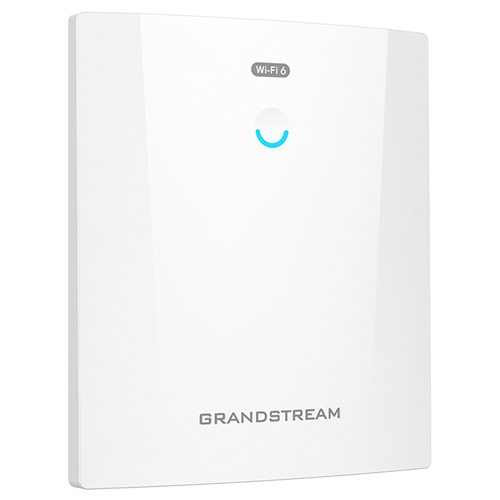
Quick Product Information
Grandstream
GWN7660ELR
Outdoor AX3000 Wi-Fi 6 access point
Campuses, warehouses, hospitality, education and industrial sites
Long-range managed staff, guest and operational Wi-Fi
IEEE 802.3af/802.3at PoE; maximum 13 W
Embedded controller, cloud or on-premise platform
Contact FourTeck for current regional options
Product Overview
Outdoor wireless networking has become a core business service rather than an optional convenience. Staff use tablets and phones in yards, loading areas and service zones. Warehouses depend on handheld scanners and mobile terminals. Hotels and resorts need guest connectivity beyond the lobby. Schools and healthcare facilities may need secure access across walkways, courtyards or linked buildings. A standard indoor access point placed near a window rarely provides the coverage consistency, environmental protection or installation flexibility expected in these situations.
The GWN7660ELR addresses this requirement as an enterprise-grade long-range access point based on IEEE 802.11ax Wi-Fi 6. Its dual-band 2×2:2 radio design uses OFDMA to improve airtime efficiency when many compatible devices share the same wireless environment. The platform provides up to 3 Gbps aggregate wireless throughput, with a listed maximum of 573.5 Mbps on 2.4 GHz and 2.4 Gbps on 5 GHz. Actual performance will depend on channel width, client capability, local radio regulations, interference, distance, obstructions and the wider wired network design.
Grandstream specifies support for up to 256 concurrent Wi-Fi clients and a coverage range of up to 300 metres in suitable conditions. Those figures help position the model, but they should not be treated as guaranteed project outcomes. Outdoor coverage is shaped by mounting height, antenna orientation, surrounding buildings, trees, metal surfaces, competing radios, weather and the transmit limits allowed in each country. A proper site survey or at least a structured placement review remains important when the network supports business-critical activity.
The enclosure provides IP68-level weatherproof capability and an operating range from -30°C to 60°C, making the unit suitable for demanding exposed locations when installed according to the manufacturer’s guidance. It can be mounted on a wall or pole using the included kits, and the bracket can be adjusted to refine positioning. This allows installers to place the access point where it can serve the intended coverage zone instead of being constrained by an indoor ceiling position.
FourTeck helps buyers turn these technical features into a workable deployment plan. The buying discussion can include access point quantity, fibre or copper backhaul, PoE switching, mounting position, VLAN requirements, guest access, authentication, controller choice, branch standards and future expansion. This matters because the correct purchase is not simply the access point model; it is the combination of equipment, accessories, network design and support expectations required to deliver dependable service.
Key Business Benefits
A professional outdoor access point should be assessed by the business outcomes it enables, not only by its radio numbers. The following benefits explain how the platform can support a more manageable and resilient wireless environment when it is correctly designed.
◆ More Efficient Shared Airtime
Wi-Fi 6 and OFDMA can organise traffic more efficiently when compatible clients are active together. For a buyer, this means a better foundation for environments where scanners, phones, laptops, guest devices and operational terminals share the same access point instead of competing through an older wireless design.
✓ Outdoor Deployment Confidence
The IP68-rated housing and broad operating temperature range help the equipment fit exposed installations where dust, moisture and temperature changes must be considered. Correct sealing, grounding, cable protection and mounting remain essential, but the enclosure provides a stronger starting point than adapting an indoor model.
↗ Flexible Backhaul Choices
A Gigabit RJ45 interface supports familiar Ethernet and PoE deployment, while the 2.5 Gigabit SFP interface provides a fibre option for sites with long cable routes, electrical interference concerns or existing optical infrastructure. Buyers can select the most practical uplink for each location instead of relying on one medium.
● Support for Busy Client Zones
Support for up to 256 concurrent clients gives planners useful capacity for public areas, campuses and operational sites. Real design should still consider airtime demand, application type and client behaviour, because 256 light users and 256 video users create very different loads.
⚙ Scalable Administration
The embedded controller can manage up to 50 local GWN access points, while cloud and on-premise options support larger or distributed deployments. This helps small sites start without a separate controller appliance and gives larger organisations a path toward central visibility and standardised configuration.
🔒 Business Security Controls
WPA3 support, enterprise authentication options, secure boot, signed critical data controls and per-device credentials help strengthen the access point platform. These controls are valuable when wireless access must be integrated into VLANs, identity services, guest policies and a wider business security architecture.
These benefits are strongest when the wired switch, firewall, DHCP, DNS, authentication and internet service are also sized correctly. FourTeck can help buyers review the full path from client device to application so the access point is not expected to solve issues created elsewhere in the network.
Product Highlights
Up to 3 Gbps aggregate wireless throughput across 2.4 GHz and 5 GHz gives modern devices a faster foundation for cloud applications, voice, video and operational traffic.
The integrated antenna arrangement supports a clean outdoor form factor without external antenna selection, while still providing dedicated radio and Bluetooth antenna capability.
Included mounting hardware supports common outdoor placement methods, and the adjustable bracket helps refine direction for the intended coverage area.
Up to 16 SSIDs per radio can support segmented wireless services, although practical designs should avoid creating unnecessary SSIDs that increase management and airtime overhead.
802.11e/WMM, VLAN and traffic marking support can help prioritise voice and other delay-sensitive applications when the full network is configured consistently.
Built-in BLE capability supports compatible location, provisioning or integration scenarios according to the selected Grandstream platform and project design.
The GWN7660ELR is particularly notable for combining a mainstream Gigabit PoE interface with a faster SFP uplink in the same outdoor unit. In a conventional installation, the RJ45 port can carry both network traffic and power from a compatible PoE switch or injector. In a fibre-oriented installation, the SFP port can help extend the data path beyond normal copper Ethernet distance or provide electrical isolation between buildings. Power still needs to be planned separately through the supported PoE input, and the correct SFP module, fibre type and termination must be confirmed.
Another practical strength is the range of management choices. A small organisation can manage a local group through the embedded controller without buying a separate hardware controller. A multi-site business can use Grandstream’s cloud platform for central administration, while an organisation that prefers local infrastructure can consider GWN Manager. The right choice depends on site count, internet reliability, security policy, administrator skill, backup procedures and the need for remote support.
Technical Specifications
| Specification Area | GWN7660ELR Details | Buyer Note |
|---|---|---|
| Brand and Model | Grandstream GWN7660ELR | Confirm regional supply and compliance requirements. |
| Product Type | Outdoor AX3000 Wi-Fi 6 access point | Designed for professional outdoor wireless deployments. |
| Wireless Standards | IEEE 802.11 b/g/n/ac/ax | Client capability determines the standard and speed used. |
| Radio Design | Dual-band 2×2:2 MIMO with OFDMA | Plan channel use around neighbouring networks and local rules. |
| Aggregate Wireless Throughput | Up to 3 Gbps | Actual application throughput is lower and environment dependent. |
| 2.4 GHz Data Rate | Up to 573.5 Mbps with 802.11ax | Useful for range and legacy compatibility; often more congested. |
| 5 GHz Data Rate | Up to 2403 Mbps with 802.11ax | Requires compatible clients and suitable channel width. |
| Channel Width | 2.4 GHz: 20/40 MHz; 5 GHz: 20/40/80/160 MHz | Wider channels increase speed potential but use more spectrum. |
| Concurrent Clients | Up to 256 | Capacity depends on traffic type, signal quality and airtime demand. |
| Coverage | Up to 300 metres | Environment, mounting and client radios can reduce practical range. |
| Antennas | Five internal antennas; 2.4 GHz gain 5.5 dBi, 5 GHz gain 6.0 dBi, BLE gain 4.5 dBi | Integrated design simplifies weatherproof installation. |
| Network Interfaces | 1 x 1G RJ45 and 1 x 2.5G SFP | Confirm SFP module, fibre type and power design if using optical uplink. |
| Power | IEEE 802.3af/802.3at PoE; maximum 13 W | Check switch PoE budget and outdoor surge protection. |
| Security | WPA/WPA2 Personal and Enterprise, WPA3, secure boot and signed controls | Use enterprise authentication and segmentation where appropriate. |
| SSIDs | 32 total, 16 per radio | Create only the SSIDs required for the business design. |
| Management | Embedded controller up to 50 local APs; cloud and on-premise options | Choose according to site count, policy and remote administration needs. |
| Environmental Rating | IP68-level weatherproof capability | Installation quality, glands, grounding and cable protection still matter. |
| Operating Conditions | -30°C to 60°C; 5% to 95% non-condensing humidity | Avoid placement that exceeds environmental limits. |
| Dimensions and Weight | 270 x 230 x 57 mm; 1 kg including brackets | Confirm mounting surface and wind exposure. |
| Package | Access point, mounting kits and quick installation guide | PoE source, SFP module and site cabling should be quoted separately if required. |
Selecting from this table should begin with the deployment objective. A site that needs coverage across a quiet courtyard may require fewer access points than a loading yard full of scanners, phones and vehicle-mounted terminals. A 300-metre maximum range figure does not mean every client will deliver useful application performance at that distance. Mobile devices often transmit at lower power than the access point, and two-way communication must remain reliable. For that reason, coverage should be planned around the weakest expected client and the minimum acceptable data rate, not only around whether a network name can be detected.
The wired side also deserves equal attention. A copper deployment needs suitable outdoor-rated cable, a protected route, correct earthing practices, surge protection and enough PoE budget. A fibre deployment needs matching SFP optics, fibre type, connectors, termination and a separate plan for PoE power. FourTeck can help assemble these details into the quotation so installation does not stop because a transceiver, injector, bracket, patch lead or protective accessory was overlooked.
Configuration and Buyer Guidance
A successful outdoor wireless project starts with questions, not a quantity. Buyers should describe the area that must be served, the applications that will run, the devices that will connect and the performance level users expect. A rough site drawing with building positions, outdoor zones, cable routes and proposed mounting points is far more useful than requesting “one long-range access point” without context.
1. Define the Coverage Zone
List the outdoor areas, indoor spill-over zones, mounting heights and important work points. Identify trees, walls, metal structures and other likely obstructions.
2. Estimate Client Demand
Share expected user count, device types and busy periods. Explain whether the traffic is messaging, scanning, voice, CCTV viewing, cloud applications or large file transfer.
3. Review Backhaul
Confirm whether each mounting point can receive copper Ethernet, fibre, PoE and protected power. Long runs or separate buildings may make fibre more suitable.
4. Choose Management
Decide who will administer the network, how many sites are involved and whether cloud or local management fits the organisation’s policy and support process.
The buyer should also decide how wireless users will be separated. Staff, guests, contractors, scanners and operational systems may need different SSIDs, VLANs, authentication methods and firewall rules. Creating many networks without a clear reason can increase complexity, so the design should use the smallest practical set of services. Where voice over Wi-Fi is important, roaming, QoS, signal thresholds and handset compatibility should be reviewed together.
Finally, include future growth. A site may begin with one yard and later add a second warehouse, security gate or public area. Cabling routes, switch capacity, controller choice and addressing should allow expansion without forcing a complete redesign. FourTeck can help compare the requested model with higher-capacity or alternative access points when the requirement exceeds a dual-band 2×2 platform.
Ideal Business Use Cases
Warehouses and Logistics Yards
Extend wireless service to loading bays, dispatch zones and exterior storage areas where handheld scanners, tablets and mobile operations need connectivity. Placement must account for moving vehicles, metal racking, containers and changing stock layouts.
Schools and Campuses
Serve courtyards, walkways, sports areas and links between buildings for staff and student access. The network can support segmented staff, learner and guest services when authentication, filtering and bandwidth policies are planned correctly.
Hotels, Resorts and Leisure Sites
Provide coverage around gardens, pools, terraces, event areas and outdoor guest spaces. Hospitality projects should consider roaming, captive portal design, privacy, peak occupancy and separation between guest and operational traffic.
Healthcare Compounds
Support authorised mobile workflows across walkways, external waiting areas and connected facilities. Healthcare deployments should use strong segmentation, controlled access and documented change procedures because wireless availability can affect daily service delivery.
Industrial and Manufacturing Sites
Connect staff devices and compatible operational terminals around production compounds, yards and service zones. Fibre uplink can be useful where electrical interference, building separation or long cable paths make copper less attractive.
Retail, Events and Public Spaces
Support guest access, mobile sales activity, ticketing or staff communications in outdoor commercial areas. Capacity planning should reflect peak events rather than average daily use, with firewall and internet bandwidth sized for the busiest periods.
The access point may also fit multi-floor offices where an outdoor-rated unit is required for exposed mounting or where fibre connectivity provides an advantage. It should not automatically be used as a point-to-point bridge replacement, and it should not be chosen solely because the stated range looks large. Fixed wireless backhaul, sector coverage and client access are different design tasks. FourTeck can help determine whether this model, a dedicated bridge or a higher-capacity access point is the right equipment for the project.
Grandstream GWN7660ELR Wi-Fi 6 Performance and Client Capacity
Wi-Fi 6 brings efficiency improvements that matter in busy wireless environments. OFDMA can divide channel resources among compatible users more effectively than older access methods, reducing wasted airtime when many devices transmit smaller amounts of data. This is useful in operational areas where scanners, phones, tablets and sensors may all be active, even when no single device is consuming the full channel.
The dual-band architecture allows network designers to use 2.4 GHz for wider reach and compatibility while using 5 GHz for higher data rates and additional channel choice. The 5 GHz radio supports channel widths up to 160 MHz, but the widest setting is not always the best business choice. In congested environments, narrower channels can create more reusable channels and improve consistency across multiple access points. Regulatory limits, radar detection requirements and neighbouring networks must also be considered.
Support for up to 256 clients should be interpreted as an association capacity, not a guarantee that every user can run a demanding application simultaneously. Network performance is governed by airtime, signal quality, retries, protocol overhead, client radio capability and the wired path beyond the access point. A design for voice, video and cloud applications should therefore set a target client load per radio and add access points where needed instead of trying to maximise the count on one unit.
FourTeck can help buyers translate device numbers into practical capacity. Sharing the busiest expected hour, application mix and minimum performance requirement allows a more useful recommendation than simply comparing headline throughput. This approach helps avoid both under-design, which creates complaints, and unnecessary over-purchasing, which adds cost without improving the user experience.
Grandstream GWN7660ELR Outdoor Resilience and Fibre Uplink Flexibility
Outdoor network equipment faces challenges that do not exist in a controlled office ceiling. Rain, dust, heat, cold, sunlight, wind, lightning risk, insects, cable movement and accidental impact all influence reliability. The IP68-level enclosure and specified -30°C to 60°C operating range make the unit suitable for demanding environments, but the overall installation is only as strong as its weakest component. Cable glands, junction points, connectors and supporting equipment must receive the same attention as the access point itself.
Wall and pole mounting options give the installer flexibility to position the radio above common obstructions and aim the unit toward the intended service area. Mounting too high can create weak coverage directly below, while mounting too low can expose the signal to vehicles, people and structures that block or reflect radio energy. The adjustable bracket helps, but a survey and post-installation validation should still confirm the result.
The 2.5 Gigabit SFP interface is especially useful for campuses and industrial compounds. Fibre can extend farther than standard copper Ethernet, avoid earth-potential problems between buildings and reduce susceptibility to electromagnetic interference. However, it does not remove the power requirement. The access point still needs PoE through its RJ45 interface, so installers must plan how power will reach the unit and how both copper and optical connections will be protected and housed.
Before quotation, provide the expected fibre type, connector standard, distance, available switch ports, PoE source and cabinet locations. FourTeck can then help identify the additional SFP modules, patch leads, injectors, switches or protective accessories needed for a complete path rather than quoting the access point alone.
Grandstream GWN7660ELR Security and Network Management
Wireless security begins with encryption and authentication, but it does not end there. The platform supports WPA3 as well as WPA/WPA2 personal and enterprise modes. For business networks, enterprise authentication can provide stronger user accountability than sharing one password across many people. The correct choice depends on identity services, client compatibility, administrator resources and the level of control required.
Grandstream also includes secure boot, digital-signature controls for critical data and unique device credentials. These protections help reduce the risk of unauthorised firmware or predictable default access. Administrators should still apply firmware updates, change administrative access practices, restrict management networks, maintain configuration backups and review logs. A secure product can become weak when it is left unpatched or managed from an open network.
Management flexibility is another central strength. The embedded controller can manage up to 50 local GWN access points, which can be attractive for a single site that wants central settings without an extra controller appliance. Cloud management can support distributed locations and remote administration, while GWN Manager provides an on-premise option for organisations that prefer local control. Each approach has different requirements for internet access, server resources, administrator roles, backup and recovery.
A buyer should decide who owns wireless policy after installation. Guest access, VLANs, passwords, certificates, firmware, radio settings and monitoring all need a responsible team. FourTeck can help clarify the management route and the information required for deployment, whether the project is a single outdoor zone or part of a larger multi-site Grandstream network.
What Buyers Should Check Before Purchase
Before requesting a quote, buyers should confirm the requirement in enough detail to avoid wrong model selection, missing accessories and unrealistic coverage expectations. The model name identifies the access point, but the finished solution depends on site conditions, power, cabling, switching, security policy and support responsibilities. FourTeck uses these questions to help procurement and technical teams align before an order is placed.
Configuration Fit
Confirm whether a dual-band 2×2 access point offers enough capacity for the application. Sites with very high client density, several simultaneous video streams or demanding public access may need more radios, more spatial streams or a greater number of access points.
Compatibility Check
Review the PoE switch, VLANs, firewall, DHCP, RADIUS, SFP modules, fibre type and client devices. Confirm that local frequency regulations and required certifications are appropriate for the deployment country.
Environment and Mounting
Identify the wall or pole, height, bracket orientation, wind exposure, shade, cable entry and lightning protection approach. Confirm safe installation access and whether a weatherproof junction arrangement is required.
Availability and Warranty
Ask for the current supply route, expected lead time, warranty handling path and what documentation accompanies the shipment. These details can vary by supplier, destination and order quantity.
Accessories are a common source of delays. The package includes mounting kits, but it does not automatically complete the network path. A project may also need an outdoor-rated Ethernet cable, PoE injector or switch, surge protector, fibre transceivers, fibre patch leads, cabinet, patch panel, grounding materials and installation hardware. Buyers should list what is already available at the site and what should be included in the quotation.
Long-term usage cost should include more than the hardware purchase. Consider installation labour, survey time, cabling, switching, replacement access, configuration, monitoring and future expansion. A cheaper initial layout can become expensive when equipment must be moved or additional cable installed after weak areas are discovered. For project supply, share the total quantity, rollout schedule, delivery locations and whether units need pre-configuration or asset labelling.
The most useful quote request includes deployment country, site type, approximate dimensions, floor or compound plan, expected clients, application mix, internet bandwidth, current switch model, PoE budget, desired management platform, fibre requirements and target installation date. With that information, FourTeck can confirm whether the requested product suits the business need or recommend a related model where a different capacity, radio design or uplink arrangement would reduce risk.
Africa Availability and Service Support
FourTeck supports product enquiries across Africa with assistance for model selection, configuration review, quote preparation, delivery coordination and warranty guidance. Availability can vary according to supplier status, regional compliance, order quantity, required accessories and the destination country. For that reason, the page does not claim automatic stock or a fixed delivery promise. The commercial team confirms the current position when the buyer provides the project details.
For a single access point requirement, FourTeck can help check the correct model and the essential installation items. For a wider project, the discussion can cover survey expectations, access point count, switching, PoE capacity, fibre uplinks, controller choice, VLANs, guest access and rollout sequence. This helps procurement teams receive a quotation that reflects the whole deployment rather than a hardware line that leaves important components unresolved.
Warranty guidance is based on the selected supply route and documented terms. Buyers should retain serial numbers, invoices, packaging and installation records because these may be needed for support. FourTeck can also help identify suitable alternatives when the requested model is unavailable, when project timing requires another option or when the client density and radio requirements point toward a higher-capacity solution.
Africa Country and Regional Coverage
Businesses across Africa, including Kenya, Uganda, Nigeria, Ghana, Tanzania, Rwanda, Ethiopia, South Africa, Zambia, Botswana, Senegal and nearby regional markets, can contact FourTeck for product availability, configuration guidance and quotation assistance. The team can review suitable access point options, switching requirements, PoE power, fibre connectivity, mounting accessories and project quantities based on the business environment.
Regional planning should account for local radio rules, import requirements, electrical conditions, support expectations and delivery routes. A model available in one market may have a different lead time or compliance requirement in another. FourTeck therefore confirms the destination and intended use before finalising the commercial recommendation.
For multi-country rollouts, buyers should share whether every site will use the same controller, SSID structure, VLAN design and security policy. Standardisation can simplify support, but each location may still need a separate coverage plan because building materials, outdoor layout, interference and internet capacity vary. FourTeck can help organise the product conversation around a common standard while allowing the deployment details to reflect each site.
GCC, Middle East and Africa Availability
FourTeck Africa can support enquiries for businesses across Africa while also guiding regional technology requirements through selected FourTeck platforms serving GCC and Middle East markets. Organisations with offices, hospitality properties, warehouses or project teams in the UAE, Saudi Arabia, Qatar, Oman, Bahrain and African locations can discuss a coordinated product requirement rather than handling every site as an unrelated purchase.
Availability, delivery options, warranty handling and configuration support may vary by country, supplier route, selected accessories and order quantity. Cross-region projects should also confirm wireless regulatory domains, power arrangements, site standards and the management platform that will be used. Using a common access point family can simplify administration, but the approved radio configuration and final bill of materials must still match each destination.
Buyers can explore FourTeck Africa technology solutions, review regional assistance through FourTeck Kenya or FourTeck Uganda, and use FourTeck UAE for suitable GCC-linked enquiries. The relevant team can help route the request according to deployment location and purchasing structure.
Other Wireless Options Buyers May Consider
The requested Grandstream model is a strong fit for long-range outdoor Wi-Fi 6, but another access point may suit a different management ecosystem, density target or environmental requirement. The alternatives below are useful conversation starters when a project needs Fortinet integration, higher indoor capacity or a rugged tri-radio platform. Final selection should be based on the whole network design rather than brand name alone.
FortiAP FAP-U432F
A rugged indoor and outdoor Wi-Fi 6 option for buyers planning wireless access inside a Fortinet security and management environment.
FortiAP FAP-831F
An indoor high-density Wi-Fi 6 model for campuses, hospitality, education and enterprise sites where a more powerful indoor radio platform is required.
FortiAP FAP-433F
An indoor Wi-Fi 6 access point with external antennas and multi-gigabit uplink planning for demanding business areas that need adjustable radio coverage.
FortiGate 50G
A compact security appliance that may complement a managed wireless project where firewall policy, VPN, segmentation and secure branch connectivity are also required.
FourTeck can compare the management model, radio capacity, environmental rating, uplink, licensing expectations and existing network compatibility before recommending an alternative. This is especially important when a buyer already operates a specific firewall or controller ecosystem and wants central policy rather than a standalone wireless island.
Why Buyers Choose FourTeck
Business technology procurement becomes easier when the supplier asks how the equipment will be used. FourTeck focuses on the practical details that connect a product code to a working deployment. That includes the site environment, client demand, management method, power source, switching, cabling, security policy, delivery destination and support expectations.
Assistance for single-unit purchases, project quantities, branch standards and related network components.
Review of coverage goals, client load, uplink choice, PoE, SSIDs, VLANs and controller approach before quotation.
A clearer bill of materials that can include accessories, transceivers, switching and installation needs where requested.
Commercial guidance based on destination, order quantity, supplier status and available delivery routes.
Explanation of the applicable warranty path and the records buyers should keep for future support.
Alternative model guidance when capacity, ecosystem, timing or project requirements point to another solution.
FourTeck works with SMB buyers, procurement teams, IT managers, resellers, system integrators and enterprise project teams. The goal is to reduce selection mistakes and make the buying conversation understandable to both technical and commercial stakeholders. No supplier can remove every project risk, but careful requirement review can prevent many common problems before equipment reaches the site.
Frequently Asked Questions
What is the GWN7660ELR mainly used for?
It is used to provide managed Wi-Fi 6 coverage in outdoor and exposed business environments such as campuses, warehouses, hospitality grounds, schools, hospitals, logistics areas and industrial compounds. It supports long-range access, many concurrent clients, staff and guest networks, voice-aware QoS and central management. The final suitability depends on the coverage area, client devices, application load and wired network design.
How far can this outdoor access point cover?
Grandstream lists a coverage range of up to 300 metres. Practical range can be shorter because trees, walls, vehicles, interference, mounting height, local transmit limits and client radio power all affect two-way communication. Buyers should plan around the minimum useful data rate for the weakest client, and important deployments should include a site survey or post-installation validation.
Can it support 256 users at the same time?
The manufacturer specifies support for up to 256 concurrent Wi-Fi clients. That figure represents client capacity, not guaranteed high-speed service for 256 demanding users. Application performance depends on traffic type, channel conditions, signal quality, retries, client capabilities, internet bandwidth and the wired uplink. High-density projects may require several access points even when the total device count is below 256.
Does the access point need a power adapter?
The unit is designed for IEEE 802.3af or 802.3at PoE and has a maximum listed power consumption of 13 W. Buyers should confirm a compatible PoE switch or injector and ensure the switch has enough total PoE budget. Outdoor surge protection, grounding, cable quality and route protection should also be included in the installation plan.
What is the purpose of the 2.5 Gigabit SFP port?
The SFP interface provides a fibre data uplink option. It can be useful for long distances, separate buildings or electrically noisy environments where copper Ethernet is less suitable. Fibre does not power the access point, so PoE must still be planned through the RJ45 interface. The correct SFP modules, fibre type, connectors and switch compatibility should be confirmed before purchase.
How is the GWN7660ELR managed?
It includes an embedded controller that can manage up to 50 local GWN access points. Grandstream also offers cloud management and an on-premise GWN Manager platform for larger or distributed deployments. The best choice depends on site count, internet reliability, security policy, remote support needs, backup procedures and who will administer the wireless network.
Is it available for business projects in Africa?
FourTeck supports Africa-focused product enquiries, quotation assistance, configuration review and delivery coordination. Availability may vary by destination, supplier status, compliance requirements, order quantity and accessory needs. Buyers should provide the deployment country, requested quantity, target date and site details so the commercial team can confirm current options without relying on an unverified stock assumption.
Can FourTeck help plan the correct quantity?
Yes. FourTeck can review a floor plan or compound sketch, expected client count, application mix, mounting locations, obstructions and existing network equipment. A full professional wireless survey may still be recommended for critical sites, but the initial review helps determine whether the requested quantity is realistic and which accessories should be included in the quotation.
Can businesses request bulk or multi-site supply?
Yes. Businesses, resellers and project teams can request quantities for a single campus, phased rollout or multi-country deployment. Share the total quantity, delivery locations, preferred schedule, management standard and whether pre-configuration or asset information is required. FourTeck can then review supply timing, accessories, suitable alternatives and the commercial structure for the project.
Need Help Planning Your Outdoor Wi-Fi?
Share your deployment country, site dimensions, expected client count, application type, switch model, PoE capacity, fibre requirements and requested quantity. FourTeck can help review product fit, accessories, availability, warranty guidance and delivery requirements before preparing the quotation.
Reviews
There are no reviews yet.