

Grandstream GWN7811P Layer 3 PoE Network Switch in Africa
Build a compact but capable business access layer with eight Gigabit PoE+ ports, two 10 Gigabit SFP+ uplinks, advanced routing, network segmentation, endpoint security, and flexible management. The GWN7811P is designed for organisations that need to power phones, wireless access points, cameras, and other PoE devices while maintaining stronger control over traffic, resilience, and future network growth.
✓ 2 × 10G SFP+ Uplinks
✓ 120W PoE Budget
✓ Layer 3 Routing and Stacking
✓ Africa Quote Assistance
Request Quote
Check Africa Availability
Quick Product Information
Grandstream
GWN7811P
Enterprise Layer 3 managed PoE switch
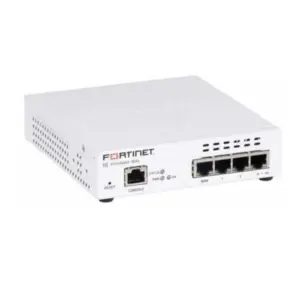
8 × Gigabit Ethernet PoE+ ports
2 × 10 Gigabit SFP+ ports
120W total, up to 30W per port
Web interface, CLI, SNMP, GDMS Networking, GWN Manager
Desktop, wall, or rack mounting
Business LAN, voice, Wi-Fi, surveillance, and branch access
Contact FourTeck for current options
Product Overview
The Grandstream GWN7811P is a compact enterprise access switch for organisations that want the control of a managed Layer 3 platform without immediately moving to a high-port-count chassis. Its eight copper ports can carry Gigabit data and provide PoE+ power to compatible endpoints, while two 10G SFP+ interfaces create a fast path to a server, network core, distribution switch, storage system, or fibre link between buildings. This arrangement is especially useful in offices, branch locations, reception areas, small equipment rooms, retail sites, classrooms, clinics, and hospitality zones where the endpoint count is moderate but network quality, segmentation, and visibility still matter.
A basic unmanaged switch only forwards traffic and offers little control when congestion, unauthorised devices, broadcast storms, or voice-quality problems appear. This platform adds VLANs, Layer 3 routing, quality-of-service controls, link aggregation, multicast management, access control lists, authentication features, and monitoring tools. Those capabilities allow an IT team or systems integrator to separate departments, prioritise voice and video, apply policies to user and device groups, troubleshoot links, and create a cleaner network design. The result is not simply more technical features; it is better operational control over the traffic that supports day-to-day work.
The PoE capability can reduce the need for separate electrical adapters near every endpoint. Compatible IP phones, wireless access points, cameras, intercoms, and other powered devices can receive data and electrical power through the same Ethernet cable. This can simplify ceiling installations, wall-mounted endpoints, front-desk deployments, and security projects. The 120W total budget should still be planned carefully because eight devices drawing the maximum 30W each would exceed the overall allowance. A proper design therefore considers the real power requirement of every connected endpoint, expected growth, cable quality, and whether selected devices negotiate power correctly.
For Africa buyers, the right decision depends on more than a model number. Fibre modules, patch leads, copper cabling, rack space, power protection, uplink design, network-management preference, firmware planning, and warranty routing can all affect a successful deployment. FourTeck can help review the intended use, device list, PoE demand, uplink distance, management method, and delivery destination before a quotation is prepared. This helps reduce the risk of ordering a switch that has the right port count but the wrong power budget, transceiver type, or network role.
Key Business Benefits
A managed switch should improve the reliability and control of the wider business environment, not merely add ports. The following benefits show how the design of this model can support practical network requirements.
◆ Consolidated Power and Data
PoE+ can deliver network connectivity and power over one cable to compatible endpoints. This reduces dependence on nearby sockets, supports cleaner ceiling or wall installations, and can make it easier to centralise endpoint power protection through the network cabinet.
◆ Faster Backbone Connections
Two 10G SFP+ ports give the switch substantially more uplink headroom than a design limited to Gigabit uplinks. This helps reduce bottlenecks when multiple access devices send traffic towards servers, storage, an aggregation layer, or another building.
◆ Stronger Traffic Control
VLANs, routing policies, access lists, and quality-of-service tools help separate business groups and protect sensitive traffic. An organisation can keep voice, cameras, guest access, staff systems, and management traffic in controlled segments instead of placing everything in one flat network.
◆ Easier Network Expansion
Stacking support allows up to four compatible switches to be treated as a coordinated system. This can simplify management and create a more orderly expansion path when a site needs more ports, more bandwidth, or greater link resilience later.
◆ Better Voice and Video Experience
Built-in traffic prioritisation and multicast controls can help delay-sensitive services receive more predictable treatment. This matters for IP telephony, video meetings, surveillance streams, and other applications that can be affected by congestion or uncontrolled broadcasts.
◆ Multiple Management Choices
Administrators can use a local web interface, command line, SNMP, GDMS Networking, GWN Manager, or supported Grandstream network platforms. This flexibility supports both a single-site deployment and a centrally supervised multi-location environment.
◆ Security at the Access Layer
Port security, DHCP snooping, source guard, ARP inspection, authentication, storm control, and loop protection help reduce common local-network risks. These controls give IT teams more ways to restrict unknown devices and contain configuration errors.
Product Highlights
Eight Gigabit copper ports suit smaller access zones, branch rooms, executive areas, training rooms, or dedicated voice and camera deployments where a larger switch would leave many ports unused.
Each copper interface can provide up to 30W to a compatible endpoint, subject to the 120W total budget. Power scheduling, priority, and maximum-per-port controls help administrators use the available budget more deliberately.
The two SFP+ slots support 10G connectivity and compatible direct-attach copper cables up to the documented length. The correct transceiver type must match fibre mode, connector, distance, and the equipment at the far end.
Static routes and supported dynamic-routing protocols can move traffic between network segments without relying on a separate router for every local path. Design and policy should still be planned by a qualified network administrator.
Support for thousands of VLANs and a large MAC table gives the platform room for structured segmentation, device growth, and multi-service deployments beyond the requirements of a simple office switch.
The GWN7811P is designed without an internal fan, reducing mechanical noise and removing one moving part. Ventilation, ambient temperature, dust control, and sensible cabinet placement remain important.
The model is particularly attractive when a site needs more than endpoint connectivity but less than a full 24- or 48-port access layer. It combines PoE, Layer 3 control, 10G uplinks, stacking, and management options in a relatively compact format. Buyers should note that this specific model supports PoE and PoE+ rather than the higher-power PoE++ capability available on selected larger models in the same family. High-power access points, PTZ cameras, displays, or specialised devices should therefore be checked individually before selection.
Technical Specifications
| Specification | Grandstream GWN7811P |
|---|---|
| Product class | Enterprise Layer 3 managed PoE network switch |
| Gigabit Ethernet ports | 8 × 10/100/1000 Mbps RJ45 ports |
| PoE ports and standards | 8 ports, IEEE 802.3af/at |
| Maximum PoE per port | Up to 30W |
| Total PoE output | 120W maximum |
| High-speed uplinks | 2 × 10 Gigabit SFP+ ports; compatible DAC cable length up to 5m |
| Switching capability | 56 Gbps |
| Non-blocking throughput | 28 Gbps |
| Forwarding rate | 41.644 Mpps |
| Packet buffer | 12MB |
| Jumbo frame | Up to 12,288 bytes |
| Memory | 256MB RAM; 128MB NAND flash; 8MB NOR flash |
| MAC and VLAN scale | 16K MAC addresses; up to 4K VLANs |
| Routing support | IPv4 and IPv6; static routing; RIP/RIPng; OSPF/OSPFv3; BGP; routing policy |
| Link aggregation | Up to 32 groups |
| Stacking | Supported, up to 4 compatible devices |
| Security controls | 802.1X, MAC authentication, RADIUS, TACACS+, port security, DHCP snooping, source guard, ARP inspection, DoS protection, storm control, loop protection |
| Management | Local web interface, CLI, SSH, Telnet, SNMP v1/v2c/v3, GDMS Networking, GWN Manager, supported GWN routers |
| Mounting | Desktop, wall, or rack mount; extended rack-mounting kits included |
| Cooling | Fanless |
| Dimensions | 330 × 176 × 44 mm |
| Unit weight | Approximately 2.17 kg |
| Operating environment | 0°C to 45°C; 10% to 90% RH, non-condensing |
| Warranty and availability | Region, supplier, and order dependent; confirm with FourTeck |
Choosing the Correct Configuration
The port count alone does not determine whether this is the correct switch. Begin by listing every endpoint, its expected data rate, and its maximum PoE demand. Reserve spare capacity for growth and for devices that may draw more power during boot, heater operation, infrared illumination, or peak radio use. The total design should remain within the 120W budget rather than assuming that all eight ports can provide 30W at the same time.
Next, define the uplink. Short in-rack connections may use a compatible direct-attach cable, while longer links may require multimode or single-mode fibre transceivers. Both ends must support the same speed, wavelength, fibre type, and connector arrangement. Buyers should also confirm whether Layer 3 routing will be handled on this switch, on a firewall, or on a core platform, because the answer affects VLAN design, default gateways, access policies, and troubleshooting responsibility.
Configuration and Buyer Guidance
A successful switch purchase starts with the network role. Decide whether the unit will serve as a standalone access switch, a branch distribution point, a dedicated voice switch, a camera switch, or part of a stack. Each role creates different requirements for redundancy, uplink capacity, policy control, monitoring, and spare ports. A small office may use one 10G uplink and reserve the second for future growth, while a higher-availability design may use both in a link aggregation arrangement connected to compatible upstream equipment.
1. Count Devices and Growth
List current endpoints, planned additions, temporary devices, and maintenance requirements. Eight ports can disappear quickly when access points, phones, cameras, printers, and uplinks are counted together.
2. Build a PoE Budget
Use the maximum consumption stated by each endpoint manufacturer. Keep a margin instead of planning exactly to 120W. Confirm whether devices require 802.3af, 802.3at, or higher-power standards.
3. Select Uplink Media
Identify the required distance, fibre type, connector, transceiver wavelength, and far-end compatibility. Do not select an SFP+ module only by appearance or advertised speed.
4. Define VLAN and Routing Ownership
Decide which device will route between VLANs and enforce security policy. Clear ownership prevents duplicate gateways, asymmetric paths, and confusing rule sets.
5. Plan Management
Choose local management, cloud supervision, on-premise management, or integration with existing monitoring. Consider administrator roles, backup procedures, firmware policy, logs, and alerting.
6. Protect the Installation
Review cabinet ventilation, grounding, clean power, surge exposure, UPS support, cable certification, labelling, and physical access. Good infrastructure protects the switch and shortens future maintenance.
Warranty expectations should also be discussed before ordering. Coverage and service processes can depend on the supply channel, destination, serial number, and local handling arrangements. FourTeck can help buyers record the chosen model, required accessories, installation environment, delivery location, and support expectations so the quotation reflects a complete deployment rather than a bare switch alone.
Ideal Business Use Cases
The GWN7811P fits environments where a focused group of endpoints needs enterprise control, PoE power, and fast upstream connectivity. The following scenarios show how the switch can be placed within a broader network design.
Office Voice and Wireless Zone
Power a group of IP phones and wireless access points while separating voice, corporate data, guest access, and management traffic. Quality-of-service rules can support voice priority, and the 10G uplink can carry combined user traffic towards the core.
Branch Office Access Layer
Connect staff devices, phones, cameras, and local services in a branch that requires central oversight. Layer 3 capability can support local segmentation, while remote management can reduce the need for routine site visits.
Surveillance and Access Control
Supply compatible cameras, door controllers, and intercoms from a secure equipment location. VLAN separation, port controls, multicast features, and a high-speed uplink can help keep security traffic structured and easier to monitor.
Hospitality or Education Zone
Serve a reception floor, guest wing, classroom block, library, or training area where a limited number of access points, phones, and cameras need reliable PoE and policy-based network access.
Retail and Customer Service Sites
Connect point-of-service support equipment, staff devices, digital signage controllers, phones, cameras, and Wi-Fi infrastructure. Segmentation helps separate operational, customer, and security services.
Dedicated Network Service Pod
Use the switch for a focused service such as an executive suite, meeting centre, camera cluster, or wireless zone. This can simplify fault isolation and keep high-priority endpoints separate from a larger general-purpose access switch.
The switch is less suitable when a project requires more than eight powered endpoints immediately, sustained multi-gigabit copper access on every port, or PoE++ for high-draw devices. In those cases, a larger or multi-gigabit model may reduce complexity and avoid adding another switch too soon. FourTeck can help compare the expected device count and traffic profile with alternatives in the same family.
Grandstream GWN7811P PoE Power and 10G Uplinks
The combination of PoE+ access ports and 10G uplinks is one of the model’s most practical strengths. Each RJ45 port can deliver up to 30W under IEEE 802.3af/at rules, allowing compatible endpoints to negotiate the power they need. Administrators can set priorities and limits so important devices retain power when the total budget becomes constrained. Scheduling can also support installations where selected endpoints should power down outside defined operating periods, subject to the organisation’s operational policy.
The 120W total budget must be treated as a shared resource. Eight phones drawing modest power may leave substantial headroom, while several access points and cameras can consume the budget more quickly. Device specifications should be checked at maximum draw rather than average consumption. Cameras with infrared lighting, access points with multiple radios, or endpoints with USB accessories may consume more power under specific conditions. A prudent design leaves reserve capacity for startup behaviour, firmware changes, and future endpoint replacement.
On the uplink side, two SFP+ interfaces can provide a high-capacity path beyond the access layer. A single 10G link can carry aggregate traffic towards a core switch or server environment, while the second can support redundancy, another destination, or a future expansion plan. Link aggregation can improve bandwidth and resilience when both ends are configured correctly. It does not automatically protect against every upstream failure, so topology, spanning-tree behaviour, switch stacking, and gateway placement still require careful design.
Transceiver selection is a common source of deployment problems. Buyers should identify whether the link uses single-mode fibre, multimode fibre, or a short direct-attach cable; confirm connector type and distance; and ensure compatibility at both ends. FourTeck can help prepare a complete bill of materials that includes suitable modules, patch leads, cable management, and labelling rather than leaving the switch disconnected after delivery.
Grandstream GWN7811P Layer 3 Routing and Segmentation
Layer 3 capability allows the switch to participate in routing rather than only forwarding frames inside a single broadcast domain. For a business, this means departments and services can be placed in separate VLANs with controlled communication between them. Staff devices, guest users, phones, cameras, servers, management interfaces, and building systems can each receive a more appropriate network boundary. The design reduces unnecessary broadcasts and gives administrators clearer points where access policy can be applied.
Static routing suits smaller environments where paths rarely change and simplicity is important. Supported dynamic-routing protocols provide more flexibility in larger or more resilient networks by allowing routers and switches to exchange path information. These features should be configured by someone who understands route selection, summarisation, redistribution, failure behaviour, and security. Enabling a dynamic protocol without a documented design can create loops, unexpected paths, or exposure between segments.
VLAN capability is supported by quality-of-service, multicast, and access-control functions. Voice VLAN features can simplify phone placement, while IGMP and MLD snooping help control multicast delivery for video or other group traffic. Queue scheduling, shaping, and rate limits can protect delay-sensitive applications and prevent a single device or traffic class from consuming disproportionate bandwidth. Access lists can filter traffic based on defined rules and time schedules, supporting more precise control than simple port isolation.
The best design separates routing responsibility from security responsibility. A switch may route locally for performance, while a firewall remains the enforcement point for internet access, remote access, and sensitive inter-department traffic. Alternatively, all inter-VLAN traffic may be sent to a firewall for central inspection. FourTeck can help buyers describe the existing topology, but final policy design should align with the organisation’s security standards and administrator skills.
Grandstream GWN7811P Security, Management, and Reliability
Access-layer security matters because most user devices and many operational endpoints connect at the edge. The switch supports authentication methods, port security, DHCP snooping, source guard, ARP inspection, storm control, loop safeguards, and protection against several denial-of-service patterns. These tools can help limit unauthorised access, address spoofing, rogue DHCP behaviour, accidental loops, and disruptive broadcast traffic. They are most effective when configured as part of a documented policy rather than enabled without testing.
Management flexibility supports different operational models. A local web interface is useful for a single installation, while command-line and SNMP access suit administrators who need detailed control or integration with monitoring systems. GDMS Networking and GWN Manager can help supervise multiple compatible devices from cloud or on-premise platforms. Whatever method is chosen, administrator roles, strong credentials, secure protocols, configuration backups, log retention, and a firmware review process should be defined from the beginning.
Reliability also depends on the physical and logical design. Link aggregation, spanning-tree variants, stacking, dual boot files, system-file redundancy, surge protection, and monitoring functions contribute to resilience. The fanless design removes fan noise and one mechanical component, but it does not eliminate thermal considerations. The switch should be installed where airflow is not blocked, ambient temperature remains within specification, dust is controlled, and cables do not pull on the chassis or ports.
A UPS and proper grounding can protect the network cabinet from common power disturbances, particularly where grid quality or generator transitions are a concern. PoE endpoints depend on the switch’s power, so loss of the switch can simultaneously affect phones, wireless coverage, and cameras. Buyers should therefore include power protection and recovery procedures in the project scope rather than viewing the switch as an isolated component.
What Buyers Should Check Before Purchase
Before requesting a quote, buyers should confirm the network role, device count, power requirements, uplink medium, management preference, and delivery location. Selecting only by model name or an attractive port count can lead to missing transceivers, insufficient PoE capacity, unsuitable cabling, or a switch that cannot support planned growth. The goal is to match the complete deployment rather than purchase a standalone box.
Configuration Fit
Confirm whether eight access ports are sufficient after counting uplinks, service devices, and growth. Review whether the project needs Gigabit copper only or multi-gigabit access for newer wireless systems.
PoE Compatibility
Record each endpoint’s standard and maximum draw. This model supports PoE and PoE+ with a 120W shared budget; it is not the correct choice for devices that require PoE++ unless they have another approved power method.
Uplink and Fibre Details
Provide distance, fibre type, connector, speed, and far-end equipment. Ask whether optics, DAC cables, patch leads, and cable management should be included in the quotation.
Existing Network Compatibility
Check VLAN conventions, spanning-tree mode, link aggregation, authentication services, monitoring platforms, firewall design, and routing protocols. Compatibility is operational as well as physical.
Installation Environment
Confirm rack depth, ventilation, ambient temperature, grounding, UPS capacity, cable entry, and physical security. A fanless switch still needs clear airflow and a suitable cabinet.
Warranty and Support Expectations
Ask how warranty claims are handled for the destination, what documentation should be retained, and whether configuration or installation assistance is required. Do not assume all supply channels provide the same process.
Bulk and Project Supply
For multi-site orders, provide quantities by location, required delivery phases, labelling conventions, accessory counts, and configuration standards. This improves quote accuracy and deployment consistency.
Alternative Model Review
A larger GWN7812P or GWN7813P may be more suitable when port demand or PoE growth is high. A multi-gigabit model may be preferable for access points that exceed Gigabit throughput.
Useful quote information includes company name, destination country and city, required quantity, endpoint list, power requirements, uplink distance, preferred management platform, rack or wall placement, and any installation deadline. FourTeck can use these details to identify gaps and prepare a more complete response.
Africa Availability and Service Support
FourTeck supports product inquiries across Africa with assistance for model selection, configuration review, quotation, delivery coordination, and warranty guidance. Availability can vary according to supplier status, order quantity, selected accessories, destination, and the time required to prepare a compliant shipment. Buyers should request confirmation for the exact model and bill of materials rather than relying on a generic family description.
For this switch, a complete request may include the unit itself, SFP+ transceivers or DAC cables, fibre patch cords, copper patch leads, rack accessories, UPS protection, surge protection, and compatible Grandstream endpoints. FourTeck can help align these items with the intended network design. Where a project includes several branches, the team can also review whether a standard configuration, common accessory set, or staged delivery approach would simplify rollout.
Configuration support may cover requirement review, VLAN planning guidance, PoE budget checking, uplink selection, management-platform discussion, and identification of suitable alternatives. Final installation and security policy should be performed by qualified personnel familiar with the customer’s environment. Warranty handling depends on the supply route and destination, so documentation and process should be confirmed before purchase.
Africa Country and Regional Coverage
Businesses across Africa, including Kenya, Uganda, Nigeria, Ghana, Tanzania, Rwanda, Ethiopia, South Africa, Zambia, Botswana, Senegal, and nearby regional markets can contact FourTeck for product availability, configuration guidance, and quote assistance. The team can help buyers review device quantities, PoE requirements, fibre or copper accessories, project timelines, and delivery needs based on the intended business environment.
Regional supply conditions differ, so lead time, shipping method, warranty routing, taxes, and local import requirements should be confirmed for the destination. For multi-country projects, FourTeck can help organise the request by location and quantity so the buyer receives clearer guidance on suitable models, alternatives, and supporting accessories.
GCC, Middle East and Africa Availability
FourTeck Africa can support networking inquiries for organisations across Africa while also guiding regional technology requirements through selected FourTeck platforms serving GCC and Middle East markets. Businesses operating in more than one region may need consistent switch models, common firmware policies, standard VLAN templates, matching optics, and coordinated documentation. A consolidated requirement list helps identify where one design can be repeated and where local power, delivery, or compliance factors require adjustments.
Regional inquiries may include markets such as the UAE, Saudi Arabia, Qatar, Oman, and Bahrain alongside African destinations. Product availability, delivery options, warranty handling, and configuration support vary by country, order quantity, supplier status, and selected accessories. Buyers should avoid assuming that a quotation or lead time for one market automatically applies to another.
For broader regional assistance, visit FourTeck Africa, explore the Kenya platform, review the Uganda platform, or contact FourTeck UAE for relevant regional guidance.
Other Options Buyers May Consider
The best alternative depends on port count, PoE demand, access speed, uplink design, and the role of the switch. The following related options can help buyers frame the comparison before requesting a quote.
Grandstream GWN7812P
Consider this model when a site needs more powered access ports and greater overall PoE capacity while remaining within the same Layer 3 switch family.
Grandstream GWN7813P
Suitable for larger access layers that require 24 Gigabit ports, more uplinks, a higher PoE budget, and selected PoE++ support for demanding devices.
Grandstream GWN7801P
A Layer 2+ alternative for smaller networks that need managed PoE access but do not require the full Layer 3 routing capability of the GWN7810 family.
Grandstream GWN7821P
A multi-gigabit Layer 3 PoE option for projects where modern wireless access points or high-speed endpoints need more than Gigabit copper access.
Enterprise Network Switches
Browse related managed switching solutions for offices, campuses, surveillance, wireless infrastructure, and branch environments.
Wireless Access Points and IP Phones
Plan compatible PoE endpoints together with the switch so port count, power demand, cabling, and management are aligned from the start.
A larger switch is not automatically the better purchase. The right choice balances today’s endpoint count, realistic growth, power demand, uplink speed, rack capacity, and administrator skills. FourTeck can help compare the likely total deployment cost, including optics, cabling, power protection, and the operational impact of adding another switch later.
Why Buyers Choose FourTeck
FourTeck approaches business technology procurement as a requirement-matching process. A network switch affects phones, wireless coverage, surveillance, applications, user access, and service continuity, so the purchasing discussion should include more than unit price. The team can help buyers clarify the intended role, compare related models, identify missing accessories, and prepare a bill of materials that reflects the actual installation.
Assistance for single-site purchases, branch rollouts, reseller requirements, and structured project supply.
Review of ports, PoE demand, uplinks, management preferences, accessories, and installation considerations.
Clearer quotations based on quantity, destination, required accessories, and the expected deployment schedule.
Guidance on delivery arrangements and regional requirements without making unverified stock or timing claims.
Support in understanding available warranty routing, documentation, and destination-dependent processes.
Comparison with larger, smaller, multi-gigabit, or different-feature models when the requested unit is not the best technical fit.
The objective is to help the buyer avoid common mismatches: too few ports, insufficient power, incompatible optics, missing rack accessories, unclear warranty expectations, or a design that cannot grow. FourTeck does not replace the customer’s network engineer, but it can support the procurement conversation with practical pre-sales questions and product-selection guidance.
Frequently Asked Questions
What is the GWN7811P used for?
It is used as a managed access or small distribution switch for business networks that need PoE-powered endpoints, VLAN segmentation, Layer 3 routing, security controls, and high-speed uplinks. Common deployments include IP phones, wireless access points, surveillance cameras, intercoms, branch-office devices, and other Ethernet equipment.
How many PoE devices can it power?
The switch has eight PoE+ ports, but the actual number of powered devices depends on each endpoint’s consumption and the 120W total budget. Up to 30W can be delivered on an individual port. Buyers should add the maximum requirement of all endpoints and retain reserve capacity rather than assuming every port can draw 30W simultaneously.
Does this model support PoE++?
No. The GWN7811P supports IEEE 802.3af and 802.3at, commonly described as PoE and PoE+. Devices that require 802.3bt PoE++ should be powered by an approved alternative or connected to a switch that supports the required standard. FourTeck can help review endpoint power requirements before quotation.
Can it connect to a 10 Gigabit core switch?
Yes, it provides two 10G SFP+ ports. The correct transceiver or direct-attach cable must be selected for the distance, fibre type, connector, and equipment at the far end. Both devices should support the same link parameters, and any link aggregation or redundancy design must be configured correctly.
Can FourTeck help with configuration planning?
FourTeck can help review the intended use, port count, PoE demand, uplink type, management preference, VLAN requirements, accessories, and suitable alternatives. Final deployment, routing policy, security rules, and acceptance testing should be completed by qualified personnel who understand the customer’s full network and operational requirements.
Is the switch suitable for cameras and IP phones?
Yes, compatible cameras and IP phones are common use cases. Buyers should verify the power standard, maximum wattage, Ethernet speed, VLAN plan, and quality-of-service requirements for each device. For surveillance, also consider aggregate video bandwidth, recording location, multicast behaviour, and the effect of a switch or power outage on coverage.
Is the product available for delivery across Africa?
FourTeck supports inquiries from African business markets and can assist with availability checks, quotation, accessory selection, delivery coordination, and warranty guidance. Supply conditions depend on destination, order quantity, supplier status, and the selected bill of materials, so current information should be confirmed for each request.
What information is needed for a quote?
Provide the destination, quantity, endpoint list, required PoE wattage, uplink distance, fibre type, preferred management method, rack or wall placement, and any required accessories. Multi-site buyers should also provide quantities and delivery phases by location. Better project information leads to a more useful quotation and fewer missing components.
Can businesses request bulk or project supply?
Yes. FourTeck can review bulk, reseller, and project requests. Buyers should state total quantity, site distribution, preferred delivery schedule, accessory requirements, labelling needs, and whether standard configuration guidance is required. Availability and fulfilment arrangements will depend on the project scope and destination.
Which alternative should I choose if eight ports are not enough?
The GWN7812P or GWN7813P may suit projects that need more ports and a larger PoE budget. A GWN7820-series model may be better for multi-gigabit access. The correct alternative depends on endpoint count, power demand, uplink speed, growth, rack capacity, and the required routing or management features.
Need Help Choosing the Right Network Switch?
FourTeck can help review port requirements, PoE demand, 10G uplinks, fibre modules, management options, warranty guidance, and delivery requirements for your business location. Share your device list, quantity, and destination to receive practical buying assistance.
Reviews
There are no reviews yet.