

Quick Product Information
Configuration Review Recommended
Grandstream
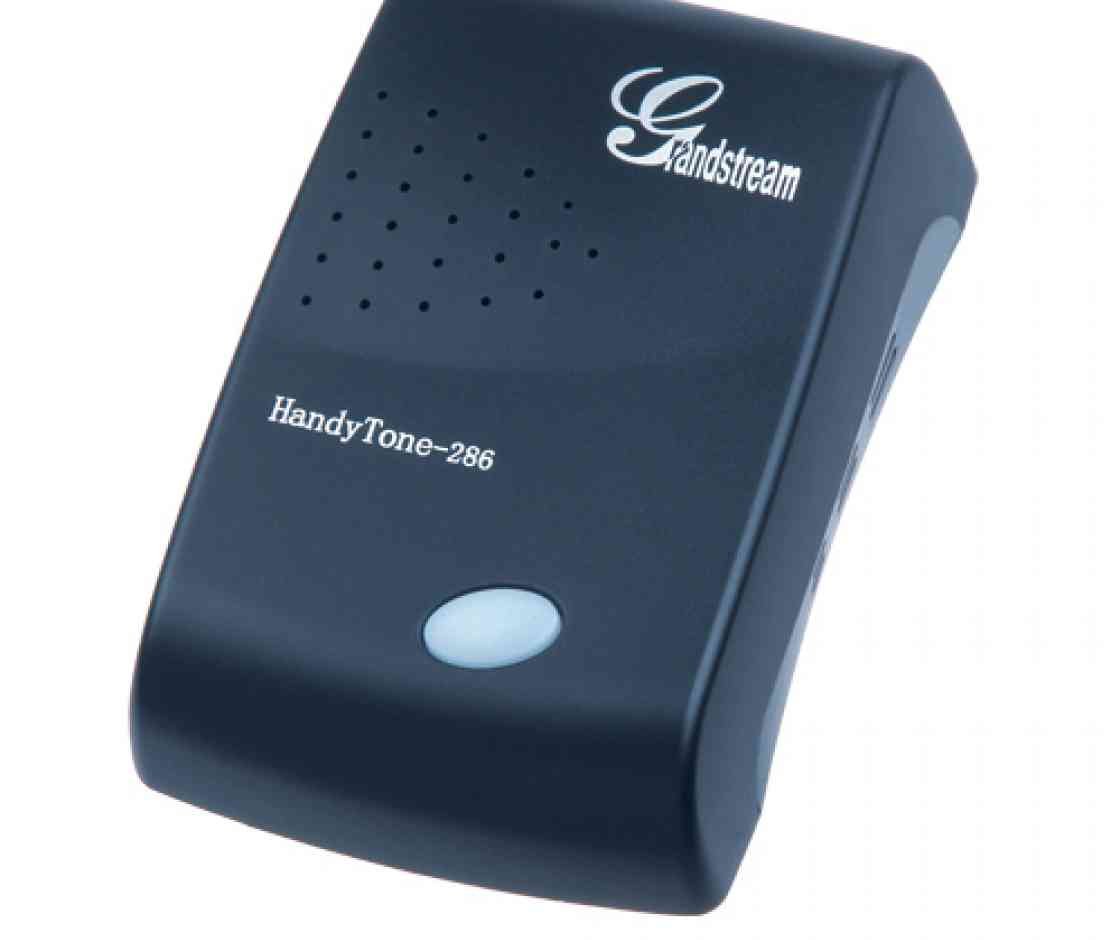
HandyTone HT286 Revision 3.0
Single-port analog telephone adapter
Connect one analog endpoint to a SIP voice service
Legacy replacement, small offices, remote sites, test environments
Archived model; current supply is not guaranteed
Africa and supported regional destinations
Selection, compatibility, quote, and delivery guidance
Depends on source, condition, supplier terms, and country
Confirm SIP platform, firmware, power adapter, and endpoint compatibility
Product Overview
The HandyTone HT286 Revision 3.0 was created for a straightforward task: allowing a conventional analog telephone device to participate in a SIP-based voice network. It sits between an Ethernet network and an analog endpoint. One side connects to a router, switch, or modem through its RJ45 10Base-T interface, while the other side presents a single FXS phone port for a standard touch-tone telephone, cordless base, selected fax machine, or another supported analog device. The adapter registers to a compatible SIP server or service provider and converts audio and signalling between the two environments.
For a business buyer, the practical value is not raw network speed or broad expansion. The value is continuity. An organisation may have a reception handset, warehouse phone, gatehouse line, staff accommodation phone, legacy conference telephone, fax workflow, or specialist analog endpoint that remains useful even after the core communications platform has moved to IP. A single-port adapter can preserve that device while avoiding the immediate replacement of every analog endpoint. It can also serve as a like-for-like spare where a deployment was standardised around this older model and the configuration has already been tested.
The unit supports the SIP 2.0 standard and a range of established voice codecs, including G.711, G.723.1, G.726 at 32 kbit/s, G.729A, and iLBC. It includes adaptive jitter handling, packet-loss concealment, echo control, comfort-noise functions, and configurable call-progress tones. Call features depend on the SIP platform and service configuration, but the device can support functions such as caller identification, call waiting, hold, transfer, forwarding, and DTMF handling. Fax operation can use T.38 or pass-through methods where the provider, PBX, network path, and destination are compatible.
Management is appropriate for the product’s generation. Administrators can use a built-in voice menu and browser interface, while project deployments may use HTTP or TFTP-based provisioning. Networking options include DHCP, static addressing, PPPoE, STUN for NAT traversal, VLAN tagging, Layer 2 priority, and Layer 3 quality-of-service markings. These features can help the adapter fit into an established voice VLAN or a small broadband-connected site, but they do not turn it into a modern managed gateway. Buyers should evaluate security policy, firmware age, service-provider compatibility, and operational support before introducing it into a current production environment.
FourTeck approaches the Grandstream HT286 Revision 3 as a legacy procurement and compatibility requirement rather than a default recommendation for every new installation. The team can help identify whether the correct outcome is a matching replacement unit, a newer single-port adapter, a dual-port option, or a multi-line analog gateway. This review is especially useful when the request involves faxing, custom dial plans, remote provisioning, a specific PBX, a locked service-provider configuration, or a larger rollout where long-term manageability matters more than the lowest initial hardware cost.
Key Business Benefits
The HT286 is a specialised bridge between analog and IP communications. Its business benefit is strongest where one known analog device must remain in service, where a matching spare is required, or where a small and controlled SIP deployment does not justify a larger gateway. The following points explain the practical outcomes a procurement or technical team should assess.
Preserves Useful Analog Equipment
Replacing an entire phone, conference unit, or supporting workflow can cost more than adapting a single endpoint. The adapter allows a compatible analog device to continue operating while the call service is delivered through a SIP platform. This can reduce disruption for users who rely on familiar equipment or established procedures.
Focused One-Line Deployment
A single FXS port keeps the deployment simple when only one analog line is needed. There is no requirement to purchase a larger multi-port gateway for a reception phone, home-office handset, test bench, remote room, or replacement line. The limited scope also makes it easier to document the connected device and SIP account.
Flexible Basic Configuration
The device can obtain an address through DHCP or use a static network configuration. Administrators may configure it through the attached phone’s voice menu, a web browser, or provisioning files. This gives installers several ways to commission or recover a unit, even when local access conditions vary.
Codec Choice for Varied Links
Support for multiple established codecs gives a compatible SIP platform options for balancing voice quality and bandwidth. G.711 can suit stable local links, while compressed codecs may help on constrained connections. The final selection should match the provider, PBX, latency conditions, licensing position, and call-quality requirement.
Useful Voice-Network Controls
VLAN tagging, priority markings, jitter management, packet-loss concealment, echo control, and STUN-based NAT traversal help the unit operate across common small-business network designs. These functions are valuable when voice traffic must receive consistent treatment or when the adapter sits behind an internet router.
Clear Legacy-Risk Assessment
Choosing an older adapter should be deliberate. Its age, archived status, 10 Mbps interface, older authentication methods, and firmware support position need to be weighed against the convenience of a matching replacement. FourTeck helps buyers make that trade-off visible instead of treating an old and new model as equivalent.
Product Highlights
One Analog Phone Interface
The single RJ11 FXS port is intended for one compatible analog endpoint. It supplies the analog line interface while the adapter handles registration and media conversion on the SIP side.
SIP-Based Interoperability
SIP 2.0 support enables operation with many standards-based IP PBX systems and voice providers, subject to the provider’s current acceptance of the device, selected firmware, account settings, and required security controls.
Voice Quality Functions
The digital signal processing features include adaptive jitter handling, packet-loss concealment, echo cancellation, automatic gain control, silence suppression, comfort-noise generation, and configurable codec preference.
Fax Support with Conditions
T.38 fax relay and G.711 pass-through can be used where the complete route supports the chosen method. Fax success depends on the PBX, provider, remote destination, jitter, packet loss, codec configuration, and fax device.
Local and Remote Setup Options
Technicians can use the attached phone and voice prompt, browse to the embedded configuration pages, or deploy settings through HTTP or TFTP. This flexibility supports individual setup and repeatable legacy replacements.
Compact Physical Footprint
At approximately 65 × 93 × 27 mm and 0.26 kg, the unit can fit near a desk phone, router, small communications cabinet, or travel kit without consuming rack space.
These highlights should be considered together with the model’s limitations. The Ethernet connection is 10Base-T rather than Fast or Gigabit Ethernet. The product is archived, and its management and security capabilities reflect an earlier generation of VoIP equipment. It is therefore most appropriate where a known legacy requirement exists, the unit has already been validated with the target platform, or the buyer needs a matching replacement while planning a controlled migration. A new installation that requires current firmware support, stronger security options, central cloud management, more ports, or longer lifecycle coverage will usually benefit from evaluating a newer Grandstream adapter or gateway.
Technical Specifications
The table below summarises documented capabilities associated with the HandyTone HT286 Revision 3 generation. Firmware, regional power accessories, service-provider configuration, package contents, and unit condition can vary. Confirm the exact device label and supplied accessories before purchase.
| Specification | Details | Buyer Note |
|---|---|---|
| Brand and model | Grandstream HandyTone HT286 Revision 3.0 | Check the underside label to confirm revision |
| Product type | Analog telephone adapter | Designed for one analog endpoint |
| Analog interface | 1 × FXS RJ11 phone port | Not an FXO port and not a two-line gateway |
| Network interface | 1 × RJ45 10Base-T Ethernet | Requires an available Ethernet connection |
| Signalling | SIP 2.0 / RFC 3261 | Registration depends on PBX or provider policy |
| Voice codecs | G.711 A-law and μ-law, G.723.1, G.726-32, G.729A, iLBC | Use a codec supported end to end |
| Fax | T.38 fax relay and G.711 pass-through support | Successful faxing is environment dependent |
| Voice processing | Jitter control, packet-loss concealment, echo cancellation, VAD, CNG, AGC | Network quality remains important |
| Network addressing | DHCP, static IP, and PPPoE options | Confirm the preferred site design |
| NAT traversal | STUN support | Modern SBC or provider methods may differ |
| Quality of service | 802.1Q VLAN, 802.1p priority, ToS/DiffServ/MPLS markings | Switch and router policies must match |
| Configuration | Voice IVR, embedded web interface, HTTP/TFTP provisioning | Credentials may have been changed by a provider |
| Authentication | SIP digest using MD5 or MD5-sess | Review against current security requirements |
| Power | 100–240 VAC input adapter; +5 VDC, 1200 mA output | Use the correct polarity and approved adapter |
| Dimensions | Approximately 65 mm W × 93 mm D × 27 mm H | Compact desktop placement |
| Weight | Approximately 0.26 kg | Verify packaged shipping weight separately |
| Operating range | 0–40°C; 10–95% humidity, non-condensing | Protect from heat, moisture, dust, and unstable power |
| Compliance | FCC, CE, C-Tick listed in product documentation | Confirm any project-specific certification requirement |
| Availability | Legacy and configuration dependent | Ask about condition, source, lead time, and alternatives |
How to interpret the specification
The most important purchasing question is not whether the adapter has enough network throughput. Voice from one analog line requires little bandwidth. The important questions are whether the target SIP platform still accepts this device, whether the unit can run an appropriate firmware version, whether the connected analog equipment uses supported signalling and electrical characteristics, and whether the organisation is comfortable operating an archived product. For fax use, request a test plan. For remote sites, confirm router behaviour, NAT policy, QoS, power quality, and remote recovery procedures. For regulated or security-sensitive environments, compare the legacy authentication and provisioning model with current policy before approval.
Configuration and Buyer Guidance
A model number alone is not enough to confirm that an analog telephone adapter will work in a specific business environment. Before requesting a quote, collect the technical and commercial details below. This reduces the risk of ordering a unit that cannot register, cannot support the intended fax workflow, has the wrong power accessory, or does not meet current security and support expectations.
What endpoint will be connected?
Identify whether the port will serve a corded phone, cordless base, fax machine, analog conference phone, modem-like device, door phone, or other equipment. Standard voice handsets are usually simpler than fax or specialist analog devices.
Which SIP platform is in use?
Provide the PBX model, hosted provider, required transport, authentication method, registration address, outbound proxy requirement, and any approved-device policy. A provider may no longer support an archived adapter even when it is technically SIP compatible.
Is this a replacement or new deployment?
A like-for-like replacement can be reasonable when the environment is known and the configuration is documented. For a new deployment, compare newer options that provide current firmware, faster interfaces, stronger security, and a longer support path.
How will the unit be managed?
Decide who will configure, monitor, reset, and recover the adapter. Record administrator credentials, SIP account data, network settings, firmware version, MAC address, and provisioning path so a future replacement does not depend on undocumented knowledge.
What network conditions apply?
Confirm an Ethernet port, DHCP or static addressing, voice VLAN policy, firewall rules, NAT behaviour, DNS, time service, internet stability, and packet-loss levels. Voice quality and registration reliability depend on the wider network.
What commercial terms matter?
Ask whether the unit is new old stock, refurbished, used, or supplied as a project spare. Confirm included accessories, warranty handling, return conditions, lead time, quantity, packaging, and whether a newer equivalent may offer better total value.
FourTeck can use this information to review the requirement and suggest the most practical path. The recommendation may be the requested HT286 Revision 3, but it may also be a modern single-port ATA, a two-line adapter, or a multi-port gateway. The aim is to match the product to the business outcome, not simply to repeat a model name on a purchase order.
Ideal Business Use Cases
This adapter is most useful in narrow, clearly defined scenarios. It should not be treated as a universal communications platform or as a replacement for a multi-line gateway. The following use cases show where a one-port legacy ATA may still provide practical value when compatibility has been confirmed.
Like-for-Like Legacy Replacement
An existing HT286 may have failed while the PBX account, analog phone, cabling, and operating procedure remain valid. A matching revision can reduce immediate change, provided the replacement condition and firmware are appropriate.
Small Remote Office Line
A remote room or branch may need one simple analog handset registered to a central SIP service. The compact adapter can provide that connection where the network, power, security policy, and remote-support process are controlled.
Reception or Service Desk Handset
A familiar corded or cordless phone can remain at a reception point, workshop counter, storage room, or service desk while calls are handled by the organisation’s SIP platform. The single-line scope keeps the setup easy to understand.
Fax Migration or Transitional Workflow
Where a business is gradually reducing fax dependence, an ATA may keep an existing machine operational during the transition. T.38 or G.711 pass-through must be validated across the provider path, and digital alternatives should be considered for long-term reliability.
Training and Test Environment
Technicians, students, integrators, and support teams may use the adapter in a controlled lab to understand analog-to-SIP conversion, registration, codecs, IVR configuration, dial plans, NAT behaviour, and basic provisioning without using production endpoints.
Project Spare for an Installed Base
Organisations with a documented installed base may keep tested spare units to reduce downtime. The spare should be stored correctly, labelled with firmware and configuration information, and included in a planned migration strategy.
The adapter is not the right choice when a site needs several analog lines, integrated FXO connectivity, gigabit routing, modern encrypted signalling and media, cloud fleet management, high-density provisioning, or a long new-product lifecycle. In those situations, a current ATA or analog gateway should be reviewed.
Grandstream HT286 Revision 3 Analog-to-SIP Connectivity
The adapter’s core function is conversion between two different communications environments. On the analog side, the FXS port presents the electrical and signalling interface expected by a supported telephone or fax device. On the IP side, the adapter behaves as a SIP endpoint. It registers an account, negotiates a codec, sends and receives RTP media, interprets dialled digits, and maps call-control events to actions that the analog user understands through ringing, dial tone, busy tone, hook flash, and caller identification where supported.
For a buyer, this architecture means the unit should be treated as an endpoint, not as a telephone exchange. It does not create a multi-user phone system by itself. A SIP service, hosted voice account, or IP PBX must provide call routing, extension logic, outside-line access, voicemail, numbering, permissions, and related services. The adapter then presents those services to one analog device. The quality of the final experience therefore depends on the combined behaviour of the phone, adapter, local network, internet connection, SIP platform, carrier, and remote destination.
Codec configuration is an important part of that chain. G.711 offers uncompressed voice commonly used on local networks and stable broadband links. Compressed options can reduce bandwidth but may introduce additional processing and may not be accepted by every service. DTMF delivery also matters for voicemail, interactive menus, banking systems, and conferencing services. The platform and adapter must agree on in-band audio, SIP INFO, or RTP event methods as required.
The one-port design is valuable because it keeps the responsibility clear. One SIP account, one analog line, and one network attachment can be documented and tested without the complexity of a larger gateway. At the same time, this simplicity limits expansion. A growing site should not build a large voice environment by scattering many unmanaged legacy adapters if a central multi-port gateway or current-generation platform would provide better administration, security, visibility, and support.
Grandstream HT286 Revision 3 Voice Quality and Fax Handling
Voice over IP turns speech into timed packets. Unlike a traditional analog line, those packets can encounter delay, variation in arrival time, congestion, or loss. The HT286 includes digital signal processing functions intended to make that packet stream usable on an analog handset. Adaptive jitter handling can buffer variations, packet-loss concealment can reduce the effect of missing audio, and line echo cancellation can help control reflections from the analog interface. Automatic gain control, silence suppression, voice activity detection, and comfort-noise generation further shape the user experience.
These functions improve tolerance but cannot repair a badly designed network. Voice traffic should receive a stable path with low packet loss, reasonable latency, minimal jitter, dependable DNS, and correct firewall handling. A voice VLAN can separate phones from general data, while 802.1p and DiffServ markings can help network devices prioritise calls. The policy must be consistent: tagging packets on the ATA does not help when switches, routers, internet links, or service providers ignore or rewrite the markings.
Fax is more demanding because the receiving equipment expects precise tones and timing. T.38 converts fax signals into a packet method designed for IP networks, while G.711 pass-through carries the fax audio in a voice stream. Neither method is guaranteed across every route. A successful test should include the actual fax machine, intended page count, local network, PBX, provider, destination network, and remote fax equipment. Long documents and international routes can expose problems that a one-page local test does not reveal.
Businesses that still rely on fax for contracts, healthcare forms, government communication, finance, logistics, or supplier processes should document the required success rate and fallback procedure. Where reliability is critical, compare the ATA route with a managed fax service or secure digital workflow. FourTeck can help frame the hardware requirement, but the customer’s provider or communications integrator should confirm the complete service path.
Grandstream HT286 Revision 3 Provisioning, Network Fit, and Legacy Security
The adapter can be configured through an interactive voice menu, its embedded web pages, or provisioning files delivered through HTTP or TFTP. The voice menu is useful for discovering the assigned IP address, changing basic network parameters, and recovering access when a computer is not immediately available. The web interface provides a clearer way to enter SIP server details, account credentials, codec order, dial settings, regional tones, network values, and firmware or provisioning locations.
For a single replacement, manual configuration may be acceptable. For several units, repeatable provisioning reduces typing errors and helps standardise settings. Even in a small deployment, keep a controlled record of the MAC address, serial label, revision, firmware, SIP user, authentication identity, dial plan, VLAN, IP method, administrator password, and connected endpoint. Do not store live passwords in unsecured spreadsheets or send them in ordinary email. Access to the adapter’s management pages should be limited to trusted networks.
Security expectations have changed since this product generation was designed. The documented SIP digest methods use MD5 or MD5-sess, and provisioning may rely on HTTP or TFTP. The device should not be assumed to provide modern encrypted signalling, encrypted media, unique factory credentials, certificate-based identity, secure boot, or current cloud management. A buyer must compare the actual firmware and feature set with organisational policy. Network segmentation, strict firewall rules, access-control lists, non-default administrator passwords, controlled provisioning servers, and restricted internet exposure can reduce risk, but they do not transform legacy hardware into a current security platform.
This does not automatically make every legacy replacement inappropriate. It means the decision should be evidence based. A closed lab, temporary migration, isolated internal line, or validated spare may have a different risk profile from an internet-exposed production endpoint handling sensitive calls. FourTeck recommends involving the voice administrator and security team where the adapter will connect to a business network.
What Buyers Should Check Before Purchase
Before requesting a quote, buyers should confirm the required configuration, usage environment, compatibility needs, warranty expectations, and delivery location. FourTeck can help review these details so the selected product matches the business requirement instead of being chosen only by model name or purchase price. This is particularly important for an archived ATA because small differences in revision, firmware, provider lock, accessories, or condition can determine whether a unit is useful.
Correct Revision
Confirm that Revision 3.0 is specifically required. Earlier or later hardware revisions may use different firmware, labels, features, or recovery procedures. A photograph of the underside label can help prevent a mismatch.
Unit Condition
Ask whether the unit is sealed old stock, open box, refurbished, or used. Request information about testing, reset status, cosmetic condition, port condition, power adapter, packaging, and return terms.
Firmware and Provider Lock
Confirm firmware version and whether an internet telephone provider previously provisioned the unit. Locked credentials, custom settings, or an unknown provisioning URL can complicate deployment and should be resolved before production use.
PBX Compatibility
Share the exact PBX or hosted service. Confirm registration transport, codecs, DTMF, caller ID format, dial plan, NAT handling, and whether the platform accepts older authentication and device behaviour.
Analog Device Fit
Identify the phone, cordless base, or fax machine and any special requirements such as pulse dialling, modem tones, message-waiting indication, custom impedance, door release, or alarm-panel signalling. Not every analog device is a suitable ATA workload.
Power and Site Environment
Verify the supplied 5 V adapter, plug type, voltage range, polarity, cable condition, and local outlet. Consider surge protection or UPS support where calls must survive short power disturbances.
Accessories and Cabling
Confirm an Ethernet cable, telephone lead, suitable RJ11 pinout, available switch port, and any mounting or enclosure needs. Include a tested spare power adapter only when its electrical specification is correct.
Long-Term Cost
Compare purchase price with technician time, testing, spare availability, security controls, future replacement, and service interruption. A newer adapter can be less expensive over its lifecycle even when its initial cost is higher.
Provide required quantity, delivery country, required revision, preferred condition, current firmware if replacing a unit, PBX or provider, connected analog device, fax requirement, power-plug preference, expected warranty, target date, and whether a modern alternative is acceptable. Project buyers should also state whether all units need identical firmware, labelling, pre-configuration, serial capture, or staged delivery.
Africa Availability and Service Support
FourTeck supports product inquiries across Africa with assistance for model selection, compatibility review, quote requests, delivery coordination, and warranty guidance. Availability for an archived adapter can vary according to supplier status, requested revision, unit condition, order quantity, destination, and the accessories included. A quote should therefore identify whether the requirement is for a new old-stock unit, refurbished replacement, tested used unit, or an approved current alternative.
The support process can begin with a straightforward requirement review. Buyers share the current phone system, connected analog device, desired quantity, delivery location, target date, and any mandatory revision or firmware. FourTeck can then help determine whether sourcing the specified model is practical and whether the commercial terms match the operational need. Where an exact HT286 is not suitable or available, the team can suggest a current single-port or multi-port Grandstream option for technical approval.
Warranty handling must be confirmed against the actual source and condition of the offered unit. An archived product may not carry the same manufacturer coverage as a current model. FourTeck can provide available warranty information, supplier terms, and return guidance in the quotation so the buyer can compare options on a clear basis. Installation, remote configuration, PBX programming, provider service, and fax validation may require separate technical support depending on the project.
Africa Country and Regional Coverage
Businesses across Africa, including Kenya, Uganda, Nigeria, Ghana, Tanzania, Rwanda, Ethiopia, South Africa, Zambia, Botswana, Senegal, and nearby business markets, can contact FourTeck for availability review, configuration guidance, and quote assistance. The team can help buyers assess a matching legacy unit, suitable replacement options, deployment requirements, project quantities, and delivery considerations based on the intended use.
Regional supply planning should account for customs procedures, delivery destination, power-plug requirements, shipment value, order quantity, warranty route, and whether the product is being purchased for immediate use or as a spare. For multiple branches, buyers should provide a consolidated list showing quantities by destination and any need for common firmware or labelling. This helps avoid separate technical decisions for each site and gives procurement teams a clearer basis for approval.
FourTeck does not assume that a legacy adapter is the correct answer for every location. Where remote support is difficult or replacement stock is uncertain, a standardised current model may simplify future operations. The customer can request a comparison between the specified unit and newer Grandstream ATA choices before confirming the order.
GCC, Middle East and Africa Availability
FourTeck Africa can support product inquiries for businesses across Africa while also guiding regional technology requirements through selected FourTeck platforms for GCC and Middle East markets. Organisations with offices in the UAE, Saudi Arabia, Qatar, Oman, Bahrain, Kenya, Uganda, and other supported destinations can share a combined requirement for review. Availability, delivery options, warranty handling, and configuration support may vary by country, product condition, selected alternative, supplier status, and order quantity.
A regional customer should identify where the units will be deployed, whether a common PBX serves all sites, which power accessories are required, and who will handle configuration. A standard current model may be easier to support across several countries than a mixture of archived devices. Where a matching replacement is mandatory, provide the old unit’s label and firmware details so the correct revision can be assessed.
Other Options Buyers May Consider
A buyer requesting an HT286 may need an exact replacement, but many requirements can be served more effectively by a current Grandstream adapter or a higher-density gateway. The cards below provide practical directions for further review. Final suitability depends on the PBX, number of analog endpoints, networking design, security policy, fax requirement, and support expectations.
Grandstream HT801
A current-generation direction for buyers who need one FXS port and want a modern replacement path for a single analog phone or fax endpoint.
Grandstream HT802
Suitable when two analog endpoints or two lines are required, reducing the need to deploy separate one-port adapters at the same site.
Grandstream HT812
A two-port ATA direction for buyers who also need integrated routing features and a more capable network interface in a compact branch solution.
Grandstream GXW4216
A multi-port analog gateway direction for offices, hotels, campuses, housing, or projects that need to connect many analog devices to a central IP voice system.
Grandstream UCM IP PBX Solutions
For buyers building or modernising the complete communications platform rather than replacing only an endpoint, a current PBX review can clarify extensions, trunks, remote users, and management.
Grandstream Brand Portfolio
Browse related voice, gateway, networking, and unified-communications choices when the project needs a broader standardised solution.
FourTeck can help compare these directions without assuming that the newest or largest model is automatically correct. A one-port adapter remains sensible for one endpoint, while a multi-port gateway can simplify a site with many analog lines. The best choice is the one that meets the required number of ports, provider compatibility, security policy, management process, installation environment, and expected service life.
Why Buyers Choose FourTeck
Technology procurement is easier when the supplier understands the business outcome as well as the model number. FourTeck helps buyers define what must connect, how the device will be used, which platform it must register to, where it will be delivered, and what support expectations apply. This is particularly valuable for archived equipment, where the commercial description may not reveal the revision, firmware, condition, or practical migration alternatives.
Business IT Supply Support
Assistance for single replacements, branch requirements, project quantities, reseller inquiries, and multi-site procurement.
Configuration Guidance
Review of port count, SIP environment, analog endpoint, firmware concerns, network design, and suitable alternatives.
Quote Assistance
Clear quotation support based on requested condition, quantity, destination, accessories, warranty information, and delivery needs.
Africa Delivery Coordination
Practical coordination for destination details, consolidated projects, shipment planning, and regional inquiry handling.
Warranty Guidance
Explanation of available source-specific warranty terms rather than assuming current manufacturer coverage for an archived model.
Related Product Matching
Support for identifying a modern single-port ATA, dual-port device, or high-density gateway where it better serves the project.
The process is consultative rather than based on unverified promises. Availability, lead time, condition, warranty, and delivery are confirmed through the quotation process. Buyers receive a practical path to compare the requested model with suitable current alternatives and can involve their voice engineer, service provider, or systems integrator before approval.
Frequently Asked Questions
What is the Grandstream HT286 Revision 3 used for?
It connects one compatible analog telephone, cordless base, fax machine, or similar endpoint to a SIP-based IP voice service. The adapter provides the analog FXS interface, registers as a SIP endpoint, and converts voice between the analog device and the network. It is most relevant for legacy replacement, transitional deployments, small remote sites, and controlled test environments.
Is the HT286 Revision 3 still a current Grandstream product?
No. Grandstream lists the HT286 Revision 3.0 in its product archive. Buyers should treat it as a legacy model and confirm source, condition, firmware, accessories, warranty terms, and provider compatibility. A current adapter such as the HT801 or HT802 may provide a better support path for a new deployment.
Can the adapter connect a fax machine?
The documented feature set includes T.38 fax relay and G.711 fax pass-through. Actual fax success depends on the fax machine, PBX, voice provider, codec, network quality, packet loss, jitter, and destination. Businesses should test the complete route with representative documents before relying on it for important operational or regulated communications.
Does it support two analog phones?
The HT286 has one FXS phone port and is intended for one analog line. Connecting several phones through informal splitting can create ringing-load, wiring, privacy, and support problems. Buyers who need two independent lines should review a two-port ATA, while larger deployments should consider a multi-port Grandstream analog gateway.
Can FourTeck help with configuration selection?
Yes. FourTeck can review the required revision, number of analog endpoints, PBX or hosted provider, expected codecs, fax requirement, network environment, power accessory, unit condition, and delivery destination. This pre-sales review helps determine whether the requested legacy adapter or a newer model is the more appropriate choice.
Is the HT286 suitable for a new business phone rollout?
It can work in a technically compatible environment, but it is usually better suited to a known legacy requirement than to a new fleet deployment. New projects should compare current firmware support, security features, management options, Ethernet capability, warranty, availability, and lifecycle. FourTeck can suggest newer Grandstream ATA or gateway options for evaluation.
Is delivery support available across Africa?
FourTeck supports regional inquiries, quotation, and delivery coordination across Africa. Final options depend on the requested quantity, product condition, destination, supplier status, shipment requirements, and any power or warranty considerations. Share the delivery country and target date so available routes and alternatives can be reviewed in the quotation process.
What warranty applies to an archived HT286?
Warranty depends on the actual unit, condition, source, supplier, and country. A sealed old-stock device, refurbished unit, and used replacement may carry different terms. Buyers should not assume that current manufacturer coverage applies. FourTeck will provide available warranty and return information with the specific quotation.
What information is needed for a quote?
Provide the quantity, delivery country, required revision, preferred unit condition, target date, PBX or provider, connected phone or fax model, current firmware if replacing a device, power-plug preference, warranty expectation, and whether a newer alternative is acceptable. Project buyers should add any staging, labelling, or pre-configuration requirements.
Can businesses request bulk or project supply?
Yes, businesses, resellers, and integrators can submit a project requirement. For an archived model, bulk quantity may be difficult and units from different sources may vary. FourTeck can review consistency requirements, expected condition, revision, firmware, delivery schedule, and modern alternatives that may offer more dependable project availability.
Need Help Choosing the Right Analog Telephone Adapter?
FourTeck can help you review HT286 Revision 3 availability, unit condition, SIP compatibility, connected analog equipment, warranty guidance, delivery requirements, and suitable current Grandstream alternatives for your business location.
Reviews
There are no reviews yet.