

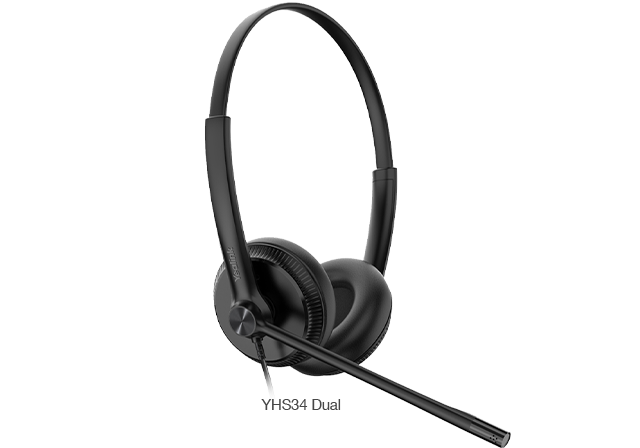
Quick Product Information
Yealink
YHS34 Lite
Analog wired over-the-head business headset
Quick Disconnect to RJ9 cable
Mono and dual-ear variants; confirm exact part number
Reception, customer service, sales, call centres and office calling
Designed for compatible Yealink enterprise IP phones; verify the phone and cable
Contact FourTeck for current variant and quantity options
Africa, subject to destination and order review
Supply-route dependent; confirm in the written quotation
Product Overview
A business headset is often a small part of the communications budget, yet it can have a direct influence on how comfortably and accurately employees handle customers. The YHS34 Lite is built for people who spend significant time speaking through a desk phone and need a simple, dependable alternative to holding a handset against the ear. It combines an over-the-head frame, adjustable microphone boom, replaceable foam ear cushion and wired connection. This arrangement keeps the user’s hands free for typing, checking records, entering an order, arranging an appointment or transferring a caller while the conversation continues.
The headset is offered in mono and dual-ear versions. A mono model leaves one ear open, which can be helpful for reception staff, supervisors, administrators and other employees who need to hear colleagues or visitors while taking calls. A dual-ear model covers both ears and can be more suitable for concentrated calling in busier rooms. The best choice depends on the workplace rather than a simple preference. Team layout, ambient noise, average call duration, the need for face-to-face interaction and the number of headsets being deployed should all be considered before a quotation is finalized.
Connection is another important point. This is not a standard USB computer headset. It uses a Quick Disconnect connection paired with an RJ9 cable for a compatible desk phone. The Quick Disconnect lets the user separate the headset from the lower cable without removing the headset from the head, which can be useful when moving away from the desk. The RJ9 end connects to the supported phone’s headset port. Exact compatibility should be checked because phone families, cable wiring and third-party variants can differ even when the connector appears similar.
For Africa-focused deployments, FourTeck helps translate the requirement into a suitable order. A business may need a few units for a reception desk, a larger quantity for a customer-care team, or a standardized headset package for several offices. Model confirmation, phone compatibility, mono-versus-dual selection, replacement cushion planning, quantity, delivery location and warranty expectations can be reviewed together. This helps avoid the common purchasing mistake of ordering by product name alone and discovering later that the selected variant, cable or user style does not match the actual operating environment.
Key Business Benefits
The value of a wired office headset is not measured only by its technical numbers. Buyers should consider how it affects daily call handling, user comfort, communication consistency and the effort required to support a group of employees. The following benefits show where this model can contribute to practical business operations.
◆ Hands-Free Productivity
Users can speak while typing notes, processing orders, checking account information or navigating a business application. This can make call handling more natural than repeatedly moving between the handset and keyboard.
◆ Clearer Voice Capture
The directional noise-cancelling microphone is designed to focus on the speaker’s voice and reduce distracting room sound reaching the far end. Clearer capture can reduce repetition during service, support and administrative calls.
◆ Comfortable Daily Wear
The lightweight frame and foam ear cushion support longer periods of use without the bulk of a heavy communications headset. Comfort still depends on fit, work pattern and personal preference, so pilot testing can be useful for large teams.
◆ Role-Based Choice
Mono and dual-ear versions let procurement teams match the headset to the job. Reception may need environmental awareness, while a busy contact-centre agent may benefit from greater listening focus.
◆ Simple Wired Reliability
A wired design avoids battery charging, pairing and radio-management tasks. Once compatibility is confirmed, it offers a straightforward desk setup for organizations that prefer predictable, fixed-position calling.
◆ Quick Disconnect Convenience
The QD connection allows a user to detach from the lower phone cable without taking off the headset. This can help employees leave the desk briefly while keeping the headset adjusted for their next call.
◆ Consistent Team Deployment
Standardizing a compatible headset across similar phone models can simplify user orientation, replacement planning and procurement. The rollout should still document exact phone models and headset part numbers to prevent cable mismatches.
Product Highlights
The headset is designed around practical office calling rather than software-heavy features. Its strongest points are the combination of wideband voice support, directional microphone design, light physical construction and close desk-phone integration. These characteristics matter most when the headset is matched to the right user role and compatible telephone.
Speaker and microphone bandwidth are designed for professional voice communication when the connected phone and calling platform support wideband audio.
A unidirectional electret condenser microphone helps prioritize the user’s speech, while careful boom placement remains important for the best result.
The flexible boom can be positioned for left- or right-side wearing and adjusted near the mouth without forcing the user into one fixed orientation.
The Lite version uses soft foam cushions. Buyers planning long-term use or large deployments may also wish to discuss replacement cushion availability.
Yealink ActiveProtection is designed to help reduce exposure to sudden acoustic peaks. It should complement, not replace, sensible volume policies and safe workplace practices.
After the correct phone and cable combination is confirmed, the headset connects directly to the RJ9 headset port without battery charging or Bluetooth pairing.
Technical Specifications
| Area | Published Detail | Buyer Note |
|---|---|---|
| Brand / Model | Yealink YHS34 Lite | Confirm the exact mono or dual part number |
| Headset Type | Analog wired, over-the-head, on-ear | Designed mainly for fixed desk-phone work |
| Wearing Styles | Mono and dual-ear variants | Choose according to awareness and concentration needs |
| Connection | QD to RJ9 | Not a standard USB connection; verify phone compatibility |
| Headset Cable | Approximately 0.9 m | Works with the supplied lower QD cable |
| QD to RJ9 Cable | Approximately 1.2 m | Total working cable reach is about 2.1 m |
| Microphone Type | Unidirectional electret condenser microphone | Boom position affects voice capture quality |
| Microphone Response | 100 Hz to 8 kHz, wideband | Final call bandwidth depends on phone and platform |
| Microphone Sensitivity | -44.0 dB re. 1 V/Pa | Published value; normal adjustment may still be required |
| Speaker Size | 28 mm | Designed for voice and general desk audio |
| Speaker Response | 20 Hz to 20 kHz | Actual call content is limited by the voice system |
| Speaker Sensitivity | 93 dB SPL at 1 kHz | Use safe and comfortable volume settings |
| Speaker Impedance | 32 ohms at 1 kHz | Matched for the intended phone connection |
| Boom Rotation | Up to 330 degrees | Supports left- or right-side wearing |
| Ear Cushion | Soft foam, replaceable | Discuss spare cushions for shared or long-term use |
| Acoustic Feature | Yealink ActiveProtection | Use alongside workplace audio-safety policies |
| Operating Temperature | -10°C to +50°C | Use indoors in a clean, suitable office environment |
| Package Contents | Headset, QD to RJ9 cable and quick-start guide | Confirm package and regional variant before order |
| Warranty / Availability | Supply-route and destination dependent | Request written confirmation in the quotation |
Specifications should be read as a compatibility and deployment guide rather than a reason to skip product confirmation. The most important buying decision is whether the headset variant and lower cable suit the intended phone. A buyer may see YHS34 Lite Mono, YHS34 Lite Dual and versions intended for particular third-party phones. Similar connectors do not guarantee identical wiring or call-control behaviour. For a small order, provide the exact phone model and a clear photograph of the headset port if the installed base is uncertain. For a larger rollout, testing one unit with the organization’s phone firmware, voice platform and normal call workflow can reduce risk before the full quantity is released. Users should also evaluate comfort, left- or right-side microphone placement, microphone distance, listening volume and the amount of surrounding noise. These practical checks are more useful than comparing only speaker frequency range or cable length.
Configuration and Buyer Guidance
A headset order should begin with the user’s work pattern and the installed phone, not with a general request for a cable headset. FourTeck can help structure the requirement, but the following questions should be answered by the procurement or IT team before the final quotation.
Which phone will be used?
Provide the complete Yealink phone model and, where possible, firmware or platform information. Compatibility must include the cable arrangement, not only the headset name.
Mono or dual-ear?
Mono supports awareness of nearby activity. Dual can improve listening focus in a busy call environment. A mixed order may suit organizations with several job roles.
How long are typical calls?
Frequent or extended calls make fit and cushion comfort more important. Large teams should consider a small user trial before standardizing the model.
What is the room like?
Open offices, reception areas and contact centres have different background-sound patterns. The microphone helps reduce distraction, but it does not create complete silence.
Are spares required?
Consider replacement foam cushions, spare headsets and cable-management needs for shared desks or large deployments. Hygiene processes are especially important where headsets change users.
What support is expected?
Confirm whether the requirement is product supply only or also includes phone checks, deployment guidance, user orientation, replacement planning and warranty coordination.
For bulk requirements, prepare a simple device schedule listing phone model, location, department, user role, mono or dual preference and quantity. This creates a clearer bill of materials and makes it easier to identify mixed phone estates. It also helps FourTeck separate confirmed products from optional spares, replacement cushions or alternative models. A well-prepared schedule reduces the chance of receiving an incomplete cable package or deploying a single headset style to users with very different working conditions.
Ideal Business Use Cases
This wired headset is most useful where employees work at a compatible desk phone and need to move efficiently between conversation and computer-based tasks. It is not intended to replace a mobile wireless headset for staff who regularly walk across a site. The following use cases show where its fixed, lightweight design can provide practical value.
Reception and Front Desk
Receptionists can answer and route calls while checking visitor records, sending messages or speaking with on-site colleagues. A mono version often suits roles that require awareness of people at the counter.
Customer Service Teams
Agents can enter case notes, review customer information and follow call scripts while keeping both hands free. Dual-ear models may be preferred where many conversations happen in the same room.
Sales and Account Desks
Sales employees can discuss requirements while updating a CRM, preparing a quotation or reviewing a customer order. Consistent microphone placement can support clearer professional communication.
Hospitality Reservations
Reservation and guest-service desks can handle calls while working in booking systems. The preferred style depends on whether staff must also hear colleagues and guests nearby.
Healthcare Administration
Appointment, billing and records teams can speak with callers while accessing schedules or patient administration systems. Organizations should apply appropriate privacy and cleaning procedures.
Education and Public Service
School offices, admissions teams and public enquiry desks can manage incoming calls while recording details, checking documents or transferring callers to the correct department.
Finance and Professional Services
Accountants, insurance teams, legal support staff and financial-service desks can keep notes and business applications visible while speaking. A quieter working area remains important for confidential conversations.
Branch Office Standardization
Organizations using compatible Yealink phones across branches can standardize headset part numbers for similar roles, simplifying ordering and user guidance while still allowing mono and dual choices.
Yealink YHS34 Lite Voice Clarity and Noise Control
Clear business calling depends on both what the user hears and what the remote caller receives. The headset uses a wideband speaker and a unidirectional electret condenser microphone designed for voice communication. The microphone’s directional pattern helps give priority to sound arriving from the user’s mouth instead of collecting every sound in the room equally. This can make conversations easier to follow in a normal office, reception area or service desk, particularly when the boom is positioned correctly.
The microphone should sit close to the corner of the mouth without touching the face. If it is too far away, the phone may need more gain and surrounding sound can become more noticeable. If it is directly in front of the mouth, breath noise may be captured. Simple user orientation at the time of deployment can therefore improve results more than repeatedly changing phone settings. The 330-degree boom provides flexibility for left- or right-side wear and lets different users adjust the position to their preferred side.
Passive noise reduction comes mainly from the physical ear cushion and the way the headset sits on the ear. A dual-ear model can create more listening focus than a mono model, but neither version should be described as active noise cancelling. The surrounding workplace still matters. Teams with loud machinery, strong music or highly reverberant rooms may need a different specialist headset or changes to the environment. The YHS34 Lite is best understood as a professional office calling tool that improves voice focus within reasonable business conditions. Buyers should also remember that wideband quality depends on the entire voice path, including the desk phone, codec, PBX, internet connection and the other party’s equipment.
Yealink YHS34 Lite Comfort and Quick Disconnect Workflow
Employees who answer occasional calls can tolerate almost any working headset for a few minutes. The real test comes when a user wears it through repeated conversations, busy service periods or long conference calls. The Lite version addresses this with a low-bulk headband and soft foam ear cushions. Foam is breathable and practical for many office users, although comfort remains personal. Head shape, glasses, hairstyle, room temperature and daily wearing time all affect the experience. A pilot group is therefore sensible when an organization plans to purchase a large quantity.
The mono and dual designs support different forms of comfort. Mono leaves one ear free and can feel less enclosing during long reception or administrative work. Dual distributes the listening experience across both ears and may help users focus without raising the volume in a noisy room. Procurement teams should avoid deciding for every employee based only on price. A mixed deployment can be more effective: dual for concentrated service roles, mono for staff who alternate between callers and people in the room.
The Quick Disconnect connection supports a useful daily habit. The user can separate the headset from the lower RJ9 cable when stepping away from the desk, rather than removing and readjusting the headband every time. This can reduce strain on the phone cable and preserve the user’s preferred fit. The QD is not a wireless link and does not keep the call active while disconnected; it is a mechanical convenience. Users should be shown how to disconnect gently rather than pulling the cable. For shared desks, each employee may keep a personal headset while the lower phone cable remains in place, subject to the organization’s hygiene policy and compatibility plan.
Yealink YHS34 Lite Compatibility and Deployment Simplicity
The apparent simplicity of an RJ9 plug can lead to one of the most common headset purchasing errors: assuming that every phone with a similar socket uses the same cable wiring. The YHS34 Lite is designed to work with compatible Yealink enterprise IP phones through a QD-to-RJ9 connection, allowing supported phones to apply suitable acoustic parameters. However, the exact phone model still needs to be confirmed. Organizations with a mixed estate may have different Yealink generations, other brands, analogue sets, USB softphones or mobile devices at different desks.
A compatibility review should separate users into groups. One group may have Yealink phones with a dedicated RJ9 headset port and require the standard cable package. Another group may use third-party phones that need a different headset version or cord. A third group may work mainly through computers and therefore need a USB headset rather than this analog model. This grouping prevents a bulk order from being distributed to desks where the physical connector or intended workflow does not fit.
Once the correct combination is confirmed, deployment is straightforward. Connect the QD cable to the headset and the RJ9 end to the phone’s headset port, position the microphone, set a safe listening volume and test an internal and external call. Users should learn how to answer through the phone’s headset key, mute a call, adjust volume and use the Quick Disconnect without pulling the cord. For a multi-site rollout, document the tested phone firmware, headset part number, cable type and any phone-side settings. This creates a repeatable standard for future expansion and replacement purchases. FourTeck can assist buyers in organizing these details before the quotation is approved.
What Buyers Should Check Before Purchase
Before requesting a quote, buyers should confirm the details that turn a headset name into a usable business solution. Start with the exact desk-phone model. “Yealink phone” is not always enough for a mixed estate, and a familiar-looking RJ9 connector does not prove cable compatibility. Provide a phone list or select one representative device for testing. Next, decide whether each user needs mono or dual. The choice should reflect the room, role and need to hear nearby activity. A call-centre employee may prefer two-ear focus, while a receptionist may need one ear open.
Configuration Fit
Confirm mono or dual, standard Yealink or third-party version, cable package and quantity. Do not assume every listing with the same family name is identical.
Compatibility Check
Share the full phone model, headset-port type and voice workflow. Computer softphone users normally need a USB solution instead.
User Environment
Describe call duration, background sound, shared-desk use, privacy needs and whether employees interact with people in the room during calls.
Quote Preparation
Include quantity, destination, required delivery grouping, warranty expectations and any need for spare cushions or replacement units.
Buyers should also understand what the headset does not include. It does not use Bluetooth, contains no battery and is not intended for free movement across a building. It is not a USB headset for direct computer connection. It relies on the desk phone for call controls, audio processing and volume behaviour. These limitations are not disadvantages when the intended role is a fixed telephone desk; they are simply reasons to match the product carefully.
For project supply, ask how warranty claims will be handled, whether the exact variant can be repeated for later expansion, and whether the order should include a percentage of spare units. Shared-headset policies should address cleaning and personal cushions. Buyers should provide FourTeck with the phone model, selected style, number of users, workplace type, destination and desired delivery grouping. With those details, alternatives can be considered when a user actually needs USB connectivity, wireless mobility, stronger isolation or a different wearing style. This approach supports a useful quotation and reduces the risk of purchasing a technically good headset that is wrong for the working environment.
Africa Availability and Service Support
FourTeck supports business headset enquiries across Africa with assistance for model review, telephone compatibility, quantity planning, variant selection, quotation preparation, delivery coordination and warranty guidance. Availability can differ between mono and dual versions, standard Yealink-phone packages and variants intended for other phone brands. Supplier position, order quantity, destination and the timing of a project can also affect the available route. A website listing should therefore be treated as a product reference rather than a promise of local stock or a fixed delivery date.
A useful request should state the exact phone model, the number of users, the preferred wearing style and the delivery country. For larger projects, buyers can add a department breakdown, planned rollout date, spare-unit requirement and information about shared desks. FourTeck can then review whether one part number suits the entire order or whether a mixed package would better match the user roles. Compatibility questions should be resolved before the shipment is arranged, especially when the organization has several phone generations or uses more than one brand.
Warranty information is confirmed according to the selected supply route and written commercial terms. Buyers should ask what documentation is required for a claim, where a faulty unit would be assessed and whether replacement timing depends on supplier approval. Delivery arrangements are also discussed according to the destination, order size and project scope. Contact FourTeck through the Africa sales enquiry page with accurate product and destination details so the quotation can reflect the actual requirement.
Africa Country and Regional Coverage
Across African markets, communication-device purchasing often involves more than selecting a model from a catalogue. Buyers may be equipping a new customer-service team, replacing worn headsets at an established office, standardizing accessories across branches or sourcing a smaller number for reception and management desks. FourTeck helps structure these enquiries around technical fit, user role, order quantity and commercial requirements. The objective is to identify a usable package rather than offer a headset without confirming the phone connection.
The review can cover mono and dual choices, QD-to-RJ9 compatibility, cable package, replacement-cushion planning, deployment groups, spare-unit allowances and suitable alternatives for employees who actually need USB or wireless connectivity. Quote preparation can also include destination, requested delivery grouping, warranty expectations and the customer’s preferred procurement documentation. Suitable configuration, accessory availability, lead time and delivery arrangements may vary by model variant, quantity, supplier status and project scope.
Tanzania, Libya and Seychelles are discussed below because their business environments can lead to different buying priorities. A growing multi-department office in Tanzania may focus on role-based standardization and infrastructure compatibility. A project buyer in Libya may place greater emphasis on precise bills of materials, operational continuity and repeatable configurations. An organization in Seychelles may need a compact, service-oriented deployment for hospitality, government, finance or distributed sites. In each case, FourTeck can help buyers prepare a clear requirement through the FourTeck Africa platform without relying on unsupported stock, delivery or local-office claims.
Yealink YHS34 Lite in Tanzania
Organizations evaluating Yealink YHS34 Lite in Tanzania should begin with the work performed at each desk rather than ordering one style for every employee. Reception teams, school administrators, hospital appointment desks, bank support units, public-sector enquiry counters, insurance offices, resellers and growing customer-care operations may all use telephone headsets, but they do not have identical needs. A receptionist may prefer a mono model to remain aware of visitors and colleagues, while an agent in a busy service room may value the greater listening focus of a dual-ear version. Procurement teams should map the installed Yealink phone models, identify any older or third-party devices and confirm the correct QD-to-RJ9 cable before quantity approval. Where offices are expanding or moving, cable routing, desk layout and the number of shared workstations should be reviewed so the headset is comfortable and does not create unnecessary cord tension. Large deployments can benefit from a pilot unit tested with the real phone firmware, PBX and call workflow. Buyers should also consider replacement foam cushions, cleaning procedures and spare units for essential call-handling positions. A quotation request is most useful when it includes quantity by department, destination, mono or dual preference, phone model, target deployment period and warranty expectations. Delivery coordination and current availability can then be discussed according to supplier status and project scope. FourTeck can help Tanzanian enterprises, institutions, integrators and project buyers review these practical details, compare alternatives for USB or wireless users and prepare a headset package that matches daily operations instead of relying only on a general product name.
Yealink YHS34 Lite in Libya
Planning Yealink YHS34 Lite in Libya is most effective when the requirement is treated as part of a complete communications project. A buyer may be equipping a service centre, professional practice, administrative department, finance team, hospitality operation or multi-site office where consistent call handling and operational continuity are important. The first task is to document the current telephone estate: exact phone models, number of headset users, preferred wearing styles, available RJ9 headset ports and any desks that instead rely on computer softphones. This prevents an incomplete order and highlights where a USB headset or alternative cable is needed. The second task is to establish a repeatable bill of materials. Each line should state the headset variant, QD-to-RJ9 cable, quantity, optional spare unit and replacement-cushion requirement. For critical desks, a small spare allowance can be considered according to the organization’s support policy and budget. User comfort should be assessed through real call periods rather than a brief fit check, particularly when employees wear glasses or handle long conversations. Project documentation should also clarify who will install the units, test microphone position, set safe volume levels and explain the Quick Disconnect function. Delivery coordination needs accurate destination and quantity information, while warranty expectations should be recorded in the quotation without assuming a fixed local process before the supply route is confirmed. FourTeck can support Libyan procurement teams with compatibility review, configuration planning, alternative-model guidance and commercial preparation so the finished order is consistent, maintainable and appropriate for the operating environment.
Yealink YHS34 Lite in Seychelles
For buyers considering Yealink YHS34 Lite in Seychelles, the strongest use cases are often found in compact, service-oriented workplaces where a small number of call-intensive desks influence the customer experience. Hotel reservations, guest services, government administration, healthcare reception, education offices, financial services, retail support, tourism-related businesses and professional practices may need employees to speak clearly while working in booking, customer or records systems. A role-based purchase can deliver better value than placing the same headset at every desk. Reception and front-office users may favour the mono version because they regularly interact with people in the room, while reservations or customer-care employees working through repeated calls may prefer a dual-ear style. Space planning is relevant in smaller offices: buyers should check cable reach, desk arrangement, storage for personal headsets and whether shared workstations require individual cushions or dedicated units for hygiene. Distributed organizations with more than one site should record phone models and headset part numbers centrally so later replacements remain compatible. The wired design requires no charging and can be easy to support, but it is intended for users who remain near the desk; staff who move between guest areas, buildings or service zones may require a wireless alternative. Quote preparation should include the exact destination, quantity by site, phone model, mono or dual preference, spare requirement, expected deployment schedule and warranty questions. Delivery arrangements and availability must be reviewed against the selected supply route. FourTeck can help Seychelles organizations compare the headset with related Yealink communication options and prepare a compact, practical package that supports long-term use without unnecessary complexity.
Other Options Buyers May Consider
The right communication device depends on whether the user stays at a desk, moves around the workplace, works through a computer or needs a complete new phone. These related FourTeck options help buyers place the headset within a wider voice solution rather than comparing unrelated products only by price.
Yealink SIP-T87W
A premium SIP desk phone for executives, reception teams and advanced call handling. It can be considered when the project includes both a new phone and a compatible headset.
Yealink W76P DECT System
A cordless voice option for employees who need to move around an office, clinic, warehouse or hospitality environment instead of remaining at one desk.
Yealink W70B Base Station
A base-only DECT platform for buyers who want to choose compatible cordless handsets or supported wireless endpoints according to different roles.
Yealink MP58-WH E2
A Microsoft Teams desk phone with a wireless handset for professional users who need a dedicated Teams endpoint and greater movement around the desk.
Yealink Product Range
Browse related phones and communication devices when a project needs several endpoint types for executives, reception, general office users and mobile teams.
Yealink IP Phone Category
Compare desk-phone choices that may be paired with suitable headsets as part of a new office, branch or voice-system deployment.
A buyer should not automatically move to a more expensive device. The wired YHS34 Lite remains appropriate when the employee works at a compatible desk phone and values simple, battery-free operation. A DECT or Bluetooth option becomes relevant when movement is essential. A USB headset is the better direction for a computer softphone. A new desk phone may be required when the existing endpoint lacks a suitable headset port or no longer supports the organization’s voice platform. FourTeck can help place each user into the correct category before the final bill of materials is prepared.
Why Buyers Choose FourTeck
FourTeck approaches communication-device supply as a business requirement rather than a product-name transaction. A headset can look simple, but an incomplete compatibility check can leave an entire team with the wrong cable or unsuitable wearing style. The buying process therefore begins with the phone model, user role, quantity, workplace and destination. This helps create a quotation that reflects the real deployment.
Product enquiries are reviewed in the context of office communication, user roles and wider infrastructure.
Phone models, connection type and alternative headset categories can be considered before ordering.
The commercial request can reflect quantity, variant, destination, spares and project-specific requirements.
Delivery arrangements are discussed according to the selected route, order size and destination.
Buyers can request written clarification of warranty terms and the expected claim process.
USB, wireless, mono, dual and related phone options can be considered when one model does not fit every user.
This approach is relevant for small businesses buying a few units, enterprises planning a standardized rollout, resellers preparing a customer order and integrators building a complete voice solution. FourTeck does not need to claim that every item is always in stock or that one headset suits all organizations. A more useful service is to identify the exact requirement, communicate current options and help the buyer avoid a wrong-model decision.
Buyers can also use FourTeck’s related product resources to compare desk phones, DECT systems and other communication endpoints. When the user roles are mixed, one order may include several product types. Reception staff may use a mono wired headset, call-centre agents may use dual headsets, mobile supervisors may need DECT and computer-based employees may need USB audio. A coordinated review can make the final solution easier to support over its working life.
Frequently Asked Questions
What is the YHS34 Lite used for?
It is a professional wired headset for employees who make and receive calls through a compatible desk phone. Common users include receptionists, customer-service agents, sales staff, reservations teams, administrators and call-centre employees. It keeps both hands free for typing and application work while providing an adjustable microphone and on-ear listening.
Does it connect directly to a computer?
The standard model uses a Quick Disconnect to RJ9 cable for a compatible telephone and is not a normal USB computer headset. Buyers who work mainly through Microsoft Teams, Zoom, a browser dialler or another computer softphone should discuss a USB headset instead. Confirm the actual device used for calls before ordering.
What is the difference between mono and dual?
Mono covers one ear and leaves the other open for awareness of colleagues, visitors or surrounding activity. Dual covers both ears and can help users concentrate on the call in a busier room. Neither is automatically better; the correct style depends on the job role, office noise and employee preference.
Will it work with every Yealink phone?
It is designed for compatible Yealink enterprise IP phones, but the exact phone and cable package should still be checked. Organizations may have different phone generations, firmware versions or third-party variants. Share the complete phone model with FourTeck so the quotation can reflect the correct headset version and connection.
Does the headset have active noise cancellation?
The microphone is designed to reduce unwanted background sound reaching the far-end caller, and the ear cushions provide passive isolation. It should not be described as an active-noise-cancelling headset. Room conditions, microphone position, listening volume and the chosen mono or dual style all affect the result.
What does Quick Disconnect mean?
Quick Disconnect is the connection between the headset and the lower phone cable. It lets a user detach from the cable without removing the headset from the head. It is not wireless and normally ends the audio path when separated. Users should disconnect gently rather than pull the cable.
Can FourTeck supply this headset for Africa projects?
FourTeck supports Africa-focused enquiries with model confirmation, compatibility review, quotation preparation, delivery coordination and warranty guidance. Current availability depends on the selected mono or dual variant, quantity, supplier status and destination. Buyers should provide the phone model and project details rather than assume a listing confirms local stock.
What information is needed for a quote?
Provide the exact desk-phone model, mono or dual preference, required quantity, user environment, delivery destination and expected deployment period. For larger orders, add a department breakdown, spare-unit requirement, replacement-cushion plan and warranty expectations. These details help create a more accurate and usable quotation.
Is it suitable for shared desks?
It can be used in shared-desk environments, but organizations should define a hygiene process. Personal headsets or personal replacement cushions may be preferable to sharing the same ear pads. The Quick Disconnect design can support a setup where the lower phone cable stays at the desk while the employee keeps a personal headset.
Can businesses request bulk or multi-site supply?
Yes. Businesses, resellers and project buyers can submit a consolidated requirement for several departments or destinations. A useful schedule lists phone model, user role, headset style and quantity for each site. FourTeck can then review whether one standard part number is suitable or whether a mixed order is required.
Need Help Choosing the Right Headset Variant?
FourTeck can help review your Yealink phone model, mono or dual preference, user environment, quantity, warranty expectations and delivery destination. Share the project details so the quotation reflects a compatible headset and cable package rather than only the catalogue name.
Reviews
There are no reviews yet.