

FortiProxy Secure Web Proxy in Africa
FortiProxy is designed for organisations that need a dedicated control point between users and the internet. It helps security teams inspect web sessions, apply acceptable-use policies, reduce exposure to malicious sites, control cloud application activity and improve visibility into encrypted traffic. The platform is available in physical and virtual forms, allowing buyers to align the deployment with user population, throughput, data-centre strategy and operational preference. FourTeck helps business and public-sector buyers review the appropriate model, FortiGuard services, support term, high-availability requirement, integration plan and regional delivery needs before a quotation is prepared.
🔒 Web Security Planning
⚙ License Review
↗ Africa Delivery Coordination
Request Quote
Check Africa Availability
Quick Product Information
Fortinet
FortiProxy
Secure web gateway and proxy security platform
Physical appliance or virtual edition, model dependent
Web threat control, policy enforcement, encrypted traffic inspection and data protection
Mid-size organisations, large enterprises, campuses, regulated sectors and distributed operations
Contact FourTeck for current model and licensing options
Sizing, quote, deployment, license and warranty guidance
Capacity, interfaces, storage and services vary by selected edition
Product Overview
Modern organisations depend on the web for almost every business process. Employees open cloud accounting systems, collaboration platforms, file-sharing services, customer portals, research resources, payment tools and industry applications throughout the day. That same dependency gives attackers many opportunities to deliver phishing pages, malicious downloads, harmful scripts, deceptive cloud links and content designed to steal credentials or move sensitive information outside the organisation. A basic router or firewall rule may allow or block a destination, but it may not provide the specialised policy depth, user awareness, content inspection and reporting required for a large web-security programme.
FortiProxy provides a dedicated secure web gateway layer for controlling and inspecting user internet traffic. It can be deployed inline, as an explicit proxy, as a transparent proxy or within other supported proxy designs, depending on the selected architecture. This flexibility matters because organisations do not all connect users in the same way. A head office may route browsing through a central data centre, a university may separate student and staff policies, a financial institution may require strict identity-based controls, and a service provider may need logical separation for different customers or departments.
The platform combines several web-focused security functions in one operating environment. These can include URL and DNS filtering, application control, antivirus inspection, intrusion prevention, SSL and SSH inspection, data loss prevention, browser isolation options, content analysis, authentication, caching, traffic shaping and detailed logging. The exact feature set depends on the model, software release and active services. For procurement teams, this means the appliance or virtual license must be evaluated together with the required subscriptions and support term. Buying only by chassis name may leave important protection, scale or lifecycle requirements unresolved.
For Africa buyers, the decision also involves internet link quality, branch topology, local skill levels, rack and power conditions, cloud strategy, support expectations and delivery planning. FourTeck helps customers organise these factors before purchase. The discussion can cover expected users, peak web throughput, encrypted traffic percentage, authentication source, high availability, logging destination, required integrations and subscription period. This approach gives technical teams and finance teams a clearer basis for approving the correct FortiProxy option rather than treating secure web access as an isolated hardware purchase.
Key Business Benefits
The value of a secure web gateway is best measured by the operational problems it helps solve. The following benefits connect platform capabilities to practical business outcomes for security leaders, network teams, compliance officers and procurement managers.
🔒 Safer Employee Web Access
Layered URL, content, application and threat controls help reduce exposure to malicious websites, suspicious downloads and unwanted browsing. This gives the organisation a consistent control point for users who depend on the public internet throughout the working day.
◆ Better Visibility into Encrypted Traffic
Much of today’s web activity is encrypted. SSL inspection, when designed with appropriate certificates, exclusions and privacy policies, can reduce blind spots and allow security services to examine traffic that would otherwise pass without meaningful inspection.
⚙ Consistent Policy Enforcement
Identity-aware and application-aware policies help organisations apply different controls to departments, user groups, devices and business functions. This is useful where finance, guest, student, contractor and administrative users require different internet permissions.
✓ Data Protection Support
Data loss prevention and content analysis options can help identify sensitive information moving through web channels. This supports organisations that want stronger control over uploads, cloud storage use, visual content and regulated information.
↗ Scalable Deployment Choices
Hardware and virtual editions allow buyers to match the platform to data-centre standards, public-cloud plans, user population and growth expectations. The correct model can support expansion without forcing every organisation into the same physical design.
● Central Reporting and Accountability
Logging and reporting help security teams understand browsing patterns, blocked events, application use and policy results. Clear evidence supports troubleshooting, policy reviews, management reporting and incident investigation.
◆ Bandwidth and Experience Control
Caching, traffic shaping and application prioritisation can help organisations manage constrained links and reduce unnecessary bandwidth consumption. The benefit depends on traffic type and deployment design, but it can be valuable for campuses and distributed operations.
Product Highlights
FortiProxy focuses on the web session itself rather than treating internet access as ordinary network traffic. It can evaluate destinations, applications, files, encrypted sessions, user identity and content against defined policies. This makes it suitable for organisations that need more detailed control than a simple allow-or-deny internet rule can provide. The platform can work with Fortinet security services and related products such as FortiAnalyzer and FortiSandbox, while supported standards such as ICAP and WCCP can help it fit into broader security and traffic architectures.
Inline, explicit, transparent and related supported proxy designs provide architectural flexibility.
Web, video, DNS, application, antivirus, IPS and encrypted traffic controls can be combined.
Supported authentication methods can connect policies to users and groups instead of only IP addresses.
Selected designs can use redundancy to reduce the impact of appliance or service interruption.
Physical appliances are available for organisations that prefer dedicated hardware acceleration, local storage and predictable data-centre placement. Virtual editions are useful where the organisation already operates supported hypervisors or wants a cloud-aligned deployment. Published capacity ranges vary widely across the family, so user count alone should not determine the model. Peak throughput, SSL inspection, enabled security profiles, caching, logging and high-availability design can materially affect sizing. FourTeck therefore recommends a requirement review before selecting the appliance, virtual license or subscription bundle.
Technical Specifications
| Specification Area | Details for Buyers |
|---|---|
| Brand | Fortinet |
| Product Family | FortiProxy secure web gateway |
| Form Factors | Physical hardware appliances and virtual editions; final choice is configuration dependent |
| Deployment Modes | Inline proxy, transparent or WCCP proxy, explicit proxy and routed proxy options, depending on model and design |
| User Capacity | Published family ranges vary by model, from smaller deployments to large enterprise populations; sizing must be confirmed |
| Web Security | Web and video filtering, DNS filtering, antivirus, application control, intrusion prevention and content analysis, subject to services and release |
| Encrypted Traffic | SSL and SSH inspection with performance and policy impact dependent on model and configuration |
| Data Protection | DLP and content analysis capabilities, including selected OCR and image-analysis functions where licensed and supported |
| Authentication | Support can include RADIUS, SAML, LDAP, NTLM, Kerberos and FortiToken methods, depending on design |
| High Availability | Active-active or active-passive options are available for supported designs; confirm model and session requirements |
| Caching and Traffic Control | Web and video caching, reverse web cache, traffic shaping and quality-of-service functions, subject to configuration |
| Management | Web interface, CLI, SNMP and console options vary by model; role-based administration and reporting are supported |
| Integrations | FortiAnalyzer, FortiSandbox and selected third-party systems through supported protocols and services |
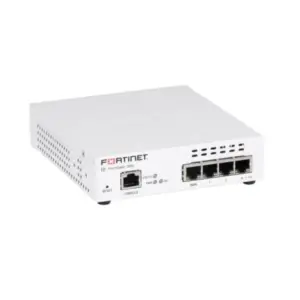
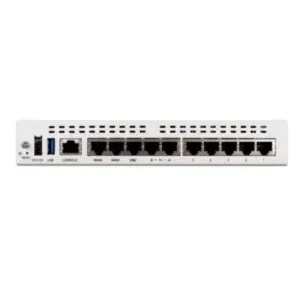
| Network Interfaces | Port type and quantity depend on the selected hardware appliance; virtual interface limits depend on the edition |
| Storage and Power | Configuration dependent; confirm rack space, power feeds, redundancy and environmental requirements |
| Licensing | Base platform, FortiCare and FortiGuard or optional services vary by order code and term |
| Warranty and Support | Based on selected support entitlement, purchase route, region and supplier terms |
How to interpret the specification table
The FortiProxy family covers different performance, user and deployment requirements. A smaller model may appear to support the required user count but still be unsuitable when most traffic is encrypted, many security profiles are enabled, or the organisation expects heavy cloud-storage and video use. A larger appliance may provide more interface, storage and high-availability options but could add unnecessary cost if the environment is modest. Virtual editions introduce a different set of questions around CPU allocation, memory, disk performance, hypervisor support and cloud networking. Buyers should therefore provide both present-day and expected three-year requirements. FourTeck can help map those requirements to a shortlist before commercial terms are requested.
Configuration and Buyer Guidance
A secure web gateway should be sized around real traffic behaviour, not only employee headcount. Two organisations with one thousand users may generate very different loads. A call centre may use mostly browser-based customer systems, while a university may carry large downloads, streaming media, research traffic and thousands of personally owned devices. A financial organisation may require deeper SSL inspection and more restrictive data policies. These patterns affect throughput, storage, logging and the number of concurrent sessions the platform must handle.
How many users and devices?
Count employees, contractors, guests, managed endpoints and peak concurrent users. Include expected growth and new branches.
What internet speed is protected?
Record all links, peak usage, future upgrades and whether traffic is centralised from remote sites.
How much SSL inspection?
Define which traffic will be inspected, which categories need exemption and how certificates will be deployed.
Which identity source?
Confirm directory, SAML, RADIUS, guest, device and multi-factor authentication requirements.
Where will logs go?
Plan retention, reporting, FortiAnalyzer integration, incident response access and privacy requirements.
Is resilience required?
Critical environments should review high availability, bypass behaviour, redundant power, maintenance and failure testing.
The buyer should also decide who will manage the platform after installation. A capable appliance can still deliver poor results if policies are unclear, certificates are not distributed correctly, exceptions are not documented or subscriptions are allowed to expire. Clarify whether internal staff, an integrator or a managed service team will own day-to-day policy changes, upgrades, backups and incident reviews. FourTeck can use this information to prepare a more complete quotation that includes the required appliance or virtual license, service term and related planning items.
Ideal Business Use Cases
FortiProxy is relevant wherever web access is business-critical and the organisation needs stronger inspection, policy and reporting than a basic internet gateway can provide. The best fit depends on the size of the environment and the selected model.
Enterprise Internet Gateway
Large organisations can centralise web security for office users, apply role-based policies and inspect high volumes of encrypted traffic at a controlled gateway.
Education and Campus Networks
Universities and schools can separate staff, student, laboratory and guest policies while controlling categories, applications, downloads and bandwidth-intensive activity.
Financial and Regulated Operations
Banks, insurers and professional services firms can use identity-aware controls, encrypted traffic inspection, logging and data-protection policies as part of a wider security programme.
Healthcare Groups
Hospitals and clinics can protect staff web access, control cloud applications and reduce exposure to malicious content while preserving carefully defined privacy exceptions.
Government and Public Services
Public agencies can standardise acceptable-use policies across departments, improve reporting and separate administrative, public-access and specialist user groups.
Multi-Branch Organisations
Businesses can route branch browsing through a central control point or use a distributed architecture, depending on link design, latency, resilience and local breakout requirements.
Service Providers and Shared Platforms
Virtual domains and segmented administration can support designs where policies, customers or business units require logical separation, subject to model and licensing.
Cloud Application Governance
Organisations with heavy SaaS use can improve visibility into application behaviour, restrict unwanted account access and apply data policies to supported web channels.
A use case should be validated against technical reality. For example, a campus may require large user capacity but also very high video traffic; a bank may have fewer users but deeper inspection and strict reporting; a branch network may need central security but cannot tolerate the latency of sending every session to one location. FourTeck helps buyers describe these operational details so the product and architecture match the intended outcome.
FortiProxy Secure Web Proxy Encrypted Traffic Inspection
Encrypted browsing protects legitimate user sessions, but it can also hide malware delivery, phishing activity, risky downloads and unauthorised data movement from security tools that cannot inspect the session. FortiProxy can perform SSL inspection so defined traffic is decrypted, evaluated by security controls and then re-encrypted before continuing to its destination. The operational benefit is improved visibility into the part of web traffic where many threats now travel.
This capability must be planned carefully. Inspection affects performance, certificate management, application compatibility, privacy expectations and legal policy. The organisation should identify which user groups and traffic categories require inspection, which trusted or sensitive destinations need exemption, how the inspection certificate will be distributed and what process will handle application failures. Banking, healthcare and personal services may require carefully documented exclusions. Managed devices are generally easier to prepare than unmanaged guest devices because certificate trust can be deployed centrally.
Model sizing should include the expected percentage of encrypted traffic, the number of concurrent sessions and the security profiles applied after decryption. Hardware acceleration can improve performance on supported appliances, but no throughput figure should be treated as universal because real results depend on cipher mix, object size, policy design and enabled services. FourTeck can help buyers document these assumptions before selecting a model. A realistic inspection plan protects performance, reduces user disruption and helps the security team gain the visibility it needs without applying unnecessary decryption to every possible session.
FortiProxy Secure Web Proxy Data Protection and SaaS Control
Web security is no longer only about blocking dangerous sites. Employees can move valuable information through browser uploads, personal cloud accounts, webmail, collaboration platforms and file-sharing applications. A secure web gateway can become an important enforcement point for controlling this movement. FortiProxy includes data loss prevention and content-analysis capabilities that can examine supported traffic for defined patterns, file types and policy conditions. Optional services may add functions such as OCR and image-oriented analysis, depending on licensing and software support.
For buyers, the key question is not simply whether DLP exists. The organisation must define what information matters, where it is allowed to go and how exceptions will be approved. Examples include customer records, payment data, financial reports, source code, identification documents and internal project material. Policies should be narrow enough to reduce false positives and clear enough that users understand why an action is blocked or monitored. Security teams should also decide whether the goal is visibility, warning, blocking or escalation, because each response affects the user experience and operational workload.
Inline cloud application control can support restrictions on unsupported or personal accounts and help administrators distinguish approved business use from risky behaviour. The exact application coverage and control depth should be checked for the selected release and service package. FourTeck can help buyers prepare the commercial and technical questions for this review, including protected data types, key SaaS platforms, number of users, reporting needs and incident workflow. This turns the purchase from a generic proxy project into a practical data-governance design.
FortiProxy Secure Web Proxy Scale, Availability and Management
A web gateway may sit in the path of every employee browser session, so reliability and manageability are as important as threat detection. FortiProxy supports a range of appliance and virtual options, allowing organisations to choose a platform that matches user population, throughput and data-centre standards. Selected models can support high-availability designs, logical virtual domains and large user capacities. Virtual editions can be allocated to supported hypervisors or cloud environments, while hardware appliances provide dedicated interfaces, local storage and purpose-built processing.
Operational teams should plan administration before go-live. Define administrator roles, change approval, policy naming, backup schedules, upgrade windows, certificate ownership and log review responsibilities. Integration with FortiAnalyzer can support central reporting and analysis, while FortiSandbox integration can provide an additional path for examining suspicious files. Third-party connections may be possible through supported protocols, but compatibility and workflow should be confirmed during design rather than assumed after purchase.
Resilience planning should cover more than two appliances. The organisation should understand failover behaviour, session impact, bypass requirements, power feeds, switch connectivity, routing, DNS, authentication dependencies and monitoring. A proxy can be available while users still fail to browse because an upstream identity service or certificate process is unavailable. FourTeck encourages buyers to map these dependencies and include testing in the deployment plan. The result is a platform that is easier to operate, maintain and expand as internet usage and security policy evolve.
What Buyers Should Check Before Purchase
Before requesting a quotation, buyers should confirm the required architecture and commercial bundle. FortiProxy is a family rather than one universal appliance, so the correct option depends on real users, traffic, security services and deployment constraints. Start with current and projected internet bandwidth, peak concurrent users, branch traffic, SSL inspection percentage and the applications that generate the most data. Explain whether the solution will operate inline, as an explicit proxy, through WCCP or in a virtual environment. These details help identify whether a physical appliance, virtual edition or different architecture is appropriate.
Configuration Fit
Confirm users, throughput, encrypted traffic, interfaces, storage, high availability, virtual domains and expected growth. Do not choose solely by headline capacity.
Compatibility Check
Review directory services, SAML or RADIUS, certificate deployment, routing, FortiAnalyzer, FortiSandbox, hypervisor and cloud-network compatibility.
Licensing and Lifecycle
Identify the base license, security services, browser isolation or data protection options, FortiCare level, subscription term and renewal responsibility.
Deployment Readiness
Check rack space, power, bypass design, switching, cabling, IP addressing, change window, administrator skills and rollback plan.
Warranty and support expectations should be stated clearly. Buyers should ask what entitlement is included, how replacement handling works for the selected route, who will open support cases and whether local technical assistance is required. Delivery questions should include destination, quantity, desired project date and whether the order requires phased supply. Virtual buyers should provide the supported platform, allocated CPU, memory, disk and intended cloud or data-centre location.
The quotation request should include the number of protected users, internet link sizes, deployment mode, required security services, preferred support term, high-availability requirement, logging platform and destination country. Buyers replacing an older proxy should also share the existing model, current pain points and policy migration needs. FourTeck can review this information and suggest a suitable model or alternative when the initial request does not fit the business requirement. This process helps avoid missing licenses, undersized performance, incompatible authentication, overlooked rack items and unclear renewal costs.
Africa Availability and Service Support
FourTeck supports FortiProxy inquiries across Africa with practical help for model selection, licensing review, quotation preparation, delivery coordination and warranty direction. Availability can change according to appliance model, virtual license, service bundle, subscription period, supplier status, quantity and destination. For this reason, buyers should request confirmation for the exact order code rather than assuming that every product-family option has the same lead time or commercial structure.
The support process can begin with a short requirement summary. Share the approximate number of users, internet bandwidth, deployment mode, desired security functions, existing Fortinet products and whether high availability is required. FourTeck can then help narrow the available options and identify the information needed for a formal quote. For large projects, the review may also cover phased deployment, central logging, branch architecture, virtual domains, training needs and renewal planning.
Delivery coordination is handled according to the selected product and business location. Hardware orders may require rack, power, transceiver, cable or accessory checks. Virtual orders require clarity on license type, platform and activation process. Warranty handling and technical support depend on the chosen entitlement and purchase route, so those terms should be reviewed before approval. FourTeck does not rely on unconfirmed stock or delivery claims; the objective is to give buyers current information for the specific request.
Africa Country and Regional Coverage
Businesses and institutions across Africa, including Kenya, Uganda, Nigeria, Ghana, Tanzania, Rwanda, Ethiopia, South Africa, Zambia, Botswana, Senegal and nearby regional markets, can contact FourTeck for product availability, configuration guidance and quote assistance. The team can help procurement managers, IT departments, resellers and project integrators review suitable FortiProxy options based on user count, bandwidth, inspection needs, delivery destination and order quantity.
Regional requirements can differ. Some organisations operate a central data centre with branch traffic routed through one gateway, while others need virtual deployments close to cloud workloads. Power quality, rack conditions, internet transit, local support skills and cross-border delivery planning may also influence the project. FourTeck helps buyers bring these operational questions into the procurement discussion so the final order reflects more than a product name.
Country coverage does not imply identical stock, delivery time, tax treatment or warranty handling in every market. Each inquiry is reviewed according to the destination and selected order code. Buyers can use the FourTeck Africa technology platform, the FourTeck Kenya site or the FourTeck Uganda site to discuss the most suitable regional route for a business requirement.
GCC, Middle East and Africa Availability
FourTeck Africa can support inquiries for organisations across Africa while also guiding wider regional technology requirements through selected FourTeck platforms serving GCC and Middle East markets. Businesses with operations in the UAE, Saudi Arabia, Qatar, Oman, Bahrain and African countries may need one coordinated conversation for model standardisation, licensing terms, delivery destinations and project timing.
Availability, delivery options, warranty handling and configuration support vary by country, product type, supplier status, selected configuration and quantity. A multinational organisation may use the same secure web policy across regions but still require different appliance sizes, cloud locations or support arrangements. The buyer should therefore provide each site’s user population, internet capacity, data-centre location and preferred procurement entity. This allows the commercial route and technical design to be reviewed together.
For wider regional assistance, buyers can review FourTeck UAE alongside the Africa platform. The goal is to help organisations compare suitable options, prepare accurate requirements and avoid fragmented purchasing where hardware, subscriptions and support terms do not align across locations.
Other Options Buyers May Consider
A secure web gateway often forms part of a wider Fortinet environment. Buyers may need a perimeter firewall, central analytics, email protection, secure access switching or resilient WAN connectivity. The options below are useful discussion points when planning a complete solution. They are not direct substitutes in every case; each product addresses a different layer of the environment.
FortiGate FG-50G-DSL
A compact branch firewall option for sites that need DSL connectivity, VPN, policy control and Fortinet security services.
FortiGate FG-3500G
A high-capacity firewall platform for data-centre, campus and service-provider environments requiring extensive network security scale.
FortiMail FML-200F
A dedicated email security appliance for organisations that need stronger control over phishing, spam and malicious message content.
FortiSwitch FS-108F
A compact managed access switch for small branches that want structured wired connectivity and Fortinet ecosystem alignment.
FortiExtender FEX-212F
A dual-modem LTE gateway for branch connectivity, failover planning and sites where fixed broadband is delayed or unreliable.
Fortinet NGFW Solutions
A wider product overview for buyers comparing FortiGate models, security bundles, VPN, SD-WAN and branch protection choices.
Why Buyers Choose FourTeck
Technology procurement becomes difficult when a product family contains several appliances, virtual editions, service bundles and support terms. FourTeck helps buyers organise the requirement before the order is placed. The goal is to connect the technical need with a practical commercial request, reducing the risk of choosing the wrong capacity, missing an essential subscription or overlooking deployment accessories.
Help for single purchases, multi-site projects, phased rollouts and regional requirements.
Review of users, throughput, deployment, inspection, logging and growth needs.
Commercial preparation based on the selected model, licensing term and destination.
Regional planning that considers destination, quantity, project schedule and product type.
Clarification of available support entitlements and purchase-route considerations.
Support for firewalls, analytics, switching, connectivity and other project components.
FourTeck works with procurement managers, IT administrators, resellers, integrators and business owners who may enter the conversation with different levels of technical detail. A buyer can begin with a model request or a business problem. The team can then ask for the missing information needed to prepare a more suitable option. This is particularly useful for secure web gateway projects, where user count, encrypted traffic, licensing and architecture have a direct effect on both cost and performance. For assistance, use the FourTeck contact page and include the project location, required quantity and expected deployment date.
Frequently Asked Questions
What is FortiProxy used for?
FortiProxy is used as a secure web gateway between users and internet services. It can inspect browsing traffic, apply URL and application policies, scan files, control encrypted sessions, support data loss prevention and provide reporting. The exact capabilities depend on the hardware or virtual model, software release and active FortiGuard or optional service licenses.
Is FortiProxy available as hardware and virtual software?
Yes. The product family includes physical appliances and virtual editions. Hardware can suit organisations that want dedicated interfaces, local storage and purpose-built processing. Virtual editions can suit supported hypervisors or cloud-aligned environments. Buyers should compare user capacity, CPU, memory, storage, network interfaces, high availability and licensing before choosing the deployment type.
How do I choose the correct FortiProxy model?
Start with peak users, internet bandwidth, concurrent sessions, SSL inspection percentage, enabled security services, logging volume, high-availability needs and three-year growth. Also confirm deployment mode and interface requirements. FourTeck can use these details to prepare a shortlist and request accurate commercial terms for the most suitable hardware or virtual option.
Can it inspect encrypted web traffic?
FortiProxy supports SSL and SSH inspection. The organisation should plan certificate deployment, privacy exclusions, application compatibility and performance impact before enabling broad inspection. Not every destination should automatically be decrypted. A controlled policy with documented exemptions and managed certificate trust normally produces a better result than an unrestricted approach.
Does FortiProxy support data loss prevention?
The platform includes data loss prevention and content-analysis capabilities, with additional OCR or image-related functions available through selected services and releases. Buyers should define the information to protect, the web channels to monitor, acceptable exceptions and the desired action. Licensing and feature coverage should be confirmed for the proposed order.
Can FourTeck help with configuration and licensing?
FourTeck can assist with requirement review, model comparison, subscription discussions, support-term selection, quote preparation and deployment planning. Buyers should provide user count, bandwidth, desired security functions, existing Fortinet products, high-availability requirement and destination. Technical implementation scope can then be discussed according to the project and available services.
Is FortiProxy available for businesses in Africa?
Businesses across Africa can contact FourTeck for current model options, licensing guidance, quotation support and delivery coordination. Availability varies by appliance, virtual edition, supplier status, service term, quantity and destination. A formal confirmation should be requested for the exact order code and project location before procurement approval.
What warranty and support options are available?
Support and replacement terms depend on the selected FortiCare entitlement, contract period, product type, supplier route and region. Buyers should confirm the service level, renewal date, support-case process and replacement handling before order approval. FourTeck can help explain the available commercial options for a specific quotation.
Can businesses request bulk or multi-site supply?
Yes. Procurement teams, resellers and integrators can request quotations for multiple appliances, virtual licenses or phased deployments. The request should include quantities, destination countries, target dates, preferred support term and whether models must be standardised across sites. This helps FourTeck coordinate a clearer commercial and delivery plan.
What information is needed for a quote?
Provide the expected number of users, internet link speeds, deployment mode, percentage of encrypted traffic, required security services, authentication method, high-availability preference, logging platform, support term, quantity and destination. Existing proxy details and growth plans are also useful. This information allows a more accurate model and licensing discussion.
Need Help Choosing the Right FortiProxy Option?
FourTeck can help you review model capacity, virtual or hardware deployment, security services, support term, high availability, warranty guidance and delivery requirements for your business location. Share your user count, bandwidth, project destination and expected timeline for a suitable quotation.
Reviews
There are no reviews yet.